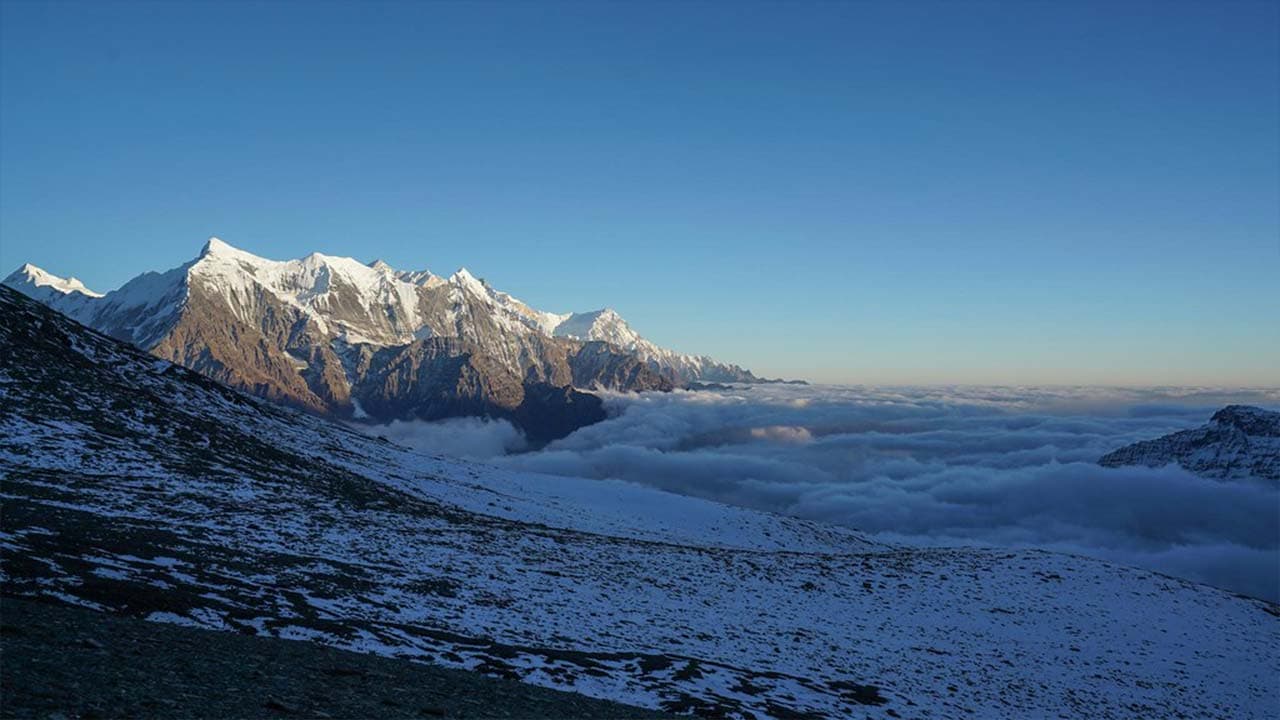
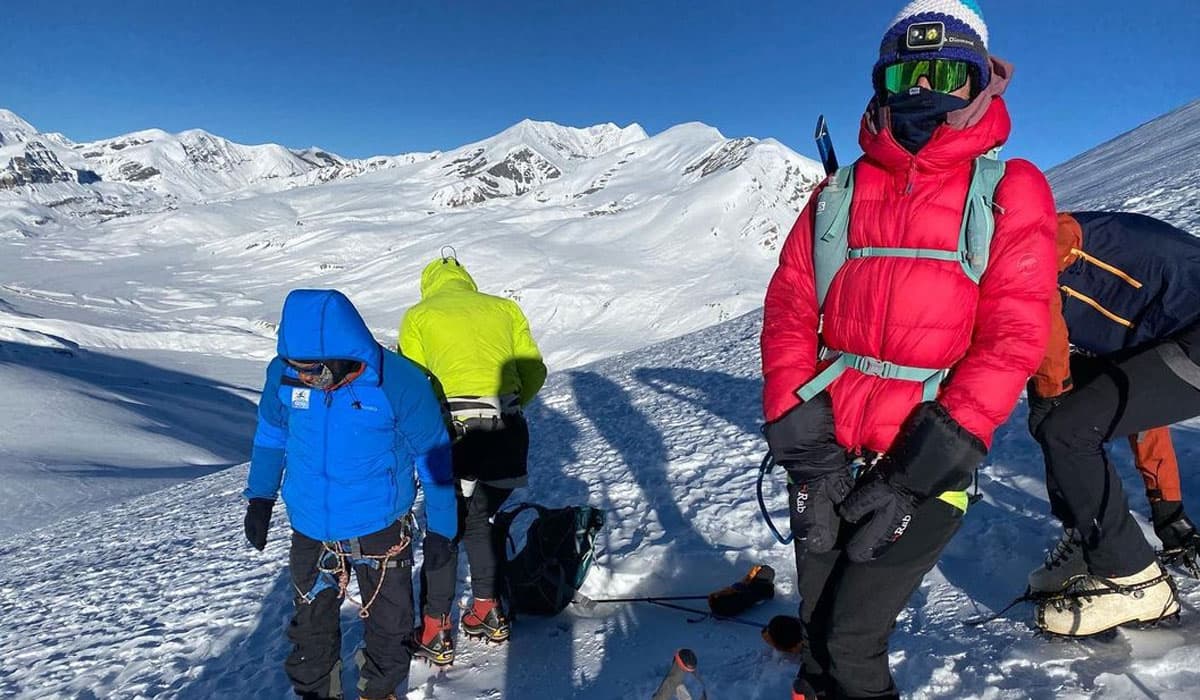
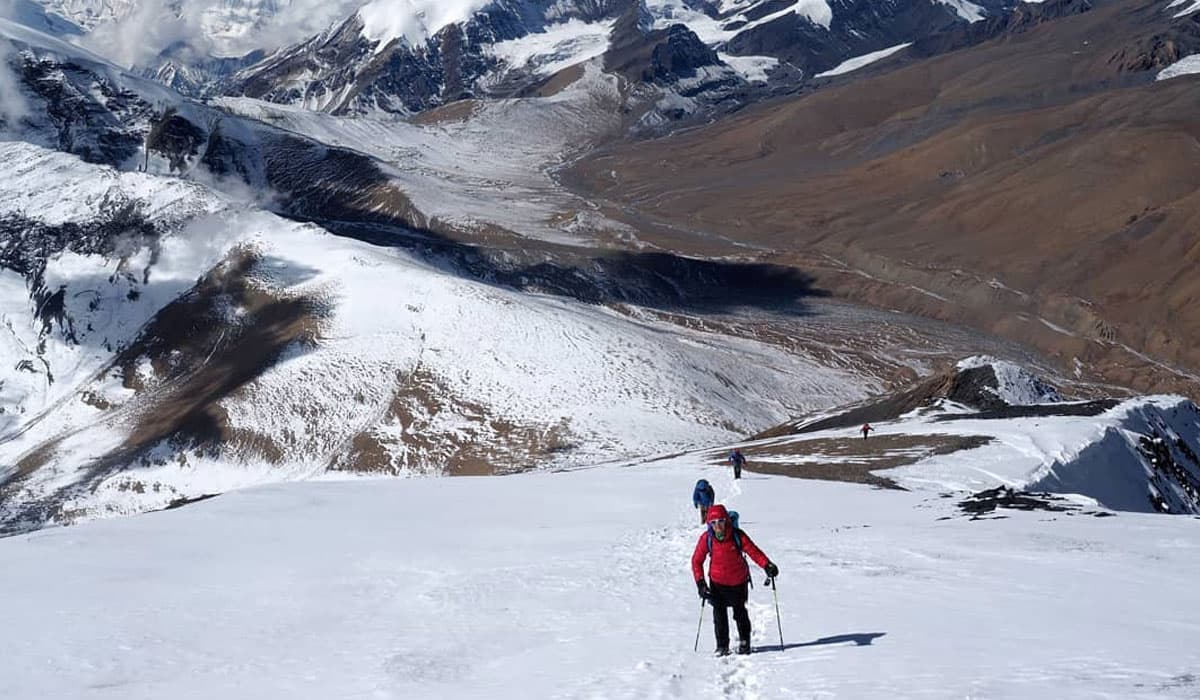
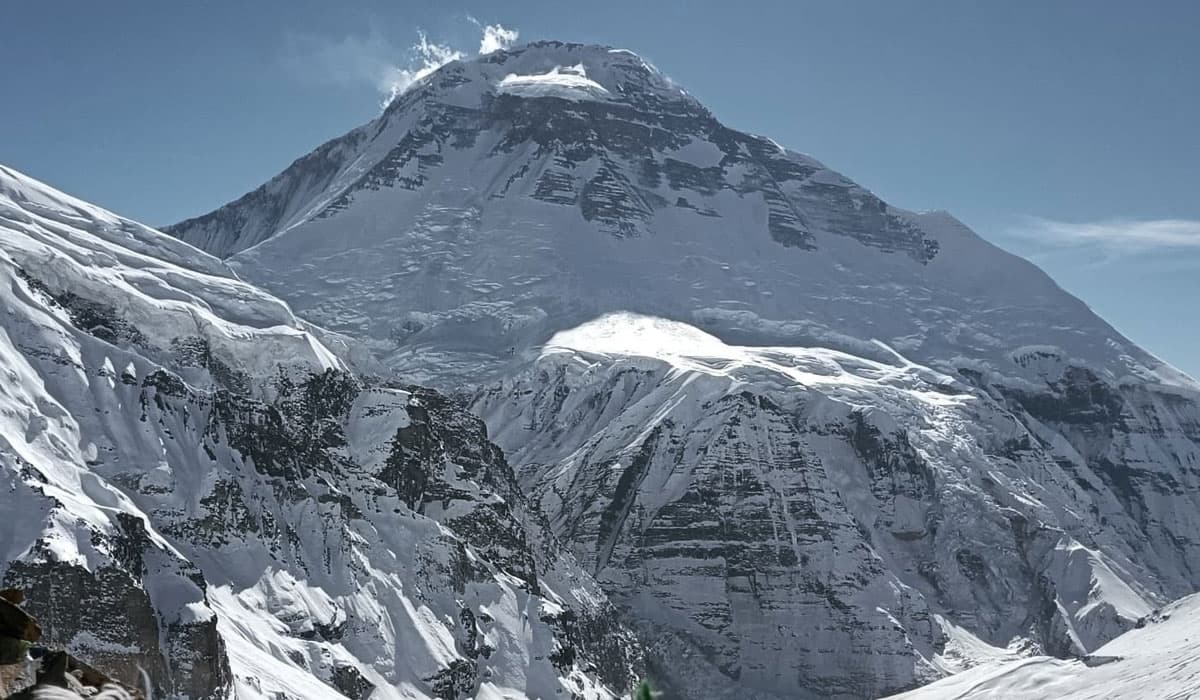
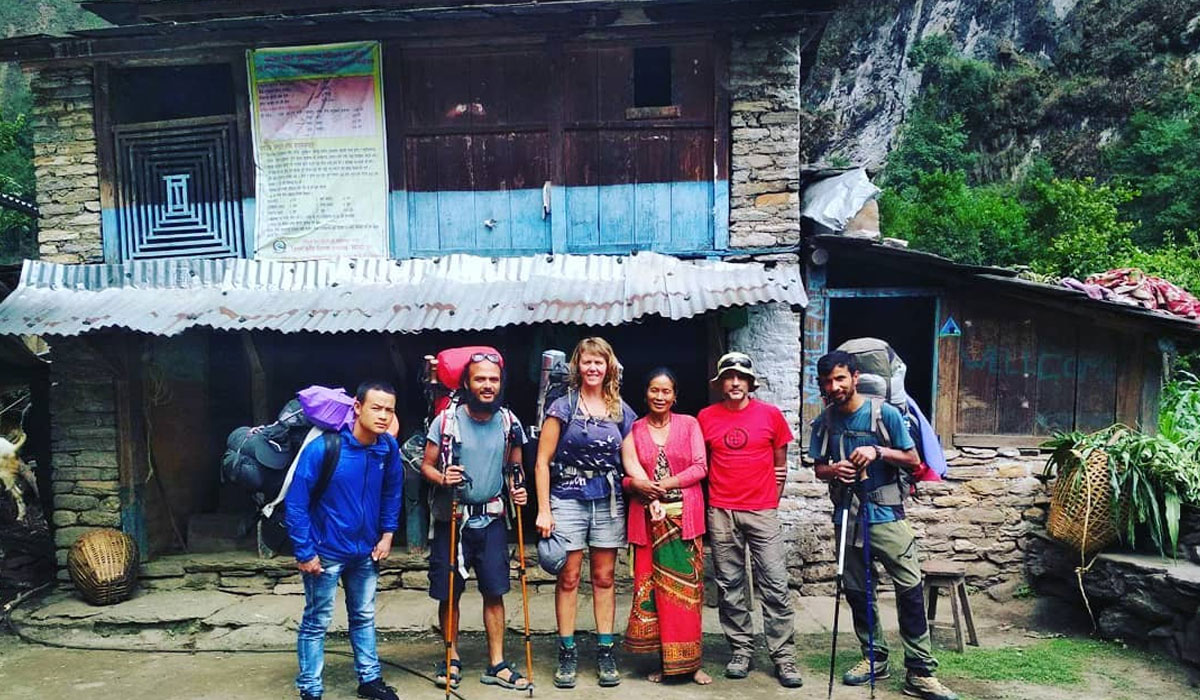
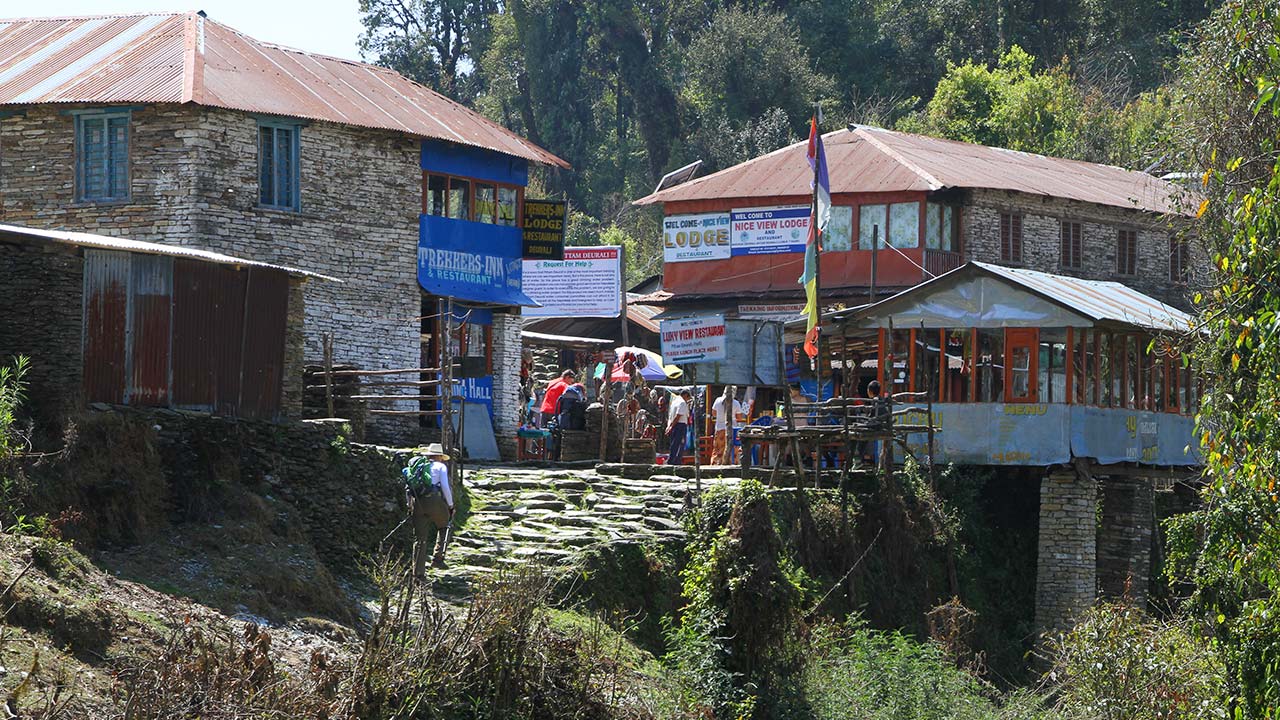
Trek-Climb areaNepal North Mid-West around Mustang district.
People / CulturePopulated by high Thakali tribes with ancient culture and traditional life of Buddhism religion.
Mode of TransportExciting drives from Kathmandu with scenic flight from Jomsom to Pokhara and back to Kathmandu.
Highlights of Dhampus Peak Climbing
Starting your adventure in scenic Pokhara Valley and trekking through terraced farmlands, riverside paths, and dense rhododendron forests
Summiting Dhampus Peak (6,012m/ 19,724ft), one of Nepal’s most accessible 6,000-meter trekking peaks
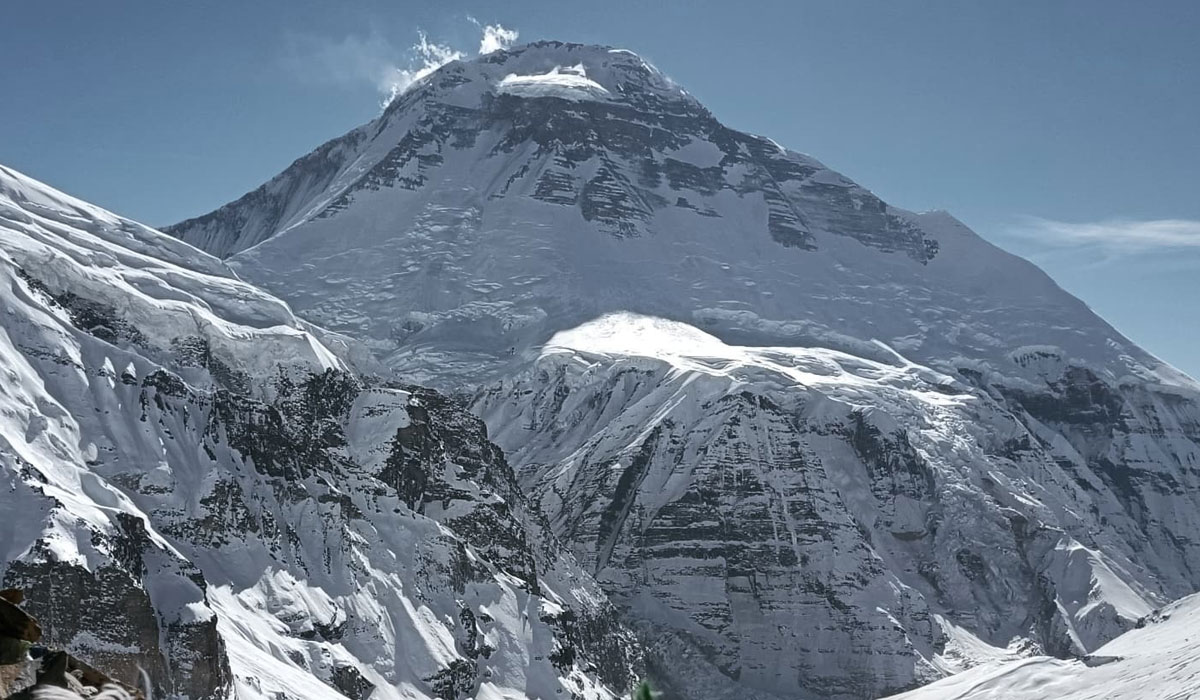
Standing on the summit, enjoying breathtaking 360° Himalayan views of Annapurna I, Machapuchare (Fishtail), Lamjung Himal, Gangapurna, and other surrounding peaks
Exploring traditional Gurung and Magar villages along the way, where you can experience local culture, home-stays, and warm Himalayan hospitality
Trek through the Annapurna Conservation Area, a protected region rich in biodiversity and home to unique alpine flora and fauna
Experience a climb that balances trekking and mountaineering, gradually ascending from forested valleys to high-altitude snow slopes, with enough time for proper acclimatization
Enjoy sunrise and sunset vistas over the Annapurna and Machapuchare massifs, creating magical photo opportunities throughout your journey
An expedition with licensed guide support, experienced in high-altitude trekking and climbing, ensuring safety, route management, and summit success
A beginner-friendly high-altitude expedition, where even first-time climbers can experience the thrill of standing above 6,000 meters
Experience less-crowded trails compared to more popular peaks like Annapurna Base Camp or Everest, offering a more serene and immersive Himalayan adventure
A well-rounded Himalayan adventure, which combines trekking, culture, mountaineering, and spectacular natural scenery all in one itinerary
Trip Overview
Dhampus Peak Climbing is a perfect Himalayan adventure ideal for those who are seeking their high-altitude mountaineering adventure. At an altitude of 6,012 meters (19,724 feet), this PD-grade trekking peak offers a thrilling summit experience without the need for you to learn advanced technical skills. The Dhampus Peak expedition takes you through the heart of the Annapurna region. You will get started on the trekking trail from the lush Pokhara Valley and wind through terraced hills, dense forests, and traditional Gurung villages before reaching the snow-covered slopes of the mountain.
One of the reasons why climbing Dhampus Peak is so popular is due to the balance it offers between challenges and accessibility. Although the ascent involves glacial travel and snow slopes, the route remains non-technical. This allows the climbers to focus on endurance, altitude adaptation, and overall experience rather than the complex climbing techniques. With proper acclimatization and guidance, this summit push becomes a rewarding and confidence-building feat.
As you reach the top of this trekking peak, you will be rewarded with the sweeping panoramic views of Annapurna I, Machapuchare (Fishtail), Lamjung Himal, Gangapurna, and other surrounding peaks, which will make the effort worthwhile. However, the Dhampus Peak Climbing is not just about reaching the top of the mountain; it is a complete Himalayan adventure. Your journey combines raw natural beauty, immersive cultural experience, and the excitement of standing above an iconic peak over 6,000meters, a true Himalayan expedition.
Dhampus Peak Itinerary (Outline Plan)
Day 01: Arrival in Kathmandu (1,400m/ 4,593ft) and transfer to the hotel
Day 02: Optional sightseeing tour in Kathmandu and climb preparation
Day 03: Kathmandu to Pokhara (822m/ 2,696ft) driving: 7 to 8 hours
Day 04: Pokhara to Marpha (2,650m/ 8,694ft) drive via Beni (899m/ 2,949ft) and Tatopani (1,190m/ 3,904ft): 6 to 7 hours
Day 05: Marpha to Yak Kharka (4,020m/ 13,188ft): 5 to 6 hours
Day 06: Trekking to Hidden Valley (4,900m/ 16,076ft) via Dhampus Pass (5,250m/ 17,24ft): 6 to 7 hours
Day 07: Dhampus Peak climb preparation at Dhampus Base Camp (5,100m/ 16,732ft)
Day 08: Climb to Dhampus Peak High Camp (5,600m/ 18,372ft): 3 to 4 hours
Day 09: Summit Dhampus Peak (6,012m/ 17,724ft) and return to base camp: 7 to 8 hours
Day 10: Reserve day in case of bad weather
Day 11: Trekking to Marpha (2,650m/ 8,694ft) via Yak Kharka (4,020m/ 13,188ft): 6 to 7 hours
Day 12: Marpha to Jomsom (2,710m/ 8,891ft) drive: 30 to 45 minutes
Day 13: Drive or fly back to Kathmandu (1,400m/ 4,593ft): 1 hour flight time or 8 to 10 hours (drive)
Day 14: International departure day
Cost Details
What's Included in Dhampus Peak Climbing
Airport picks up and drops.
Kathmandu city tour with guide.
Kathmandu to Pokhara by tourist bus.
Pokhara to Marpha b y bus or sharing jeep.
Three night’s tourist standard hotel in Kathmandu twin sharing basis.
Three meals during trekking and camping.
Necessary climbing equipments.
A highly experience and helpful climbing guide with his all expenses.
Strong Potter with his all expenses.
Jomsom to Pokhara flight.
Pokhara to Kathmandu by tourist bus.
Two night hotel in Pokhara.
All necessary climbing permit.
Annapurna Conservation Area project permit.
Medical supplies (first aid kit box).
Arrangement Helicopter service for emergency case. (Paid by your travel insurance).
Eco Holidays Nepal T-shirt and Cap.
What's Excluded in Dhampus Peak Climbing
Meals while you are in city.
Your personal expenses.
Nepal entry visa and international flight fare.
All kind of hard and soft drinks.
Battery charge, wifi and shower during trekking in Tea house.
Personal Climbing equipment can be hired (140$).
Tips for guide and potter.
Kathmandu city tour entry fee.
Price & Availability
Group Discount Available
1 Person
US$ 3180
2 - 4 Person
US$ 2990
5 - 8 Person
US$ 2875
8 - 15 Person
US$ 2755
Itinerary of Dhampus Peak Climbing - 14 days
Day 01
Arrival in Kathmandu (1,400m/ 4,593ft) and transfer to the hotel
Arrival in Kathmandu and transfer to Hotel.
Your Dhampus Peak Climbing adventure begins with your arrival in Kathmandu, the cultural and logistical heart of Nepal. As your flight descends into this capital valley, you will catch your first glimpse of terraced hills, clustered rooftops, and distant ridgelines. After landing at Tribhuvan International Airport (TIA), you will be greeted by our staff and transferred to your hotel in the city.
The plans for the rest of the day are kept intentionally light. So, you will be able to recover from your journey and settle into the atmosphere of Nepal. In the evening, you will meet your climbing guide for a brief introduction and overview of the upcoming days of your Dhampus Peak Climbing. After that, you can explore the nearby lively streets and enjoy a traditional Nepali meal before calling it a night.
Max. Elevation:1400
Duration:30 min
Day 02
Optional sightseeing tour in Kathmandu and climb preparation
Kathmandu elevation: 1,400 meters/ 4,600 feet
Overnight: Hotel in Kathmandu
This day is dedicated to acclimatization, cultural immersion, and final climb preparation before heading to the mountains. If you choose the optional sightseeing tour, you will get a chance to explore some of Kathmandu’s most significant heritage sites. The sightseeing tour will take you across the major highlights like Swayambhunath (Monkey Temple), Pashupatinath Temple, Kathmandu Durbar Square, and Boudhanath Stupa. These places offer deep insight into the spiritual traditions and history of this beautiful Himalayan country.
Later in the day, you will then dedicate your time to climbing preparation. Take your time to review your equipment, check your technical gear, and go through a detailed briefing to not to miss out on crucial. Any missing or last-minute gear can be arranged in Kathmandu. This strategic day in your Himalayan expedition balances rest, preparation, and cultural context, ensuring you are both mentally and physically prepared for the journey ahead.
Max. Elevation:1400
Day 03
Kathmandu to Pokhara (822m/ 2,696ft) driving: 7 to 8 hours
Pokhara elevation: 822 meters/ 2,697 feet
Overnight: Hotel in Pokhara
It’s a long day’s drive today, and you will get started early in the morning. The driving journey from Kathmandu to Pokhara follows the Prithvi Highway, tracing the Trishuli River. The drive passes through busy highway towns such as Mugling, Dumre, and Damauli, which are the commercial hubs for the surrounding hill districts. As you keep driving west, the terrain gradually opens up steep middle hills, terraced farmland, and river gorges dominating the scenery.
This is a long but important transit day, as it positions you closer to the Annapurna and Dhaulagiri regions. By late afternoon, you will arrive in Pokhara, which is a popular tourist hub in the country and a key logistics base for western Nepal treks and climbs. From here, you will be able to enjoy crisp and stunning views of Annapurna, Machhapuchhre, and Dhaulagiri on clear days. This beautiful city of lakes also marks the last major urban center before entering more remote terrain.
Max. Elevation:822
Duration:7-8 hrs
Distance:200km
Day 04
Pokhara to Marpha (2,650m/ 8,694ft) drive via Beni (899m/ 2,949ft) and Tatopani (1,190m/ 3,904ft): 6 to 7 hours
Beni elevation: 899 meters/ 2949 feet
Tatopani elevation: 1,190 meters / 3,904 feet
Marpha elevation: 2,650 meters / 8,694 feet
On the 4th day of your Dhampus Peak itinerary, you will leave Pokhara early. The driving road follows the Seti River toward Beni, the official gateway to the Mustang and Dhaulagiri regions. From Beni onward, the driving trail enters the Kali Gandaki Valley, and the landscape gradually transitions from green hills to drier trans-Himalayan landscapes. On the stretch ahead, the trail passes through Tatopani, a well-known village famous for its natural hot springs and a common overnight stop for Annapurna Circuit trekkers.
Beyond Tatopani Village, the road climbs steadily through villages such as Ghasa and Kobang, where the vegetation begins to thin, and pine forests replace subtropical greenery. By afternoon, you reach Marpha, one of the most distinctive villages in the Mustang region. This high-altitude village features whitewashed stone houses, narrow alleys, apple orchards, and traditional Thakali culture. Marpha serves as an important acclimatization and staging point before you climb higher.
Max. Elevation:2650
Duration:6-7 hrs
Distance:146km
Day 05
Marpha to Yak Kharka (4,020m/ 13,188ft): 5 to 6 hours
Yak Kharka elevation: 4,020 meters / 13,188 feet
Overnight: Yak Kharka
The trekking part of the Dhampus Peak Climbing begins from this day onward. Your trek begins by leaving Marpha and heading northward. You will follow the trails used by local herders and traders rather than busy trekking highways. The path gradually climbs above the Kali Gandaki Valley and passes the Dhumba Lake area. As you gain altitude, the permanent settlements start to disappear.
Your trekking route passes isolated highland shelters and open pastureland, used mainly during the summer months for yak and sheep grazing. The terrain becomes increasingly barren, with loose scree sections and wide alpine slopes. You will then finally arrive at Yak Kharka. This is a high-altitude grazing area rather than a busy settlement. The open landscape here offers a clear view of Tukuch Peak and the surrounding ridges. Your arrival here marks the approach of serious alpine terrain.
Max. Elevation:4020
Duration:5-6 hrs
Distance:8km
Day 06
Trekking to Hidden Valley (4,900m/ 16,076ft) via Dhampus Pass (5,250m/ 17,24ft): 6 to 7 hours
Dhampus Pass elevation:5,250meters / 17,224 feet
Hidden Valley elevation: 4,900 meters / 16,076 feet
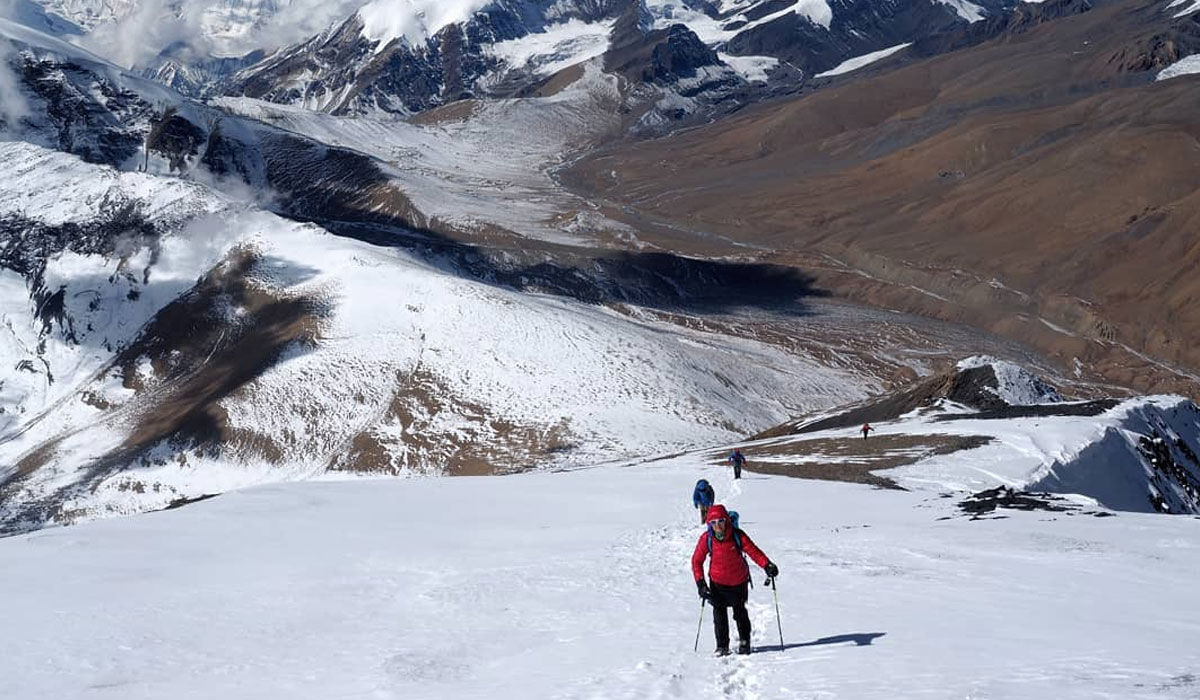
Today’s trek involves a major alpine crossing and is one of the most demanding days of the Dhampus Peak itinerary. The trail climbs steadily from Yak Kharka toward Dhampus Pass, and you will traverse across the loose moraine, snow patches (season-dependent), and exposed slopes. The final push to Dhampus Pass is slow and deliberate due to altitude and terrain. From the pass, you can witness the dramatic, contrasting Himalayan landscape. On one side lies the Kali Gandaki corridor, while the other opens up the vast, enclosed basin of Hidden Valley.
The descent into Hidden Valley is gradual but long. You will walk on the glacial debris and wide alpine flats. Hidden Valley is not a village but a remote high-altitude basin surrounded by peaks such as Dhaulagiri, Dhampus Peak, and Tukche Peak. This stop is only for climbers and occasional herders.
Max. Elevation:5250
Duration:5-6 hrs
Distance:10km
Day 07
Dhampus Peak climb preparation at Dhampus Base Camp (5,100m/ 16,732ft)
Preparation Day to Climb Dhampus Peak
Finally, you will get close to the major goal of this Himalayan expedition, the basin of the Dhampus Peak. A short approach from Hidden Valley will bring you to Dhampus Peak Base Camp. This base camp is located near the lower glacial zone beneath the mountain. This is a functional climbing camp rather than a scenic stop, which has been positioned for safety and access to the climbing route.
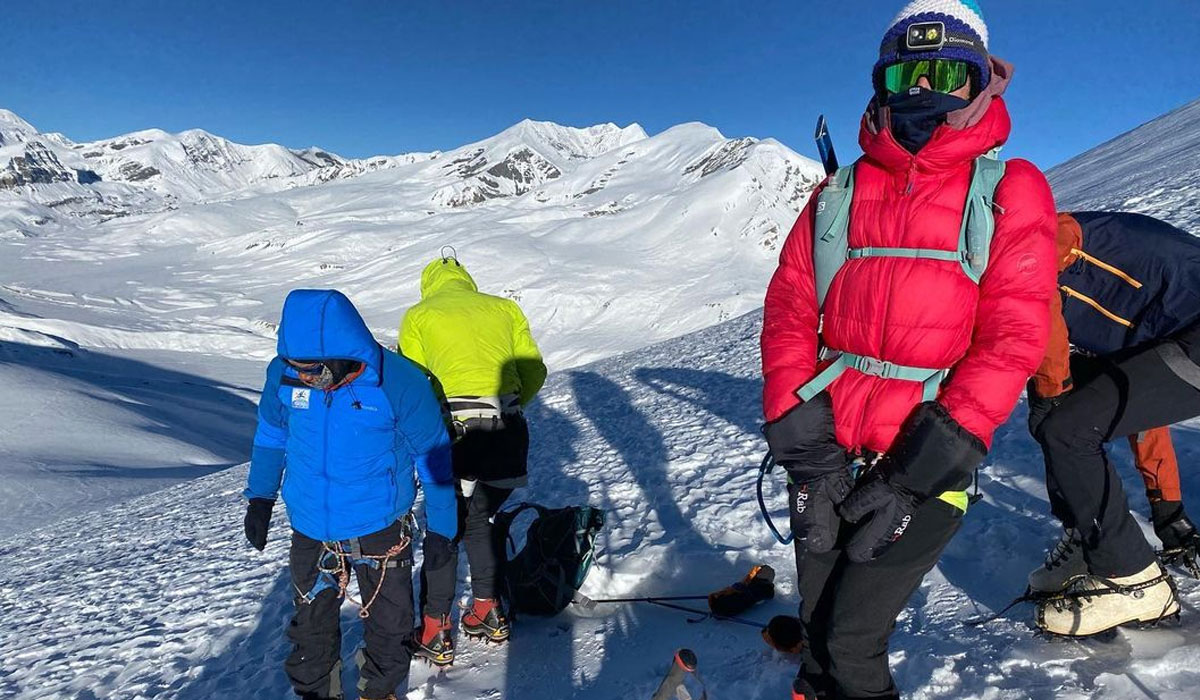
Your day at the base camp will be dedicated to climbing preparation and acclimatization. The climbing guide will train you about technical skills such as movement on snow and ice, use of crampons and ice axe, rope handling, and basic self-arrest techniques if conditions require. You will also discuss the climbing route in detail based on current weather and snow conditions. This preparation day is essential not just for skill refinement, but to allow your body to adjust before moving higher toward High Camp and the summit push.
Max. Elevation:5100
Day 08
Climb to Dhampus Peak High Camp (5,600m/ 18,372ft): 3 to 4 hours
Dhampus peak high camp: 5,600 meters / 18372 feet
Overnight: High Camp on tent
From Dhampus Peak Base Camp, the route to High Camp stretches steadily over rocky moraines and snow-covered slopes, depending on seasonal conditions. Although this section is not long in distance, the altitude gain is significant. So, you will need to maintain a steady and controlled pace. The route from base camp follows the natural line of ascent beneath Dhampus Peak, avoiding heavily crevassed areas while staying close to the main ridge. Fixed ropes may be used if snow or ice conditions require an additional securing factor.
The Dhampus High Camp is established on an exposed alpine platform at around 5,600 meters. This campsite is chosen for its direct access to the summit route rather than comfort. From here, the surrounding views open across Hidden Valley, with Dhaulagiri’s massive west face dominating the horizon. For the remainder of the day, you will hydrate, rest, and prepare your gear for the final summit push. An early dinner and briefing are followed by a very early night in preparation for summit day.
Max. Elevation:5600
Duration:3-4 hrs
Distance:7km
Day 09
Summit Dhampus Peak (6,012m/ 17,724ft) and return to base camp: 7 to 8 hours
The day to Climb Dhampus Peak
Finally, the big day is here. Your summit day begins well before dawn, typically between 2:00 and 3:00 AM, depending on weather and snow conditions. The initial ascent follows snow slopes and a ridge line, with steady gradients but increasing exposure as you gain height. As the climb progresses, the route requires careful footwork on firm snow and ice. You will use rope support where it is necessary. The final section of the summit involves a sustained climb, where altitude and cold become the primary challenges rather than technical difficulty.
Reaching the summit of Dhampus Peak rewards you with expansive views across the Dhaulagiri massif, Tukuche Peak, Nilgiri, Hiunchuli, Tilicho Peak, and deep into the Kali Gandaki Valley. After enjoying a short period on the summit to relish the grandeur of the high Himalayas, you will then begin your descent journey. After climbing down carefully back to High Camp, you will take a short rest before continuing down to Dhampus Peak Base Camp. The descent is long but manageable, and reaching base camp marks the successful completion of your Dhampus Peak Climbing.
Max. Elevation:6012
Duration:8-9 hrs
Day 10
Reserve day in case of bad weather.
This day in your Dhampus Peak itinerary is kept as a buffer in case of unfavorable weather, high winds, or slow acclimatization during the summit push. In high-altitude climbing, flexibility is crucial, and this reserve day significantly increases summit success and your overall safety.
If not required during the climb, this day can be used for additional rest after the climb or to begin descent earlier, depending on team condition and logistics.
Max. Elevation:5100
Day 11
Trekking to Marpha (2,650m/ 8,694ft) via Yak Kharka (4,020m/ 13,188ft): 6 to 7 hours
Trek to Marpha
Overnight: Marpha
In this descending phase, you will begin your walk by retracing the route back through Hidden Valley. As you gradually lose altitude and you will re-enter more familiar terrain. The trail crosses alpine flats and moraine stretches before reaching Yak Kharka. From here onwards, the vegetation begins to reappear. You will continue walking downhill, with your every step, the air grows noticeably thicker and warmer as you approach lower elevations.
The return to Marpha feels dramatic after spending days in barren high-altitude environments. The stone houses, apple orchards, and cultivated fields signal your return to permanent settlement. Marpha offers a comfortable and well-earned rest after the climb, with proper lodges, extensive food options, and a chance to reflect on your Himalayan expedition before heading back toward Pokhara and Kathmandu.
Max. Elevation:2650
Duration:5-6 hrs
Distance:11km
Day 12
Marpha to Jomsom (2,710m/ 8,891ft) drive: 30 to 45 minutes
Jomsom elevation: 2,710 meters / 8,891 feet
Overnight: Jomsom
After breakfast in Marpha, a short drive will take you north along the Kali Gandaki Valley to Jomsom. This is the administrative center of the Mustang region. The driving route passes through Thini and open riverbed terrain shaped by strong mountain winds, which is common in this valley. Jomsom is a functional mountain town rather than a traditional village. It serves as a hub for flights, road transport, and supplies.
Compared to Marpha’s traditional structure, Jomsom feels more open and exposed, with a mix of lodges, local homes, and government offices. Your short travel time allows flexibility either to rest properly after the climb or to prepare for onward travel to lower valleys.
Max. Elevation:2710
Duration:30 min
Distance:13.2km
Day 13
Drive or fly back to Kathmandu (1,400m/ 4,593ft): 1 hour flight time or 8 to 10 hours (drive)
Drive to Kathmandu
There are two options for returning to Kathmandu, depending on weather conditions, availability, and personal preference. You can either take a morning flight from Jomsom Airport offers a quick return to Kathmandu, often routed via Pokhara. The flights operate early in the day due to strong valley winds, and schedules are highly weather-dependent.
Another option is traveling by road, the driving route retraces the Kali Gandaki Valley through Kagbeni, Tatopani, Beni, and onward to Pokhara before continuing toward Kathmandu. This option is longer but reliable when flights are delayed or canceled. You will arrive in Kathmandu usually in the evening, and you will be transferred to your respective hotel. After getting some rest, you can take a stroll around the city and enjoy modernity after the journey to the isolated corner in the Himalayas.
Max. Elevation:1400
Duration:13-14 hrs
Distance:360km
Day 14
International departure day
Final Departure
This is your final day in Nepal and the concluding day of your Dhampus Peak Climbing. Depending on your flight schedule, you will be transferred to Tribhuvan International Airport for your onward international departure. If time permits, you can do last-minute shopping, or take a short walk around Kathmandu, exploring nearby highlights.
Thank you for choosing Eco Holidays Nepal for your Himalayan adventure. We hope to see you again for your next big adventure. Have a safe journey.
Max. Elevation:1400
Duration:30 min
If the provided schedule isn't suitable for you, we can create personalized travel arrangements.
Dhampus Peak, also known as Thapa Peak (6,012m), has been classified as a PD-Grade trekking peak in Nepal. It is one of the more accessible 6,000-meter climbs in the Himalayas. This thrilling peak is often chosen by climbers who are looking for their first high-altitude mountaineering experience because it does not require advanced technical climbing skills or complex rope systems.
That said, you should not underestimate Dhampus Peak for an easy walk. The climb is physically demanding, with long uphill and downhill days, steep snowy sections, and you will also need to traverse over glacial terrain. Above 5,000 meters, it is important to move efficiently on snow using crampons and an ice axe, especially on summit day when firm snow and exposure are common. Altitude is the primary challenge. As you will need to spend a significant time above 5,000 meters, you will require good physical conditioning, proper acclimatization, and disciplined pacing. Symptoms of altitude sickness can occur if the ascent is rushed, making acclimatization days and reserve days critical for safety and summit success.
Another factor that adds to the Dhampus Peak climbing difficulty is remoteness. Once you cross Dhampus Pass into Hidden Valley, there are no permanent settlements, no teahouses, and limited exit options. Weather changes can delay summit attempts, and rescue logistics are more complex compared to peaks closer to main trekking routes.
Thus, in overall, Dhampus Peak (Thapa Peak) stands out as an excellent introduction to Himalayan mountaineering, offering a balanced mix of accessibility and genuine high-altitude challenge. While its PD grading and non-technical nature make it suitable for beginners stepping into 6,000-meter climbing, the mountain still demands respect due to its altitude, physical intensity, and remote setting.
Best Time to Trek
The best time to trek and climb Dhampus Peak is during Nepal’s two main climbing seasons: spring (March to May) and autumn (September to November). These periods offer the most stable weather, crystal clear mountain vistas, and safer snow conditions for crossing high passes and scaling the Dhampus Peak, which is above 6,000 meters.
Spring Season (March to May)
Spring is one of the most popular times for Dhampus Peak climbing. During this season, temperatures gradually warm, daylight hours are longer, and snow conditions are generally stable for safe traverse. The route over Dhampus Pass and the summit slopes usually have firm snow, making crampon travel more predictable and safe. This nature’s peak season also provides excellent visibility of the Dhaulagiri and Annapurna ranges, while the lower sections are covered with stunning rhododendrons and rich vegetation.
Autumn Season (September to November)
Like the spring season, autumn is considered another major reliable season for trekking and peak climbing in this region. After the monsoon season leaves the atmosphere, the skies are crisp, the humidity is low, and the mountain vistas are at their best. Likewise, the trail conditions are dry up to higher elevations. The snow coverage on the upper slopes is usually manageable. Stable weather windows make autumn an ideal time for summit attempts, especially for climbers who prioritize safety and consistent conditions.
Off-Season Considerations
If you are wondering whether there are other favorable windows besides the peak seasons for Dhampus Peak Climbing, they are not as favorable as spring and autumn. In winter (December to February), this expedition is possible but challenging. Extreme cold, heavy snowfall, and strong winds increase difficulty, particularly at High Camp and on summit day. So the winter Dhampus Peak expedition is only suitable for well-prepared and experienced climbers.
As for the monsoon (June to August), this climb is not generally recommended. Heavy rainfall affects road access, visibility is poor, and there is also a high risk of landslides and flooding. At the same time, the monsoon system brings fresh snowfall at higher elevations, covering trails, moraines, and pass crossings. This combination significantly increases risk and makes route navigation difficult.
Packing List
Climbing Dhampus Peak requires a balanced approach as this is a Himlayan trek and expedition combination. So, your packing list needs to be light enough for long trekking days but complete enough for the cold, wind, snow, and high-altitude conditions over 6,000 meters. Here is a practical and field-tested packing list for Dhampus Peak climbing, focused on what you actually need for this expedition.
Clothing
Moisture-wicking thermal top and bottom
Lightweight trekking shirts (quick-dry)
Fleece or softshell jacket
Down or synthetic insulated jacket (essential for High Camp and summit day)
Waterproof and windproof jacket
Waterproof trekking/climbing pants
Lightweight trekking pants
Insulated or softshell pants for snow travel
Warm beanie or wool hat
Sun cap or hat
Buff or neck gaiter
Inner gloves (thermal)
Insulated waterproof gloves or mittens (summit-rated)
Footwear
High-quality trekking boots (broken in)
Mountaineering boots compatible with crampons
Gaiters (for snow and scree)
Warm socks (wool or synthetic)
Personal Hygiene
Quick-dry towel
Sunscreen (SPF 40+)
Biodegradable soap or body wipes
Toothbrush and toothpaste
Hand sanitizer and wet wipes
Quick-dry towel
Personal first aid kit
Altitude medication (if prescribed)
Blister treatment
Water purification tablets or a filter
Toilet paper and small zip-lock bags
Trekking and Technical Gear
Trekking poles
Duffel bag for porters
Climbing backpack
Four-season sleeping bag (rated to at least -20°C)
Sleeping bag liner (optional but recommended)
Reusable water bottles or hydration bladder (insulated preferred)
Headlamp with extra batteries
Sunglasses (UV protection)
Crampons (compatible with mountaineering boots)
Ice axe
Climbing harness
Helmet
Locking and non-locking carabiners
Safety sling
Ascender (if required by guide)
Snow gaiters (if not integrated into boots)
Accommodation and Food During Trek
The Dhampus Peak expedition takes you across some of the most remote and high-altitude terrain in western Nepal. Accommodation and food available along this route are functional rather than luxurious. They reflect on the isolation and altitude challenges. This is not a comfort-focused trek; the conditions become simpler and harsher the higher you go. Both sleeping arrangements and meals in this Himalayan route are determined by elevation, weather, and accessibility.
In villages like Marpha and along the lower sections of the trek, you will stay in basic teahouses. Rooms are usually twin-sharing with wooden beds and thin mattresses. The insulation is minimal, and temperatures at night drop significantly above 4,000 meters. Bathrooms are shared basis, and hot showers are limited and will cost extra. These stops provide a chance to rest and acclimatize before you ascend into more remote high-altitude areas.
Above Yak Kharka and into the Hidden Valley, Dhampus Peak Base Camp and High Camp, you will stay in tented camps. These camps are set on open alpine terrain and will be fully managed by the expedition team. This arrangement includes sleeping tents, dining tents, and kitchen tents. High Camp is perched on exposed terrain to allow early summit departures. This shift from teahouses to tents marks the real transition from trekking to a high-altitude climbing expedition.
Food and Beverage
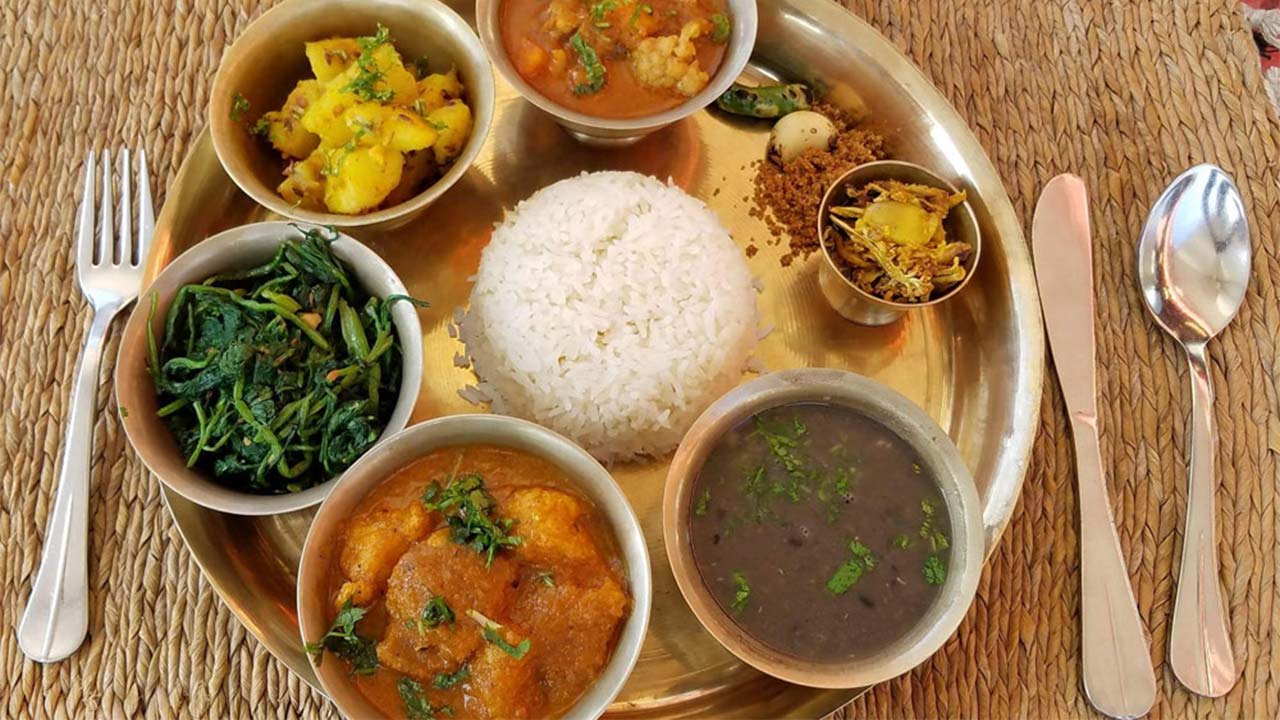
Food menus available on the Dhampus Peak route focus on energy, warmth, and easy digestion. As you gain altitude, the menu becomes more limited, but nutritious meals are always available to sustain your strength and aid your recovery after a long day’s adventure. As appetite can decline above 5,000 meters due to altitude effects, it’s important to plan meals carefully and stay hydrated to maintain energy and aid acclimatization.
Typical Breakfast Options:
Tibetan bread
Porridge or oatmeal
Toast or pancakes
Chapati or local flatbreads
Boiled eggs, scrambled, fried eggs, or omelettes
Tsampa (roasted barley flour)
Muesli or cornflakes
Typical Lunch and Dinner Options:
Dal Bhat (rice with lentils and vegetables)
Fried rice or pasta
Noodles, Thukpa, or Thenthuk
Momo
Chowmein
Potato-based dishes or stews
Soup varieties
Vegetable curry with chapati or rice
Pizza or basic Western dishes at lower elevations
Beverages:
Tea (black, milk, or ginger)
Coffee (instant or brewed)
Hot lemon or ginger‑lemon honey tea
Bottled water or purified water
Hot chocolate
Soft drinks
Local alcoholic beverages
Training and Preparation
Climbing Dhampus Peak requires solid physical conditioning and mental readiness. You need to build your endurance to manage long trekking days. You will walk around 5 to 7 hours on average while carrying a backpack, often over uneven trails and snowy slopes. So, strong legs, core, and lower back muscles are essential for balance, stability, and efficient movement on the demanding trekking and expedition trails.
Likewise, high-altitude preparation is crucial. For altitude adaptation, you can simulate the effects of thinner air through long hikes in hilly or mountainous areas. The altitude chambers are also helpful equipment that are especially designed for high-altitude expeditions. In overall, focusing on strength, endurance, flexibility, balance, and stamina will prepare your body for the sustained effort that is required on this expedition route.
Besides the physical aspects, mental strength is equally important. Dhampus Peak Climbing will test your patience, focus, and resilience as you face cold temperatures, fatigue, and limited comfort. Practicing strategies like controlled breathing, visualization, and staying calm under pressure can help you manage stress, conserve energy, and make safe decisions during the demanding days.
Ideally, a 12 to 16-week training plan is recommended for the Dhampus Peak expedition. You can begin your training with general cardio and strength building in the early weeks. Then, you can gradually progress to longer uphill hikes with a pack, focusing on leg and core conditioning in the middle weeks. In the final phase, allow yourself time for rest and mental preparation. This will ensure that your body and mind are ready for the climb.
Dhampus Peak Permit
Dhampus Peak Climbing takes place in the heart of the Annapurna region, which is one of Nepal’s most closely protected mountain areas. As this region falls under conservation and mountaineering regulations, you will need to obtain the necessary permits for your expedition. These issued permits help to control access to the region, help protect the fragile alpine environment, and support the local conservation and administrative efforts.
Here are the essential permits required for Dhampus Peak Climbing:
Dhampus Peak Climbing Permit issued by the Nepal Mountaineering Association (NMA)
Annapurna Conservation Area Permit (ACAP)
Trekkers’ Information Management System (TIMS) Card
The Dhampus Peak Climbing Permit from the NMA officially authorizes your summit attempt and is mandatory for all climbers. The permit fee varies by season, with higher costs during peak climbing periods such as spring and lower fees in winter and summer. The Annapurna Conservation Area Permit (ACAP) is required because Dhampus Peak lies within the Annapurna Conservation Area. As for the TIMS Card, it is a general trekking permit used across Nepal. While it is sometimes considered optional for certain peak-climbing itineraries, it is commonly required, especially when the climb is combined with trekking routes in the Annapurna region.
**Note: These permits are typically arranged in advance by your trekking or climbing agency, minimizing paperwork and ensuring all regulations are met before your expedition begins. It is best if you carry multiple physical copies and a digital backup, so there won’t be any issue even if your permits are damaged or lost**
Is Dhampus Peak Climbing Suitable for Beginners?
Yes, Dhampus Peak Climbing is considered suitable for beginners, especially for those looking to step into the mountaineering world for the first time. Dhampus Peak is classified as a trekking peak, meaning it does not require advanced technical climbing skills, making it an excellent introduction to high-altitude peak climbing in Nepal.
The ascent involves mostly non-technical terrain, with snow slopes and straightforward ridge walking rather than steep ice walls or complex rock segments. If you are familiar with the basic mountaineering skills, such as using crampons, ice axe, ropes, and harnesses, it is quite sufficient for your Himalayan adventure. Also, these techniques are typically taught during the expedition by experienced climbing guides.
Another reason Dhampus Peak is beginner-friendly is its gradual acclimatization profile. The climbing and trekking route allows you to gain altitude steadily, reducing the risk of altitude sickness. It is very helpful for first-time climbers to adapt comfortably to high elevations. That said, while technical difficulty is low, good physical fitness is still essential.
Long trekking days, cold conditions, and high altitude can be challenging for newcomers. Thus, prior trekking experience, especially at elevations above 4,000 meters, is highly beneficial. In summary, Dhampus Peak is an ideal choice for beginners who are physically and mentally prepared, open to learn basic mountaineering skills, and eager to experience their first Himalayan summit in a safe and guided environment.
Dhampus Peak Climbing Cost
Dhampus Peak Climbing is a short yet rewarding Himalayan expedition that combines scenic trekking in the Annapurna region with a straightforward trekking peak ascent. Compared to other higher and more remote peaks, Dhampus Peak requires fewer logistical complexities and a shorter itinerary. So, it is more affordable than many other peak climbing adventures in Nepal. On average, the Dhampus Peak Climbing price ranges between USD 2,900 and USD 4,500 per person. The final price of the expedition depends on factors such as the climbing season, group size, itinerary length, and the level of services included in the package.
The Dhampus Peak Climbing cost can vary depending on whether you choose a private climb or a group departure, the number of acclimatization days included, and the quality of guiding and climbing support. Seasonal permit fees, especially during spring, can also influence the overall cost. While Dhampus Peak is technically less demanding, professional guidance and proper logistics are still essential for safety and summit success. A standard Dhampus Peak Climbing package typically includes teahouse accommodation during the trek, basic camping at higher altitudes, three meals per day, all required permits and climbing fees, an experienced climbing guide, porters, and basic climbing gear for group use. Pre-climb training and safety briefings are also commonly provided to prepare climbers for summit day.
If you are planning to travel to Nepal for Dhampus Peak Climbing, making sure your visa is sorted is one of the first things to take care of. This beautiful Himalayan nation is very welcoming to adventure travelers, and the visa process is simple and efficient for most nationalities. Except for Indian citizens (who can enter freely), all other travelers need a tourist visa to enter the country.
Most climbers choose the Nepal Tourist Visa on Arrival, which is issued at Kathmandu’s Tribhuvan International Airport (TIA) and at certain border crossings. As long as your passport is valid for at least six months, you have a passport photo, and you pay the visa fee (in cash), the process is usually quick and hassle-free.
For those who prefer to be fully prepared before flying, it is also possible for you to apply through a Nepali embassy or consulate or complete the online visa application in advance. This can save you time upon your arrival at the TIA.
Nepal Tourist Visa Duration and Fees
Tourist visas for Nepal are available in the following durations and prices:
15 days— USD 30
30 days— USD 50
90 days— USD 125
Dhampus Peak Climbing generally requires less time than longer Himalayan expeditions, around 14 to 16 days. So, a 30-day visa is a practical choice for this expedition. This duration gives you flexibility for trekking, acclimatization, potential weather delays, and a few relaxed days in Kathmandu or Pokhara if you decide to extend your stay.
**Note: If you want to extend your visa to explore other cultural and natural aspects of the country, you can also get a 15-day extension, which will cost USD 45**
Dhampus Peak Climbing FAQs
FAQs about Dhampus Peak Climbing
What is the Height of Dhampus Peak?
Dhampus Peak, stands at an elevation of 6,012 meters (19,724 feet) above sea level. It is one of Nepal’s most accessible 6,000-meter trekking peaks, which offers stunning Himalayan views without extreme technical difficulty.
Where is Dhampus Peak Located in Nepal?
Dhampus Peak is located in the Annapurna region of central Nepal, close to the popular trekking routes near Pokhara. The peak lies within the Annapurna Conservation Area, which makes it both a scenic and environmentally protected climbing destination.
Do I Need Prior Mountaineering Experience to Climb Dhampus Peak?
No, you do not need prior mountaineering experience to climb Dhampus Peak. It is suitable for beginners and first-time climbers, especially those with good trekking experience. Basic mountaineering skills such as walking in crampons and using an ice axe are necessary. But don’t worry, you will be taught these skills during the expedition by professional guides.
What Permits Are Required for Dhampus Peak Climbing?
You will need the following Dhampus Peak Climbing permits for the climb:
Dhampus Peak Climbing Permit issued by the Nepal Mountaineering Association (NMA)
Annapurna Conservation Area Permit (ACAP)
Trekkers’ Information Management System (TIMS) Card
These permits are mandatory, and they regulate climbing activities, protect the environment, and ensure proper monitoring of climbers in the region.
How Difficult is Dhampus Peak Climbing?
Dhampus Peak is classified as a PD-grade trekking peak, meaning it is moderately difficult but technically straightforward. This climb involves traversing across snow slopes, glacier travel, and a non-technical summit push. While the technical demands are manageable, the altitude of over 6,000 meters makes the climb physically challenging and demands adequate preparation.
How Long Does Dhampus Peak Climbing Take?
Dhampus Peak Climbing typically takes 14 to 16 days, depending on the itinerary, acclimatization plan, and weather favorability. The short approach and well-planned acclimatization make it one of the more time-efficient 6,000-meter climbs in Nepal.
What is the Cost of Dhampus Peak Climbing?
The Dhampus Peak Climbing cost generally ranges between USD 2,900 and USD 4,500 per person. The final price depends on factors such as group size, season, quality of service, itinerary length, and whether it is a group or private expedition.
Do I Need a Guide for Dhampus Peak Climbing?
Yes, climbing Dhampus Peak requires a licensed climbing guide and professional support. The climbing permit is only issued through registered agencies, and having an experienced guide ensures safety, proper acclimatization, and increases the success rate.
What Equipment is Required for Dhampus Peak Climbing?
Essential equipment for Dhampus Peak Climbing includes mountaineering boots, crampons, ice axe, harness, helmet, ropes, and appropriate mountaineering clothes. Group climbing gear is usually provided by the expedition operator, while personal gear should be arranged by the climbers themselves.
What Fitness Level is Required for Dhampus Peak Climbing?
A good level of physical fitness is required for Dhampus Peak Climbing. Climbers should be comfortable trekking for multiple days, handling long walking hours, and coping with high-altitude alpine conditions. Although prior high-altitude trekking experience is not mandatory, a good physical fitness level will make up for that.
A short, high-reward 6,000m expedition overlooking the mighty Dhaulagiri
Also known as Thapa Peak this is a hidden gem for climbers wanting to break the 6,000-meter mark without a month-long commitment. The trek through the Kali Gandaki Valley into Yak Kharka sets up a fantastic base camp. The climb itself is non-technical under good snow conditions, offering front-row, face-to-face views of Dhaulagiri. The climbing guides were professional, encouraging and safety-focused throughout.