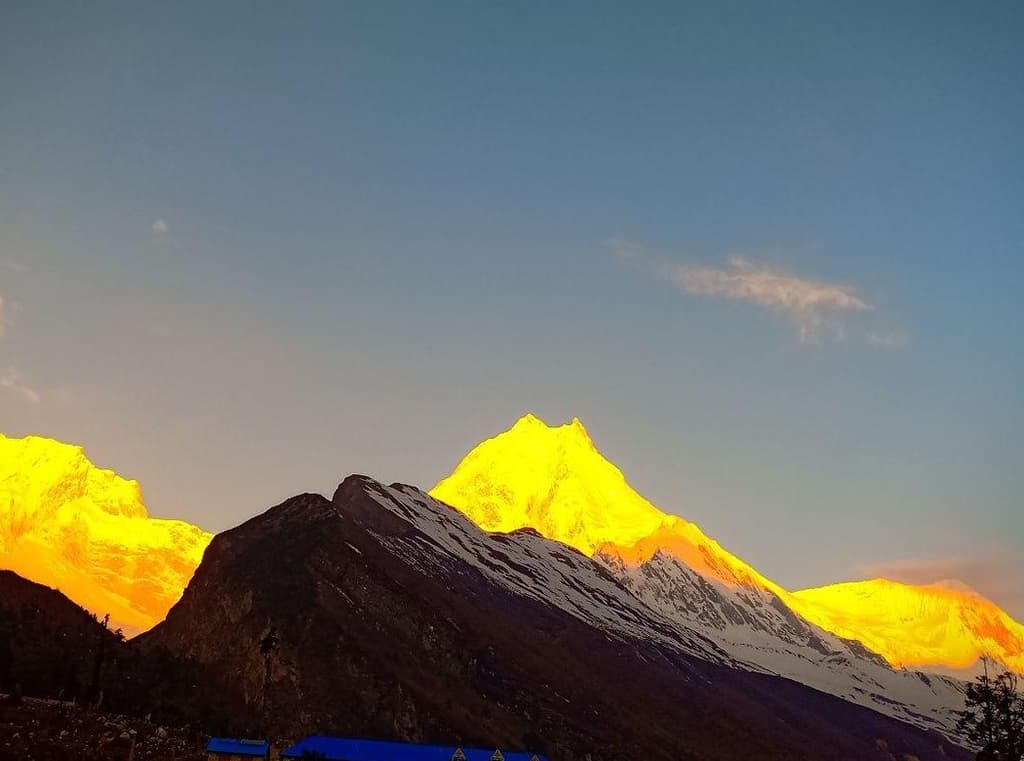

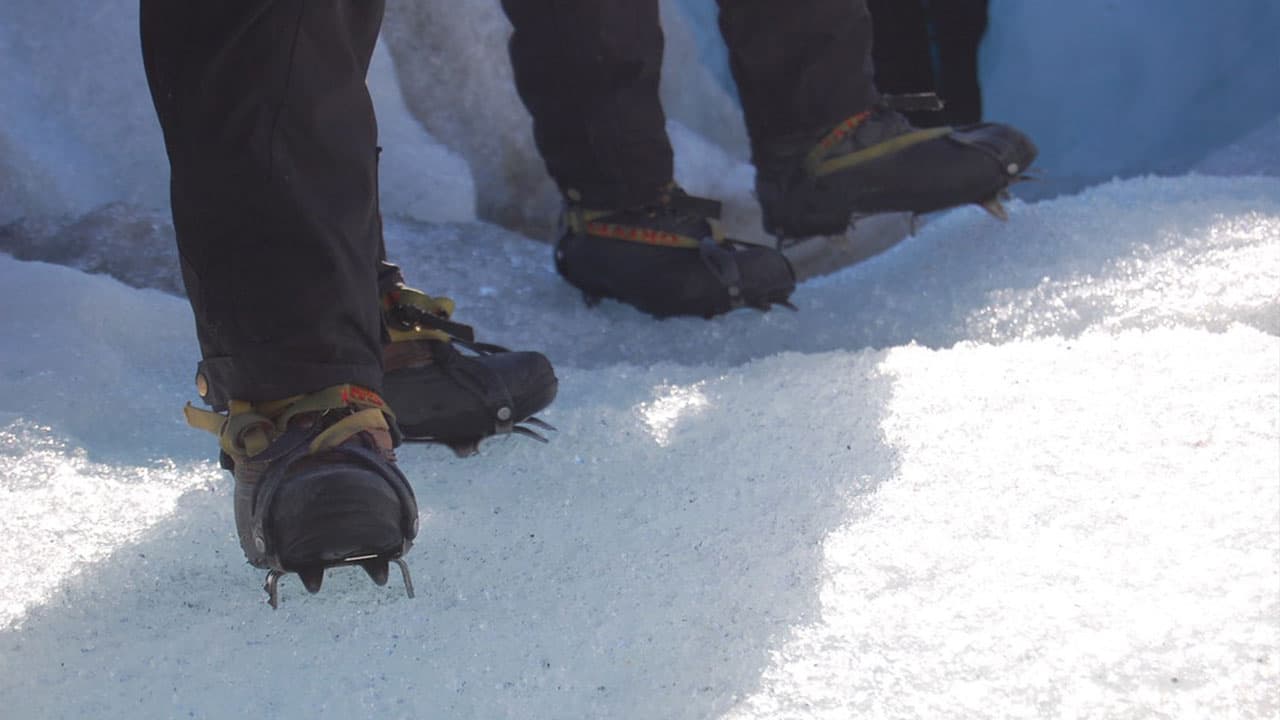
The Manaslu Circuit Trek is one of Nepal's most beautiful and remote high-altitude trekking routes. It is known for its raw landscapes, traditional villages, and the dramatic crossing of Larkya La Pass (5,160 meters). Unlike more commercial treks such as Everest Base Camp or Annapurna Circuit, Manaslu remains less crowded and more wilderness-oriented. Because of this, many trekkers are drawn to this route. But, there is an underlying question while considering this circuit route: Do you need crampons for Manaslu Circuit Trek?
This question is important because trail conditions on Manaslu can change significantly depending on the season, recent snowfall, and temperature. Much of the trek follows dry trails, suspension bridges, and rocky paths. The higher sections, especially near the Larkya La Pass, can involve snow-covered slopes, frozen surface, and icy descent, particularly in early spring, late autumn, and winter. These conditions can turn a normal trekking day into a challenging and risky crossing if proper traction is missing.
Many first-time Manaslu trekkers assume crampons are always necessary because of the altitude, while others underestimate the terrain and believe trekking boots alone are enough. The reality lies somewhere in between. Crampons are not required throughout the trek, but in certain conditions, they can be the difference between a safe, confident crossing and a dangerous situation at high altitude.
In this blog, we will discuss the breakdown of the real need for crampons on the Manaslu Circuit based on season, trail conditions, and practical trekking experience. By the end, you will clearly understand when crampons are essential, when they are optional, and when you can safely trek without them, allowing you to plan smarter and safer.
Understanding Manaslu Circuit Terrain and Key Risk Zones
To understand whether crampons are necessary for the Manaslu Circuit, it is important to first understand the terrain and trail conditions along the route. The Manaslu Circuit is not a single type of trail. The trail changes dramatically as you move from low altitude villages to high alpine passes. This variation is what makes the trek rewarding, but it also creates potential risk zones where traction can become important.
In the lower sections of the trek, from Soti Khola to Namrung, the trail mostly consists of dirt paths, stone staircases, forest tracks, and river crossings. These areas are generally dry and stable, even in the colder seasons. Crampons are never needed in these lower elevations, as snow and ice are extremely rare here.
As the trek continues toward Samagaon and Samdo, the landscape becomes more open and alpine. The trails here are often rocky and exposed, with occasional patches of snow during the colder months. While these sections usually do not require crampons, early morning frost and overnight freezing can create slippery surfaces, especially near streams and shaded areas.
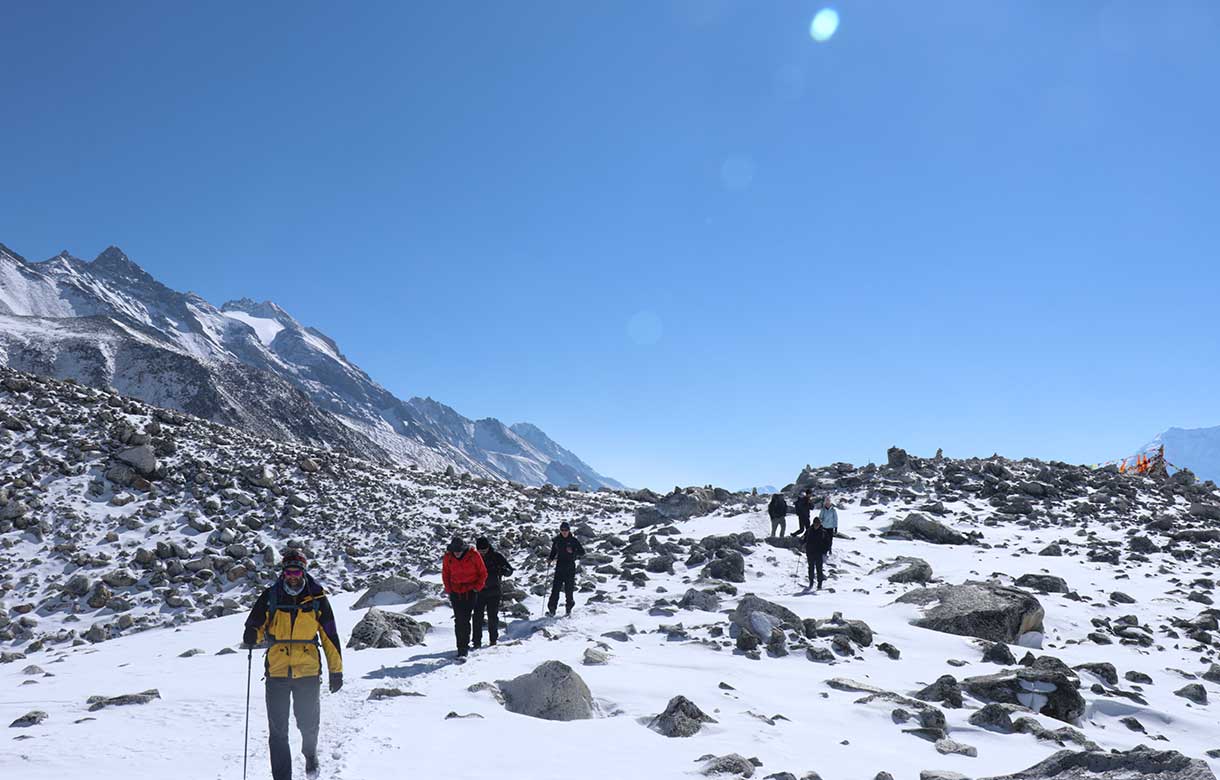
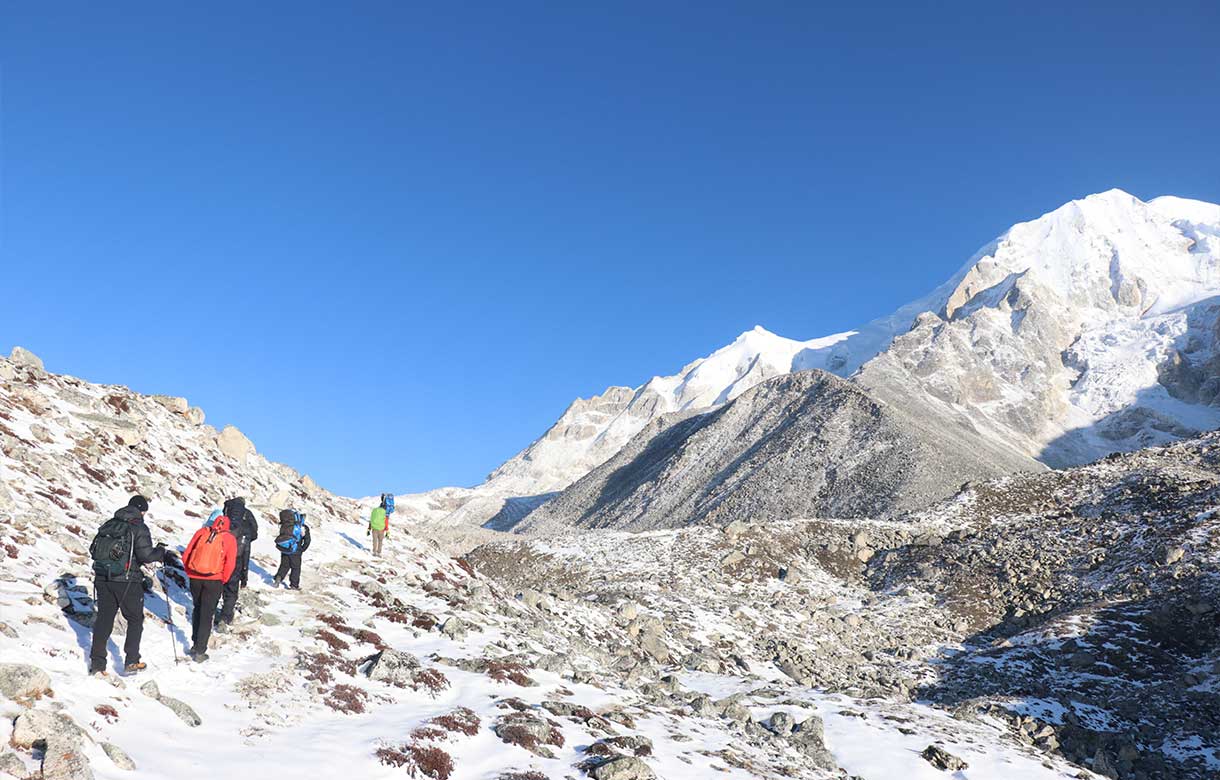
The most critical section of the entire Manaslu Circuit is the crossing of Larkya La Pass (5,160m). The high mountain pass is where crampons may become necessary. The approach to the pass often involves walking over snowfields, compacted ice, and wind-blown slopes. The descent from the pass can be even more challenging as trekkers must navigate steep, icy sections where slipping is a real risk.
Other smaller risk zones include areas between Dharmasala (Larkya Phedi) and Bimthang, where lingering snow can remain well into spring or appear early in winter. These sections are short, but they can be dangerous without proper traction.
Overall, most of the Manaslu Circuit does not require crampons. However, the high altitude terrain around Larkya La Pass is unpredictable and bleak, and this is where understanding the trail conditions becomes crucial for safe trekking.
Snow and Ice Conditions on the Manaslu Circuit
The need for crampons on the Manaslu Circuit depends largely on when you trek. Snowfall, temperature, and trail conditions change significantly with the seasons, especially at higher elevations. Understanding seasonal patterns helps trekkers prepare realistically instead of carrying unnecessary gear without lacking essential safety equipment.
Spring (March to May)
Spring is one of the most popular seasons for the Manaslu Circuit. In early spring, especially in March and early April, snow from winter still covers Larkya La Pass and the surrounding areas. Mornings are cold, and snow often refreezes overnight, creating icy surfaces. During this period, microspikes or light crampons are often needed, particularly for the early morning pass crossing. By late May, most snow begins to melt, and crampons become optional depending on recent snowfall.
Monsoon (June to August)
The summer and Monsoon season (June to August) brings warmer temperatures even at high altitudes. Snow rarely remains on the trail, including at Larkya La Pass. Instead of ice, trekkers face wet, muddy, and slippery paths due to rain. During this season, crampons are not required at all, though good trekking boots with a strong grip are essential.
Autumn ( September to November)
This fall season is considered the best and most stable season for the Manaslu Circuit. September and October usually offer dry trails, clear skies, and minimal snow. In these months, the crampons are generally not needed. However, in late November, early winter snow can fall at higher elevations, and sudden weather changes may create icy sections near the pass. In such cases, carrying lightweight traction can be a smart precaution.
Winter (December to February):
The winter season presents the most challenging conditions. Heavy snowfall, extreme cold, and frozen trails make Larkya La Pass risky or sometimes impassable. During winter, crampons are mandatory, and only experienced trekkers with proper gear and guides should attempt the trek. Depending on the weather, you may need to use microspikes even at high-altitude stretches besides the Himalayan pass. Crampons are not a year-round requirement, but seasonal awareness is key for making the right decision.
Do you Really Need Crampons for Larkya La Pass?
Larkya La Pass stands at an altitude of 5,160 meters. It is the highest and most challenging point of the Manaslu Circuit Trek. This is the section where most trekkers seriously consider whether crampons are necessary. The answer is not a simple yes or no. It depends on current snow conditions, temperature, and recent weather patterns.
Most trekkers cross Larkya La early in the morning, often starting before sunrise from Dharmasala (Larkya Phedi). At this time, temperatures are well below freezing. Even if there is no fresh snowfall, melted snow from the previous day often refreezes overnight, creating hard-packed ice. Without proper traction, these icy sections can be extremely slippery, especially on sloped terrain.
The ascent to the pass usually involves walking over snow-covered paths and compacted snowfields. With these slopes, which are not technical, slipping here can result in long slides or injuries due to the altitude and terrain. The descent toward Bimthang is often more dangerous than the climb. This section can be steep, icy, and exposed, making stable footing essential.
In good autumn conditions or late spring after snow has melted, many trekkers successfully cross Larkya La without crampons. However, after fresh snowfall or during cold months, guides frequently recommend microspikes or crampons to ensure safety. Even experienced trekkers benefit from extra traction at high altitude, where balance and reaction time are reduced.
From a practical perspective, carrying lightweight crampons or microspikes is a small weight trade-off for significant safety benefits. Many trekking agencies advise trekkers to carry them as a precaution, especially in spring and late autumn.
In conclusion, crampons are not always required for Larkya La Pass, but when snow or ice is present, they become a critical safety tool rather than an optional accessory.
Types of Crampons and Microspikes Suitable for the Manaslu Circuit
Not all crampons are the same, and for a trekking route like the Manaslu Circuit, choosing the right type of traction is more important than choosing the strongest or heaviest option. The terrain on Manaslu does not require technical mountaineering equipment, but it does demand reliable grip on snow and ice, especially near Larkya La Pass.
-
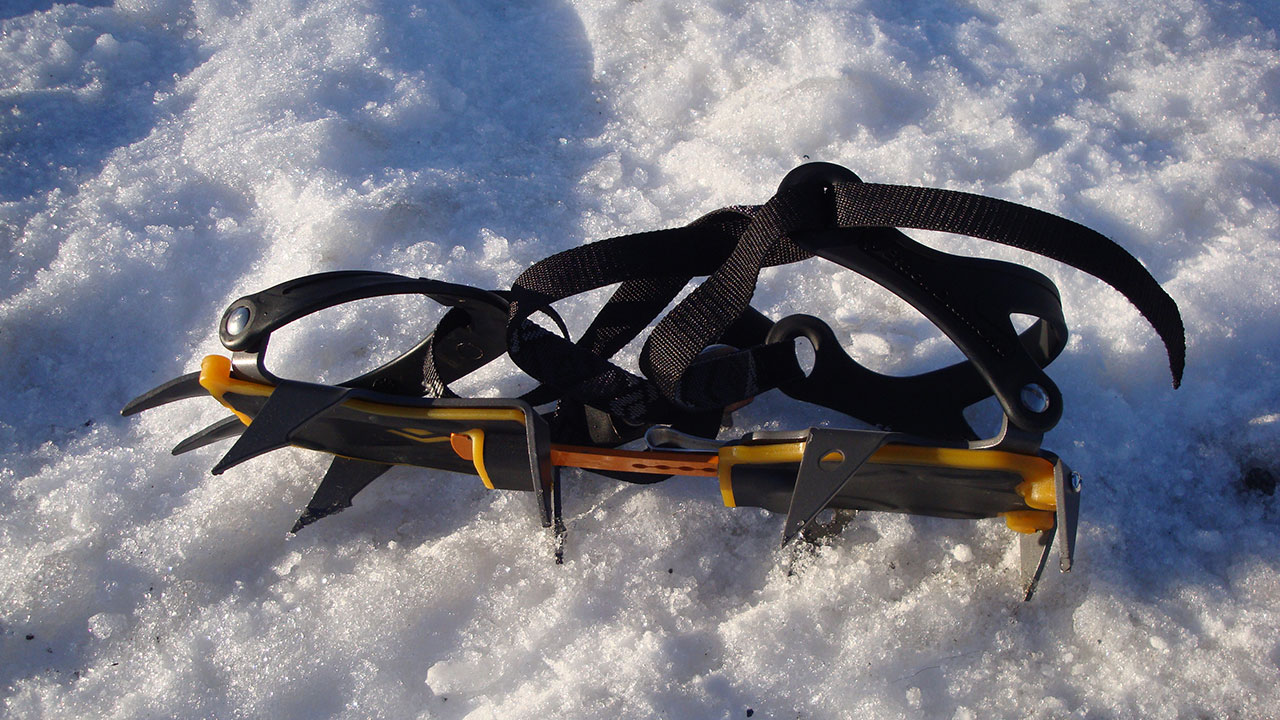
Microspikes: For most trekkers, microspikes are the most practical and commonly used option. Microspikes are lightweight traction devices with small metal spikes connected by chains and rubber harnesses. They fit easily over standard trekking boots and provide excellent grip on hard-packed snow and icy trails. They are easy to put on and remove, which is useful when snow appears only in short sections. Because of their lightweight and simplicity, microspikes are what most Manaslu guides recommend during spring and late autumn.
-
Full Crampons: These types of crampons have longer and sharper spikes. They are generally designed for steep, technical ice and mountaineering routes. For the Manaslu Circuit, full crampons are rarely necessary unless trekking in deep winter conditions or after heavy snowfall. They are heavier, require more rigid boots, and can feel excessive for normal trekking terrain.
-
Understanding Boot Compatibility: Understanding the boot compatibility is very important when deciding what kind of crampons or microspikes you are bringing for the adventure. Microspikes work well with normal trekking boots, while full crampons often require stiff or semi-mountaineering boots. For this reason alone, microspikes are a more realistic choice for most trekkers.
In Nepal, microspikes can be rented or purchased in Kathmandu, and some trekking agencies also provide them if conditions require. The cost is relatively low compared to the safety benefit they provide. Overall, for the Manaslu Circuit, lightweight microspikes offer the best balance between safety, comfort, and practicality, making them ideal choices for most seasons.
What Happens If You Trek Without Crampons When They Are Needed?
By now, you probably are clear on whether do you need crampons for Manalu Circuit or not. But, happens if you show up with crampons for this circuit route? Trekking the Manaslu Circuit without crampons or microspikes when snow and ice are present can significantly increase both risk and physical strain, especially at high altitude. While some trekkers choose to rely solely on their trekking boots, this decision can lead to avoidable problems, particularly around Larkya La Pass.
The most immediate danger is slipping and falling on icy or hard-packed snow. At high altitude, even a minor fall can result in serious injury because the body reacts more slowly due to fatigue and reduced oxygen levels. Slipping on a steep or exposed section can also lead to long, uncontrolled slides, which are difficult to stop without proper traction.
Without crampons, trekkers often move much more slowly and cautiously. The increased exposure to cold, wind, and altitude-related stress, especially during early morning pass crossings. Spending extra time above 5,000 meters can increase the risk of altitude sickness even for well-acclimatized trekkers.
There is also a strong mental impact. Fear of slipping can reduce confidence, disturb balance, and drain energy. Many trekkers report that icy sections become mentally exhausting when they lack proper grip, turning what should be a manageable crossing into a stressful experience.
In some cases, trekkers without crampons are forced to turn back or ask for assistance, especially if guides decide conditions are unsafe. This can lead to itinerary changes, additional costs, or missed opportunities to complete the trek.
Ultimately, crampons or microspikes are not about skills or toughness; they are about risk management. When conditions demand them, trekking without traction unnecessarily increases dangers and reduces enjoyment. Carrying lightweight traction is a simple precaution that can prevent accidents and ensure a safer and more confident Manaslu Circuit experience.
Do Trekking Agencies Provide Crampons? Guide & Porter’s Perspective
From a local guide and porter perspective, crampons or microspikes are seen as safety backup gear, not mandatory equipment for every trekker on the Manaslu Circuit. Most experienced Manaslu guides assess the need for crampons based on current trail conditions, recent snowfall, and temperature rather than following a fixed rule.
In most trekking seasons, especially autumn and late spring, agencies do not automatically include crampons in standard Manaslu Circuit packages. However, reputable trekking companies closely monitor weather updates and reports from guides already on the trail. If snow or ice is expected at Larkya La Pass, guides often arrange microspikes in advance or carry a few extra pairs for group use.
Porters usually do carry personal crampons for trekkers unless this has been discussed beforehand. This is why communication with your trekking agency is important. Trekkers should ask whether traction devices are available if needed, especially when trekking in March, April, late November, or winter months.
Many guides prefer trekkers to carry their own microspikes as personal gear matters for comfort and safety. In emergencies, guides may share or rotate crampons among group members, but this is not ideal, and it can slow down the crossing.
For restricted areas, treks like Manaslu, where trekking must be done with a licensed guide, the decisions of the guide play a crucial role. If a guide determines crossing the pass is unsafe without crampons, they may delay the crossing, change the itinerary, or turn back for safety reasons.
So, while some agencies can provide crampons when conditions demand them, trekkers should not fully rely on this. Discussing crampon availability before booking and being prepared yourself ensures smoother decision-making and a safer trek overall.
Final Verdict: Do You Need Crampons for Manaslu Circuit?
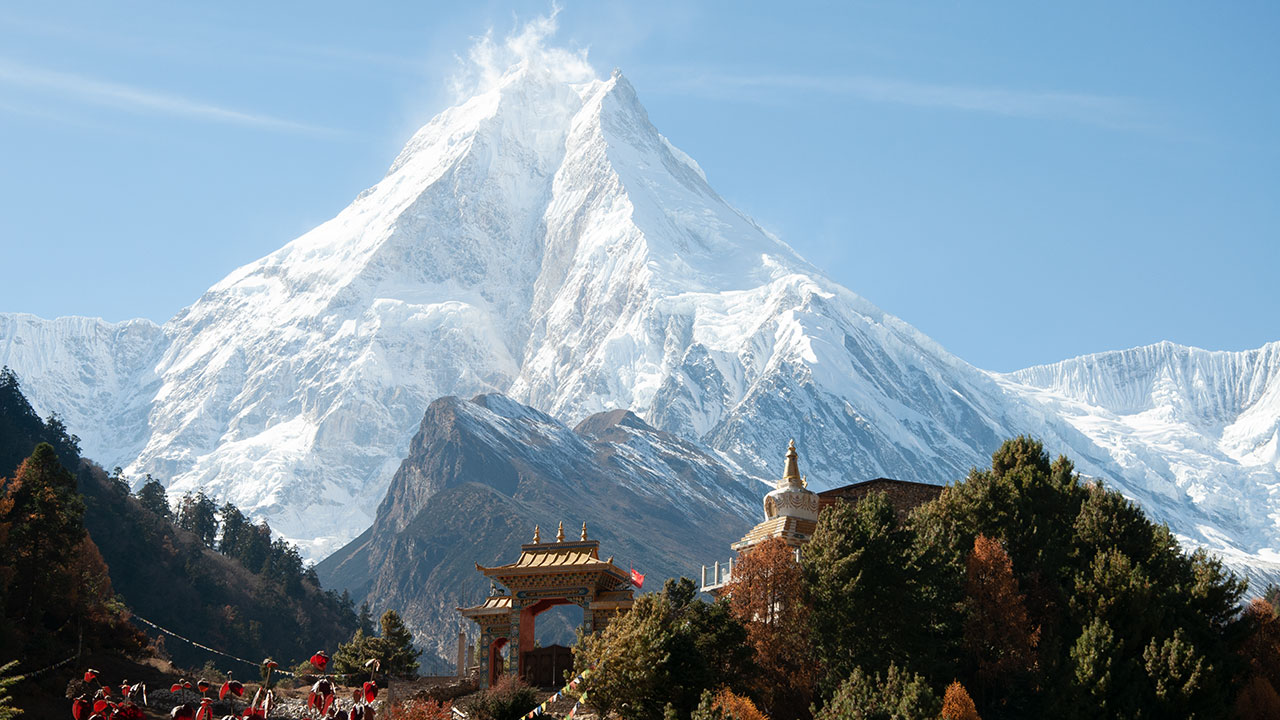
So, do you need crampons for Manaslu Circuit? The most accurate answer is, it depends on the season and current conditions. But carrying lightweight traction is often a wise decision during the trek.
For most of the trek, from lower villages up to Samagaon and Samdo, crampons are not needed at all. The trails are dry, rocky, and dusty, and standard trekking boots are more than sufficient. The real deciding factor is the Larkya La Pass, where snow and ice can appear suddenly, even during otherwise stable seasons.
If you are trekking in early spring (early March) or late autumn (late November), there is a real possibility of encountering icy conditions. In these cases, microspikes are strongly recommended. They are light, easy to carry, and they can dramatically improve safety with confidence during the pass crossing. In winter (December to February), crampons are essential, and the trek should only be attempted by experienced trekkers with proper support.
For Autumn (September to October) and late spring (April and May), most trekkers complete the Manaslu Circuit without using crampons. However, the weather in the high Himalayas is unpredictable. A sudden snowfall can change trail conditions overnight, which turns a safe path into a slippery hazard.
The best approach is simple. You can carry microspikes as a precaution. The added weight is minimal, but the safety benefit is significant. Instead of worrying about whether you will need them, you gain peace of mind knowing that you are prepared for any condition.
In conclusion, crampons are not always necessary for the Manaslu Circuit Trek, but being prepared for snow and ice is what separates a risky trek from a smart, confident, and enjoyable adventure.