

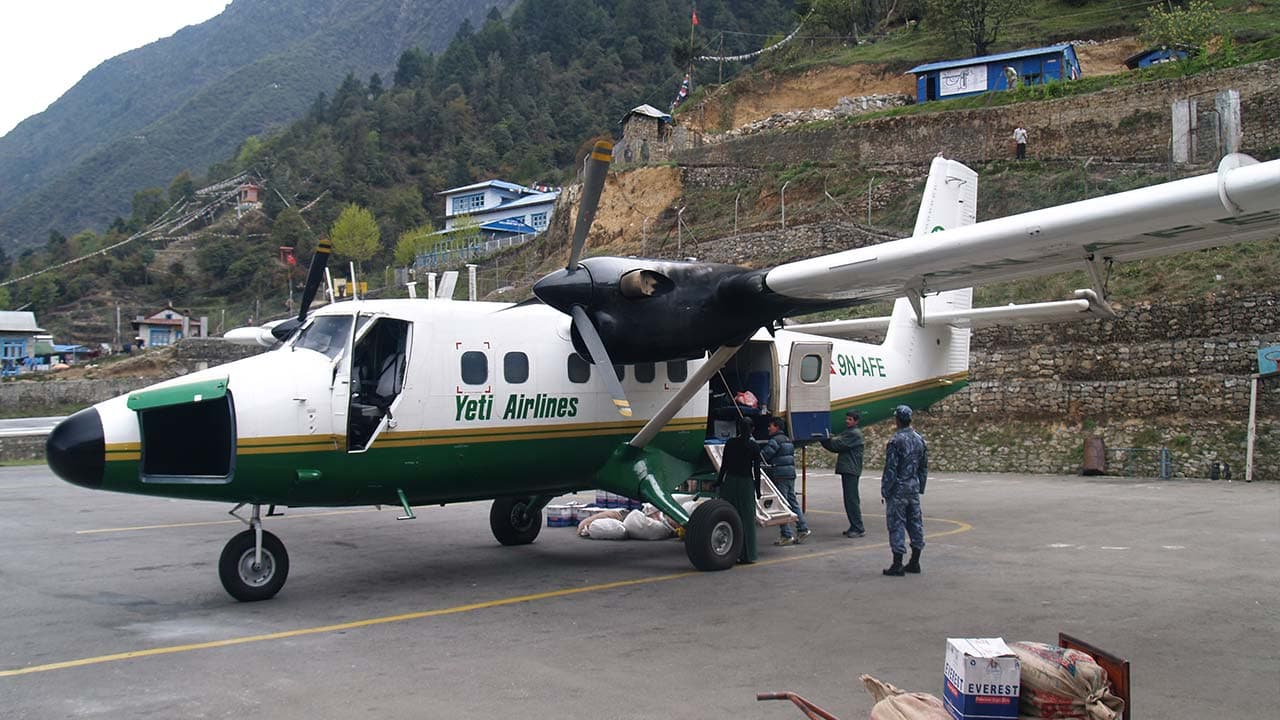
The flight to Lukla is one of the most famous mountain flights in the world. Many trekkers take this flight to start the Everest Base Camp trek. The first-time travellers to this thrilling starting point of the Everest region often ask the same question: Is the Lukla flight scary?
The airport in Lukla is called Tenzing-Hillary Airport. It sits high in the Himalayas at about 2,860 meters (9,383 feet) above sea level. It is surrounded by tall mountains, deep valleys, and changing weather. Because of these things, the airport is often listed as one of the most challenging airports in the world.
The runway at Lukla is very short. It is only about 527 meters (1,729 feet) long and has a slope of about 11-12 percent. This slope actually helps airplanes slow down when they land. Even though the airport looks scary in pictures, thousands of trekkers safely fly there every year to start their adventure in the Everest region. Pilots who fly to Lukla must have special training and experience in mountain flying.
In this blog, we will explore why the Lukla flight feels scary, how safe it really is, and what alternative ways you can use to reach Everest if you do not want to take the flight.
Why the Lukla Flight Looks Scary?
Many travelers feel nervous when they hear about the Lukla flight. This is because the airport looks very different from normal airports. First, the runway is very short. Lukla's runway is about 527 meters long, while large international airports usually have runways longer than 3,000 meters. This means pilots must land very carefully and stop the plane quickly.
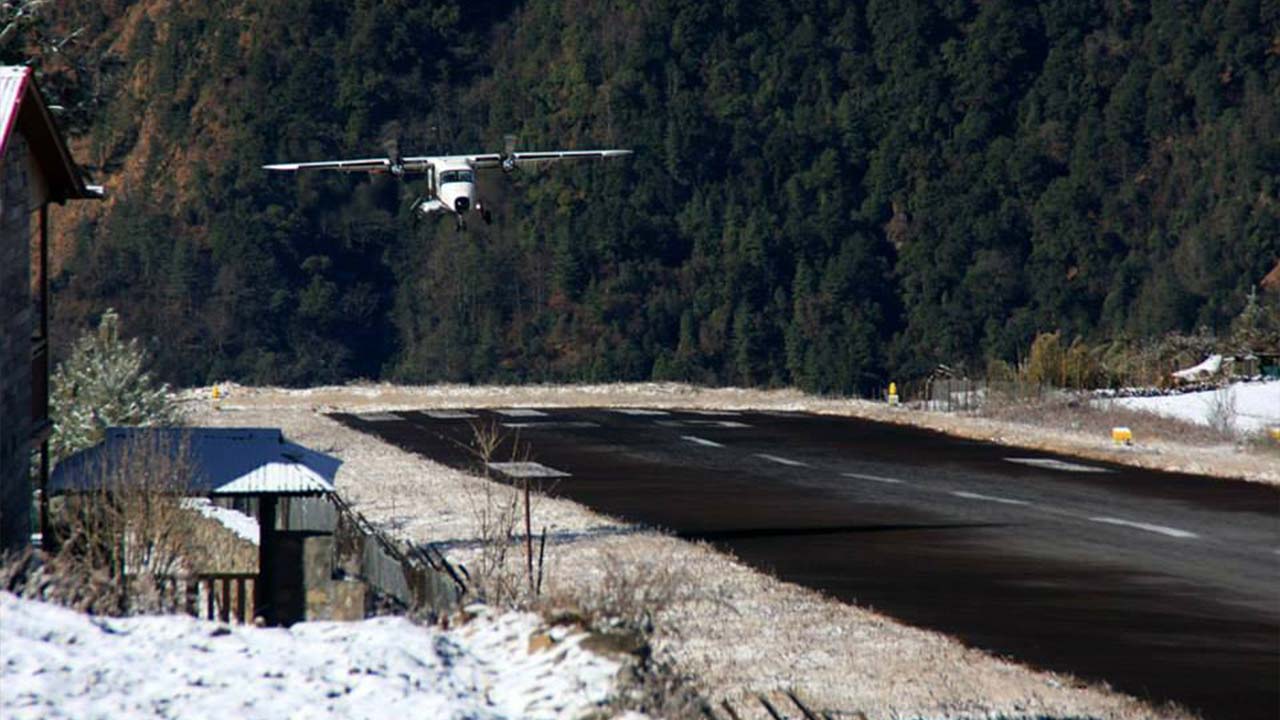
Another reason the flight looks scary is the slope of the runway. The runway goes uphill when planes land. This may look strange, but it is actually designed for safety. When the plane lands, gravity helps slow it down. The airport is surrounded by high mountains. Pilots must fly through narrow valleys before landing. There is very little space for mistakes. In most airports, a plane can try landing again if something goes wrong. At Lukla, there is no go-around option, which means pilots must land on the first attempt.
The weather is another factor. The Himalayan weather changes quickly. Fog, wind, or clouds can appear suddenly. Because of this, flights sometimes get delayed or canceled. Even though all these things sound scary, the airport is built specially for mountain flying. Only small aircraft designed for short runways are allowed to land there.
So while the Lukla flight may look frightening, the airport's design and the pilot's experience make it safer than many people think.
How Safe is the Lukla Flight, Actually?
Many people think Lukla flights are extremely dangerous, but the real data tells a different story. First, the number of flights to Lukla is very high. During the trekking seasons of spring and autumn, more than 100 flights may operate in a single day.
Even with so many flights, accidents are rare. Some reports suggest the accident rate is around 1 incident per 50,000 flights, which shows that most flights operate safely. One reason for this safety is the strong pilot training rules. Pilots who want to land in Lukla must meet special requirements. They must have experience flying in the mountains and complete many short-runway landings before they can operate at this airport.
For example, pilots must complete:
- At least 100 short takeoff and landing flights
- Training flights with an instructor
- Specific experience flying in Nepal's mountain regions
Flights also follow strict weather rules. If visibility is poor or winds are too strong, flights are cancelled immediately. Most Lukla flights also happen early in the morning. Morning weather is usually more stable in the Himalayas.
Because of these safety rules, thousands of trekkers safely reach Lukla every year. While the flight may feel exciting and a little scary, the aviation system works carefully to reduce risks as much as possible.
Why Weather Causes Lukla Flight Delays?
One of the biggest challenges of flying to Lukla is the weather. The Himalayas have unpredictable weather. The sky can be clear in Kathmandu but cloudy in Lukla. Sometimes fog appears suddenly and covers the runway.
Pilots must see the runway clearly when landing because Lukla airport does not use advanced landing systems. Flights are done using visual flight rules, which means pilots must rely on what they can see. If the weather becomes bad, the flight can not land safely. In these cases, the aircraft must return to Kathmandu or wait for better conditions.
Another reason weather affects the flight is the high altitude. Lukla airport sits at about 2,860 meters above sea level. At this height, the air is thinner. Thin air affects how aircraft engines perform and how planes slow down during landing. Strong winds are also common in mountain areas. These winds can make landing difficult for small aircraft.
Because of these factors, flights to Lukla usually operate in the early morning between 6 AM and 9 AM. Morning weather is calmer and clearer. For trekkers, this means delays are sometimes normal. Some travelers may need to wait one or two days for good weather. Even though delays can be frustrating, they are actually a sign that safety is the top priority.
The Experience of Flying to Lukla
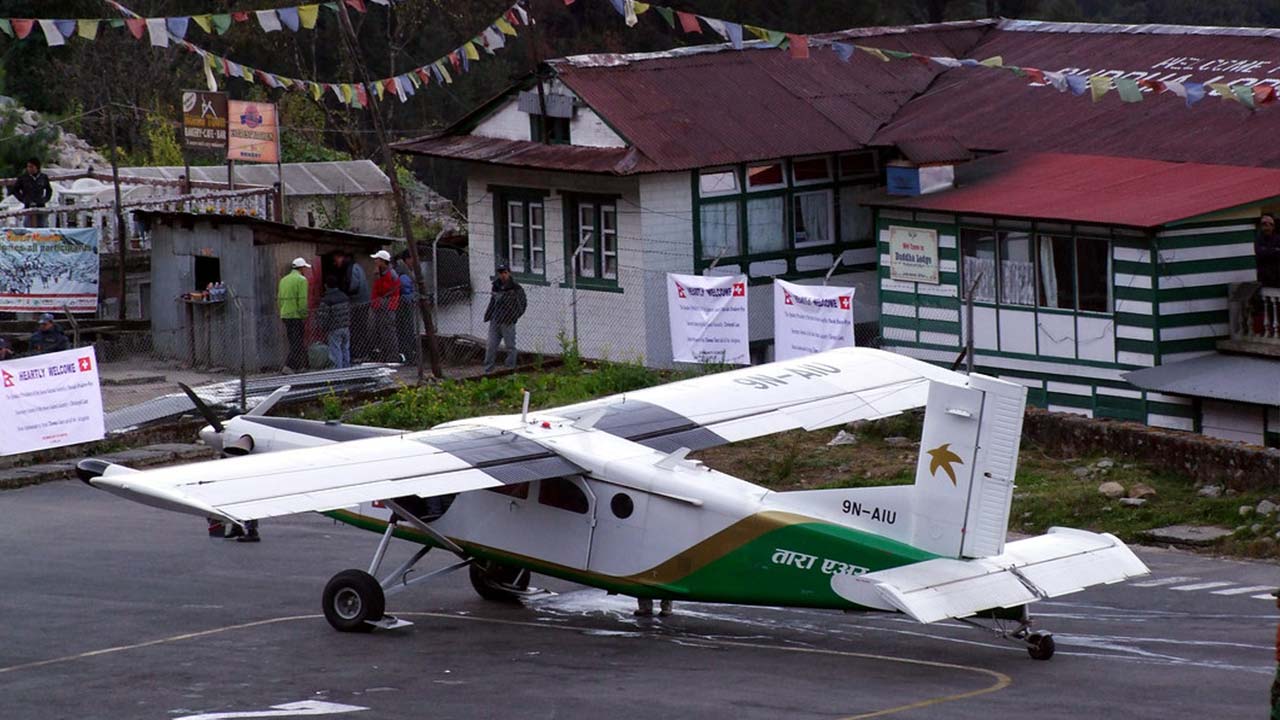
For many trekkers, the Lukla flight becomes one of the most memorable parts of their trip. The flight usually takes about 30 to 40 minutes from Kathmandu. The aircraft used for this route are small propeller planes like Twin Otter or Dornier. These places carry around 15 to 20 passengers.
After takeoff, passengers can see amazing views of the Himalayas. Snow-covered peaks, deep valleys, and beautiful mountain villages appear below the plane. Because the aircraft is small, passengers may feel more movement than on larger airplanes. This can make the flight feel exciting or a little scary for first-time travelers.
As the plane approaches Lukla, the mountains appear very close. The pilot carefully guides the aircraft through a narrow valley before aligning with the runway. The landing itself happens quickly. The plane touches the runway and moves uphill to stop. Many trekkers say their hearts beat fast during the landing. But once the plane stops, passengers often feel excited and proud.
For most travelers, the Lukla flight is not just transportation. It is the beginning of an unforgettable Himalayan adventure.
Why Some Trekkers Avoid the Lukla Flight?
Many trekkers take the Lukla flight because it is the fastest way to reach the Everest region. However, some travelers choose to avoid this flight for different reasons. Here are some common reasons why trekkers prefer other routes.
-
Fear of Short Runway: Lukla Airport has a very short runway compared to normal airports. The runway is about 527 meters long, located between mountains. When travelers see photos or videos of planes landing there, it can look frightening. Because of this, some trekkers feel nervous about flying to Lukla and decide to avoid the flight.
-
Frequent Weather Delays: Weather in the Himalayas changes very quickly. Fog, clouds, and strong winds can appear suddenly around Lukla Airport. Because of this, flights are often delayed or canceled. Sometimes trekkers must wait one or two days for clear weather. Travellers who have tight schedules prefer to avoid this risk and choose road routes instead.
-
Small Aircraft Experience: Flights to Lukla usually use small propeller planes that carry about 15 to 20 passengers. These aircraft can feel different from large international airplanes. Passengers may feel more movement during the flight, especially if there is wind. Some trekkers feel uncomfortable in small planes and prefer not to take this flight.
-
Desire for a Longer Trekking Experience: Some trekkers enjoy longer adventures, and they want to explore more villages and landscapes. Starting the trek from places like Salleri, Phaplu,u or Jiri allows travelers to walk through forest, farms, and traditional villages before reaching Lukla.
-
Better Altitude Adjustment: Starting from a lower altitude helps the body to adjust slowly to high mountain conditions. This gradual climb can reduce the risk of altitude sickness, which is another reason some trekkers choose to avoid flying directly to Lukla.
In the end, avoiding the Lukla flight is a personal choice. Some trekkers prefer a slow route because they want more time to explore nature, villages, and culture. Others simply feel comfortable travelling by road and trekking gradually. No matter which option you choose, the journey to the Everest region is still an incredible and unforgettable adventure.
Alternative 1: Drive to Phaplu and Trek
One of the best alternatives to flying to Lukla is travelling to Phaplu by road and starting the trek from there. Phaplu is a small town in the Solukhumbu district, located at about 2,413 meters above sea level. Trekkers who do not want to take the Lukla flight often choose this route because it feels safer and more relaxed. Instead of flying into the mountains, travellers can enjoy a scenic drive through the hills of Nepal and then begin their trek slowly.
The journey from Kathmandu to Phaplu usually takes about 8 to 10 hours by jeep or local vehicle, depending on road conditions. The drive passes through beautiful countryside with green hills, rivers, farms, and small villages. This road trip itself becomes a part of the adventure. Trekkers get a chance to see rural life in Nepal, meet local people, and experience the landscape before reaching the Everest region.
After reaching Phaplu, trekkers start walking towards Lukla. The trail goes through villages such as Ringmo, Taksindu, Nuntha La, and Kharikhola. These areas are less crowded than the Lukla route, so the trekking experience feels peaceful and authentic. Along the trail, trekkers can see forests, traditional houses, terraced farms, and beautiful mountain views.
This route usually adds two to three extra trekking days before reaching Lukla. However, the extra time helps trekkers adjust slowly to the altitude, which can reduce the risk of altitude sickness. Many trekkers enjoy this gradual start because it allows them to experience more culture, nature, and local hospitality before joining the main Everest Base Camp trail.
Alternative 2: Drive to Salleri and Trek
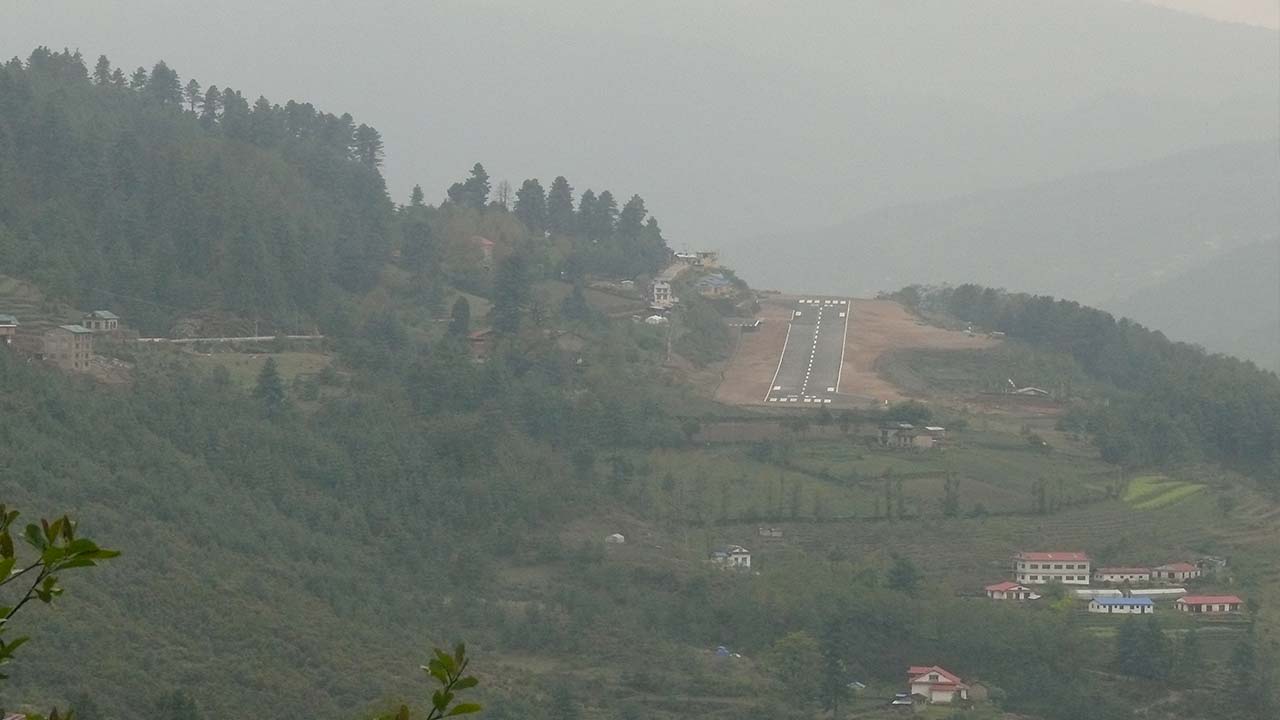
Another popular alternative to the Lukla flight is travelling to Salleri and starting the trek from there. Salleri is the administrative center of the Solukhumbu district, and it is located at about 2,362 meters above sea level. Many trekkers choose this route because Salleri is connected to Kathmandu by road, making it possible to reach the Everest region without flying.
The journey from Kathmandu to Salleri usually takes around 9 to 13 hours by jeep or bus, depending on road conditions and weather. The road passed through beautiful hills, rivers, and small towns. During the drive, travelers can see farming terraces, forests, and traditional Nepali villages. The journey itself becomes part of the adventure and gives trekkers a closer look at rural life in Nepal.
After arriving in Salleri, trekkers begin walking toward Lukla. The trekking route passes through villages such as Ringmo, Taksindu, Nunthala, and Bupsa before finally reaching Lukla. These villages are less crowded than the main Lukla trail, so trekkers can enjoy a quieter and more peaceful trekking experience. Along the way, they can see traditional Sherpa culture, local farms, and beautiful natural scenery.
Starting the trek from Salleri usually adds three to four extra trekking days compared to flying directly to Lukla. However, this longer route had important benefits. Trekkers gain altitude slowly, which helps the body adjust to the high mountains and reduces the risk of altitude sickness.
For travelers who want to avoid the Lukla flight and enjoy a longer adventure, the Salleri route is a great option. It offers beautiful scenery, cultural experiences, and a gradual start to the Everest Base Camp journey.
Alternative: Helicopter Flights to Lukla
Helicopter flights are another alternative for trekkers who want to reach Lukla without using the regular small airplane flight. Many travelers choose this option when they want a faster and more flexible way to start their Everest trek. Helicopters are often used during busy trekking seasons when Lukla flights are delayed because of weather conditions.
A helicopter flight from Kathmandu to Lukla usually takes about 40 to 45 minutes. During the journey, passengers can enjoy incredible views of the Himalayan mountains, deep valleys, rivers, and small villages. Because helicopters fly lower than airplanes, travelers often get clearer and closer views of the beautiful landscape. For many trekkers, this short flight becomes an unforgettable part of their Everest adventure.
One advantage of helicopter travel is flexibility. Helicopters can sometimes operate when small airplanes cannot fly due to visibility issues. When Lukla flights are cancelled for many hours or even days, trekkers often choose helicopter services to avoid waiting too long in Kathmandu or Ramechhap. This option helps travelers keep their trekking schedule on track.
Another option is shared helicopter flights, where several passengers share the cost of one helicopter. Instead of paying for a private charter, trekkers can split the price with other travelers heading to Lukla. Many trekking companies help to arrange shared helicopter seats when flights are cancelled during the peak seasons of spring and autumn.
However, helicopter flights are more expensive than regular Lukla flights. The price can be several times higher than a normal airplane ticket. Weather conditions can still affect helicopter travel, so flights may sometimes be delayed.
Despite the higher cost, many trekkers choose helicopters for comfort, speed, and amazing aerial views of the Himalayas.
Helpful Tips for Choosing the Best Way to Reach the Everest Region
Before starting your journey to the Everest region, it is helpful to think carefully about how you want to travel. Different options work better for different trekkers. Here are some simple tips that can help you to choose the best route.
-
Think About Your Schedule: If you have limited time for your trip, the Lukla flight may be the best option. The flight takes less than an hour and allows you to begin your trek quickly. However, if you have extra days, starting the trek from places like Salleri or Phaplu can give you a longer and more enjoyable adventure.
-
Consider Your Comfort With Flying: Some people feel nervous about mountain flights, especially when flying in small aircraft. If you are not comfortable with this, it may be better to travel by road and start trekking from a lower village. This can make the journey feel more relaxed and less stressful.
-
Plan for Possible Weather Delays: Weather in the Himalayas can change quickly. Lukla flights sometimes get delayed or canceled because of fog or strong winds. It is always smart to keep one or two days extra in your travel plan in case flights do not operate on time.
-
Choose a Route That Helps With Altitude Adjustment: Starting the trek from a lower place allows your body to slowly adjust to higher altitudes. This gradual climb can help to reduce the risk of altitude sickness. Routes from Salleri, Phaplu are good examples of gradual trekking routes.
-
Think About the Kind of Experience You Want: Some trekkers want fast and direct trips, while others enjoy longer journeys with fewer crowds. Road routes and longer treks offer more chances to see villages, forests, and local culture along the way.
These tips can help you to choose the safest and most enjoyable way to reach the Everest region.