
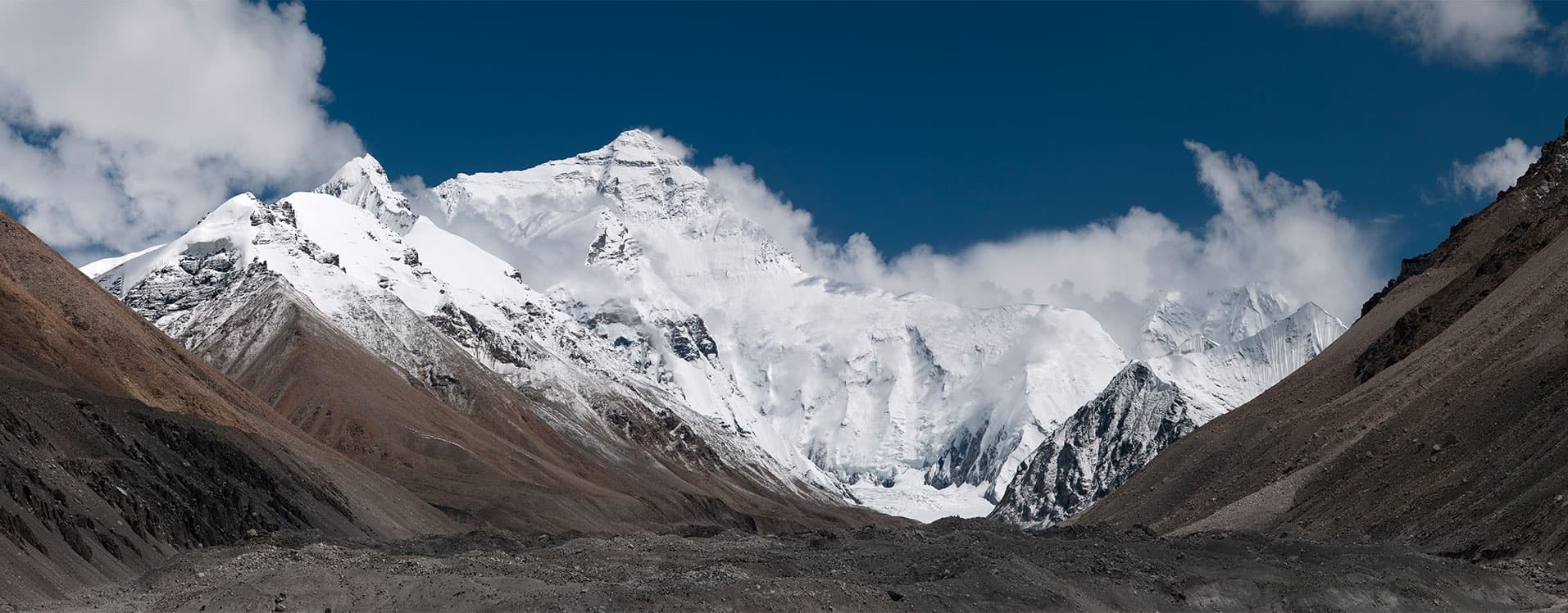
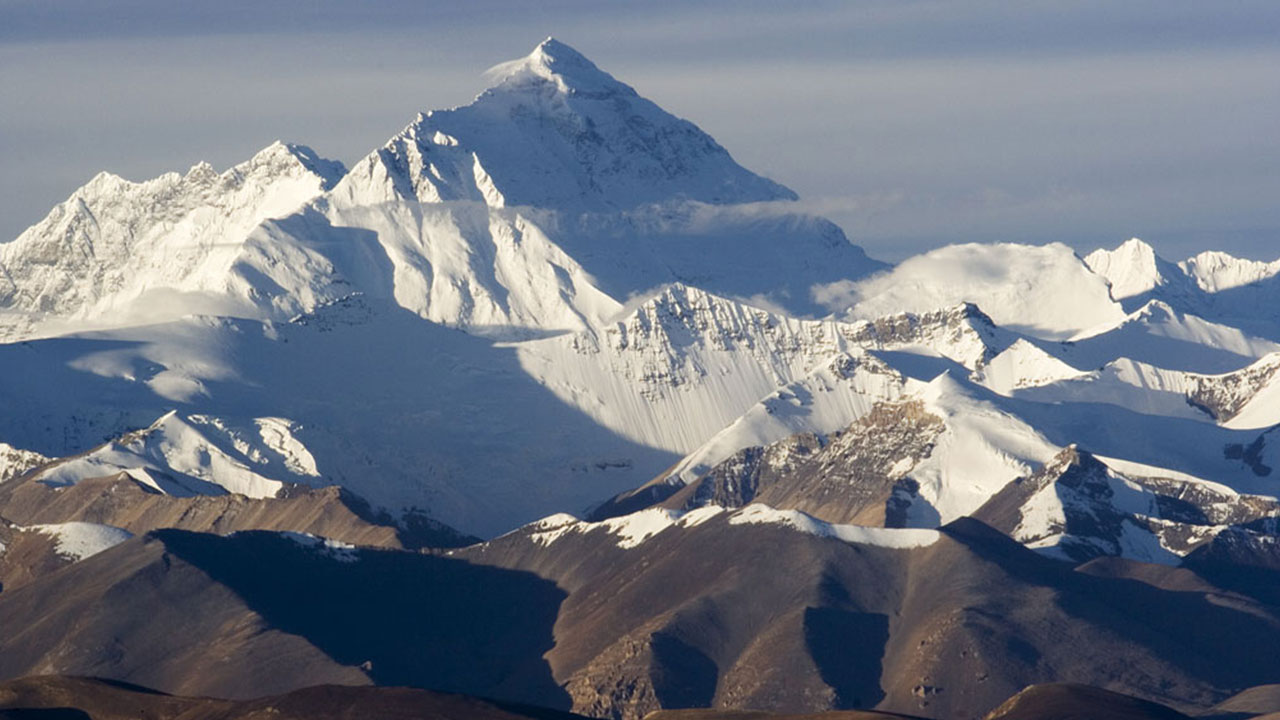
The North Face of Mount Everest is one of the most dangerous and respected climbing faces in the world. It rises sharply on the Tibetan side of Mount Everest, in China. It is known for its steep walls, extreme cold, and powerful winds. Unlike the more commonly used southern routes in Nepal, the North Face presents a harsher and more technical challenge, even for experienced climbers.
Mount Everest stands at 8,848.86 meters (29,031.7 feet). The North Face alone rises more than 3,000 meters almost vertically from the base. The massive wall of ice and rock leaves little room for error. Temperatures here can drop below -40°C. The strong jet stream winds frequently hit this side of the mountain, which makes climbing conditions unpredictable and dangerous.
The North Face gained early attention during the British expeditions of the 1920s, long before Everest was officially summited. At that time, Tibet was the only accessible route to the mountain. The climbers were drawn to this side despite its risk. These early attempts helped build the North Face's reputation as a place of mystery, courage, and human ambition.
Today, the North Face of Mount Everest symbolizes the purest form of high-altitude mountaineering. It is not just a route to the summit but a true test of endurance, skill, and mental strength.
Geographic Location and Physical Features
The North Face of Mount Everest is located on the Tibetan side of the mountain within the Tibet Autonomous Region of China. This side of Everest is reached through Tibet. It leads to the North Base Camp, which sits at an elevation of around 5,150 meters (16,900 feet). From this point, the North Face rises dramatically, forming a massive wall of ice, snow, and exposed rock.
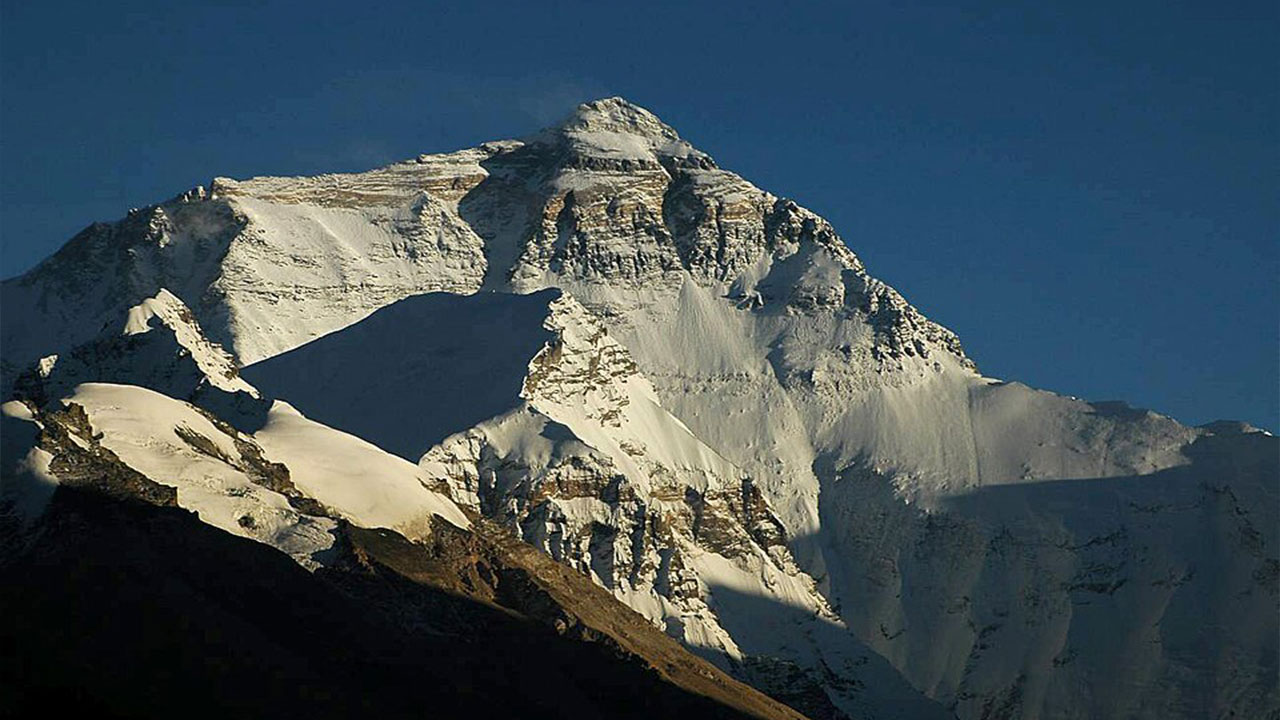
One of the most striking features of the North Face is its sheer vertical rise. The face climbs more than 3,000 meters from the base to the upper ridges. It makes one of the steepest and most intimidating faces on the mountain. Large sections consist of hard blue ice, which is mixed with unstable rocks that are prone to falling mostly during warmer daylight hours.
The North Face is also extremely exposed to strong winds. The powerful jet stream often hits this side directly. Especially above 7,000 meters, here wind speeds can exceed 100 km per hour. These winds increase cold exposure and make climbing and rope fixing very difficult.
Another key physical challenge is the lack of natural shelter. Unlike the south side, which has the Khumbu Icefall and Western Cwm, the North Face offers few protected areas for rest or emergency stops. There are constant threats of avalanches, ice collapse, and rockfalls.
The geographic and physical features of the North Face make it one of the most demanding high-altitude climbing environments on Earth because of its location, steep terrain, and harsh weather.
History of the North Face Exploration
The history of the North Face of Mount Everest is closely linked to the earliest attempts to climb the world's highest mountain. Before Everest was first successfully summited in 1953, all major expeditions approached the mountain from the north, through Tibet. At that time, Nepal was closed to foreign climbers, which made the North Face and North Ridge the only possible access routes.
The first major explorations began in the early 1920s, led by British expeditions. These teams carefully studied the North Face, mapping glaciers, ridges, and possible climbing lines. Climbers such as George Mallory became deeply associated with this side of Everest. Mallory took part in several expeditions and famously disappeared in 1924, along with Andrew Irvine, during a summit attempt from the North Ridge. Their fate remained a mystery for decades and added to the legend of the North Face.
Although the early climbers lacked modern equipment, weather forecasts, and high-altitude clothing, they pushed higher with each expedition. These attempts proved that the mountain could be climbed, but they also revealed how dangerous the North Face truly was. Many climbers suffered from frostbite, exhaustion, and altitude sickness.
After China reopened Tibet to climbers in the 1960s, interest in the North Face returned. In 1960, a Chinese team made the first confirmed ascent of Everest from the North. Since then, the North Face has remained a symbol of exploration, courage, and extreme mountaineering. It has earned respect for both its history and its difficulty.
Key Routes on the North Face of Mount Everest
The North Face of Mount Everest has several well-known climbing routes. Each of them is known for its own level of difficulty and risk. These routes are considered more technical and demanding than most routes on the south side of the mountain. Only experienced climbers with strong high-altitude skills usually attempt them.
-
North Ridge Route (Standard Route From Tibet)
The North Ridge Route is the most commonly used path to the summit from the North side. It begins at North Col around 7,000 meters and follows a long, exposed ridge toward the summit. This route includes the famous Three Steps. These are the rocky sections near the summit that require technical climbing. Fixed ropes are often used, but strong winds and extreme cold make progress slow and exhausting. Despite being the “standard” route, it is still very dangerous.
-
Norton Couloir
The Norton Couloir is a steep snow and ice gully located high on the North Face. It was first climbed by Norton and Somervell in 1925 without supplemental oxygen. This route is extremely exposed and prone to icefall. Few climbers choose this route today due to its high risk and technical difficulty.
-
Hornbein Couloir
The Hornbein Couloir is even steeper and more direct than the Norton Couloir. It involves sustained ice climbing at extreme altitude. It offers almost no safe resting areas. Only elite climbers attempt this route, often as part of advanced or alpine style ascents.
-
Direct North Face
The Direct North Face is rarely climbed and considered one of the hardest lines on Everest. It requires ice experts and mixed climbing skills. It has a very low success rate.
Each of these routes highlights why the North Face is known as a true test of endurance, skill, and mental strength.
Major Challenges and Dangers of the North Face
The North Face of Mount Everest is considered one of the most dangerous areas on the mountain due to its extreme natural conditions and technical difficulties. Even well-trained climbers face serious risks throughout the ascent.
One of the biggest challenges is extreme cold. Temperatures on the North Face can fall below -40°C, especially above 8,000 meters, which is known as the Everest Death Zone. In such cold, exposed skin can freeze within minutes, leading to severe frostbite. At the same time, climbers must manage their energy carefully to avoid exhaustion.
Another major danger is strong winds. The North Face is directly exposed to the jet stream, and wind speeds can exceed 100 Km per hour. This wind increases cold exposure, reduces visibility, and makes it difficult to move or handle climbing equipment. High winds can also delay summit attempts for days.
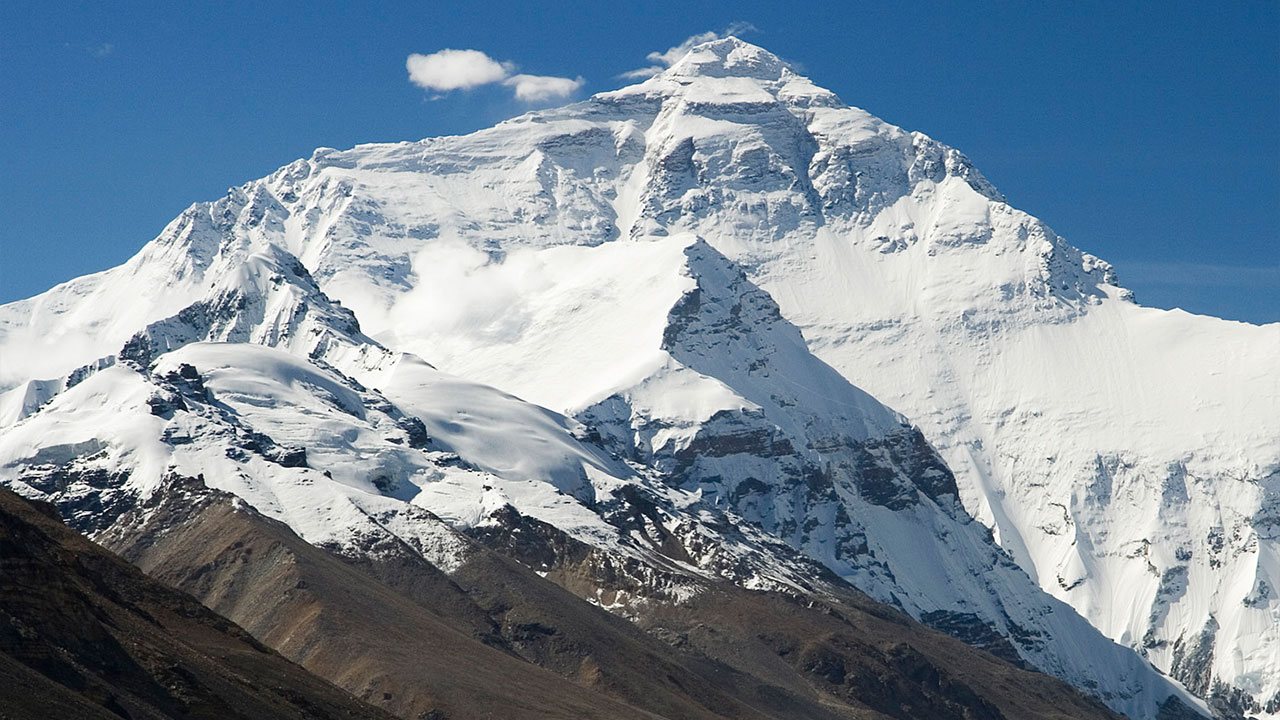
The terrain itself is extremely hazardous. The North Face includes steep ice slopes, vertical rock sections, and unstable snowfields. Icefall and rockfalls are constant threats, especially during daylight hours when temperatures slightly rise. Avalanches can occur without warning, making route timing very crucial.
Altitude-related illnesses are also a serious concern. Low oxygen levels can cause altitude sickness, cerebral edema, and pulmonary edema, all of which can be fatal if not treated quickly. Rescue options on the North Face are very limited due to the steep terrain and remote location.
Because of these combined dangers, climbers on the North Face must rely on careful planning, experience, teamwork, and mental strength. Small mistakes in this environment can quickly turn life-threatening situations. These are the reasons why the North Face is respected as one of Everest's toughest challenges.
Famous Climbers and Notable Ascents
The North Face of Mount Everest has been climbed by some of the most respected and courageous mountaineers in history. These climbers helped shape Everest's legacy and proved that the north side could be climbed despite its extreme danger.
One of the most famous names linked to The North Face is George Mallory. Along with Andrew Irvine, Mallory attempted to reach the summit in 1924 via the North Ridge. They were last seen climbing high on the mountain before disappearing. Whether they reached the summit remains unknown, while making their attempt, one of the greatest mysteries in mountaineering history.
A breakthrough came in 1960, when a Chinese expedition successfully reached the summit from the North side. This marked the first confirmed ascent of Everest via the North Route, which proved that the mountain could be climbed from Tibet.
Another historic moment occurred in 1980, when Reinhold Messner completed the first solo ascent of Everest without supplemental oxygen, climbing from the North side. His climb is considered one of the greatest achievements in high-altitude mountaineering. This climb shows what was possible with exceptional skill and mental strength.
In later years, elite climbers have continued to attempt harder routes on the North Face, including the Norton and Hornbein Couloirs. These ascents are rare and highly respected due to the extreme technical skills required.
Together, these climbers and expeditions have made the North Face a symbol of human endurance, exploration, and courage at the highest level.
North Face vs South Face
Mount Everest can be climbed from two main sides. One is the North Face from the Tibet side, and the other is the South Face from the Nepal side. Both of these routes are extremely challenging. But the North Face is widely considered more difficult and demanding.
The south face is accessed through Nepal, and it is the most popular route. It has better infrastructure, including well-established camps, more Sherpa support, and easier access to rescue services. The terrain includes the Khumbu Icefall, which is dangerous, but climbers benefit from relatively protected areas like the Western Cwm. Because of this support, the success rate on the south side is higher.
In contrast, the North Face offers fewer natural shelters and harsher weather conditions. It is more exposed to strong winds from the jet stream, which makes climbing slower and more exhausting. The terrain on the North Face includes long, steep ice slopes and technical rock sections near the summit. Rescue operations are extremely limited due to the steepness and remote location.
Another major difference is the level of crowding. The south side often sees heavy traffic during climbing season, while the north side is less crowded due to stricter regulations and higher technical demands.
Overall, climbers choose the North Face for its pure technical challenge, while the South Face is often selected for better logistics and support. This comparison clearly explains why the North Face holds a reputation as Everest's tougher side.
Permits, Access, and Modern Climbing Conditions
Climbing the North Face of Mount Everest requires special permits and careful planning because it lies within the Tibet Autonomous Region of China. All the climbers must obtain a permit issued by the Chinese authorities. Climbing is only allowed during specific seasons when conditions are considered safer.
Access to the North Face begins with travel through Tibet, usually by road from Lhasa to Everest Base Camp (North Base Camp). Unlike the Nepal side, which involves long trekking approaches, the Tibetan base camp is reachable by vehicle, making initial access easier. However, this doesn't reduce the difficulty of the climb itself.
The North Base Camp sits at around 5,150 meters, while the Advance Base Camp (ABC) is located approximately 6,400 meters. From ABC, climbers move through a series of high camps toward the North Col and summit ridge. Modern expeditions use fixed ropes, weather forecasting, and Supplemental oxygen, but the North Face remains highly exposed and technically demanding.
Climbing seasons on the north side are usually limited to short weather windows, mainly in late April and May. Chinese authorities also impose strict rules regarding team size, waste management, and safety standards.
Despite modern equipment and regulations, the North Face has not become easier. Strong winds, extreme cold, and limited rescue options continue to make it one of the most serious challenges in high-altitude mountaineering until today.
Why the North Face of Everest Still Matters Today?
The North Face of Mount Everest continues to hold great importance in modern mountaineering. It represents the purest form of challenge on the world's highest mountain. Even with the modern equipment, better weather forecasts, and improved climbing techniques, the North Face has not lost its seriousness or danger.
The side of Everest matters because it tests a climber's true skill, experience, and mental strength. Unlike more commercial routes, the North Face demands technical ability, careful decision-making, and strong self-reliance. There is little room for mistakes, and help is often far away.
The North Face is also deeply connected to the history of Everest exploration. Early expeditions, legendary climbers, and historic ascents all began here, giving this face lasting cultural and Historical value.
Finally, the North Face of Mount Everest plays an important role in ongoing discussions about ethics, safety, and sustainability in high-altitude climbing. Its difficulty naturally limits crowding and reminds the mountaineering world that Everest is not just a destination but a serious and demanding mountain.
For these reasons, the North Face remains one of the most respected and meaningful routes on Mount Everest.