

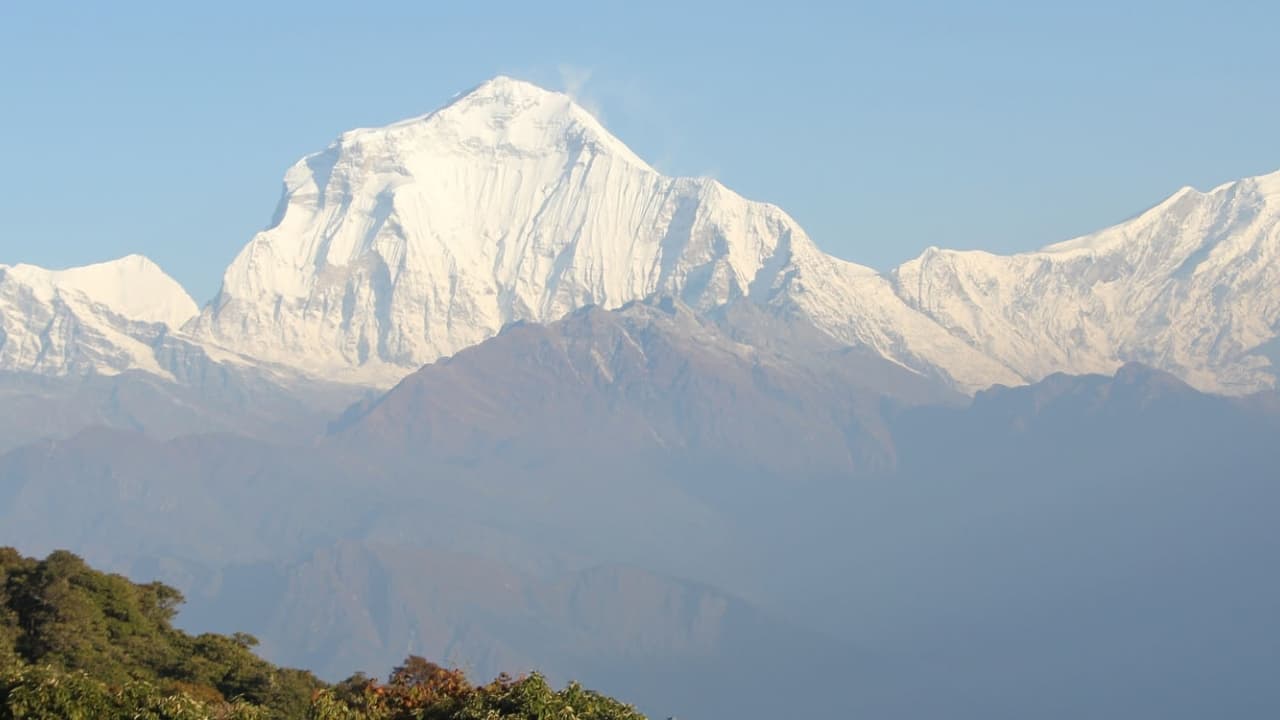
The Poon Hill Trek in October is a beautiful introduction to the Annapurna region, especially when the Himalayas begin to settle into the clear and pleasant conditions of autumn. This short and rewarding trek takes you through peaceful mountain villages, lush forests, and traditional hillside settlements before reaching Poon Hill at 3,210 meters (10,531 feet), one of Nepal’s most famous sunrise viewpoints. October is particularly appealing because the heavy monsoon period has passed, the trails are generally in good condition, and the clearer atmosphere often brings the surrounding mountains into sharp view.
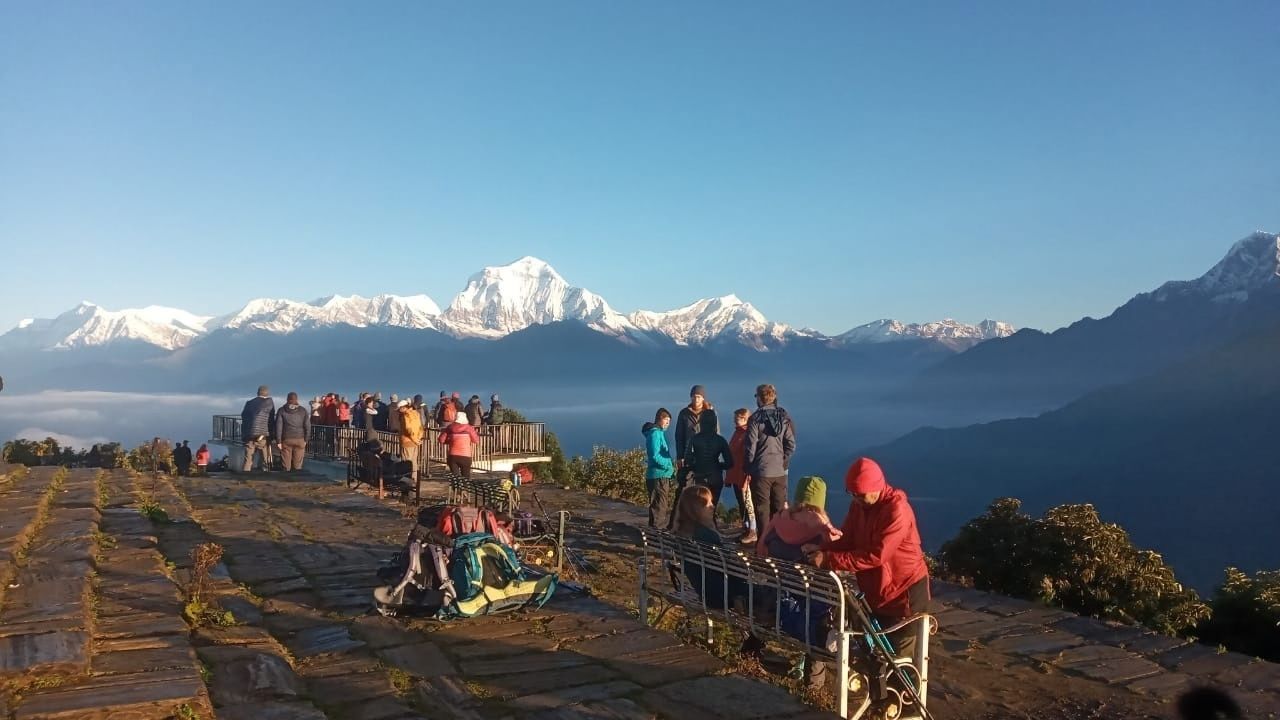
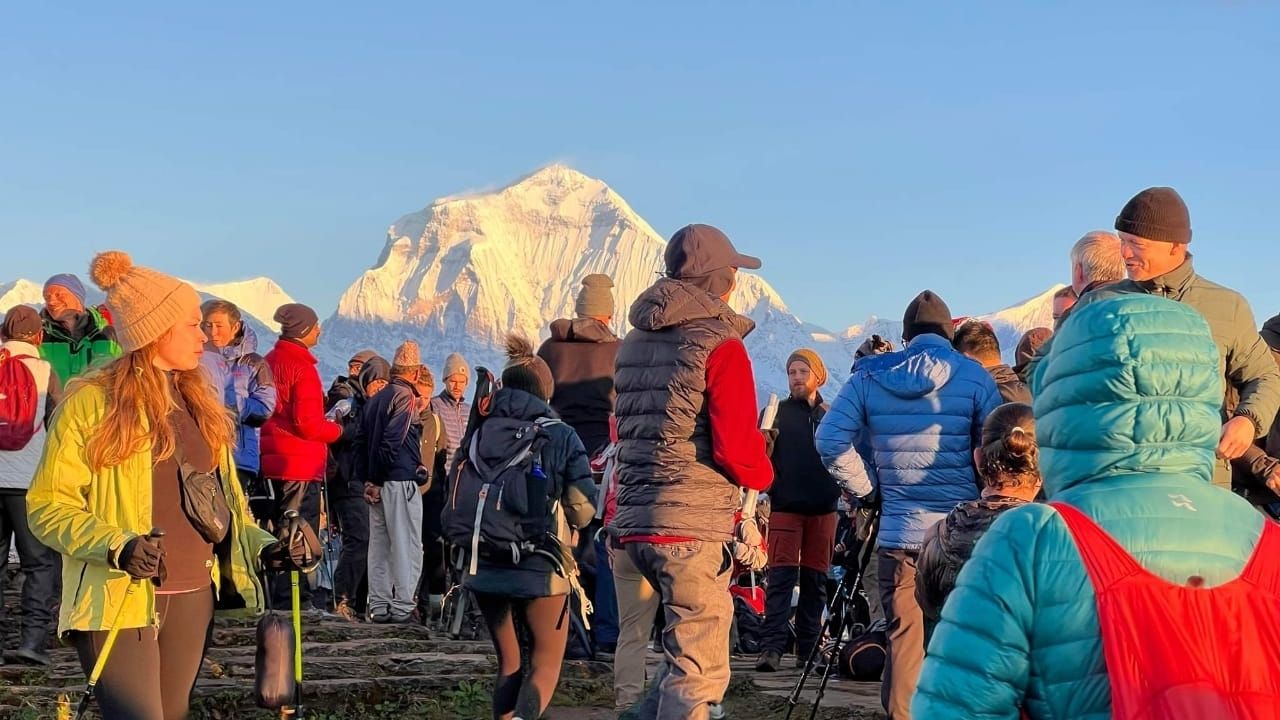
The real magic of the trek comes in the early morning at Poon Hill, when the first rays of sunlight gradually illuminate the enormous Himalayan panorama. Dhaulagiri, Annapurna, Machhapuchhre (Fishtail) and several surrounding peaks create a spectacular backdrop that is especially impressive when October’s clearer skies reveal the mountains in full detail. As one of the busiest months of Nepal’s autumn trekking season, October also brings more trekkers to the Poon Hill trail and greater demand for accommodation.
Even so, the combination of favorable weather, comfortable trekking conditions, and exceptional mountain scenery makes this month a particularly memorable time to experience the Annapurna foothills.
Poon Hill Trek in October– Package Overview
The Poon Hill Trek in October follows a relatively short but varied route through the lower Annapurna region. From Pokhara, the trail heads toward the traditional villages and forested hills around Ulleri and Ghorepani, before the early-morning climb to Poon Hill provides the trek’s defining Himalayan panorama. The route can then continue through Tadapani and Ghandruk, adding more village scenery and cultural encounters before returning to Pokhara.
|
Trek Detail |
October Overview |
|
Duration |
3 to 5 days, depending on the itinerary |
|
Starting Point |
Pokhara |
|
Highest Point |
Poon Hill (3,210m/ 10,531ft) |
|
Typical Walking Time |
Around 5 to 7 hours per day |
|
Main Route |
Pokhara → Birethanti/Nayapul → Ulleri → Ghorepani → Poon Hill → Tadapani → Ghandruk → Pokhara |
|
Landscape |
Rhododendron forests, terraced hillsides, mountain villages and Himalayan foothills |
|
Cultural Experience |
Gurung and Magar villages and traditional mountain communities |
|
Major Attractions |
Poon Hill sunrise, Annapurna range, Dhaulagiri, Machhapuchhre and surrounding peaks |
October adds a particular character to this route. The trails are generally drier following the monsoon, the autumn weather brings better mountain visibility, and the surrounding hills remain fresh and green. At the same time, this is a popular trekking period, so the villages and teahouses along the route have a noticeably livelier atmosphere than during the quieter months.
Poon Hill Trek Weather in October
October brings the Poon Hill Trek into Nepal’s autumn season, with the monsoon largely behind and generally drier, clearer conditions across the Annapurna foothills. Temperatures remain comfortable during the day but become noticeably colder at higher elevations, particularly before sunrise.
|
Location |
Approx. October Temperature |
|
Lower trail areas |
Around 15°C to 25°C during the day |
|
Ghorepani (2,874m/ 9,429ft) |
Around 4°C to 18°C |
|
Poon Hill (3,210m/ 10,531ft) |
Around 2°C to 16°C |
|
Pre-dawn at Poon Hill |
Around 2°C or slightly lower |
Climate data for October gives Poon Hill an average temperature of about 17°C, with average minimum and maximum temperatures of approximately 14°C and 20°C respectively, although temperatures vary with elevation and time of day. Rainfall is considerably lower than during the monsoon months, and October typically provides much better visibility for the Annapurna, Dhaulagiri, and Machhapuchhre ranges. Occasional rain is still possible, particularly toward early October, so a lightweight rain jacket remains useful.
For the early-morning hike to Poon Hill, warm layers, gloves, and a fleece or down jacket are recommended. The combination of cool pre-dawn temperatures and exposed conditions at the viewpoint can feel significantly colder than the daytime weather.
Highlights of Poon Hill Trek in October
October brings together clear Himalayan views, comfortable trekking conditions, fresh autumn landscapes and the lively atmosphere of Nepal’s peak trekking season. The Poon Hill Trek is relatively short, but the combination of mountain scenery, sunrise, forests and traditional villages gives the route considerable variety.
-
Clear Views of the Annapurna and Dhaulagiri Ranges
One of the biggest advantages of trekking to Poon Hill in October is the improved mountain visibility. With the monsoon largely gone, clearer skies and lower humidity often create expansive views across the Annapurna region. From Poon Hill at 3,210 meters, the sunrise viewpoint looks toward Dhaulagiri, Annapurna I, Annapurna South, Machhapuchhre (Fishtail), Hiunchuli, and several surrounding peaks. The clearer autumn atmosphere is particularly valuable around sunrise, when the first light gradually illuminates the snow-covered peaks and creates one of the most memorable viewpoints on the trek.
-
Comfortable Trekking Conditions
October generally provides a good balance between warm daytime temperatures and cool mountain air. The route does not reach extreme Himalayan elevations, with Poon Hill at 3,210 meters as its highest point, so the effects of altitude are considerably less demanding than on high-altitude treks such as Everest Base Camp Trek or the Annapurna Circuit Trek. Drier trails also make the many stone steps and forest paths easier to manage than during the monsoon season. You can expect some long uphill and downhill sections, particularly around Ulleri, Ghorepani and Tadapani, but the weather generally makes these more manageable.
-
Spectacular Poon Hill Sunrise
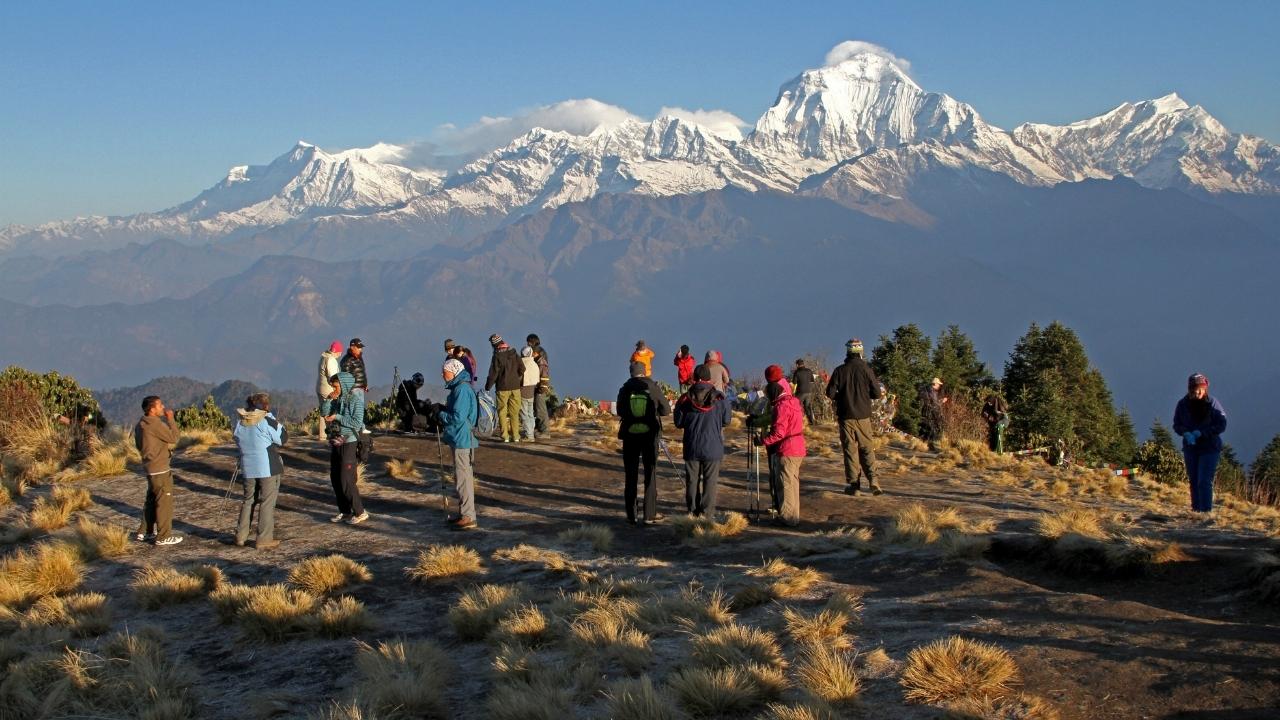
The sunrise from Poon Hill is the defining experience of the trek. The viewpoint sits above Ghorepani and requires an early-morning ascent, but October's generally clear conditions provide a strong chance of seeing the surrounding Himalayan ranges as they catch the first light. The viewpoint's elevation of 3,210 meters also places you high enough for an expansive panorama without requiring a technical climb or acclimatization schedule typical of much higher Himalayan routes.
-
Fresh Autumn Landscapes
October follows the summer monsoon, so the hills around the Poon Hill route remain green and fresh, while the improving weather brings greater clarity to the landscape. Forests, terraced hillsides and mountain slopes create a varied backdrop throughout the trek. The route passes through extensive rhododendron and mixed mountain forests, which are particularly attractive when combined with the clear autumn atmosphere. Although the famous rhododendron blooms are primarily associated with spring, the forests remain an important part of the scenery in October.
-
Lively Autumn Trekking Atmosphere
October is one of Nepal's busiest trekking months, and Poon Hill is among the country's most accessible and popular short treks. The trails, teahouses, and villages therefore have a noticeably more active atmosphere than during quieter seasons. This also means higher demand for accommodation, particularly around Ghorepani and Tadapani, so travelers planning an October trek should arrange their accommodation and overall itinerary in advance.
-
Gurung and Magar Villages and Local Culture
The trek is not only about mountain views. The route passes through traditional settlements where Gurung and Magar communities have a strong cultural presence. Villages such as Ghorepani and Ghandruk add a distinctly local character through traditional houses, mountain hospitality and views into everyday life in the Annapurna foothills. Ghandruk, in particular, is one of the major cultural highlights of the route, combining traditional village architecture with impressive views toward the Annapurna and Machhapuchhre ranges. October's pleasant trekking conditions make it easier to appreciate both the landscape and the cultural side of the journey.
Is October a Good Time for Poon Hill Trek?
October is particularly well suited to the Poon Hill Trek because it combines post-monsoon clarity, relatively dry trails, and comfortable daytime temperatures across the Annapurna foothills. The route remains accessible without the severe cold or high-altitude conditions found on longer Himalayan treks, while the clearer autumn atmosphere significantly improves the chances of enjoying uninterrupted mountain views.
The biggest advantage is visibility around Poon Hill at 3,210 meters, where the sunrise viewpoint looks toward Dhaulagiri, Annapurna, Machhapuchhre (Fishtail), Hiunchuli, and surrounding peaks. October's lower rainfall and reduced cloud cover make these panoramas much more rewarding than during the monsoon months. Trail conditions also improve, with less mud and fewer prolonged wet periods on the stone steps and forest paths.
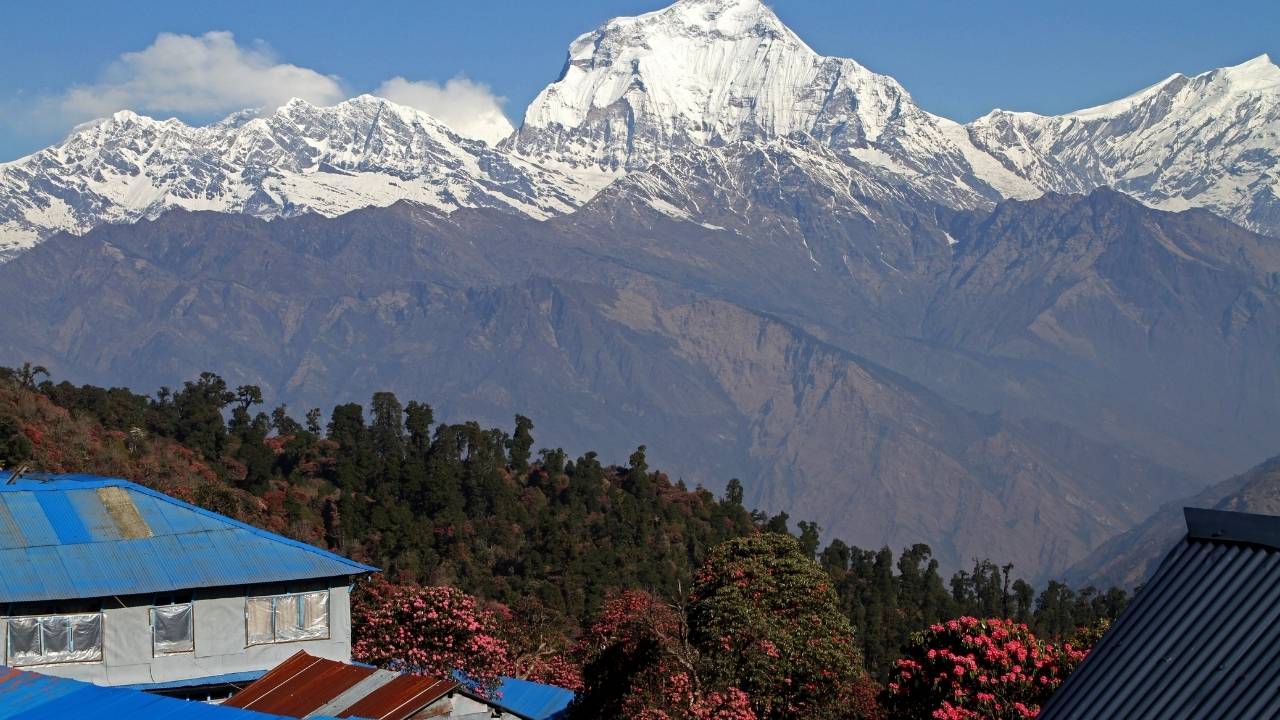
There are a few seasonal considerations. October is peak trekking season, so Ghorepani, Tadapani and other popular stops can be noticeably busier, with higher demand for teahouse accommodation. Early mornings at higher elevations are also cold, particularly for the pre-dawn walk to Poon Hill. Overall, the combination of clear mountain views, dry walking conditions, moderate temperatures, and manageable altitude makes October a particularly favorable period for this short Himalayan trek.
Trek Difficulty
The Poon Hill Trek is a moderate trek, with most of its difficulty coming from steep stone staircases, continuous uphill sections, and repeated descents rather than extreme altitude. The route reaches 3,210 meters at Poon Hill, and a typical 3 to 5 day itinerary involves around 5 to 7 hours of walking per day, depending on the overnight stops and route chosen.
The section from the lower trail toward Ulleri and Ghorepani involves substantial stair climbing and can be physically demanding, while the early-morning climb from Ghorepani to Poon Hill adds another uphill push before sunrise. The descent through Tadapani and Ghandruk also requires good control on uneven steps and downhill terrain. Although the highest elevation is moderate compared with high-altitude treks, the cumulative elevation changes can still be tiring for people unused to mountain walking.
October generally makes the route more comfortable because drier trails reduce mud and prolonged wet conditions, although stone steps may remain slippery after occasional rain. No technical climbing skills are needed, but regular walking, stair climbing, and basic cardiovascular preparation will help you handle the terrain and daily walking hours more comfortably.
Training and Preparation for Poon Hill Trek in October
The Poon Hill Trek does not require intensive mountaineering training, but preparing your legs and cardiovascular fitness beforehand will make the repeated climbs and long stair sections much more comfortable. With typical walking days of 5 to 7 hours and the route reaching 3,210 meters, your Poon Hill Trek in October preparation should focus more on endurance and uphill strength than speed.
Start with regular walking and gradually include 4 to 6 hour hikes before the trek. Stair climbing is particularly useful because much of the route consists of stone steps, especially around Ulleri and Ghorepani. Add squats, lunges, and calf exercises two or three times a week to strengthen the muscles used for climbing and descending. Include some downhill walking in your training as well, since the descent can place considerable strain on the knees and thighs.
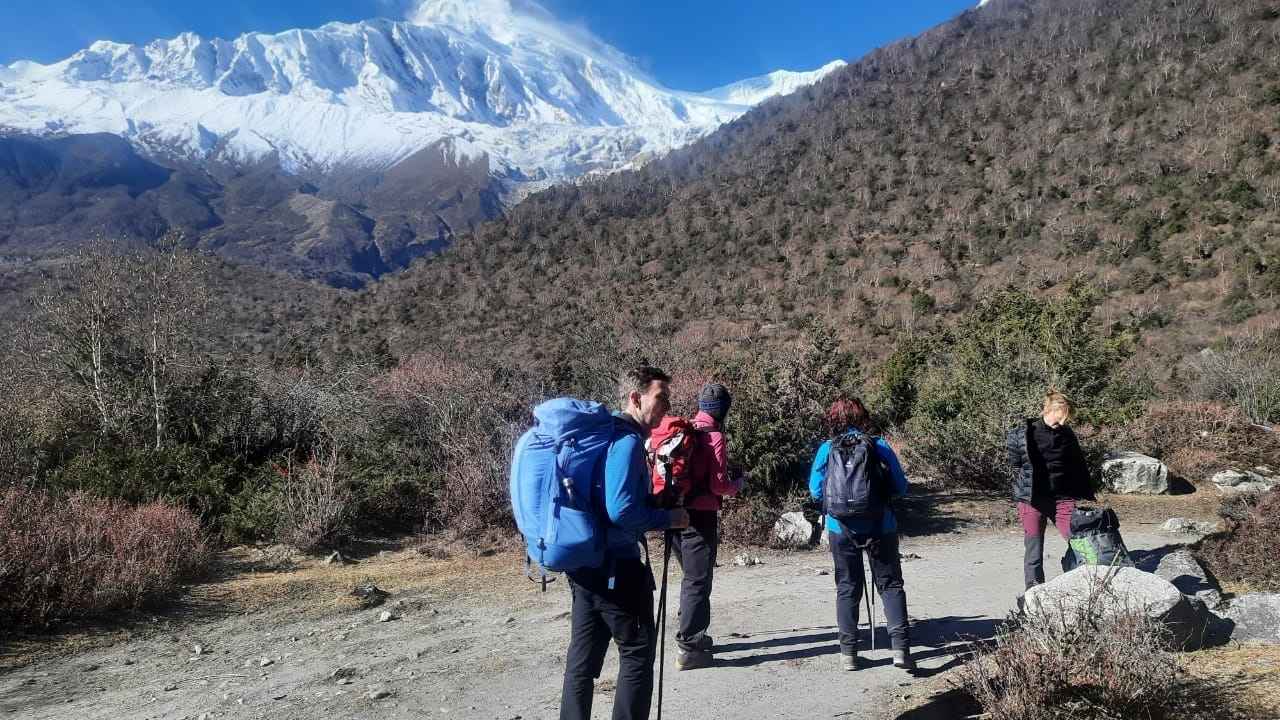
For October, also prepare for the cold early-morning conditions at Poon Hill. Practice walking with your trekking boots and the layers you plan to carry, and make sure your footwear has good grip for uneven stone paths. There is no need to train for technical climbing, but being comfortable with several consecutive hours of uphill and downhill walking will make the trek considerably easier.
What to Pack for the Trek?
Packing for the Poon Hill Trek in October is relatively straightforward, but you need to prepare for both mild daytime conditions and cold early mornings at 3,210 meters. October is generally dry, so heavy monsoon gear is unnecessary, while warm layers remain important for the sunrise at Poon Hill.
Clothing and Layers
-
Moisture-wicking base layers
-
Fleece or warm mid-layer
-
Lightweight down or insulated jacket (essential for Ghorepani and the pre-dawn sunrise)
-
Lightweight waterproof/windproof jacket
-
Trekking T-shirts and long-sleeve shirts
-
Comfortable trekking trousers
-
Thermal leggings or warm trousers for cold mornings
-
Underwear and trekking socks
-
Warm hat, gloves, and buff
Footwear
-
Broken-in trekking shoes or boots with good grip
-
Lightweight camp shoes or sandals
-
Extra trekking socks
-
Optional gaiters if you prefer additional protection from mud or wet vegetation
Backpack and Rain Protection
-
30 to 40 liter daypack if using a porter, or a larger pack if carrying your own equipment
-
Waterproof backpack cover
-
Dry bags or waterproof packing bags
-
Small daypack for valuables and essentials if a porter carries the main luggage
-
Trekking poles for steep ascents and descents
Sun and Personal Protection
-
Sunglasses with good UV protection
-
Sunscreen, preferably SPF 30 to 50
-
Lip balm with SPF
-
Reusable water bottle or hydration bladder
-
Headlamp or small flashlight with spare batteries
-
Personal toiletries and quick-drying towel
Documents, Electronics and Money
-
Passport and required trekking documents
-
Travel insurance details
-
Small amount of Nepali cash for snacks, drinks, charging and personal expenses
-
Phone and charging cable
-
Power bank
-
Camera and spare batteries or memory cards if needed
Useful Extras
-
Small snacks such as energy bars or nuts
-
Quick-dry towel
-
Earplugs for busy teahouses
-
Small personal lock
-
Trekking map or offline navigation app
-
Binoculars or camera zoom lens for mountain views
Tips for Poon Hill Trekking in October
-
Reserve your Ghorepani night before arriving. October is one of Nepal’s busiest trekking months, and Ghorepani is a major overnight stop on the Poon Hill route. Walking in without a room can turn an easy trekking day into an unnecessary accommodation hunt, particularly during the middle and latter part of the month.
-
Treat the sunrise morning as a separate hike. The walk from Ghorepani to Poon Hill starts before daylight and climbs to 3,210 meters. Give yourself roughly 45 to 60 minutes for the ascent, depending on your pace, and leave early enough to reach the viewpoint before sunrise rather than arriving as the sky is already bright.
-
Plan your day around the morning views. October often gives the Annapurna and Dhaulagiri ranges much clearer visibility than the monsoon months. If photography matters to you, sunrise and the first few hours after it are worth protecting; clouds can build later in the day even after a beautifully clear morning.
-
Don't assume October means completely dry weather. Conditions improve substantially after the monsoon, but occasional rain can still occur, particularly during early October. Keep your rain jacket and backpack cover somewhere accessible rather than treating them as emergency gear you will never use.
-
Expect the temperature to change dramatically through the day. You might begin the morning around Ghorepani at roughly 4°C to 18°C and later find the lower trail considerably warmer. The practical solution is layering: start warm for the sunrise, then remove layers as you descend and temperatures rise.
-
Respect the stairs more than the altitude. At 3,210 meters, Poon Hill is relatively moderate in elevation, but the trail can still be physically demanding because of its repeated stone staircases. The climb toward Ulleri and Ghorepani and the later descent through Tadapani can leave your legs more tired than the elevation figure suggests.
-
Give yourself time in Ghandruk. If your itinerary includes Ghandruk, don't treat it simply as another overnight stop. The Gurung village setting, traditional houses and views toward Annapurna and Machhapuchhre are an important part of the trek's character, particularly when October weather allows the surrounding landscape to open up.
-
Carry Nepali cash for the small things. Teahouses cover the basic needs of the trek, but snacks, drinks, charging, hot showers, and other extras can add up. Having enough Nepali rupees avoids depending entirely on whatever payment facilities happen to be available in the village.
-
Keep your October itinerary realistic. A 3 to 5 day Poon Hill itinerary is short enough to tempt people into packing too much walking into each day. Remember that the route includes significant ascents and descents, and the sunrise hike adds another early start. A slightly slower itinerary leaves more room to enjoy the villages and scenery instead of spending the entire trek watching the clock.