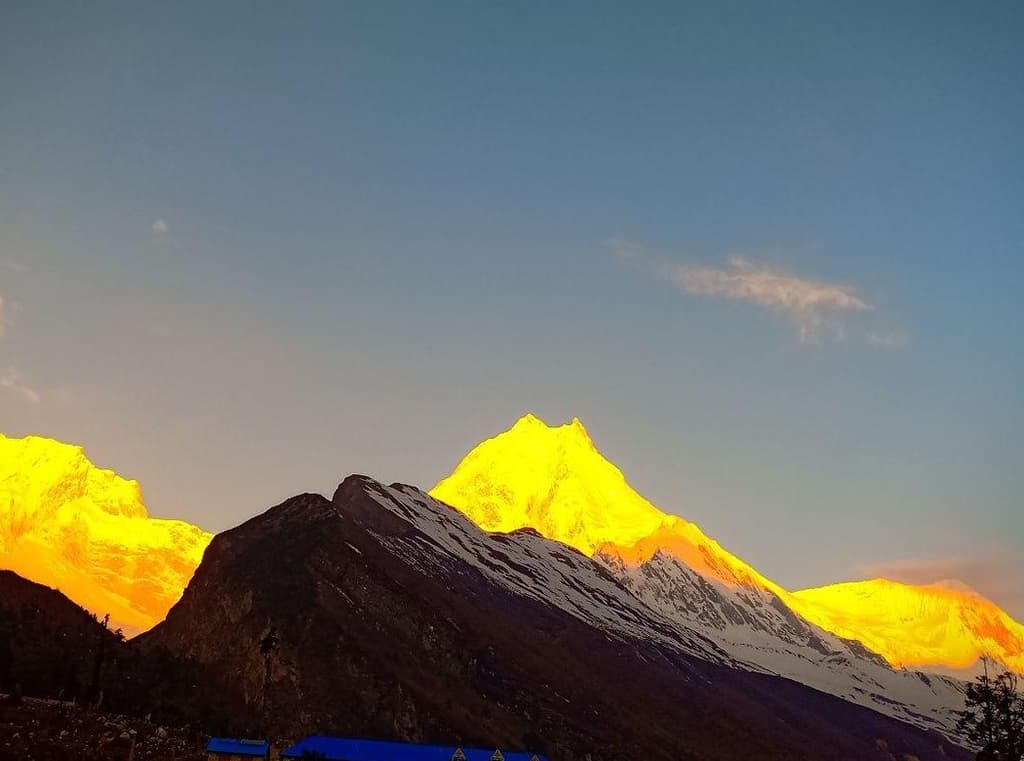

Beyond the towering peaks of Mount Annapurna and Dhaulagiri lies a hidden world that is shaped by high winds, stone, and centuries of isolation: Upper Mustang, the ancient Kingdom of Lo. Hidden behind the dramatic cliffs and vast high-altitude deserts, this remote Himalayan region has preserved a cultural and spiritual legacy that has almost vanished from almost everywhere in the Tibetan Buddhism world. The Upper Mustang was officially restricted to foreign visitors until 1992. Thus, as a result, even today, this sacred Himalayan zone has a civilization that continues to live by ancient traditions.
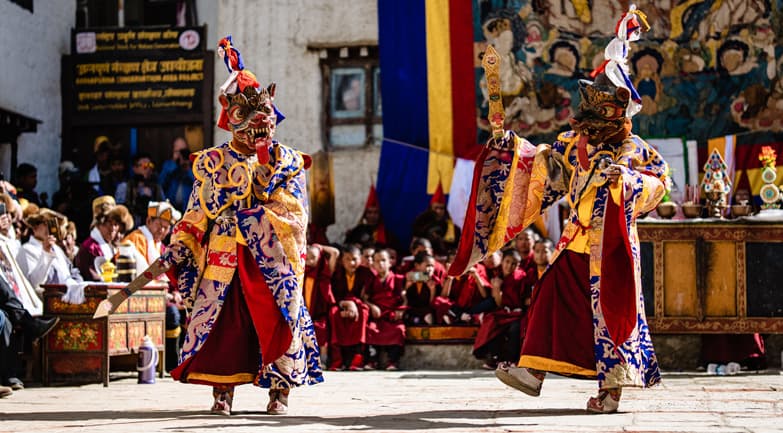
The Upper Mustang Tiji Festival 2027 is a remarkable celebration that unfolds at the center of this revered landscape. This is one of the most powerful and visually striking Buddhist ceremonies in the Himalayas. Tiji Festival is celebrated annually inside the fortified city of Lo Manthang. Tiji Mustang is a three-day Vajrayana Buddhism festival that reenacts the legendary victory of Dorje Jono. He was an incarnation of Buddha over his demonic father, Ma Tam Ru, who brought destruction and drought to the land.
Through the hypnotic masked dances, sacred chants, rhythmic drumbats, and elaborate monastic ceremonies, Tiji Mustang becomes a living spiritual drama. It is not performed for entertainment like in other festivals that we are used to, but carries rituals for cosmic balance, environmental harmony, and collective protection of the world. Eco Holidays Nepal’s Tiji Festival in Mustang 2027 presents a rare opportunity to experience this extraordinary tradition while trekking through one of the most dramatic and least explored landscapes in Nepal.
Combined with peak trekking conditions and unmatched cultural access, the Tiji Festival in Nepal offers one of the most rewarding cultural and unspoiled raw beauty exploration experiences available anywhere in the Himalayas. This in-depth Upper Mustang Tiji festival guide covers everything you need to understand, plan, and make the most out of your experience.
What is Tiji Festival? History and Cultural Significance
The Tiji Festival is a sacred three-day Tibetan Buddhist ritual celebrated annually in Lo Manthang, Upper Mustang. Among the locals Tiji Festival is also known as “Tenpa Chirim,” which can be translated to “Prayer for World Peace”. It is one of the most important spiritual events of the Loba (Mustangi) community and represents the victory of good over evil, spiritual purification, and the restoration of harmony in nature and human life.
The Loba community treats this festival as a duty, not just a ceremony. They believe that the Tiji Festival brings rain on time, keeps the land nourished, and supports the long life of the king, people, and monasteries, which are part of the high-altitude arid terrain. At its core, the Upper Mustang Tiji Festival symbolizes:
- The triumph of compassion over negativity
- The destruction of ignorance and evil forces
- The restoration of balance in nature and human life
Sacred dances, chants, and symbolic rituals are performed during this festival, which convey powerful spiritual messages. Tiji is also a reminder for the participants and spectators alike about the importance of harmony between humans, nature, and the unseen spiritual realm.
The festival is deeply rooted in Vajrayana Buddhism, especially the Vajrakila (Dorje Phurba) tradition. It commemorates the victory of Dorje Jono, an incarnation of Buddha, over his demonic father, Ma Tam Ru, who was the cause of drought and destruction. The three-day event involves sacred masked dances (Cham) and ritual ceremonies conducted by monks of Choedhe Monastery, which belongs to the Sakya sect of Tibetan Buddhism.
Origin and History of the Tiji Festival Upper Mustang
The Tiji Festival originates from the Vajrayana Buddhist Vajrakila (Dorje Phurba) tradition and developed between the 16th and 17th centuries in Upper Mustang. It emerged as a ritual practice intended to counter natural disasters, drought, disease, and destructive spiritual forces believed to threaten the region.
Upper Mustang, historically known as the Kingdom of Lo, maintained strong religious and cultural ties with Tibet. As Sakya Buddhism expanded in the region, Vajrakila meditation rituals became part of the monastic practice. These rituals were not symbolic performances but protective religious ceremonies meant to restore balance between human life, nature, and the spiritual world.
The festival became formally established through Choedhe Monastery in Lo Manthang, which follows the Sakya sect of Tibetan Buddhism. Over time, the Vajrakila rituals evolved into the structured three-day Tiji Festival, preserving both the religious doctrine and ritual practices that have been continued throughout generations.
Tiji has remained a continuously practiced religious ritual, not a revived or reconstructed tradition, making it one of the oldest living Buddhist ritual festivals in Nepal.
Importance of the Upper Mustang Tiji Festival to the Local Community
For the people of Lo Manthang and surrounding villages, the Tiji Festival is not a cultural performance or seasonal celebration; it is a core institution of their Vajrayana Buddhist culture. Tiji is believed to maintain the spiritual balance of the land, ensuring protection from environmental and metaphysical disturbances.
In the traditional Himalayan belief, natural disasters such as drought, crop failure, disease, and extreme weather are not viewed solely as physical phenomena but as manifestations of spiritual imbalance. The Vajrakila-based rituals of Tiji are therefore understood as necessary interventions to restore cosmic order.
The festival is believed to provide:
- Protection from drought, storms, disease, and natural calamities
- Stability in agriculture and livestock survival
- Collective community health and spiritual safeguarding
- Environmental balance and fertility of the land
- Accumulation of religious merit (puṇya) for individuals and the community
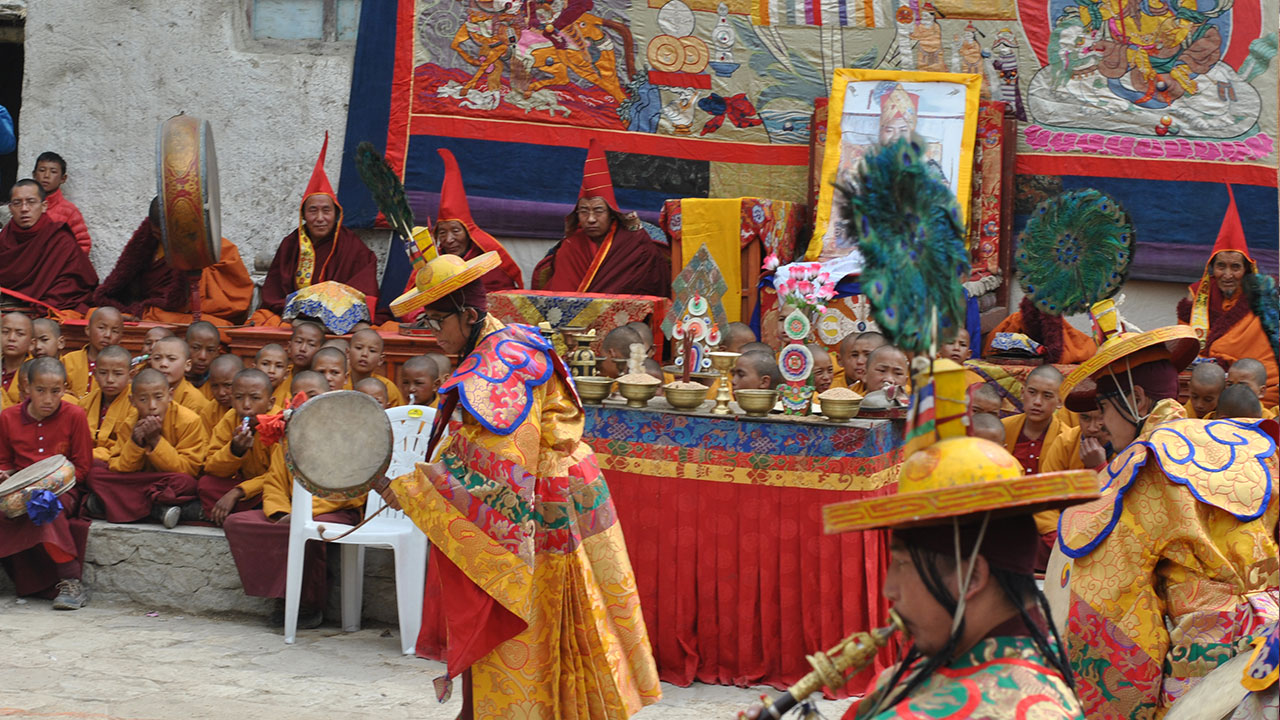
The locals participate in the festival collectively, and it is also religiously obligatory. Every household contributes food supplies, offerings, labor, and logistical support. This collective investment reinforces communal solidarity, social responsibility, and religious discipline. The monks of Choedhe Monastery, trained in Vajrakila tantric ritual practice, perform the ceremonial core. However, the entire community functions as a ritual ecosystem.
From a cultural perspective, Tiji acts as a living preservation system of Tibetan Buddhist heritage. Upper Mustang remained politically isolated until 1992, due to which ancient Tibetan customs, language, architecture, and religious practices are largely intact to this date. Tiji Mustang continues to operate as a ritual transmission platform that preserves sacred dance forms, liturgical music, ceremonial choreography, monastic discipline, and oral religious traditions that have been carried down for centuries.
Upper Mustang Tiji Festival 2027 Dates and Location
The Upper Mustang Tiji Festival Nepal 2027 will be celebrated from 1st June to 3rd June. This festival is celebrated for three consecutive days. As the Loba (Mustangi) community follows the Tibetan lunar calendar, the exact dates of the festival change every year. The exact timing of the festival is determined through traditional astrological calculations by senior monks of Choedhe Monastery. The head monk ensures that the rituals align with spiritually auspicious lunar phases.
The 2027 festival dates have been confirmed by Mustang cultural authorities, monastic institutions, and regional trekking organizations. They have been set for the 1st June, 2nd June, and 3rd June. So, if you are a traveler or a pilgrim planning the Tiji Festival 2027, you can now plan your logistics based on that. Because the festival is governed entirely by religious tradition rather than tourism schedules, the dates are fixed according to monastic calculations and strictly observed by the local community.
This makes early planning essential, as permits, flights to Jomsom, accommodation in Lo Manthang, and local transportation fill up quickly after official dates are announced. For travelers, mid-May represents the optimal seasonal window, offering:
- Stable weather conditions
- Clear mountain views
- Comfortable trekking temperatures
- Full cultural participation
This combination of religious timing and peak seasonal suitability makes the Upper Mustang Tiji Festival 2027 one of the most significant cultural and trekking attractions in Nepal this year. It will offer you a rare chance to experience ancient Himalayan rituals alongside some of the best trekking conditions of the year.
Tiji Festival Upper Mustang Itinerary: Tiji Festival Rituals and Daily Program Breakdown
The Tiji Festival in Mustang unfolds over three consecutive days. Each of the day is dedicated to a distinct phase of the Vajrakila ritual cycle. These days follow a precise spiritual sequence: invocation, confrontation, and victory, symbolizing the defeat of negative forces and the restoration of harmony.
Every ritual, dance movement, mask, costume, and chant in Tiji is scripturally prescribed and spiritually functional. The rituals are conducted by monks of Choedhe Monastery, who are trained specifically in Vajrakila tantric practice.
Day 01: Opening Ceremony and Cham Dance (1st June 2027)
The first day marks the initiation of the ritual cycle and focuses on spiritual purification and invocation. Early in the morning, senior monks perform preliminary rituals inside Choedhe Monastery. In this stage, the monks invoke protective deities and prepare sacred instruments, ritual objects, and ceremonial masks. These opening ceremonies establish a ritual boundary, believed to shield Lo Manthang from negative spiritual influences during the festival.
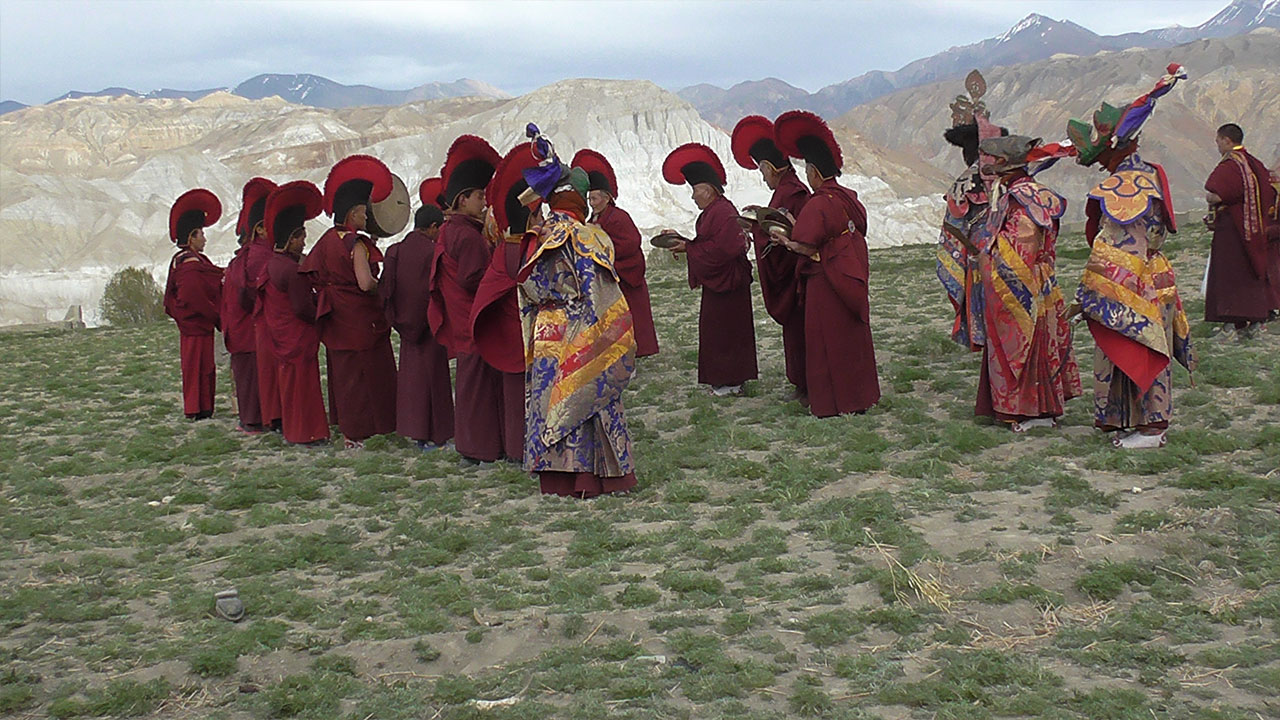
By late morning, the public rituals begin in the courtyard of the Royal Palace, where thousands of locals and visitors gather. Monks emerge in elaborate silk robes and sacred masks, performing the first sequence of Cham dances (Tsa Cham). These dances represent the invocation of the Vajrakila deities, cleansing of spiritual impurities, and preparation for the confrontation with destructive forces.
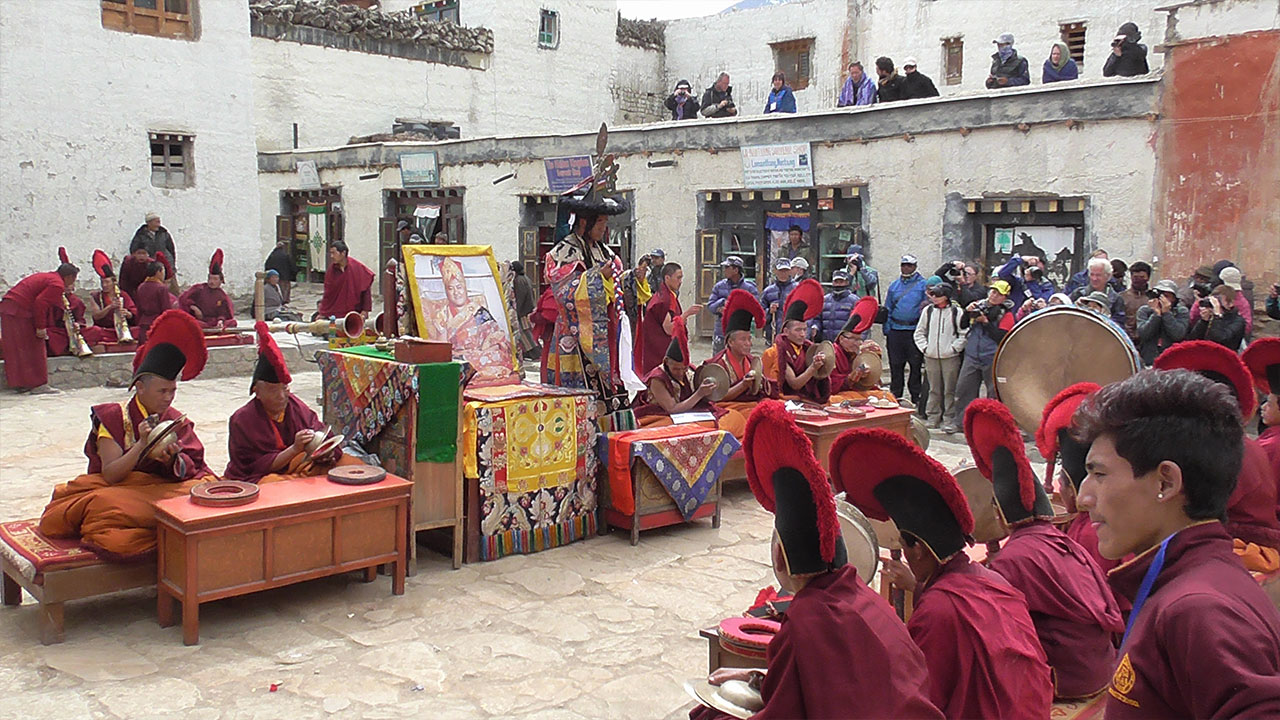
The pace of Day 1 is slow and meditative, which allows both monks and visitors to spiritually align with the unfolding ritual. Traditional instruments, long horns, cymbals, drums, and conch shells, create a deep, resonant atmosphere that fills the ancient city walls. This first day of the Upper Mustang Tiji Festival establishes the spiritual foundation of the entire festival.
Day 02: Sacred Dances and Spiritual Ceremonies (2nd June 2027)
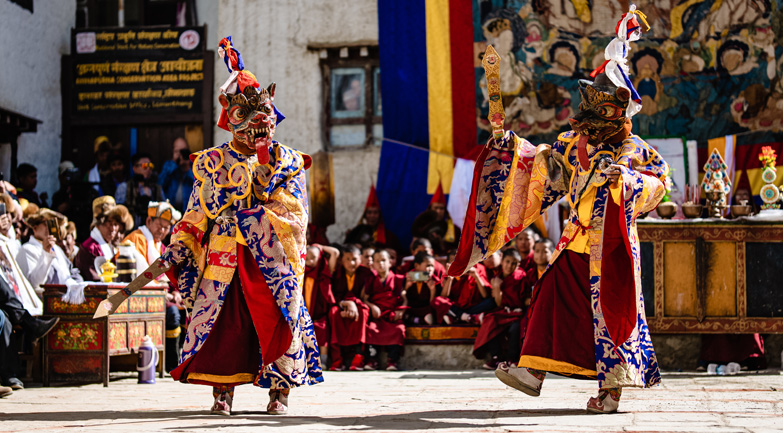
The second day is the most intense and elaborate phase of the Tiji Festival. On this day, the Cham dances become faster, more dynamic, and symbolically confrontational. The ritual choreography enacts the cosmic battle between Dorje Jono and the demonic forces embodied by Ma Tam Ru. Key features of Day 2 include the complex group dances, fierce masked deity performances, rhythmic drum and horn sequences, and extended mantra recitations.
This day represents the spiritual struggle, where negative energies, obstacles, and destructive influences are confronted and subdued. The Cham dances (Nga Cham) are highly structured, with each step and movement reflecting specific tantric symbolism.
From a cultural perspective, Day 2 has the most visually dramatic and spiritually charged atmosphere. This core part of the Tiji Mustang draws the largest crowds and offers the most powerful insight into Vajrayana ritual traditions.
Day 03: Final Day Celebrations and Demon Victory Ritual (3rd June 2027)
The third and final day symbolizes ultimate victory, purification, and renewal. This day culminates in the ritual defeat of Ma Tam Ru, represented through a sequence of sacred dances and ceremonial enactments. The Cham dance (Rha Cham) and ritual performed on this day represent the symbolic destruction of evil, which signifies the restoration of environmental balance, protection from natural disasters, assurance of agricultural fertility, and renewal of communal harmony.
One of the most powerful moments of the festival occurs when monks perform the final Vajrakila subjugation rituals, believed to seal the spiritual protection for the coming year. The atmosphere gradually shifts from intense ritual focus to community celebration. Local families gather, elders offer blessings, and monks conclude the ceremonies with auspicious prayers for prosperity, health, and peace.
This final day Tiji Festival Mustang Nepal 2027 marks not just the end of the festival, but also the renewal of spiritual order for the entire Upper Mustang region.
Why Visit Upper Mustang During Tiji Festival?
Tiji Festival Nepal 2027 Tour is not just about attending a cultural event; it is also about experiencing the deep spiritual, historical, and geographical essence of the former Kingdom of Lo at its most powerful moment of the year. For most of the year, Upper Mustang offers dramatic landscapes, ancient monasteries, and isolated villages. However, during the Tiji Festival, the entire region transforms into a living cultural arena. In this three-day celebration, centuries-old rituals, monastic traditions, and community life unfold in their pure and raw form.
This is a once-a-year opportunity to witness Upper Mustang not just as a trekking destination, but as a sacred civilization shaped by Tibetan Buddhism. Here are the key reasons why the Upper Mustang Tiji festival offers exceptional value and depth:
Witness One of the Last Authentic Himalayan Buddhist Festivals
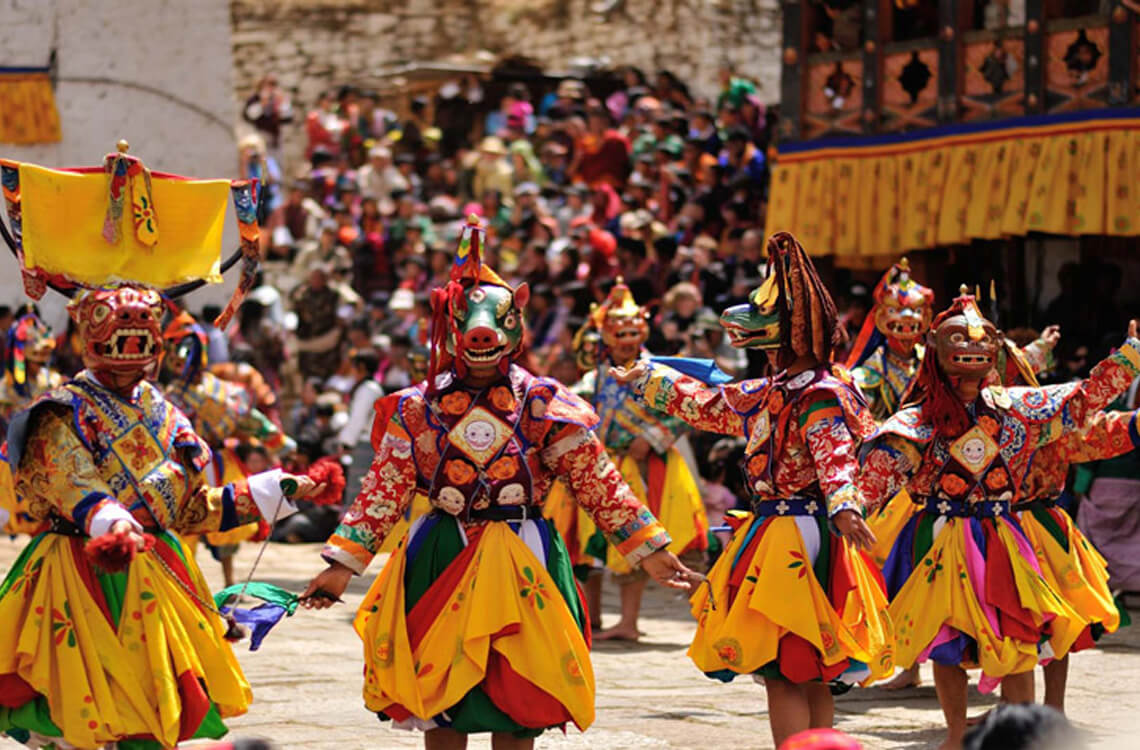
The Tiji Festival is one of the few remaining Buddhist festivals in the Himalayas that still has its full spiritual and ritual form. Unlike many modern festivals that have been adapted for tourism, Tiji is governed entirely by the monastic community of Choedhe Monastery and the local villages. Each Cham dance, each mask, and each ritual step has a specific spiritual function, from invoking protective deities to subduing destructive forces symbolized by Ma Tam Ru.
As a visitor, you can experience a living tradition that has survived for over 600 years. The Upper Mustang Tiji Festival Tour 2027 offers unparalleled insight into Vajrakila tantric practices and the spiritual worldview of Upper Mustang. This authenticity makes Tiji a must-see religious event in the Himalayas.
Immerse Yourself in Lo Culture at Its Peak
During Tiji Festival Mustang Nepal, the entire city of Lo Manthang transforms into a vibrant stage of Loba community life. The local families decorate homes, prepare ceremonial offerings, and participate in the rituals, while elders and monks ensure that traditions are meticulously followed. The Royal Palace courtyard and monastery squares become gathering points where locals and visitors can witness rituals that have been performed uninterrupted for centuries.
This period offers travelers the deepest cultural immersion possible, with opportunities to interact with villagers, learn about traditional dress, cuisine, and crafts, and observe the communal harmony of the Upper Mustang that helps to sustain the festival. Experiencing Tiji is about witnessing the unspoiled culture in motion, rather than a static, staged representation.
Trekking in Optimal Seasonal Conditions
The Upper Mustang Tiji Festival 2027 takes place from 1st June to 3rd June, which aligns perfectly with Upper Mustang’s favorable trekking season. At this time, daytime temperatures are comfortable for long treks, while nights can be cold but they are manageable. You can expect the skies to be generally clear, providing panoramic views of the Annapurna, Dhaulagiri, and Nilgiri ranges. At the high altitudes, the desert valleys are at their most photogenic.
The close-to-peak-season timing will also allow you to explore Upper Mustang’s dramatic cliffs, ancient monasteries, and plateau-like valleys in the most ideal conditions. It is a rare moment when cultural immersion and trekking adventure align perfectly, creating an unforgettable experience.
Gain Rare Spiritual and Ritual Insight
The Tiji Festival is more than a visual spectacle; it is a profound spiritual process. You will get a rare chance to witness Vajrakila rituals, Cham masked dances, and tantric chants performed exactly as they have been for centuries, from up close. Each gesture, mask, and instrument has a symbolic meaning.
For spiritually curious travelers, Upper Mustang Tiji Festival Tour 2027 provides direct insight into Tibetan Buddhist cosmology, monastic discipline, and ritual choreography, knowledge that is almost impossible to experience anywhere else. In short, witnessing a festival like this will be an unforgettable chapter of your life where the Himalayan religion is in action, not just in theory.
Exceptional Photography and Visual Experience
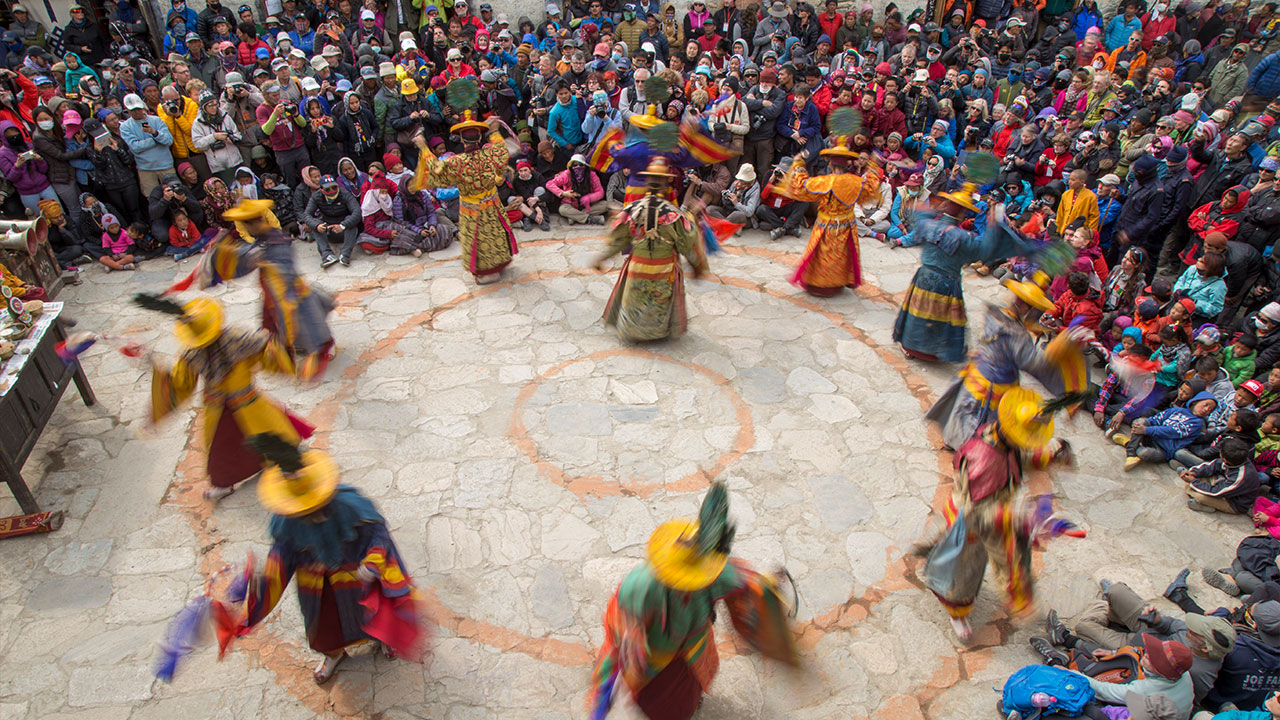
Tiji Mustang is a photographer’s dream. Monks in vibrant robes and elaborate masks perform in the backdrop of Lo Manthang’s walled city, which is framed by barren cliffs and rugged deserts. From ceremonial instruments to intricate tormas (ritual offerings) and flowing silk robes, your every shot will be visually rich and culturally meaningful.
Combined with the Upper Mustang’s unique high-altitude light, sweeping valleys, and snow-capped peaks, this festival will offer some of the most dramatic, authentic, and photogenic scenes in the Himalayas. If you are interested in cultural or landscape photography, the Tiji Festival period is unmatched.
Combine Remote High-Altitude Trekking with Cultural Immersion
Upper Mustang Trek is one of the only regions where trekking, spiritual exploration, and cultural participation converge so perfectly and completely. You can trek through high-altitude desert valleys, visit ancient caves and monasteries, and experience centuries-old festivals, all in a single journey.
This fusion of physical adventure, cultural depth, and the spiritual realm creates an immersive and memorable experience. Only a few other Himalayan destinations provide the combination of challenging terrain, isolation, and culturally rich engagement that Upper Mustang does during the Tiji Festival. For adventurous travelers and cultural explorers alike, this is the ultimate Himalayan window to embrace the unspoiled beauty of the high Himalayas.
Upper Mustang Tiji Festival Tour Cost 2027
The Upper Mustang Tiji Festival Tour 2027 is priced higher than standard trekking packages due to the region’s restricted status. This tour requires mandatory permits, involves a controlled access system, and complex high-altitude logistics. Upper Mustang lies inside Nepal’s government-regulated restricted zone, requiring a special Restricted Area Permit, which costs USD 500 per person (for the first 10 days and USD 50 per day after that). In addition to that, you will also need the Annapurna Conservation Area Permit, making permits alone a major cost component.
Furthermore, travelers must be accompanied by a licensed guide, and transportation involves mountain flights, rugged 4WD jeep routes, and carefully managed supply chains. All of these combined significantly increase the operational expenses. At Eco Holidays, we offer one of the most competitive and transparent pricing structures for this premium cultural journey. You can book your Upper Mustang Tiji Festival 2027 tour with us at USD 2,300 per person for a 15 nights/ 16 days fully guided itinerary plan.
Our group-based pricing allows better value, with 1 to 2 pax at US $2300, 3 to 5 pax at US $2175, and 6–10 pax at US $2025 per person, making larger group travel more cost-efficient. Considering the high permit fees, professional staffing, festival-season logistics, remote geography, and full-service inclusion, this pricing represents strong market value. You will be accessing one of the most restricted and culturally preserved regions in the Himalayas during its most important annual festival, and we guarantee an unforgettable and comfortable experience.
Food and Accommodation During Tiji Festival
Traveling to Upper Mustang during the Tiji Festival offers an extraordinary cultural experience. However, you also need to have realistic expectations regarding food quality and accommodation standards in this remote and high-altitude region. Due to the Upper Mustang’s extreme remoteness, harsh climate, limited infrastructure, and restricted access, facilities remain basic yet culturally authentic. Understanding this beforehand will allow you to enjoy the Upper Mustang Tiji Festival comfortably and without any unrealistic expectations.
Accommodation During Tiji Festival in Upper Mustang
Accommodation in the Upper Mustang region primarily consists of traditional teahouses, family-run lodges, and basic guesthouses. Across the major settlements such as Jomsom, Kagbeni, Ghami, Tsarang, and Lo Manthang, you can expect clean, simple, and culturally immersive lodging. However, do not expect the services to be on par with luxury hotels.
Accommodation Standard and Facilities:
- Clean private or twin-sharing rooms
- Simple wooden beds with warm blankets
- Basic furniture (small table, stool, storage hooks)
- Shared bathrooms in most villages
- Limited hot shower facilities (solar or gas-heated)
- Dining halls heated by wood stoves
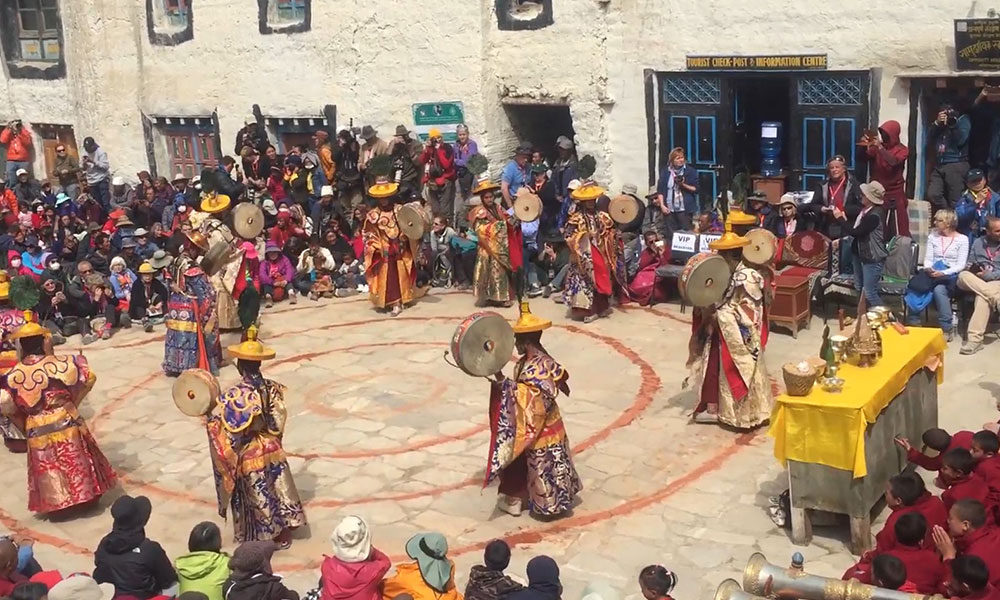
In Lo Manthang, accommodation availability is extremely limited, especially during the Tiji Festival in Nepal. Lodges operate at full capacity weeks in advance, and room-sharing may be necessary. Despite the simplicity, staying inside the ancient walled city during the festival offers an unmatched cultural atmosphere. And the best thing, you will just be a few steps away from the ceremonial courtyard.
**Note: For accommodation during the Upper Mustang Tiji Festival 2027, you can expect authentic Himalayan hospitality, not the luxury comfort of star hotels. This is precisely what makes the experience special and close to the communal level**
Food During Tiji Festival in Upper Mustang
Food options during the Upper Mustang Tiji Festival Tour are nutritious, warming, and designed for high-altitude conditions rather than culinary luxury. Meals are prepared using local ingredients and the goods supplied from Pokhara and Jomsom. You can expect the following menus during your stay at the teahouse or guesthouse in Upper Mustang:
Common Meals You Can Expect:
- Tibetan bread
- Tsampa (roasted barley flour)
- Thukpa (Tibetan noodle soup)
- Dal Bhat (rice, lentils, vegetables)
- Buckwheat pancakes
- Seasonal vegetable curries
- Khapse (deep-fried Tibetan pastry, common during festivals)
- Chura (dried yak cheese snacks)
- Sukuti (air-dried meat, usually yak or goat)
- Shyakpa (thick traditional Mustang stew with vegetables and dough pieces)
- Tingmo (steamed Tibetan bread)
- Phaag-sha pa (pork stir-fry, available in some villages)
International and Trekking Menu Items
- Fried rice
- Noodles
- Pasta
- Vegetable soup
- Eggs (omelet, boiled, scrambled)
- Simple sandwiches
- Oatmeal porridge
- Muesli with hot milk
- Toast with jam or honey
- Pancakes (apple, plain, or honey)
- Popcorn
- Momo
- Chowmein
Drinks
- Tibetan butter tea
- Black tea & milk tea
- Gur-gur cha (salted Tibetan butter tea)
- Herbal tea
- Coffee (instant)
- Hot lemon & ginger tea
- Mineral water bottle
- Local alcohol
Due to limited agriculture in this high-altitude desert region, fresh vegetables and fruits are limited. As altitude increases, menus become simpler and more repetitive, especially closer to Lo Manthang. However, food remains hygienically prepared, calorie-rich, and nutritionally adequate for trekking and festival travel.
Cultural Etiquette and Travel Tips for Upper Mustang Tiji Festival Tour 2027
Upper Mustang is not like mainstream tourist destinations in Nepal. It is a living Tibetan Buddhist civilization, where religion, daily life, governance, and identity are connected. During the Tiji Festival, this cultural intensity multiplies. Monasteries become active ritual centers, courtyards transform into sacred ceremonial spaces, and the entire population of Lo Manthang enters a state of religious participation.
Thus, respect, awareness, and restraint are not simply polite behaviors; they are fundamental to meaningful participation in the festival during your Upper Mustang Tiji Festival Tour. The following guidelines help travelers move through Upper Mustang with dignity, awareness, and cultural intelligence:
- Treat the Tiji Festival as a sacred religious ritual, not as a tourist performance; observe the rituals quietly, maintain a respectful distance, and avoid unnecessary movement or conversation during ceremonies
- Always follow monastery protocols, including removing shoes before entering religious spaces, walking clockwise around stupas and temples, and never stepping over ritual objects, offerings, or prayer items
- Ask permission before taking photographs of monks, elders, and rituals, and avoid using flash photography during ceremonies
- Dress modestly and conservatively, cover shoulders, chest, and legs, especially during festival days and monastery visits, to align with traditional Tibetan cultural norms
- Avoid physical contact such as hugging or touching monks, elders, or religious practitioners; this may be considered culturally inappropriate or disrespectful
- Accept food, drinks, and offerings with both hands as a sign of gratitude and respect in Tibetan culture
- Speak calmly and avoid loud conversations, shouting, or disruptive behavior, especially in monastery courtyards and prayer spaces
- Never point your feet toward monks, altars, religious objects, or elders while sitting, as it is seen as a disrespectful gesture
- Do not smoke, drink alcohol, or consume intoxicants near monasteries or religious gatherings
- Respect local privacy by avoiding intrusion into family homes, private rituals, or community spaces unless you are invited
- Follow your guide’s instructions carefully, as they understand local customs, spiritual sensitivities, and festival protocols
- Finally, approach interactions with humility, curiosity, and patience, recognizing that you are entering one of the most culturally preserved Himalayan societies, which still follows the unspoiled ancient Himalayan rituals and customs