

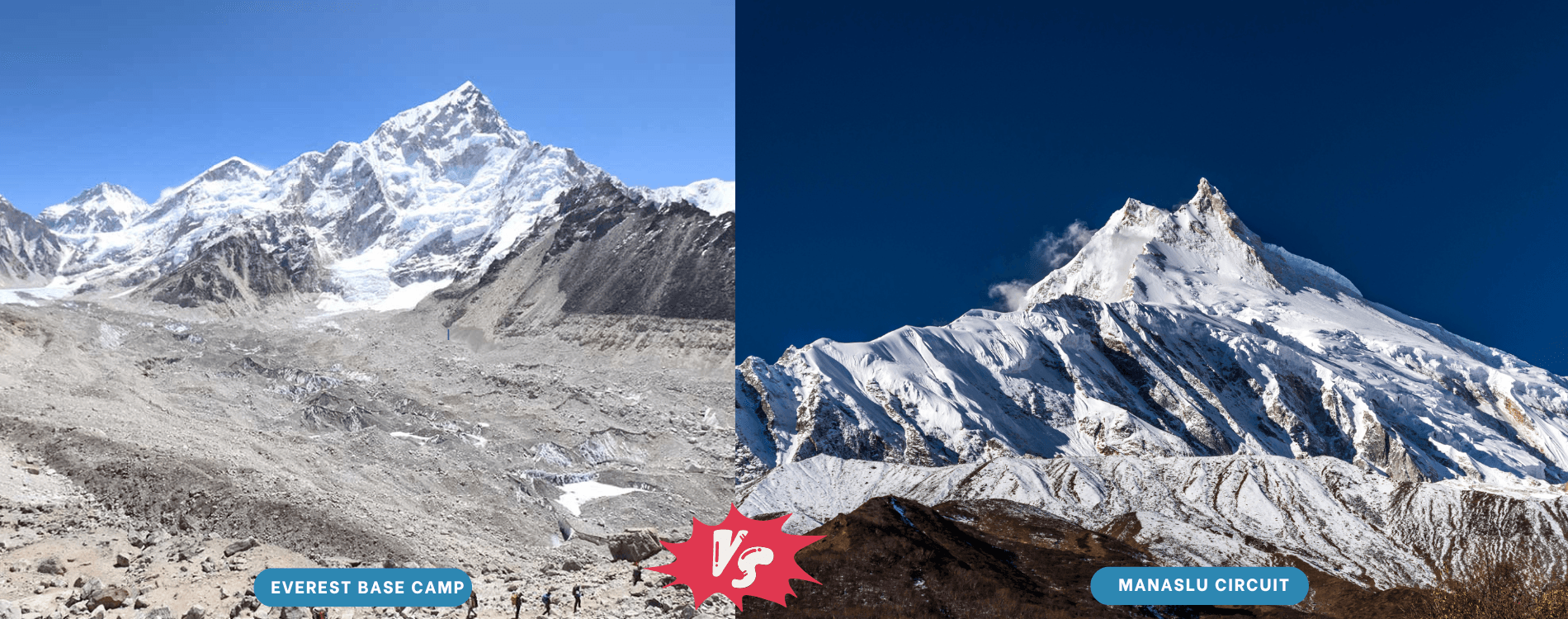
Nepal is one of the best places in the world for mountain trekking. This country is home to the Himalayas, which include eight of the fourteen highest mountains on Earth. Because of this, thousands of trekkers visit Nepal every year to walk through beautiful valleys, high mountain passes, and traditional villages.
Among many trekking routes, two journeys often come up in conversations: the Everest Base Camp (EBC) Trek and the Manaslu Circuit Trek. Both of these treks offer breathtaking mountain views, unique local culture, and unforgettable adventure. However, many trekkers wonder about one important question when comparing EBC vs Manaslu Circuit, which trek is more challenging?
The Everest Base Camp trek is one of the most famous treks in the world. It takes trekkers to the base of Mount Everest (8,848.86 m), the highest mountain on Earth. The trail passes through the beautiful Khumbu region, including well-known villages like Namche Bazaar and Tengboche. Each year, more than 35,000 to over 50,000 trekkers walk this route.
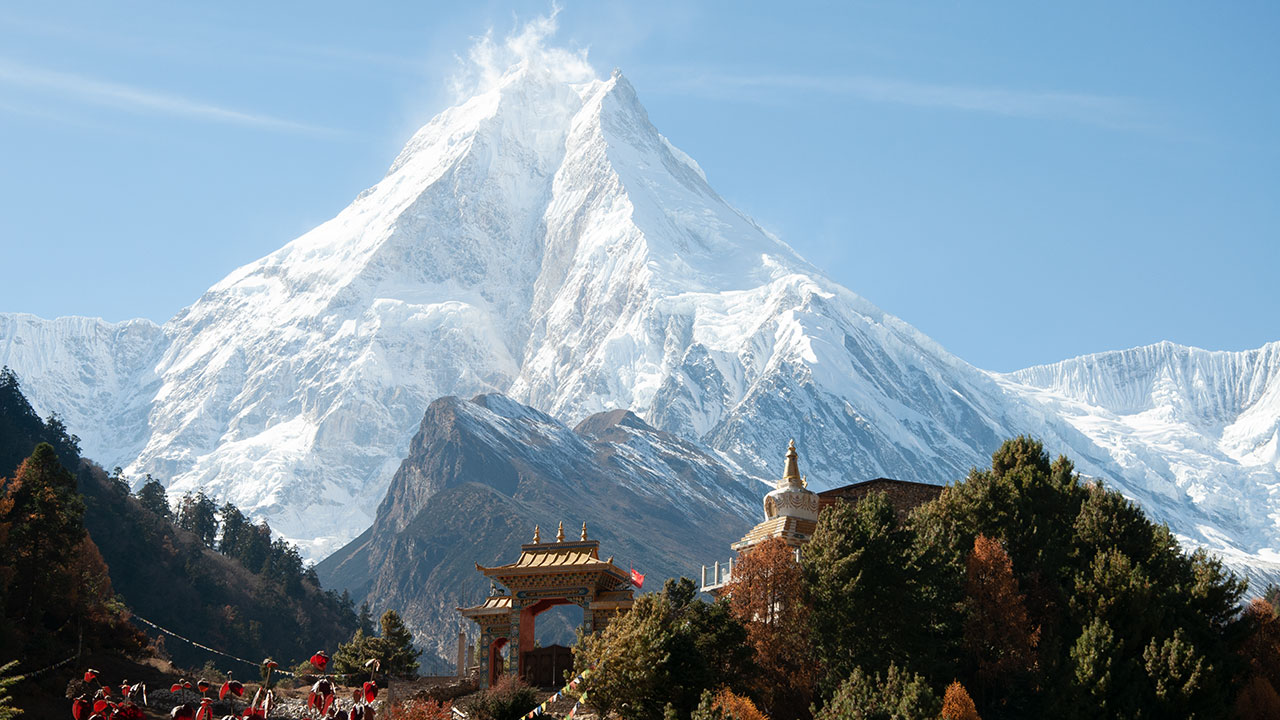
On the other hand, the Manaslu Circuit Trek is quieter and more remote. The trek circles Mount Manaslu (8,163m), the eighth-highest mountain in the world. The trail goes through deep river valleys, traditional mountain villages, and crosses the high Larkya La Pass (5,106 m). Because it is a restricted area, far fewer trekkers visit Manaslu compared to Everest.
Both treks are beautiful and rewarding, but they are also physically demanding. Factors like altitude, trekking distance, trail conditions, weather, and remoteness can make a big difference in how difficult a trek feels.
In this blog, we will compare EBC vs Manaslu Circuit. By the end, you will clearly understand which trek is more challenging and why.
Overview of the Everest Base Camp Trek
The Everest Base Camp (EBC) is one of the most famous trekking routes in the world. It takes trekkers to the base of Mount Everest (8,848.86 m), the highest mountain on Earth. According to data shared by trekking companies, thousands of trekkers visit this trail every year to experience the beauty of the Himalayas.
The journey usually starts with a flight from Kathmandu to Lukla (2,860m), which is known as the gateway to the Everest trek. Here are some important factors about the trek:
- Total Trekking Distance: about 130 kilometers round trip
- Average Trekking Duration: 12-14 days
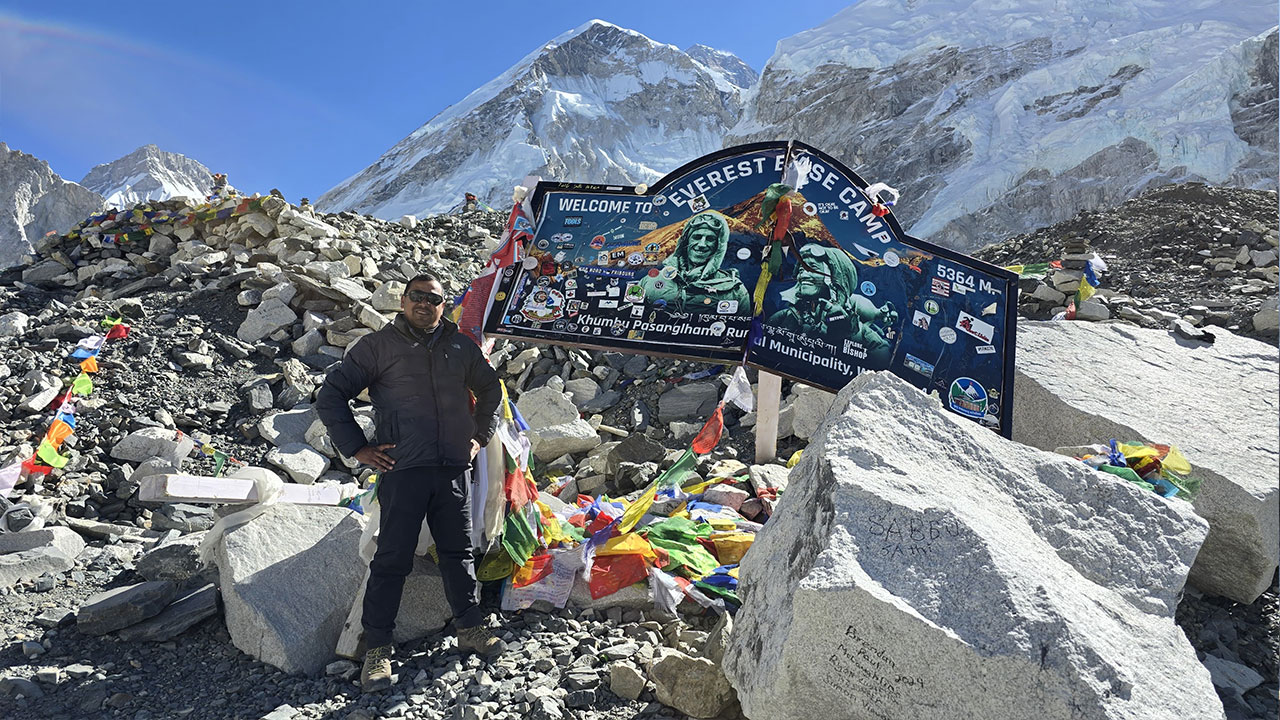
- Everest Base Camp Altitude: 5,364 meters
- Highest Point: Kala Patthar (5,545 meters)
- Average Walking Time: 5-7 hours per day
Because of the high altitude and long walking days, trekkers must walk slowly and take rest days for acclimatization.
Route, Villages, and Trekking Experience
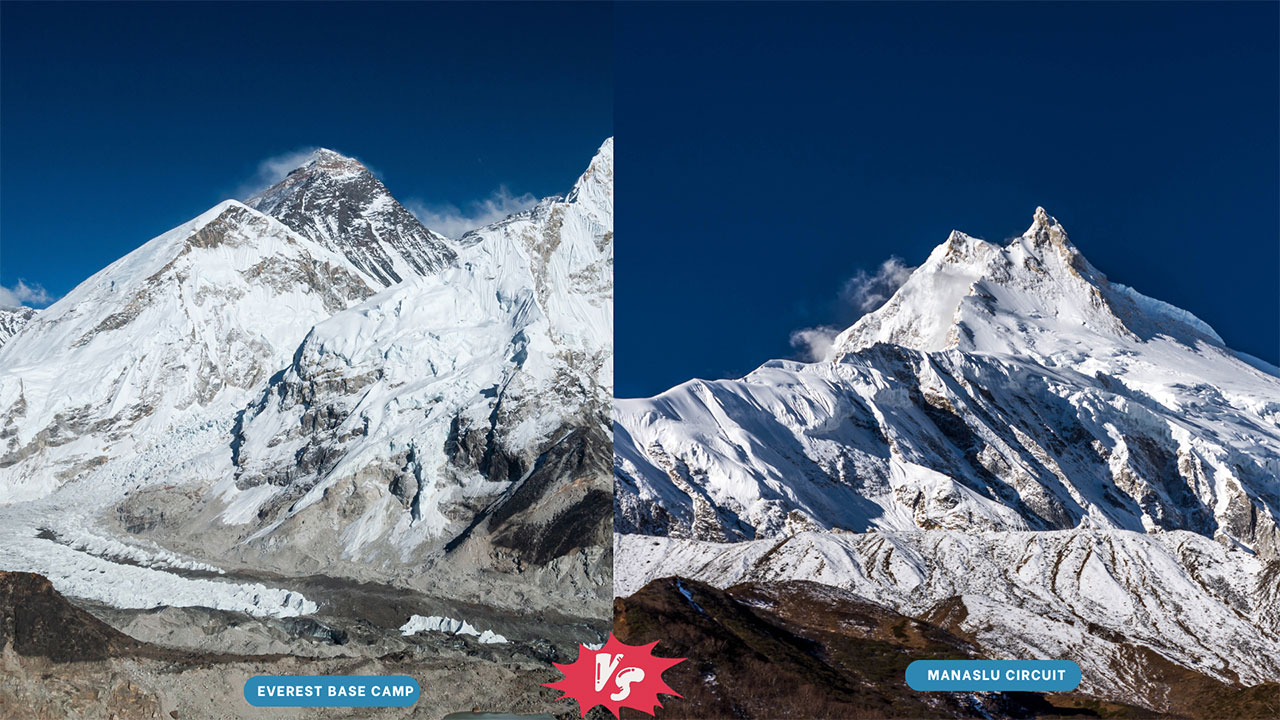
The Everest Base Camp trail passes through the beautiful Khumbu region of Nepal, inside Sagarmatha National Park. Along the way, trekkers see glaciers, suspension bridges, rivers, and tall Himalayan peaks.
Some of the main villages on the route include:
- Phakding (2,610m)
- Namche Bazaar (3,440 m)– it is the main Sherpa trading town.
- Tengboche (3,867 m)– it is famous for the Tengboche Monastery.
- Dingboche (4,410 m)– it is a common acclimatization stop.
- Lobuche and Gorakshep– these are the final villages before the base camp.
Trekkers can also see famous mountains such as Everest, Lhotse, Nuptse, and Ama Dablam along the trail.
The EBC route has many tea houses, lodges, and even cafes and restaurants. Because of these facilities and well-marked trails, the Everest Base Camp Trek is considered demanding but manageable for many first-time Himalayan trekkers with proper preparation.
Overview of the Manaslu Circuit Trek
The Manaslu Circuit Trek is one of the most scenic and adventurous trekking routes in Nepal. This trek circles Mount Manaslu (8,163 meters), which is the eighth-highest mountain in the world. Compared to the Everest Base Camp trek, the Manaslu region is less crowded and feels more remote and peaceful.
The Manaslu Circuit Trek usually takes 14 to 18 days to complete. The journey begins with a long drive from Kathmandu to Soti Khola or Machha Khola, which are the common starting points of the trek.
Here are some important trekking facts :
- Total Trekking Distance: around 170-180 kilometers
- Average Trekking Duration: about 14-18 days
- Highest Point: Larkya La Pass (5,106 meters)
- Average Walking Time: about 6 to 8 hours.
Because the trek is longer and passes through remote areas, it requires good stamina and physical fitness.
Trail Experience and Remote Mountain Villages
The Manaslu Circuit trail follows the beautiful Budhi Gandaki River Valley for many days. Trekkers walk through forests, suspension bridges, and traditional mountain villages with strong Tibetan culture.
Some of the main villages along the route include Jagat (1,340 m), Deng (1,860 m), Namrung (2,630 m), Samagaon (3,530 m), and Samdo (3,875 m). These villages are important resting places where trekkers acclimatize and learn about local culture.
The most Manaslu challenging part of the trek is crossing Larkya La Pass, one of the highest trekking passes in Nepal. The climb is long and often very cold and windy.
Because the Manaslu region is a restricted trekking area, trekkers must travel with a licensed guide and special permits. Due to its long distance, remote trails, and high mountain pass, many trekkers consider the Manaslu Circuit Trek more physically demanding than the Everest Base Camp Trek.
EBC vs Manaslu Circuit– Distance and Trekking Duration Comparison
One of the biggest factors that affects the difficulty of a trek is the total distance you need to walk and the number of days on the trail. When comparing the Everest Base Camp Trek and the Manaslu Circuit Trek, there is a clear difference in both distance and duration.
The Everest Base Camp (EBC) Trek usually covers about 130 kilometers round-trip from Lukla to Everest Base Camp and back. Most trekkers complete the journey in 12 to 14 days, including two important acclimatization days. These rest days help the body adjust to high altitude. On average, trekkers walk about 5 to 7 hours per day, depending on the trail conditions and altitude.
The trek starts with a flight from Kathmandu to Lukla (2,860 m) and then continues through villages like Phakding, Namche Bazaar, Tengboche, and Dingboche before reaching Everest Base Camp at 5,364 meters.
In comparison, the Manaslu Circuit Trek is longer and takes more time. The total trekking distance is about 170 to 180 kilometers. Most trekkers need 14 to 18 days to complete the circuit. Daily walking time is usually 6 to 8 hours, and sometimes even longer on certain days.
Which Trek Requires More Endurance?
Because the Manaslu Circuit Trek is longer, it generally requires more physical endurance and stamina. Trekkers spend more days walking and cover a greater distance compared to the Everest Base Camp trek.
Another important difference is the remote nature of the Manaslu Circuit route. Some trekking days are longer because villages are farther apart. This means trekkers must walk longer distances between stops. The most demanding day on the Manaslu trek is crossing of Larkya La Pass (5,106 m). On this day, trekkers may walk 8 to 9 hours through steep and high mountain terrain.
The Everest Base Camp trek is shorter. But still it has challenging sections, such as the steep climb to Namche Bazaar and the early morning hike to Kala Patthar (5,545 m). In summary, Everest Base Camp is shorter but still demanding, while the Manaslu Circuit Trek is longer and requires stronger endurance, making it feel more challenging for many trekkers.
Altitude and Acclimatization Challenges
This is one of the most significant aspects of the EBC vs Manaslu Circuit comparison, as altitude sickness is the biggest challenge during high-altitude trekking in the Himalayas. The higher you go, the thinner the air becomes, which makes breathing harder. This can lead to altitude sickness, which is why proper acclimatization is very important.
Altitude on the Everest Base Camp Trek
The Everest Base Camp trek reaches a maximum altitude of 5,364 meters at the base camp, with the highest viewpoint being Kala Patthar at 5,545 meters. Trekkers usually take acclimatization days in Namche Bazaar (3,440 m) and Dingboche (4,410 m) to help their bodies adjust to the higher altitude. Daily walking times are usually 5-7 hours, which allows a gradual climb to higher elevations.
Because Everest Base Camp reaches such a high altitude in a relatively short number of days. Trekkers need to carefully monitor symptoms like headache, dizziness, or nausea, which are early signs of altitude sickness. Proper hydration, rest stops, and slow pacing are essential.
Altitude on Manaslu Circuit Trek
The Manaslu Circuit Trek reaches its highest point at Larkya La Pass (5,106 meters). Although slightly lower than Everest Base Camp, trekkers on the Manaslu Circuit spend longer days at high altitude, especially when crossing the pass. The trek is longer overall, and some acclimatization days are spent in Samagaon (3,530 m) before attempting the pass.
Because the Manaslu region is more remote, medical help is limited. Trekkers must carefully plan their pace and rest days to avoid altitude sickness. On high-altitude days, walking is slower, and starting early in the morning is common to finish before strong winds set in.
Comparison of Altitude Challenges
In simple terms:
- Everest Base Camp: Slightly higher maximum altitude, risk of altitude sickness is higher over a short period.
- Manaslu Circuit Trek: Slightly lower peak, but longer high-altitude exposure makes the trek physically tiring.
Both treks require proper acclimatization, a slow walking pace, and careful attention to the body. The Everest Base Camp trek is more intense in terms of altitude in a shorter duration, while Manaslu is demanding because of sustained high-altitude days.
Trail Conditions and Terrain
Before choosing a trek, it is important to understand the trail conditions and terrain. The path, steepness, and facilities along the way can make a big difference in how hard a trek feels.
Everest Base Camp Trail
The Everest Base Camp (EBC) trek is one of the most developed trekking routes in Nepal. The trail is well-marked, and because thousands of trekkers walk it every year, it is easy to follow. The trail passes through forests, rivers, suspension bridges, and rocky paths.
Some parts of the trail are steep, especially the climb to Namche Bazaar (3,440m) and the uphill walk to Dingboche (4,410m). The path to Kala Patthar (5,545m) is also rocky and can be challenging, but the route is safe and supported by many tea houses, lodges, and shops along the way.
The terrain is generally clear, with steps and stone paths built in steeper areas. Walking here is physically demanding, but the frequent villages and facilities make it easier for first-time trekkers to manage the trek safely.
Manaslu Circuit Trail
The Manaslu Circuit Trek has a very different trail experience. The trail is longer, less crowded, and more rugged. The path passes through narrow mountain trails, forests, rivers, and rocky valleys. Because it is a restricted trekking area, fewer trekkers walk this route, which means the trail is often more natural and less maintained.
One of the most challenging sections is the approach to Larkya La Pass (5,106 m). Trekkers face steep slopes, snow, and icy patches, which can be tiring and require careful walking. Some days, villages are far apart, so trekkers may have to walk for 6-8 hours with fewer rest stops.
The trail also passes through remote villages like Samagaon (3,530 m) and Samdo (3,875 m). Because the area is isolated, facilities are basic, with fewer tea houses and lodges than on Everest.
Terrain Comparison
In simple terms:
- EBC Trail: It is well-marked, developed, with many lodges, and easier to navigate.
- Manaslu Circuit Trail: It is longer, rougher, and more remote, with high mountain passes and fewer facilities.
The Manaslu Circuit Trek feels more physically challenging because of its rough terrain, longer walking distances, and remote high-altitude sections. EBC is still thought to be more accessible for most trekkers.
Remoteness and Trekking Facilities
The availability of facilities and how remote a trail is can greatly affect how challenging a trek feels. Let's compare Everest Base Camp and Manaslu in this aspect.
Everest Base Camp: Developed and Comfortable
The Everest Base Camp (EBC) trek is located in the Khumbu region, which is one of the most developed trekking areas in Nepal. Because it is very popular, the trail has many tea houses, lodges, and guesthouses in almost every village. Trekkers can usually find hot meals, clean rooms, and even internet access in larger villages like Namche Bazaar and Tengboche.
The developed infrastructure makes the trek more comfortable and safer, especially for first-time Himalayan trekkers. Medical facilities are also available in bigger villages, and guides or porters are easy to hire. Trekking permits for EBC are standard and easy to arrange in Kathmandu.
Even though the trek is physically demanding, the availability of services along the route helps to reduce the overall stress of the journey.
Manaslu Circuit: Remote and Isolated
The Manaslu Circuit trek is very different. The trail passes through a restricted area, and it is much less crowded. The villages along the route have fewer lodges and basic facilities. Trekkers must carry warm clothes, some snacks, and be prepared for limited services.
The Manaslu region requires a special trekking permit, and all trekkers must travel with a licensed guide. Medical facilities are limited, and electricity or internet is not available in many villages. Some days, the trail may have no teahouse for hours of walking, so trekkers must plan carefully.
Facility Comparison
In simple words,
- EBC Trek Facility: Is developed, comfortable, and has easy access to food, lodges, and medical support.
- Manaslu Circuit Trek Facility: Is remote, with basic facilities, limited food and lodging, and requires a guide and permits.
The remoteness and limited facilities of the Manaslu Circuit make it more challenging, while Everest Base Camp is physically demanding but generally easier to manage because of its infrastructure.
Weather and Natural Challenges
The weather and natural conditions in the Himalayas can change quickly and dramatically. These factors affect how difficult a trek feels, no matter how fit you are.
Everest Base Camp
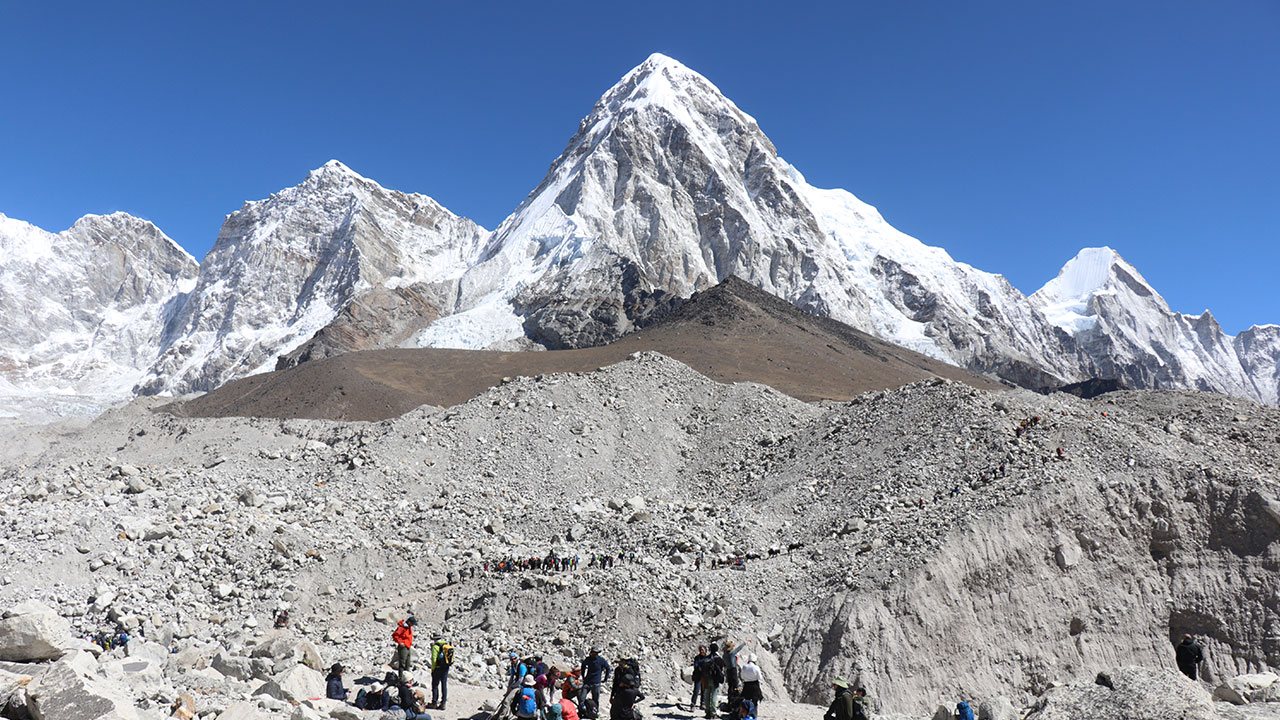
The Everest Base Camp (EBC) trek lies in the Khumbu region, where the weather can vary greatly. The best trekking seasons are autumn (September to November) and spring (March to May). During these times, the weather is relatively stable, the skies are clear, and the temperature is moderate.
However, trekkers can still face cold mornings, strong winds, and occasional snowfall at higher elevations. The trail also crosses rivers, suspension bridges, and rocky paths. While the terrain is well-maintained, steep climbs and rocky steps in places like Namche Bazaar, Dingboche, and Kala Patthar can be tiring.
Because Everest Base Camp is a popular trekking route, the trail is clear, and help is nearby if needed. Snow accumulation is usually manageable, and guides and lodges provide support.
Manaslu Circuit
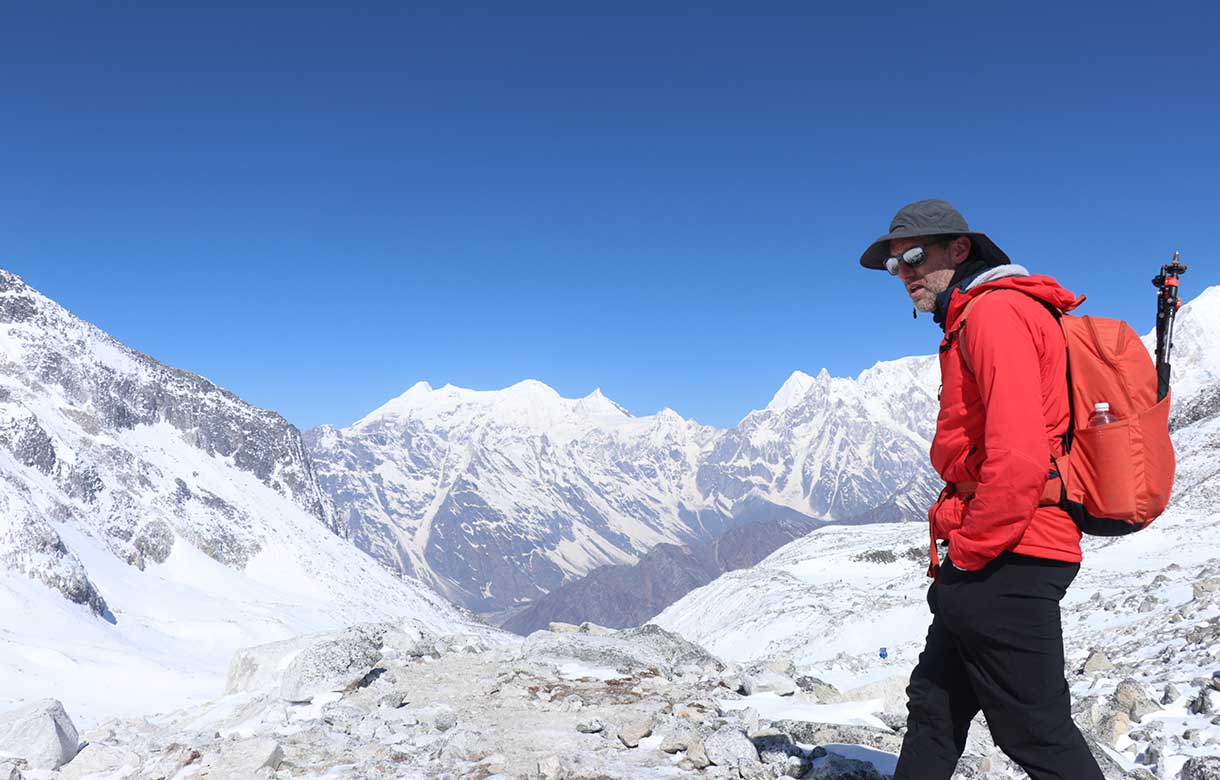
The Manaslu Circuit Trek experiences more unpredictable weather. It is in a more remote region, and trails are less maintained. Snow, landslides, and icy sections are common, especially around Larkya La Pass (5,106 m). Some areas may have slippery rock or narrow paths along river valleys.
Trekking seasons are similar to Everest, March to May and September to November, but trekkers need to be prepared for sudden snowstorms or heavy rain, which can make the path slippery and challenging. Some sections have no shelters for long distances, so bad weather can increase difficulty.
Comparison
In summary:
- EBC trek's weather is easier to predict, the trail is maintained, and help is nearby.
- The Manaslu Circuit trek has more unpredictable weather, rough terrain, fewer safety points, and longer exposure to natural challenges.
Because of the combination of steep terrain, high mountain passes, and unpredictable weather, the Manaslu Circuit Trek feels more adventurous and physically demanding than the Everest Base Camp Trek.
Final Say: EBC vs Manaslu Circuit– Which Trek Is More Challenging?
Both the Everest Base Camp (EBC) trek and the Manaslu Circuit Trek are beautiful and rewarding, but they offer very different experiences. EBC is shorter, well-marked, and has many lodges and facilities along the way, making it more accessible for first-time Himalayan trekkers. The altitude is slightly higher, but the trail's infrastructure and regular acclimatization stops help to reduce risk.
In comparison, the Manaslu Circuit trek is longer, more remote, and passes through rugged terrain with fewer lodges and basic facilities. Trekkers must spend longer days walking, cross Larkya La Pass, and deal with unpredictable weather.
Overall, while both treks are challenging, Manaslu Circuit is generally considered more physically and mentally demanding than Everest Base Camp due to its length, remoteness, and high-altitude exposure.