Highlights of Everest Base Camp With Ama Dablam Base Camp Trek
Trekking through the heart of the Khumbu Valley, following the classic Everest trail through Sherpa villages, pine and rhododendron forests, high mountain valleys and some of the most dramatic landscapes in Nepal
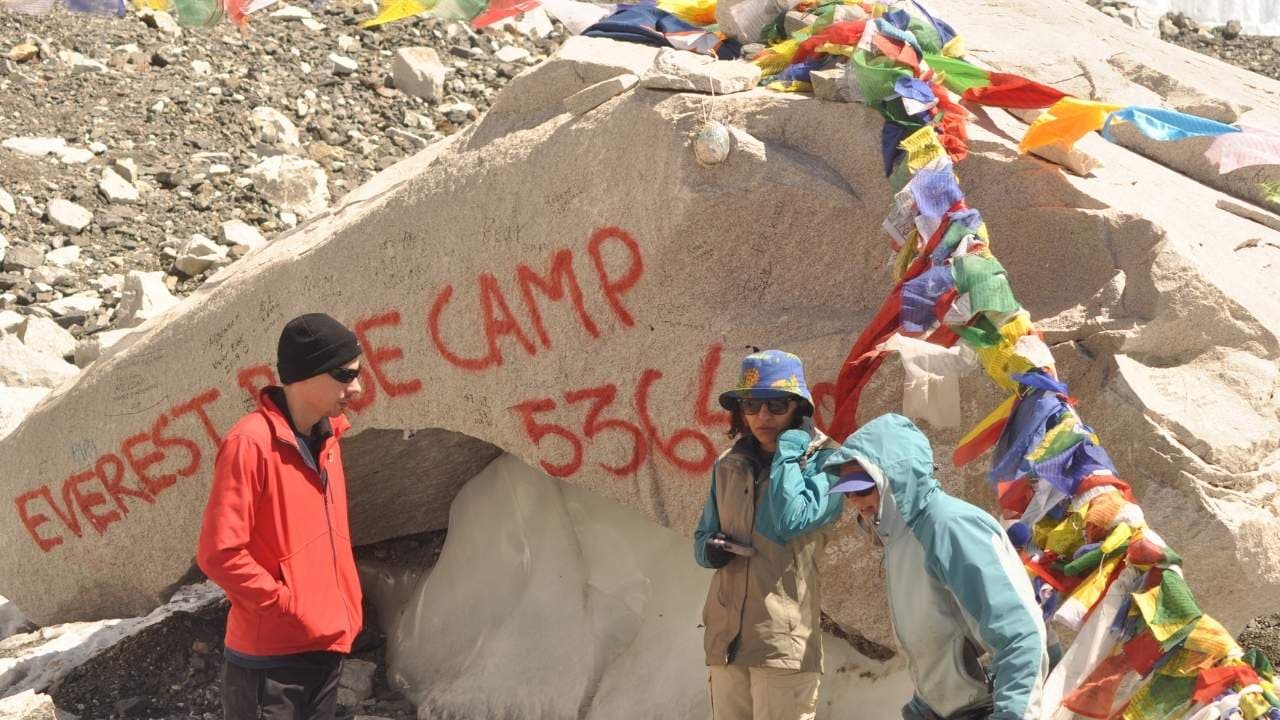
Standing at Everest Base Camp at 5,364 meters (17,598 feet), the legendary staging ground for expeditions attempting Mount Everest
Making the additional journey to Ama Dablam Base Camp, reaching approximately 4,570 meters (14,990 feet) and experiencing the mountain from a much closer perspective than the usual Everest trekking route
Spectacular views of Ama Dablam, one of the most distinctive mountains in the Himalayas, whose sharp summit, hanging glaciers and steep ridges create a dramatic backdrop throughout the upper Khumbu
Experience two very different high-altitude destinations in one trek: the globally famous Everest Base Camp and the quieter, more intimate mountain environment around Ama Dablam Base Camp
Following the trail through the Pangboche and Ama Dablam valley, one of the most visually impressive sections of the trek, where Ama Dablam rises dramatically above the villages and surrounding ridges
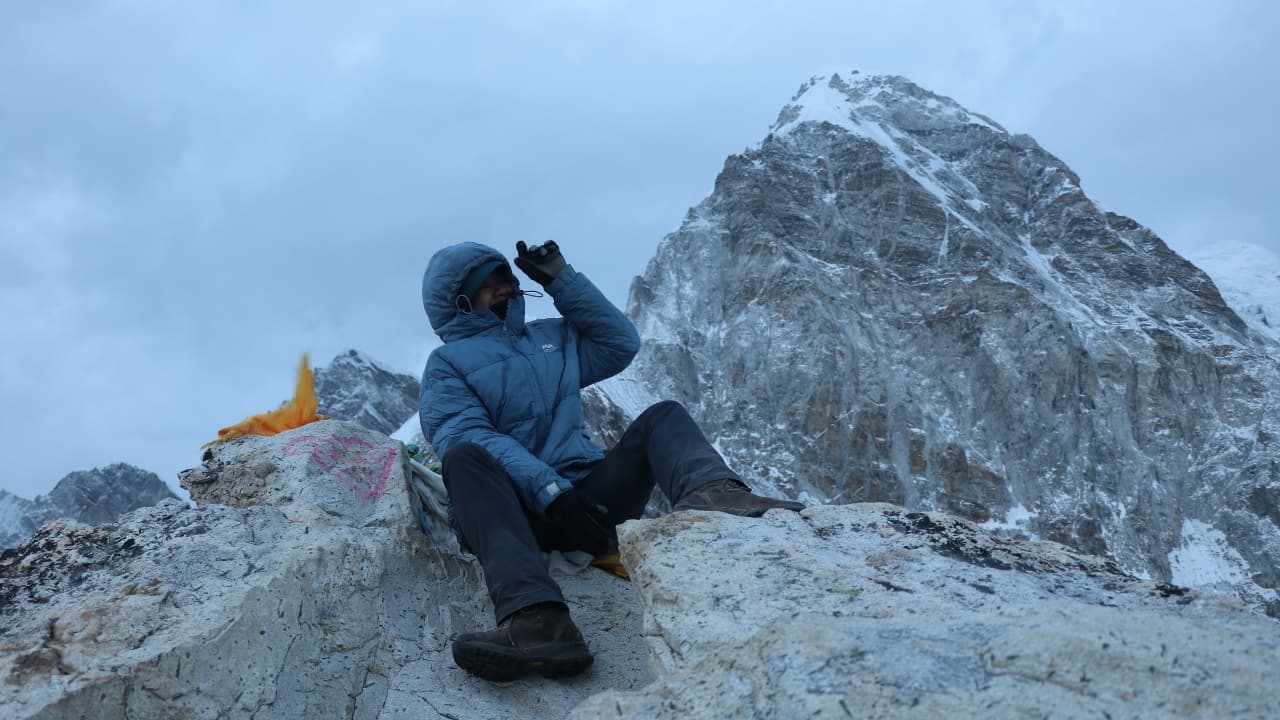
Hike to Kala Patthar at 5,550 meters (18,208 feet) for one of the finest panoramic viewpoints of Mount Everest, Nuptse, Pumori, Ama Dablam and the surrounding Himalayan peaks
Experience the changing Himalayan landscape from the lower valleys to the high alpine zone, moving from forest, rivers and cultivated hillsides to glacial moraines, barren slopes and permanently snow-covered mountains
Trek with gradual altitude progression and dedicated acclimatization days, allowing the body time to adjust before reaching Everest Base Camp and the higher sections of the journey
Experience the contrast between the busy Everest Base Camp trail and the more peaceful surroundings of Ama Dablam Base Camp, making the trek feel more varied than a standard Everest Base Camp itinerary
A complete Himalayan journey that combines Everest Base Camp, Kala Patthar and Ama Dablam Base Camp in one carefully paced adventure, giving trekkers a broader experience of the Khumbu rather than focusing on Everest alone
Trip Overview
The Everest Base Camp with Ama Dablam Base Camp Trek brings together two of the most impressive mountain destinations in the Khumbu region. This Himalayan experience combines the legendary appeal of Everest with an up-close experience beneath one of the Himalayas’ most recognizable peaks, Ama Dablam. Standing at 6,812 meters, Ama Dablam rises above the surrounding valleys with its distinctive pyramid-shaped summit and steep ridges. As for the Everest Base Camp at 5,364 meters, it remains one of the world’s most sought-after trekking destinations.
What makes the EBC with Ama Dablam Base Camp Trek particularly rewarding is the contrast it offers between the two experiences. Everest Base Camp carries the history and excitement of standing at the foot of the world’s highest mountain, following trails used by climbers and trekkers from around the globe. Ama Dablam Base Camp offers a quieter and more intimate mountain setting, where the huge walls of Ama Dablam dominate the landscape, and the surrounding peaks seem remarkably close. The two destinations reveal different sides of the Khumbu rather than simply adding another stop to an Everest itinerary.
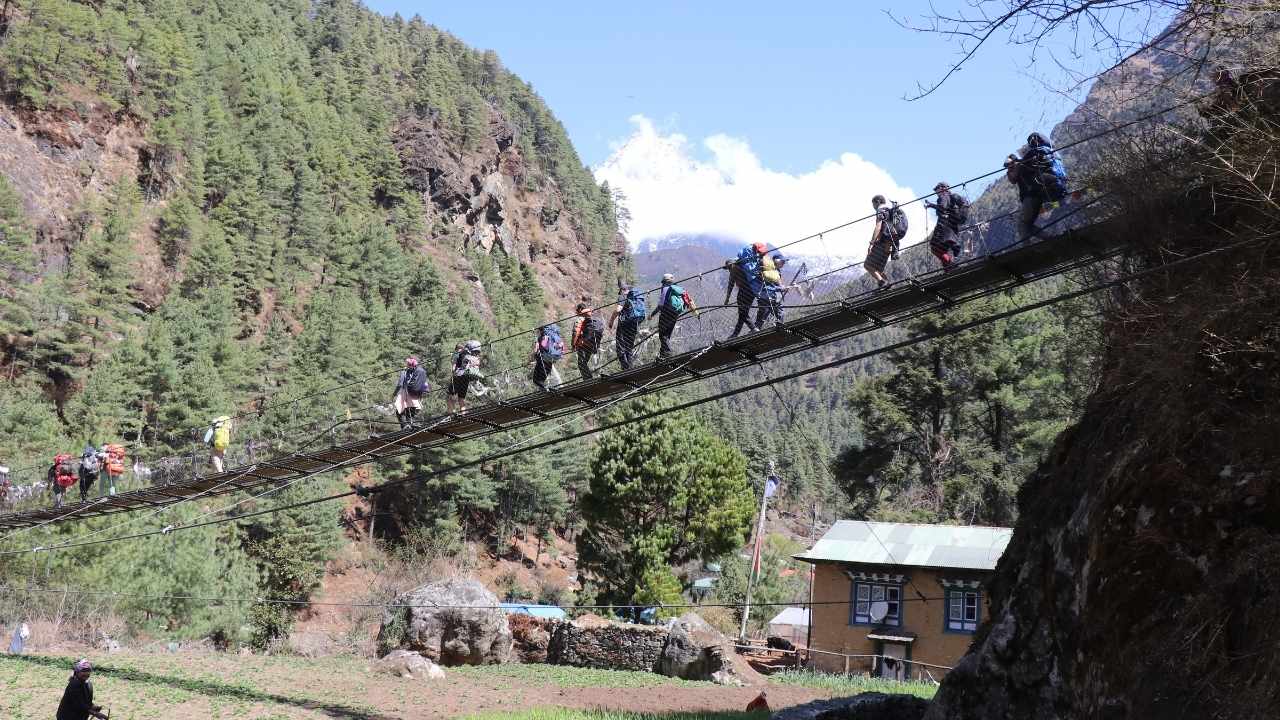
The trek also gives you time to experience the Sherpa heartland beyond its famous viewpoints. Along the way, the landscape changes from forested hills and river valleys to open alpine terrain, with villages, Buddhist monasteries, prayer walls, suspension bridges, and high mountain settlements which become part of the journey. The gradual change in altitude is equally noticeable, particularly as the trail moves above Namche Bazaar toward the thinner air and rugged terrain of the upper Khumbu.
For trekkers who want more than a straightforward visit to Everest Base Camp, this EBC and Ama Dablam Base Camp Trek combination adds depth without taking away from the main objective. You experience the famous Everest trail while also stepping away from its busiest sections to spend time in the spectacular surroundings of Ama Dablam. With proper acclimatization, a reasonable level of fitness, and a well-planned itinerary, this incredible Himalayan odyssey offers a challenging but achievable Himalayan adventure filled with some of the finest mountain scenery in Nepal.
Why Choose EBC With Ama Dablam Base Camp Trek?
The Everest Base Camp and Ama Dablam Base Camp Trek is a good choice for trekkers who want to experience more of the Khumbu than the standard Everest Base Camp route alone can offer. Everest Base Camp provides the iconic objective, while the detour toward Ama Dablam Base Camp takes you into a different mountain setting where the scale of Ama Dablam becomes much more immediate. Our itinerary is built around experiencing both destinations at a sensible pace, with acclimatization and mountain conditions taken seriously rather than trying to fit everything into the shortest possible number of days.
Two Iconic Himalayan Objectives in One Trek: Reaching Everest Base Camp and walking to Ama Dablam Base Camp gives the journey two distinct goals. You experience the legendary Everest landscape while also getting much closer to the dramatic south face and ridges of Ama Dablam.
A Different Perspective of Ama Dablam: Ama Dablam is visible from several points along the Everest trail, but reaching its base brings a completely different sense of scale. The mountain dominates the surrounding landscape, with its sharp summit, glaciers, and enormous rock faces appearing much closer.
More Than a Standard EBC Trek: The additional Ama Dablam section gives the trek a stronger sense of exploration. Instead of simply following the most familiar Everest route from Lukla to Base Camp and back, you spend time in another remarkable part of the Khumbu.
A Well-Paced High-Altitude Experience: The itinerary allows the body to gain elevation progressively, with acclimatization built into the journey before the highest sections. This is particularly important when combining Ama Dablam Base Camp, Everest Base Camp and Kala Patthar in one trek.
Explore the Sherpa Heartland: The journey passes through traditional settlements where Sherpa culture remains closely connected with the mountains. Namche Bazaar, Tengboche, Pangboche, Dingboche, and other villages offer opportunities to see monasteries, mani walls, prayer flags, stone houses, and everyday mountain life along the trail.
Exceptional Mountain Views Throughout the Trek: The scenery is not limited to Everest. Depending on weather and visibility, the trek brings views of Ama Dablam, Lhotse, Nuptse, Thamserku, Kangtega, Pumori, and other Himalayan peaks, with the landscape changing dramatically as the trail gains altitude.
A Good Balance of Famous and Less Crowded Sections: The Everest Base Camp trail is understandably popular, but the Ama Dablam Base Camp section offers a more secluded mountain experience. This contrast helps the trek feel less like a single busy pilgrimage to Base Camp.
Progressive Change in Landscape: The trail begins among forests and river valleys before moving through cultivated hillsides and Sherpa villages into an increasingly barren alpine environment. By the time you reach the upper Khumbu, the scenery is dominated by glaciers, moraine, exposed rock, and massive Himalayan peaks.
Suitable for Experienced Trekkers Without Technical Climbing: Reaching Ama Dablam Base Camp does not require climbing Ama Dablam itself. The trek involves demanding high-altitude walking, but it is a trekking journey rather than a technical mountaineering expedition.
A More Complete Khumbu Adventure: For trekkers who have enough time and want a broader Himalayan experience, combining Everest Base Camp, Kala Patthar, and Ama Dablam Base Camp creates a richer journey than focusing on Everest Base Camp alone. You get the history and recognition of Everest alongside the raw mountain character of Ama Dablam.
EBC Ama Dablam Trek Itinerary Outline Plan
Planning a high-altitude trek is much easier when you can see the key details of each day at a glance. The following EBC With Ama Dablam Base Camp Trek itinerary outline summarizes your complete 12-day journey with the daily route, elevation profile, trekking or flight distance, and estimated duration. The elevation figures show how the trek progresses, while the distance and duration columns help you understand the actual walking workload involved on each stage.
This outline table is useful for assessing the altitude gain, daily trekking hours, and overall pace of the itinerary before looking at the detailed day-by-day plan.
Day
EBC With Ama Dablam Base Camp Trek Itinerary
Elevation Profile
Duration/ Distance
01
Kathmandu (1,400m/ 4,593ft) to Lukla (2,860m/ 9,383ft) Flight and Then Trek to Phakding (2,610m/ 8,562ft)
1,460m/ 4,790ft (gain)
Flight Distance: 138km/ 85 miles
Flight Duration: 35 minutes
Trek Distance: 8km/ 4.9 miles
Trek Duration: 3 to 4 hours
02
Phakding to Namche Bazaar (3,440m/ 11,286ft) Trekking
830m/ 2,723ft (gain)
Trek Distance: 12.3km/ 7.64 miles
Duration: 5 to 6 hours
03
Acclimatization Day in Namche (Hike to Hotel Everest View)
04
Trek to Tengboche (3,867m/ 12,687ft) From Namche
427m/ 1,400ft (gain)
Trek Distance: 10.7km/ 6.65 miles
Duration: 5 to 6 hours
05
Tengboche to Dingboche (4,410m/ 14,468ft)
543m/ 1,781ft (gain)
Trek Distance: 9.8km/ 6.09 miles
Duration: 5 to 6 hours
06
Dingboche to Lobuche (4,910m/ 16,108ft)
500m/ 1,640ft (gain)
Trek Distance: 8.8 km/ 5.47 miles
Duration: 5 to 6 hours
07
Trek to Gorakshep (5,164m/ 16,942ft) to Everest Base Camp (5,364m/ 17,598ft)
454m/ 1,489ft (gain)
Trek Distance: 11.5km/ 7.15 miles
Duration: 8 to 9 hours
08
Hike to Kala Patthar (5,550m/ 18,208ft) and Trek Down to Pheriche (4,230m/ 13,877ft)
386m/ 1,266ft (gain)
Trek Distance: 9.8km/ 6.08 miles
Duration: 5 to 6 hours
09
Trek to Ama Dablam Base Camp (4,570m/ 14,990ft) and Then to Pangboche (3,900m/ 12,795ft)
340m/ 1,115ft (gain)
Trek Distance: 14km/ 8.6 miles
Duration: 6 to 7 hours
10
Trek Back to Namche Bazaar (3,440m/ 11,286ft)
460m/ 1,509ft (loss)
Trek Distance: 13.8km/ 8.57 miles
Duration: 6 hours
11
Namche to Lukla (2,860m/ 9,383ft)
580m/ 1,902ft (loss)
Trek Distance: 17.9km/ 11.1 miles
Duration: 6 to 7 hours
12
Flight to Kathmandu (1,400m/ 4,593ft)
1,460m/ 4,790ft (loss)
Flight Distance: 138km/ 85 miles
Duration: 35 minutes
Cost Details
What's Included in Everest Base Camp With Ama Dablam Base Camp Trek
Airport pickup and drop-off by private vehicle.
Three meals a day (breakfast, lunch, and dinner) during the trek.
Trekking lodge (tea house) accommodations throughout the trek.
All necessary paperwork: Sagarmatha National Park entry permit and Trekker’s Information Management System (TIMS) permit.
Kathmandu-Lukla-Kathmandu flight with private airport transfer and domestic airport tax.
A highly experienced, helpful, knowledgeable, friendly, English-speaking, well-trained, government-licensed guide. With all his salary, food, drinks, accommodation, transport, and insurance included.
Comprehensive medical supplies (first aid kit will be available)
Arrangement of emergency helicopter service (paid by your travel insurance company).
Use of sleeping bag, down jacket, duffel bag, and walking poles. (If you don’t have your own, you need to return after the trip is completed.)
Eco Holidays Nepal T-shirt.
Government taxes and official expenses.
Everest Base Camp trek map.
Oximeter to check your pulse, oxygen saturation, and heart rate twice daily. (Very useful to check Altitude Mountain Sickness (AMS) symptoms.) This will ensure your trek is in the safest hands possible for all levels of trekkers.
Assistant guide group size: above 6 persons.
What's Excluded in Everest Base Camp With Ama Dablam Base Camp Trek
Meals while you are in Kathmandu: lunch and dinner.
Kathmandu Hotels.
International airport transfer.
Your Travel and Medical Insurance.
Porter if needed ($240). One porter will be used for two people.
Your Personal Expenses.
All the alcoholic and nonalcoholic cold and hot drinks on the trek. (Those you choose to purchase along the way and during evenings in the tea houses).
All desserts are sweet things like chocolate, cake, pie, and pudding.
Hot showers and battery charging at the tea houses.
Extra activities around Kathmandu.
Price & Availability
Group Discount Available
1 Person
US$ 1350
2 - 5 Person
US$ 1225
6 - 12 Person
US$ 1185
13 - 20 Person
US$ 1125
Itinerary of Everest Base Camp With Ama Dablam Base Camp Trek - 12 days
Day 01
Kathmandu (1,400m/ 4,593ft) to Lukla (2,860m/ 9,383ft) Flight and Then Trek to Phakding (2,610m/ 8,562ft): 35 Minutes Flight and 3 to 4 Hours Trek
Your Everest Base Camp with Ama Dablam Base Camp Trek begins with the exciting 35-minute flight from Kathmandu to Lukla. This flight takes you from the busy capital straight into the mountains. As the aircraft approaches Lukla, the change can be felt immediately. The city disappears, hills fill the windows, and the small mountain airstrip marks the moment when your Everest journey truly begins.
From Lukla, the trail descends gradually through Chheplung, Thalsharoa, and Ghat, following the Dudh Koshi River through pine and rhododendron forests. The walking on this day is relatively gentle, giving you time to settle into the rhythm of trekking, meet local people along the trail, and enjoy the first real sense of being in the Khumbu. After 3 to 4 hours of walking, you will arrive at Phakding. This first night in the mountains feels very different from the morning you left Kathmandu.
Max. Elevation:2610
Duration:35 minutes (flight) and 3 to 4 hours (trek)
Distance:138km(flight) and 8km(trek)
Day 02
Phakding to Namche Bazaar (3,440m/ 11,286ft) Trekking: 5 to 6 Hours
Today you will feel like the trek has properly begun. The trail follows the Dudh Koshi River through Zhamfute, Tok Tok, Benkar and Monjo, passing waterfalls, forests and traditional mountain settlements. Then, you will enter the Sagarmatha National Park. Several suspension bridges add to the excitement, particularly the crossings around Jorsale and the Larja Bridge on this day.
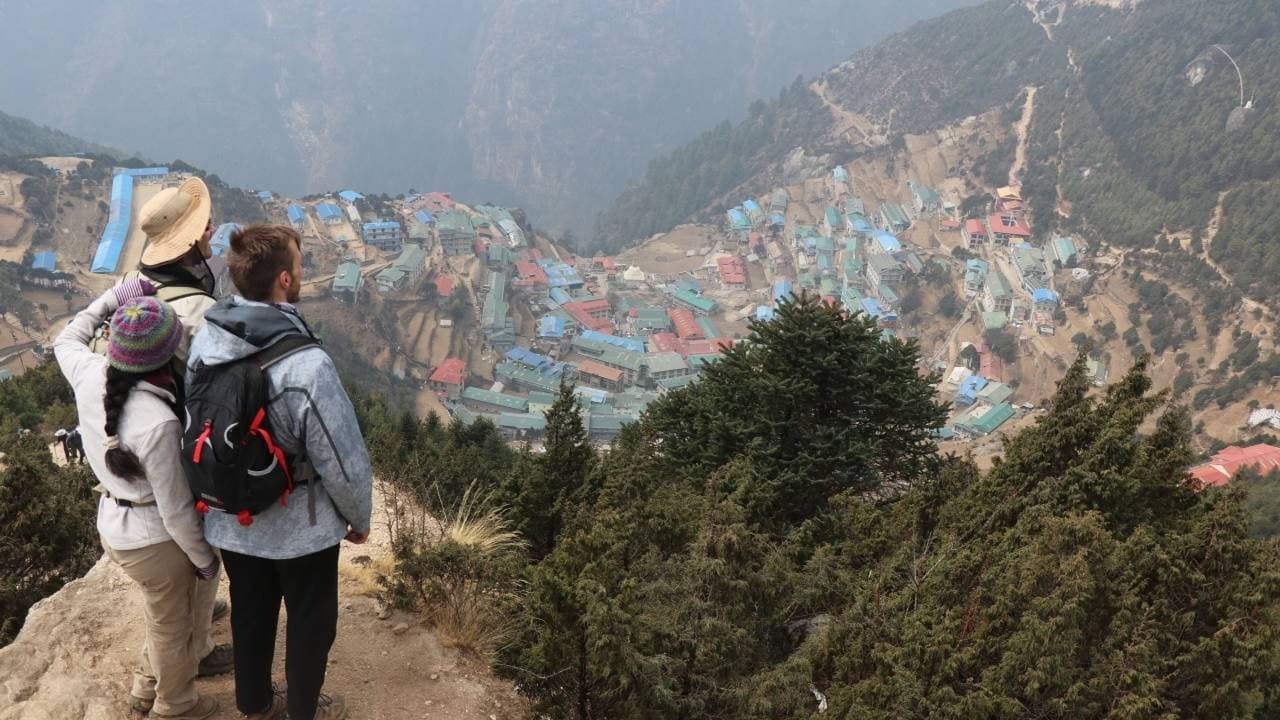
After crossing the river, the trail begins its long climb toward Namche. It is a demanding section, but reaching the viewpoint above the forest and catching the first distant glimpse of Everest, Lhotse, Nuptse and Thamserku makes the effort feel worthwhile. Then, the colorful buildings of Namche Bazaar appear around the mountainside. After long hours on the trail, arriving here feels like reaching the real heart of the Everest region.
Max. Elevation:3440
Duration:5 to 6 hours
Distance:12.3km
Day 03
Acclimatization Day in Namche (Hike to Hotel Everest View)
Instead of spending the acclimatization day entirely indoors, on this acclimatization day, you will climb above Namche toward Syangboche and Hotel Everest View at around 3,880 meters. The higher you climb, the more the surrounding mountains open up. The stunning Himalayan peaks like Dablam, Everest, Lhotse, Nuptse, Thamserku and Kongde begin to dominate the horizon.
The acclimatization hike is about more than adjusting to altitude. You have your first relaxed morning to appreciate the scale of the Khumbu without carrying your trekking pack all day. If conditions and energy allow, your hike can continue toward Khumjung and Khunde. In these traditional Himalayan villages, the stone houses, monastery life, and quieter village trails offer a glimpse of everyday Sherpa life. You then return to Namche for another night, feeling more comfortable with the altitude and more prepared for the higher mountains ahead.
Max. Elevation:3440
Duration:3 to 4 hours
Day 04
Trek to Tengboche (3,867m/ 12,687ft) From Namche: 5 to 6 Hours
You will leave Namche after breakfast; the trail climbs gently along the mountainside with some of the finest open views of the Khumbu. Ama Dablam becomes increasingly impressive as you walk, while Everest, Lhotse, Nuptse and Thamserku remain visible across the valley in clear weather. The trekking route passes Kyangjuma and Sanasa before descending through forest toward the Dudh Koshi at Phunki Tenga.
From Phunki Tenga, the trail climbs steadily through pine, fir, and rhododendron forest toward Tengboche. The final ascent can feel demanding, but reaching the village and seeing Tengboche Monastery surrounded by towering peaks is one of the moments that makes the effort worthwhile. After your arrival, you can visit the monastery and, if your timing allows, experience the quiet atmosphere of this important Buddhist center before settling in for the night.
Max. Elevation:3867
Duration:5 to 6 hours
Distance:10.7km
Day 05
Tengboche to Dingboche (4,410m/ 14,468ft): 5 to 6 Hours
This morning begins with a memorable descent through rhododendron and pine forest toward Deboche, with Ama Dablam rising prominently ahead. The trail then crosses the Imja Khola and continues through Pangboche, which is one of the oldest and most important Sherpa settlements in the upper Khumbu. From here, the landscape gradually becomes more open as the trail leaves the dense forests behind.
Beyond Shomare and Orsho, the valley widens, and the mountains begin to feel much larger as you approach Dingboche. Ama Dablam, Lhotse, Island Peak, and the surrounding peaks dominate the horizon. Arriving at Dingboche marks another significant step into the high Himalayas. Here, the colder and drier air makes it clear that the character of the trek is changing.
Max. Elevation:4410
Duration:5 to 6 hours
Distance:9.8km
Day 06
Dingboche to Lobuche (4,910m/ 16,108ft): 5 to 6 Hours
On this day of your EBC With Ama Dablam Base Camp Trek, the trail takes you deeper into the high-altitude landscape. Leaving Dingboche, you will climb gradually toward Duglha, with increasingly broad views across the valley toward Taboche, Cholatse and Pumori. The vegetation becomes sparse, the terrain becomes more rugged, and the sense of remoteness grows with every hour.
After Duglha, the trail climbs a steeper section toward the Khumbu Glacier moraine, where memorials honor climbers and Sherpa guides who lost their lives in the Everest region. It is a quiet and reflective part of the journey before the trail continues across the rocky moraine toward Lobuche. By the time you reach the village, the surrounding mountains feel enormous, and the reality of trekking above 4,900 meters truly sets in.
Max. Elevation:4910
Duration:5 to 6 hours
Distance:8.8km
Day 07
Trek to Gorakshep (5,164m/ 16,942ft) to Everest Base Camp (5,364m/ 17,598ft): 8 to 9 Hours
Today is the day the trek has been building toward. From Lobuche, you will move along the trail that continues across the rugged Khumbu Glacier moraine toward Gorakshep. Pumori, Lingtren, Khumbutse and Nuptse rise around the valley in this approach. After reaching Gorakshep, you have a short break before continuing toward Everest Base Camp.
The trail to Everest Base Camp follows the glacier and rocky moraine, with the landscape becoming increasingly stark and immense. Reaching Everest Base Camp at 5,364 meters is less about a dramatic summit-like finish and more about finally standing in a place you have spent days working toward. The famous Everest summit itself is hidden from the base camp, but the surrounding Khumbu peaks, glacier formations, and expedition activity create an unforgettable high-altitude setting. After spending time at the foothills of the tallest snow-clad giant on the planet, you return to Gorakshep for the night.
Max. Elevation:5364
Duration:8 to 9 hours
Distance:11.5km
Day 08
Hike to Kala Patthar (5,550m/ 18,208ft) and Trek Down to Pheriche (4,230m/ 13,877ft): 5 to 6 Hours
An early start takes you above Gorakshep toward Kala Patthar, the highest point of the trek and one of the best viewpoints in the Everest region. The climb is demanding at this altitude, but reaching the top as the morning light reaches the mountains can be one of the most rewarding moments of the entire journey. From 5,550 meters, you get an exceptionally close panorama of Mount Everest, Nuptse, Pumori, Changtse and the surrounding Himalayan peaks.
After returning to Gorakshep for breakfast, you will then retrace the route toward Lobuche and Duglha before descending through the wider valley toward Pheriche. The descent feels noticeably different after the intensity of the previous days, and the return to Pheriche brings you back into a more comfortable environment with broader valley views and slightly thicker air.
Max. Elevation:4230
Duration:5 to 6 hours
Distance:13.8km
Day 09
Trek to Ama Dablam Base Camp (4,570m/ 14,990ft) and Then to Pangboche (3,900m/ 12,795ft): 6 to 7 Hours
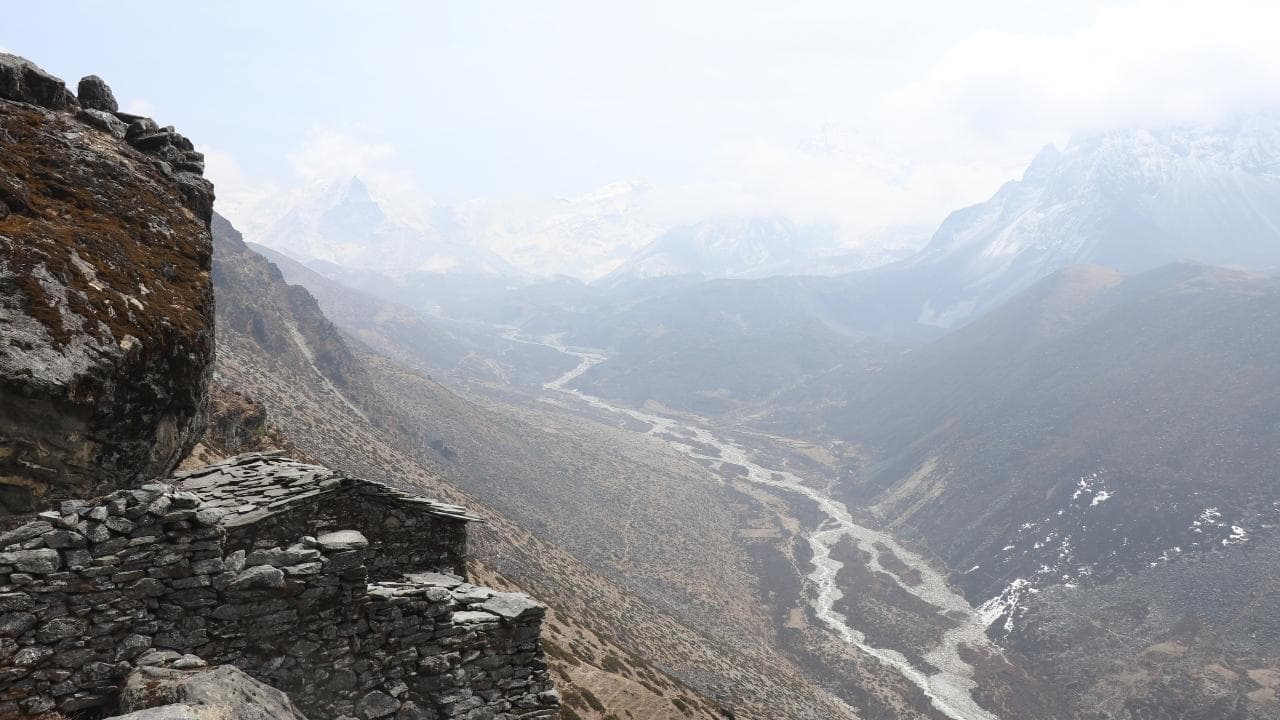
After exploring the Everest Base Camp Trek, today you will move to the next major highlight of your journey. From Pheriche, the trail follows the Imja Valley toward Orsho and Pangboche. As you approach the base camp, Ama Dablam becomes increasingly dominant. The surroundings feel quieter and more open, offering a welcome contrast to the busier Everest Base Camp route.
From the trail near Pangboche, you continue toward Ama Dablam Base Camp at approximately 4,570 meters. You will enter the mountain's immediate landscape of rocky slopes, glaciers, and towering Himalayan walls. Standing beneath Ama Dablam gives a very different perspective from the views seen along the standard EBC trail; the mountain rises almost directly above you. After taking time to experience the base camp and its surroundings, you will then descend to Pangboch to spend the night.
Max. Elevation:3900
Duration:6 to 7 hours
Distance:14km
Day 10
Trek Back to Namche Bazaar (3,440m/ 11,286ft): 6 Hours
Leaving the quieter experience around Ama Dablam, you will follow the trail that begins its return toward Namche. From Pangboche, you descend through Tengboche and Deboche, passing back through the rhododendron and pine forests before reaching Phunki Tenga. You will then climb toward Sanasa and Kyangjuma. The familiar views of Ama Dablam and the surrounding peaks remain with you for much part of the walk.
Reaching Namche Bazaar feels different on the way back. After spending time above 4,000 and 5,000 meters, the lower altitude is noticeably more comfortable. Namche's cafes, shops, and lively streets provide a pleasant change from the remote mountain settlements of the upper Khumbu.
Max. Elevation:3440
Duration:6 hours
Distance:13.8km
Day 11
Namche to Lukla (2,860m/ 9,383ft): 6 to 7 Hours
The final full trekking day of the Everest Base Camp and Ama Dablam Base Camp Trek takes you back through the familiar trail along the Dudh Koshi Valley. From Namche, the route descends toward Jorsale and Monjo, passing through the Sagarmatha National Park checkpoint. You will then continue walking across the major traditional settlements such as Benkar, Tok Tok, Ghat and Phakding.
The trail feels noticeably different now that you are descending. Forests become greener, the river runs closer to the trail, and the villages become more frequent as you approach Lukla. The final climb back toward Lukla can feel tiring after several days of mountain walking, but reaching the town also brings the satisfying realization that you have completed the trekking portion of the journey.
Max. Elevation:2860
Duration:6 to 7 hours
Distance:17.9km
Day 12
Flight to Kathmandu (1,400m/ 4,593ft): 35 Minutes
Your Himalayan journey comes to an end with a 35-minute flight from Lukla to Kathmandu. As the aircraft leaves the Khumbu Valley behind, the mountains gradually give way to Nepal's green hills and the Kathmandu Valley.
Arriving in Kathmandu is a major change after spending time at elevations above 5,000 meters. More importantly, you leave the mountains with the experience of having reached Everest Base Camp, Kala Patthar, and Ama Dablam Base Camp, three very different perspectives of the Khumbu packed into one demanding and rewarding trek.
Max. Elevation:1400
Duration:35 minutes
Distance:138km
If the provided schedule isn't suitable for you, we can create personalized travel arrangements.
Accommodation on the EBC With Ama Dablam Base Camp Trek is primarily in locally operated tea houses and mountain lodges. These are simple, practical places designed around the needs of trekkers rather than hotel-style comfort. Most rooms have two beds with mattresses, pillows, and blankets, while bathrooms are commonly shared. In Namche Bazaar, you will find comparatively comfortable lodges with dining rooms, hot showers, charging facilities, and better connectivity, while accommodation becomes progressively simpler beyond Dingboche.
The difference in accommodation facilities becomes particularly noticeable around Lobuche and Gorakshep. In these high-altitude regions, the combination of altitude, limited infrastructure, and harsh weather means facilities are basic. Rooms can be cold, bathrooms are usually shared, and hot showers or electronic charging may require an additional payment.
At Ama Dablam Base Camp, there is no accommodation itself, so the trek returns to Pangboche after spending time in the base-camp area. The tea houses are part of this Himalayan experience. Evenings at the teahouses usually offer a chance to sit in a communal dining room, warm up, and exchange stories with trekkers and guides from different parts of the world.
Food During the Trek
Food is available at tea houses throughout the route, so you do not need to carry meals for the entire journey. The selection is broader in Lukla and Namche and gradually becomes more limited as the trail climbs toward the high-altitude settlements. The emphasis is on warm, filling food that can keep you going during long trekking days. A typical day begins with a hot breakfast before heading onto the trail, followed by a substantial lunch at a village tea house and a warm dinner after reaching your overnight stop.
Throughout the teahouses along the trekking trail, Dal bhat remains one of the most dependable choices because it combines rice, lentils, vegetables, and pickle. Similarly, soups, noodles, potatoes, and other simple dishes are useful when temperatures drop at higher elevations. You can generally expect options such as:
Traditional Nepali Meals: Dal bhat, vegetable tarkari, lentil soup, rice, roti, and seasonal vegetables
Tibetan and Sherpa Dishes: Thukpa, Tibetan bread, Sherpa stew, noodle-based dishes, and momos
Quick Energy Meals: Pancakes, porridge, eggs, toast, potatoes, pasta and fried rice
Lighter Options: soups, sandwiches, noodles, cereals, fruit and yogurt where available
Snacks: Chocolate, biscuits, energy bars, nuts and locally available bakery items
Hot Drinks: Tea, coffee, ginger tea, lemon tea, hot chocolate and hot lemon with honey
**Note: At lower elevations, you will have more freedom to choose between different dishes, but the menu becomes simpler above 4,000 meters. Around Dingboche, Lobuche and Gorakshep, having a hot meal and plenty of fluids becomes as much about staying comfortable as it is about eating. For a trek involving both Everest Base Camp and Ama Dablam Base Camp, maintaining regular meals and hydration is particularly important because you will spend several days at significant altitude**
Transporation
Transportation for the Everest Base Camp with Ama Dablam Base Camp Trek begins and ends with the mountain flight between Kathmandu and Lukla. The flight takes approximately 35 minutes and saves several days of overland travel, placing you directly at the gateway of the Khumbu. On a clear morning, the flight itself becomes part of the experience, with changing views of Nepal's hills and Himalayan terrain as the aircraft approaches Lukla.
After arriving in Lukla, the rest of the journey is completed on foot with your guide and trekking crew. The trail passes through Phakding, Namche Bazaar, Tengboche, Pangboche, Dingboche, Lobuche and Gorakshep before reaching Everest Base Camp. The Ama Dablam section follows the Imja Valley toward its base camp before returning through Pangboche and Namche toward Lukla.
The Lukla flight is weather-dependent, particularly during periods of poor visibility, strong winds, or changing mountain conditions. Flight schedules can therefore shift, and occasional delays are possible. It is sensible to keep some flexibility around the beginning and end of the trek rather than arranging an immediate international connection on the same day as the Lukla flight.
Difficulty and Fitness Requirements for EBC With Ama Dablam Base Camp Trek
The Everest Base Camp With Ama Dablam Base Camp Trek is a demanding high-altitude trek suitable for trekkers with good fitness and some previous experience with long-distance walking. There is no technical climbing involved, but the altitude is the main factor that makes the journey demanding. The trek reaches 5,550 meters (18,208 feet) at Kala Patthar, while Everest Base Camp stands at 5,364 meters and Ama Dablam Base Camp at around 4,570 meters.
Most trekking days involve around 5 to 7 hours of walking, with some longer days reaching 8 to 9 hours. The trail includes frequent ascents and descents, rocky and uneven sections, suspension bridges, moraine terrain, and long uphill stretches. The section toward Everest Base Camp becomes particularly demanding because of the thin air, while the climb to Kala Patthar requires extra effort despite its relatively short distance.
You do not need to be an athlete, but you should be comfortable walking for several consecutive days and handling sustained uphill sections. Preparing with regular hiking, stair climbing, uphill walking, and cardiovascular exercise before the trek can make a noticeable difference. Strengthening your legs and improving overall endurance is also useful because the accumulated fatigue becomes more noticeable in the second half of the trek.
The itinerary includes acclimatization time in Namche Bazaar and Dingboche, which helps your body adjust before reaching the higher elevations. Still, altitude affects people differently, regardless of fitness, so the trek should be approached patiently, with a steady pace, adequate hydration, proper nutrition, and attention to how you feel throughout the journey.
Best Time to Do Everest Base Camp With Ama Dablam Base Camp
The Everest Base Camp and Ama Dablam Base Camp Trek is best undertaken during spring (March to May) and autumn (late September to November), when the Khumbu generally offers the most favorable combination of stable weather, clear mountain views, and manageable trail conditions. This becomes particularly important on a trek that reaches 5,550 meters at Kala Patthar, with Everest Base Camp at 5,364 meters and Ama Dablam Base Camp at around 4,570 meters.
Seasonal conditions change considerably with elevation. A pleasant afternoon in Namche does not mean the same conditions will be waiting at Gorakshep or Kala Patthar. At the highest points, nighttime temperatures can fall well below freezing even during the main trekking seasons.
Spring (March to May)
Spring season brings a gradual return of warmer conditions to the Khumbu and is one of the best times to experience the trek. In Namche Bazaar, daytime temperatures are generally around 8°C to 15°C, while nighttime temperatures can fall to approximately -2°C to 5°C. Around Gorakshep and Kala Patthar, conditions remain much colder, with daytime temperatures often around -5°C to 5°C and nighttime temperatures potentially dropping below -10°C.
By April and May, snow from winter is usually retreating from the main trekking trails, although higher sections can still hold snow. The lower valleys become greener, and rhododendrons begin flowering, while clear mornings often provide excellent views of Everest, Ama Dablam, Lhotse, Nuptse and Pumori. April and early May are also busy, so expect more trekkers and fuller tea houses along the main EBC route.
Best For: Clear mountain views, spring landscapes, relatively stable trekking conditions and blooming rhododendrons.
Autumn (Late September to November)
Autumn generally provides the most reliable overall conditions for the Everest Base Camp with Ama Dablam Base Camp Trek. After the monsoon, the atmosphere becomes clearer, and October in particular is known for excellent mountain visibility. Around Namche, daytime temperatures commonly range from 8°C to 15°C, with nights around 0°C to 5°C. At Gorakshep and Kala Patthar, daytime temperatures can remain around -5°C to 5°C, while nighttime temperatures may fall below -10°C.
October usually offers a particularly strong combination of clear skies and comfortable daytime trekking temperatures. November becomes progressively colder, but the dry air can still produce exceptionally sharp mountain views. The trade-off is popularity: October and early November are among the busiest periods on the Everest trail.
Best For: Mountain visibility, stable weather, photography, comfortable daytime trekking and the most dependable overall trekking conditions.
Winter (December to February)
Winter is possible but requires much greater preparation for cold and snow. Around Namche Bazaar, daytime temperatures can remain around 0°C to 8°C, while nighttime temperatures may fall to -10°C or lower. At Gorakshep and Kala Patthar, temperatures can become extremely cold, with nighttime conditions potentially reaching -15°C to -20°C or below during severe cold spells.
Snowfall can affect the higher trail, particularly around Lobuche, Gorakshep and Kala Patthar. Heavy snow may temporarily make some sections difficult or inaccessible, and shorter daylight hours mean early starts become particularly important. On the other hand, winter offers something the peak seasons cannot: quiet trails, fewer visitors, and snow-covered Himalayan scenery.
Best For: Experienced trekkers, solitude, winter landscapes, and exceptionally crisp views when conditions are stable.
Summer/Monsoon (June to August)
Summer is the least popular period for the Everest trek because the southwest monsoon brings clouds, rain, and unstable weather to Nepal. The higher Khumbu receives less rainfall than many lower regions, but cloud cover can still obscure the mountains, particularly during the daytime. Temperatures around Namche can reach approximately 12°C to 18°C during the day, while nights may remain around 5°C to 10°C. Higher elevations remain significantly colder.
The biggest practical concern is often Lukla flight reliability. Low cloud and poor visibility can cause delays or cancellations, while wet sections of the lower trail can become slippery. On the positive side, there are far fewer trekkers, and the quieter trails can appeal to travelers who prioritize solitude over consistently clear mountain views.
Best For: Fewer crowds, quieter trails, and travelers comfortable with weather uncertainty.
So, When Should You Go?
For most trekkers, October to November and March to April offer the strongest balance of weather, visibility, and trail conditions. April is particularly attractive for spring scenery, while October is hard to beat for clear Himalayan panoramas. If avoiding crowds is more important than having the most predictable weather, winter or the monsoon shoulder periods can offer a quieter experience, but they require considerably more flexibility and preparation.
Altitude and Acclimatization
The Everest Base Camp with Ama Dablam Base Camp Trek involves a substantial change in elevation, beginning at 1,400 meters (4,593 feet) in Kathmandu and reaching 5,550 meters (18,208 feet) at Kala Patthar. The elevation increases gradually as you move from Lukla at 2,860 meters through Namche Bazaar (3,440m), Tengboche (3,867m), Dingboche (4,410m), Lobuche (4,910m), and Gorakshep (5,164m). Ama Dablam Base Camp sits at around 4,570 meters (14,990 feet), so by the time you reach the upper Khumbu, your body has already spent several days adapting to thinner air.
The itinerary includes acclimatization time in Namche Bazaar and a slower progression through the higher villages rather than gaining altitude too quickly. The rest day in Namche allows you to hike to higher elevations around Syangboche and Hotel Everest View before returning to sleep at Namche. Dingboche is another important stage of the trek, giving your body additional time at more than 4,000 meters before continuing toward Lobuche, Gorakshep, and Everest Base Camp. The descent after Kala Patthar and the return toward Pangboche and Namche also gives your body a valuable recovery period at lower elevations.
At higher altitudes, some trekkers may experience mild symptoms such as headache, reduced appetite, tiredness, dizziness or shortness of breath. These can occur regardless of fitness level, so the safest approach is to walk at a steady pace, drink enough fluids, eat regularly, and avoid trying to push through worsening symptoms. Your guide will monitor your condition throughout the trek and can adjust the pace or itinerary if necessary. If symptoms become severe or continue to worsen, descending to a lower elevation is the most important response.
Because this trek reaches above 5,500 meters, acclimatization should be treated as an essential part of the journey rather than simply a rest period. Giving your body enough time to adjust can make the difference between struggling through the upper Khumbu and being able to properly enjoy Everest Base Camp, Kala Patthar, and the dramatic surroundings of Ama Dablam.
Packing Essentials for EBC Ama Dablam Trek
Packing for the EBC with Ama Dablam Base Camp Trek means preparing for very different conditions along the route. You begin around 2,860 meters in Lukla and gradually climb above 4,000 meters, eventually reaching 5,550 meters at Kala Patthar. Temperatures, wind, and trail conditions can change significantly with elevation, so a layering system is more useful than carrying bulky clothing. The goal is to stay warm and dry without making your trekking pack unnecessarily heavy.
Clothing and Layers
Moisture-wicking thermal base layers
Quick-drying T-shirts and long-sleeve trekking shirts
Fleece or warm mid-layer
Down or synthetic insulated jacket
Waterproof and windproof outer shell
Thermal leggings or warm base-layer trousers
Comfortable trekking pants
Warm hat or beanie
Sun hat or cap
Warm gloves and a lighter pair of liner gloves
Buff or neck warmer
Warm sleepwear
Several pairs of moisture-wicking trekking socks
Extra warm socks for higher elevations
Trekking Footwear
Broken-in trekking boots with good ankle support and grip
Lightweight sandals or slippers for tea houses
Several pairs of trekking socks
Optional gaiters for snow, mud, or wet trail conditions
Backpack and Sleeping Gear
30 to 40 liter daypack
Waterproof backpack cover
Duffel bag for luggage carried by porter
Sleeping bag suitable for sub-zero temperatures
Lightweight sleeping bag liner
Small dry bags or waterproof bags for clothing and electronics
Trekking poles
Headlamp with spare batteries
Reusable water bottles or hydration system
Sun, Hydration and Personal Care
Sunglasses with strong UV protection
Sunscreen, preferably SPF 30–50
Lip balm with SPF
Reusable water bottles
Water purification tablets or a suitable filtration method
Moisturizer
Toothbrush and toothpaste
Biodegradable soap
Hand sanitizer
Wet wipes and tissues
Small quick-drying towel
Health and First-Aid Essentials
Personal prescription medications
Basic first-aid supplies
Blister treatment
Pain-relief medication
Basic medication for common travel-related problems
Oral rehydration solution
Any altitude medication prescribed or recommended by your doctor
Documents and Trekking Essentials
Passport and copies of important documents
Trekking permits and required documents
Travel insurance details
Nepali rupees for personal expenses
Mobile phone
Power bank
Charging cables
Universal travel adapter
Small wallet or money pouch
Emergency contact information
Optional but Useful Items
Camera or smartphone
Extra memory cards and batteries
Portable charger
Small book or entertainment for tea-house evenings
Earplugs
Lightweight trekking towel
Snacks such as chocolate, nuts or energy bars
Small padlock for your duffel bag
A few lightweight laundry bags
**Note: Keep your daily-use items, valuables, documents, water and warm layers in a 30 to 40 liter daypack. If porter service is included, your heavier clothing and equipment can be packed in a duffel bag and carried separately. Avoid overpacking; the higher sections of the trek involve long walking days, and carrying unnecessary weight can make the experience noticeably harder**
Travel Insurance
Travel insurance is an important part of preparing for the Everest Base Camp and Ama Dablam Base Camp Trek because the journey takes you into remote Himalayan terrain and reaches elevations above 5,500 meters. Medical facilities become limited as you move farther into the Khumbu, so a suitable policy should provide coverage for emergency medical treatment and evacuation if you become seriously ill or injured during the trek.
Before purchasing a policy, check the maximum trekking altitude covered and make sure it includes at least 5,550 meters (18,208 feet), the highest point reached at Kala Patthar. The policy should also cover emergency helicopter evacuation, hospitalization, medical expenses, trip cancellation or interruption, flight delays, lost or delayed baggage, and personal belongings. Some insurers exclude high-altitude trekking unless the activity and maximum elevation are specifically covered, so the wording of the policy matters.
The weather-dependent flights between Kathmandu and Lukla are another reason to have adequate travel coverage. Delays or cancellations caused by weather can affect your trekking schedule and onward international travel, particularly during periods of poor visibility or unstable mountain conditions. It is therefore worth checking how your insurer handles missed connections, additional accommodation and transportation expenses.
Make sure to carry a digital and printed copy of your insurance policy and emergency contact details during the trek. Your guide should also have the information needed to contact the insurer or coordinate assistance in an emergency. Good insurance does not replace careful acclimatization and responsible trekking, but it provides important financial and logistical protection when traveling through the high and remote areas of the Everest region.
Safety and Trekking Support
Safety becomes increasingly important as the Everest Base Camp with Ama Dablam Base Camp Trek moves from the lower Khumbu into terrain above 4,000 meters. The trek is supported by an experienced local guide who understands the route, changing mountain conditions, and the challenges of high-altitude trekking. Your guide helps maintain a steady walking pace, monitors how you are responding to the elevation, and provides practical assistance throughout the journey.
The itinerary is designed with acclimatization in mind, including dedicated time in Namche Bazaar and a slower progression through Dingboche before the trek reaches Lobuche, Gorakshep, and Everest Base Camp. Your guide can adjust the pace or recommend changes when weather, trail conditions, fatigue, or altitude-related symptoms make the planned schedule unsuitable. On the Ama Dablam section, local route knowledge is particularly valuable as the trail leaves the main Everest Base Camp route and heads toward the quieter base-camp area.
Mountain weather can change quickly, and conditions may affect trekking plans or the Kathmandu to Lukla flight schedule. We keep the itinerary flexible when necessary rather than rushing through difficult conditions. Guides also assist with navigation across rocky and uneven sections, suspension bridges, moraine terrain, and other challenging parts of the trail.
Basic first-aid support is available during the trek, while your guide can coordinate with local health facilities or emergency evacuation services if a serious situation develops. Carrying appropriate travel insurance with high-altitude trekking and emergency evacuation coverage is strongly recommended. With proper preparation, gradual acclimatization, responsible pacing, and experienced trekking support, you can focus on enjoying the Khumbu while taking the necessary precautions for a demanding high-altitude journey.
Necessary Permits
The Everest Base Camp with Ama Dablam Base Camp Trek requires the permits and entry fees applicable to the Khumbu region. The main requirement is the Sagarmatha National Park Entry Permit, as the trekking route passes through Sagarmatha National Park from the Monjo area onward. The current entry fee listed by the Nepal Tourism Board is around USD 30 per person for foreign visitors.
You will also need the Khumbu Pasang Lhamu Rural Municipality Permit, which applies to the local area around the Everest trekking route. The Nepal Tourism Board currently lists the fee for foreign trekkers as USD 25 per person.
These permits are normally arranged as part of the trekking preparation, so you do not need to manage the application process independently. Our team handles the required documentation and permit arrangements before and during the trek, allowing you to concentrate on the journey itself. Keep your passport details and necessary documents available when requested, as permits are checked at designated points along the route.
Unlike treks into areas such as Upper Mustang or the Manaslu Restricted Area, this itinerary does not enter a restricted trekking zone. A separate restricted-area trekking permit is therefore not required simply for reaching Everest Base Camp, Kala Patthar, or Ama Dablam Base Camp. The Nepal Tourism Board specifically distinguishes restricted-area permits from the regular Everest trekking requirements.
**Note: Permit fees and local regulations can be revised by the relevant authorities, so the applicable rates at the time of your trek should be confirmed when your permits are processed**
Everest Base Camp With Ama Dablam Base Camp Trek FAQs
FAQs
What is the Everest Base Camp With Ama Dablam Base Camp Trek?
The Everest Base Camp With Ama Dablam Base Camp Trek is a high-altitude trekking adventure that combines three major Himalayan experiences: Everest Base Camp at 5,364 meters (17,598 feet), Kala Patthar at 5,550 meters (18,208 feet), and Ama Dablam Base Camp at approximately 4,570 meters (14,990 feet). The route follows the classic Everest trail through Lukla, Namche Bazaar, Tengboche, Dingboche, Lobuche, and Gorakshep before reaching Everest Base Camp. After exploring the Everest Base Camp area, the itinerary takes a different route through the Imja Valley toward Ama Dablam Base Camp before returning to Pangboche and Namche.
How Difficult is the Everest Base Camp With Ama Dablam Base Camp Trek?
EBC Ama Dablam Trek is a challenging high-altitude trek rather than a technical climbing expedition. Most days involve around 5 to 7 hours of walking, while the Everest Base Camp day can take around 8 to 9 hours. The main challenges are altitude, long ascents and descents, rocky terrain, moraine sections, and accumulated fatigue. The highest point is Kala Patthar at 5,550 meters, so proper acclimatization and preparation are essential.
How Many Days Does the Everest Base Camp With Ama Dablam Base Camp Trek Take?
The itinerary takes 12 days, including the Kathmandu to Lukla flights. The trekking portion begins in Lukla and includes acclimatization in Namche Bazaar, the journey to Everest Base Camp and Kala Patthar, a separate excursion to Ama Dablam Base Camp, and the return trek to Lukla. The final day is reserved for the approximately 35-minute flight from Lukla back to Kathmandu.
What is the Highest Altitude Reached on the Trek?
The highest point you will reach during the Everest Base Camp with Ama Dablam Base Camp trek is Kala Patthar at 5,550 meters (18,208 feet). Everest Base Camp is slightly lower at 5,364 meters (17,598 feet), while Ama Dablam Base Camp is around 4,570 meters (14,990 feet). Although Kala Patthar is not a technical summit, reaching this elevation requires careful pacing because the air contains considerably less oxygen than at sea level.
How High is Ama Dablam Base Camp?
Ama Dablam Base Camp is located at approximately 4,570 meters (14,990 feet). It lies beneath the dramatic south face of Ama Dablam and provides a much closer perspective of the mountain than the views from the main Everest trail. The excursion is made after reaching the Everest Base Camp area and returning toward the Imja Valley, with an overnight stay at Pangboche after visiting the base-camp area.
How High is Everest Base Camp?
Everest Base Camp is situated at 5,364 meters (17,598 feet) above sea level on the southern side of Mount Everest. The trail reaches base camp from Gorakshep through the rocky terrain and moraine of the Khumbu Glacier. Everest's summit itself is not directly visible from base camp because of the surrounding peaks and ridges, but the area provides an impressive close-up view of the Khumbu Glacier, Nuptse, and other surrounding mountains.
Do I Need Previous Trekking Experience for This Trek?
Previous high-altitude trekking experience is helpful but not strictly required. The trek does not involve technical climbing, ropes, or specialized mountaineering skills. However, you should be comfortable walking for several consecutive days, including long uphill and downhill sections. If you have never completed a high-altitude trek before, good physical preparation, a gradual itinerary, and close attention to acclimatization become particularly important.
Is the Everest Base Camp With Ama Dablam Base Camp Trek Suitable for Beginners?
Everest Base Camp with Ama Dablam Base Camp can be suitable for fit and well-prepared beginners, but it is more demanding than a standard low-altitude trekking holiday. The combination reaches 5,550 meters and includes several long trekking days, particularly the journey to Everest Base Camp and the climb to Kala Patthar. Beginners should prepare with regular hiking, uphill walking, stair climbing, and cardiovascular exercise before arriving in Nepal. A slow pace and proper acclimatization are more important than trying to walk quickly.
How Fit Do I Need to Be for the Trek?
You should have a good level of cardiovascular endurance and leg strength and be comfortable walking for approximately 5 to 7 hours on consecutive days. Your training can include regular hiking, stair climbing, uphill walking, brisk walking, cycling, or similar endurance activities. You do not need to be an athlete, but building your endurance several weeks before the trek will make the higher sections considerably more manageable.
How Does Acclimatization Work on This Trek?
The itinerary uses gradual elevation gain and includes acclimatization time in Namche Bazaar at 3,440 meters and additional time around Dingboche at 4,410 meters. During the Namche acclimatization day, you can hike toward Syangboche and Hotel Everest View at around 3,880 meters before returning to sleep at Namche. This follows the useful principle of gaining elevation during the day while returning to a lower sleeping altitude.
Do I Need a Licensed Guide for the Everest Base Camp With Ama Dablam Base Camp Trek?
Yes, foreign trekkers entering Nepal's protected trekking areas are required to trek with a licensed guide or porter-guide under Nepal's current trekking regulations. For this route, having an experienced guide is also particularly useful because the trek reaches above 5,000 meters and includes the less-traveled section toward Ama Dablam Base Camp. Your guide assists with navigation, pacing, acclimatization, local arrangements, and communication with tea houses and local services along the route.
Is Wi-fi or Mobile Network Available During the Trek?
Wi-Fi and mobile connectivity are available at several settlements, but the quality and reliability vary considerably with elevation and location. Namche Bazaar generally has better connectivity than the higher villages, while Wi-Fi can also be purchased at many tea houses farther along the route. Mobile network coverage is available in parts of the Khumbu, although there can be dead zones and interruptions.
Can I Charge My Phone and Camera Batteries During the Trek?
Yes, charging is available at many tea houses along the Everest Base Camp route, particularly in villages such as Namche, Tengboche, and Dingboche. At higher elevations, charging facilities may be more limited as they mostly rely on solar power.
Is Porter Service Available for the Everest Base Camp With Ama Dablam Base Camp Trek?
Porter service can be arranged for the trek. Porters carry the heavier luggage between overnight stops, allowing you to walk with a lighter daypack containing water, personal items, warm layers, valuables, and other essentials. A common approach is to keep your daily-use belongings in a 30 to 40 liter daypack while the main luggage is carried separately.
What is the Difference Between the Standard Everest BASE Camp Trek and This Combined Trek?
The main difference is that the combined trek adds Ama Dablam Base Camp to the classic Everest Base Camp journey. A standard EBC itinerary focuses primarily on reaching Everest Base Camp and usually Kala Patthar, following the main route through Namche, Tengboche, Dingboche, Lobuche, and Gorakshep. This Everest Base Camp with Ama Dablam Base Camp Trek itinerary includes those major Everest destinations but then takes you into the Imja Valley toward Ama Dablam Base Camp at approximately 4,570 meters. The result is a more varied itinerary with Everest Base Camp, Kala Patthar, and Ama Dablam Base Camp as three distinct objectives rather than focusing on Everest Base Camp alone.
A surprisingly rich birding escape right on Kathmandu's doorstep
I only had a single free day in Kathmandu before my flight home, and taking this birding excursion to Phulchwoki Hill was the best way to spend it. Driving up through the dense oak and rhododendron forests, the temperature dropped and the forest came alive with bird activity. Within a few hours of quiet walking, we logged Cutias, Kalij Pheasants, Laughingthrushes, and several colorful Sunbirds. Our guide knew every feeding spot along the trail and brought along high-end spotting scopes that made capturing crisp photographs effortlessl.
MMaria Luz Esteve1st Apr, 2022
Great Cultural Experience
I had planned to visit Nepal before COVID, but my trip was cancelled. Finally, I made it to Kathmandu in 2022. The city tour was a great choice for my first day. We saw many beautiful temples and old buildings, and our guide told us interesting stories about the places. Kathmandu was lively and colorful, and I enjoyed walking around the old areas. Thank you Eco Holidays Nepal for making our first day easy and enjoyable. Highly recommended for anyone visiting Kathmandu.
DDolors Pallas15th Mar, 2022
My First Big Trip After COVID
This was my first major international trip after the COVID years, so I was excited and nervous at the same time. The Everest Base Camp trek was better than I expected. The team explained everything clearly and helped us with the daily walking and altitude. Some tea houses were still getting back to normal after the quiet COVID period, but I actually liked the peaceful feeling in the villages. The scenery was unbelievable. Everything was well arranged, and I would happily travel with Eco Holidays Nepal again.