

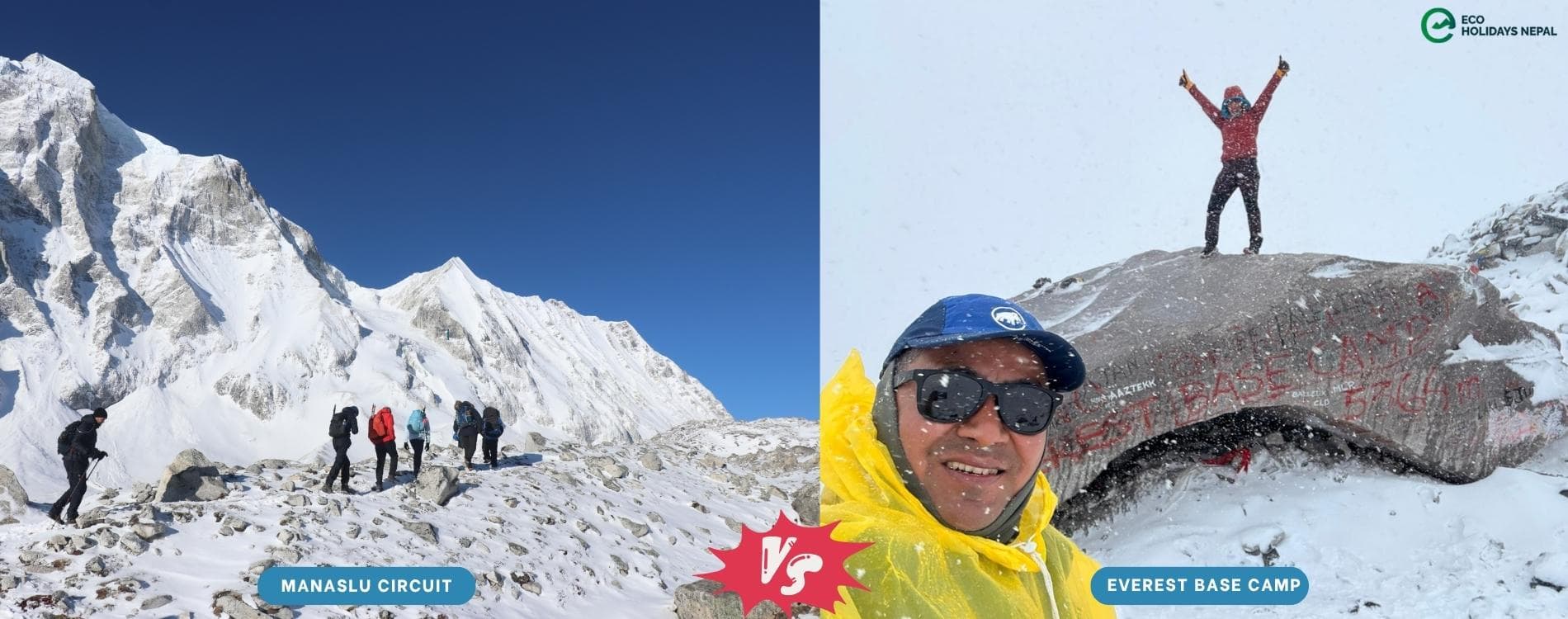
Nepal is home to some of the world's most famous treks, among them Everest Base Camp (EBC) and the Manaslu Circuit stand out as dream adventures for trekkers. Every year, thousands of travelers from around the world come here to walk these trails, experience the high Himalayas, and witness breathtaking scenery. But while both treks are incredible, many first-time trekkers wonder is Manaslu harder than Everest Base Camp? The concern mostly comes due to the involvement of a high Himalayan pass in the Manaslu Circuit route.
The Everest Base Camp Trek is perhaps the most iconic. It takes you to the foot of the world's highest mountain, Mount Everest (8,848m). It offers views of towering peaks, glaciers, and vibrant Sherpa villages. The highest point trekkers usually reach is Kala Patthar (5,550m), which is famous for its stunning sunrise over Everest. The EBC trail is popular, with well-established teahouses, clear paths, and good support for travelers, making it suitable for even first-time trekkers with reasonable fitness.
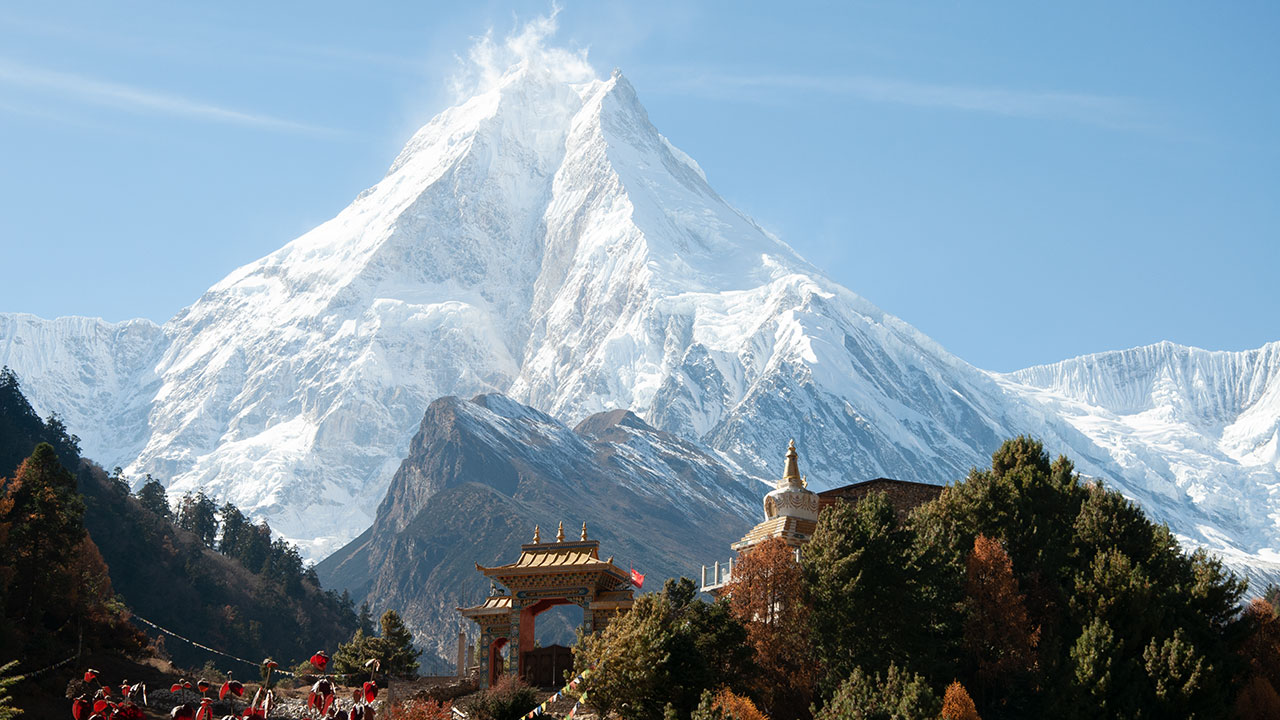
On the other hand, the Manaslu Circuit is a hidden gem and a more challenging adventure. Mount Manaslu, the world's 8th highest peak (8,163m), is surrounded by remote villages, forests, and rugged mountain passes. The trek’s highlight is Larkya La Pass (5,106m), a long and steep crossing that tests both physical strength and mental endurance. Unlike EBC, Manaslu is less crowded, lodges are simpler, and emergency services are farther away, making it feel wider and more demanding.
In this blog, we will compare these two treks on altitude, terrain, daily effort, facilities, culture, safety, and costs to help you to understand which trek might suit your ability, goals, and sense of adventure. Whether you are dreaming of the classic Everest route or the remote thrill of Manaslu, this blog will give you clear insights to plan your journey.
Altitude: How High Does Each Trek Go?
Altitude is one of the most important factors that determine how difficult a trek feels. This is also a factor that truly answers your is Manaslu harder than Everest Base Camp question as well. As you climb higher in the Himalayas, the air becomes thinner, and your body has to work harder to get enough oxygen. This can lead to altitude sickness, which is a common concern for trekkers.
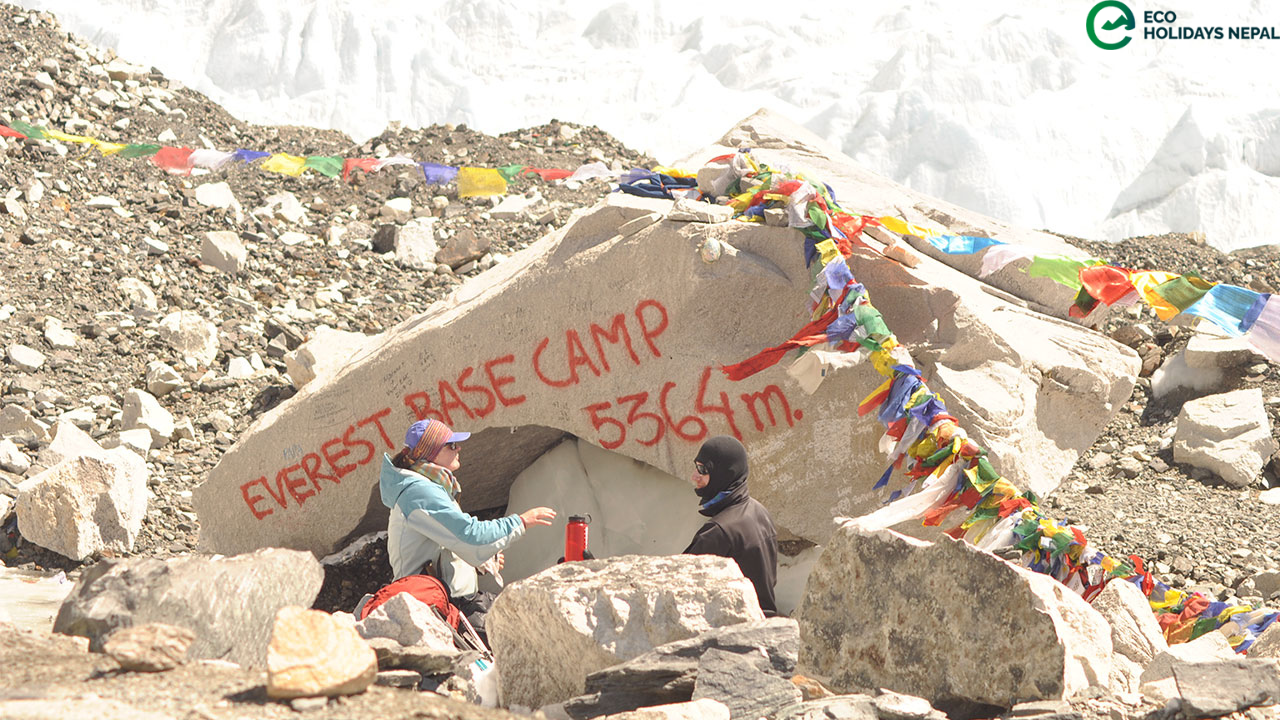
On the Everest Base Camp (EBC) Trek, the highest point most people reach is Kala Patthar at 5,550 meters, while the base camp itself sits around 5,364 meters. The trek is carefully planned with gradual ascents and rest days, allowing the body to acclimatize properly. Trekkers slowly move from lower villages like Namche Bazaar to higher points like Dingboche and Gorakshep, giving their bodies time to adjust. Despite this, some people may still experience headaches, nausea, or fatigue at higher elevations, especially if they ascend too quickly or skip rest days.
In comparison, the Manaslu Circuit Trek reaches its highest point at the Larkya La Pass around 5,106 meters. Although this is slightly lower than EBC, the climbs feel more demanding because it is steeper and more continuous. The trail often involves long days of 6-8 hours, and there are fewer villages and resting points along the route. This means trekkers have less opportunity for gradual acclimatization, which can make the altitude feel more intense. The combination of longer day climbs, rugged terrain, and remote location increases the physical and mental stress of the trek.
In overall, while EBC takes you to a higher altitude, the Manaslu Circuit challenges trekkers differently. Its steep, long climbs and fewer stopping points make the effects of altitude more noticeable. Many experienced hikers agree that the Manaslu trek feels harder at altitude, even though it is slightly lower than EBC, showing that altitude is not just about numbers; it is about how your body adjusts to the climb.
Is Manaslu Harder than Everest Base Camp?: Terrain and Trail Conditions
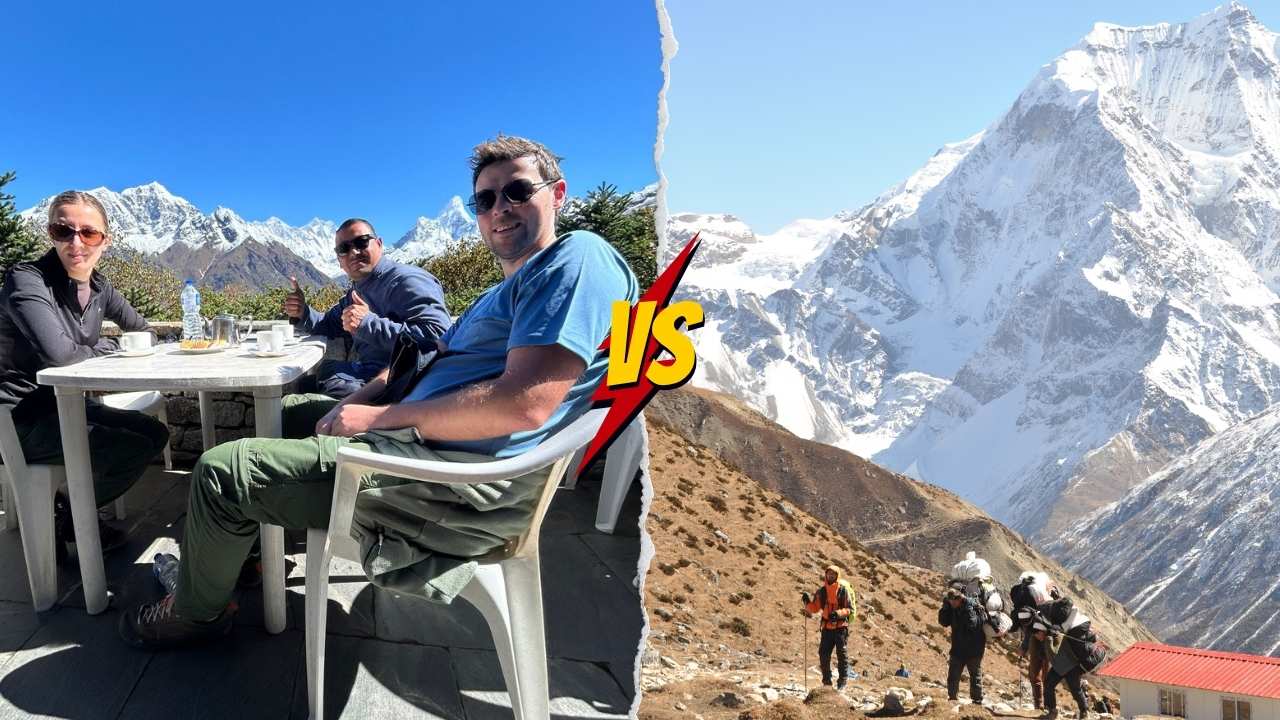
The Everest Base Camp (EBC) Trek has trails that are generally well-developed and easy to follow. Many parts of the route are wide dirt paths or stone steps built by local communities. Tekkers walk through forests, small villages, and open valleys. There are also many suspension bridges over the river, which are strong and safe. Because this trail is very popular, it is regularly maintained and clearly marked. This makes navigation easier, especially for people who are trekking in the Himalayas for the first time.
Even though the EBC trail is easier to walk on, it still has some challenging parts. Some sections include long uphill climbs and rocky paths, especially as you go higher towards places like Lobuche and Gorakshep. The air also becomes thinner at higher altitudes, which makes walking slower and more tiring. However, the trail is designed with gradual elevation gain, and there are many tea houses along the way where trekkers can rest, eat, and recover. Because of this support system, most trekkers find the terrain demanding but manageable.
The Manaslu Circuit Trek is quite different when it comes to terrain. The trail is more natural, remote, and rugged. Trekkers often walk on narrow mountain paths, uneven rocks, and steep hillsides. In some places, the path passes through landslide areas or rough sections along rivers and cliffs. The trail also changes a lot as you climb higher from green forests in the lower region to rocky alpine landscapes in the upper region.
The most difficult terrain on the Manaslu Circuit is near Larkya La Pass (5,106m). This part of the trek can involve snow, ice, and loose rocks, especially during colder seasons. The climb to the pass is long and physically demanding. Because the trail is less developed and there are fewer facilities, trekkers must be more careful and prepared.
Thus, to sum it up, EBC offers smoother and more comfortable trails, while Manaslu has rougher and more challenging paths, which makes it feel harder for many trekkers.
Daily Distance and Trek Duration
Another important factor that decides how hard a trek feels is the distance you walk each day and the total number of trekking days. The longer the trek and the more hours you walk daily, the more energy and endurance you need. Both the Everest Base Camp (EBC) Trek and the Manaslu Circuit require good physical fitness, but their distances and walking patterns are a little different.
The Everest Base Camp trek usually takes around 12 to 14 days to complete. The total walking distance is about 130 kilometers (round trip) from Lukla to Everest Base Camp and back. On most days, trekkers walk around 5 to 7 hours, depending on the altitude and trail conditions. The itinerary also includes acclimatization days, especially in places like Namche Bazaar and Dingboche. These rest days allow the body to adjust to a higher altitude and help to reduce the risk of altitude sickness. Because of this gradual pace, many trekkers find the daily effort manageable, even though the altitude is high.
In comparison, the Manaslu Circuit Trek is longer and usually takes about 14 to 18 days to finish. The total trekking distance can reach around 170 to 180 kilometers, depending on the route taken. Trekkers often walk 6 to 8 hours each day, and some days can be even longer when crossing remote areas or high mountain passes. Since the region is less developed, there are fewer villages and rest points along the trail, which means trekkers must be prepared for longer walking stretches.
The most demanding day on the Manaslu trek is the crossing of Larkya La Pass, which can take 8 to 10 hours of walking in one day. This long and challenging section requires strong endurance and determination.
In summary, while EBC has a steady and well-placed itinerary, Manaslu involves longer distances and tougher daily walks, which makes it feel more physically demanding for many trekkers.
Infrastructure, Comfort, and Accessibility
Infrastructure and comfort can make a big difference in how difficult a trek feels. Good facilities, reliable accommodation, and easy access to services help trekkers to recover better each day. When comparing the Everest Base Camp (EBC) trek and the Manaslu Circuit, the level of infrastructure is quite different.
The Everest Base Camp Trek has some of the best trekking infrastructure in Nepal. Because it is one of the most popular trekking routes in the world, there are many teahouses, lodges, and restaurants along the trail. Most villages offer comfortable rooms, warm meals, and even small bakeries or cafes. In places like Namche Bazaar, trekkers can find Wi-Fi, mobile networks, gear shops, and medical clinics. This level of support makes the journey easier because trekkers can rest properly, recharge devices, and access help if needed.
Another advantage of the EBC region is accessibility. The trek usually starts with a short flight from Kathmandu to Lukla, which quickly takes trekkers into the mountains. Emergency services are also better developed. If a serious problem occurs, helicopter rescue services are commonly available in the Everest region. This strong support system helps many trekkers feel safer and more comfortable during the journey.
In comparison, the Manaslu Circuit Trek is much more remote. The trek usually begins with a long 7 to 9-hour drive from Kathmandu to Soti Khola or Machha Khola. Along the trail, there are tea houses, but they are simpler and more basic than those on the EBC route. Facilities with Wi-Fi, hot showers, or charging stations may not always be available, especially in higher villages.
Because the Manaslu region is less developed and less crowded, trekkers need to be more self-reliant. Emergency services and medical facilities are also limited compared to those in the Everest region. While this remoteness creates a more peaceful and authentic trekking experience, it can also make the journey feel more challenging and less comfortable.
Cultural Experience and Scenery
One of the most beautiful parts of trekking in Nepal is the chance to experience the local culture and mountain landscapes. Both the Everest Base Camp (EBC) Trek and the Manaslu Circuit offer amazing scenery, but the cultural atmosphere and trekking environment feel quite different.
The Everest region is famous for its strong Sherpa Culture. Along the trail, trekkers pass through lively villages such as Namche Bazaar, Tengboche, and Pangboche. These places are known for their colorful prayer flags, Buddhist monasteries, and friendly local communities. The Tengboche Monastery, for example, is one of the most important spiritual sites in the Khumbu region. Because the EBC Trek is very popular, these villages are busy during the trekking season. Many trekkers enjoy this lively environment because it creates opportunities to meet other travellers from around the world.
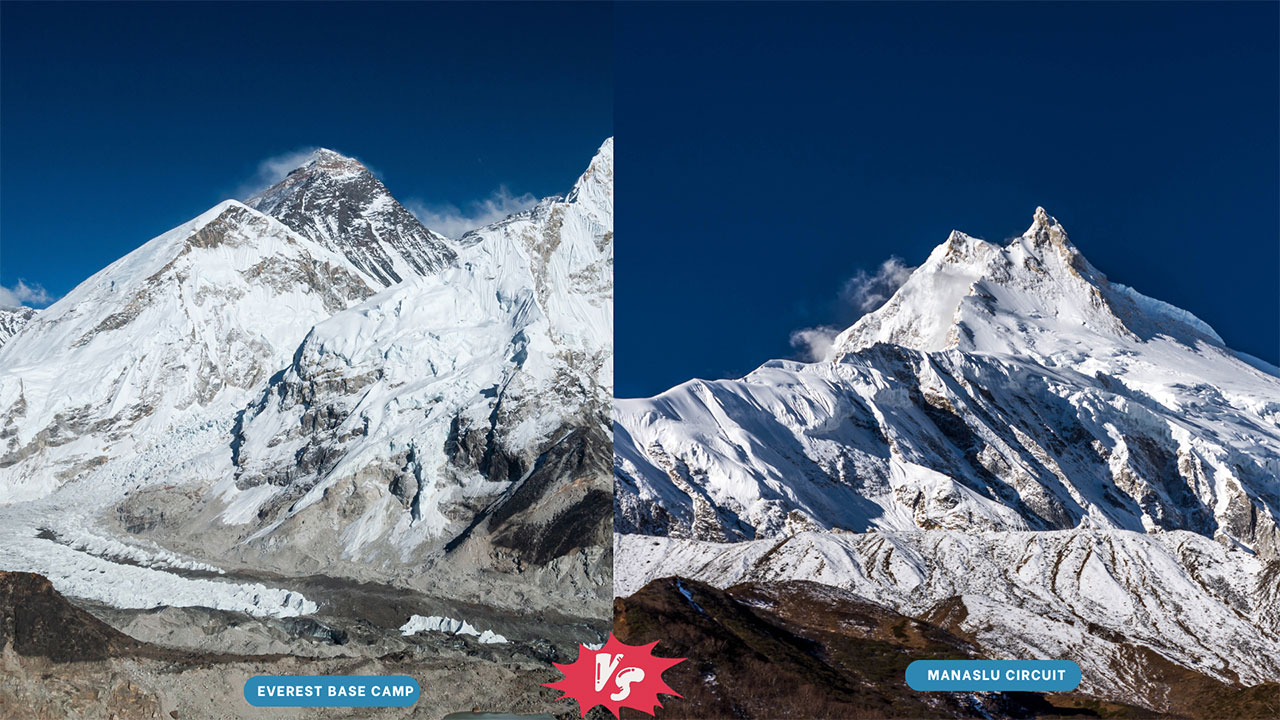
The scenery on the EBC trek is also spectacular. Trekkers can see some of the World's highest mountains, including Everest, Lhotse, Nuptse, and Ama Dablam. The landscape changes as you climb higher from green forests and rivers to rocky valleys and massive glaciers near base camp. The famous viewpoint at Kala Patthar offers one of the best views of Mount Everest, especially during sunrise.
The Manaslu Circuit, however, offers a quieter and more traditional cultural experience. The villages along the route are smaller and less influenced by tourists. Many communities have Tibetan cultural roots, and trekkers can see ancient monasteries, Mani walls, and traditional stone houses. The lifestyle here is simple and closely connected to the mountains.
As for the scenery in Manaslu, it is also incredibly diverse. Trekkers walk through lush forests, terraced farmland, deep river valleys, and high alpine landscapes. Because the trail is less crowded, the environment feels more peaceful and wild. This remoteness gives trekkers a deeper sense of adventure, but it can also make the journey feel more demanding.
Safety, Permits, and Costs
Planning and safety are important parts of any high-altitude trek. Both the Everest Base Camp (EBC) trek and the Manaslu Circuit require permits, preparation, and awareness of mountain risks. However, the rules and logistics for these two treks are quite different.
For the Everest Base Camp trek, the permit process is simple. Trekkers usually need the Sagarmatha National Park Permit and the Khumbu Pasang Lhamu Rural Municipality Permit. These permits are easy to obtain in Kathmandu or at the trekking entry points. Because EBC is a popular route, it has good safety support. There are health clinics in places like Namche Bazaar and Pheriche, and helicopter rescue services are available if someone faces a serious medical problem. This strong support network helps tekkers feel safer during the journey.
In terms of cost, EBC can still be expensive because of flight tickets to Lukla, accommodation, food, and guide or porter services. Prices also increase as trekkers go higher because supplies must be carried by porters or yaks. However, because the trail is well organized and competitive, trekkers can choose from different budget options depending on their travel style.
The Manaslu Circuit Trek has stricter rules because it lies in a restricted area near the Tibetan border. Trekkers must obtain a Manaslu Restricted Area Permit, along with the Manaslu Conservation Area Permit (MCAP) and Annapurna Conservation Area Permit (ACAP). Another important rule is that trekkers must travel with a licensed guide and in a group of at least two people. These requirements make the planning process more complex.
Costs for the Manaslu trek can sometimes be higher because of permit fees and guide requirements. The remote location also means fewer services and limited medical facilities. In overall, EBC is easier to organize and has better safety support, while Manaslu requires more planning and preparation, which can make it feel more challenging for many trekkers.
The Actual Reality: Is Manaslu Harder than Everest Base Camp?
After comparing altitude, terrain, distance, infrastructure, culture, and safety, it becomes easier to understand the main context of this blog: Is Manaslu harder than Everest Base Camp? The answer depends on what kind of challenge you are looking at, but in general, many trekkers consider the Manaslu Circuit to be slightly harder than the Everest Base Camp trek.
One of the reasons that contributed to the Manaslu Circuit’s difficulty is the remoteness of the region. The trail is less developed and has fewer facilities compared to the Everest region. Trekkers often walk through long stretches without many tea houses or services. Because of this, the journey requires more planning, patience, and self-reliance. The rugged terrain, narrow paths, and remote mountain landscapes can also make each day feel more physically demanding.
Another factor is the daily walking distance and trail conditions. The Manaslu Circuit is generally longer and includes more challenging sections, especially the crossing of Larkya La Pass at 5,106 meters. This high pass requires a long day of trekking in cold and sometimes snowy conditions. The combination of steep climbs, rough trails, and fewer rest points can test both physical strength and mental endurance.
The Everest Base Camp Trek, on the other hand, reaches a slightly higher altitude at Kala Patthar (5,550m). However, the trail is well established, with many teahouses, support services, and regular acclimatization days. This strong infrastructure helps trekkers adjust better and makes the trek more comfortable, even though the altitude is high.
To sum it up, Everest Base Camp is a challenging but well-supported trek, making it suitable for many first-time Himalayan trekkers with good fitness. The Manaslu Circuit is wilder, longer, and more rugged, which often makes it feel tougher overall. For trekkers seeking a quieter and more adventurous experience, Manaslu offers a deeper challenge and a strong sense of achievement.