
Nepal has taken a significant step in reshaping how foreign trekkers experience its most remote regions. The authorities have lifted a long-standing restriction that once barred solo travelers from entering designated restricted areas of the Himalayas.
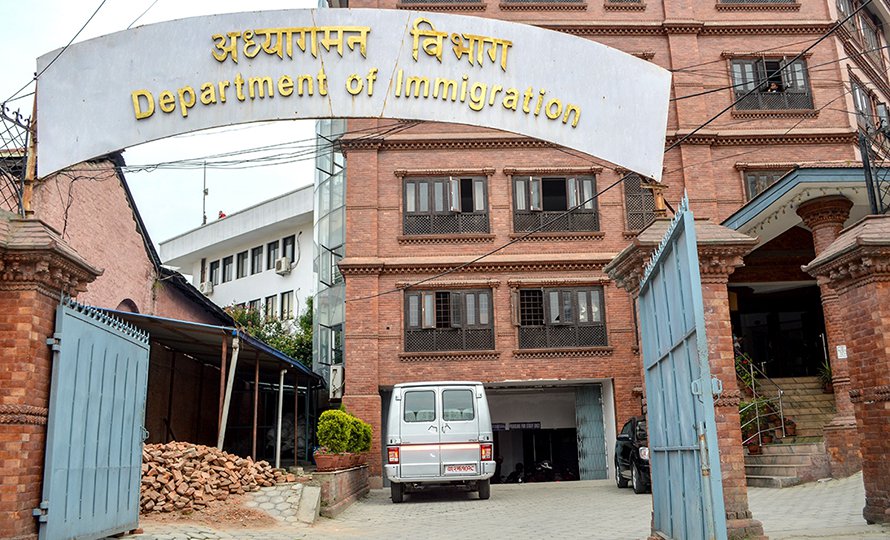
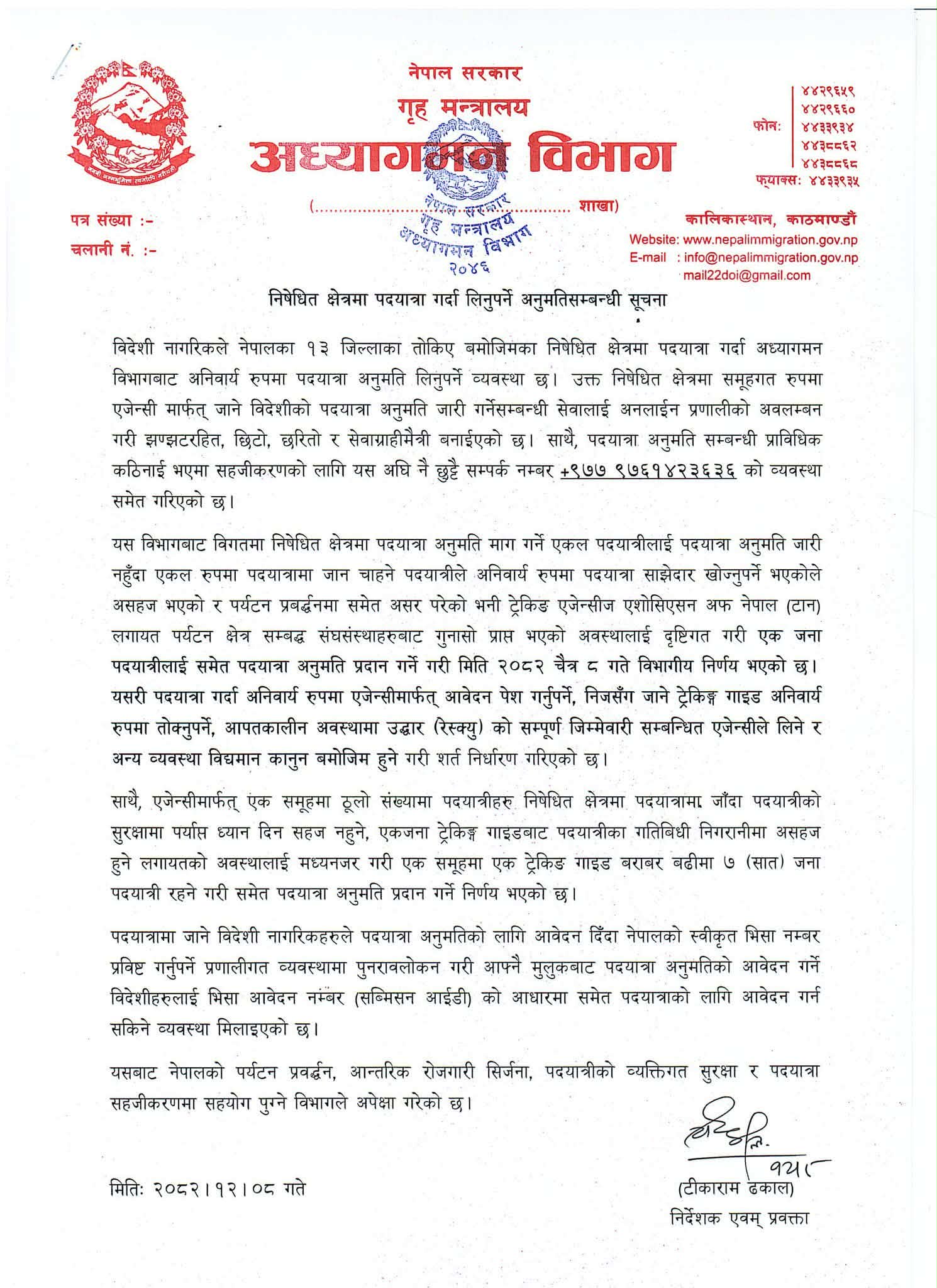
Under a revised policy introduced by the Department of Immigration, foreign trekkers can now obtain permits to access these controlled zones individually as well. It was something that was previously not possible unless there were two or more trekkers in the group.
At first glance, the change might seem like a simple administrative update. However, in reality, it reflects a deeper shift in how Nepal is trying to balance between opening up to modern travel trends while still maintaining strict control over safety, security, and cultural preservation.
A Rule That Had Started to Feel Outdated
In the past, Nepal enforced a rule that required at least two foreign trekkers to issue a permit for restricted regions. The idea behind it was not restriction. These areas are often isolated, close to international borders, and in some cases, environmentally fragile. So, managing trekkers in such places comes with real risks.
But over time, the rule began to feel increasingly out of sync with how trekkers prefer their adventures today. Solo travel is no longer niche; it is kind of a mainstream experience. From seasonal backpackers to experienced trekkers, a growing number of travelers prefer to move independently. Nepal’s restriction effectively shut this entire segment out of some of its most unique trekking destinations.
Industry groups, especially the Trekking Agencies' Association of Nepal (TAAN), had been raising this issue for years. Their concern was not just about convenience; it was about competitiveness. When travelers have options across the Himalayas and beyond, restrictive rules can quietly push them elsewhere.
The government’s step regarding the matter suggests that it has finally acknowledged that reality.
Solo Travel, But Not Completely Alone
Despite opening the door to solo trekkers, the new system still places clear boundaries around how these trips are organized and conducted. Anyone planning to trek alone in restricted areas must go through a registered trekking agency. More importantly, they must be accompanied by a licensed guide for the duration of the trek.
The agency itself needs to carry full responsibility for managing logistics and coordinating emergency rescue if something goes wrong. According to Tikaram Dhakal, the spokesperson for the Department of Immigration, these conditions are essential. The goal is not simply to allow more people in, but to ensure that those who enter these regions do so within a framework that prioritizes safety and accountability. Nepal is allowing independent travelers, not unsupervised trekking.
Why the Government Is Not Taking Risks?
The caution regarding the restricted area trekking is not without reason. Many of Nepal’s restricted trekking areas are not just remote; they are complex environments where small mishaps can have serious consequences.
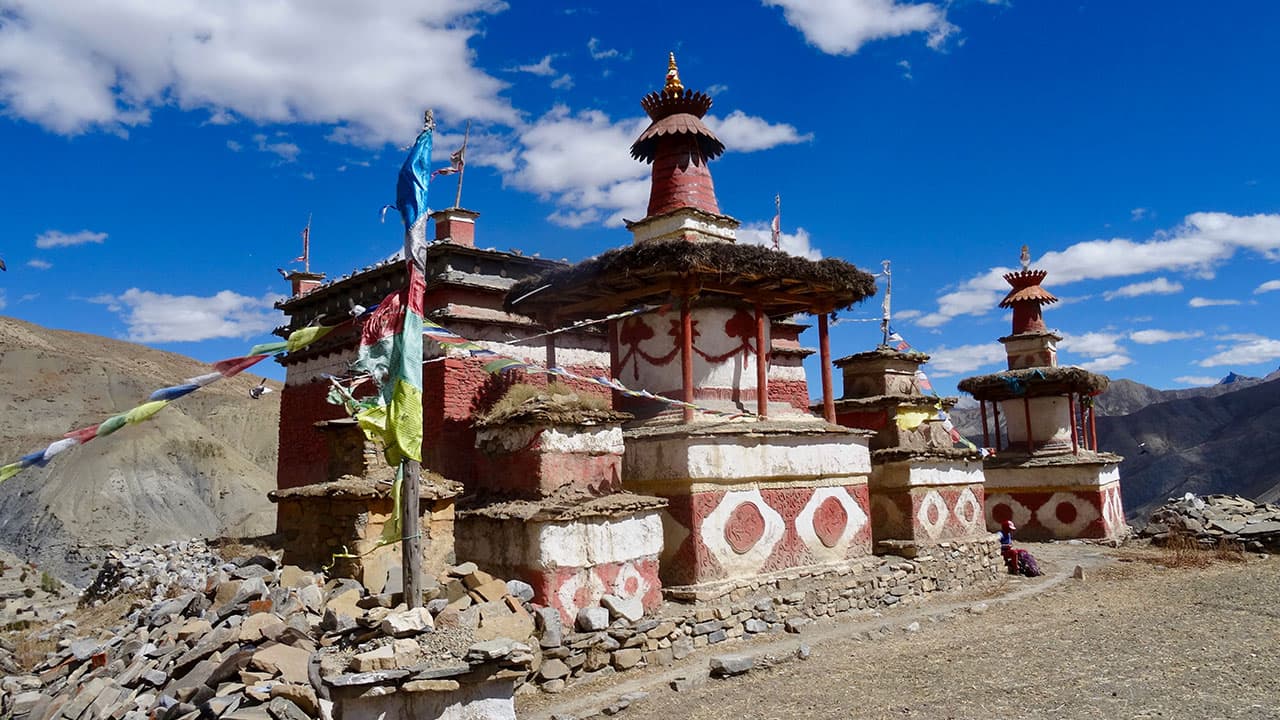
These adventures take place in regions like Upper Mustang, where ancient Tibetan culture still shapes daily life, or Upper Dolpa, one of the most isolated regions in the country. So, the trail here can be physically demanding, infrastructure is limited, and access to immediate help is often far.
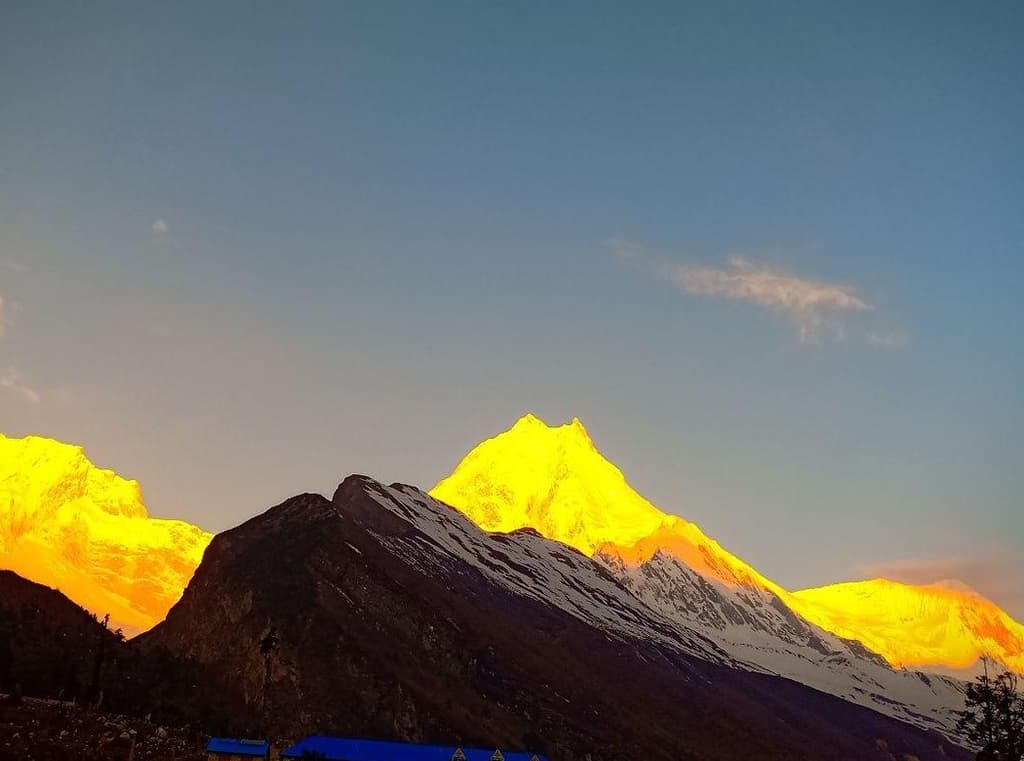
Other regions, including the Manaslu region and the hidden valleys of Nar Valley and Phu Valley, combine challenging terrain with cultural sensitivity. And, in some cases, they are also close to the international borders. Due to these existing conditions, having a guide is less about regulation and more about survival, navigation, and respect for local communities.
Smaller Groups and Closer Watch
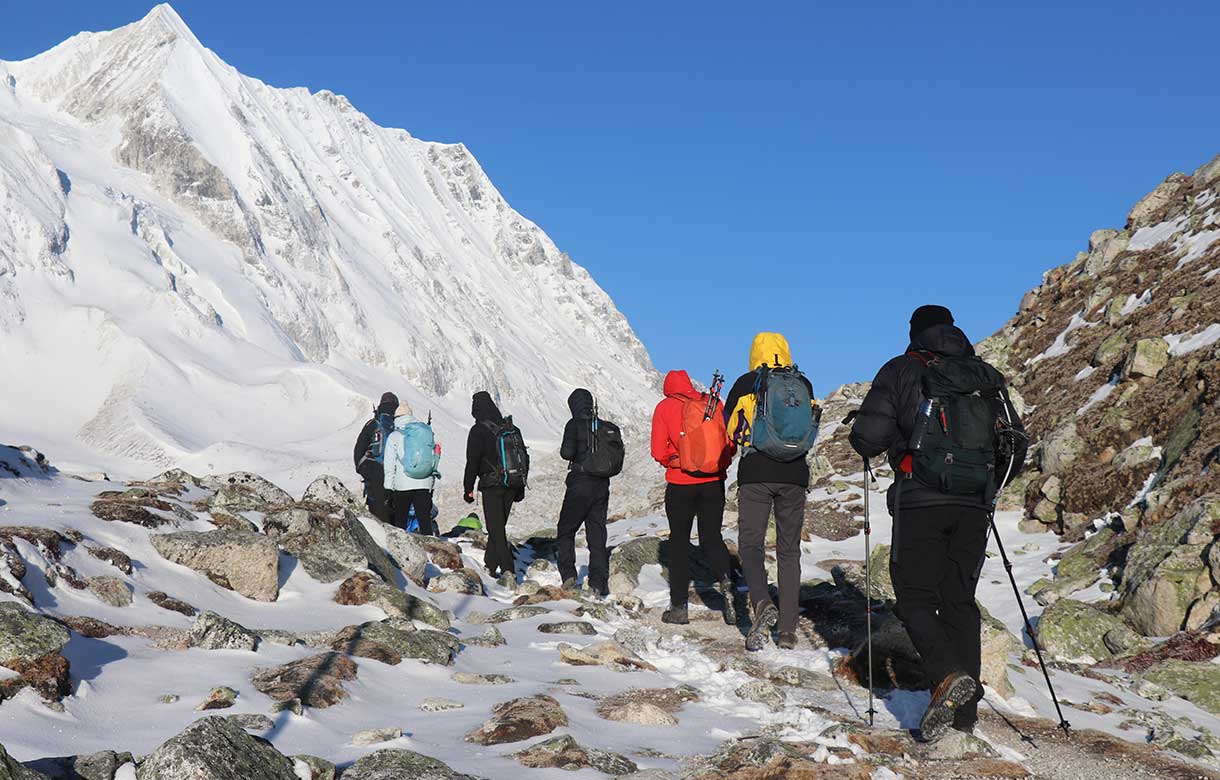
Alongside allowing solo permits, the government has also tightened how groups are managed. A single guide can now handle a maximum of seven trekkers in restricted areas.
This change might seem minor, but it addresses a very real issue. Large trekking groups can be difficult to monitor, especially in high-altitude terrain where weather, health, and logistics can change rapidly.
By limiting group size, authorities are aiming to ensure that guides can give proper attention to each trekker. This means that the guide will be able to handle every circumstance on the trail seamlessly, whether it is spotting early signs of altitude sickness or responding quickly in an emergency.
A System That Is Finally Catching Up
Beyond the trekking rules themselves, one of the most practical improvements lies in how permits are issued. In another reform, the immigration department has revised its system, requiring a valid visa number at the time of application.
Previously, applicants needed to provide a confirmed Nepali visa number before applying for trekking permits. This often delays trip planning, especially for those organizing their journey from abroad.
Under the new system, foreign nationals can now apply using a visa application number, also referred to as a submission ID. This will allow trekkers to begin the permit process from their home country and even pay fees in advance.
Officials expect the online system to significantly reduce processing time while making the entire experience more user-friendly and predictable. Although it is a small administrative change on paper, for international travelers, it removes a major layer of friction while planning a trip to Nepal.
What This Change Means for Nepal’s Tourism Future?
The revised rules apply to restricted areas across 13 districts, covering some of Nepal’s most distinctive trekking landscapes, including Tsum Valley and Lower Dolpa. By allowing solo trekkers, while still requiring guides and agency involvement, authorities are trying to strike a careful balance.
This step will attract a wider range of travelers without losing monitoring efforts in the regions that are environmentally fragile and culturally significant. At the same time, the policy supports local employment. Licensed guides, trekking agencies, and support staff all remain central to the system, ensuring that tourism revenue continues to flow into local communities.
Nepal is no longer just relying on its natural beauty to draw visitors; it is also adapting its systems to meet modern expectations. And in doing so, it is trying to ensure that growth in tourism does not come at the cost of safety, sustainability, or cultural preservation.
For solo trekkers, this is undeniably good news. The routes that once felt out of reach are now accessible. Just not without conditions, and in this beautiful Himalayan nation’s case, that might be exactly the point.