Highlights of Manaslu Circuit Trek Cost and Itinerary
Trekking through one of Nepal’s most remote, isolated, and untouched Himalayan regions, where you can enjoy true wilderness far away from commercial trekking crowds
Exploring Nepal’s restricted Manaslu region, where special permit regulations help to preserve the area’s authentic culture, peaceful trails, and unspoiled mountain landscapes
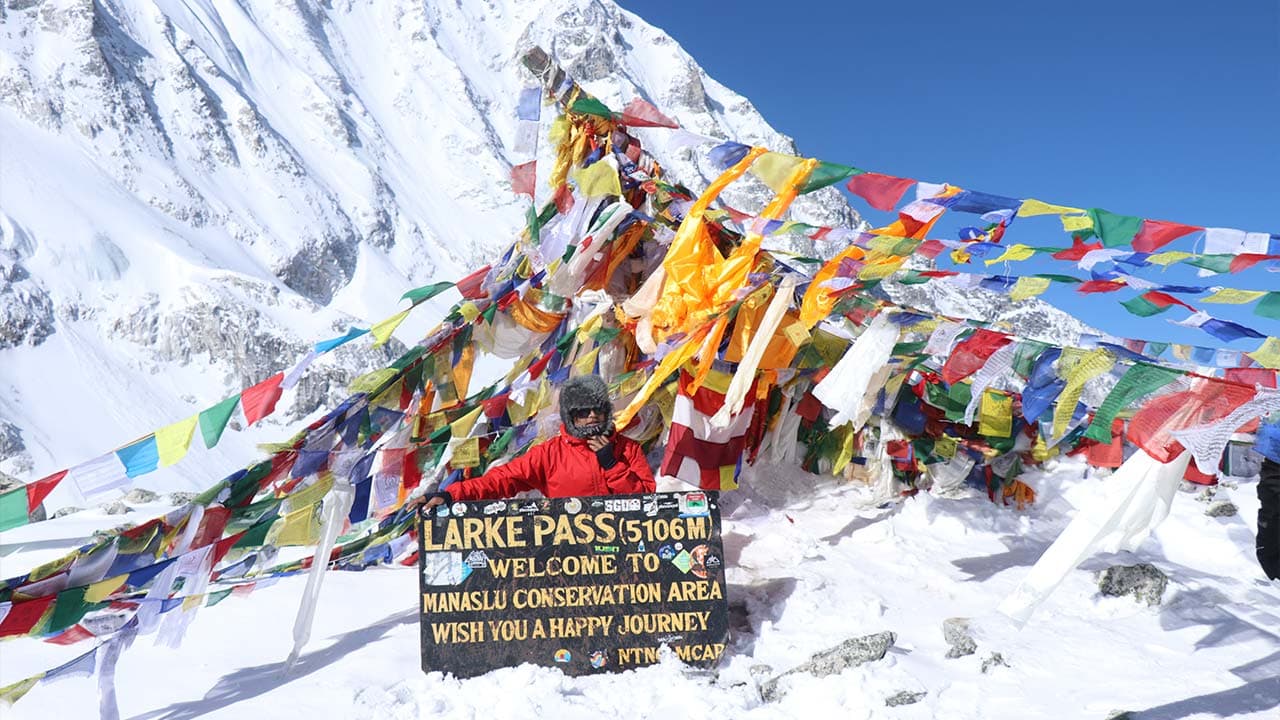
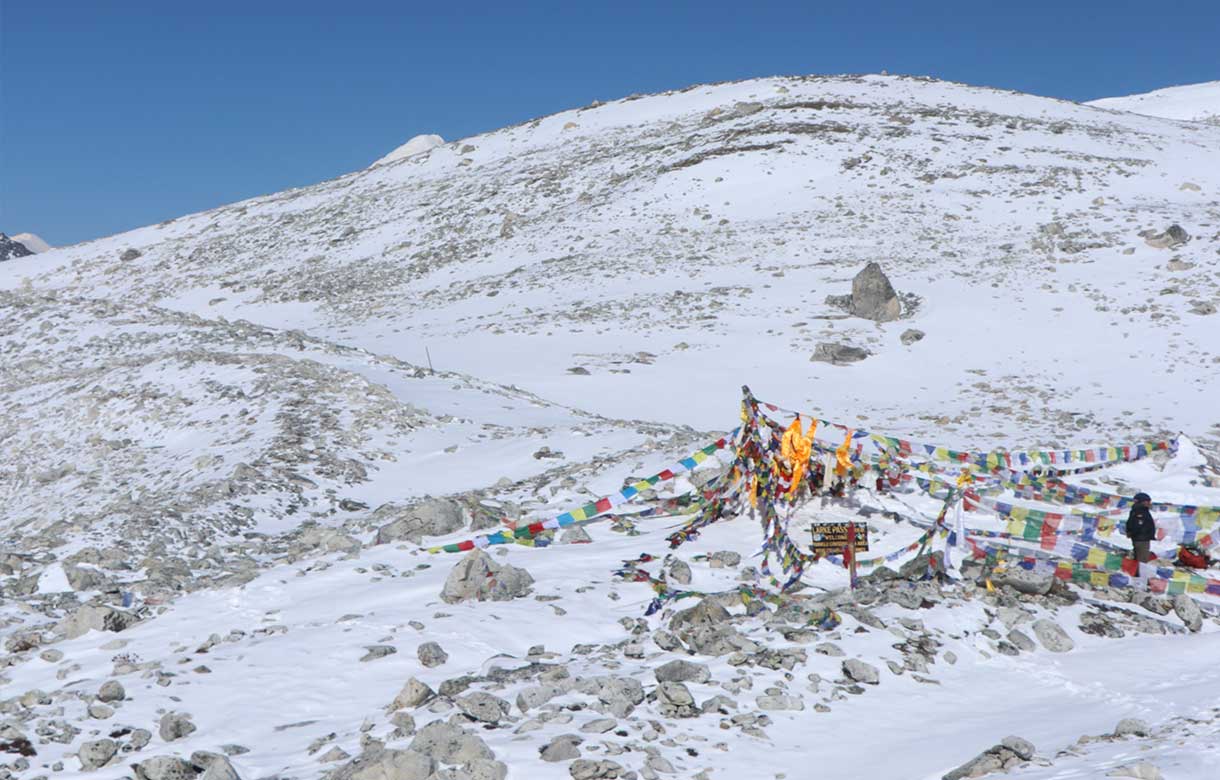
Crossing the legendary Larke La Pass (5,106m/ 16,751ft), one of the most dramatic and physically rewarding passes in the Himalayas
Hiking to the remote Rui La Pass (4,998m/16,397ft) on the Nepal–Tibet border, following an old Himalayan trade route through the rugged landscape above Samdo
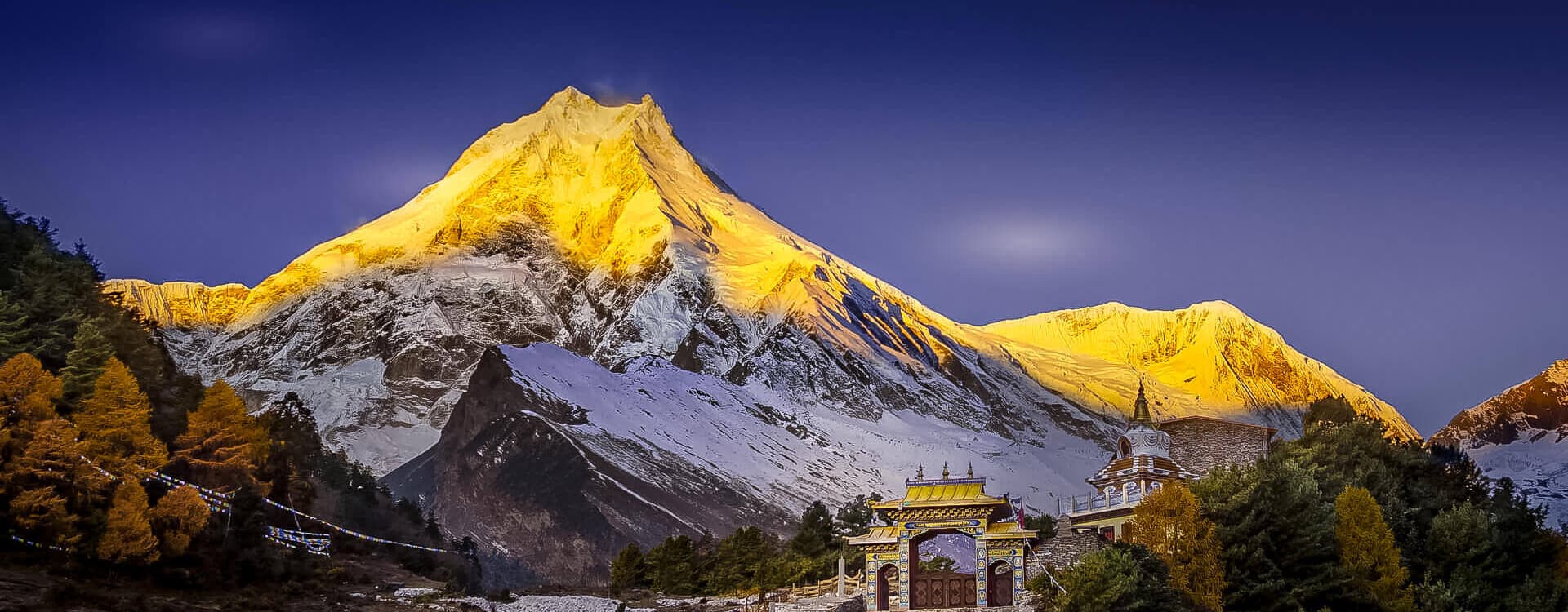
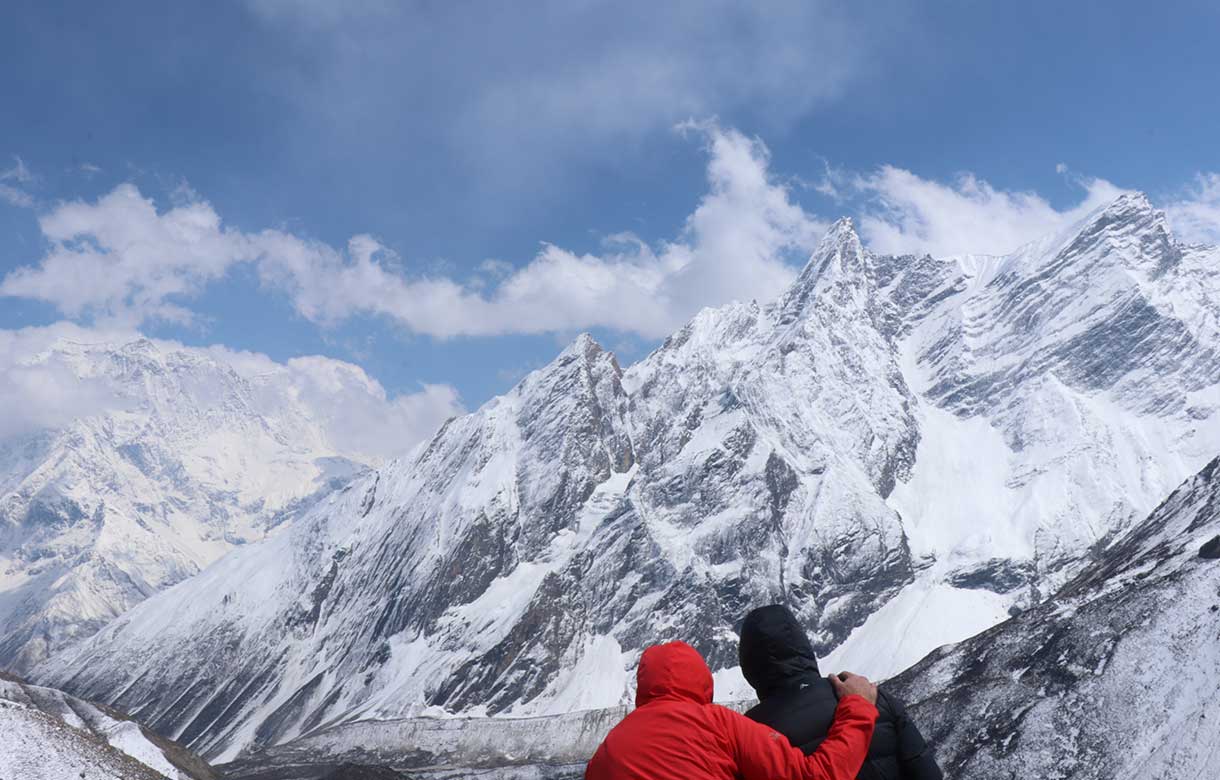
Witness extraordinary close-up views of Himlung Himal, Cheo Himal, Kang Guru, Larkya Peak, Annapurna II, Ngadi Chuli, and Buddha Himal, including Manaslu
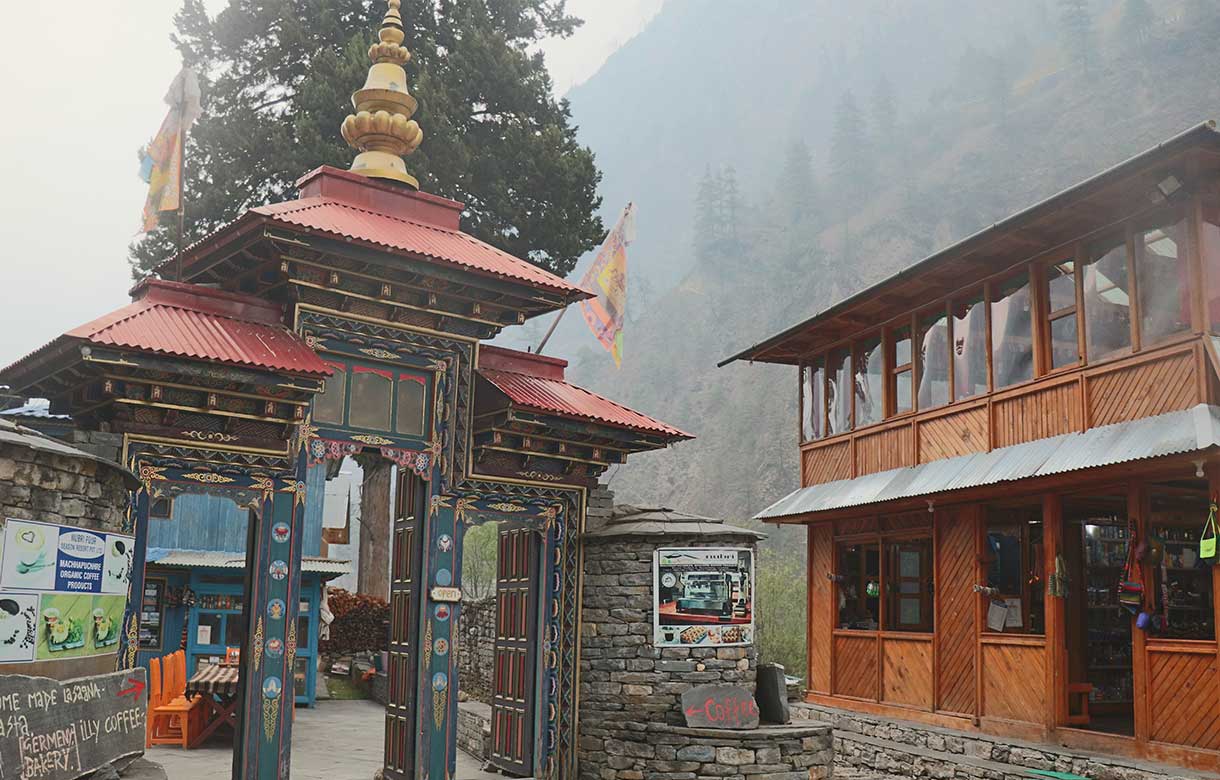
Experience the feeling of trekking through a hidden Himalayan world where ancient Tibetan Buddhism-influenced villages, yak caravans, prayer walls, and centuries-old monasteries remain deeply connected to mountain life
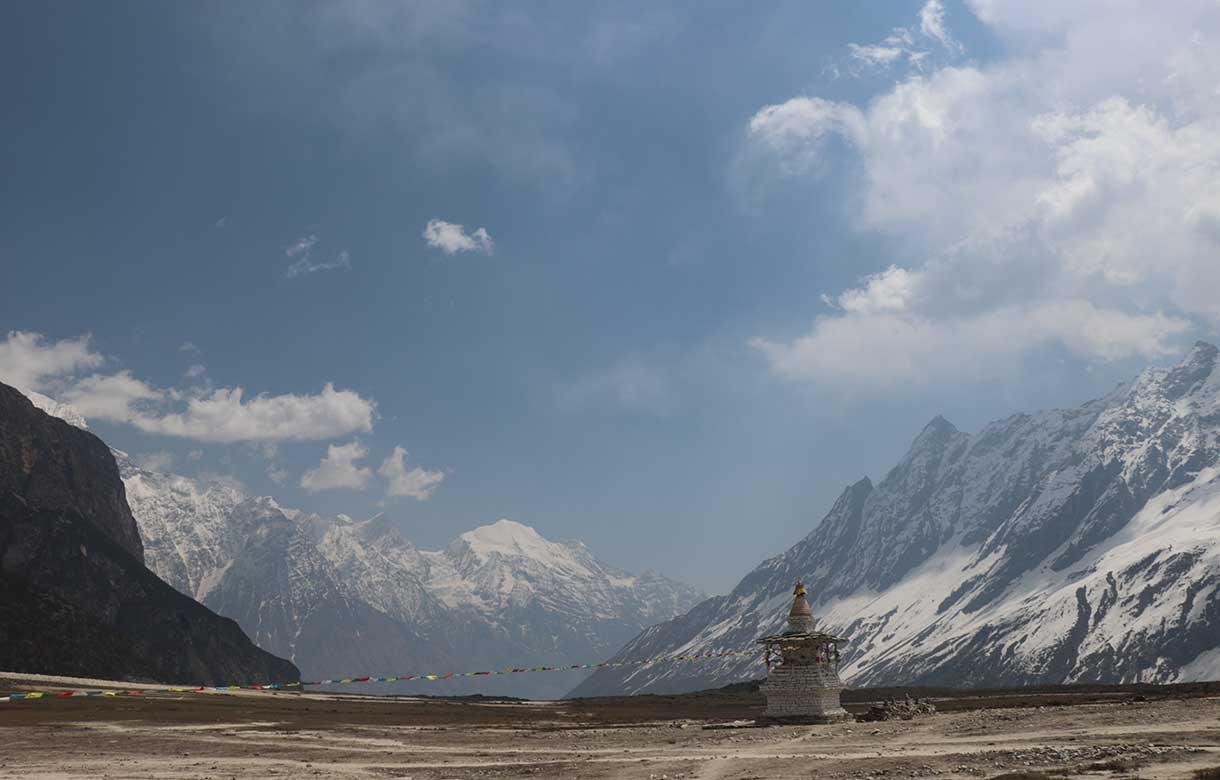
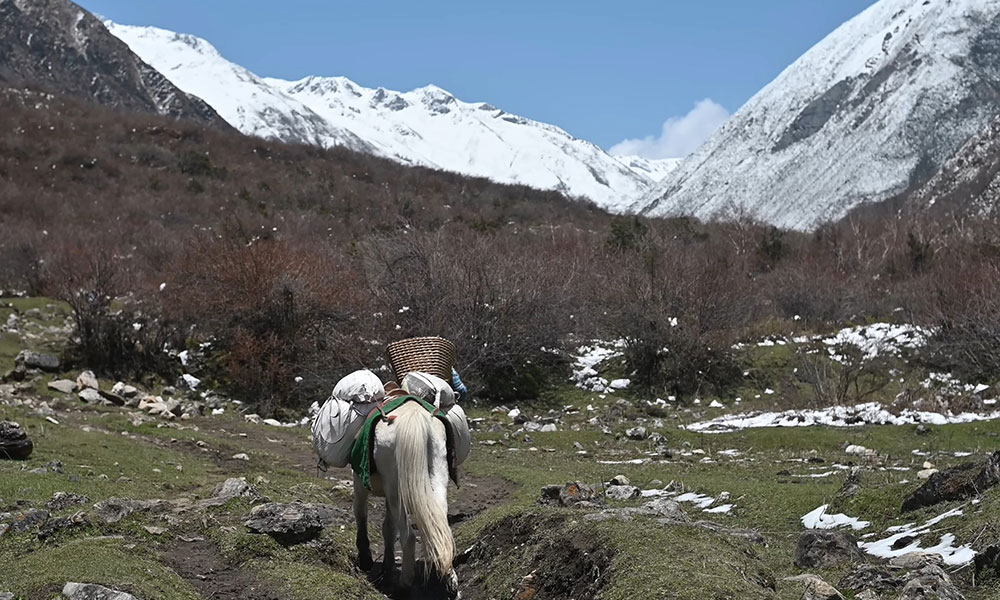
Walk through an incredibly diverse landscape that shifts from humid subtropical forests, waterfalls, terraced farmland, and deep river gorges to alpine meadows, glacial valleys, rocky moraines, and rugged Himalayan wilderness
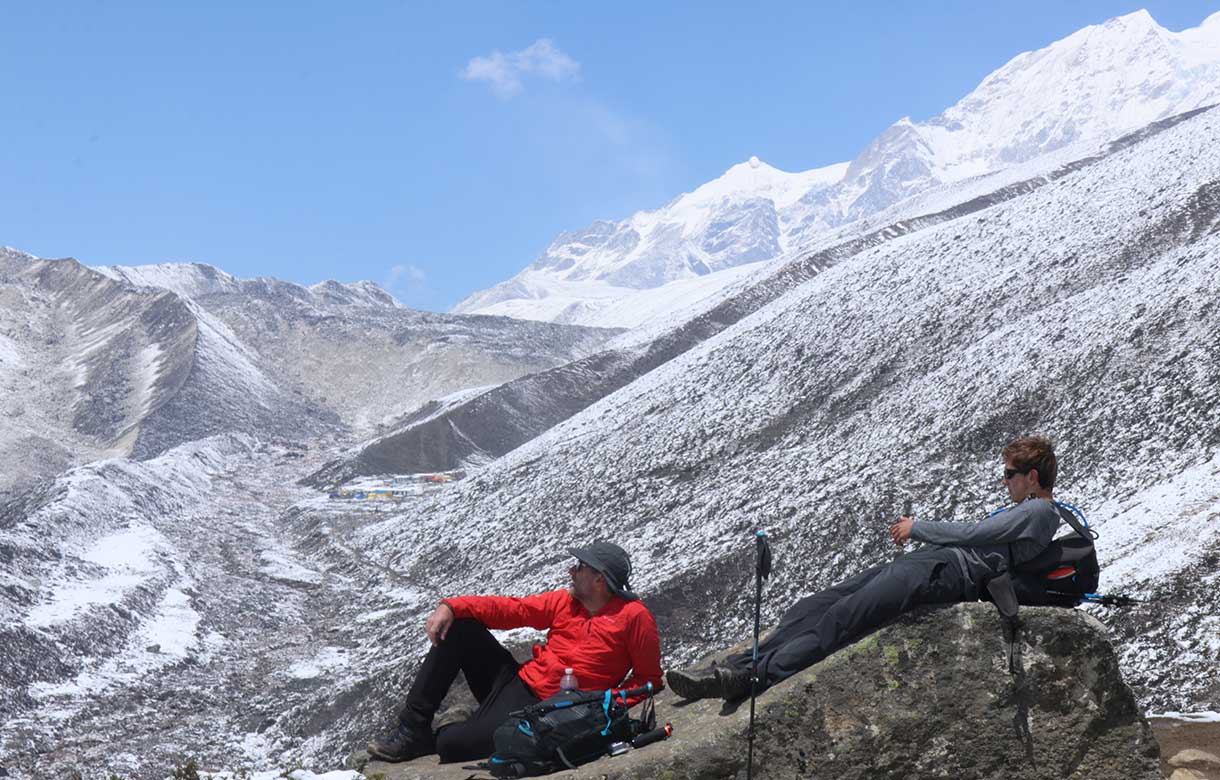
Spend an acclimatization day at Samagaon with a memorable hike to Manaslu Base Camp, Birendra Lake, or Pungyen Gompa, offering closer encounters with the glaciers, landscapes, and mountain scenery surrounding Manaslu
Experience one of Nepal’s finest teahouse trekking routes that still feels genuinely remote and uncrowded, offering a balance between adventure, comfort, and authentic Himalayan exploration
Enjoy the unique sense of accomplishment of a physically demanding restricted-area route that remains less visited than Everest and Annapurna, adding that exclusive flavour
Trip Overview
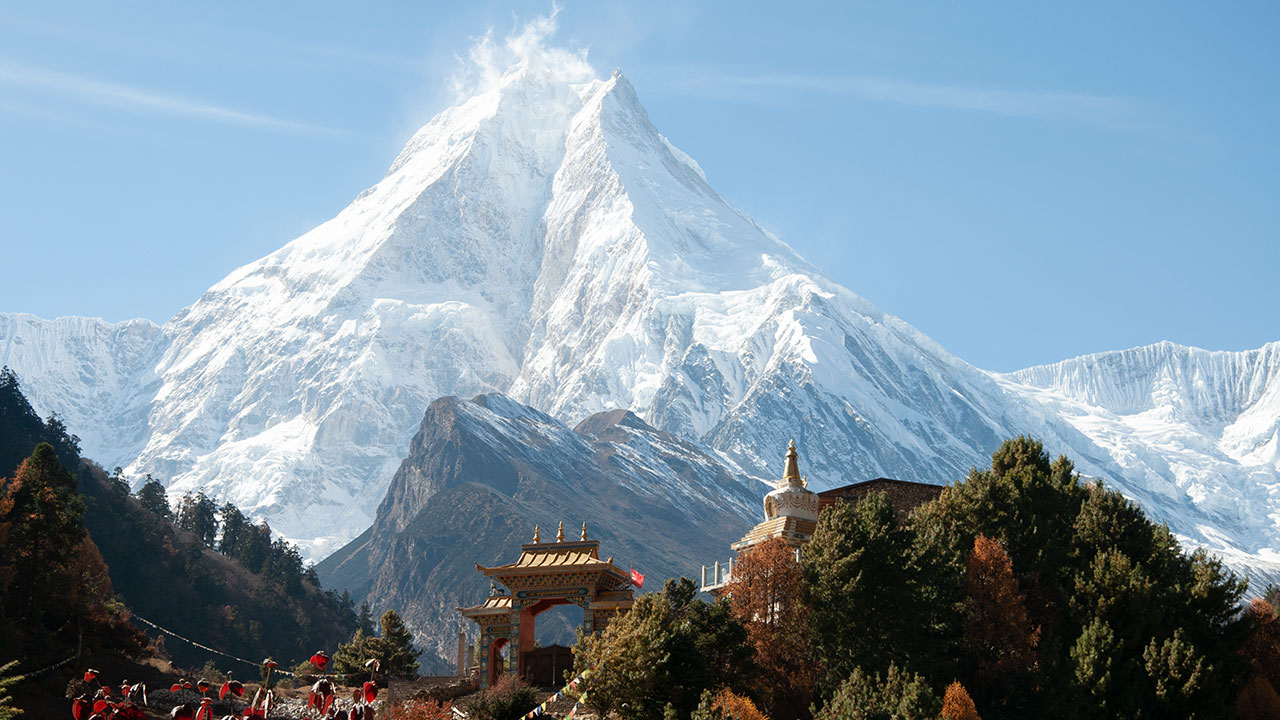
The Manaslu Circuit Trek is one of Nepal’s most rewarding Himalayan adventures. This trek offers a rare combination of dramatic mountain scenery, authentic Tibetan-influenced culture, remote wilderness, and genuine off-the-beaten-path exploration. Circling the eighth-highest mountain in the world, Mount Manaslu (8,163m/ 26,781ft), this iconic journey takes you deep into one of Nepal’s most restricted and least commercialized regions. On this remote stretch, the ancient mountain villages, centuries-old monasteries, yak caravans, and traditional Himalayan lifestyles continue to thrive beneath towering snow-clad peaks. Unlike the crowded trekking routes of Everest and Annapurna, the Manaslu Circuit still feels raw, peaceful, and deeply connected to the natural and cultural rhythm of the Himalayas.
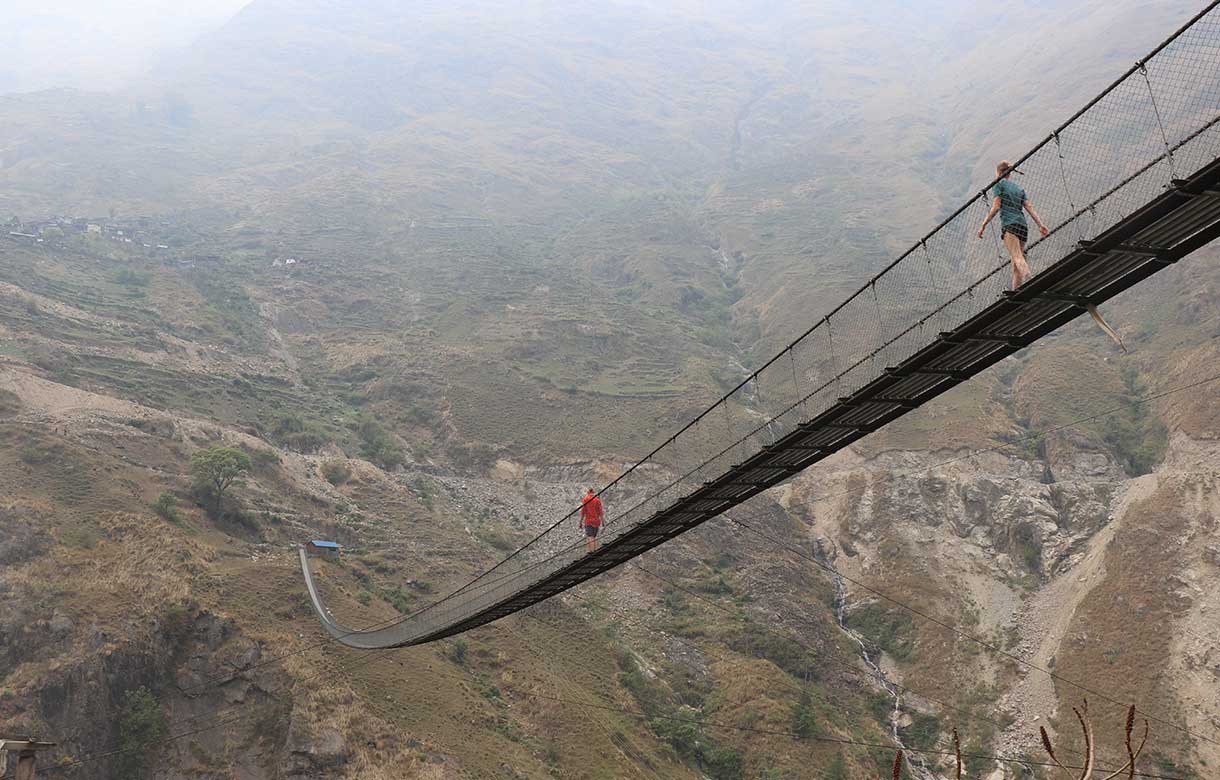
Your journey follows the dramatic rapids of the Budhi Gandaki River through lush subtropical forests, cascading waterfalls, suspension bridges, and narrow gorges. Then, the switch takes you across alpine meadows and remote high-altitude valleys before crossing the breathtaking Larke La Pass (5,106m/ 16,751ft), one of the most spectacular mountain passes in Nepal. Throughout the journey, you will be rewarded with constantly changing landscapes and extraordinary mountain views. At the same time, the cultural experience becomes equally unforgettable as the trail gradually stretches across traditional Tibetan Buddhist settlements. These beautiful Himalayan villages on the Tibetan border isder are decorated with prayer flags, mani walls, chortens, and intricate architecture.
The mountain life that remains largely untouched by modern development on this side of the mountains is one of the most intruding parts of the journey. Thus, the Manaslu Circuit Trek is perfect for trekkers who are seeking something more adventurous, culturally immersive, and less crowded than the classic trekking routes in Nepal. This fascinating endeavour offers a perfect balance between challenging adventure, authentic local encounters, dramatic high-altitude landscapes, and the powerful feeling of trekking through one of the last truly untouched regions of the Nepali Himalayas.
Before you step into the detailed route, this outline plan helps you understand how the trek is designed to feel. This outline gives you a clear structural overview of the entire journey in one place. It highlights how the trek progresses from lower river valleys to high Himalayan terrain, showing key stopping points, daily walking distance/ duration, and gradual altitude gain. For the trekkers planning ahead, this section is a structural map of the journey that helps you visualize the entire Manaslu Circuit Trek 14 Days itinerary before getting into the detailed daily descriptions.
Day
Manaslu Circuit Trek 14 Days Itinerary
Elevation Profile
Duration/ Distance
01
Drive from Kathmandu (1,400m/ 4,593ft) to Machha Khola (870m/ 2,854ft)
530m/ 1,738ft (loss)
Drive Distance: 165km/ 102 miles
Drive Duration: 7 to 8 hours
02
Machha Khola to Jagat (1,290m/ 4,232ft)
420m/ 1,377ft (gain)
Trek Distance: 22.2km/ 13.79 miles
Trek Duration: 6 to 7 hours
03
Trek to Deng (1,860m/ 6,102ft) via Philim (1,570m/ 5,150ft)
570m/ 1,870ft (gain)
Trek Distance: 19.9km/ 12.36 miles
Trek Duration: 7 to 8 hours
04
Deng to Namrung (2,660m/ 8,727ft)
800m/ 2,624ft (gain)
Trek Distance: 19.5km/ 12.11 miles
Trek Duration: 5 to 6 hours
05
Trekking from Namrung to Lho Gaon (3,180m/ 10,433ft)
520m/ 1,706ft (gain)
Trek Distance: 11km/ 6.8 miles
Trek Duration: 5 to 6 hours
06
Lho to Samagaon (3,530m/ 11,581ft)
350m/ 1,148ft (gain)
Trek Distance: 9km/ 5.5 miles
Trek Duration: 5 to 6 hours
07
Rest and acclimatization day at Samagaon– Hike to Manaslu Base Camp (4,800m/ 15,748ft)
1,270m/ 4,166ft (gain)
Trek Distance: 14km/ 8.6 miles
Trek Duration: 6 to 8 hours
08
Trek to Samdo (3,875m/ 12,713ft)
345m/ 1,131ft (gain)
Trek Distance: 8.2km/ 5.09 miles
Trek Duration: 3 to 4 hours
09
Acclimatization at Samdo and hike to Tibetan border and Rui La Pass (4,998m/ 16,397ft)
1,123m/ 3,684ft (gain)
Trek Distance: 19.5km/ 12 miles
Trek Duration: 8 to 9 hours
10
Samdo to Dharamshala/ Larke Phedi (4,460m/ 14,632ft)
585m/ 1,919ft (gain)
Trek Distance: 6.6km/ 4.1 miles
Trek Duration: 4 to 5 hours
11
Crossing Larke La Pass (5,106m/ 16,751ft) and trek to Bimthang (3,590m/ 11,778ft)
646m/ 2,119ft (gain)
Trek Distance: 24.7km/ 15.34 miles
Trek Duration: 7 to 8 hours
12
Trek from Bimthang to Tilche (2,262m/ 7,421ft)
1,328m/ 4,356ft (loss)
Trek Distance: 26.3km/ 16.3 miles
Trek Duration: 7 to 8 hours
13
Tilche to Dharapani (1,860m/ 6,102ft) trek and drive to Besisahar (760m/ 2,493ft)
1,502m/ 4,927ft (loss)
Trek Distance: 8km/ 4.9 miles
Trek Duration: 3 to 4 hours
Drive Distance: 35km/ 21 miles
Drive Duration: 3 to 4 hours
14
Drive back to Kathmandu (1,400m/ 4,593ft)
640m/ 2,099ft (gain)
Drive Distance: 175km/ 108 miles
Drive Duration: 6 to 8 hours
Cost Details
What's Included in Manaslu Circuit Trek Cost and Itinerary
Airport pickup and drop by private vehicle.
Three times meals (Breakfast, Lunch and Dinner) during the trek.
Trekking lodge (Tea House) accommodations during the trek.
A highly experience and helpful guide including his all expenses.
All necessary permits Manaslu and Annapurna Conservation Area.
Manaslu Restricted permit.
Manaslu Conservation Permit.
Annapurna Conservation Area Permit.
Bus transport from Kathmandu to Machha Khola and from Besisahar to Kathmandu.
Jeep from Tilche to Besisahar sharing basis.
Medical supplies (first aid kit will be available) provide by company.
Emergency Helicopter service will be paid by your Travel Insurance.
Use of Sleeping bags, Down Jacket and Duffel bag will be provided (if you needed, to be returned after the trip).
Official expenses.
Around Manaslu trekking route map.
Farewell dinner with culture show.
Assistance guide group size 5 +.
What's Excluded in Manaslu Circuit Trek Cost and Itinerary
Meals in City (lunch and dinner).
Hotel in Kathmandu.
Porter if needed($260)
Your personal expenses.
All kind of soft and hard drinks.
Nepal entry visa and international airfare.
Private transports.
Price & Availability
Group Discount Available
1 Person
US$ 1050
2 - 4 Person
US$ 960
5 - 10 Person
US$ 850
Itinerary of Manaslu Circuit Trek Cost and Itinerary - 14 days
Day 01
Drive from Kathmandu (1,400m/ 4,593ft) to Machha Khola (870m/ 2,854ft): 7 to 8 hours
You will begin your Manaslu Circuit Trek Nepal with a long scenic drive from Kathmandu to Machha Khola, following the Prithvi Highway west before turning north toward the remote Budhi Gandaki Valley. The first part of the journey passes through Naubise and Dharke, with views of terraced hillsides, roadside settlements, and river valleys before continuing toward Dhading Besi and the lower Budhi Gandaki region.
From the highway, the road gradually becomes rougher as you head toward Arughat, an important gateway to the Manaslu trekking region. The route then follows the Budhi Gandaki River through increasingly narrow valleys and rural settlements. Passing through Arkhet and Khorlabesi, you will notice the landscape changing from cultivated lower hills to steeper forested slopes and rocky river scenery.
The final stretch brings you to Machha Khola, a small riverside settlement along the Budhi Gandaki. After arriving, you can check into your teahouse, rest after the long drive, and prepare for the first trekking day toward Jagat and deeper into the Manaslu region.
Max. Elevation:870
Duration:7-8 hrs
Distance:165 km
Day 02
Machha Khola to Jagat (1,290m/ 4,232ft): 6 to 7 hours
The trail from Machha Khola begins with a relatively gentle walk along Budhi Gandaki before switching to suspension bridges, stone staircases, and rolling ascents. You will pass the small Gurung settlement of Khorlabesi along the way. From here, the trail continues toward the natural hot spring of Tatopani. Beyond Tatopani, the route becomes increasingly dramatic. You will cross several suspension bridges over the river and traverse the path where the valley starts to feel steeper, narrower, and more rugged.
You will continue your trek across the villages like Doban and Thuo Dunga, where the landscape becomes increasingly rocky and wild. Then, you will walk on a long stone staircase during the final part, which eventually leads you to Jagat. This village serves as the official entry checkpoint for the Manaslu Conservation Area, so your permits will be checked here. With its stone alleys, terraced fields, and mountain backdrop, Jagat offers one of the first truly memorable overnight stops of the trek.
Max. Elevation:1290
Duration:7-8 hrs
Distance:22.2 km
Day 03
Trek to Deng (1,860m/ 6,102ft) via Philim (1,570m/ 5,150ft): 7 to 8 hours
Day four of the Manaslu Circuit Trek 14 Days itinerary is often one of the longest and most varied trekking days in the early part of this circuit route. The trekking route begins with a gradual climb from Jagat before entering the higher villages that reflect the increasing influence of Tibetan culture. You will first descend toward the river and cross a suspension bridge before gradually climbing toward Salleri. The route then continues toward Sirdibas, a beautiful traditional village with distinctive stone houses and terraced farmlands.
A gradual accent from here will eventually bring you to Philim Village. This is one of the latest and most scenic villages on this section of the trek. Then, you will traverse the narrow forested sections beyond Philim and move deeper into the valley. After crossing Ekle Bhatti, the route becomes quieter and more remote as fewer settlements appear. Finally, scenic stretch through bamboo forests and steep cliffside trail above the rushing Budhi Gandaki leads you to Deng. At Deng, the cultural shift is noticeable; this village feels like a true gateway between lower subtropical valleys and more remote Himalayan landscapes.
Max. Elevation:1860
Duration:7-8 hrs
Distance:19.9 km
Day 04
Deng to Namrung (2,660m/ 8,727ft): 5 to 6 hours
On this day’s adventure in your Manaslu Circuit Trek Nepal, the dense subtropical landscapes begin to fade behind you, and the route introduces you to a stronger Tibetan cultural identity. From Deng, the trail crosses the Budhi Gandaki River several times while taking you across forest paths. As you continue walking further, you will arrive at Bihi Phedi with traditional stone homes and prayer walls. Then, the trail passes through the peaceful village of Ghap, which is often used as a tea break stop along this circuit route.
Beyond Ghap, you will walk through beautiful stretches of pine forest while crossing wooden and suspension bridges over deep river gorges. As you approach Namrung, the village appears dramatically against the mountain backdrop. Namrung offers clearer views of major Himalayan peaks, including a stunning panorama of Manaslu. This village also feels far more influenced by Tibetan Buddhism culture as prayer flags, chortens, and traditional architecture become more prominent.
Max. Elevation:2660
Duration:6-7 hrs
Distance:19.5 km
Day 05
Trekking from Namrung to Lho Gaon (3,180m/ 10,433ft): 5 to 6 hours
Leaving Namrung, you will follow the trail that steadily climbs through the forest before reaching Lihi Village. The scenery feels open here compared to the narrower valleys below. Then, the route continues to stretch toward Sho Village, which is another culturally rich settlement with strong Tibetan influence. As you continue walking on this high-altitude segment, Mount Manaslu becomes increasingly visible. The final stretch from here leads you to Lho Gaon, one of the most scenic villages on this circuit route.
Lho sits beneath the massive Himalayan walls and offers breathtaking views of Manaslu. One of the major highlights here is visiting the Ribung Monastery. It is a peaceful monastery located above the village that offers incredible sunset and sunrise views over the mountains. At Lho, the environment feels dramatically alpine compared to where you started the itinerary of Manaslu Circuit Trek a few days ago.
Max. Elevation:3180
Duration:5-6 hrs
Distance:11 km
Day 06
Lho to Samagaon (3,530m/ 11,581ft): 5 to 6 hours
This day of your Manaslu Circuit Trek itinerary involves moderate trekking hours, but it is packed with some of the most iconic scenery. Your morning begins with breathtaking sunrise views over Manaslu. You will then gradually climb through forested stretches to Shyala Village. This section feels dramatically open with massive Himalayan peaks surrounding you from nearly every direction. From Shyala, the trail becomes relatively gentle and passes ancient monasteries, yak pastures, and wide valleys before reaching Samagaon.
Samagaon is the largest settlement in the Upper Manaslu region and serves as a major acclimatization stop. This village sits beneath the towering face of Mount Manaslu and offers a fascinating glimpse into traditional Nubri culture. Here, you will notice large stone houses, monasteries, patures, and a slower rhythm of life that feels deeply connected with the surrounding mountains.
Max. Elevation:3530
Duration:4-5 hrs
Distance:7.6 km
Day 07
Rest and acclimatization day at Samagaon– Hike to Manaslu Base Camp (4,800m/ 15,748ft): 6 to 8 hours
Today, you will make a stop at Samagaon for acclimatization before moving on to the Larke La crossing part. This acclimatization day is one of the most important parts of the entire Manaslu Circuit Trek 14 Days itinerary. From this point, the trek moves into significantly higher elevation. So proper adaptation is necessary before you traverse those stretches. Although it is labeled as a ‘rest day’, you will be active through short acclimatization hikes. The most popular acclimatization hike on this is Manaslu Base Camp via Birendra Lake.
Birendra Lake is a stunning glacial lake just above Samagaon that is known for its striking turquoise waters and dramatic mountain surroundings. Trekkers who are looking for a longer acclimatization hike often continue toward Manaslu Base Camp for close-up views of the glacier and Mount Manaslu. Another short alternative for an acclimatization hike is Pungyen Gompa, a 400-year old monastery on a ridge with incredible panoramic views of surrounding glaciers and peaks.
This acclimatization stop also gives trekkers a rare opportunity to slow down and fully appreciate Samagaon’s mountain atmosphere before the trail becomes harsher and more physically demanding.
Max. Elevation:4800
Duration:6-8 hrs
Distance:14 km
Day 08
Trek to Samdo (3,875m/ 12,713ft): 3 to 4 hours
After acclimatization day at Samagaon, your trek resumes with a shorter but increasingly high-altitude-focused day. The trail begins with a gentle descent toward Budhi Gandaki before crossing a wooden bridge and entering the wide glacial valley. Compared to the dramatic forests and narrow river gorges of earlier days, the landscape now feels far more open, barren, and exposed. As you continue walking higher, you will pass stone-built shelters, yak grazing pastures, and seasonal settlements used by local herders. The train feels quieter, and the winds become stronger.
This day highlights the increasing sense of remoteness as you head toward the pass. You will also notice signs pointing toward the historic trade route that connects Nepal with Tibet. Eventually, you will arrive at Samdo, the final permanent settlement before crossing the Larke La Pass. This village is located near the Tibetan border, and it feels raw, isolated, and deeply traditional. Samdo is home to Tibetan refugee communities, stone houses, prayer flags, and dramatic mountain scenery in every direction.
Max. Elevation:3875
Duration:4-5 hrs
Distance:8.2 km
Day 09
Acclimatization at Samdo and hike to the Tibetan border and Rui La Pass (4,998m/ 16,397ft): 8 to 9 hours
You will spend an important acclimatization day at Samdo, with a side hike toward the Rui La Pass on the Nepal–Tibet border. The route follows the Athara Saya Khola valley, leaving the main Manaslu Circuit trail and entering a remote high-altitude landscape that was historically part of the trade route between Nepal and Tibet.
From Samdo, the trail gradually climbs through dry alpine terrain, with the vegetation becoming increasingly sparse as you gain elevation. Along the way, you will see the rugged mountain scenery around Samdo Glacier and Fukang Glacier, while the surrounding ridges open toward the mountains along the Nepal-Tibet frontier. The route is remote, with no settlements or teahouses along the way, making this one of the more wilderness-focused side trips of the Manaslu Circuit.
After a steady ascent, you will reach Rui La at 4,998 meters (16,397 feet), marked by the Nepal–Tibet border and surrounded by broad Himalayan views. From the pass, the landscape opens toward the Tibetan side, while the high mountains and glaciers of the Manaslu region dominate the southern horizon. After spending some time at the pass, you will retrace the same route back to Samdo.
**Note: Trekkers who do not wish to hike to Rui La Pass can use the acclimatization day to explore the Samdo Peak area instead. Those with appropriate mountaineering equipment, sufficient experience, and suitable weather conditions may also climb Samdo Peak with guidance. The peak option should be planned in advance, as it requires proper gear and preparation beyond what is needed for the regular Manaslu Circuit Trek**
Max. Elevation:4998
Duration:8-9 hrs
Distance:19.5 km
Day 10
Samdo to Dharamshala/ Larke Phedi (4,460m/ 14,632ft): 4 to 5 hours
This day’s trek is not particularly longer in terms of distance. However, it can feel physically demanding due to the increasing altitude and thinning air. The trail starts with a gradual climb out of Samdo across barren alpine landscapes. This stretch feels significantly harsher than previous days due to constant exposure to cold winds. After crossing the wooden bridges and traversing wide moraine valleys, the trekking trail steadily climbs toward Larke Bazaar. It is a historic trading point that once served merchants traveling between Nepal and Tibet.
As you continue trekking higher, the terrain becomes increasingly rugged with glacial streams, rocky paths, and vast mountain walls surrounding the trail. Eventually, you will arrive at Dharamshala, which is also known as Larke Phedi. This is the final overnight stop before crossing the Larke La Pass. Accommodation here is basic compared to lower villages, and weather conditions can feel significantly colder. Trekkers spend the evening here eating early, hydrating, and preparing gear for the longest and most physically demanding part of the Manaslu Circuit Trek itinerary.
Max. Elevation:4460
Duration:4-5 hrs
Distance:6.1 km
Day 11
Crossing Larke La Pass (5,106m/ 16,751ft) and trek to Bimthang (3,590m/ 11,778ft): 7 to 8 hours
Day 11 of your Manaslu Circuit Trek itinerary marks the most challenging and rewarding day of the entire journey. Your day begins very early, often pre-dawn, with headlamps lighting your way. The initial ascent is slow and steady as the trail takes you across glacial moraines and frozen terrain. At this altitude, even gradual inclines feel exhausting. Thus, it is important to maintain a slow and consistent pace. After several demanding hours, you will finally reach the prayer-flag-covered summit of Larke La Pass.
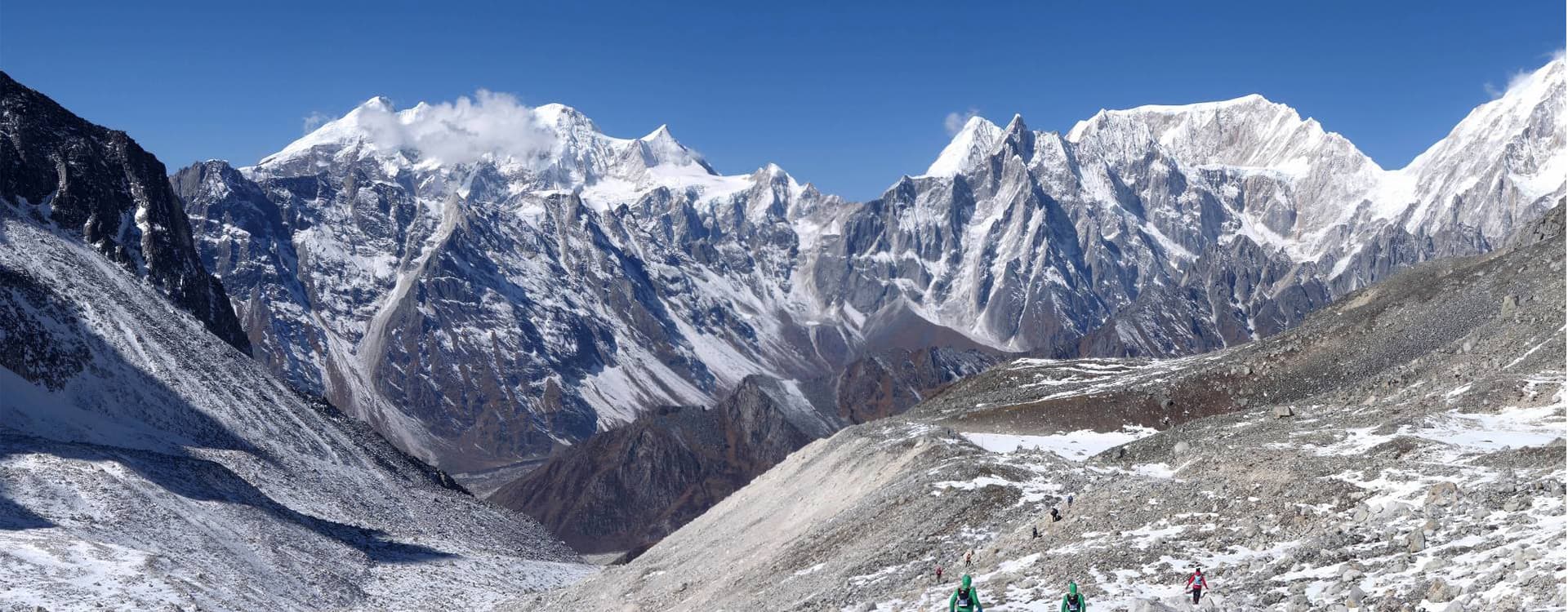
At an elevation of 5,106 meters, this summit offers surreal Himalayan panoramas that include Himlung Himal, Cheo Himal, Kang Guru, Larkya Peak, Annapurna II, Ngadi Chuli, Buddha Himal, and Manaslu. Reaching the top feels rewarding, but the day is far from over. After spending some time at the top, you will prepare for the descent toward Bimthang. This descending stretch is long, steep, and often harder on the knees. Snow and ice can make this section more challenging, depending on seasonal conditions.
As you descend to lower elevations, the barren glacial terrain gradually transitions into green valleys. Then, you will gradually arrive at Bimthang. It is a stunning settlement that is surrounded by glaciers, lakes, and towering peaks. After such a demanding day, the comfort of Bimthang feels incredibly premium and satisfying.
Max. Elevation:5106
Duration:4-5 km
Distance:7 km
Day 12
Trek from Bimthang to Tilche (2,262m/ 7,421ft): 7 to 8 hours
After the physical intensity of crossing Larke La Pass, Day 12 of your Manaslu Circuit Trek itinerary brings a long but comfortable descent into greener landscapes. Leaving Bimthang, the trail gradually descends through alpine meadows and rocky terrain. As you lose elevation, the air feels noticeably richer, and breathing becomes much easier compared to previous days. You will pass Yak Kharka before entering dense rhododendron and pine forests. Then, the trail continues toward Gho Village, a peaceful settlement where many trekkers stop for lunch.
Further downhill, you will pass Tilije Village, a culturally fascinating settlement where Tibetan and Gurung influences blend together. Here, the stone pathways, traditional homes, and terraced farmlands create a welcoming atmosphere. A final descent from Tilje finally brings you to Tilche Village, your overnight destination on this day. By this stage, the harsh landscape of Upper Manaslu feels far behind, and the trek begins to transition toward its conclusion.
Max. Elevation:2262
Duration:6-7 hrs
Distance:13 km
Day 13
Tilche to Dharapani (1,860m/ 6,102ft) trek and drive to Besisahar (760m/ 2,493ft): 3 to 4 hours trek and 3 to 4 hours drive
You will make the final walking section of your Manaslu Circuit Trek Nepal from Tilche to Dharapani, following the Marsyangdi River through the lower valley. The trail passes through Thonje, where the Manaslu and Annapurna trekking routes connect, before continuing toward Dharapani through forested slopes, waterfalls, and riverside villages.
At Dharapani, you will complete the trekking portion of the journey and meet your vehicle for the drive to Besisahar. The road follows the Marsyangdi Valley, passing through settlements such as Jagat and Chamje and descending into warmer, greener landscapes as you lose elevation.
After around 3 to 4 hours on the road, you will reach Besisahar, the main town and transport hub of the Lamjung region. You can settle into your hotel, rest after the combined trek and drive, and enjoy the evening in Besisahar before your onward journey from the Manaslu region.
Max. Elevation:760
Duration:3-4 hrs (trek) and 3-4hrs (drive)
Distance:17.9 km
Day 14
Drive back to Kathmandu (1,400m/ 4,593ft): 7 to 8 hours
The final day of your Manaslu Circuit Trek 14 Days begins with a drive from Besisahar toward Kathmandu. Leaving the Marsyangdi Valley behind, you will follow the road through the lower hills of Lamjung, passing Sundarbazar and Dumre before reconnecting with the Prithvi Highway. The scenery gradually changes from the greener river valleys and terraced hills of central Nepal to busier roadside settlements and market towns as you continue east.
Once on the Prithvi Highway, the drive follows the Trishuli River, passing through towns and settlements along the highway before approaching the Kathmandu Valley. The road becomes increasingly busy as you near the capital, marking a clear contrast with the remote mountain trails and high-altitude valleys you experienced during the trek.
After around 6 to 8 hours of driving, you will arrive in Kathmandu, bringing your Manaslu Circuit journey to an end. After two weeks of trekking through remote Himalayan landscapes, crossing Larkya La Pass, visiting Tibetan-influenced mountain villages, and following the Budhi Gandaki and Marsyangdi river valleys, returning to the capital provides time to slow down and reflect on the journey. You can spend the evening resting, enjoying a proper shower and a comfortable meal, or celebrating the completion of the circuit with a cultural dinner.
Max. Elevation:1400
Duration:6-8 hrs
Distance:175 km
If the provided schedule isn't suitable for you, we can create personalized travel arrangements.
Manaslu Circuit Trek Cost and Itinerary Map & Elevation
Loading map...
Altitude Chart
Altitude in:|
Essential Information
Difficulty Level of Manaslu Circuit Trek
The Manaslu Circuit Trek difficulty is at a moderate level to challenging level. The difficulty level of this journey comes from a combination of long trekking days, remote terrain, and high-altitude exposure rather than technical segments. Although you don’t need mountaineering skills for this high-Himalayan route, it still demands strong physical endurance and proper acclimatization. In the lower part of the trail, the difficulty often comes from constant ascents and descents, narrow trails, suspension bridges, and long walking hours across the humid river valleys.
As you move beyond Namrung, the challenge gradually shifts from trail difficulty to altitude. The trekking route climbs from Soti Khola (730m/ 2,395ft) to Larke La Pass (5,106m/ 16,751ft). With an increase in altitude, it increases risk of altitude sickness if you don’t maintain a steady pace and follow a proper acclimatization schedule. The toughest day of the trek is considered the crossing of Larke La Pass, which takes around 7 to 8 hours. Another factor that makes Manasu Circuit more difficult than the Everest Base Camp Trek or the Annapurna Circuit Trek is the remoteness factor. On these isolated parts of the mountains, the teahouses are basic, there are fewer medical facilities, limited internet access, and less flexibility for transportation delays or emergencies.
Once you traverse deeper into the restricted region, the comfort becomes much more limited. Likewise, the unpredictable weather conditions of the Himalayas contribute significantly to the trek’s difficulty. Rainfall can make the lower trails slippery and increase the risk of landslides. Meanwhile, snowfall and strong winds near the pass can create serious challenges in winter or early spring departures. Even during peak trekking seasons, the temperatures at higher elevations can drop well below freezing points at night.
In overall, the Manaslu Circuit Trek is achievable for trekkers with good fitness and proper preparation. However, it feels more demanding than beginner-friendly treks because of all these difficulty aspects stacking on top of each other.
Manaslu Circuit Trek Best Time
Choosing the right season for the Manaslu Circuit Trek directly affects your overall trekking experience. This remote Himalayan route stretches across the lower subtropical valleys to high-altitude alpine terrain. Thus, weather conditions influence everything from road accessibility and trail safety to mountain visibility and the success of crossing Larke La Pass. In general, spring (March to May) and autumn (September to November) are considered the ideal Manaslu Circuit Trek best time. Both of these peak seasons offer the most reliable weather, clearer skies, and safer trekking conditions at higher elevations.
Spring (March to May)
Spring is considered one of the most visually rewarding trekking seasons in Nepal. After winter snow melts, the lower valleys become lush and green, forests start blooming with rhododendrons, and trail conditions gradually improve. The weather in spring is stable, and temperatures feel comfortable. One of the biggest advantages of spring is the combination of colorful landscapes and excellent mountain views. If you are looking for a balanced adventure of comfort, stability, lush scenery, and breathtaking views, spring is one of the most suitable periods for Manaslu Circuit Trekking.
Daytime Temperatures: 10°C to 25°C
Nighttime Temperatures: 6°C to -10°C
Autumn (September to November)
Autumn is often debated as the most reliable season for this remote Himalayan adventure. After the monsoon weather clears out, the air becomes cleaner, the skies are sharper, and the mountain visibility improves significantly. This season is particularly popular because the tail conditions are usually dry and stable. The crossing of the Larke La Pass is also more predictable during this season due to less snow accumulation. The lower valleys also remain pleasant, while the higher villages experience crisp weather and excellent panoramic views. This fall season also coincides with some of the major festivals in Nepal, like Dashain and Tihar, which add cultural depth to your journey.
Daytime Temperatures: 7°C to 23°C
Nighttime Temperatures: 4°C to -10°C
Winter (December to February)
Doing the Manaslu Circuit Trek Nepal in winter is also possible, but the journey becomes far more demanding. The biggest challenge winter presents on this circuit route is how the Larke La Pass is covered by snow, and the trails are frozen. The biting cold wind also adds another layer of challenge, requiring you to pack right. Likewise, only a few teahouses operate during this season with limited facilities. That said, winter does offer quieter trails, dramatic snow-covered landscapes, and very clear mountain views. So, if you are an experienced trekker who can handle harsh conditions and won’t mind the pass blocking, you can still enjoy this circuit route.
Daytime Temperatures: 5°C to 15°C
Nighttime Temperatures: -15°C to -20°C
Monsoon (June to August)
Monsoon season is generally the least preferred season for trekking in Nepal. For routes like this, which need driving logistics, the continuous downpour can be challenging at lower regions. There can be several complications due to landslides and flooding. Similarly, the muddy trail, powerful river currents, and leech-infested trail require extra precaution. However, the landscape becomes incredibly lush, waterfalls are more dramatic, and trails remain far less crowded.
Daytime Temperatures: 15°C to 30°C
Nighttime Temperatures: 0°C to 5°C
Packing List
Packing properly for the Manaslu Circuit Trek Nepal is extremely important as this route takes you from warm lower river valleys to freezing high-altitude alpine environments. In this remote, isolated stretch of the Himalayas, the weather conditions can shift quickly, teahouse facilities become more basic, and buying forgotten gear along the trail is far less convenient compared to commercial routes like the Everest Base Camp Trek and the Annapurna Circuit Trek. The goal here is to pack efficiently and bring enough gear to stay comfortable across changing elevations without carrying unnecessary weight.
Clothing Layers
Moisture-wicking base layers
Quick-dry trekking t-shirts
Fleece or insulated mid-layer
Down jacket for higher elevations
Waterproof/windproof outer shell jacket
Trekking pants
Thermal inner layers
Comfortable hiking shorts (optional for lower sections)
Warm gloves
Woolen hat or beanie
Sun hat/cap
Buff or neck gaiter
Footwear
Broken-in trekking boots with ankle support
Lightweight sandals or camp shoes
Trekking socks
Thick wool socks for higher elevations
Gaiters (helpful during snow or dusty seasons)
Personal Essentials
Sunscreen
Lip balm with SPF
Biodegradable soap
Quick-dry towel
Toiletries
Wet wipes
Hand sanitizer
Toilet paper
Power bank
Charging cables
Passport copies
Trek permits documents
Cash for personal expenses
Energy bars/ snacks
Personal prescriptions
Altitude medication (if recommended by your doctor)
Small first aid kit
Trekking Gear
Backpack (30 to 40L for personal essentials)
Duffel bag (if using porters)
Trekking poles
Sleeping bag rated at least -10°C to -15°C
Sleeping bag liner (for warmth and hygiene)
Rain cover for bags
Packing cubes/ dry bags
Headlamp with extra batteries
Reusable water bottles or hydration bladders
Water purification tablets/ filter bottle
Sunglasses with UV protection
Small thermos flask
Accommodation and Food During Trek
Accomodation during the Manaslu Circuit Trek Nepal is primarily provided through traditional teahouses spread across remote mountain villages. One of the most appealing parts of this trek is that the lodging experience feels far less commercialized than the routes like the Everest Base Camp Trek or the Annapurna Circuit Trek. Many of these teahouses are family-run businesses, and tourism remains connected to local village life. It is pretty common to stay in lodges operated by families who are also involved in farming, livestock herding, and seasonal trade. You can expect a simple room on a twin-sharing basis; the beds are wooden and basic.
Mattresses, pillows, and blankets are provided by the host, still you are recommended to carry a sleeping bag for warmth. At lower elevations, the accommodation feels slightly more comfortable. Some lodges also offer attached bathrooms and better room insulation. As you climb higher toward Namrung, Samagaon, and Dharamshala, the accommodation becomes far more basic. The rooms are smaller, facilities are limited, and the focus shifts from comfort to practicality. Evenings are usually spent in communal dining halls where trekkers gather around a central stove.
Facilities like hot showers, WiFi, charging, and laundry services are provided, but they usually come with additional charges. These services become less reliable as you gain altitude, as many lodges depend on solar power.
Food and Beverages
Meals on the Manaslu Circuit are designed to provide steady energy for long trekking days. Despite the remote settings, the teahouses offer a fairly diverse menu in the lower and mid-altitude villages. As for the higher stretches, the choices become more limited due to the transportation challenges. The meals at the teahouses are freshly cooked after ordering, and most ingredients are locally sourced from nearby farms. Here are the menus that you can generally expect at the teahouse:
For Breakfast
Tibetan bread with jam, honey, or butter
Chapati
Toast
Pancakes (apple, banana, chocolate)
Porridge
Muesli with hot milk
Tsampa
Cornflakes
Granola
Hash browns
Boiled potatoes
Vegetable curry with bread
Eggs (boiled, scrambled, omelet)
For Lunch and Dinner
Dal bhat set (rice, lentils, vegetables, and pickles)
Fired rice
Chomwein
Thukpa
Thenthuk
Instant noodle soup
Pasta
Macaroni
Pizza (mostly in the lower villages)
Momo
Dhindo
Sherpa stew
Soup (garlic, mushroom, tomato, chicken)
Beverage Options
Tea (black, milk, masala, ginger)
Hot lemon
Herbal tea
Coffee (brewed or instant)
Hot chocolate
Hot milk
Boiled drinking water
Bottled water
Soft drinks (Coke, Fanta, Sprite)
Packaged fruit juice
Energy drinks
Local raksi
Chhyang/ local millet beer
Training and Preparation
The Manaslu Circuit Trek Nepal is not a journey that you should approach casually. Yes, it does not involve technical climbing, but the route consistently demands physical effort for nearly two weeks. You will need to deal with altitude, basic facilities, changing weather, and long days in remote terrain. A proper physical and mental preparation significantly improves both your safety and overall experience. You can begin your training 6 to 8 weeks before the trek, longer if you are not regularly active. You will need to focus on building your cardiovascular endurance to walk multiple days consecutively. For that part, you can focus on running or jogging, stair climbing, cycling, swimming, or hiking on local trails.
Likewise, it is important to train your legs for repeated elevation gain. You can boost your leg strength with exercises like squats, lunges, step-ups, deadlifts, calf raises, and stair workouts. These exercises will help prepare your legs and knees for long ascents and descents. Similarly, the uneven trails, suspension bridges, and rocky terrain require stability. Basic core workouts can improve your posture and reduce fatigue. Doing practise hikes is also one of the most effective forms of preparation. Long day hikes will help to simulate the trekking conditions and teach your body how to respond to sustained walking.
Mental Preparation
Many trekkers focus on the physical preparation part and overlook the mental demands of this circuit route. For nearly two weeks, you will be living in remote mountain villages where access to facilities is limited, and the comfort is basic. The trail also requires patience with uncertainty, as the weather can be an unpredictable element in the Himalayas. Walking for multiple hours across the remote mountain terrain consecutively can be mentally draining as well. Thus, you need to focus on mental preparation properly as well for this remote trek.
Mental Preparation Tips
Prepare yourself for the basic level of comfort
Be comfortable with uncertainty
Learn patience with slow progress
Be ready for limited connectivity
Break difficult days into smaller goals
Build realistic expectations
Avoid comparing your pace with others
Communicate if you feel mentally drained
Focus on the expereince, not just the finish line
Necessary Permits for Manaslu Circuit Trek Nepal
The Manaslu Circuit Trek Nepal takes you across one of Nepal’s most regulated trekking regions. So, the permit requirements here are stricter than those of other mainstream trekking routes in Nepal. This trail enters the restricted Himalayan corridor near the Tibetan border and makes an exit through another protected trekking region. Thus, you will need to acquire multiple permits before starting the trek. These permits are mandatory for all foreign trekkers, and your documents will be checked at various checkpoints along the route.
Permits Necessary for Manaslu Circuit Trek
Manaslu Restricted Area Permit (MRAP)
Manaslu Conservation Area Permit (MCAP)
Chumnubri Rural Municipality Permit (CRMP)
Annapurna Conservation Area Permit (ACAP)
The Manasalu Restricted Area Permit (MRAP) is the most important permit for this trek. The section between Jagat and Dharapani falls under Nepal’s restricted trekking zone. This regulation exists due to the region’s remote geography and close proximity to the Tibetan border. The MCAP permit is required because much of the trek passes through the Manaslu Conservation Area. You will also need the Chumnubri Rural Municipality Permit, a local permit introduced by the municipality to support regional tourism infrastructure and community development projects.
After crossing the Larke La Pass, the trail descends toward Dharapani and enters the Annapurna Conservation Area. This is why the ACAP permit is also necessary for completing the full Manaslu Circuit Trek route. It is important to know that independent trekking is not permitted in this restricted region. Foreign trekkers must book through a registered trekking agency and trek with a licensed guide.
Is This Trek Suitable for Beginners?
Yes, the Manaslu Circuit Trek 14 Days itinerary can be suitable for beginners, but for those with managed expectations and who don’t mind training. The Manaslu Circuit is not a technical route, and you don’t need expertise to take on this route. However, some prior hiking or trekking experience does certainly help. Calling this isolated route a ‘beginner-friendly’ adventure without context would be misleading. This trek is still physically demanding and far more remote than other introductory routes in Nepal. The biggest challenge for the first-time trekkers is not necessarily the daily walking hour alone. Dealing with a combination of multiple demanding factors stacked together can be physically demanding.
As a beginner, you will need to be prepared for consecutive trekking days, long ascents and descents, basic teahouse conditions, limited connectivity, and high-altitude exposure. You will eventually cross the Larke La Pass at an elevation of 5,106 meters (16,751 feet). Lower sections of the trail can feel exhausting due to repeated elevation gain and loss. As for the higher trails, they will introduce you to thinner air conditions, colder temperatures, and slower recovery. On top of that, the remoteness of the Manaslu region, with fewer medical facilities and less flexibility, can feel overwhelming for someone who is completely new to trekking.
That said, beginners do complete this trek successfully every year, especially those who are properly prepared for this remote route. If you maintain good cardiovascular fitness, have experience with long walks or shorter hikes, and understand the significance of pacing and acclimatization, this trek is absolutely achievable. If this is your first time trekking in the Himalayas and you are unsure how your body handles the long days or altitude, you can start with shorter routes like:
The Manaslu Circuit is considered a mid-range trekking adventure in Nepal. It is generally more expensive than other short routes like the Annapurna Base Camp Trek or the Mardi Himal Trek. But it is still more affordable than premium trekking experiences in the Everest region. The cost for the Manaslu Circuit Trek is largely influenced by restricted-area permits, mandatory guide requirements, transportation logistics, and the remote nature of the trail. On average, the Manaslu Circuit Trek cost for a 14-day itinerary is around USD 1,100 to USD 1,800 per person. This pricing factor is heavily influenced by the quality of the services and inclusions of the package.
Budget group departures with shared transportation usually cost less. And, if you are going on a private trip with upgraded logistics, it naturally costs more. A standard Manaslu Circuit Trek package within this price range usually includes: necessary permits, licensed trekking guide, teahouse accommodation, three meals a day, ground transportation, and tax and service charges. However, it is still best to review the package inclusion and exclusion details carefully to understand what you get at a certain range. While the cost for Manaslu Circuit Trek is not the cheapest considering the wide range of trekking routes in Nepal, the value is considered exceptional.
You are paying for access to one of Nepal’s least commercialized trekking regions. Here, the remote Himalayan landscapes, Tibetan Buddhism-influenced villages, and dramatic crossing of Larke La Pass create an experience that feels far more exclusive than its price suggests.
Travel Visa
Before arriving in Nepal for the Manaslu Circuit Trek, you will need to ensure that you meet the visa requirements in advance. The good part is that Nepal has one of the most straightforward tourist visa systems for travelers. Most nationalities can obtain their visa after landing in Tribhuvan International Airport (TIA). Thanks to the smooth and easy visa process, visa for Nepal is the easiest part of planning the trek. Most foreign nationals are eligible for Visa on Arrival, which is issued at the airport. You can complete the visa process after you land at the Department of Immigration office. You will have to fill in the arrival card and visa form using the kiosk machine at the airport.
Then, you can make the payment based on your intended period of stay and get your visa stamped. If you fill out the visa form via the website, you will get submission receipt with barcode. Print the receipt and bring it along with you to get your visa. Indian citizens do not need to get a tourist visa for Nepal. However, they should carry valid identification document for entry verification. There are three types of visa that you can apply for:
Nepal Tourist Visa and Fees
15 Days Tourist Visa— USD 30
30 Days Tourist Visa— USD 50
90 Days Tourist Visa— USD 125
For the Manaslu Circuit Trek 14 Days itinerary, most trekkers chose the 30-day visa rather than the 15-day option. This gives you extra flexibility for arrival days, permit processing, potential transportation delays, sightseeing in Kathmandu, and buffer days after completing the trek. If your travel plans change, you can also apply for a visa extension through the Department of Immigration Nepal. For that, you will need to get at least 15 days of extension, which will cost about USD 45.
**Note: For visa processing in Nepal, you will generally have to present a passport with at least six months' validity, a completed visa application form, passport-sized photographs, and the visa fee in cash**
Manaslu Circuit Trek Cost and Itinerary FAQs
Around Manaslu Circuit Trekking
How Long Does the Manaslu Circuit Trek Take?
The Manaslu Circuit Trek typically takes around 12 to 16 days to complete. The overall duration depends on the itinerary, pace, and acclimatization stops. The standard 14-day itinerary is the most balanced option, which allows you enough time for proper altitude adjustment before crossing Larkya La Pass.
What is the Best Time to Do the Manaslu Circuit Trek?
The Manaslu Circuit Trek best time is considered to be during spring (March to May) and autumn (September to November). These seasons offer stable weather, clearer mountain views, and safer conditions for high-altitude trekking.
What is the Maximum Altitude of the Manaslu Circuit Trek?
The highest point of this circuit route is Larke La Pass at 5,106 meters (16,751 feet). This section is considered the most demanding part of the entire journey and where altitude effects are most noticeable.
Do I Need a Guide for the Manaslu Circuit Trek?
Yes, a licensed guide is mandatory for the Manaslu Circuit Trek because this trek lies in a restricted region. Independent trekking is not allowed here, and you must travel with a registered trekking agency to obtain permits.
What Permits Are Required for the Manaslu Circuit Trek?
You will need four main permits for this trek: Manaslu Restricted Area Permit (MRAP), Manaslu Conservation Area Permit (MCAP), Chumnubri Rural Municipality Permit (CRMP), and Annapurna Conservation Area Permit (ACAP). These permits cover restricted access, conservation areas, and local entry regulations throughout the route.
Is Altitude Sickness Common on the Manaslu Circuit Trek?
Altitude sickness is a common risk on this circuit route because the trek gradually rises above 3,000 meters and reaches over 5,000 meters at Larke La Pass. That is why proper acclimatization days (especially at Samagaon) are essential, and you need to maintain a steady pace as well as stay hydrated.
What is the Hardest Day of the Manaslu Circuit Trek?
The hardest day of the Manaslu Circuit Trek Nepal is considered the crossing of Larke La Pass. It involves a very early start, a long ascent in thin air, cold temperatures, possible snow conditions, and a long descent to Bimthang. So this stretch is both physically and mentally demanding.
What is the Starting Point of the Manaslu Circuit Trek?
The trek typically starts from Soti Khola or Machha Khola, which are reached by a long drive from Kathmandu. These villages mark the beginning of the trekking route along the Budhi Gandaki Valley.
Is WiFi Available on the Manaslu Circuit Trek?
WiFi is available in some teahouses in the lower and mid sections, like Jagat, Deng, and Namrung. However, as you climb higher, the services can be unreliable. In upper villages like Samdo and near Larkya La Pass, connectivity is very weak or unavailable.
Can I Charge My Phone During the Manaslu Circuit Trek?
Charging is available in most teahouses, but it becomes more expensive and less reliable at higher altitudes. Higher settlements are solar power-dependent, and charging options may be limited in remote villages like Dharmashala and Samdo.
What Kind of Accommodation is Available on the Manaslu Circuit Trek?
Accommodation during the Manaslu Circuit Trek is mainly in basic teahouses and mountain lodges. Rooms are simple, usually twin-sharing, with shared bathrooms in most places. The facilities offered by the teahouses become more basic as you gain altitude.
Is the Manaslu Circuit Trek More Difficult Than Everest Base Camp?
While both treks reach similar altitude challenges, the Manaslu Circuit is more remote, less developed, and has more rugged trail sections. As for the Everest Base Camp Trek, it has better infrastructure, making Manaslu feel more demanding overall.
What Makes the Manaslu Circuit Trek Special?
The Manaslu Circuit Trek Nepal is special because it offers a less crowded, more authentic Himalayan experience with dramatic landscapes, deep cultural transitions, and a challenging high pass crossing at Larkya La Pass. This journey feels more remote and untouched compared to many popular trekking routes in Nepal.
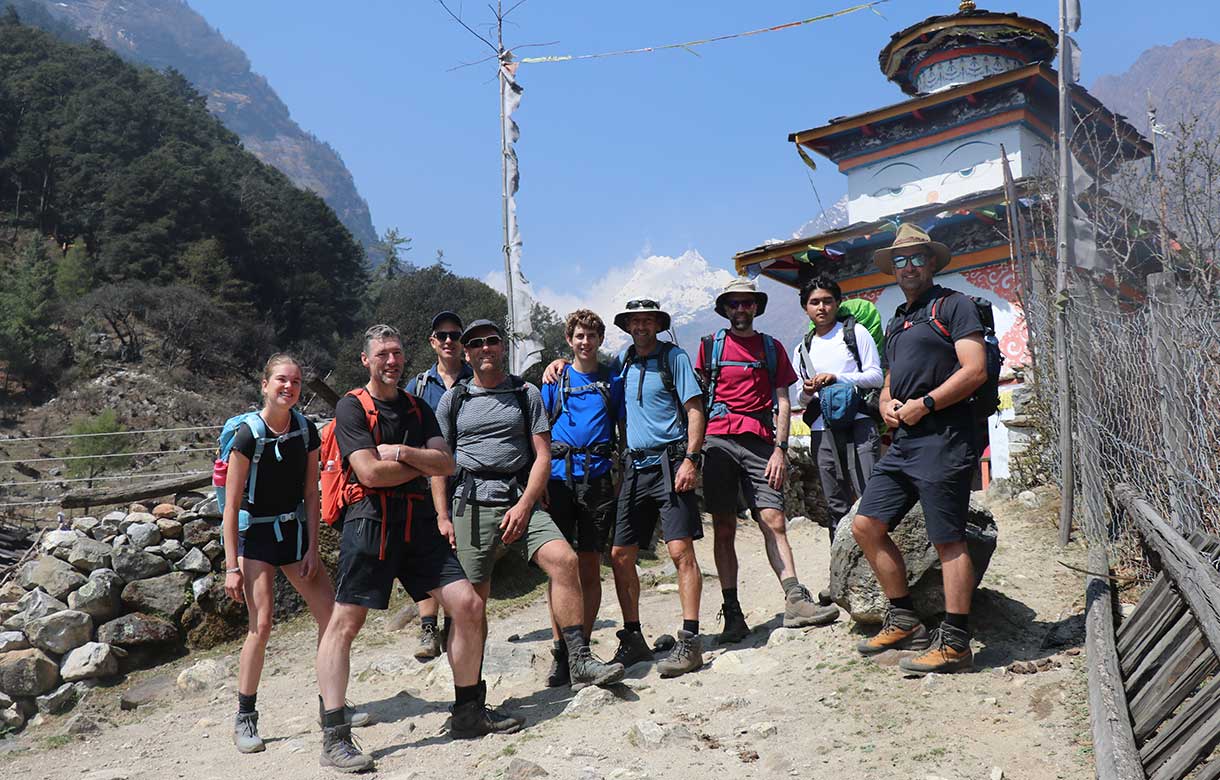
Wild, diverse landscapes with top-tier mountain leadership
Walking around Manaslu over two weeks offers an incredible progression of environments from subtropical forests to high-alpine glaciers. The cultural shift as you ascend toward the Tibetan border is fascinating. Our guide's knowledge of the local trails, weather patterns and high-pass logistics gave our group total confidence during the big pass crossing.