Highlights of Annapurna Circuit With Tilicho Lake Trek
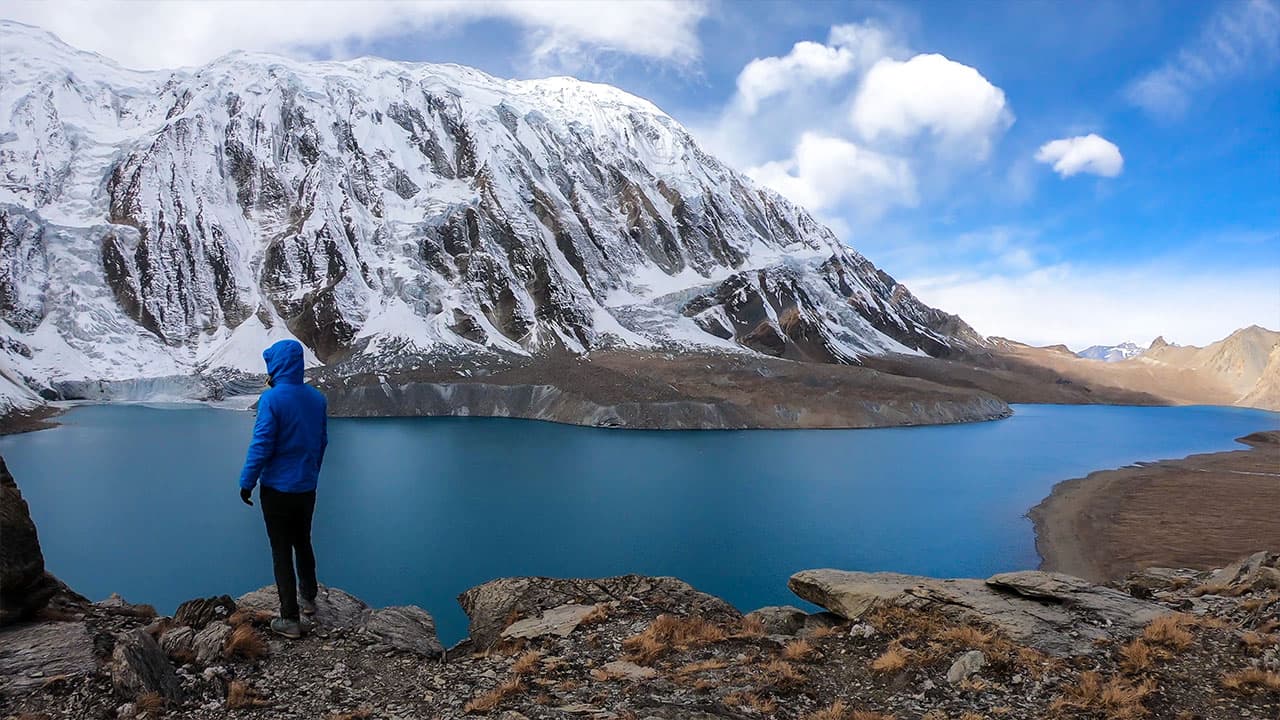
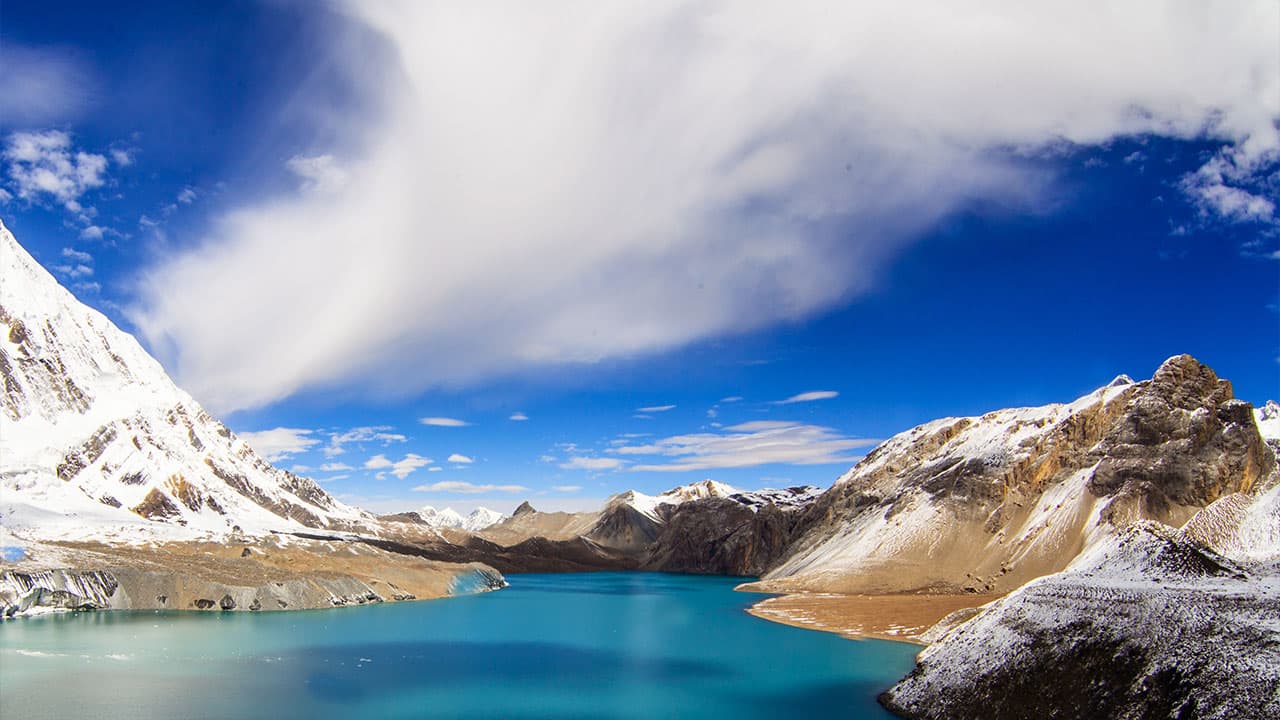
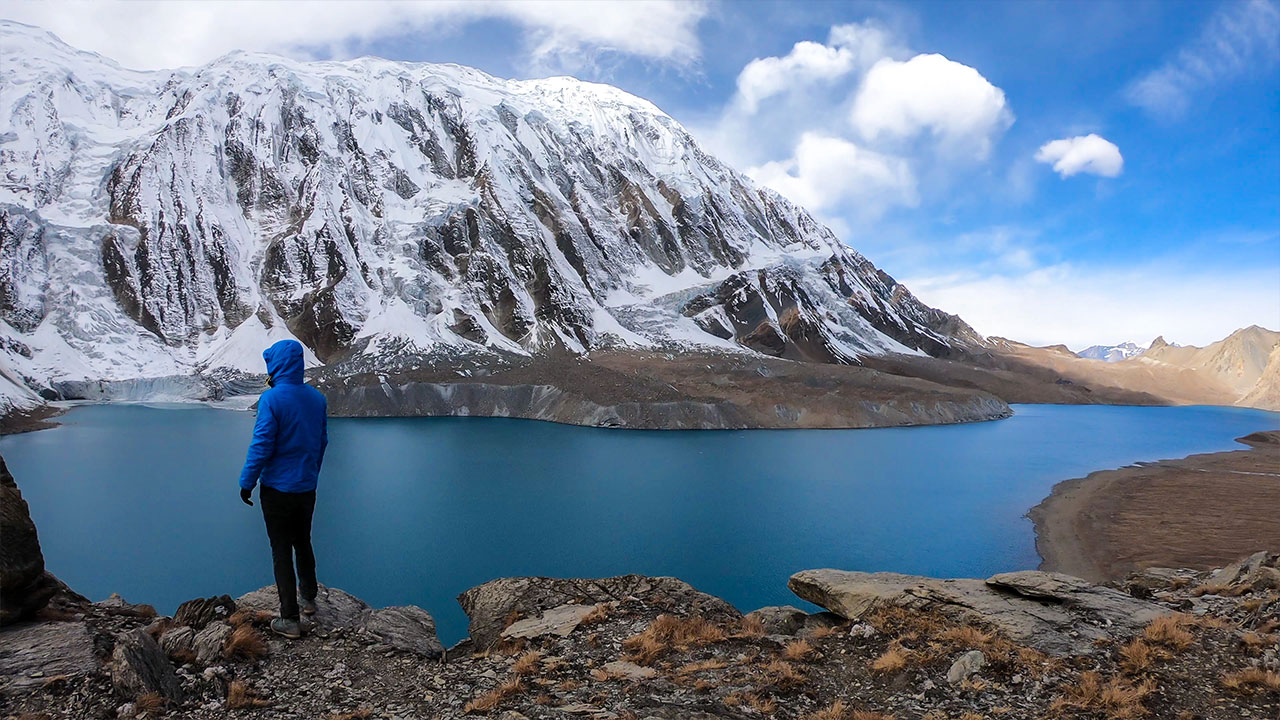
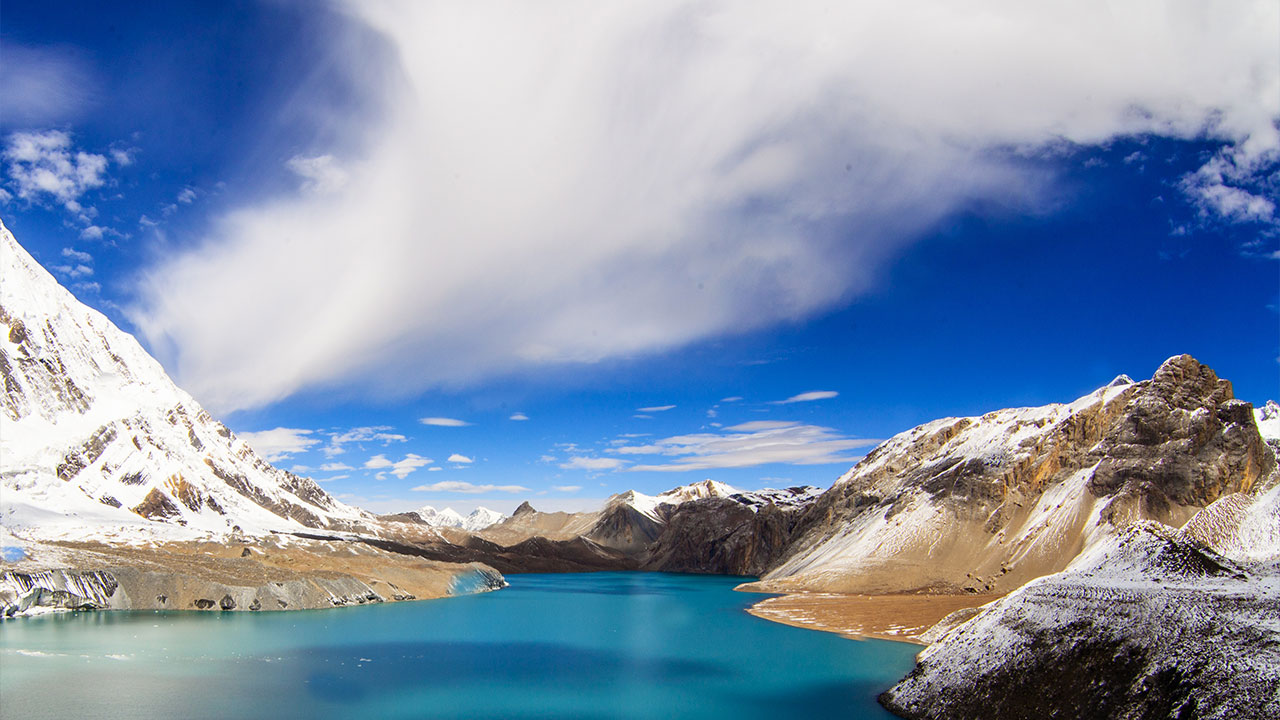
Trek to the spectacular high-altitude Tilicho Lake (4,919m/ 16,138ft), one of the world’s highest alpine lakes
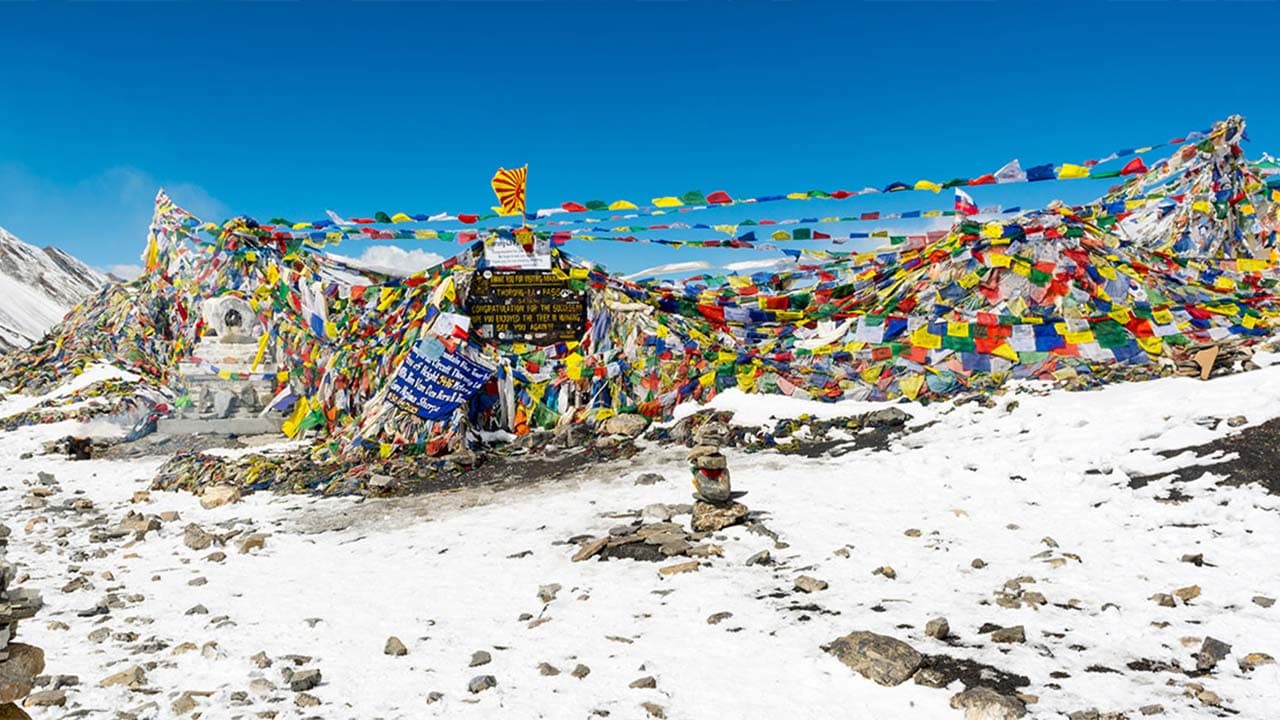
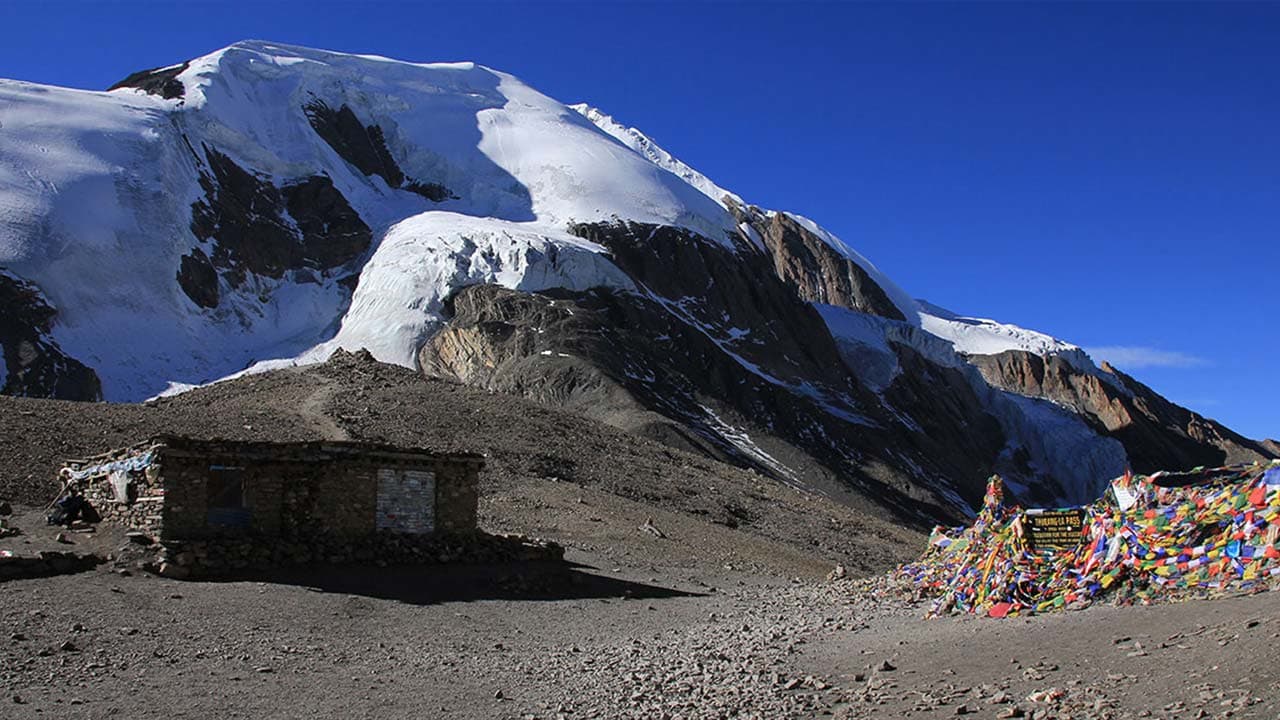
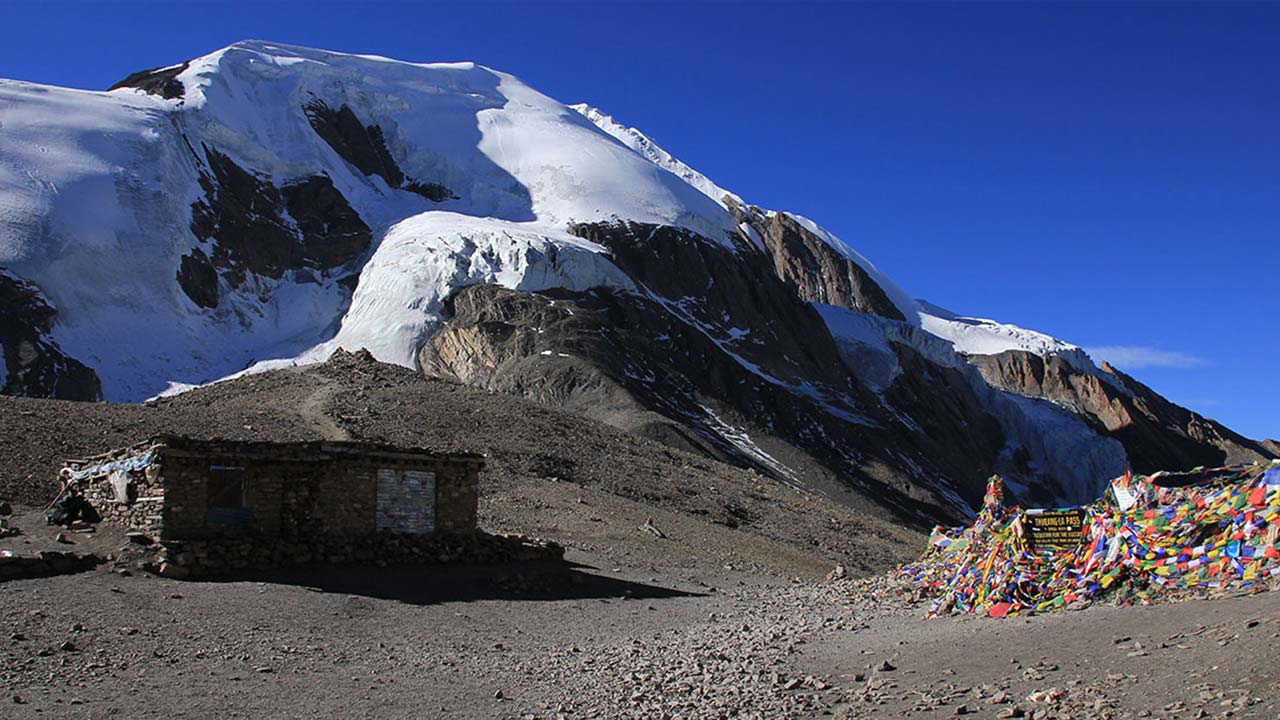
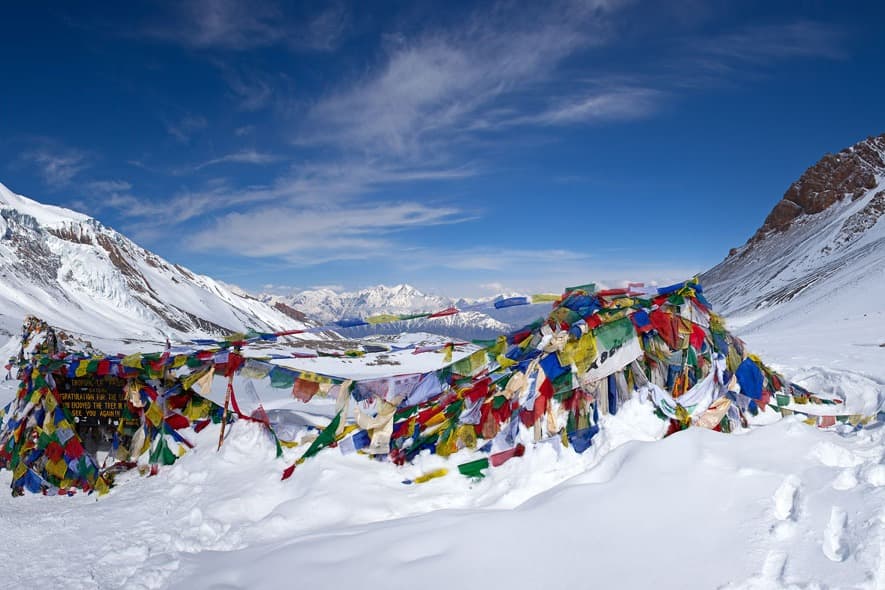
Crossing the legendary Thorong La Pass (5,416m/ 17,769ft), one of the highest trekking passes in the world, and a defining highlight of the Annapurna Circuit Trek route
A rare chance to experience the remarkable diversity of landscapes, from lush river valleys and terraced farmland to alpine meadows, arid high-altitude desert, and the stunning glacial lake surrounded by snow-clad giants
Exploring the culturally rich mountain village of Gurung, Magar, Thakali, Brahmins, and Chhetri ethnic groups, where you can admire their unspoiled culture and traditions
Witness panoramic views of the towering peaks like Annapurna I, II, III, IV, Annapurna South, Dhaulagiri, Nilgiri, Machhapuchhre, Manaslu, Gangapurna, Lamjung Himal, and Tilicho Peak
Visit the sacred pilgrimage site of Muktinath Temple, an important spiritual destination for both Hindus and Buddhists
Experience the dramatic landscape transition from the Marsyangdi River Valley to the rain-shadow region of Mustang, where arid terrain, windswept valleys, and Tibetan-style settlements dominate the scenery
Enjoy the authentic teahouse trekking experience, staying in traditional mountain lodges and sharing meals with fellow trekkers and local families
One of Nepal’s most diverse long-distance trekking routes, where landscapes, cultures, and climate zones change dramatically within a single journey, a truly unforgettable endeavour in the Himalayas
Trip Overview
The Annapurna Circuit with Tilicho Lake is an extraordinary Himalayan journey that combines the legendary Annapurna Circuit Trek route with a breathtaking side trip to the magnificent Tilicho Lake. This high-altitude lake, set at an altitude of nearly 5,000 meters, lies beneath towering Himalayan peaks and adds a dramatic and adventurous extension to the traditional circuit route. This journey will not only bring you to one of the world’s highest alpine lakes and a beloved circuit route, but it will also allow you to experience the incredible geographical and cultural diversity that the Annapurna region is known for. Annapurna Circuit via Tilicho Lake unfolds from the lush lower valleys carved by the Marsyangdi River to the arid and alpine terrain of the Upper Himalayas.
Along the way, you will pass through traditional villages, terraced hills, lush pine and rhododendron forests, and windswept landscapes carved by the harsh mountain winds. This gradual change in scenery is one of the most captivating aspects of the Annapurna Trek route. It will give you a real sense of how dramatically the Himalayas evolve with altitude. As your journey progresses, it branches toward Tilicho Lake (4,919m/ 16,138ft), which is surrounded by rock walls and snow-clad sennitels. After returning to the mainstream Annapurna Circuit route, you will push toward the ultimate challenge, Thorong La Pass (5,416m/ 17,769ft). This iconic Himalayan pass marks the dramatic transition of the Tilicho Lake Annapurna Circuit from the lush valley to the stark and windswept landscape of Mustang.
Beyond the dramatic scenery and natural charm, the Annapurna Circuit and Tilicho Lake Trek is also an experience through the culturally rich mountain communities. The villages along the route reflect a blend of Gurung, Magark, Thakali, Brahmin, Chhetri, Manangi, and Tibetan-influenced traditions. Combined with the welcoming teahouse trekking culture, constantly shifting landscapes, and breathtaking mountain vistas, the Annapurna Circuit with Tilicho Lake Trek offers a deeply immersive and unforgettable Himalayan experience in Nepal.
Annapurna Circuit With Tilicho Lake Trek Outline Itinerary Plan
The following table presents an outline itinerary for the Annapurna Circuit with Tilicho Lake Trek. It includes the day-by-day itinerary plan along with key details such as altitude profile, elevation gain and loss, trekking distance, and walking duration during each day of the trek. This outline table will help you understand how the journey unfolds along the way before you reach high-altitude highlights like Tilicho Lake and cross the iconic Thorong La Pass. You will also be able to get a clear picture of the overall pacing of the trek and the physical demands at different stages of the trek.
Day
Annapurna Circuit with Tilicho Lake Trek Itinerary
Elevation Profile
Distance/ Duration
01
Arrival in Kathmandu (1,400m/ 4,593ft) and transfer to hotel
02
Sightseeing around Kathmandu and trek preparation
03
Drive from Kathmandu to Dharapani (1,860m/ 6,102ft) via Besisahar (760m/ 2,493ft)
460m/ 1,509ft (gain)
Drive Distance: 190km/ 118 miles
Drive Duration: 8 to 9 hours
04
Dharapani to Chame (2,670m/ 8,759ft)
810m/ 2,657ft (gain)
Trek Distance: 16km/ 9.94 miles
Trek Duration: 5 to 6 hours
05
Chame to Pisang (3,200m/ 10,498ft) trekking
530m/ 1,738ft (gain)
Trek Distance: 14km/ 8.6 miles
Trek Duration: 5 to 6 hours
06
Trek from Pisang to Manang Village (3,519m/ 11,545ft)
319m/ 1,046ft (gain)
Trek Distance: 16km/ 9.94 miles
Trek Duration: 5 to 6 hours
07
Rest and acclimatization day at Manang
08
Manang to Siri Kharka (4,060m/ 13,320ft) trekking
541m/ 1,774ft (gain)
Trek Distance: 12km/ 7.45 miles
Trek Duration: 4 to 5 hours
09
Trek to Tilicho Lake Base Camp (4,150m/ 13,615ft)
90m/ 295ft (gain)
Trek Distance: 8km/ 4.9 miles
Trek Duration: 5 hours
10
Hike to Tilicho Lake (4,919m/ 16,138ft) and return to Siri Kharka
859m/ 2,818ft (gain)
Trek Distance: 11km/ 6.8 miles
Trek Duration: 5 to 6 hours
11
Trek from Siri Kharka to Ledar Village (4,230m/ 13,877ft) via Yak Kharka(4,020m/ 13,188ft)
170m/ 557ft (gain)
Trek Distance: 8km/ 4.9 miles
Trek Duration: 5 to 6 hours
12
Ledar to Thorong High Camp/ Thorong Phedi (4,540m/ 14,895ft)
310m/ 1,017ft (gain)
Trek Distance: 7.5km/ 4.6 miles
Trek Duration: 4 to 5 hours
13
Crossing Thorong La Pass (5,416m/ 17,769ft) to reach Muktinath (3,710m/ 12,171ft)
876m/ 2,874ft (gain)
Trek Distance: 16.4km/ 10.19 miles
Trek Duration: 7 to 8 hours
14
Drive from Muktinath to Jomsom (2,710m/ 8,891ft) via Kagbeni (2,804m/ 9,199ft)
1,000m/ 3,280ft (loss)
Drive Distance: 23km/ 14.29 miles
Drive Duration: 2 to 3 hours
15
Jomsom to Pokhara (822m/ 2,696ft) driving
1,888m/ 6,194ft (loss)
Drive Distance: 151km/ 93.82 miles
Drive Duration: 5 to 6 hours
16
Drive back to Kathmandu (1,400m/ 4,593ft) from Pokhara
A highly experience, helpful, knowledgeable, friendly, English speaking, Government License holder guide. All his salary, food, drinks, accommodation, transport and insurance are included.
Comprehensive medical supplies (first aid kit will be available)
Arrangement of Emergency Helicopter service (paid by your Travel Insurance Company).
Use of sleeping bag, down Jacket and Duffel bag. (if you don’t have your own, need to return after trip completed).
Pokhara to Kathmandu by tourist Bus.
Eco Holidays Nepal T-shirt and cap.
Government taxes and official expenses.
Trekking map.
Oximeter to check your pulse and oxygen saturation and heart rate twice daily. (Very useful to check Altitude Mountain Sickness(AMS) symptoms.) Which will ensure you trek is in the safest hands possible for all levels of trekker.
What's Excluded in Annapurna Circuit With Tilicho Lake Trek
Meals whilst you are in Kathmandu and Pokhara (Lunch and Dinner).
Your Travel and Medical Insurance.
Flight from Pokhara to Kathmandu. (If require 120 $)
Porter if needed($ 220)
Your Personal Expenses.
Priate transport if required Kathandu to Dharapani.
All the alcoholic and non-alcoholic cold and hot drinks on trek.
All desserts sweet things like chocolate, cake, pie, pudding.
Hot shower and battery charging on the tea houses.
Tips for the guide, porter and driver (Tipping is expected)
Extra night hotel in Kathmandu and Pokhara.
Price & Availability
Group Discount Available
1 Person
US$ 1155
2 - 4 Person
US$ 1025
5 - 10 Person
US$ 905
11 - 20 Person
US$ 825
Itinerary of Annapurna Circuit With Tilicho Lake Trek - 17 days
Day 01
Arrival in Kathmandu (1,400m/ 4,593ft) and transfer to hotel
Upon your arrival at the Tribhuvan International Airport (TIA) and completing your immigration formalities, you will be greeted by our representative at the airport terminal. From the airport, a short drive will take you to your hotel in Kathmandu. The remaining part of the day is kept flexible to allow you sufficient time to recover from the journey. Depending on your arrival time, you may also have time for a short walk around the surrounding area neighbourhoods, exchange currency, or organize last-minute trekking items.
In the evening, your guide will usually conduct a short briefing about the upcoming Annapurna Circuit with Tilicho Lake Trek, reviewing itinerary plans and important details. This briefing also provides a good opportunity to check your gear and ask the final question before heading toward the Annapurna region.
Max. Elevation:1400
Duration:30min
Day 02
Sightseeing around Kathmandu and trek preparation
This day of your Annapurna Circuit with Tilicho Lake Trek itinerary is dedicated to exploring some of the most culturally significant landmarks in Kathmandu and also making the final preparations for the trek. Kathmandu Valley is home to several UNESCO World Heritage Sites, many of which reflect the rich blend of Hindu and Buddhist traditions. You will explore some of the major sites like Swayambhunath Stupa, Pashupatinath Temple, Boudhanath Stupa, and Kathmandu Durbar Square.
After returning from sightseeing, the afternoon is usually reserved for trek preparation. This is the time to check the trekking gear, finalize permits, and finish your shopping for the mountain journey. With everything set ready, the anticipation for the trek begins to build. Tomorrow you will leave the bustling capital valley heading toward the trailhead of the Annapurna region.
Max. Elevation:1400
Day 03
Drive from Kathmandu to Dharapani (1,860m/ 6,102ft) via Besisahar (760m/ 2,493ft): 8 to 9 hours
Your journey to the Annapurna Circuit with Tilicho Lake Trek begins with an early drive from Kathmandu. You will gradually leave the bustle of the capital behind and move along the road that follows winding valleys of central Nepal. The first segment of your drive passes through small roadside settlements and terraced hillsides before descending to the warmer valleys of the Marsyangdi region. After several hours of driving, you will arrive at Besisahar. It is the lively district headquarters of Lamjung and the traditional marker of the starting point of the trek.
From here, the landscape begins to shift noticeably. The air starts to feel warmer, the valleys get narrower, and the powerful currents of the Marsyandi River start accompanying your drive. You will also switch vehicles at Besisahar or the rough mountain road ahead that hugs the river gorges and takes you across remote, scattered settlements. You will also travel across the beautiful villages of Khudi and Bhulbhule, where you will catch the first glimpse of the Annapurna range between the hills.
The driving journey continues deeper into Marsyangdi Valley through settlements like Jagat, Chamje, and Tal, each of which marks gradual progress into the higher sections of the Annapurna region. As you drive further north, pine forests begin to appear along the slopes, and the mountain air starts to get cooler. Eventually, you will arrive at Dharapani Village, which is a traditional village that is set at the junction of the Annapurna Circuit and Manaslu Circuit trekking routes. This is one of the key settlements along the Annapurna Circuit and Tilicho Lake Trek route, where the Tibetan-influenced culture becomes more prominent.
Max. Elevation:1860
Duration:8 to 9 hours
Day 04
Dharapani to Chame (2,670m/ 8,759ft): 5 to 6 hours
After a warm breakfast, enjoying dramatic scenery, it is time to keep pushing deeper into the Manang district. The cultural character of the region becomes distinctly Tibetan. The prayer wheels, chortens, and mani walls line the path as you move through pine and fir forests. The first major stop on the Annapurna Circuit Trek with Tilicho Lake itinerary on this day is the Bagarchhap Village. This traditional village is known for its Tibetan-style flat-roofed houses, and prayer flags flutter above the rooftops.
From here, the trail continues to climb toward Danaque Village, a key stop on the circuit where trekkers often pause for lunch while enjoying the views of the forested ridges rising above the valley corridor. You will continue walking steadily through the lush forested segment toward Timang Village, which is perched on a ridge that offers a dramatic panorama of the Himalayan giants. From Timang, the route descends slightly through pine forest before continuing toward Thanchok and eventually to Koto Village. Your arrival at Koto marks the entrance to the Nar Phu Valley.
The final leg of this day’s trail follows the river through a beautiful frosted corridor before reaching Chame, the administrative center of Manang. Chame is a relatively large village with comfortable teahouses, small shops, and a natural hot spring known as Tatopani Kunda, where you can dip your tired legs.
Max. Elevation:2670
Duration:5 to 6 hours
Day 05
Chame to Pisang (3,200m/ 10,498ft) trekking: 5 to 6 hours
Today, you will walk on one of the most visually dramatic sections of the Annapurna Circuit. After leaving Chame, you will follow the winding trail that passes through dense pine forest where the massive rock wall Paungda Danda rises nearly 1,500 meters above the valley. As you gradually ascend higher, the valleys start to widen, and the shift in landscape is noticeable. The lush forest starts to thin out and reveal more open terrain and clearer views of the surrounding mountains.
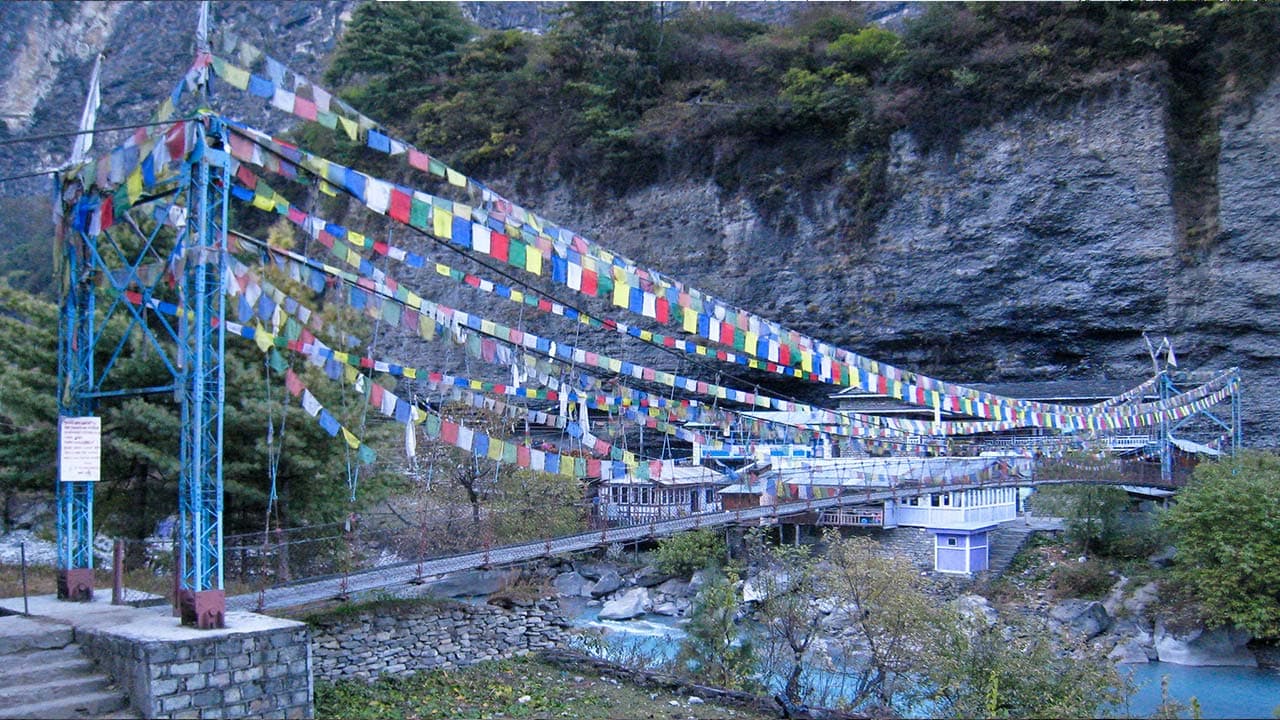
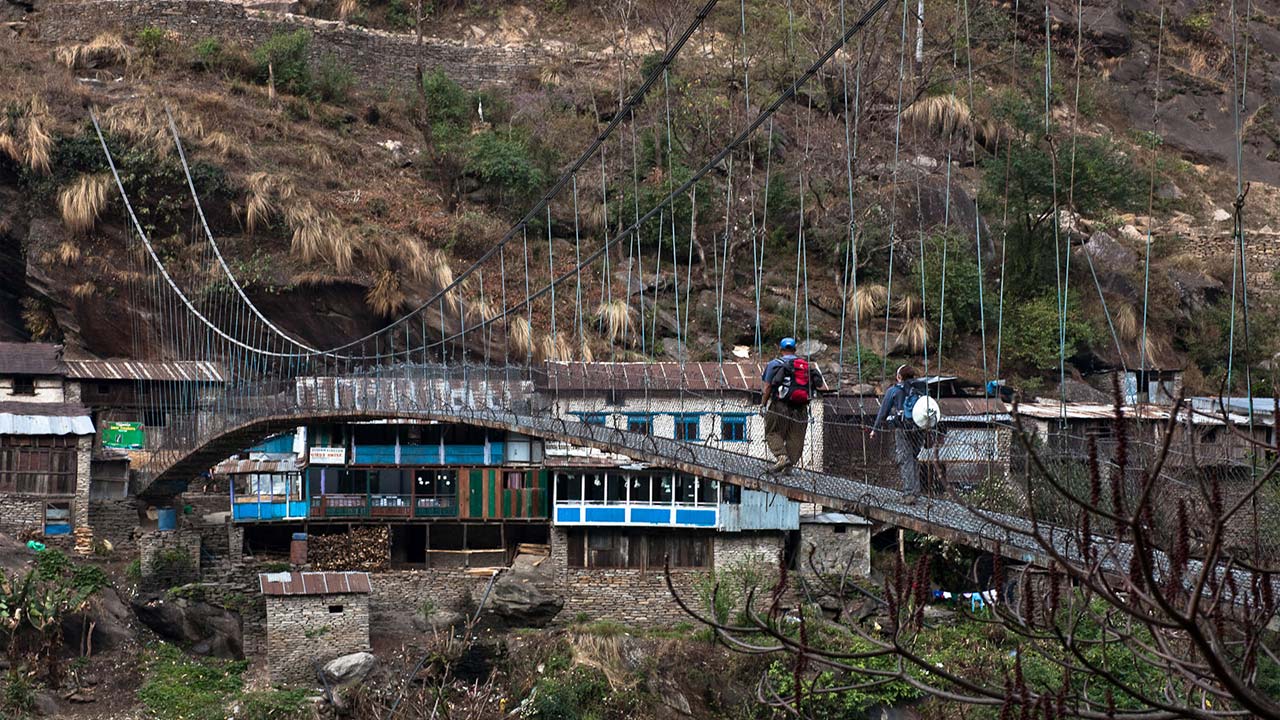
Along the way, you will pass through small settlements like Bhratang, which is popular for its apple orchards and bakeries. Beyond this point, your trail crosses a suspension bridge and enters the narrow gorge before opening into the broader Upper Manang Valley. As you climb higher, the terrain becomes drier and more alpine with the stronger influence of the Tibetan plateau. Eventually, the path leads you toward Pisang, which is divided into two sections. Lower Pisang is where most teahouses are located. As for Upper Pisang, it is perched higher on the hillside and offers spectacular views of the surrounding peaks.
Max. Elevation:3200
Duration:5 to 6 hours
Day 06
Trek from Pisang to Manang Village (3,519m/ 11,545ft): 5 to 6 hours
Today’s journey in your Annapurna Circuit via Tilicho Lake enters the heart of the Manang Valley. From now on, the landscapes become increasingly arid, and the Himalayan vistas grow even more dramatic. If you stayed at Lower Pisang, you will first climb toward Upper Pisang for wider mountain views and better acclimatization. The trail then ascends above the valley floor and takes you to the traditional village of Ghyaru. This village has a cluster of stone houses and ancient monasteries. From the vantage point, you can catch the sweeping panorama of Annapurna II, Annapurna III, and Gangapurna.
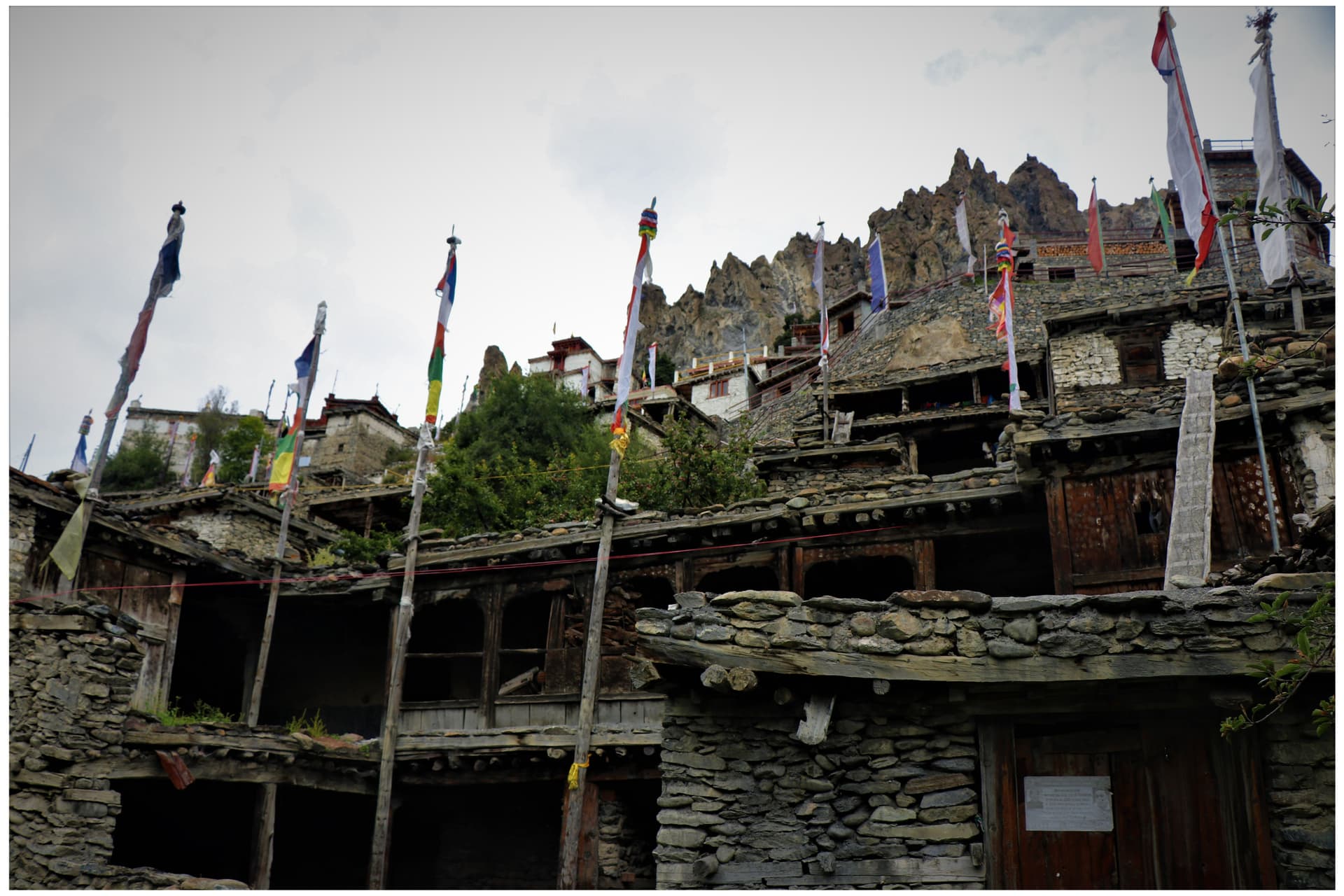
You will continue walking along the high trail across dry alpine slopes to Ngawal Village. The trail then gradually descends toward the valley floor, taking you across scattered settlements and cultivated fields toward the central hub of the region. Before reaching Manang, you will pass through a small village of Braga, which is home to one of the oldest monasteries in the Annapurna region. A short walk further ahead brings you to Manang Village, the main settlement of the upper valley and an important acclimatization stop for trekkers on this circuit route.
Manang is surrounded by towering peaks and glaciers. You will be able to appreciate the immense scale of the Annapurna Himalayas from its wide valley setting. With bakeries, teahouses, and breathtaking mountain views, Manang is a perfect place to pause and adjust before heading to the high altitude portions of the Annapurna Circuit with Tilicho Lake Trek.
Max. Elevation:3519
Duration:5 to 6 hours
Day 07
Rest and acclimatization day at Manang
By this day, you have already climbed to major altitudes of this circuit route. So, Manang will serve as a crucial acclimatization before you venture higher into the Himalayas. Although this day is considered a rest day, it is not an inactive day. You will do short hikes around the valley, which will allow your body to gradually adjust to the thinner air conditions. Many trekkers spend the morning exploring the hills above Manang with scenic viewpoints.
A popular hike leads to the ridge above the village, which offers stunning views of Gangapurna Glacier and the surrounding peaks like Annapurna III, Tilicho Peak, and Chulu East. Another worthwhile hike toward the Braga Village, which is home to a 600-year-old Braga Monastery. The Manang Village itself has a surprisingly lively atmosphere. After the morning hike, you can spend your day exploring small bakeries, trekking shops, and cozy teahouses where trekkers from all around the world gather.
Max. Elevation:3519
Day 08
Manang to Siri Kharka (4,060m/ 13,320ft) trekking: 4 to 5 hours
After acclimatizing properly at Manang, you will follow a quieter route that branches west from the valley, leaving the busier mainstream Annapurna Circuit Trek route. You will first pass the small settlement of Khangsar, one of the last traditional villages in this part of the valley. Beyond this village, the trail becomes noticeably more rugged and remote. You will climb along the dry alpine hillsides that are shaped by centuries of glacial erosion. The higher you climb, the more vegetation becomes sparse as the landscape transitions into high Himalayan terrain.
Enjoying the captivating views of Tilicho Peak rising above the valley, you will traverse the exposed slopes to reach Siri Kharka. This is a small cluster of teahouses perched on an open hillside. From here, you will be able to enjoy the panoramas that stretch across Upper Marsyangdi Valley. The sense of isolation also becomes more apparent here compared to the busier Annapurna Circuit Trek trail. Siri Kharka is an important stop before you head deeper toward Tilicho Lake basin.
Max. Elevation:4060
Day 09
Trek to Tilicho Lake Base Camp (4,150m/ 13,615ft): 5 hours
This day’s trekking part follows a more dramatic section of the Tilicho Lake Trekking route. Leaving Siri Kharka, you will follow the trail that contours along the steep mountainsides where the landscape is shaped by glacial erosion and landslides. Although this day’s trekking distance is not particularly long, the narrow paths and exposed slopes require careful footing. Then, the trekking trail gradually descends toward Tilicho Khola, a glacial stream which originates from the Tilicho basin.
Along the way, you will pass small settlements of the Tilicho Base Camp, which are scattered across the rocky plateau beneath the towering peaks. The base camp itself is a small cluster of teahouses which have been built to support the trekkers visiting the glacial lake. The surrounding landscapes here feel stark with enormous mountain walls rising above the valley. As the evening approaches, the temperatures drop quickly in this high alpine environment. Most trekkers rest early and prepare for a pre-dawn push to Tilicho Lake, one of the highest lakes in the world.
Max. Elevation:4150
Duration:5 hours
Day 10
Hike to Tilicho Lake (4,919m/ 16,138ft) and return to Siri Kharka: 5 to 6 hours
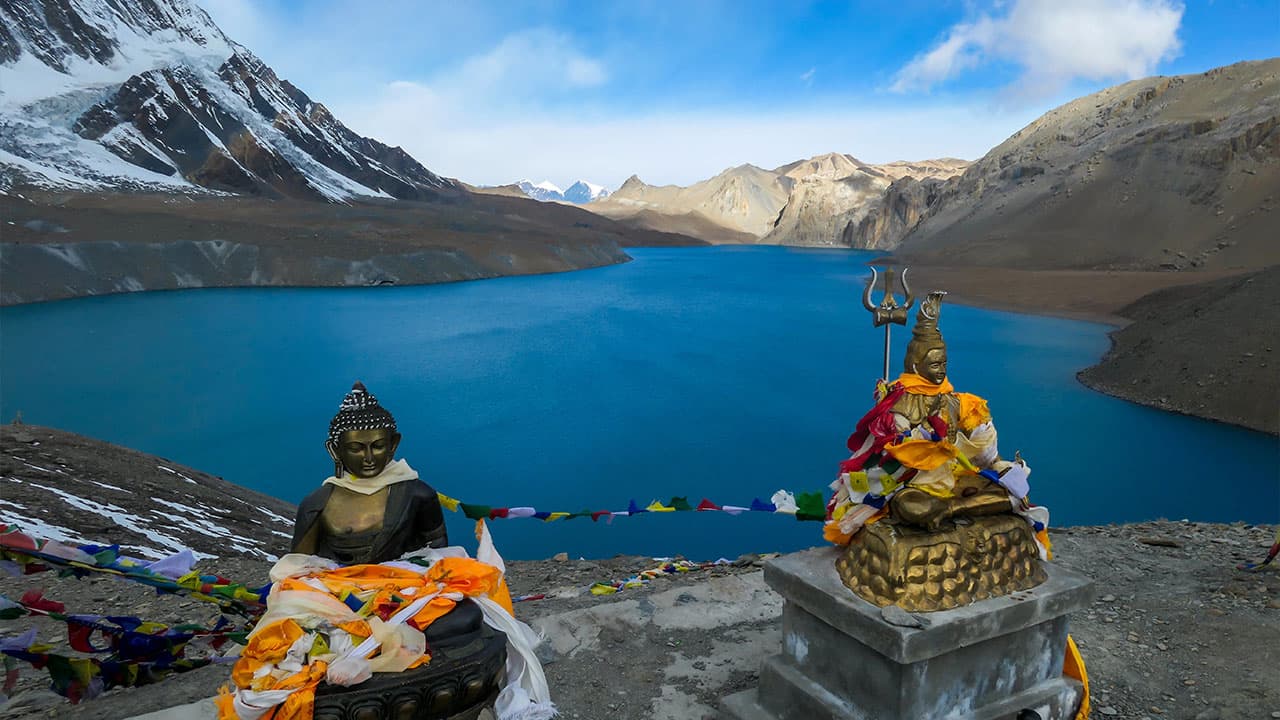
Your journey to Tilicho Lakes begins early in the morning when the weather conditions are calm and most reliable before the midday winds develop. You will follow the trail that climbs steadily above the base camp and weaves across the rocky moraines and barren slopes. As you climb higher, the terrain starts to get increasingly stark and dramatic. The path then eventually reaches the shores of Tilicho Lake. This vast glacial lake is set beneath the towering slopes of Tilicho Peak. The deep blue water of the glacial lake contrasts sharply with the grey alpine landscape, creating one of the most striking high-altitude sceneries in the world.
You will stand beside the lake, which is nearly 5,000 meters, and the scale of the surrounding peaks, such as Khangsar, Muktinath Peak, Nilgiri, and Tilicho, becomes truly apparent. After spending some time absorbing the scenery and taking photographs, you will then retrace your steps back toward the base camp. Rather than spending another night at the Tilicho Base Camp, you will continue descending toward Siri Kharka. The thicker air and slightly lower elevation provide a more comfortable overnight stop on this day of your Annapurna Circuit via Tilicho Lake.
Max. Elevation:4919
Duration:5 to 6 hours
Day 11
Trek from Siri Kharka to Ledar Village (4,230m/ 13,877ft) via Yak Kharka(4,020m/ 13,188ft): 5 to 6 hours
After exploring Tilicho Lake, today you will rejoin the main Annapurna Circuit Trek route. The trail from Siri Kharka gradually climbs toward the higher grazing pastures of the Upper Marsyangdi Valley. You will first reconnect with the main trail near Khangsar and continue toward Yak Kharka, which is one of the major stopping points before Thorong La Pass. You will continue gradually ascending across wide alpine pastures where yak herds and blue sheep often graze along the hillside.
The landscape on this part of the Tilicho Lake Annapurna Circuit feels vast and open. The rolling high-altitude slopes replace the steeper valleys of the lower altitudes. After crossing Yak Kharka, the trail continues further along the valley and gradually climbs toward Ledar. This beautiful settlement is located higher up the valley and is exposed to an alpine environment. Ledar is surrounded by brown hills and snow-covered peaks, spening night here allows you to gain altitude gradually, which is important before crossing the pass.
Max. Elevation:4230
Duration:5 to 6 hours
Day 12
Ledar to Thorong High Camp/ Thorong Phedi (4,540m/ 14,895ft): 4 to 5 hours
You will leave Ledar after a warm breakfast with stunning sunrise views above the surrounding peaks. The trekking trail outward from the village continues through wide and windswept valley. At this elevation, the environment is noticeably harsher, vegetation is sparse, air is thinner, and the surrounding slopes appear rugged compared to greener valleys below. The trail keeps steadily ascending across scattered grazing areas before reaching Thorong Phedi, a small but important settlement that is nestled at the foothills of the massive Thorong La Pass.
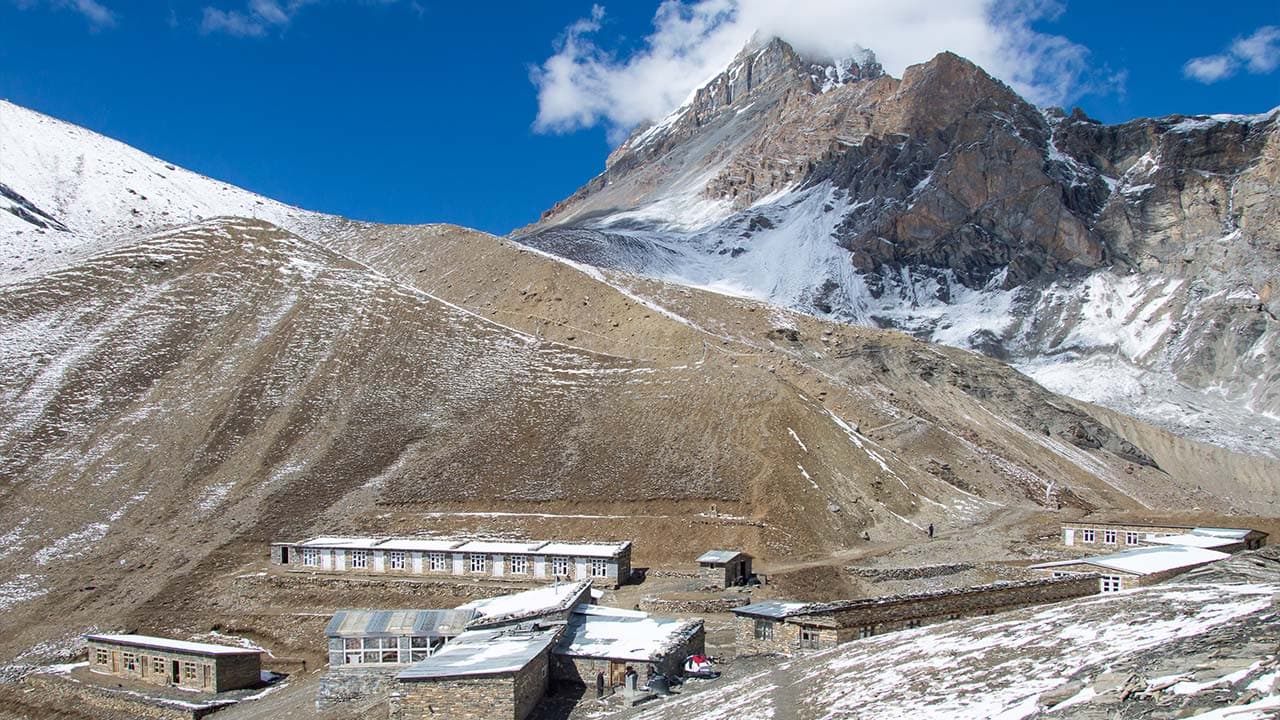
The name “Phedi” literally means the “base of the hill,” which accurately reflects its location. There are several teahouses at Thorong Phedi, which provide shelter for trekkers who are preparing for the demanding crossing the next morning. Some trekkers choose to continue climbing further to Thorong High Camp (4,880m/ 16,010ft), roughly about an hour above Thorong Phedi. You will traverse the rocky switchback to reach the high camp. Staying here shortens the distance for the early morning pass crossing.
Max. Elevation:4540
Duration:4 to 5 hours
Day 13
Crossing Thorong La Pass (5,416m/ 17,769ft) to reach Muktinath (3,710m/ 12,171ft): 7 to 8 hours
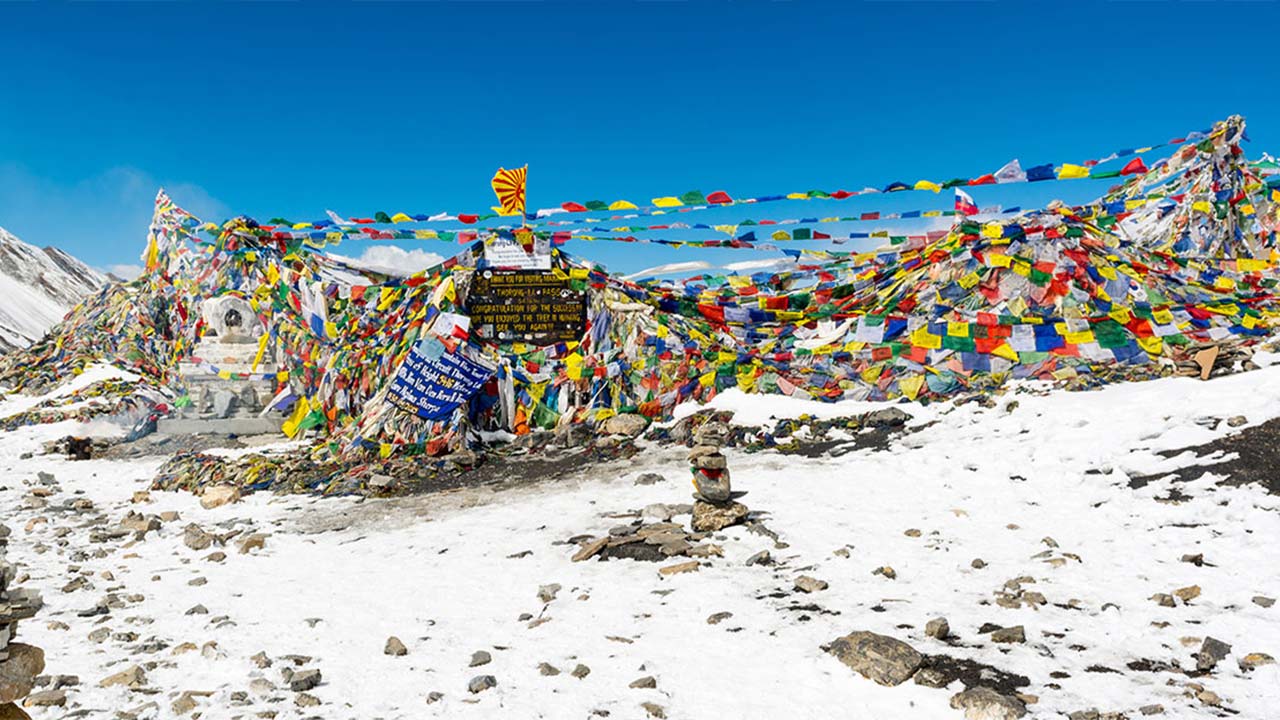
This is the most demanding and rewarding day of your Annapurna Circuit with Tilicho Lake Trek. Your journey begins before sunrise as you leave Thorong Phedi or Thorong High Camp in the pre-dawn cold and darkness. You will follow the narrow trail leading toward the pass lit by your headlamp. You will climb steadily across the rocky terrain and high alpine ridges to the top of the pass. After several hours, colorful flags marking Thorong La Pass finally come into view.
At an altitude of 5,416 meters (17,769 feet), Thorong La Pass is one of the highest trekking passes in the world. At the summit, the fluttering prayer flags and signboard mark your victory. From here, you will also catch the breathtaking panorama of the Annapurna Massif, Manaslu, Gangapurna, Tilicho Peak, Nilgiri, Macchapuchhre, Khatung Kang, and Chulu Range. After spending some time at the top, you will continue with your long descent down the pass. From the top, the trail drops steeply across the rocky slopes before reaching the broader valley.
As the altitude decreases, small settlements and greenery begin to appear again, marking the signs of agriculture and human habitation. Eventually, your trail reaches Muktinath, one of the most sacred sites in the country for both Hindus and Buddhists. Muktinath Temple, with its 108 stone water spouts, an eternal flame, and sacred ambiance attract pilgrims from all around the world.
Max. Elevation:5416
Day 14
Drive from Muktinath to Jomsom (2,710m/ 8,891ft) via Kagbeni (2,804m/ 9,199ft): 2 to 3 hours
After exploring the sacred ground of Muktinath on this day of your Annapurna Circuit with Tilicho Lake Trek itinerary, you will begin your descending journey into the dramatic landscapes of the Mustang region. The drive follows a rugged mountain road that winds through the dry and windswept terrain of the Upper Gandaki Valley. The first major stop along this driving route is Kagbeni, which is one of the most culturally fascinating villages in the region. Kagbeni is situated at the confluence of the Kali Gandaki River and the Jhong Khola, and it marks the gateway to the restricted Upper Mustang region.
This village is known for its medieval appearance with narrow stone alleyways, mud-brick houses, ancient monasteries, and prayer flags fluttering at the rooftops. After a brief stop here, you will continue your drive on the wide gravel plain of the Kali Gandaki Valley. As the drive continues southward, the terrain starts to gradually open into a broad valley that lead you toward Jomsom, the administrative center of Mustang Distrcit.
Jomsom is located along the bank of the Kali Gandaki River, and it has a lively mountain atmosphere with dramatic scenery. This is also a key transportation hub for the Mustang region. It means that you will be able to enjoy a comfortable overnight stay after conquering high-altitude sections of the Annapurna Circuit via Tilicho Lake.
Max. Elevation:2710
Duration:2 to 3 hours
Day 15
Jomsom to Pokhara (822m/ 2,696ft) driving: 5 to 6 hours
Leaving Jomsom, you will continue your drive south along the bank of the Kali Gandaki corridor. The driving road follows the ancient trade route that once connected Nepal and Tibet. You will pass through several culturally rich villages and diverse landscapes toward the charming village of Marpha. This village is popular for its whitewashed houses, narrow stone lanes, and apple orchards. Marpha has long been the apple capital of Nepal. Many travelers stop here to taste the local products such as dried apple pickles, apple cider, and apple brandy.
From Marpha, the drive continues further down the valleys, passing roadside settlements like Tukuche, Kobang, and Ghasa. The towering peaks of Dhaulagiri and Nilgiri, which dominate the skyline, will keep you company during this part. As the elevation gradually drops, the landscape starts to transform from dry Mustang terrain to greener hillside. Eventually, the route reconnects with the lower Annapurna region before reaching Pokhara, the beautiful lakeside city of Nepal.
After spending days on the remote mountain terrain and rugged valleys, your arrival in Pokhara feels like a refreshing change. It is a perfect destination to unwind after completing the Annapurna Circuit and Tilicho Lake Trek adventure.
Max. Elevation:822
Duration:5 to 6 hours
Day 16
Drive back to Kathmandu (1,400m/ 4,593ft) from Pokhara: 6 to 8 hours
After a restful stay in Pokhara, you will begin your return journey to Kathmandu with a scenic drive along the Prithvi Highway. The driving road winds through river valleys, terraced hillside, and bustling roadside towns as you gradually leave the Annapurna region behind. Along the way, the road follows the Trishuli River, where you may notice the rafting boats. This drive back offers one final look at Nepal’s rural landscape, where local life unfolds amidst the green terraces, suspension bridges, and small marketplaces.
As the road climbs back into the Kathmandu Valley, you will be greeted with familiar sights. After reaching Kathmandu, you will be transferred to your hotel, where you can relax, reflect on your journey, and enjoy your final evening in Nepal.
Max. Elevation:1400
Duration:6 to 8 hours
Day 17
Airport transfer for international departure
This day marks the conclusion of your Annapurna Circuit with Tilicho Lake Trek. Depending on your flight schedule, you will be transferred to Tribhuvan International Airport by our staff for your international departure. As you leave Kathmandu, the memories of the journey remain vivid, from the lush river valleys and traditional villages to high alpine landscapes and unforgettable Tilicho Lake. This Annapurna Circuit via Tilicho Lake journey offers an extraordinary glimpse into Nepal’s diverse landscapes, cultures, and mountain environment.
Although your departure marks the end of an incredible Himalayan endeavour, the memories of the Annapurna region will undoubtedly stay with you long after you leave Nepal. We hope you enjoyed your Annapurna Circuit with Tilicho Lake Trek with Eco Holidays Nepal. Let’s meet again for your next call to the Himalayas. Have a safe journey.
Max. Elevation:1400
If the provided schedule isn't suitable for you, we can create personalized travel arrangements.
Annapurna Circuit With Tilicho Lake Trek Map & Elevation
Loading map...
Altitude Chart
Altitude in:|
Essential Information
Annapurna Circuit with Tilicho Lake Trek Difficulty
The Annapurna Circuit with Tilicho Lake Trek difficulty is at a moderately challenging to demanding level. Although the trek route does not require technical skills, the difficulty that comes from the combination of long trekking days, high altitude, and rugged mountain terrain should not be underestimated. One of the primary factors that makes this trek challenging is the significant altitude gain along the way. This trek pushed toward the high elevation points such as Tilicho Lake (4,919m/ 16,138ft), Thorong High Camp (4,880m/ 16,010ft), and Thorong La Pass (5,416m/ 17,769ft). Pushing for such major elevation points with thinner air demands proper pace and acclimatization.
Another factor that contributes to the Annapurna Circuit with Tilicho Lake Trek difficulty is the length and consistency of the trek. The itinerary of this duo highlights exploration typically spans over two weeks, with daily average walking hours of 5 to 7. Some sections of the trail involve steady climbs along the rocky trails, forested paths, and alpine slopes. The trekking route toward Tilicho Base Camp includes a narrow section along the steep hillsides where careful footing is essential. Likewise, weather and environmental conditions also play a crucial role. In the higher part of the trail, especially around Tilicho Base Camp, Yak Kharka, and Thorong Phedi, the temperatures can drop significantly in the early morning and evenings.
Furthermore, strong winds are common in exposed valleys, and snowfall can occasionally affect the Thorong La Pass crossing during the colder months. Thus, it is also very important to prepare for the weather factors to ensure a safe and comfortable experience. Despite these challenges, the Annapurna Circuit via Tilicho Lake remains accessible for most reasonably fit trekkers with proper preparation. Previous high-altitude trekking experience can be helpful, but it is not mandatory if the itinerary plan includes an adequate acclimatization period.
But, still, maintaining a steady pace, staying well hydrated, and allowing the body enough time to adapt to the altitude are key factors to complete this thrilling Himalayan adventure safely and comfortably.
Best Time to Trek Annapurna Circuit via Tilicho Lake
Your choice of the season plays a major role in the overall experience of the Annapurna Circuit with Tilicho Lake Trek. As the trekking route crosses high-altitude terrain, weather conditions can significantly influence trail safety, visibility, and trekking comfort. In general, spring (March, May, and April) and autumn (September, October, and November) are considered the two best seasons for the Annapurna Circuit and Tilicho Lake Trek. These periods offer stable weather, clear mountain views, and favorable trail conditions that make the trek exciting and comfortable.
Spring (March to May)
The spring season is one of the most rewarding times to trek the Tilicho Lake Annapurna Circuit. As the winter snow gradually melts, the trail reopens, and the surrounding landscapes begin to come alive. The lower part of the trail, such as Dharapani, Chame, and the forested path leading to Pisang, becomes vibrant with colorful rhododendrons and fresh greenery. Likewise, the temperatures during the spring season are relatively mild, which makes trekking comfortable even as you gain altitude. The higher section of the trail may still hold patches of snow early in the season, but the visibility is often excellent.
Lower Region Temperatures: 5°C to 25°C (daytime) and 5°C to -5°C (nightime)
Higher Region Temperatures: 5°C to 12°C (daytime) and -5°C to -10°C (nightime)
Autumn (September to November)
The autumn season is widely regarded as the most stable and popular trekking season in Nepal. After the monsoon season clears the dust from the atmosphere, the mountain vistas become exceptionally sharp and expansive. Trails during the autumn season are generally dry, skies are clear, and temperatures are ideal for long trekking days. This season also offers the best conditions for crossing Thorong La Pass as the weather is typically more predictable compared to other times of the year.
Lower Region Temperatures: 5°C to 23°C (daytime) and 5°C to -5°C (nighttime)
Higher Region Temperatures: 5°C to 12°C (daytime) and -10°C to -15°C (nighttime)
Winter (December to February)
Winter trekking on the Tilicho Lake Annapurna Circuit is also possible, but it is significantly more challenging than in other seasons. During winter, snowfall can block the high section of the route, particularly around Tilicho Lake and Thorong La Pass. Temperatures at the higher part of the trail may drop well below the freezing point, especially during the night. However, for the well-prepared trekkers who can handle the colder conditions, the winter season offers a quieter experience with far fewer trekkers on the trail. As for the lower section of the circuit route, they remain accessible, and the landscape often appears beautifully with snow fur.
Lower Region Temperatures: 5°C to 18°C (daytime) and 0°C to -10°C (nighttime)
Higher Region Temperatures: 5°C to -10°C (daytime) and -20°C or lower (nighttime)
Monsoon (June to August)
The monsoon season brings heavy rainfall to much part of Nepal, which can make sections of the Annapurna Circuit and Tilicho Lake Trek slippery and prone to landslides. It is especially risky to traverse the lower river valleys between Dharapani and Chame. Cloud cover also tends to obscure the mountain views during this period. That said, the northern sections of the route, closer to Manang and the Mustang region, lie in a partial rain shadow region. Meaning, rainfall is generally lighter on this part and doesn’t significantly affect the trail. Some experienced trekkers still attempt the route during the monsoon. But, in overall, this season is considered the least favorable period for the Annapurna Circuit via Tilicho Lake.
Lower Region Temperatures: 10°C to 30°C (daytime) and 0°C to 8°C (nighttime)
Higher Region Temperatures: 10°C to 18°C (daytime) and 0°C to -8°C (nighttime)
**Further Reading: Trekking Seasons in Nepal — a season-by-season breakdown of Nepal's climate to help you time any Himalayan trek.**
Packing List
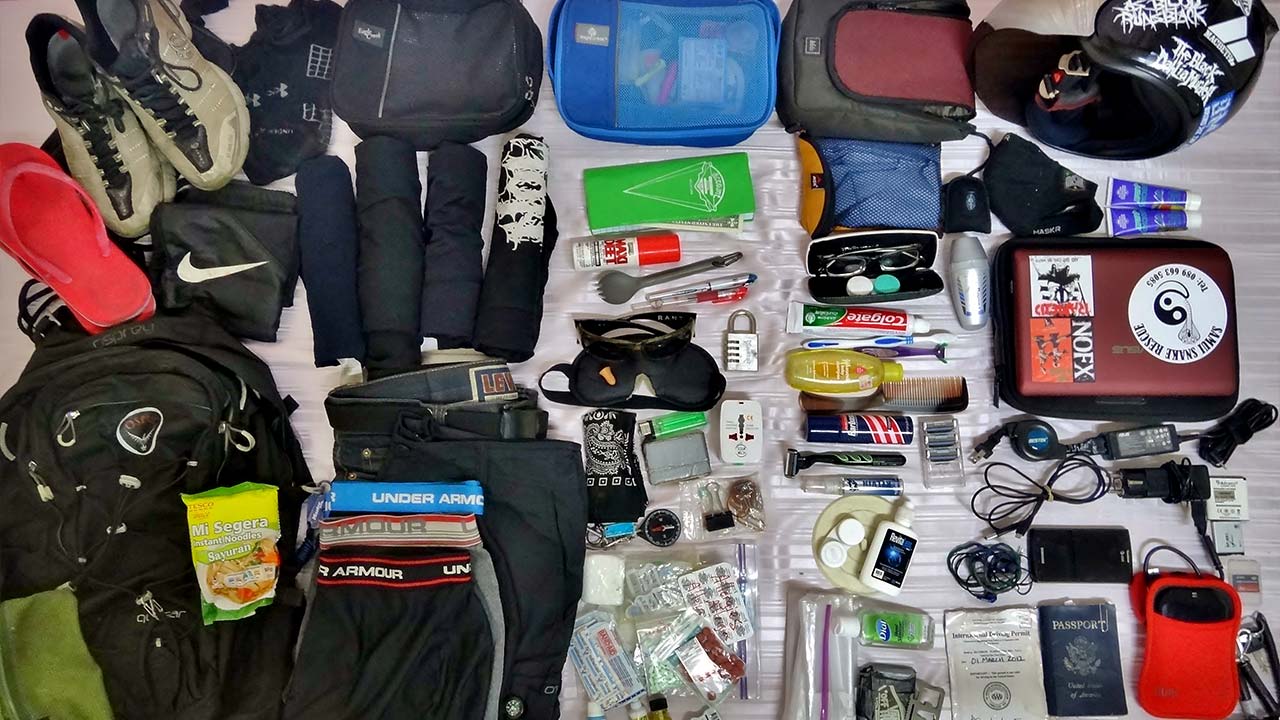
Packing for the Annapurna Circuit with Tilicho Lake Trek requires careful planning because this journey takes you across several climatic zones. You will start your adventure from trek relatively warmer river valleys and gradually climb into the dry alpine terrain of the Manang Valley. You will eventually push for the high elevations near Tilicho Lake and the Thorong La Pass. Because of this dramatic altitude variation, you will often experience warm afternoons in lower villages and freezing mornings and nights at higher elevations.
For this reason, your packing for the Tilicho Lake Annapurna Circuit should focus on layering, weather protection, and practicality. Here is our recommended packing list for your journey.
Clothing
Thermal base layers (top and bottom)
Moisture-wicking trekking shirts
Long-sleeve trekking shirts for sun protection
Fleece jacket or fleece pullover
Down jacket or insulated winter jacket
Lightweight trekking pants
Softshell trekking pants
Waterproof and windproof outer shell jacket
Waterproof trekking trousers or rain pants
Warm hat or wool beanie
Sun hat or cap
Neck gaiter or buff
Lightweight gloves
Insulated gloves for cold mornings
Inner glove liners
Comfortable innerwears
Lightweight sleepwear or base layer for nights
Footwear
Waterproof trekking boots (well broken-in before the trek)
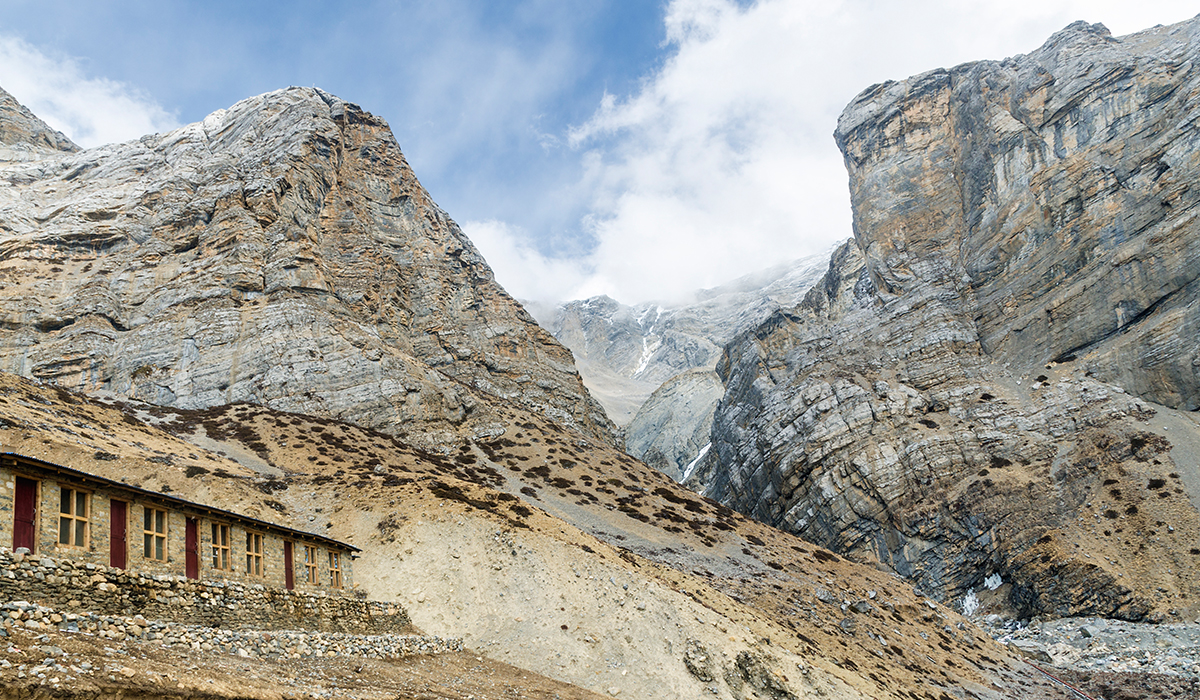
The Annapurna Circuit with Tilicho Lake Trek is primarily a teahouse-based trekking experience. That means you will not need to carry camping equipment or cooking gear during the trek. Throughout the Annapurna Circuit via Tilicho Lake trekking route, villages have teahouses where trekkers can rest, eat, and spend the night after a full day on the trail. These teahouses provide simple but welcoming facilities that allow travelers to comfortably progress through the Himalayas without the need for heavy logistical support.
Teahouses along the way generally offer basic twin-sharing rooms with wooden beds, mattresses, pillows, and blankets. The rooms are usually simple, with minimal furniture and wooden walls that help retain some warmth during colder nights. At higher elevations, temperatures can drop significantly at night, so bringing a warm sleeping bag is strongly recommended. Most teahouses have a central dining hall, which often becomes the warmest place in the lodge. At the hall, there is usually a large stove which provides heating in the evenings, and trekkers usually gather here for meals, conversation, and warmth.
Similarly, bathrooms are generally on a shared basis; they may be either squat-style or western-style depending on the lodge and altitude. Basic amenities such as hot showers, Wi-Fi, and device charging are available along the way, but they are typically offered for an additional fee.
What About Food?
Meals along the Annapurna Circuit and Tilicho Lake Trek trail are served directly in the teahouses where you stay. While the menus are in limited numbers compared to urban settlements, they focus on simpler, hearty meals suitable for cold alpine conditions.
Despite the simplicity, the food served on the trail is generally filling, warm, and designed to provide the energy needed for long trekking days. Here are the menus you can expect at the teahouses during your Himalayan adventure:
Breakfast Menu
Tibetan bread served with butter, honey, or jam
Chapati
Toast
Pancakes (plain, apple, banana, chocolate)
Porridge
Muesli with milk or yogurt
Cornflakes
Eggs (scrambled, fried, omelet, boiled)
Breakfast set (eggs, toast, potatoes, tea or coffee)
Potato hash with eggs
Lunch and Dinner
Dal bhat (rice, lentils, seasonal vegetables, and pickles)
Fried rice
Mixed vegetable noodles
Chowmein (vegetable, egg, or chicken)
Steamed momos
Thukpa (Tibetan noodle soup)
Sherpa stew
Macaroni
Pasta
Spaghetti
Pizza
Sandwiches
Potato dishes (boiled, fried, or curry style)
Vegetable spring rolls
Tibetan bread with vegetable soup
Shyakpa (thick noodle stew with vegetables)
Tingmo (steamed Tibetan buns served with curry)
Beverages
Tea (black, green, ginger, lemon, and masala)
Instant coffee
Filter coffee (where available)
Hot chocolate
Honey lemon drink
Boiled drinking water
Bottled mineral water
Soft drinks
Fruit juice (seasonal)
Energy drinks
Local drinks such as chyang and raksi
Training and Preparation
Preparing for the Annapurna Circuit via Tilicho Lake can make a significant difference in how comfortably you can complete the journey. Although this trekking route does not involve technical stretches, it does involve long days of walking, steady altitude gain, and physically demanding sections as you push toward higher elevations. Thus, building both physical endurance and mental resilience before the trek will ensure that your body and mind are ready for the challenges of the trail. For physical preparation, you should primarily focus on your endurance, leg strength, and cardiovascular fitness.
During the Annapurna Circuit via Tilicho Lake, you will have to walk for around 5 to 7 hours on average. You will need to walk on uneven terrain that includes stone steps, steep ascents, and gradual high-altitude climbs. Training your body to handle sustained physical effort is more important than short bursts of intense activity. Regular exercises like hiking, long-distance walking, cycling, swimming, or jogging are excellent ways to build stamina. Likewise, exercises like stair climbing, lunges, squats, and step-ups help to strengthen your legs and core muscles.
It will be best if you can include a practice hike session during the preparation part. If you are a complete beginner, you will be able to familiarize yourself with uphill stretches and understand the sustained physical effort required for the journey. It will also be a perfect acclimatization practice, and you can even test out how comfortable your trekking gear actually is.
Mental Preparation
Although physical conditioning often receives the most attention, mental preparation plays an equally important role in assisting you in successfully completing the Annapurna Circuit and Tilicho Lake Trek. This trek spans over two weeks and takes you across a dramatically changing environment. The combination of altitude, long walking days, physical exhaustion, and unpredictable mountain conditions can challenge even physically fit trekkers.
Thus, preparing mentally before the trek helps you develop a mindset needed to handle these situations. Understanding that the progress in the mountains is gradual, accepting that some days feel more demanding than others, and focusing on the overall experience rather than just the destination can make a significant difference.
Helpful Mental Preparation Tips for Annapurna Circuit and Tilicho Lake Trek
Set realistic expectations
Focus on daily progress rather than the entire journey
Practise patience with altitude adaptation
Develop a positive and flexible mindset
Learn to embrace the simplicity of trekking life
Surround yourself with positive people
Learn to manage your pace and don’t rush
Stay motivated by the experience itself
Prepare to leave your comfort zone and the moments of discomfort
Limit your comparison with other trekkers
Necessary Permits for Annapurna Circuit and Tilicho Lake Trek
Before setting out for the Annapurna Circuit via Tilicho Lake, you must obtain the official permits required for entering the Annapurna region. The entire route passes through a protected conservation zone, and there are checkpoints along the way that regularly check the essential permits. From the lower valleys near Dharapani to the high-altitude settlements around Manang and the Tilicho Lake trail, permit checks are part of the standard trekking process. For this trekking route, you will need to acquire two major permits:
Annapurna Conservation Area Permit (ACAP)
Trekkers’ Information Management System (TIMS) Card
The Annapurna Circuit, including the trail leading to Tilicho Lake, lies entirely within the Annapurna Conservation Area. Thus, every trekker entering the region must obtain the conservation area permit. As for the TIMS Card, it records information about trekkers entering specific routes and helps authorities maintain a system for monitoring. The information registered through TIMS is crucial in coordination during emergencies and ensures that trekking routes remain organized.
Beyond access control, these permits support the management of trekking tourism in the region. Funds collected through permits contribute to trail maintenance, conservation efforts, and community projects that help to sustain the local villages scattered across the region. These permits can be obtained in Kathmandu or Pokhara, and trekking agencies generally arrange them as part of the trekking preparation process.
Is This Trek Suitable for Beginners?
The Annapurna Circuit with Tilicho Lake Trek is often considered a challenging adventure, but that does not automatically mean it is impossible for beginner trekkers. Although the route does not involve strenuous or technical segments, it is still a demanding high-altitude trek that requires strong physical endurance, patience, and the ability to adapt to mountain conditions. One of the main challenges of this trek is the long duration and significant altitude gain. Over the course of the journey, you will move from the lower valleys of the Marsyangdi River to the high alpine landscapes of Manang. You will eventually reach the major elevation points such as Tilicho Lake (4,919m/ 16,138ft) and Thorong La Pass (5,416m/ 17,769ft).
Reaching such heights puts considerable stress on the body, especially for those who have never experienced high altitude before. The section toward Tilicho Lake Base Camp can also feel more remote compared to the main Annapurna Circuit trek. The terrain becomes rugged and exposed in certain areas, and weather conditions can also change quickly. Because of these factors, you need to remain attentive to your pace, hydration, and follow a proper acclimatization calendar throughout the journey.
However, beginners who approach the trek with the right preparation and mindset often complete it successfully. The trail itself is well established, and teahouses along the way offer food and accommodation. If you are a first-time trekker, then some prior hiking experience can be extremely helpful for this long Himalayan journey. Spending time on multi-day hikes, improving cardiovascular endurance, and preparing mentally for long trekking days can make a significant difference once on the trail.
The best option here if you are a first-time trekker is to go through a reputable agency like Eco Holidays Nepal. They will oversee every aspect of your journey, from providing an experienced trekking guide, managing logistics, and assigning porters to taking care of your health and safety. That way, you will have peace of mind and can actually focus on experiencing the journey and making memories without worrying about anything.
Annapurna Circuit With Tilicho Lake Trek Cost
The Annapurna Circuit with Tilicho Lake Trek price can vary depending on several factors, such as the length of the overall itinerary plan, transportation mode, group size, accommodation standards, and whether it is a private trek or a group joining. As this trekking route covers a longer distance and includes a high-altitude side trip to Tilicho Lake, the overall price is generally higher than shorter treks in the Annapurna region. In most cases, you can expect the standard Annapurna Circuit with Tilicho Lake Trek cost to range between US$1,000 and US$1,600 per person.
When booking through a trekking agency, at this price range, the Annapurna Circuit via Tilicho Lake package typically covers major services required during the journey, including accommodation in teahouses, meals during the trek, transportation between Kathmandu and the trekking region, trekking permits, a government-licensed guide, and administrative expenses like taxes and service charges. For travelers seeking a well-organized and comfortable trekking experience, Eco Holidays Nepal offers the Annapurna Circuit with Tilicho Lake Trek package with carefully planned logistics, experienced guides, and full trekking support.
Our package is designed to allow you to focus on the journey itself, without worrying about permits, transportation, or accommodation arrangements. If you go for group bookings, you will be eligible for additional discounts, and we also offer a complete customization option where you can enjoy this Himalayan adventure in your own style.
**Note: If you book for the Annapurna Circuit and Tilicho Lake Trek, we will also provide a sleeping bag, down jacket, duffel, and trekking poles if you don’t have your own (should be returned after completing the trek)**
Travel Visa
Your Nepal travel visa is the first official step before you begin your Himalayan adventure. Fortunately, Nepal has a simple and fast visa process for international travelers. Most nationalities can obtain a Tourist Visa on Arrival at Tribhuvan International Airport in Kathmandu, as well as at other designated land entry points. At the airport, you can apply for different visa durations depending on how long you plan to stay in Nepal. There are typically three options:
15-Day Tourist Visa— US$30
30-Day Tourist Visa— US$50
90-Day Tourist Visa— US$125
For the Annapurna Circuit with Tilicho Lake Trek, which typically lasts around two to three weeks, including travel days, a 30-day visa is usually the most practical option. This duration gives you enough time to complete the trek comfortably while still allowing a few days to explore places like Pokhara or spend time in Kathmandu before or after the trek. If your travel plans change, you can also apply for a visa extension. For that, you will need to get at least a 15-day extension, which costs about US$ 45.
**Note: To obtain a Nepal tourist visa, you typically need to submit a passport with at least six months' validity from the date of entry, a passport-sized photograph, and the visa fee, usually paid in US dollars or other major foreign currencies (cash is the easiest option)
Annapurna Circuit With Tilicho Lake Trek FAQs
FAQs
How Long Does the Annapurna Circuit With Tilicho Lake Trek Take?
Most Annapurna Circuit via Tilicho Lake itineraries take around 15 to 18 days, depending on the starting and ending points, acclimatization days, and side trips. The journey typically follows the classic Annapurna Circuit route through villages before branching off toward Tilicho Lake and eventually crossing Thorong La Pass.
What is the altitude of Tilicho Lake?
Tilicho Lake sits at an altitude of 4,919 meters (16,138 feet), making it one of the highest lakes in the world accessible by trekking. Because of the significant elevation, trekkers often spend a night at Tilicho Base Camp to acclimatize before climbing toward the lake.
Do I Need Permits for the Annapurna Circuit With Tilicho Lake Trek?
Yes, you will need to get two main permits for this trekking route:
Annapurna Conservation Area Permit (ACAP)
Trekkers’ Information Management System (TIMS) Card
These permits are essential to enter and trek within the Annapurna region. If you are trekking through a registered agency in Nepal, like Eco Holidays Nepal, they will generally handle the permit requirements.
Is There Risk of Altitude Sickness in Annapurna Circuit via Tilicho Lake?
Yes, altitude sickness can be a concern because this trek reaches elevations above 5,000 meters. The risk increases near Tilicho Lake and while crossing Thorong La Pass. So, proper acclimatization, slow ascent, hydration, and awareness of symptoms are crucial for a safe experience.
What Kind of Accommodation Can I Expect During Tilicho Lake Annapurna Circuit?
Accommodation is mostly in traditional Himalayan teahouses run by local families. Rooms are usually simple with twin beds, shared bathrooms, and communal dining areas where trekkers gather for meals and warmth.
What is the Total Distance of the Annapurna Circuit via Tilicho Lake?
The Annapurna Circuit with the Tilicho Lake detour covers roughly 210 to 230 kilometers (130 to 142 miles), depending on the exact itinerary and starting point. Due to the additional side trip to Tilicho Lake, it adds several extra trekking days compared to the classic Annapurna Circuit route.
Do I Need a Guide for This Trek?
Yes, according to current trekking regulations in Nepal, foreign trekkers must hire a licensed guide when trekking in protected regions such as the Annapurna Conservation Area. This rule was implemented to improve trekker safety, reduce search-and-rescue complications, and support sustainable tourism.
What is the Highest Point of the Annapurna Circuit and Tilicho Lake Trek?
The highest point of the trek is the crossing of Thorong La Pass at 5,416 meters (17,769 feet). This is one of the highest trekking passes in the world and a major highlight of this circuit trekking route.
Is the Annapurna Circuit With Tilicho Lake Trek Safe?
The trek is generally safe when done with proper preparation, acclimatization, and awareness of weather conditions. That’s why hiring experienced local guides and following a well-paced itinerary greatly improves safety and overall trekking experience.
Is the Annapurna Circuit With Tilicho Lake Trek Worth It?
Annapurna Circuit via Tilicho Lake is considered one of the most rewarding trekking experiences in Nepal. It combines the cultural richness of the Annapurna region with dramatic landscapes ranging from subtropical valleys to high Himalayan deserts, along with highlights like Tilicho Lake and the iconic Thorong La Pass.
High-altitude turquoise lake and endless dal bhat refills
Visiting Tilicho Lake at 4,919m on the Annapurna Circuit was one of the best decisions we made. The bright blue water surrounded by huge snow-covered mountains looked almost unreal, and reaching the lake after the long walk made the whole effort feel completely worth it.
The nights were freezing, but the cozy teahouses helped a lot with extra thick blankets. And after a long day on the trail, nothing tasted better than a big plate of dal bhat with those much-needed refills! It was definitely a challenging but unforgettable part of the trek.
MMarcus Vance11th May, 2022
The grand high-altitude loop combining legendary lakes and passes
This 17-day grand circuit covers every major landmark in the Annapurna region. Hiking up to the turquoise waters of Tilicho Lake at nearly 5,000 meters was a major physical highlight, setting us up with incredible altitude adaptation before tackling Thorong La Pass a few days later. The route transitions seamlessly from glacial lakes to high mountain passes and desert valleys. A complete uncompromised Himalayan journey.