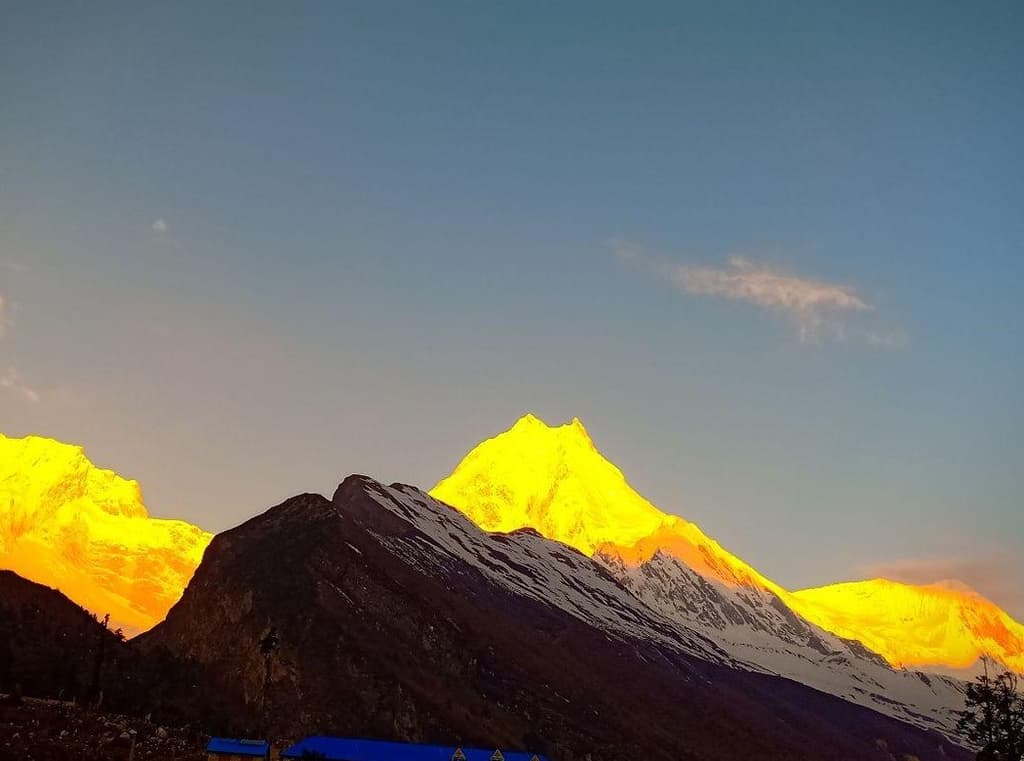

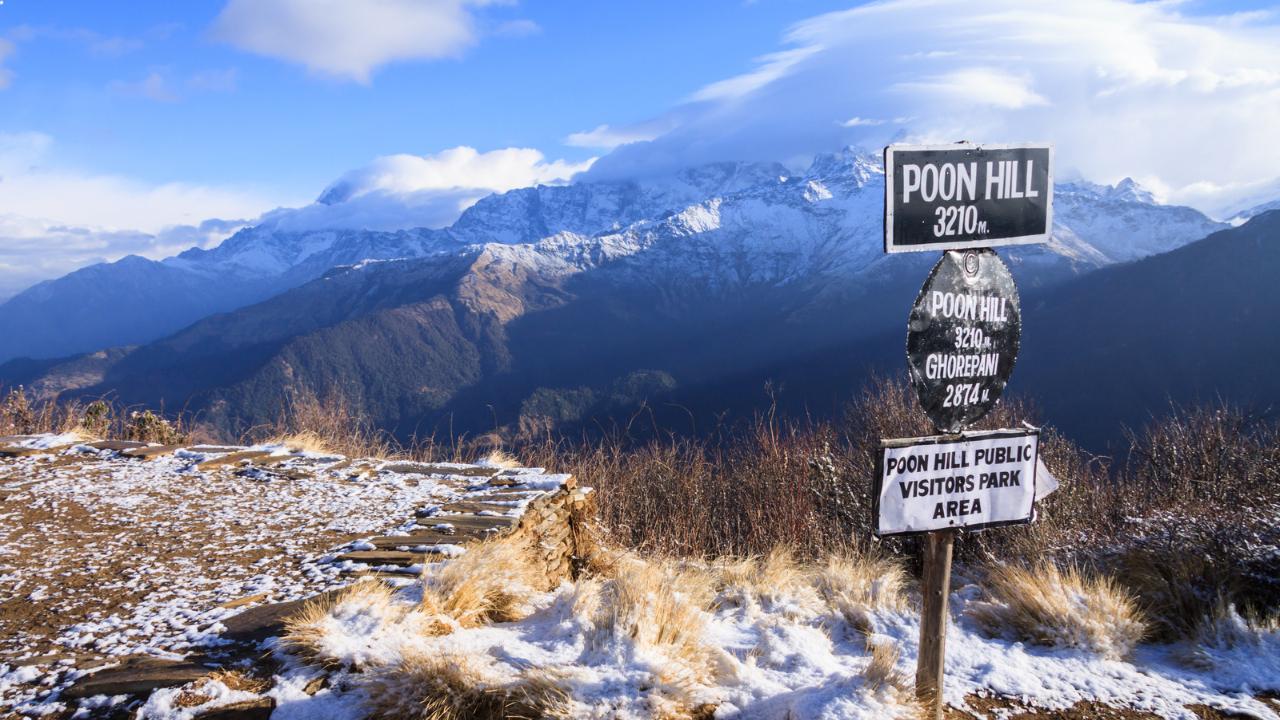
The Ghorepani Poon Hill Trek in December offers an excellent opportunity to experience the Annapurna Himalayas during the quieter winter season without facing the extreme cold, high-altitude challenges, and demanding conditions of Nepal's longer Himalayan expeditions. With its highest point at Poon Hill (3,210m/ 10,531ft), this relatively low-altitude trek remains accessible throughout December, bringing you closer to snow-covered Himalayan peaks, crisp mountain air, and spectacular sunrise views over the Annapurna and Dhaulagiri ranges.
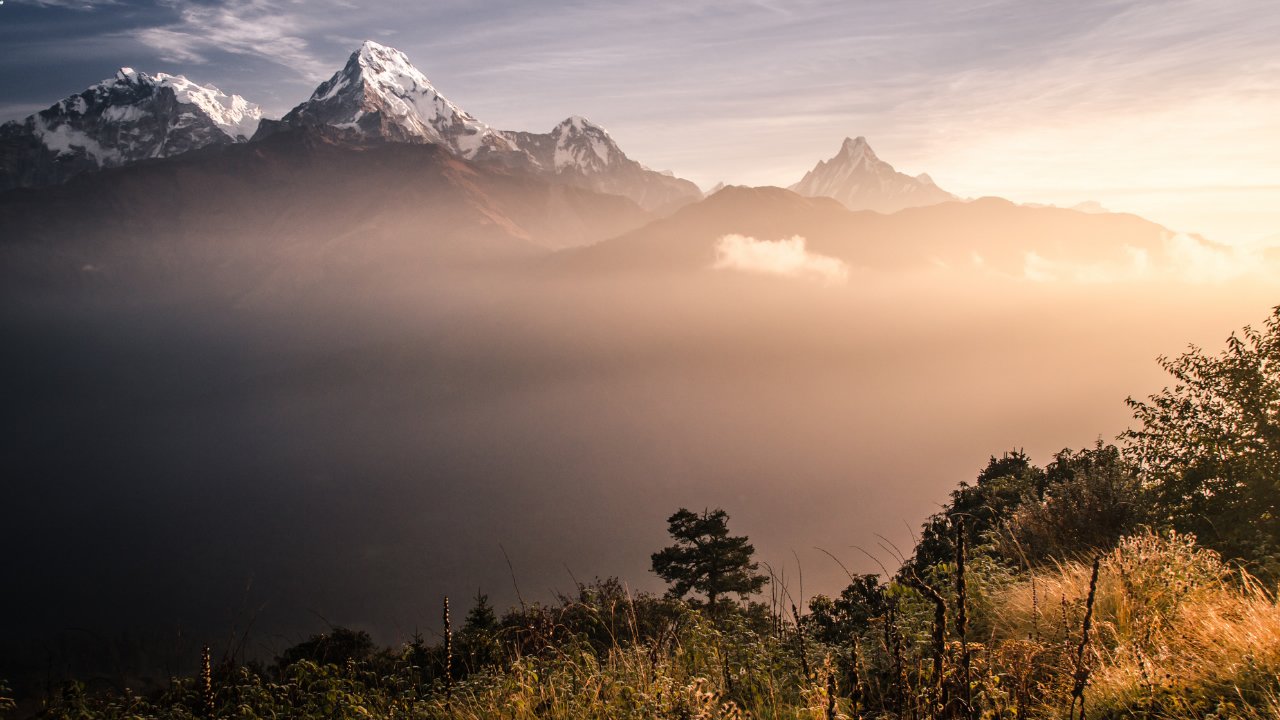
Your five-day journey begins with a scenic drive from Pokhara (822m/ 2,696ft) to Nayapul, followed by a gradual ascent through Birethanti, Tikhedhunga, and Ulleri (2,050m/ 6,725ft). You will climb the famous stone staircases of Ulleri, walk through quiet oak and rhododendron forests, and reach Ghorepani (2,874m/ 9,429ft), where the winter landscape becomes noticeably colder. The defining moment comes with an early-morning hike to Poon Hill, where the first sunlight illuminates Dhaulagiri (8,167m), Annapurna I (8,091m), Annapurna South (7,219m), Machhapuchhre (6,993m), Nilgiri, Hiunchuli, and other Himalayan summits. After the sunrise experience, the route continues through Tadapani and Chuile before descending toward Jhinu Danda, where you can enjoy its natural hot springs before returning to Pokhara.
December brings generally dry conditions, reduced rainfall, quieter trails, and good opportunities for clear mountain visibility. Daytime temperatures around Ghorepani can reach approximately 8°C to 15°C, while nighttime temperatures may fall between -5°C and 5°C, particularly during colder spells. The pre-dawn climb to Poon Hill is considerably colder, and occasional snowfall or icy patches can occur along the higher forest trails. Nevertheless, the moderate elevation, established teahouse network, and manageable daily walking distances of approximately 8 to 12 km make this a rewarding winter adventure for beginners, families, and experienced hikers alike.
If you want to experience Nepal's Himalayan scenery in December without committing to a demanding high-altitude trek, the Ghorepani Poon Hill Trek offers a wonderful balance of mountain panoramas, traditional Gurung and Magar villages, forest trails, and comfortable trekking days. With proper winter clothing and a little preparation for freezing mornings, you can enjoy a memorable Annapurna adventure in one of Nepal's most beautiful foothill landscapes.
Ghorepani Poon Hill Trek in December: Package Details
The five-day Ghorepani Poon Hill Trek in December is a practical choice for travelers who want to experience the Annapurna region without spending a week or more at high elevations. The itinerary starts and finishes in Pokhara, covering approximately 49.5 km (30.7 miles) of trekking through traditional mountain settlements, forested ridges, and terraced hillsides. You reach Ghorepani (2,874m) on the second day, giving you time to prepare for the early-morning ascent to Poon Hill (3,210m), the highest point of the journey.
Unlike longer Himalayan routes that require dedicated acclimatization days, this itinerary maintains a relatively moderate elevation profile. However, the walking is not entirely effortless: the stone staircase above Tikhedhunga, the steady climb from Ulleri to Ghorepani, and the undulating forest trail beyond Poon Hill require reasonable walking fitness. December adds another consideration, as temperatures around Ghorepani can drop below freezing overnight, and the pre-dawn viewpoint hike may encounter frost, snow, or icy trail sections.
December Trek Package Overview
|
Trek Detail |
December Package Overview |
|
Duration |
5 days |
|
Starting and Ending Point |
Pokhara (822m/ 2,696ft) |
|
Trek Starting Point |
Nayapul (approximately 1,070m / 3,510ft) |
|
Highest Point |
Poon Hill (3,210m/ 10,531ft) |
|
Overnight High Point |
(2,874m/ 9,429ft) |
|
Total Trekking Distance |
Approximately 49.5 km/ 30.7 miles |
|
Typical Walking Duration |
3 to 7 hours per day |
|
Main Route |
Pokhara → Nayapul → Ulleri → Ghorepani → Poon Hill → Tadapani → Chuile → Jhinu Danda → Nayapul → Pokhara |
|
Accommodation |
Mountain teahouses and lodges |
|
Meals |
Breakfast, lunch, and dinner during the trek |
|
Landscape |
Rhododendron and oak forests, terraced farmland, stone staircases, river valleys, and Himalayan ridges |
|
Cultural Experience |
Traditional Magar and Gurung settlements and local mountain hospitality |
|
Major Attractions |
Poon Hill sunrise, Annapurna and Dhaulagiri panoramas, Machhapuchhre, Tadapani forests, and Jhinu Danda hot springs |
|
Difficulty |
Moderate; suitable for reasonably fit beginners and experienced hikers |
The daily walking distances are distributed to give you a gradual progression toward Ghorepani before the main viewpoint excursion. The first day covers approximately 8 km from Nayapul to Ulleri, followed by another 10 km through the forest to Ghorepani. Day three is the longest and most varied, combining the Poon Hill sunrise hike with the forested trail through Tadapani to Chuile. The final two days take you through lower Gurung settlements toward Jhinu Danda and back to Nayapul.
For December departures, the main adjustment is preparing for the cold rather than changing the overall itinerary. Snowfall is possible around Ghorepani, Poon Hill, and Tadapani, so your guide may need to adjust the walking pace or timing if shaded forest sections become icy.
Weather Conditions During Poon Hill Trek in December
December marks the beginning of winter on the Annapurna foothills, bringing colder mornings, dry trekking conditions, and generally clear mountain skies. Unlike the higher Himalayan routes, where prolonged freezing temperatures and heavy snowfall can make winter trekking demanding, the Ghorepani Poon Hill Trek in December remains a relatively manageable option because its highest point is only 3,210 meters (10,531 feet). You can still enjoy comfortable daytime walking when the sun is out, although temperatures fall quickly after sunset, particularly around Ghorepani and during the early-morning climb to Poon Hill.
Average December Temperatures Along the Poon Hill Route
|
Location |
Approx. December Temperature |
|
Pokhara (822m/ 2,696ft) |
18°C to 22°C during the day; 6°C to 9°C at night |
|
Lower trail areas (1,000 to 2,000m) |
Around 10°C to 17°C during the day |
|
Ulleri (2,050m/ 6,726ft) |
Around 7°C to 14°C during the day; 0°C to 5°C at night |
|
Ghorepani (2,874m/ 9,429ft) |
Around 5°C to 10°C during the day; -5°C to 0°C at night |
|
Poon Hill (3,210m/ 10,531ft) |
Around 2°C to 8°C during the day; below freezing before sunrise |
|
Pre-dawn at Poon Hill |
Approximately -5°C to 0°C, potentially feeling colder with wind |
The temperature difference between the lower villages and upper viewpoints is noticeable. Pokhara and the lower trail sections remain comparatively mild, while Ghorepani experiences near-freezing nights and colder mornings. At Poon Hill, the combination of elevation, exposure, and wind can make the pre-dawn sunrise considerably colder than the daytime conditions suggest.
December is generally one of the drier months for trekking in the Annapurna foothills. The main monsoon rainfall has passed, and prolonged rainy days are uncommon. This means you can usually walk on relatively dry trails, enjoy longer periods of mountain visibility, and photograph the Annapurna and Dhaulagiri ranges without the persistent cloud cover typical of the summer monsoon.
Highlights of Ghorepani Poon Hill Trek in December
-
Enjoy Crisp Winter Views of the Annapurna and Dhaulagiri Ranges
December's generally dry weather creates good opportunities for clear mountain views, particularly during the early morning. From Poon Hill (3,210m), you can see a sweeping Himalayan panorama featuring Dhaulagiri (8,167m), Annapurna I (8,091m), Annapurna South (7,219m), Machhapuchhre (6,993m), Nilgiri and Hiunchuli. The crisp air on settled days makes the mountain outlines look especially sharp against the winter sky. Although autumn is traditionally known for its reliable visibility, December offers another opportunity to enjoy these views after the peak-season crowds have thinned.
-
Experience a Frosty Sunrise at Poon Hill (3,210m)
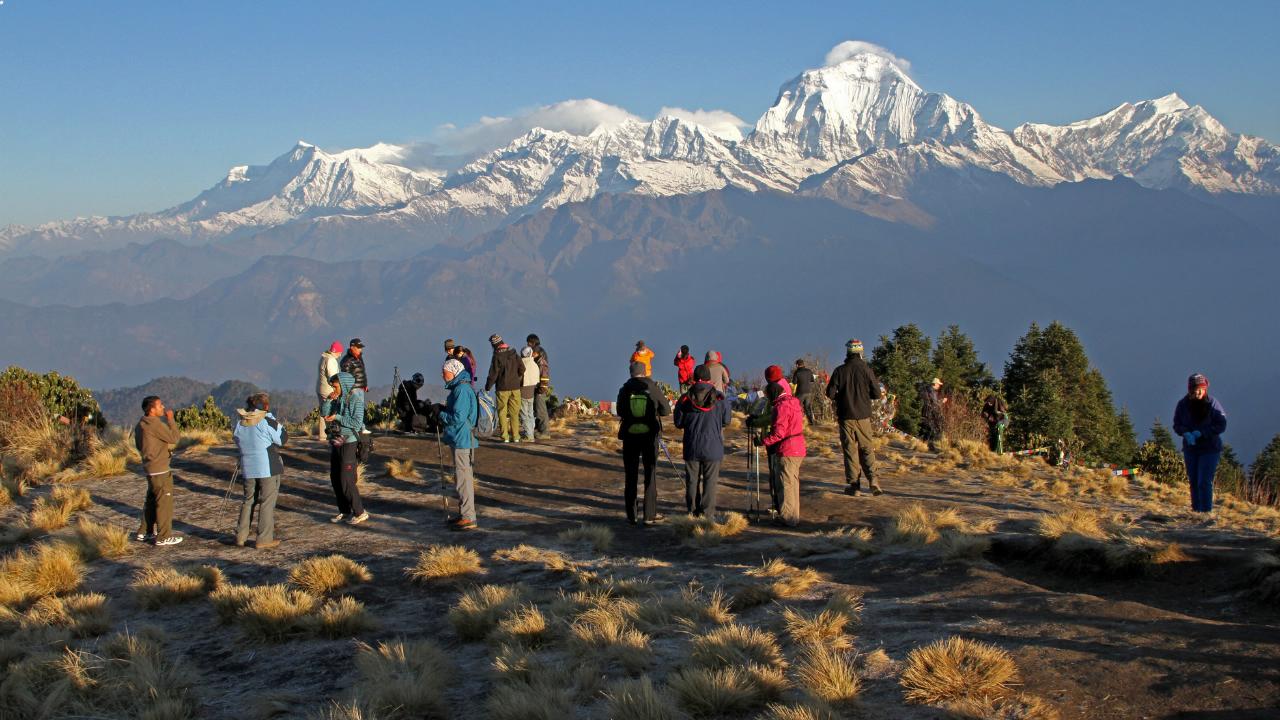
The pre-dawn climb from Ghorepani to Poon Hill is one of the most memorable parts of a December trek. You start around 4:30 to 5:00 AM and walk approximately 1.5km uphill, gaining roughly 336 meters in elevation over 45 to 60 minutes. Temperatures around the viewpoint can fall below freezing, sometimes reaching approximately -5°C or lower depending on wind and weather. As daylight reaches the peaks, Dhaulagiri and Annapurna gradually turn golden above the shadowed valleys. The contrast between the freezing viewpoint and the first warm sunlight makes the winter sunrise particularly memorable.
-
Walk a Quieter Trail After the Autumn Trekking Rush
Ghorepani Poon Hill Trek in December offers a noticeable change in trail activity after the busy October and November trekking season. With fewer trekkers heading towards Ghorepani, you can enjoy a more peaceful walk through the forest, less crowded teahouse common areas, and a quieter sunrise experience at Poon Hill. This can also make accommodation arrangements more flexible during much of the month. However, expect more visitors around Christmas and New Year, when international holiday travel brings a temporary increase in trekkers.
-
Enjoy Sunny-Day Walking Without Monsoon Rain
December is among the drier months on the Poon Hill route, so you are less likely to encounter the persistent rain, muddy paths, and leeches associated with the monsoon season. Daytime temperatures around the trekking villages can generally range from 8 to 15°C, although shaded forest sections remain colder. When the sun is out, conditions are often comfortable for walking uphill from Ulleri towards Ghorepani or continuing through the woodland towards Tadapani. You should still carry a warm layer, as temperatures drop quickly in the late afternoon and after sunset.
-
See Frost and Occasional Snow Around Ghorepani and Tadapani
December brings the possibility of a light snowfall around Ghorepani (2,874m), Poon Hill and Tadapani. When snow settles, it can dust the rooftops, forest floor, and higher sections of the trail, giving the Annapurna foothills a winter appearance. Snow is not guaranteed, and conditions vary between early and late December. Frost is more common on cold mornings, while snow and ice can linger longer on shaded paths between Ghorepani and Tadapani. These conditions add seasonal character to the walk, but you need footwear with good traction and extra care on slippery stone steps.
-
Trek a Lower-Altitude Himalayan Route During Winter
Unlike longer Himalayan treks that cross high passes or require overnight stays above 4,000 meters, the Poon Hill route reaches its highest point at just 3,210 meters. Your overnight stay at Ghorepani is around 2,874 meters, and the route descends towards lower settlements after the viewpoint visit. This makes it a practical winter option for trekkers who want mountain panoramas without committing to the colder, more demanding conditions of high-altitude routes. The steep stone staircase to Ulleri and the long walking days still require reasonable fitness, but you do not need technical climbing skills or high-pass experience.
-
Fit a Himalayan Trek into a Short December Holiday
The classic Ghorepani Poon Hill itinerary can be completed in approximately 4 to 5 days from Pokhara, making it suitable for a Christmas break, New Year holiday or a short trip at the end of the year. You can reach the 3,210 meters viewpoint, explore the forested trail towards Tadapani, and return to Pokhara without setting aside two weeks for a Himalayan expedition. The shorter itinerary also leaves room to spend additional time in Pokhara before or after trekking. For a winter holiday with limited time, it offers a practical balance of mountain scenery, village trails, and a rewarding sunrise hike.
Poon Hill Trek in December: How Difficult Is the Journey?
The Ghorepani Poon Hill Trek is a moderate-level trek, and December does not make the entire route exceptionally difficult. The trail reaches a maximum elevation of 3,210m at Poon Hill, so altitude-related challenges are generally less significant than on high-altitude Himalayan treks. However, cold mornings, steep stone staircases, and occasional icy sections require preparation.
You should be comfortable walking for around 4 to 7 hours on trekking days and handling repeated uphill and downhill sections. The main difficulty factors to consider are:
-
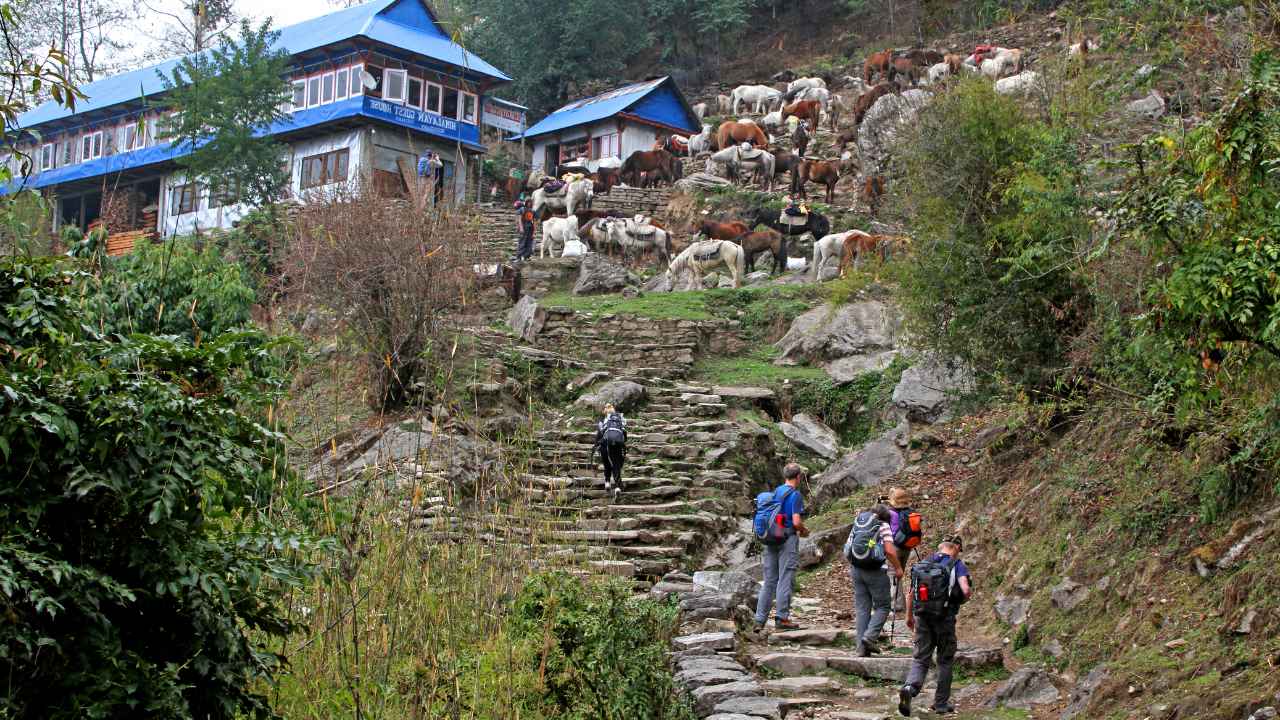
Steep Stone Staircase to Ulleri: The climb from Tikhedhunga to Ulleri (approximately 2,050m) involves several thousand stone steps. This is one of the most demanding sections, particularly if you are not accustomed to sustained uphill walking. Take a steady pace and avoid rushing the ascent.
-
Cold Temperatures at Higher Elevations: Ghorepani (2,874m) can experience nighttime temperatures around -5°C to 0°C in December, with colder conditions possible during particularly cold spells. The pre-dawn walk to Poon Hill is colder still, so insulated clothing, gloves, and a warm hat are essential.
-
Frost, Snow and Slippery Trail Sections: Although December is generally dry, occasional snowfall and overnight frost can affect the upper trail. Shaded stone steps and forest paths, especially around Ghorepani and towards Tadapani, may become slippery. Shoes with reliable grip and careful footing help manage these conditions.
-
Continuous Ascents and Descents: The route is not technically difficult, but you gain and lose elevation repeatedly. The climb towards Ghorepani, early-morning ascent to Poon Hill, and descent through Tadapani towards the lower villages can put considerable strain on your knees and leg muscles.
-
Early-Morning Poon Hill Climb: You typically start before sunrise and climb from Ghorepani to 3,210m in approximately 45–60 minutes. Walking uphill in freezing temperatures, sometimes on frosty ground, can feel more challenging than the same climb later in the day.
-
Basic Altitude Awareness: Poon Hill is below 3,500m, so serious altitude problems are less common than on higher Himalayan routes, but altitude-related symptoms can still occur. Walk gradually, stay hydrated, and tell your guide if you develop a persistent headache, nausea, dizziness, or unusual breathlessness.
You do not need previous high-altitude trekking experience to complete Poon Hill Trek in December, but reasonable fitness, warm winter layers and suitable trekking footwear are important. The biggest challenges are the steep stone steps, cumulative walking effort, and cold or slippery conditions around the higher sections– not technical climbing or crossing a high mountain pass.
Training and Preparation for the December Trek
The Ghorepani Poon Hill Trek requires reasonable stamina rather than advanced climbing ability. You should prepare for approximately 4 to 7 hours of walking on trekking days, including the sustained stone-step climb to Ulleri and the early-morning ascent from Ghorepani (2,874m) to Poon Hill (3,210m). Start training 4 to 6 weeks before departure, focusing on endurance, leg strength, and your ability to walk on consecutive days.
-
Build Walking Endurance: Walk for 45 to 60 minutes, 4 to 5 days a week. Gradually increase one weekly walk to 2 to 3 hours, preferably on an uphill or uneven route. This helps prepare your body for several hours of continuous trekking rather than short bursts of exercise.
-
Strengthen Your Legs and Knees: Include squats, lunges, step-ups, and calf raises 2 to 3 times weekly. Step-ups are particularly useful for preparing for the long staircase between Tikhedhunga and Ulleri, while controlled step-downs help condition your legs for the descents towards Tadapani and Jhinu Danda.
-
Practise Consecutive Walking Days: Try walking for 2 to 3 hours on two successive days during your final training weeks. This helps you understand how your legs recover between trekking days and prepares you for the repeated ascents and descents along the route.
-
Prepare for Cold-Weather Walking: December mornings at Ghorepani can fall below freezing, and the Poon Hill sunrise walk starts before daylight. Practise early-morning walks in cool conditions if possible, and become comfortable walking with your winter layers without overheating during uphill sections.
-
Develop a Steady Pace and Realistic Expectations: The Ulleri staircase and the climb to Poon Hill can feel demanding if you rush. Practise maintaining a consistent pace, taking short breaks and drinking water regularly. You should also be prepared to slow down if frost or occasional snow makes the upper trail slippery.
You do not need an intensive gym programme or technical climbing practice. Consistent walking, basic strength training and a little experience on uneven terrain will provide a useful foundation for completing the December trek comfortably.
Ghorepani Poon Hill Trek in December Packing Suggestion
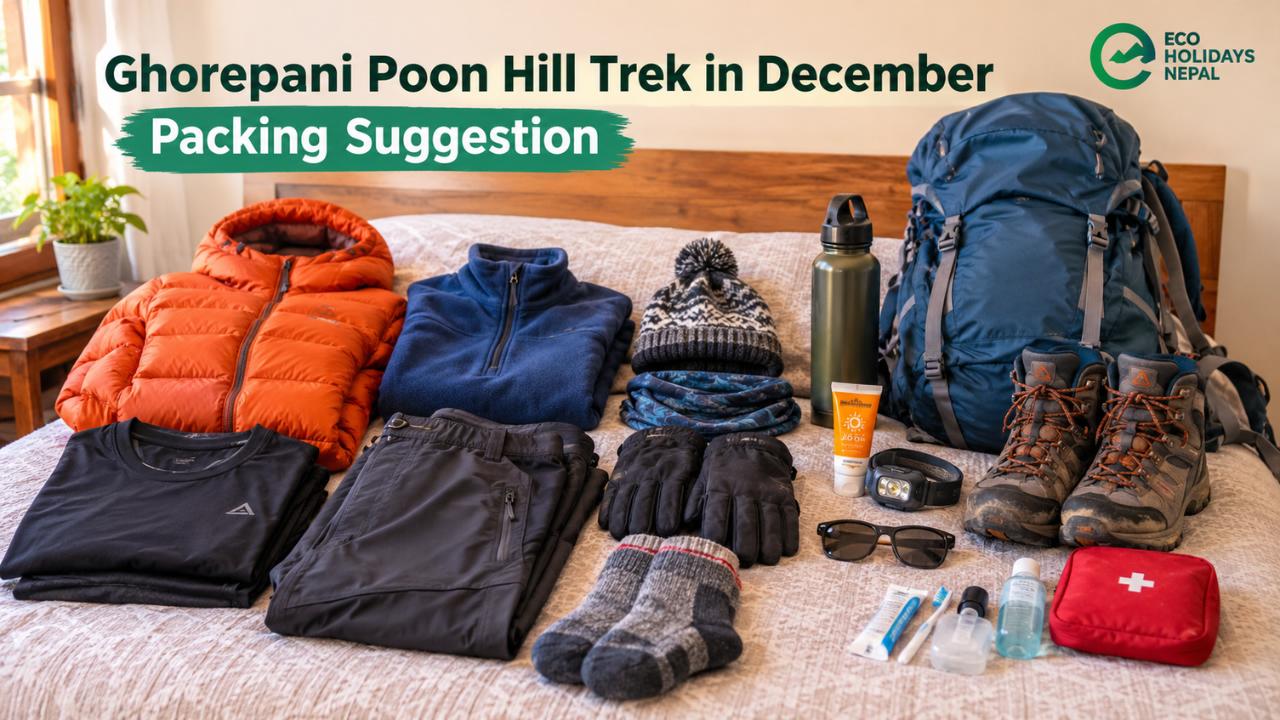
December packing for Poon Hill is mainly about managing temperature changes. You may feel comfortable in a light trekking outfit while climbing during the day, but need several insulating layers when staying overnight at Ghorepani (2,874m) or walking to Poon Hill (3,210m) before sunrise. Pack for cold conditions at the upper elevations without carrying the heavy equipment required for high-altitude expeditions.
Clothing for Changing Temperatures
-
Quick-drying base-layer shirts for daytime trekking
-
Warm fleece or lightweight wool sweater for cooler sections
-
Insulated down jacket for temperatures around or below freezing
-
Windproof outer jacket to protect against cold air at Poon Hill
-
Lightweight rain shell in case of unexpected precipitation
-
Thermal top and bottom for sleeping and pre-dawn walking
-
Trekking trousers, preferably quick-drying
-
Warm trousers or leggings for evenings
-
Cushioned trekking socks
-
Insulated gloves, a fleece neck warmer and a warm beanie
Footwear for Stone Steps and Winter Trails
-
Trekking shoes with firm ankle support and deep, grippy soles
-
A spare pair of dry socks to change into after a long walking day
-
Lightweight indoor footwear for teahouses
-
Optional microspikes if recent snowfall or icy trail conditions are reported before departure
Equipment for the Poon Hill Sunrise
-
Headlamp with fresh or spare batteries for the pre-dawn departure
-
Small daypack for carrying an insulated jacket, water, and personal essentials
-
Trekking poles for the steep ascent and knee-intensive descents
-
Sunglasses to protect your eyes from strong mountain sunlight
-
Camera or phone with sufficient storage for sunrise photography
-
Power bank to keep your phone and camera charged
Health, Hydration and Personal Care
-
Reusable insulated water bottle to keep drinking water warm
-
Water purification tablets or a portable filter
-
SPF 30 to 50 sunscreen and SPF lip balm
-
Moisturizer for exposed skin during cold, dry conditions
-
Personal medication and basic blister-care supplies
-
Small first-aid kit with bandages, antiseptic wipes, and pain relief
-
Hand sanitizer and a compact personal hygiene kit
Documents and Trekking Essentials
-
Passport and necessary trekking permits
-
Travel insurance documents with trekking coverage
-
Nepali cash for personal purchases along the route
-
Offline copies of important travel documents
-
Phone with offline maps and emergency contact details
**Packing Tip: Keep your insulated jacket, gloves, headlamp, and water bottle in your daypack on the night before visiting Poon Hill. You will need these items during the coldest part of the trek, and having them readily accessible is much more practical than unpacking your main luggage before an early-morning departure. You do not need technical climbing equipment for this route; prioritize warmth, reliable footwear, and a manageable pack**
Tips for Poon Hill Trek in December
Ghorepani Poon Hill Trek in December is a rewarding experience, but colder mornings, shorter daylight hours, and occasional frost or snowfall around the upper trail require a little extra planning. From timing your sunrise hike to managing the steep stone steps and keeping your itinerary flexible, these practical tips will help you handle winter conditions and enjoy the trek without unnecessary difficulty.
-
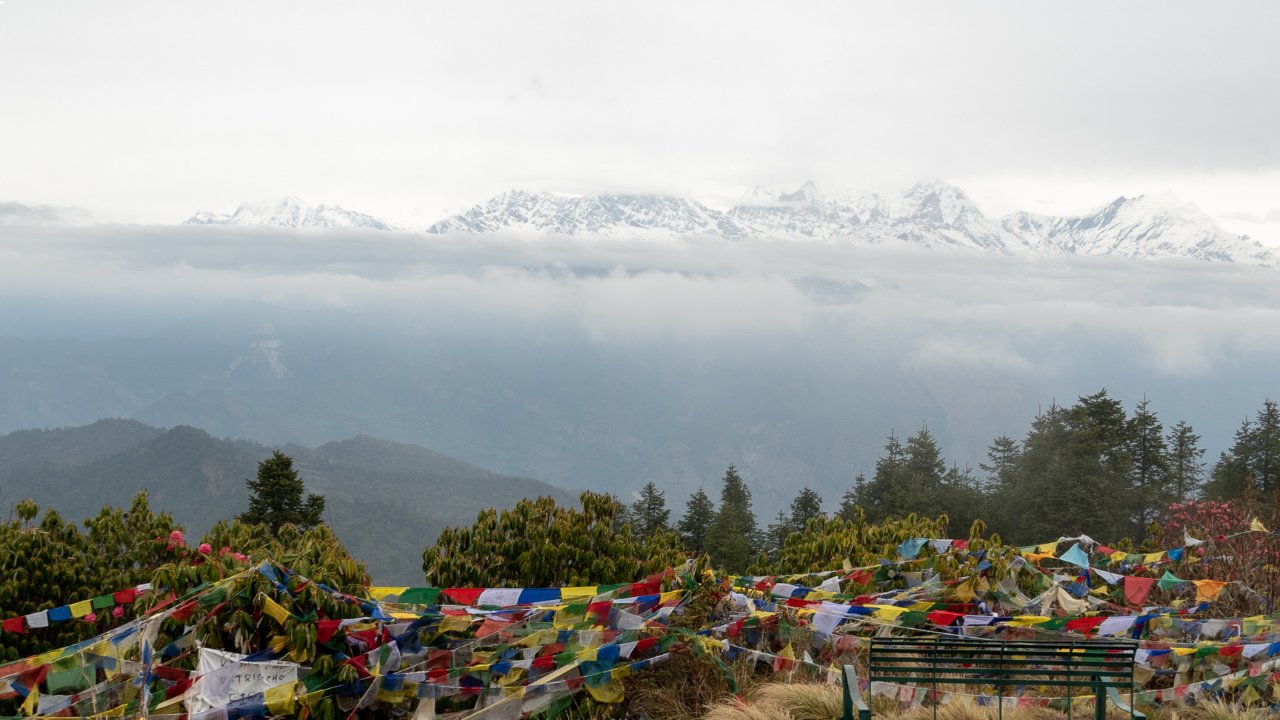
Reach Poon Hill Before the First Light: Start from Ghorepani around 4:30 to 5:00 AM, allowing approximately 45 to 60 minutes for the 1.5km uphill walk to Poon Hill (3,210m). Carry a headlamp and leave enough time to reach the viewpoint before sunrise rather than rushing through the final climb.
-
Keep Your Warmest Layers Accessible Overnight: Ghorepani (2,874m) can experience nighttime temperatures around -5°C to 0°C in December, with colder conditions possible. Keep your insulated jacket, thermal layer, gloves, and beanie ready beside your bed so you can dress properly before the early-morning departure.
-
Check Upper-Trail Conditions Before Starting the Day: Frost and occasional snowfall can affect the trail around Ghorepani, Poon Hill and Tadapani. Ask your guide about overnight conditions, particularly if snow has fallen. Shaded stone steps can remain slippery even after sunny weather returns, so adjust your pace and use trekking poles where helpful.
-
Make the Most of Morning Mountain Visibility: Plan your main mountain-view stops for the morning, when the atmosphere is often clearer, and clouds may be less developed. From Poon Hill, look for Dhaulagiri (8,167m), Annapurna I (8,091m), Annapurna South (7,219m) and Machhapuchhre (6,993m). Keep your camera ready, but remember that clear views are weather-dependent.
-
Pace Yourself on the Ulleri Staircase: The ascent from Tikhedhunga to Ulleri (approximately 2,050m) involves several thousand stone steps. Avoid using too much energy in the first hour; maintain a steady rhythm, take short breaks, and drink water regularly. Trekking poles can also help reduce pressure on your knees during the subsequent descents.
-
Allow Extra Time for Winter Trail Conditions: Do not calculate walking time using distance alone. Frost, icy patches, muddy sections, and photo stops can slow your progress, particularly around the upper forest trails. Keep a reasonable time buffer on the Ghorepani–Tadapani section and avoid reaching your overnight village close to darkness.
-
Stay Hydrated Even When You Don't Feel Thirsty: Cold weather can make you less conscious of fluid loss, especially during uphill walking. Drink regularly throughout the day and consider carrying warm water in an insulated bottle for the early-morning viewpoint hike. Warm tea and soup at teahouses can also help you maintain fluid intake.
-
Carry Enough Cash for Personal Expenses: Keep Nepali rupees available for hot drinks, snacks, bottled water, showers, device charging, and other purchases in the villages. Do not assume you will find reliable card payment facilities along the trekking route, particularly in smaller settlements.
-
Keep Your Itinerary Flexible Around Christmas and New Year: December is generally quieter than October and November, but accommodation demand can increase around the holiday period. Confirm your overnight arrangements in advance if travelling during late December, and leave some flexibility in your Pokhara travel schedule for possible weather or transport delays.
-
Protect Your Batteries and Electronics from the Cold: Camera and phone batteries can drain faster in low temperatures, especially during the pre-dawn climb. Keep spare batteries and your power bank inside an insulated pocket close to your body, and avoid leaving your camera exposed to the cold for unnecessarily long periods.
**One Important December Consideration: Do not assume that dry-season weather means every upper-trail section will be dry. A sunny afternoon can follow a freezing night, while shaded steps may still hold ice. Your guide's assessment of the actual trail conditions should determine your pace and footwear choices**