
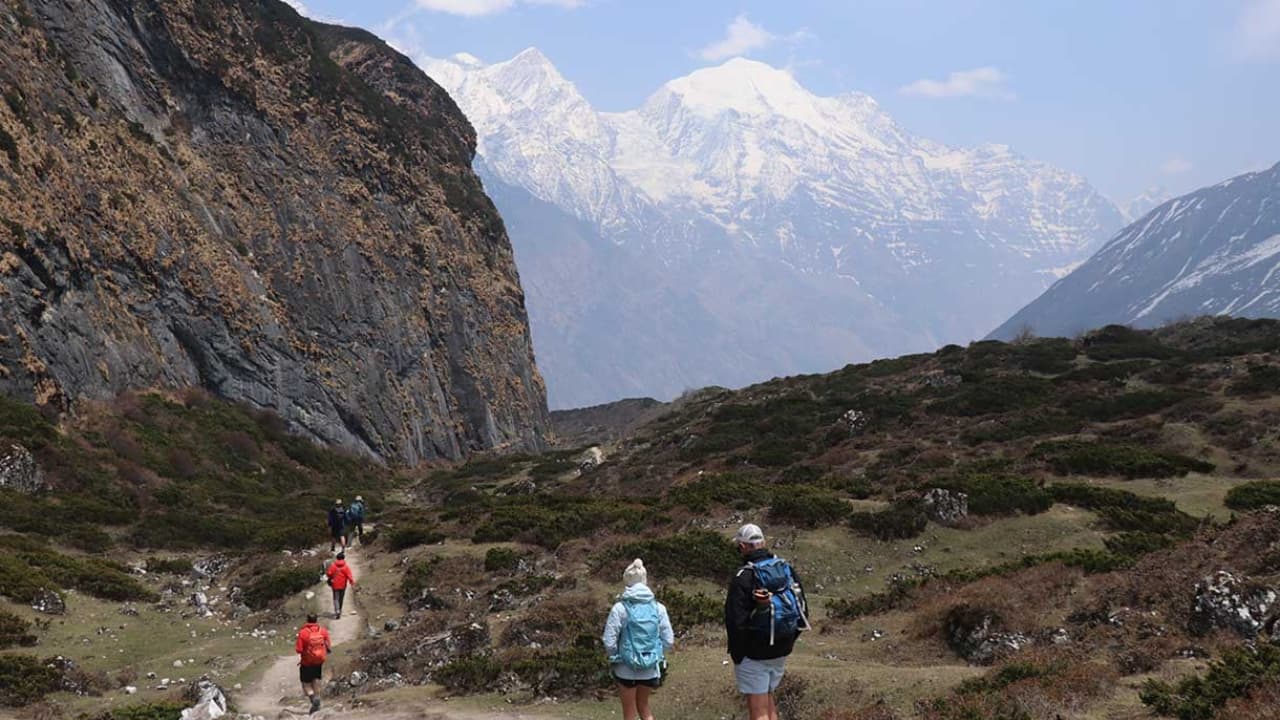
For the Manaslu Circuit, autumn is less about a single “perfect” month and more about finding the conditions that suit the way you want to trek. From September through November, the monsoon gradually gives way to drier weather, clearer mountain views and more dependable trail conditions, making this one of the most favorable periods to walk around Mount Manaslu. The route reaches Larkya La Pass at 5,106 meters (16,752 feet), so stable weather and good visibility matter considerably more here than they do on a lower-altitude trek.
The three autumn months, however, do not feel exactly the same. September is a transition month: the first part can still bring rain and cloud, while conditions usually become noticeably drier and clearer toward the end. October is the heart of the trekking season, with generally stable weather, crisp mountain views, and comfortable daytime temperatures at the lower and middle elevations, although it also brings the highest number of trekkers. November remains relatively dry and often offers excellent visibility, but temperatures drop more sharply, particularly around Samagaun (3,530m), Samdo (3,875m), Dharamsala (4,460m) and Larkya La.
For trekkers planning the Manaslu Circuit Trek in autumn, this distinction is useful when choosing departure dates. September can offer a quieter trail with improving conditions, October provides the most balanced combination of weather and accessibility, while November appeals to those who prefer fewer people and clear Himalayan scenery and are comfortable with colder mornings and nights.
Is Autumn a Good Time for the Manaslu Circuit Trek?
Yes, autumn is one of the best times to do the Manaslu Circuit Trek, particularly from late September through October and into November. After the summer monsoon, the Manaslu region becomes progressively drier, the skies are generally clearer, and the mountain views open up across the route. These conditions are especially valuable on a trek that climbs to 5,106 meters (16,752 feet) at Larkya La Pass, where weather can directly affect both comfort and the practicality of crossing the pass.
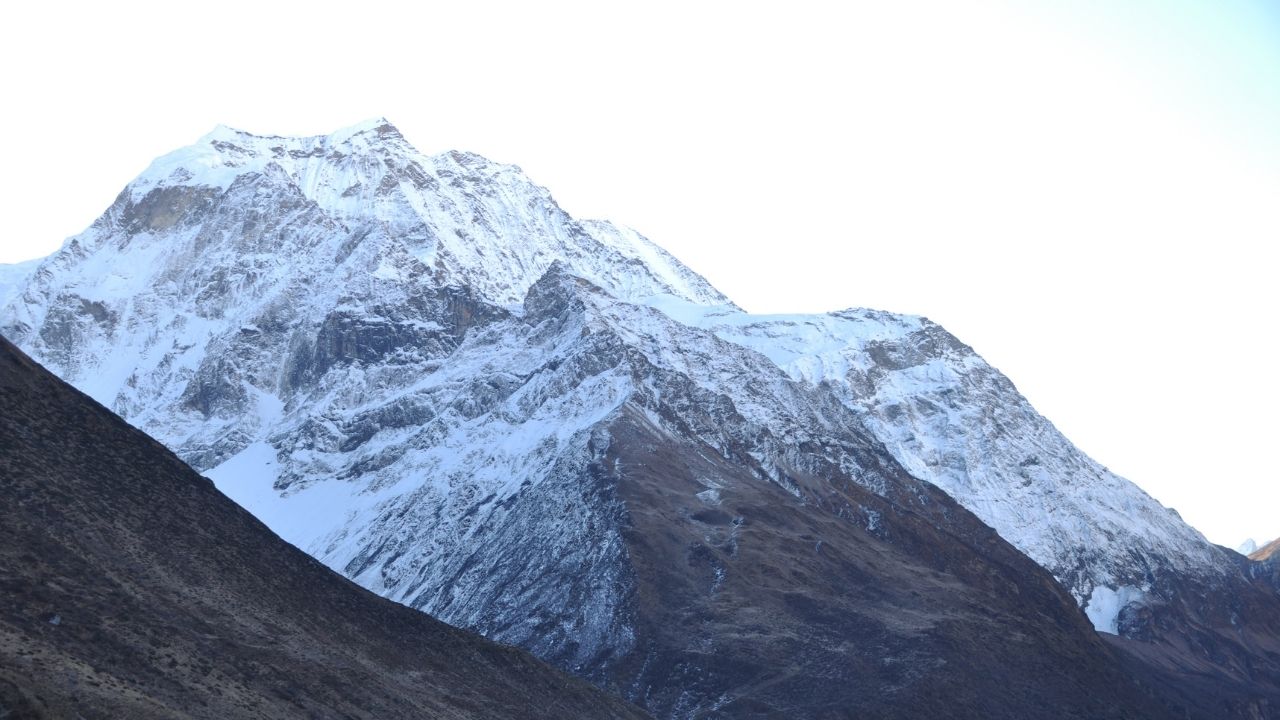
Autumn also gives the trail a noticeably different feel from the monsoon months. By October, many of the muddy and rain-affected sections of the lower trail have dried out, while the higher valleys around Samagaun (3,530m), Samdo (3,875m), and Dharamsala (4,460m) tend to have crisp mornings, dry trails and wide mountain views. Manaslu (8,163m) and the surrounding peaks are often at their most impressive when the air is clear, with the landscape becoming especially photogenic in the early morning.
|
Factor |
Autumn Conditions |
|
Weather |
Generally stable, particularly in October |
|
Mountain Visibility |
Excellent, with October often offering the clearest conditions |
|
Rainfall |
Decreasing in September; generally low in October and November |
|
Trail Conditions |
Mostly dry and manageable, although isolated muddy, rocky, or landslide-affected sections can remain |
|
Larkya La Pass |
Usually accessible, with cold and possible snow/ice at the highest point |
|
Crowds |
Moderate overall; October is the busiest autumn month |
|
Teahouse Accommodation |
Generally available, but October brings significantly higher demand |
|
Daytime Trekking Conditions |
Comfortable at lower and middle elevations; increasingly cold above 4,000m |
-
Weather and Visibility
The biggest advantage of the Manaslu Circuit Trek in autumn is the improvement in atmospheric conditions after the monsoon. September needs some caution, particularly during its first half, because remnants of the monsoon can still produce cloudy skies and occasional rainfall. Toward late September, however, the weather usually becomes more settled. October is generally the most reliable month for clear skies and mountain visibility. The mornings can be particularly rewarding: after an early start, the mountains often appear sharply defined against a blue sky, giving you much better views than you would typically expect during the wetter summer months. November continues the dry pattern but brings colder conditions. At higher elevations, the difference is noticeable after sunset and before sunrise, so excellent visibility comes with a greater need for warm clothing.
-
Mountain Views
Autumn is particularly attractive for trekkers who want the Manaslu landscape rather than simply the achievement of completing the circuit. Clearer skies improve views of Manaslu and the surrounding Himalayan peaks, while the route itself moves through increasingly dramatic terrain as it approaches the Tibetan-influenced upper valley. The contrast is especially striking around Samagaun and Samdo, where the high mountains feel much closer, and the dry autumn air can make distant ridges and snow-covered summits appear remarkably sharp. Around Larkya La, visibility is even more important because the pass crossing involves a long day at high altitude.
-
Trail Conditions
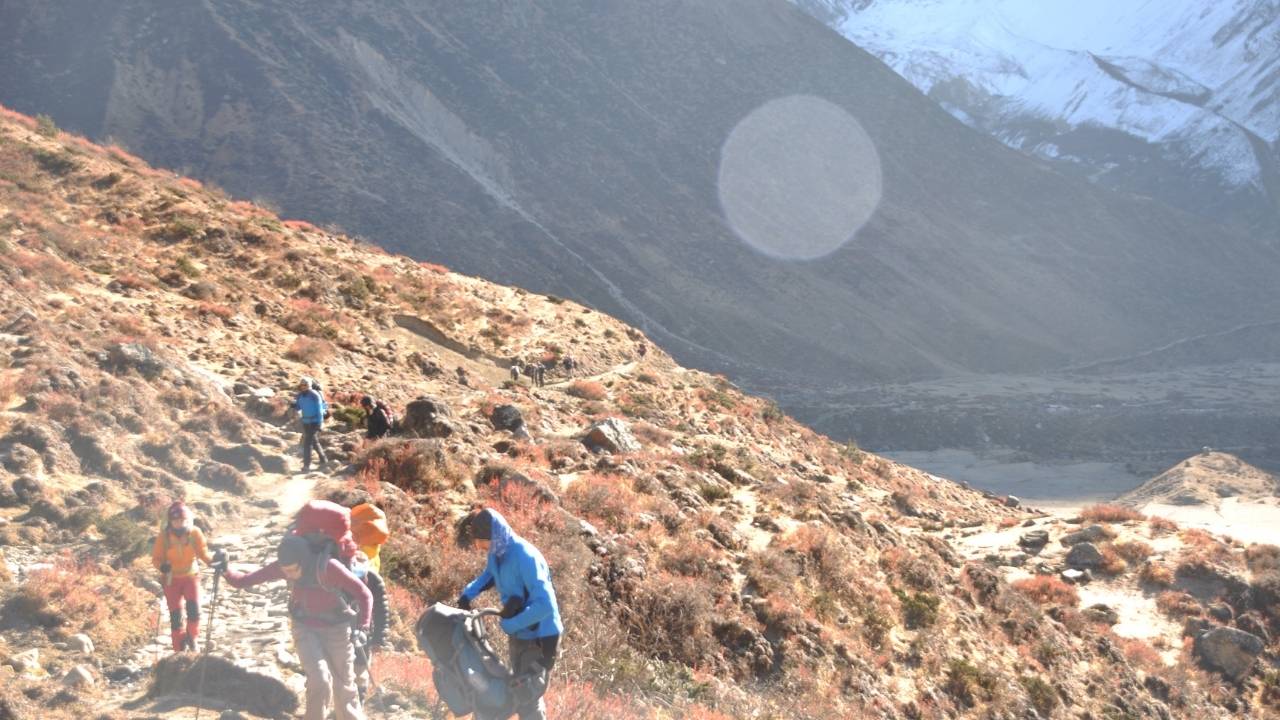
Autumn generally brings better walking conditions than the preceding monsoon season. The lower sections of the Manaslu Circuit can still be rough; this is not a paved mountain trail, but prolonged rain is less of an issue as September progresses. You should still expect rocky paths, uneven ground, steep ascents and descents, suspension bridges, and occasional muddy or landslide-affected sections, particularly in September. October normally offers the driest and most comfortable trail conditions, while November tends to be cold and dry at higher elevations. So, “good autumn conditions” should not be interpreted as an easy trail. The Manaslu Circuit remains a physically demanding Himalayan trek.
-
Larkya La Pass Conditions
Larkya La Pass is the point where autumn's advantages matter most. At 5,106m, the pass is exposed to wind, cold, and rapidly changing mountain weather. A clear forecast at a lower village does not guarantee identical conditions at the pass. In October, the combination of relatively stable weather and good visibility generally makes it an excellent period for the crossing. November can also be very good, but temperatures are lower, and snow or icy sections can become more likely depending on the season's conditions. September is usually improving, although early-season weather can be less predictable. This is why trekkers normally spend the night at Dharamsala (4,460m) before making the long crossing day toward Larkya La and Bimthang. Starting early gives you more daylight and a better chance of crossing before afternoon weather changes.
-
Rainfall Compared With the Monsoon
The difference between monsoon and autumn is substantial. June, July, and August are the core monsoon months in Nepal, when rain can affect the lower Manaslu trails, visibility and road access to the trekking region. September sits on the boundary between the two seasons. Early September can still feel wet, but rainfall generally decreases as the month progresses. By October, rainfall is normally much lower, and November is typically one of the driest periods of the trekking season. That seasonal shift is one reason late September through October is such a popular window for the Manaslu Circuit.
-
Crowds and Teahouse Availability
Autumn is popular, so you will not have the Manaslu Circuit entirely to yourself. October is usually the busiest month, while September and November generally see fewer trekkers. Even at peak season, however, the Manaslu Circuit tends to feel less crowded than Nepal's most heavily trafficked trekking routes. The practical difference is most noticeable at teahouses. Accommodation is generally available along the established route, but October creates greater demand in popular overnight villages such as Namrung, Samagaun, Samdo and Dharamsala. Booking through a guided trek and planning overnight stops sensibly can make the experience considerably easier during the busiest weeks.
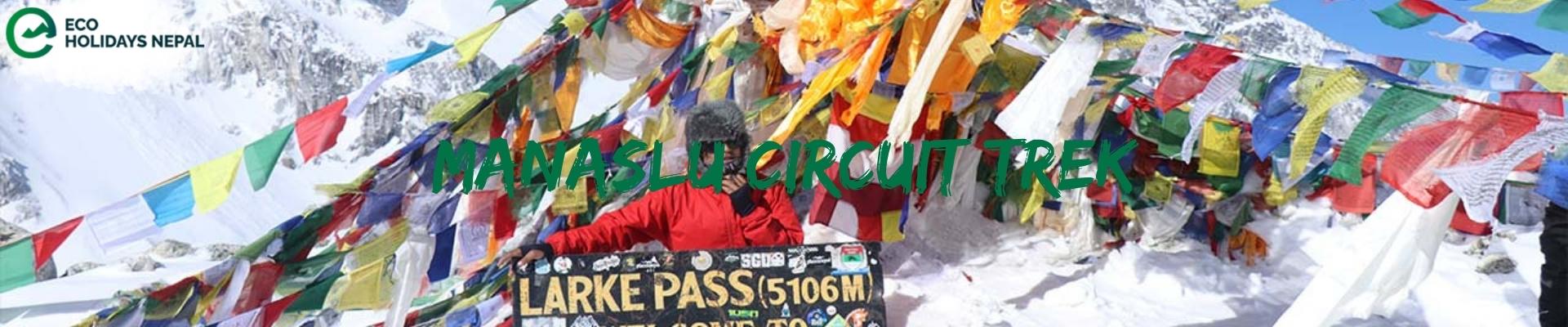
Weather Conditions: Manaslu Circuit Trek in Autumn
Autumn is generally the most dependable weather window for the Manaslu Circuit Trek, but the three months behave differently as the route moves from the warm, lower Budhi Gandaki valley toward the cold, exposed terrain above 4,000 meters. The most important point for trekkers is that there is no single “Manaslu temperature”: the circuit starts around 700 to 900 meters and climbs to 5,106 meters at Larkya La, so conditions can change from warm afternoons to below-freezing nights within a few trekking days.
|
Month |
Lower Valleys: Day/ Night |
Samagaun: Day/ Night |
Dharamsala: Day / Night |
Larkya La: Day/ Night |
|
September |
18 to 28°C/ 10 to 18°C |
8 to 14°C/ 0 to 6°C |
2 to 8°C/ -2 to 2°C |
0 to 5°C/ -6 to -3°C |
|
October |
18 to 24°C/ 10 to 15°C |
5 to 12°C/ -4 to 3°C |
0 to 5°C / -10 to -6°C |
-2 to 5°C / -12 to -8°C |
|
November |
15 to 24°C / 8 to 15°C |
6 to 12°C/ -3 to 0°C |
3 to 7°C/ -8 to -4°C |
-1 to 4°C/ -10 to -15°C |
**Note: Temperature ranges vary considerably between sources and by elevation. The figures above are useful planning ranges, not guaranteed daily temperatures**
-
September Weather
September is the month that requires the most attention to when you are travelling. The first part of September can still feel like an extension of the monsoon, particularly in the lower Budhi Gandaki valley. Rain showers, humid conditions, wet trails, and cloud cover are still possible. By the latter part of the month, the weather normally begins shifting toward the clearer and drier conditions associated with autumn.
This difference is quite noticeable on the trail. Around Machha Khola, Jagat and Deng, early-September trekkers can encounter damp ground, runoff, and slippery sections left by the monsoon. As September progresses, those trails generally become firmer. Higher up, the conditions are different: the upper Manaslu valley is considerably cooler, and the area around Samagaun (3,530 meters) and above is less affected by the heavy rainfall experienced farther down the gorge.
The reward for travelling later in September is that the landscape can change quickly. Mountain views that may be hidden behind monsoon cloud during the first weeks become increasingly open, and late-September conditions can begin to resemble the October trekking season.
-
October Weather
October is the most consistently favorable month for the Manaslu Circuit Trek in autumn. The monsoon has normally withdrawn, rainfall is relatively low, mornings are often clear, and the combination of dry trails and good visibility makes long trekking days much more comfortable. This is also when the mountain scenery tends to be at its most impressive. Clear autumn air can reveal Manaslu, Himalchuli and the surrounding peaks with much less cloud obstruction, particularly during early morning hours. At Lho and around Samagaun, the transition from forested valleys to the stark high Himalayan landscape becomes especially dramatic.
For Larkya La, early and mid-October generally offer some of the most reliable crossing conditions of the autumn season. The pass is still a serious high-altitude environment, however, and cold, wind, or occasional snow can occur. Late October should not be treated as identical to the beginning of the month; temperatures are already trending downward as winter approaches.
-
November Weather
November brings the Manaslu Circuit into its early-winter phase. The positive side is that the weather is usually dry, the air is crisp, and mountain visibility can remain excellent. The trade-off is temperature: mornings and nights become significantly colder, particularly once the trail reaches Samagaun and the upper valley. Snow and icy sections become increasingly possible as the month advances, so late-November departures need to allow for more winter-like conditions than early-November departures.
There is also less daylight than in September and October. November still provides enough daylight for a properly planned trekking day, but the combination of shorter days, colder mornings, and the exposed nature of Larkya La makes an early start particularly important on the pass-crossing day. By late November, you should be prepared for substantially colder conditions and the possibility of snow or harder trail surfaces around the pass.
**Note: The overall seasonal progression is straightforward in the autumn season. September trades some weather uncertainty for milder conditions and fewer trekkers; October offers the best balance of stability, visibility, and temperature; and November provides clear, dry mountain days but demands much better preparation for cold at altitude **
Why Choose Autumn Season for Manaslu Circuit Trek?
Autumn works particularly well for the Manaslu Circuit Trek because several important factors weather, visibility, trail conditions, and access to the high pass come together at the same time. The route climbs from the relatively warm Budhi Gandaki valley to Larkya La Pass at 5,106 meters (16,752 feet), so seasonal conditions have a direct impact on how comfortable and manageable the trek feels.
-
Clearer Mountain Views After the Monsoon
One of the biggest rewards of the Manaslu Circuit Trek in autumn is the improvement in mountain visibility. As the monsoon withdraws, the persistent cloud and haze gradually give way to clearer skies, allowing the surrounding Himalayan peaks to become much more prominent.
The difference becomes particularly noticeable as you approach Namrung, Lho and Samagaun (3,530m). Instead of mountains appearing intermittently through cloud, trekkers can often enjoy longer stretches of unobstructed views of Manaslu (8,163m), Himalchuli, Ngadi Chuli and the surrounding ridges. October is generally the strongest month for visibility, while late September and November can also provide excellent mountain views.
-
Drier Trails Make Long Walking Days More Comfortable
The Manaslu Circuit is not an easy trail even in good weather. There are rocky sections, steep climbs, uneven descents, suspension bridges, and narrow mountain paths. Autumn helps by reducing one of the additional difficulties: persistent rain. Early September can still have wet and muddy sections because of the retreating monsoon. By late September, conditions generally improve, and October is usually the driest and most comfortable period for walking. November remains dry in most years, although colder temperatures become a more important consideration. This means you spend more of the trekking day dealing with the terrain itself rather than simultaneously dealing with heavy rain, slippery ground, and poor visibility.
-
Better Conditions for Crossing Larkya La Pass
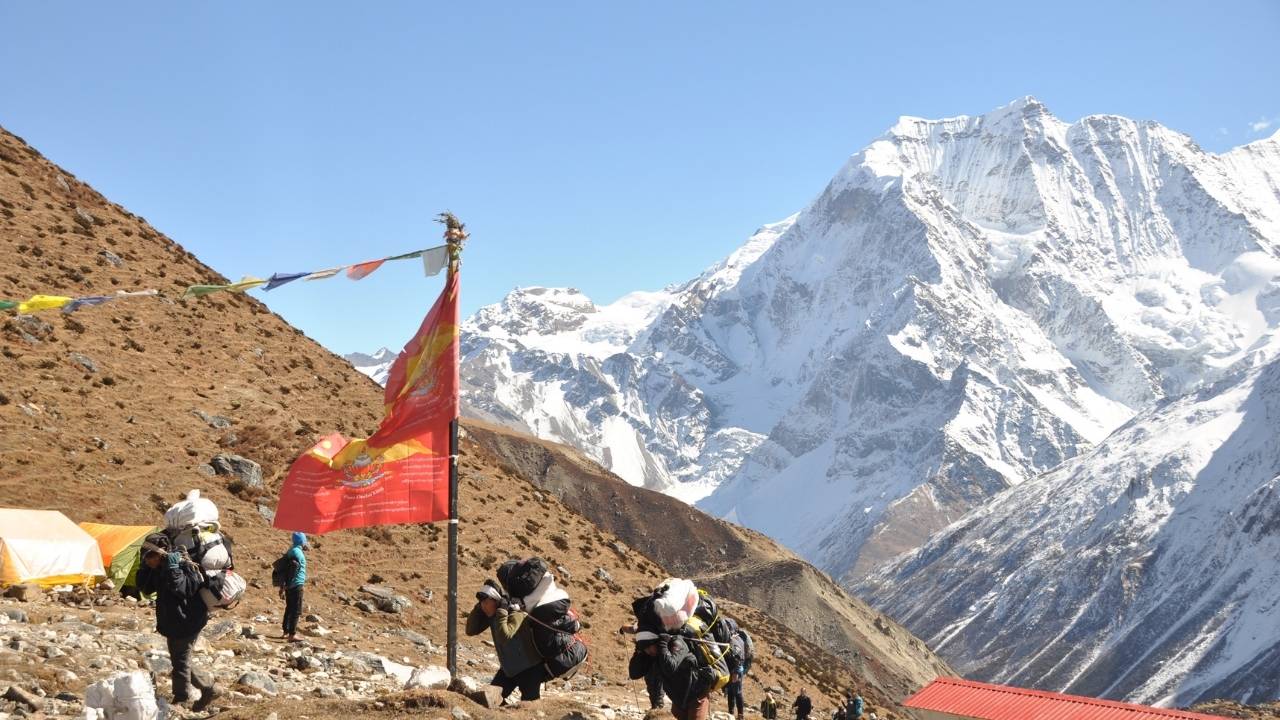
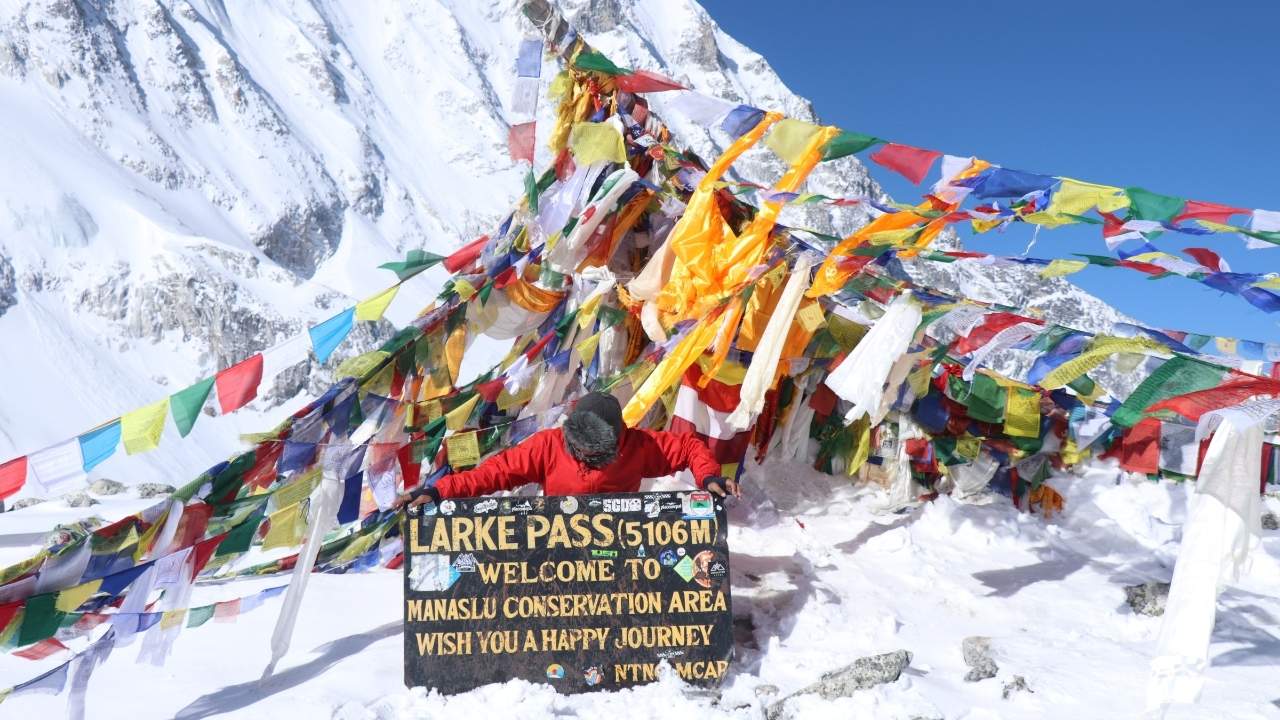
For a trek that reaches 5,106m, the weather around Larkya La matters more than conditions in the lower valleys. The pass is exposed, windy, and cold, and the crossing is one of the longest and most physically demanding days of the circuit. The normal progression places trekkers at Dharamsala (4,460m) before the pass. From there, you climb toward Larkya La and then descend toward Bimthang. Stable autumn weather and clearer visibility generally make this crossing more manageable. October is usually the most favorable month, while November can still provide excellent conditions but with considerably colder temperatures and a greater possibility of snow or icy sections. September can be suitable too, particularly later in the month, but early-season weather can be less predictable.
-
Comfortable Daytime Temperatures at Lower and Middle Elevations
Autumn gives you a useful temperature balance. The lower valleys can remain relatively warm while the middle elevations provide comfortable conditions for walking. Approximate daytime temperatures can range around:
-
Lower Manaslu: 18 to 28°C in September, 18 to 24°C in October and 15 to 24°C in November
-
Samagaun (3,530m): roughly 8 to 14°C in September, 5 to 12°C in October and 6 to 12°C in November
-
Dharamsala (4,460m): generally only a few degrees above freezing during the day, with substantially colder nights
The important point is that these temperatures vary considerably with elevation and weather. A sunny afternoon around the lower valley can feel warm, while the same day at Dharamsala can feel genuinely wintry.
-
Excellent Conditions for Photography
Autumn is particularly rewarding if mountain photography is part of your reason for doing the Manaslu Circuit. Clearer skies improve visibility of the major peaks, while the changing landscape gives the trek considerable visual variety. You begin among greener valleys and forests before moving through the dramatic Himalayan terrain around Namrung, Lho and Samagaun, eventually reaching the stark high-altitude landscape around Samdo, Dharamsala and Larkya La. Early mornings are often the best time for photography because the air is crisp and mountain visibility can be excellent. October generally offers the most dependable combination of clear skies and stable conditions.
-
A Good Balance Between Crowds and Mountain Conditions
Autumn is popular, but the Manaslu Circuit still tends to feel considerably more remote than Nepal's busiest trekking routes. There is a noticeable difference between the three months:
|
Month |
Crowds |
Main Advantage |
Main Trade-off |
|
September |
Low to moderate |
Quieter trail, improving weather |
Possible rain early in the month |
|
October |
Moderate to high |
Best overall weather and visibility |
Highest demand |
|
November |
Moderate |
Clear skies and quieter trails |
Much colder at high altitude |
**Note: October is therefore the best choice if weather takes priority. Late September or early November may be better if you want a somewhat quieter trail**
-
Teahouses Are Operating for the Main Trekking Season
Autumn falls within the main trekking period, so the established teahouses along the Manaslu Circuit are generally operating. This is particularly important at higher settlements such as Samagaun, Samdo and Dharamsala, where accommodation options are much more limited than in the lower valleys. October sees the greatest demand, so trekkers should not assume they can arrive late in the day and always find their preferred room. For an autumn 2026 trek, arranging accommodation through a guided itinerary is particularly useful during the busiest October weeks.
-
The Changing Landscape Feels Especially Dramatic in Autumn
The Manaslu Circuit Trek in autumn is rewarding because the scenery changes continuously with elevation. Autumn weather allows you to appreciate that transition without as much interference from rain and cloud. You begin in the warmer lower Budhi Gandaki valley, pass through forested sections and traditional mountain settlements, and gradually enter the drier and more Tibetan-influenced upper Manaslu region. By Samdo and Dharamsala, the environment feels distinctly high alpine, with sparse vegetation, cold air, and enormous mountains surrounding the trail. The progression is one of the best parts of the trek, and clear autumn weather makes it easier to actually see the landscape changing around you.