
The Everest Base Camp (EBC) Trek is considered one of the most rewarding trekking journeys in the world. This surreal destination attracts thousands of trekkers from all over the world every year. During this exhilarating eastern Himalayan experience, you get the chance to explore the Sherpa villages, cross high suspension bridges, and climb rocky mountain trails to reach the foothills of the world's highest mountain, Mount Everest. Reaching Everest Base Camp is a dream come true for many adventure lovers. But after completing this long and tiring trek, many trekkers start thinking about an easier and faster way to return. This is where the helicopter return from Everest Base Camp becomes an attractive option.
Normally, after completing the Everest Base Camp Trek, the trekkers walk back the same route, which takes about 3 to 4 days. However, with a helicopter return, you can fly directly from the Everest region back to Lukla or Kathmandu in less than one hour. This saves time, reduces physical exhaustion, and adds a thrilling scenic flight experience over the Himalayas. For many people, this helicopter ride becomes one of the most memorable parts of the entire journey.
But the big question is a helicopter return from Everest Base Camp really worth the cost? Is it safe? Who should choose it, and who should avoid it? In this blog, we will answer all these questions. We will explore the cost, time savings, safety, scenic views, advantages, disadvantages, and who this option is best for, helping you to decide if a helicopter return is the right choice for your Everest adventure.
What Is Helicopter Return From Everest Base Camp?
Helicopter return from Everest Base Camp means flying back to the helicopter instead of walking down after completing the trek. Normally, trekkers walk 3 to 4 days from Gorakshep to Lukla, covering around 55 kilometers downhill. This long descent is tiring, especially after many days of high-altitude trekking.
With a helicopter return, trekkers can fly from Gorakshep, Lobuche, or Pheriche directly to Lukla or Kathmandu in about 45 to 60 minutes, depending on weather and flight route. This saves 3 to 4 full trekking days, making it ideal for travelers who have limited time or physical exhaustion.
Common Helicopter Pickup Points
-
Gorakshep (5,164m)- Most common pickup point
-
Kala Patthar (5,550m)- Weather dependent for flight take off
-
Lobuche (4,910 m)- Need to retrace step back to Lobuche across Gorakshep
-
Pheriche (4,230m)- Popular shuttle point for Everest Base Camp Helicopter Tour
From these points, helicopters usually fly to Lukla for refueling and then continue to Kathmandu. In good weather, direct flights to Kathmandu are also possible, which saves even more time.
Flight Duration and Experience
-
Gorakshep to Lukla: 25 – 30 minutes
-
Lukla to Kathmandu: 35 – 40 minutes
-
Total Flight Time: 45 – 60 minutes
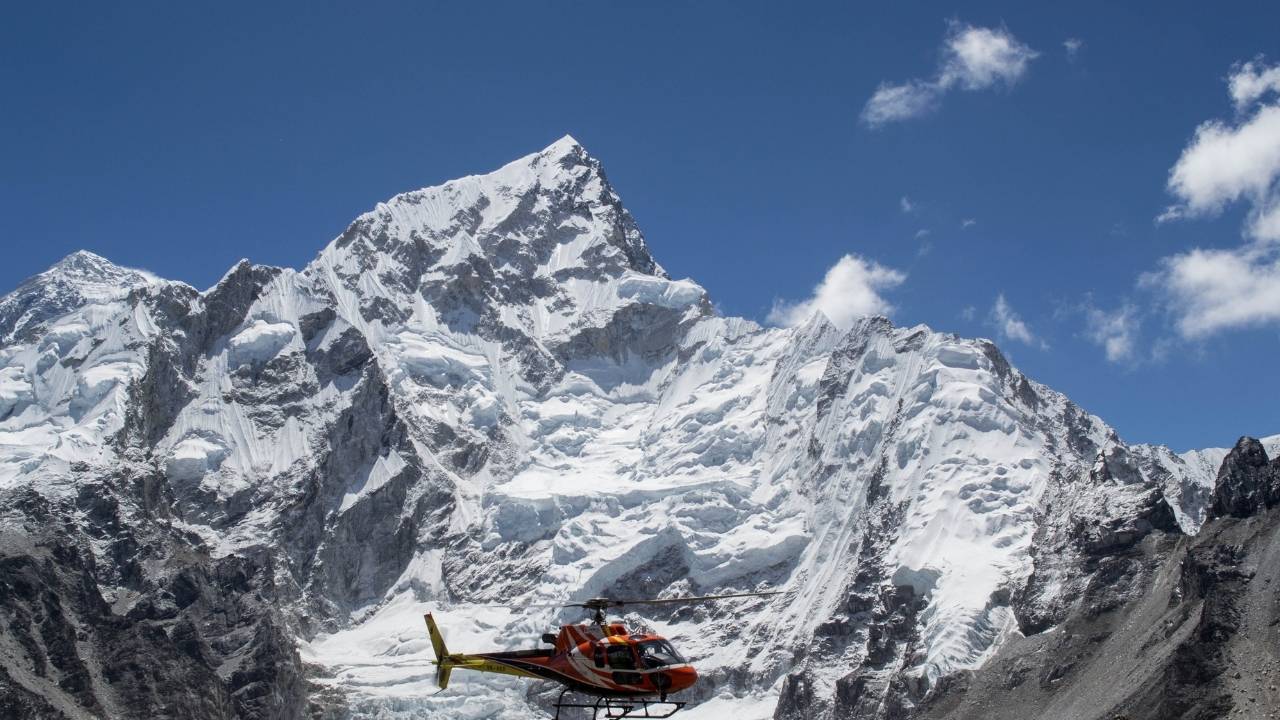
During the flight, trekkers enjoy stunning aerial views of Mount Everest (8,848.86 m), Lhotse, Nuptse, Ama Dablam, Khumbu Glacier, and deep Himalayan valleys. This turns the return journey into one of the most memorable moments of the trek.
Shared vs Private Helicopter
-
Shared Flight: USD $1,200 – $1,400 per person
-
Private Charter: USD $4,000 – $5,000 total
Most trekkers choose shared helicopter flights, where 4-5 passengers share one helicopter, making the cost affordable.
Who Usually Chooses Helicopter Return?
-
Time-limited travelers
-
Elderly trekkers
-
Luxury trekkers
-
Family groups
-
Corporate travelers
-
Tired trekkers
-
Emergency evacuation cases
Helicopter return is now considered one of the safest, fastest, and most comfortable ways to end the Everest Base Camp Trek. It offers a perfect mix of safety, comfort, and unforgettable Himalayan views.
Why Do Trekkers Choose Helicopter Return From Everest Base Camp?
Every year, more than 40,000 trekkers visit Everest Base Camp. After walking for 10 to 12 days at high altitude, the body becomes very tired and weak. The return walk from Gorakshep to Lukla takes 3 to 4 more days, covering around 55 to 65 kilometers. Because of this long and tiring journey, many trekkers now choosea helicopter return. It helps save time, energy, and physical strength, and also adds comfort and safety to the trip.
Main Reasons Why Trekkers Choose Helicopter Return
-
Saves a Lot of Time: Walking back takes 3-4 days, while a helicopter return takes only 45-60 minutes. This helps trekkers save almost 30-40% of the total trekking time. Many people have limited holidays, so this time-saving is extremely useful.
-
Reduces Physical Tiredness: The full Everest Base Camp Trek covers around 130 kilometers (round trip). After long days of walking, trekkers often suffer from knee pain, muscle soreness, joint problems, and foot blisters. Helicopter return helps to avoid 3-4 days of hard downhill walking, allowing the body to recover faster.
-
Improved Safety: Around 8-10% of trekkers experience altitude sickness, and 1-2% require emergency helicopter evacuation. A helicopter can descend 2,500-3,000 meters in just 30 minutes. It quickly brings trekkers to safer altitudes and reduces serious health risks.
-
Offers Comfort and Easy Travel: Helicopter return provides warm seating, smooth flying, and no physical effort. This is why elderly trekkers, families, and luxury travelers prefer this option for a more comfortable journey.
-
Gives Amazing Mountain Views: The helicopter flight offers spectacular aerial views of Mount Everest (8,848.86 m), Lhotse, Nuptse, Ama Dablam, and the Khumbu Glacier. For many trekkers, this becomes the most unforgettable part of the entire trek.
-
Helps Better Travel Planning: Flights from Lukla are often delayed due to weather. Helicopter return helps to avoid long waiting times, reach Kathmandu on schedule, and connect easily with international flights.
**Don't Miss: Everest Base Camp Trek with Helicopter Return, Trek to Base Camp, Fly Back in Style- The Ultimate Everest Experience**
Cost of Helicopter Return From Everest Base Camp
The cost of a helicopter return from Everest Base Camp Trekking depends mainly on the type of flight you choose, the trekking season, and weather conditions. While helicopter service is more expensive than walking back, it offers huge time savings, comfort, and safety, which makes it a valuable option for many trekkers. Below is a clear explanation that helps you understand the real cost of this return flight.
Most Popular Option: Shared Helicopter Flight
Most trekkers choose the shared helicopter flight to reduce cost. In this option,4 to 5 passengers share one helicopter, which lowers the price per person. The average cost of a shared flight is USD 1,200 to 1,500 per person. The usual flight route is Gorakshep→Lukla (for refueling)→Kathmandu, and the total flight time is around 45 to 60 minutes. This option offers a good balance between cost, comfort, and time saving.
Luxury Option: Private Charter Helicopter
Private charter helicopters are best for families, small groups, luxury travelers, and emergency evacuations. The total cost of a private charter usually ranges between USD 4,400 and 5,500 per flight, depending on the season, weather, and passenger weight. A private helicopter can carry up to 5 passengers, providing full privacy, flexible departure time, and a premium travel experience.
What Is Included in the Price?
The helicopter return price generally includes:
-
Helicopter flight
-
Fuel surcharge
-
Airport and landing fees
-
Pilot and crew charges
-
Basic passenger insurance
What Is Not Included?
The cost usually does not include:
-
Personal travel insurance
-
Emergency medical treatment
-
Extra baggage charges
-
Personal expenses
Seasonal Price Difference
Helicopter prices change according to the trekking season. During high seasons like March to May (spring) and September to November (autumn), there is high demand, so costs are slightly higher. During low seasons like June to August (monsoon) and December to February (winter), there is lower demand, so prices are slightly lower, but there is more weather risk.
Is the Cost Worth Paying?
Although the helicopter return costs USD 1,200 to 1,500, it saves 3 to 4 days of walking, reduces physical pain, improves safety, and offers spectacular mountain views. When compared with extra food, accommodations, and physical effort, many trekkers feel that the helicopter cost is reasonable and worth the investment.
Time Saved: Helicopter vs Walking Back
Time is one of the biggest reasons why trekkers choose a helicopter return from Everest Base Camp. Walking back from Gorakshep to Lukla normally takes 3 to 4 days, depending on walking speed, fitness level, and weather. During this time, trekkers walk 6 to 8 hours each day, covering 55-65 kilometers in total. After already trekking for 7 to 8 days, this return journey can feel long, tiring, and physically demanding.
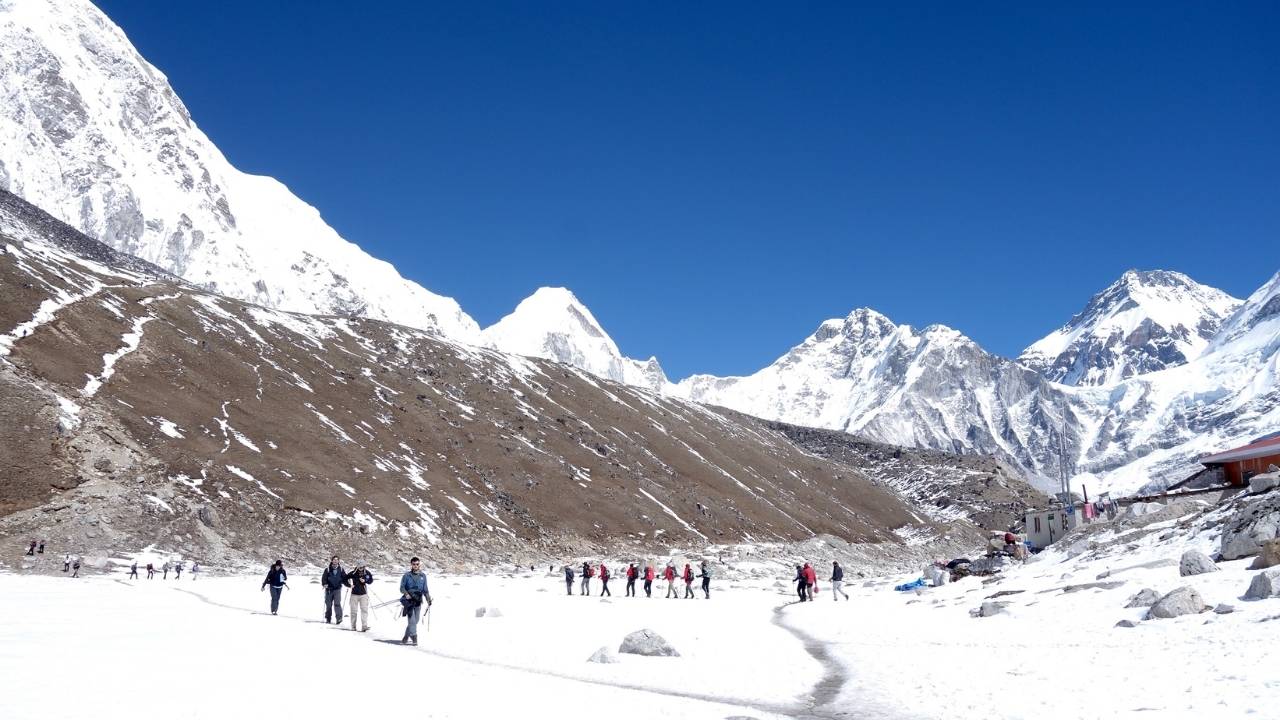
With a helicopter return, the same journey is completed in just 45 to 60 minutes. The helicopter usually flies from Gorakshep to Lukla for refueling and then to Kathmandu, making the total travel time less than one hour. This means trekkers save 3 to 4 full days, which equals to 24 hours of average walking time. This time saving allows trekkers to shorten their total trip by 30-40%, making the Everest Base Camp trek possible even for travelers with tight holiday schedules.
Clear Time Comparison
-
Return Trek: 3 to 4 days (24 to 32 hours)
-
Helicopter Return: 45 to 60 minutes
-
Total Saved Time: 3 to 4 full days
How Time Saving Helps Trekkers?
-
Helps office workers and short holiday travellers to complete the trek in a short period
-
Allows faster return to Kathmandu
-
Reduces total trekking days from 12-14 days to 8-10 days
-
Lowers physical stress and fatigue
-
Makes trip planning more flexible
By choosing a helicopter return from Everest Base Camp, trekkers replace multiple days of hard walking with a one-hour scenic flight. This makes the Everest Base Camp Trek faster, easier, and more comfortable, especially for travelers who value time, comfort, and convenience.
**You May Also Like: Everest Base Camp Landing Helicopter Tour - Group Sharing, Touch Down at Everest Base Camp, The Most Efficient Himalayan Experience**
Scenic Experience: Views From a Helicopter
One of the most special things about choosing a helicopter return from Everest Base Camp is the amazing scenic flight over the Himalayas. While walking gives close-up views of mountains and villages, a helicopter flight offers a complete bird's-eye view of the Everest region. In just 45 to 60 minutes, trekkers can see some of the highest and most beautiful mountains on Earth, along with glaciers, deep valleys, rivers, and remote Sherpa settlements. For many people, this helicopter ride becomes the highlight of the entire trip.
-
Stunning Himalayan Paranoma: During the flight, trekkers can clearly see Mount Everest (8,848.86m), the highest mountain in the world, along with Lhotse (8,516m), Nuptse (7,861m), Ama Dablam (6,812m), Thamserku (6,608m), and Kangtega (6,782m). The helicopter also flies over the Khumbu Glacier, one of the largest glaciers in Nepal, and the famous Khumbu Icefall, which is one of the most dangerous climbing sections on Everest. These views are not possible to experience fully while walking, making the helicopter ride truly unique.
-
Photography and Video Experience: The helicopter flight offers perfect chances for photography and taking aerial videos. Clear windows and flying speed allow trekkers to capture stunning aerial shots of snow peaks, glaciers, and valleys. Many trekkers say their best Everest photos are taken during the helicopter return.
-
Emotional Experience: Flying back, admiring the Himalayas after completing the trek, creates a strong emotional feeling of achievement. Seeing the entire trekking route from the air helps trekkers to realize how far they walked. For many, this moment becomes deeply emotional, peaceful, and unforgettable.
-
A Once in a Lifetime Experience: The helicopter return transforms the long descent into a once-in-a-lifetime scenic flight. It offers world-class mountain views, unforgettable photography moments, and deep emotional satisfaction. This makes the Everest Base Camp journey even more special and memorable.
Safety, Weather, and Flight Conditions
Safety is one of the most important concerns when choosing a helicopter return from Everest Base Camp. Helicopter flights in the Everest region operate in extreme mountain conditions, including high altitude, strong winds, snow, and sudden weather changes. Because of this, only experienced mountain pilots and certified helicopter companies are allowed to fly in this region. Nepal's Civil Aviation Authority strictly controls these flights to ensure maximum safety for passengers.
Weather Conditions in the Everest Region
The weather in the Everest region can change very quickly. Clear skies on the th morning can turn cloudy quickly, with wind and snowfall within hours. Because of this, most helicopter flights operate early in the morning between 6:00 AM and 10:00 AM, when visibility is the best and wind is lowest.
-
Best Flying Seasons: March to May (spring) and September to November (autumn)
-
Less Reliable Seasons: June to August (monsoon) and December to February (winter)
About 20-30% of helicopter flights face delays or cancellations during bad weather, especially in the monsoon and winter seasons.
Flight Safety Standards
Nepali helicopter companies operating in the Everest region follow strict safety rules :
-
Highly trained mountain pilots with sufficient flying hours and experience
-
Regular helicopter maintenance checks
-
Weight control for safe high-altitude flying
-
Strict weather evaluation before every flight
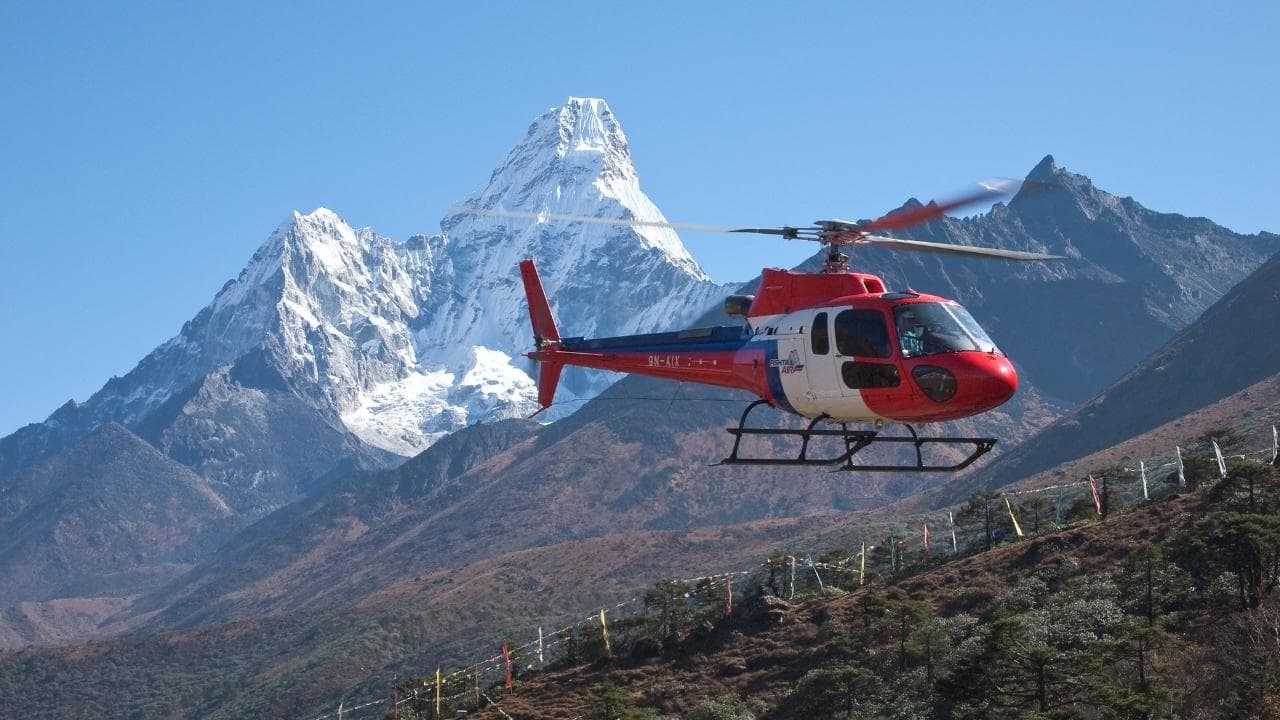
Most helicopters used are Eurocopter AS350 B3 or B3e, specially designed for high altitude operations.
Altitude and Oxygen Safety
At high altitude, the air becomes thin, which makes helicopter performance more difficult. To ensure safety, helicopters carry limited passenger weights.
-
Flights are done in multiple short stages
-
Emergency oxygen is available onboard
This ensures stable flight performance and reduces risk.
Emergency and Rescue Reliability
Helicopters are the fastest rescue method in the Everest region. About 1-2% of trekkers require helicopter evacuation every season. Average rescue response time is around 30-90 minutes. This quick response saves many lives every year, especially in cases of:
-
HAPE and HACE
-
Serious injuries
Common Reasons for Flight Delay or Cancellations
-
Heavy cloud cover
-
Strong winds
-
Snowfall
-
Poor visibility
-
Sudden weather changes
If flights are cancelled, trekkers may need to wait 1-2 days or walk down to a lower altitude for better flying conditions.
Helicopter returns from Everest Base Camp are very safe when flown in good weather by experienced pilots. However, because of unpredictable Himalayan weather, delays and cancellations are common. Proper planning, a flexible schedule, and patience help to ensure a smooth and safe helicopter experience.
Pros and Cons: Is Helicopter Return From Everest Base Camp Worth It?
After completing the Everest Base Camp trek, many trekkers think about whether they should walk back or take a helicopter. Both options have their own benefits and drawbacks. Helicopter return offers speed, comfort, and safety, but it also comes with a higher cost and weather dependency. To help you to decide clearly, here is a breakdown of the main advantages and disadvantages of this aerial return.
Advantages of Helicopter Return From Everest Base Camp
-
Save Time: It saves 3-4 days of walking by returning in just 45-60 minutes.
-
Reduces Physical Tiredness: Avoids long downhill walking, reducing knee pain, muscle soreness, and joint stress.
-
Comfortable Travel: Provides warm seating, smooth flight, and easy journey after tiring trek days.
-
Emergency Safety: Offers fast evacuation in case of altitude sickness or injury, which can save lives.
-
Scenic Experience: Gives amazing aerial views of Everest, glaciers, valleys, and villages.
-
Better Trip Planning: Helps to avoid Lukla flight delays and manage travel schedules easily.
Disadvantages of Helicopter Return From Everest Base Camp
-
High Cost: It costs USD 1,200-1,500 per person, which is expensive for budget travellers.
-
Weather Dependency: Flights can be delayed or canceled due to cloud, wind, or snow.
-
Limited Baggage: Strict weight limits and an extra charge for heavy bags.
-
Less Eco-friendly: Helicopters consume fuel and create noise, which affects the fragile mountain environment.
-
Less Walking Experience: Some trekkers miss the final days of peaceful village trekking.
Helicopter return from Everest Base Camp is worth it for trekkers who value time, comfort, and safety. It is ideal for travelers with limited holidays, physical concerns, or luxury travel preferences. However, for budget travellers and adventure lovers, walking back offers a more traditional and rewarding trekking experience. The right choice depends on your time, budget, fitness level, and travel style.
**Related Read: Everest Base Camp Luxury Trek- Where Himalayan Adventure Meets Refined Comfort**
Who Should Choose Helicopter Return From Everest Base Camp?
The helicopter return to Everest Base Camp is best for trekkers who have limited time and want a comfortable journey. Office workers, business travelers, and short holiday tourists often choose this option because it helps them skip 3-4 days of the return trekking part. Instead of walking back for several days, they can reach Kathmandu in less than one hour, making their travel schedule more flexible and stress-free.
This option is also ideal for elderly trekkers, families, and people with knee or back problems. After many days of walking at high altitude, the body becomes very tired. Helicopter return reduces the physical pain, injury risk, and exhaustion, offering a safe and smooth journey back. It is also the fastest rescue method in the case of altitude sickness or injuries.
However, budget travellers and adventure lovers may prefer to walk back, as it offers a deeper cultural experience and costs much less. The best choice depends on your time budget, fitness, and travel style.