

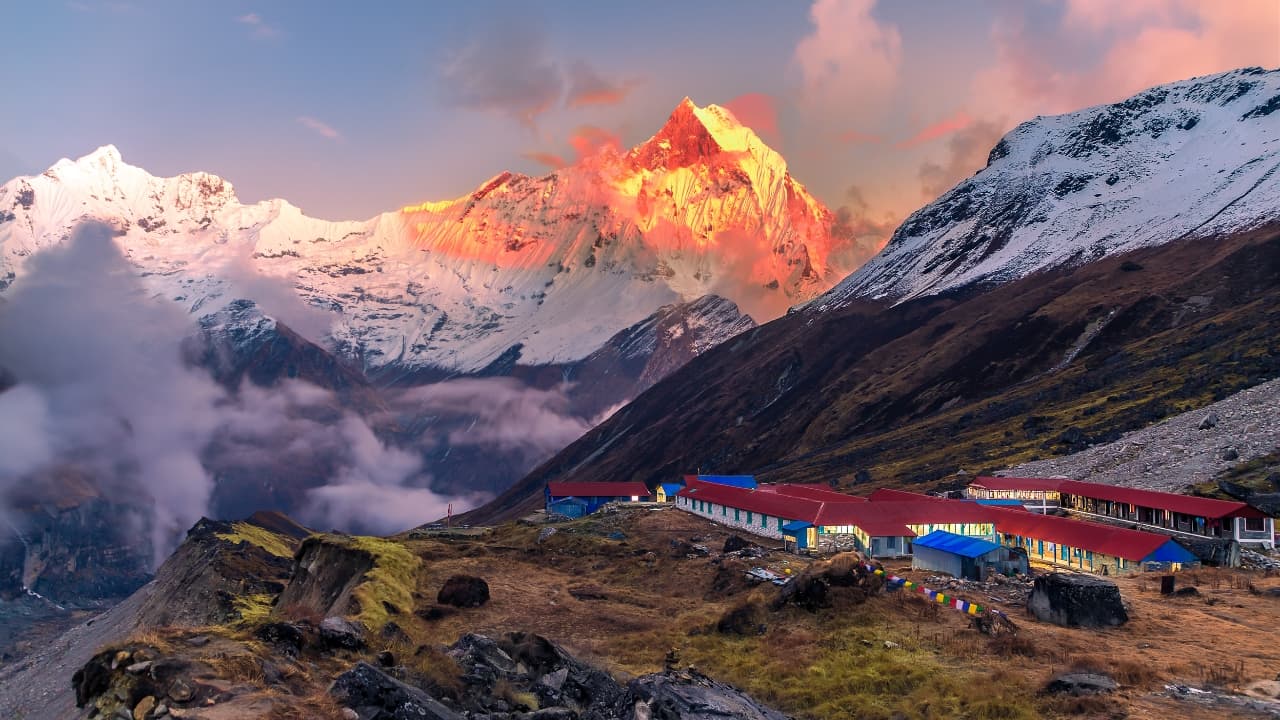
The Annapurna Base Camp Trek covers roughly 90 to 110 km (56 to 68 miles) of walking, depending on the route, starting point, and itinerary you choose. A typical itinerary involves around 5 to 7 hours of walking per day, although some days are considerably shorter or longer. On the popular Annapurna Base Camp Trek via Poon Hill, for example, daily trekking distances range from about 2.9 km to 16.7 km, taking you from the lower hills through rhododendron forests and traditional mountain villages to the high alpine landscape of the Annapurna Sanctuary.
Distance alone, however, does not tell the full story of the Annapurna Base Camp Trek. The trail is constantly changing in character. You may begin among terraced hills and warm, subtropical vegetation before climbing through dense forests, crossing stone staircases, following the Modi Khola valley, and eventually reaching Annapurna Base Camp at 4,130 meters (13,549 feet). Along the way, the amount of climbing and descending can make a relatively short distance feel much more demanding than the number of kilometers suggests.
For example, the 2.9 km walk from Machhapuchhre Base Camp to Annapurna Base Camp is one of the shortest trekking days on the route, but it takes place above 3,700 meters and involves a steady climb toward 4,130 meters. In contrast, the 16.7 km descent from Annapurna Base Camp to Bamboo is the longest walking day in the same itinerary, yet the substantial loss of elevation changes the physical challenge completely.
Understanding the Annapurna Base Camp Trek distance is therefore useful not only for knowing how many kilometers you will walk, but also for preparing your body, planning your pace, and choosing an itinerary that matches your fitness and available time. In this guide, we break down the total distance, daily walking distances, route variations, walking times, elevation changes, and the sections of the trail where the distance feels most demanding.
Annapurna Base Camp Trek Distance and Facts
The Annapurna Base Camp Trek covers approximately 90 to 110 km (56 to 68 miles) of walking on a typical round-trip itinerary, although the exact distance depends on where you begin and finish the trek and whether you take a shorter or more extended route. The trail does not follow a simple gradual climb toward the mountains. Instead, it repeatedly rises and falls through villages, forests, river valleys, and stone staircases before entering the high-altitude Annapurna Sanctuary.
One of the most important things to understand is that kilometers alone do not determine how demanding a day feels. A 10 km section with continuous stone steps and significant elevation gain can require more effort than a longer section on a relatively gradual trail. The approach to Annapurna Base Camp also becomes progressively more demanding as the trail climbs above 3,000 meters, eventually reaching 4,130 meters (13,549 feet) at the base camp.
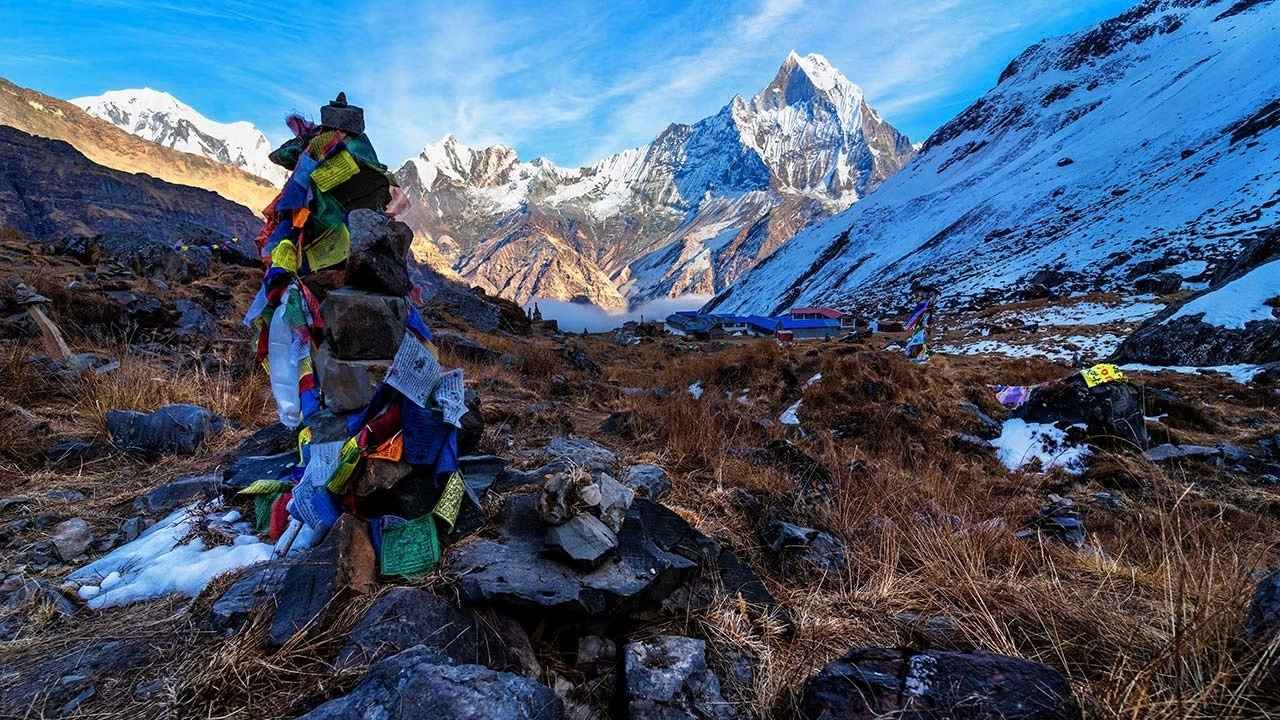
The popular route via Ghandruk and Poon Hill can include particularly varied walking distances. Some days are relatively short, while others involve more than 15 km of walking. On Eco Holidays Nepal's existing itinerary, for example, the daily distance ranges from approximately 2.9 km to 16.7 km, showing why the overall distance is better understood through the individual stages of the trek rather than as one single number.
Here are the key Annapurna Base Camp Trek distance, altitude, and walking facts at a glance:
|
Trek Fact |
Details |
|
Typical Trek Duration |
7 to 12 days, depending on route and itinerary |
|
Total Trekking Distance |
Approximately 90 to 110 km (56 to 68 miles) |
|
Average Daily Distance |
Around 10 to 15 km, although individual days vary |
|
Average Walking Time |
Approximately 5 to 7 hours per day |
|
Highest Point |
Annapurna Base Camp (4,130m/ 13,549ft) |
|
Typical Starting Elevation |
Nayapul (1,070m/ 3,510ft) |
|
Longest Walking Days |
Annapurna Base Camp to Bamboo (16.7km/ 10 miles) |
|
Shortest Walking Days |
MBC to ABC (2.9km/ 1.8 miles) |
|
Terrain |
Stone steps, forest trails, suspension bridges, rocky paths, and alpine terrain |
|
Accommodation |
Teahouses and mountain lodges |
|
Difficulty |
Moderate |
|
Spring (March to May) and autumn (September to November) |
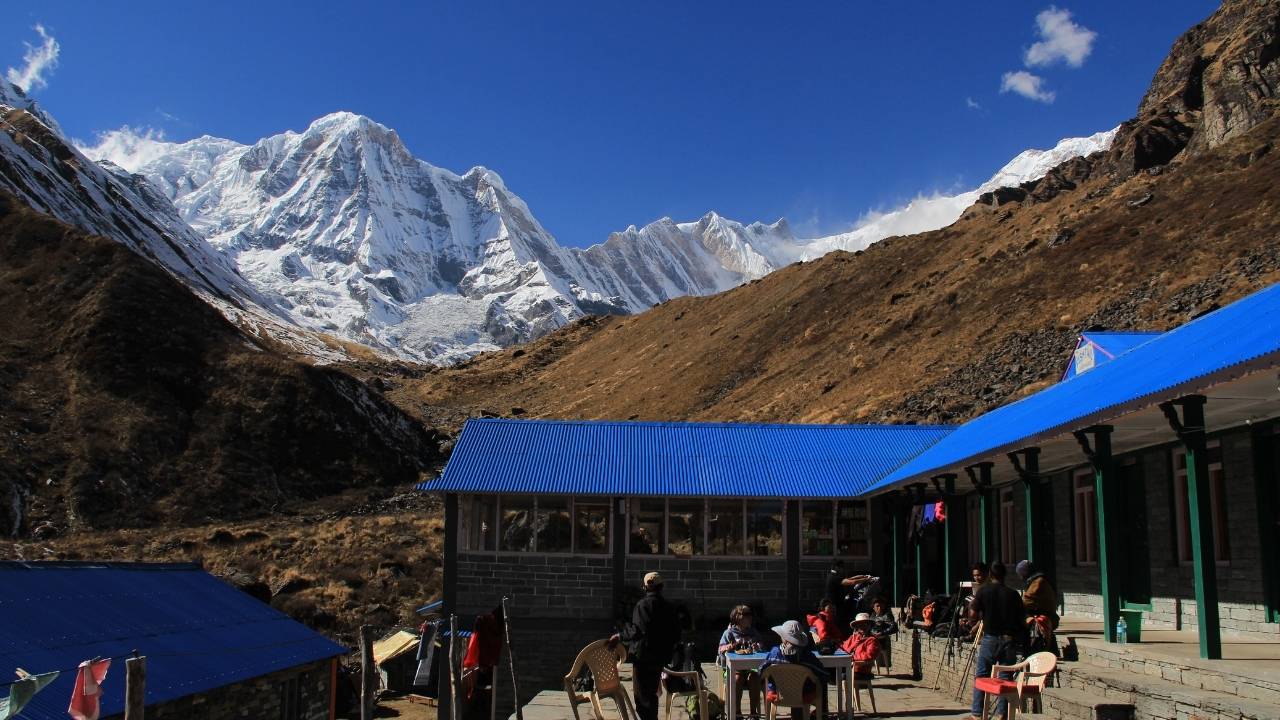
The variation in distance is what makes the ABC route interesting from a trekking perspective. You might spend one day climbing through rhododendron forest and passing traditional Gurung settlements, then find yourself walking beside the Modi Khola through a much narrower mountain valley the following day. Near Machhapuchhre Base Camp and Annapurna Base Camp, vegetation becomes sparse, and the landscape opens into a distinctly high-Himalayan environment.
Annapurna Base Camp Trek Daily Distance and Route Details
The distance you cover on the Annapurna Base Camp Trek changes considerably from one day to the next. The 10-day Annapurna Base Camp Trek via Poon Hill itinerary used by Eco Holidays Nepal covers approximately 89.7 km of trekking, from the first walking section at Nayapul to the final trail at Sibai. The route begins with relatively moderate walking through the lower Annapurna foothills, climbs through Ghorepani and Poon Hill, enters the Modi Khola valley, and reaches Annapurna Base Camp at 4,130 meters before descending toward Jhinu Danda and Pokhara.
The daily figures are quite varied. The 2.9 km walk from Machhapuchhre Base Camp to Annapurna Base Camp is the shortest trekking stage, while the 16.7 km descent from ABC to Bamboo is the longest. This difference matters because walking distance is only one part of the effort: elevation gain, steep stone steps, altitude, and prolonged descents can make a shorter day surprisingly demanding.
|
Day |
Route |
Distance |
Duration |
Elevation |
|
01 |
Nayapul to Tikhe Dhunga |
9.2km/ 5.7 miles |
4 to 5 hours |
1,070 meters to 1,540 meters |
|
02 |
Tikhe Dhunga to Ghorepani |
12.9km/ 8 miles |
5 hours |
1,540 meters to 2,874 meters |
|
03 |
Ghorepani to Poon Hill to Tadapani |
10km/ 6.2 miles |
5 to 6 hours |
2,874 meters to 3,210 meters |
|
04 |
Tadapani to Chhomrong |
9km/ 5.5 miles |
5 to 6 hours |
2,630 meters to 2,170 meters |
|
04 |
Chhomrong to Dovan |
8.6km/ 5.3 miles |
6 to 7 hours |
2,170 meters to 2,600 meters |
|
06 |
Dovan to Machhapuchhre Base Camp |
14km |
6 to 7 hours |
2,600 meters to 3,700 meters |
|
07 |
Machhapuchhre Base Camp to Annapurna Base Camp |
2.9km/ 1.8 miles |
2 to 3 hours |
3,700 meters to 4,130 meters |
|
08 |
Annapurna Base Camp to Bamboo |
16.7km/ 10 miles |
6 to 7 hours |
4,130 meters to 2,310 meters |
|
09 |
Bamboo to Jhinu Danda |
12km/ 7.5 miles |
5 to 6 hours |
2,310 meters to 1,780 meters |
|
10 |
Jhinu Danda to Sibai |
4.4km/ 2.7 miles |
2 to 3 hours |
1,780 meters to 1,530 meters |
Distances and walking times follow the current Eco Holidays Nepal 10-day itinerary. The final day's road journey from Sibai to Pokhara is separate from the trekking distance.
What the Daily Distances Feel Like on the Annapurna Base Camp Trail?
The first few days gradually build the walking load. From Nayapul to Tikhe Dhunga, the 9.2 km opening stage acts as a warm-up, while the following day to Ghorepani increases both distance and elevation, with the trail climbing through Ulleri's famous stone staircases. The Poon Hill morning hike then adds a memorable high point before the route continues through rhododendron forests toward Tadapani.
From Tadapani onward, the character of the trek changes. The trail descends to Chhomrong before climbing again through Sinuwa, Bamboo, and Dovan. Day 6 is particularly important from a distance-and-effort perspective: although the route covers 14 km, it also gains around 1,100 meters, taking you from Dovan at 2,600 meters to Machhapuchhre Base Camp at 3,700 meters.
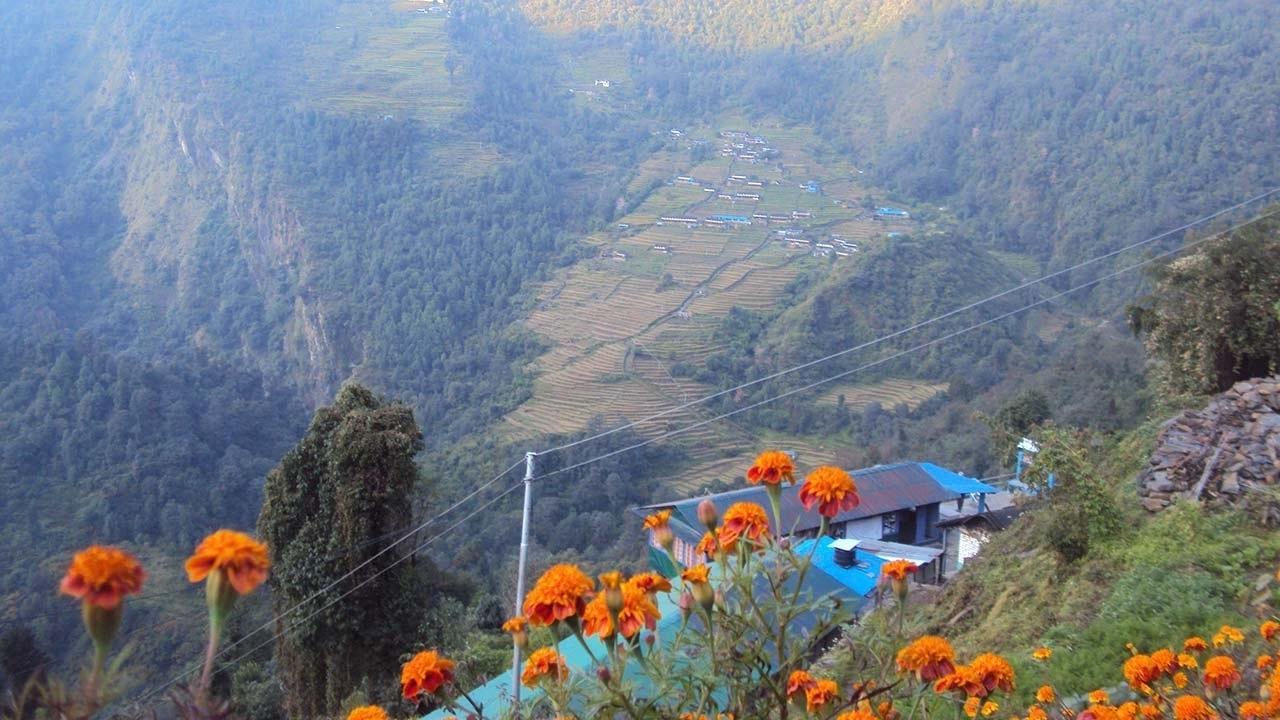
The final approach to Annapurna Base Camp is only 2.9 km, but the trail climbs another 430 meters (1,410 feet) and takes you above 4,000 meters. After reaching ABC, the longest day begins: the 16.7 km descent to Bamboo loses approximately 1,820 meters of elevation. The distance is substantial, but the repeated downhill sections and stone terrain are what you will feel most in your legs.
The route then becomes progressively lower and warmer as you descend toward Jhinu Danda, famous for its natural hot springs, before the short final trek to Sibai and the drive back to Pokhara.
Does ABC Trek Distance Vary by Route?
Yes, the Annapurna Base Camp Trek distance varies according to the starting point, route combination, and whether you return on foot or by road or helicopter. A typical full trekking itinerary falls around 90 to 110 km (56 to 68 miles), but shorter approaches can reduce the walking distance considerably. The main ABC Trek distance variations are:
|
Route/ Itinerary |
Distance/ Walking Detail |
Key Difference |
|
ABC via Ghandruk |
Approximately 90 km for a full round trip |
Direct approach through Ghandruk and Chhomrong |
|
ABC via Poon Hill |
Approximately 90 km on Eco's 10-day itinerary |
Adds Ghorepani and Poon Hill (3,210 meters) before joining the ABC route |
|
Short Annapurna Base Camp Trek |
Shorter than the full route |
Starts farther along the road-accessible section, reducing lower-altitude walking |
|
ABC with Helicopter Return |
Walking distance is reduced on the return |
Trek to ABC, then fly back instead of retracing the entire route |
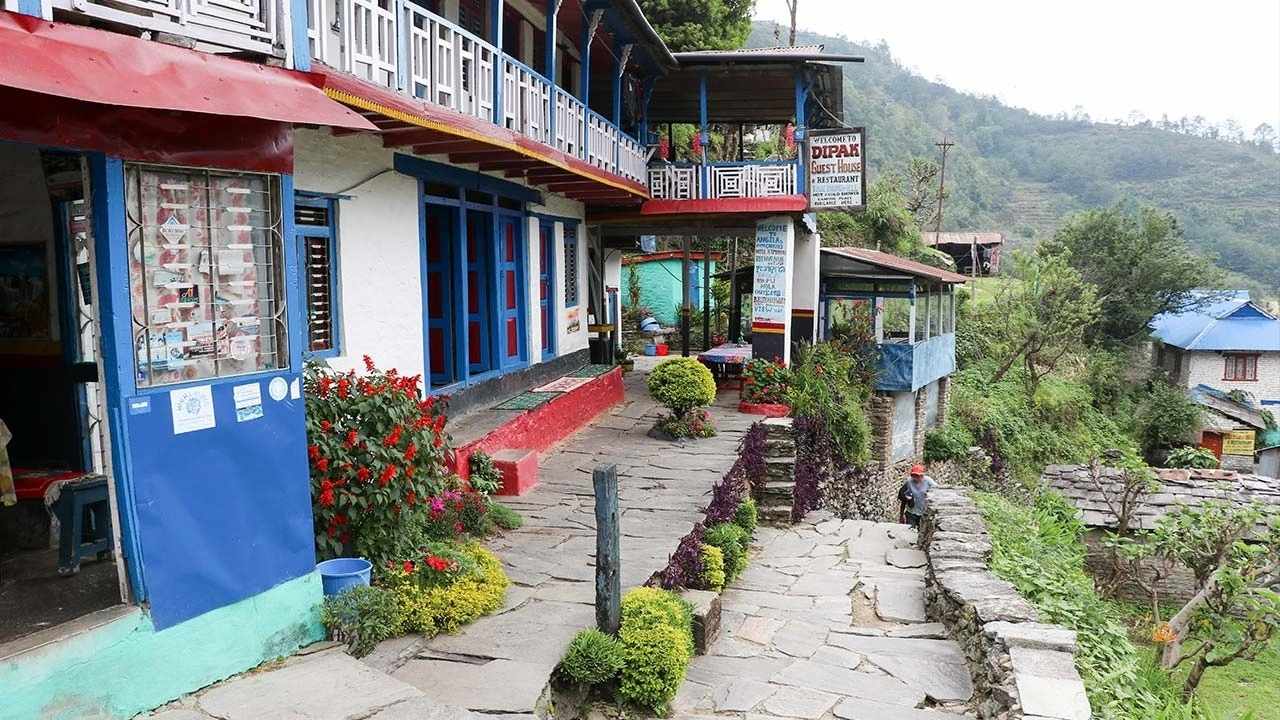
The Poon Hill variation adds several walking stages before reaching the main ABC trail. On Eco Holidays Nepal's itinerary, the first three trekking days cover 9.2 km from Nayapul to Tikhe Dhunga, 12.9 km to Ghorepani, and 10 km from Ghorepani via Poon Hill to Tadapani. From Tadapani, the route continues toward Chhomrong and joins the main sanctuary trail.
The starting point also makes a noticeable difference. On the Ghandruk approach, the trek begins at Syauli Bazaar, with an approximately 8 km walk to Ghandruk, while the Poon Hill itinerary begins walking earlier at Nayapul. This is why comparing ABC itineraries only by the number of days can be misleading, the actual walking distance and daily elevation profile matter more.
For a full trekking experience, 90 to 110 km is a useful planning range, but always check the individual itinerary because road access, Poon Hill additions, side trips, and helicopter returns can change the total distance.
Best Time for Trek
The best time for the Annapurna Base Camp Trek is spring (March to May) and autumn (September to November), when the trails are generally drier, mountain visibility is better, and temperatures are more comfortable for long days of walking. Because this trek reaches 4,130 meters, weather becomes increasingly important as you move from the lower hills toward Machhapuchhre Base Camp and Annapurna Base Camp.
|
Month |
Daytime Temperature |
Night Temperature |
Trail & Visibility |
Trekking Conditions |
|
March |
10 to 18°C |
0 to 5°C |
Clear to good |
Cool mornings, gradually warmer |
|
April |
15 to 20°C |
5 to 10°C |
Excellent |
One of the best months; rhododendrons bloom |
|
May |
18 to 22°C |
7 to 12°C |
Good to moderate |
Warmer, with increasing pre-monsoon clouds |
|
June to August |
18 to 25°C |
10 to 15°C |
Often cloudy |
Monsoon rain, wet and slippery trails |
|
September |
15 to 20°C |
5 to 10°C |
Improving |
Early September can remain wet; conditions improve later |
|
October |
15 to 20°C |
3 to 8°C |
Excellent |
Dry, stable weather and clear mountain views |
|
November |
10 to 17°C |
0 to 5°C |
Excellent |
Dry and clear, but mornings and nights become colder |
|
December to February |
5 to 15°C |
-5 to 2°C |
Often clear |
Cold; snow and freezing conditions possible at higher elevations |
-
Spring is particularly rewarding for the route itself. From March to May, the lower sections around Ghorepani, Tadapani, and Chhomrong become increasingly colorful with blooming rhododendrons, while the higher trail toward ABC retains its dramatic snow-covered Himalayan scenery. April is generally the sweet spot for combining comfortable walking temperatures with good visibility.
-
Autumn offers the most consistently stable trekking conditions. October is usually the standout month, with dry trails, crisp mountain views, and comfortable daytime temperatures. November remains excellent for visibility and dry conditions, although temperatures drop noticeably after sunset and at higher elevations.
-
Winter is possible but requires more preparation. Snow can affect the higher sections around Machhapuchhre Base Camp and ABC, and temperatures can fall below freezing at night. The shorter daylight hours also matter when planning longer walking days.
-
The monsoon months of June to August are the least favorable. Rain can make the stone steps and forest trails slippery, while clouds and precipitation frequently obscure the Annapurna range. For a distance-focused trek, wet conditions can also make a 10-km day feel substantially harder and slower than the same distance on a dry autumn trail.
For the best combination of walking conditions, manageable temperatures, dry trails, and mountain visibility, spring and autumn are particularly strong choices.
Annapurna Base Camp Trek Difficulty in Overall
The Annapurna Base Camp Trek is considered moderately difficult. You do not need technical climbing experience, but the combination of daily walking distance, steep stone staircases, repeated ascents and descents, and altitude up to 4,130 meters (13,549 feet) makes it more demanding than a short low-altitude hike. The distance itself is manageable for most reasonably fit trekkers.
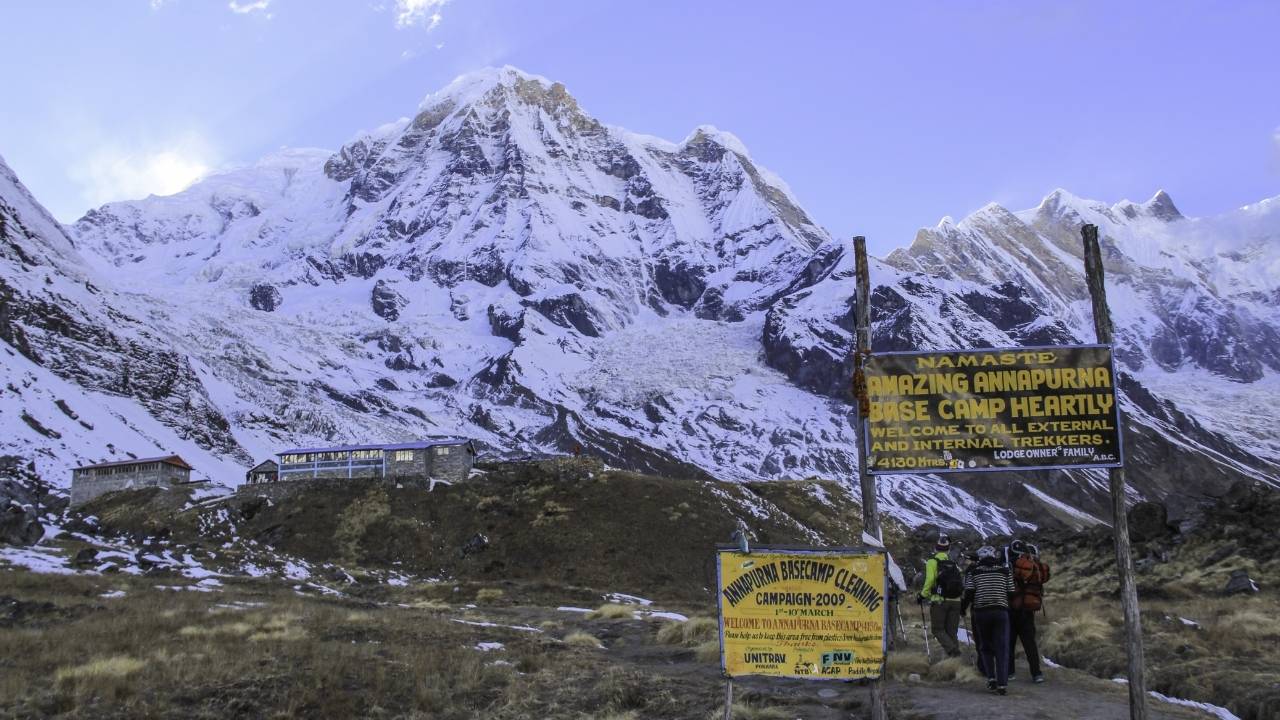
The bigger challenge is the variation in terrain and elevation. On the Eco Holidays Nepal route via Poon Hill, daily walking ranges from just 2.9 km to 16.7 km, while the route moves from the lower foothills to ABC at 4,130 meters. The longest day is actually a major descent from ABC to Bamboo, while the shortest day involves climbing from Machhapuchhre Base Camp to ABC.
|
Difficulty Factor |
What to Expect |
|
Overall Difficulty |
Moderate |
|
Daily Walking |
Generally 5 to 7 hours, with longer days possible |
|
Daily Distance |
Approximately 3 to 17 km, depending on the itinerary stage |
|
Highest Elevation |
Annapurna Base Camp (4,130m/ 13,549ft) |
|
Most Demanding Factors |
Steep stairs, elevation gain, long descents, altitude |
|
Technical Climbing |
Not required |
|
Fitness Requirement |
Good basic cardiovascular fitness and ability to walk for several consecutive days |
|
Best Preparation |
Hiking, stair climbing, uphill walking, and regular endurance training |
What Makes the Trek Challenging?
The stone staircases are one of the most noticeable physical challenges, particularly around Ulleri, Chhomrong, and other sections of the lower route. You gain and lose elevation repeatedly rather than following a continuously uphill trail. Altitude becomes more important above 3,000 meters. The approach from Dovan toward Machhapuchhre Base Camp takes you from 2,600 meters to 3,700 meters, followed by the final climb to 4,130 meters at ABC.
Even though the final stage is only 2.9 km, the thinner air and steady ascent make it feel considerably harder than the distance suggests. Descending can be equally demanding. The 16.7 km walk from ABC to Bamboo involves losing roughly 1,820 meters of elevation in a single day. The distance is long, and repeated downhill sections and stone steps can place considerable strain on the knees and legs.
For most trekkers, consistent preparation matters more than speed. Regular uphill walking, stair training, and longer weekend hikes can prepare your legs for consecutive trekking days. You do not need to be an elite athlete, but being comfortable with 5 to 7 hours of walking and significant elevation changes will make the journey much more enjoyable.
Tips for Managing Annapurna Base Camp Trek Distance
The Annapurna Base Camp Trek is not difficult simply because of its total distance. The real challenge comes from how that distance is spread across steep stone steps, repeated climbs and descents, and higher elevations as you approach the sanctuary. A few practical habits can make the 5 to 7 hour walking days much more manageable.
-
Build Your Walking Endurance Before the Trek: Train with regular uphill walks, stairs, and longer hikes rather than relying only on gym workouts. Being comfortable walking for 5 to 7 hours on consecutive days is more useful than being able to walk a short distance quickly.
-
Pace Yourself From the First Day: The early stages around Tikhe Dhunga, Ghorepani, and Tadapani can feel easy compared with the high trail, but the accumulated distance matters. Keep a steady pace and avoid spending too much energy trying to finish the first few days quickly.
-
Treat the Stone Stairs as Part of the Distance: Sections around Ulleri and Chhomrong can make a relatively short distance feel much longer. Take shorter steps, maintain a consistent rhythm, and use brief pauses rather than stopping for long periods after every steep section.
-
Respect the Elevation Gain, Not Just the Kilometers: The 14 km Dovan to Machhapuchhre Base Camp section climbs from about 2,600 meters to 3,700 meters, while the final 2.9 km from MBC to ABC gains another 430 meters. At these elevations, maintaining a slower pace is often more effective than trying to match your low-altitude walking speed.
-
Use the Shortest Days to Recover: The 2.9 km MBC to ABC section is short in distance but comes at the highest point of the trek, while the final Jhinu Danda to Sibai section is only about 4.4 km. Shorter stages give your legs and breathing a chance to recover, so use them rather than adding unnecessary side trips.
-
Prepare for the Long Descent From ABC: The 16.7 km ABC to Bamboo day is the longest walking day on the Eco route and involves roughly 1,820m of descent. Downhill walking can be hard on the knees and thighs, so use trekking poles, keep your steps controlled, and avoid rushing simply because you are going downhill.
-
Eat and Drink Before You Feel Exhausted: Long walking days become considerably harder when you start the next section already dehydrated or low on energy. Carry water and snacks, eat proper meals at teahouses, and use breaks to refuel rather than waiting until your energy drops sharply.
-
Take Breaks According to the Terrain: A short pause after a sustained staircase or climb is more useful than trying to follow a fixed number of rest stops. On longer stages such as Dovan to MBC and ABC to Bamboo, several controlled breaks can help you maintain a steady pace throughout the day.
-
Pack for Walking, Not for Carrying Your Entire Trip: A lighter daypack makes repeated ascents and descents noticeably easier. Keep only the essentials you need during the day- water, layers, snacks, sun protection, personal items, and basic emergency supplies and avoid carrying unnecessary weight.
-
Look at Each Day Individually Rather Than Focusing on Total Distance: The overall distance gives you an idea of the trek's scale, but the daily profile tells you how demanding it will feel. A 2.9 km climb to ABC and a 16.7 km descent to Bamboo require very different pacing strategies, even though both are part of the same trek.