

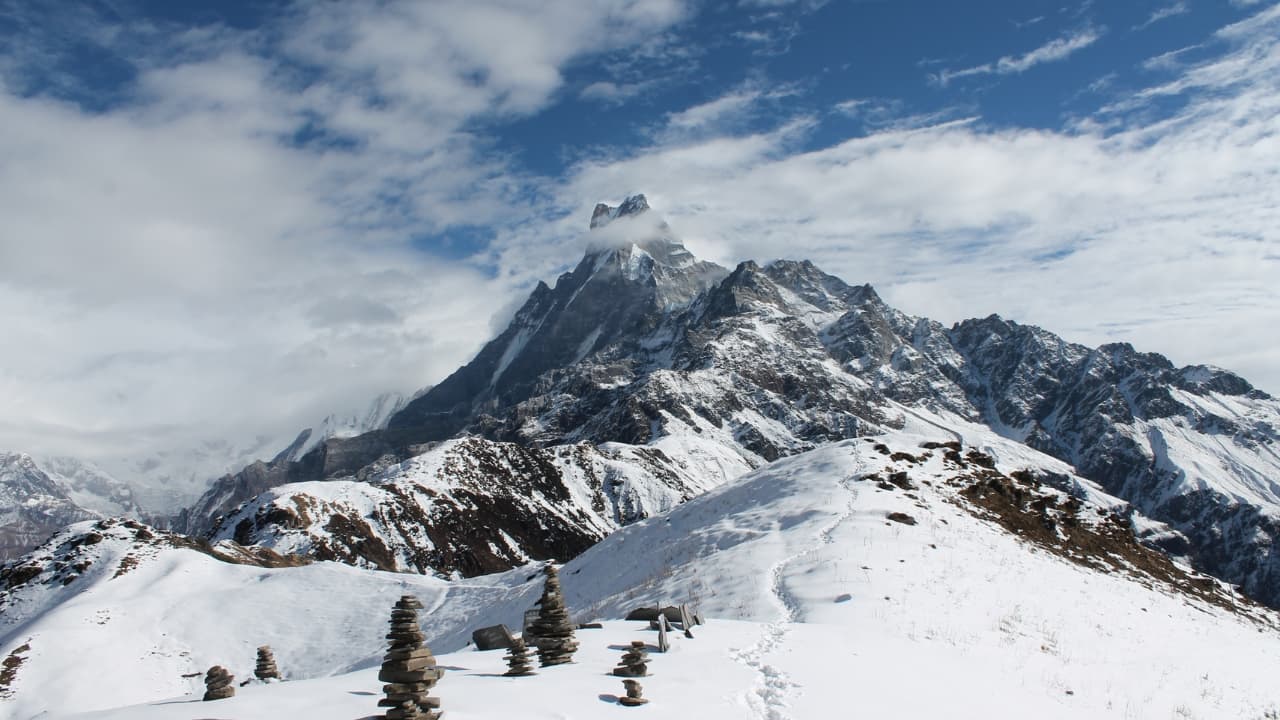
The Mardi Himal Trek in November is a compact Himalayan adventure that delivers an unusually high mountain experience for the time and distance involved. Within a relatively short trek, the landscape changes from the subtropical foothills and traditional villages around Pokhara to quiet forest trails, open alpine ridges, and a dramatic high-altitude amphitheater dominated by Mardi Himal, Machhapuchhre (Fishtail), Annapurna South, Hiunchuli, and the Annapurna massif. November adds another advantage: the mountains are at their most visually impressive after the summer monsoon has cleared the atmosphere, making the panoramic scenery one of the strongest reasons to choose this month.
What makes Mardi Himal particularly attractive is the character of the trail. Rather than following a broad and heavily traveled valley for days, the route climbs along ridges and forested slopes, eventually opening onto a narrow high ridge with increasingly expansive views. The transition is gradual but dramatic. Rhododendron forests give way to open grassland and rugged mountain terrain, while the final approach toward Mardi Himal Base Camp at around 4,500 meters feels much more remote than the trek's relatively short duration might suggest.
November is also an excellent month for trekkers who want the atmosphere of Nepal's peak autumn season without committing to a two- or three-week high-altitude journey. The trek can generally be completed in around 5 to 7 days, making it practical for travelers with limited time in Nepal while still providing genuine Himalayan altitude and scenery. For photographers and mountain lovers, November brings another major attraction: clear mountain horizons and strong visibility create excellent conditions for seeing the Annapurna range from the high ridge.
At the same time, the route retains a quieter, more intimate character than some of the better-known Annapurna trekking corridors. The combination of short duration, dramatic altitude gain, ridge-top scenery, distinctive mountain views, relatively uncrowded trails, and the reliable character of the late-autumn season makes Mardi Himal Trek in November one of the most appealing times to enjoy substantial Himalayan scenery and a sense of adventure without needing an extended itinerary.
Mardi Himal Trek in November– Package Overview
The Mardi Himal Trek in November offers a relatively short route into the high Annapurna landscape, with the trail rising from the foothills near Pokhara through traditional villages and dense mountain forests before reaching the open ridges above High Camp. The final section toward Mardi Himal Base Camp at around 4,500 meters brings the trekker face-to-face with Machhapuchhre, Mardi Himal, Annapurna South, Hiunchuli, and the surrounding peaks. Unlike longer Annapurna journeys, Mardi Himal does not require two weeks on the trail.
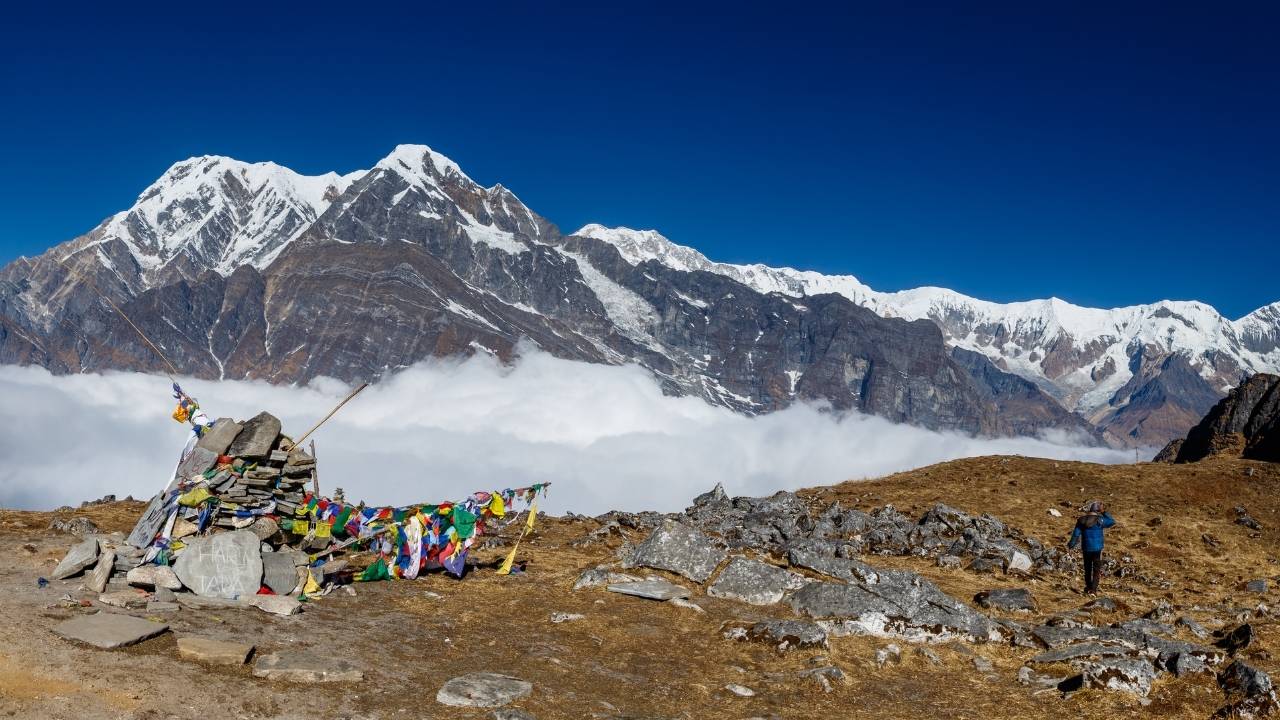
Most itineraries take 5 to 7 days, making it a practical choice for travelers who want substantial Himalayan scenery within a limited schedule. November is particularly well suited to this compact itinerary because the trek combines relatively manageable daily distances with increasingly impressive mountain landscapes as the elevation rises.
|
Trek Detail |
November Overview |
|
Duration |
5 to 7 days, depending on the starting point, walking pace, and itinerary |
|
Starting Point |
Kande, Phedi, or Dhampus, depending on the selected itinerary; the trek is generally accessed from Pokhara |
|
Highest Point |
Mardi Himal Base Camp (4,500m/ 14,763ft) |
|
Typical Walking Time |
Around 4 to 7 hours per day, with longer walking periods on the High Camp and Mardi Base Camp sections |
|
Main Route |
Kande/Phedi → Australian Camp/Dhampus → Forest Camp → Low Camp → High Camp → Mardi Himal Base Camp → Siding/Lumre → Pokhara |
|
Landscape |
Terraced hills, rhododendron and oak forests, alpine grasslands, ridgelines, rocky slopes, and high Himalayan terrain |
|
Cultural Experience |
Gurung communities, traditional mountain villages, local teahouses, agricultural landscapes, and Himalayan village life |
|
Major Attractions |
Mardi Himal Base Camp, High Camp, Mardi Himal, Machhapuchhre, Annapurna South, Hiunchuli, Forest Camp, and the panoramic high ridge |
The defining feature of the trek is the rapid change in scenery over a relatively short distance. The lower section feels distinctly Himalayan foothill country, with cultivated slopes and forested trails, while the upper route becomes increasingly open and rugged. From High Camp and the ridge toward Base Camp, the scale of the Annapurna landscape becomes much more apparent, with Machhapuchhre standing particularly prominently across the valley.
The November experience also benefits from the contrast between the lively lower settlements and the quieter high-altitude sections. Trekkers spend the early part of the journey moving through inhabited hills and forests before entering a more exposed mountain environment where the focus shifts almost entirely toward the surrounding peaks, ridgelines, and changing light across the Annapurna range.
Mardi Himal Weather Conditions in November
November is one of the most favorable months for weather on the Mardi Himal Trek, with generally dry conditions, clear mornings, and good mountain visibility. The lower sections around Pokhara and the forested trail remain relatively comfortable during the day, while temperatures drop steadily as you climb toward Low Camp and High Camp. Above 3,500 meters, cold mornings, freezing nights, and occasional frost become normal parts of the trek.
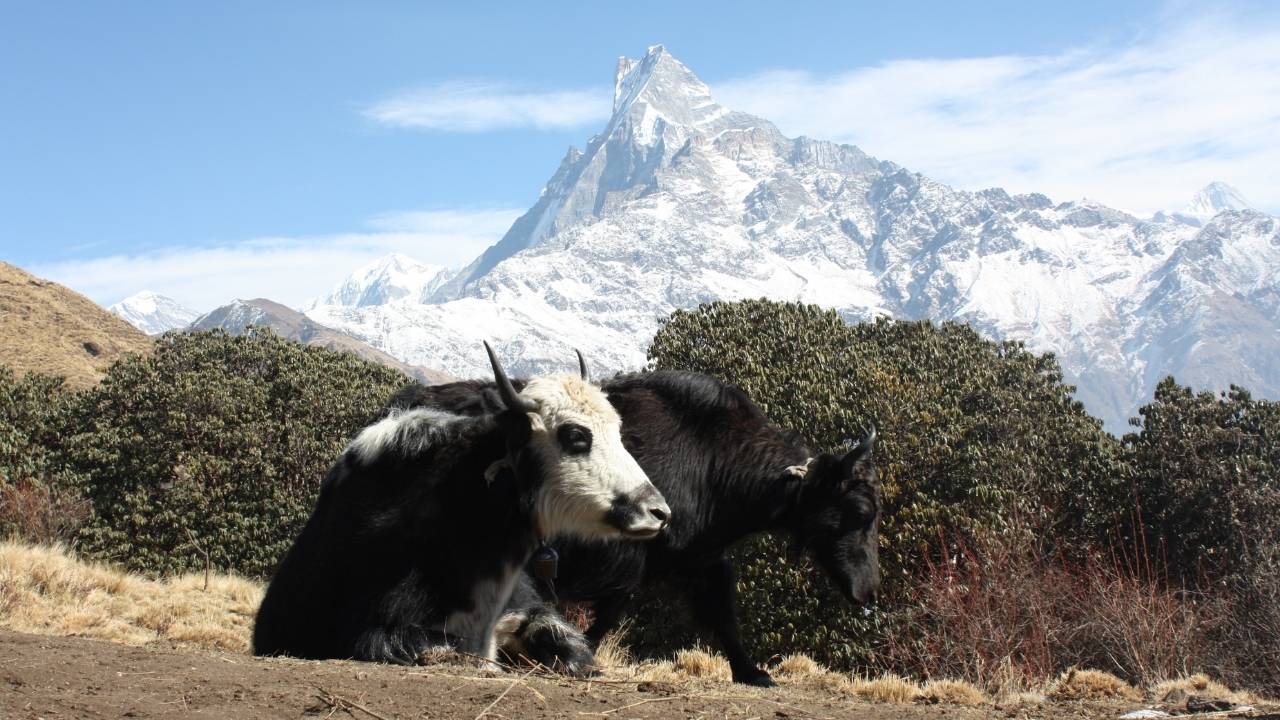
The reward for the colder conditions is generally excellent mountain visibility. Post-monsoon moisture is low, and clear mornings can open wide views toward Machhapuchhre, Annapurna South, Hiunchuli, and Mardi Himal. November is also among the driest periods of the year around the route; long spells of rain are uncommon, although an isolated weather system can still bring cloud, wind, or snow to the upper elevations. Climate records for the broader Mardi Himal area show very little November precipitation compared with the monsoon months.
|
Location |
Approx. November Temperature |
|
Pokhara/ Lower Trail (822m/ 2,6696ft) |
Around 18°C to 24°C during the day |
|
Forest Camp (2,600m/ 8,530ft) |
Around 10°C to 16°C |
|
High Camp (3,550m/ 11,646ft) |
Around 3°C to 8°C during the day; below 0°C at night |
|
Mardi Himal Base Camp/ Upper Ridge (4,500m/ 14,763ft) |
Around 0°C to 5°C during the day; around -7°C to -12°C at night |
These are approximate planning ranges rather than fixed forecasts. Sunshine, wind, altitude, and the timing of the trek within November can produce noticeable differences.
Clear skies are one of November's biggest advantages on the Mardi Himal route. With the monsoon largely finished, the atmosphere is generally dry, and the mountains are often clearly visible, particularly during the early morning. Rain is generally limited in November, so prolonged wet or muddy trail conditions are uncommon. At higher elevations, however, the weather is already approaching winter, and frost, strong winds, and occasional snowfall are possible, particularly around High Camp and the upper ridge later in the month.
Major Highlights of November Mardi Himal Trek
November gives the Mardi Himal Trek a distinctive late-autumn character. The monsoon has cleared, the mountains are generally visible, the lower hills still carry the colors of autumn, and the upper trail is beginning to feel distinctly wintry. Rather than simply being a “good month” for the trek, November changes what you experience on the route, from the appearance of the landscape to the conditions on the high ridge and the atmosphere around High Camp.
-
Crisp Views of Machhapuchhre and the Annapurna Range
The clearest reason to trek Mardi Himal in November is the quality of the mountain views. The route gradually opens toward Machhapuchhre, Annapurna South, Hiunchuli, and Mardi Himal itself, and the dry post-monsoon atmosphere often provides excellent visibility. The difference is particularly noticeable above Low Camp, where the forest begins to open, and the trail reaches broader ridges. On clear November mornings, the peaks can remain sharply defined from the trail rather than disappearing behind the afternoon cloud that is more common during wetter months.
-
The Mardi Himal Ridge at Its Best
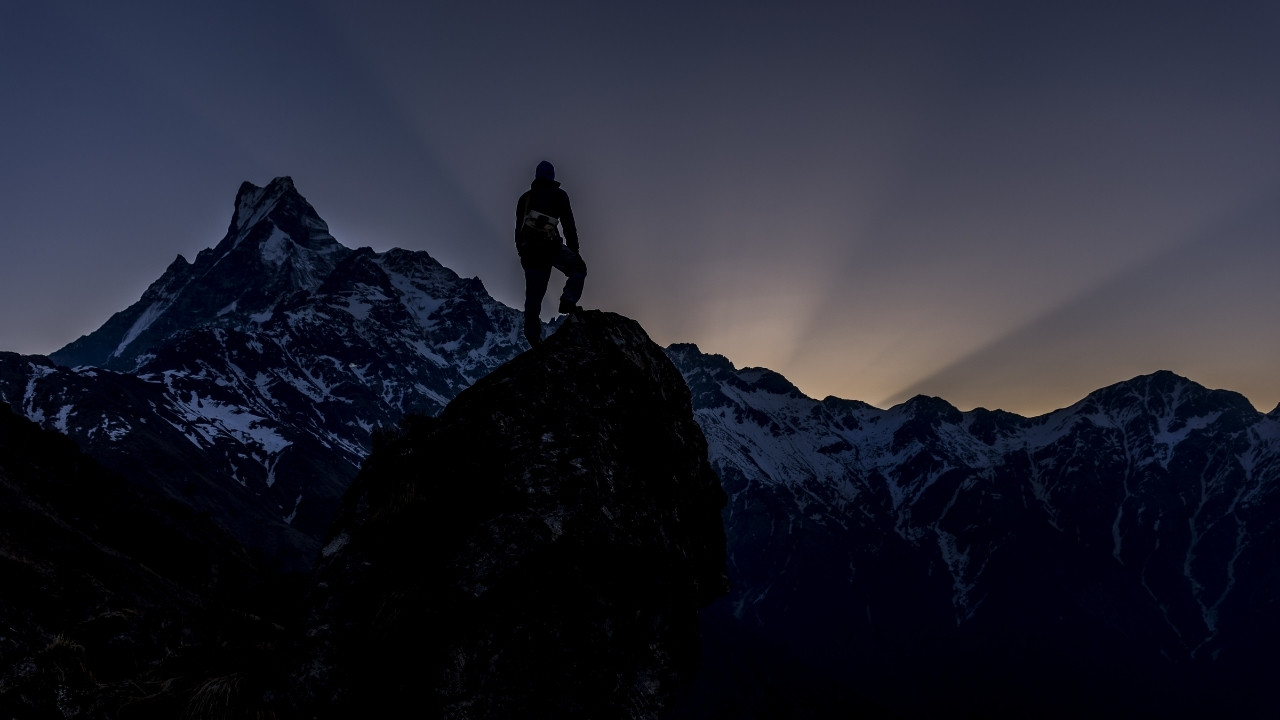
The ridge above High Camp is the part of the trek that November conditions suit particularly well. With little rain, the trail is generally dry, while clear weather allows trekkers to appreciate the exposed landscape and uninterrupted mountain panorama. The trade-off is temperature. By November, this section is cold, especially before sunrise, and wind can make the exposed ridge feel considerably colder. That combination of dry trail, open terrain, sharp visibility, and genuine alpine cold gives the upper Mardi Himal route its November character.
-
Autumn Colors on the Lower Trail
November is not only about snow-covered peaks. The lower sections of Mardi Himal still retain the seasonal character of autumn, with rhododendron and oak forests, dry trails, terraced hills, and golden-brown vegetation creating a noticeable contrast with the colder upper elevations. As you climb, the landscape changes progressively rather than all at once. The trek therefore gives you two very different visual experiences in the same journey: autumn-colored forests below and increasingly stark alpine terrain above.
-
Dry Trails Make the Forest and Ridge Sections Easier to Enjoy
November's limited rainfall is a practical advantage throughout the trek. The forest sections are generally much less muddy than during the monsoon, and the upper trail is usually firmer underfoot. That does not mean the entire route is guaranteed to remain dry. Frost, ice, or occasional snow can appear around High Camp and the upper ridge, particularly later in the month. Still, compared with the wet-season experience, November offers substantially better conditions for walking and enjoying the route itself.
-
A Noticeable Shift From Autumn Into Winter
One of the interesting things about trekking Mardi Himal during November is that early and late November can feel quite different. Earlier in the month, the lower and middle sections can still feel relatively mild during the day, while the upper camps are cold. By late November, freezing mornings and colder nights become increasingly prominent, and the upper landscape can begin to take on a more winter-like appearance. For trekkers who enjoy seasonal change, this makes November particularly interesting. You are walking through the transition between autumn trekking conditions and the approaching Himalayan winter rather than experiencing one uniform type of weather throughout the journey.
-
A Quieter Feel as November Progresses
Mardi Himal remains a popular autumn trek, particularly in early November, so the route should not be expected to be empty. However, trekking activity generally becomes less intense as the month moves toward winter. Later November can therefore bring a more relaxed atmosphere around Forest Camp, Low Camp, High Camp, and the teahouses, while still retaining many of the clear-weather advantages of the autumn season. For trekkers who prefer some breathing room without giving up the established November trekking conditions, this gradual reduction in trail traffic is an added benefit.
-
Strong Value for Trekkers Who Want Scenery Rather Than Mileage
Mardi Himal does not require covering enormous distances each day to produce a rewarding experience. The value comes from how quickly the landscape changes and how much mountain scenery is concentrated into a short route. In November, that value becomes even stronger because the conditions are generally favorable for enjoying the upper sections. For a relatively short trek, you get traditional villages, rhododendron forests, alpine terrain, a 4,500-meter destination, and some of the closest mountain views available from a short Annapurna itinerary.
Is Mardi Himal Trek Worth It in November?
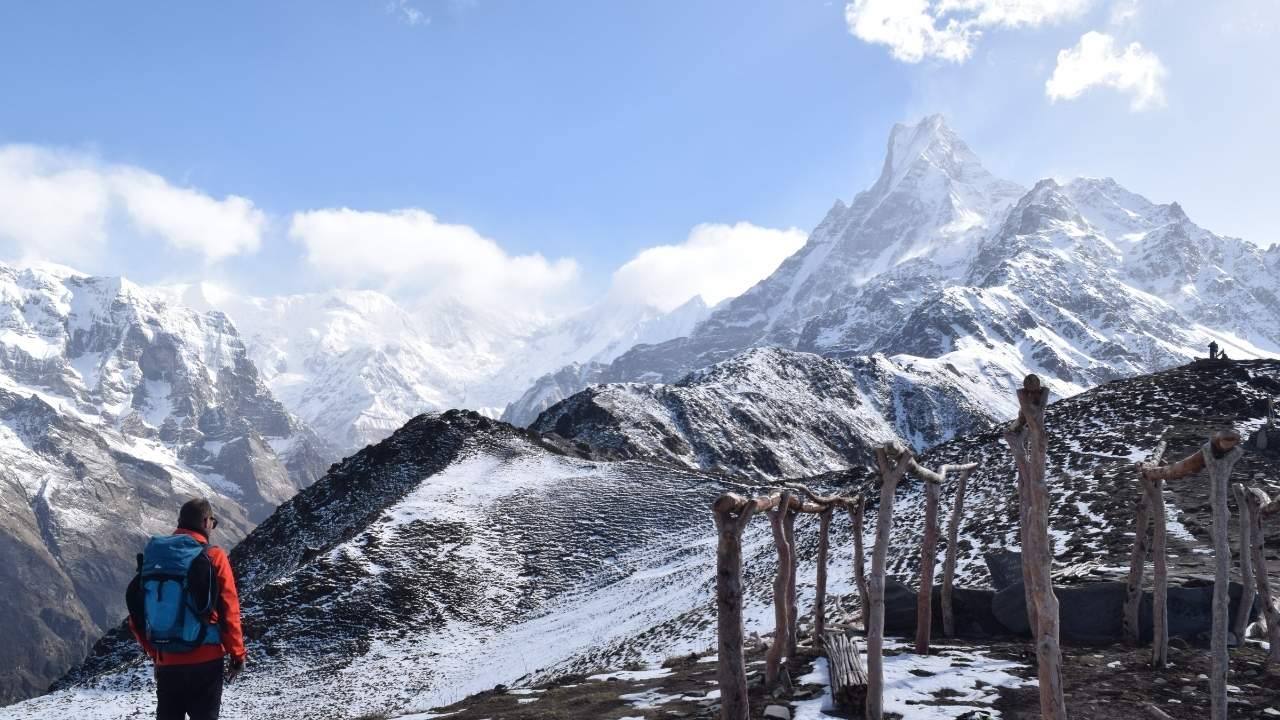
Yes, the Mardi Himal Trek is worth doing in November, particularly if your priority is clear mountain scenery and reliable trekking conditions rather than warm temperatures. November sits in the post-monsoon period when the route is generally dry, the skies are often clear, and the Annapurna peaks are at their most visible. For Mardi Himal, where much of the reward comes from the high ridge and close views of Machhapuchhre, these conditions make a meaningful difference.
The strongest advantage is the combination of dry trails and excellent visibility. The lower route through the forest is usually easier to walk than during the wet season, while the higher sections around Low Camp, High Camp, and the upper ridge can offer broad views of Mardi Himal, Machhapuchhre, Annapurna South, and Hiunchuli. November also gives the landscape a distinct late-autumn appearance, with the lower forests and hills contrasting against the increasingly cold and open terrain above.
Another advantage is that the route gradually becomes less busy as November progresses. Early November can still have substantial autumn trekking activity, while the latter part of the month generally feels quieter. You should not expect an empty trail, but fewer trekkers can make the high camps, viewpoints, and teahouses feel less congested.
The main compromise is cold at altitude. High Camp can fall below freezing at night, and the pre-dawn climb toward the upper viewpoint can be particularly cold, with wind making the exposed ridge feel colder still. Later November becomes progressively more wintry, and frost or occasional snow is possible at the highest sections.
Difficulty of Mardi Himal Trek in November
The Mardi Himal Trek is a moderate Himalayan trek, but its difficulty comes from the way the trail climbs rather than from technical climbing. The route repeatedly gains elevation through steep forest paths, stone steps, and uneven mountain trails before reaching the exposed ridge above High Camp. The highest point, Mardi Himal Base Camp at around 4,500 meters (14,763 feet), is high enough for altitude to affect your walking pace, particularly during the final ascent.
The lower part of the trek is physically more forgiving, while the section from Low Camp to High Camp and onward toward Mardi Himal Base Camp demands considerably more effort. The trail becomes steeper and less sheltered as the forest thins out, and the ridge sections require careful footing on rocky and uneven ground. The Mardi Himal Base Camp excursion is usually the most demanding part of the trek because you are walking at much higher elevation while dealing with a more exposed landscape.
November changes the nature of that effort without making the route technically difficult. Dry trails are a major advantage, particularly on the forested sections where wet-season mud and slippery ground are much less of a concern. At the same time, cold temperatures become increasingly noticeable as you climb. Around High Camp and the upper ridge, freezing mornings, frost, and strong winds can make the first hours of walking uncomfortable, while occasional ice or snow later in November may require more cautious footing.
Altitude is another factor to respect, even though Mardi Himal does not reach the extreme elevations of longer Himalayan treks. The jump from the lower villages to High Camp at around 3,550 meters (11,646 feet) happens over a relatively short itinerary, so some trekkers may notice headaches, reduced appetite, unusual tiredness, or slower recovery after steep climbs. Keeping a controlled pace and allowing your body to adjust is more useful than trying to maintain a fast trekking speed.
Training and Preparation
You do not need extensive trekking experience for the Mardi Himal Trek, but your legs should be ready for repeated uphill walking. Start preparing around 6 to 8 weeks before the trek, with 3 to 4 training sessions each week. Brisk walking, stair climbing, uphill hiking, cycling, and jogging can build the cardiovascular fitness needed for the route, while squats, lunges, step-ups, calf raises, and core exercises help prepare your legs for steep sections and uneven ground.
Longer walks become increasingly useful during the final few weeks of preparation. Try to include 3 to 6 hour hikes on consecutive days, preferably on routes with regular elevation gain and descent. Once your fitness improves, carry a daypack similar to what you expect to use during the trek. This is particularly useful for Mardi Himal because the physical challenge is concentrated around the climbs toward Low Camp, High Camp, and the upper ridge, rather than being spread evenly across a long trekking itinerary.
Your preparation should also account for the change in conditions above the forest line. November can be sunny and comfortable during the day but distinctly cold at High Camp and on the early-morning ridge walk. Make sure your trekking boots are already broken in, and test your base layers, fleece or insulation, gloves, warm hat, and down jacket before departure. Good grip on your footwear is particularly important for the rocky and potentially frosty sections above High Camp.
Altitude preparation is equally important. Mardi Himal reaches around 4,500 meters at base camp, so fitness alone does not prevent altitude-related problems. Keep your pace controlled as you gain elevation, drink regularly, eat enough even when your appetite decreases, and give your body time to adjust. Headache, dizziness, nausea, unusual weakness, or worsening breathlessness should not be ignored, particularly around High Camp and during the base camp excursion.
**Your Goal Is Simple: Arrive prepared for sustained uphill walking, recover well between trekking days, and stay comfortable through the coldest sections of the November route**
Packing Suggestions for Mardi Himal Trek in November
Mardi Himal in November does not require expedition-level equipment, but the difference between the lower trail and the exposed upper ridge makes smart packing more important than simply packing warm clothes. You may start the day comfortably in the foothills and finish it in freezing conditions around High Camp. Pack for changing temperatures, steep and uneven terrain, cold nights, strong sun, and the possibility of frost or light snow at the highest sections.
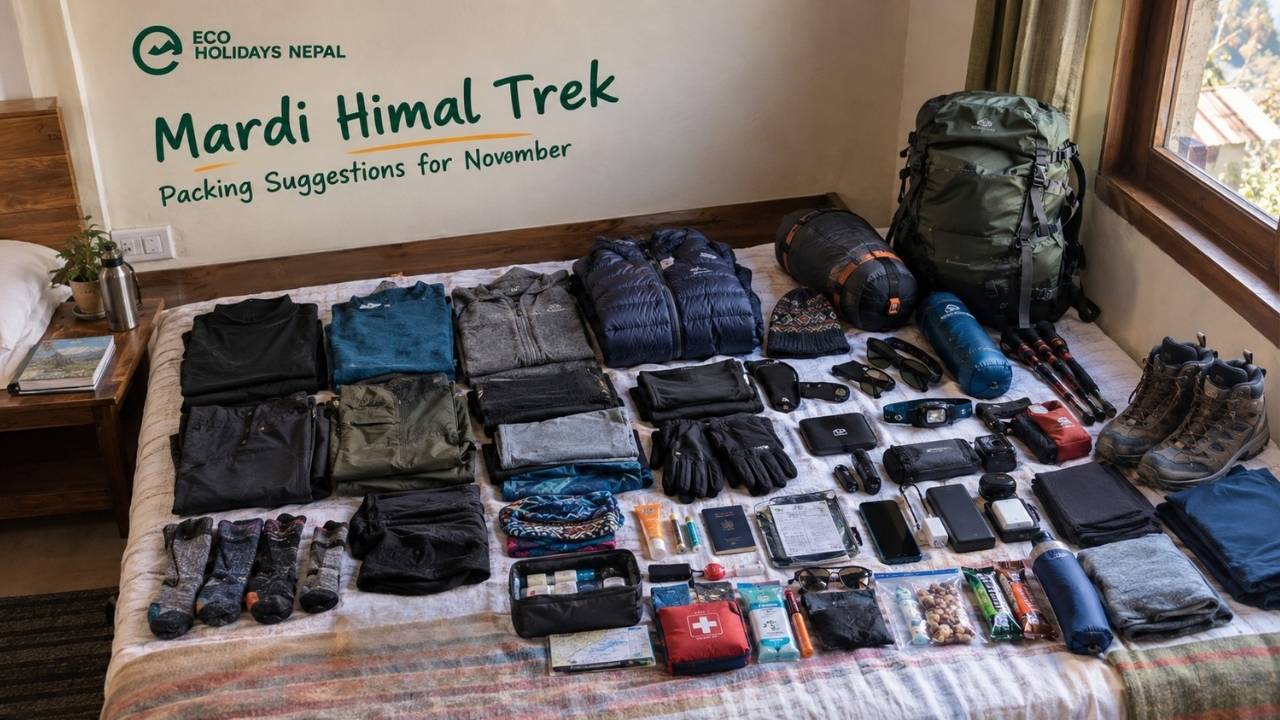
What to Wear on the Trail
-
Moisture-wicking T-shirts
-
Long-sleeve trekking shirts
-
Thermal base layer for colder days
-
Fleece or lightweight insulating layer
-
Down or synthetic insulated jacket
-
Waterproof and windproof shell
-
Trekking trousers
-
Thermal bottoms for High Camp
-
Warm woolen or fleece hat
-
Insulated gloves
-
Buff or neck gaiter
-
Comfortable clothes for sleeping
Gear for the High Camp and Ridge
-
Warm down jacket for pre-dawn starts
-
Good-quality insulated gloves
-
Headlamp with spare batteries
-
Warm hat or beanie
-
Sunglasses with strong UV protection
-
Sunscreen and SPF lip balm
-
Trekking poles for the steep ridge sections
-
Lightweight gaiters if frost or snow is expected
-
Hand warmers, optional for particularly cold mornings
Your Boots Matter More Than Extra Clothing
-
Well-broken-in trekking boots with good traction
-
3 to 4 pairs of moisture-wicking and trekking socks
-
Lightweight camp shoes or sandals
-
Blister plasters
-
Small foot-care kit
-
Gaiters if you prefer additional protection from mud, frost, or snow
Sleeping and Teahouse Comfort
-
Sleeping bag rated around -10°C to -15°C
-
Thermal sleepwear
-
Warm socks reserved for sleeping
-
Lightweight sleeping-bag liner, if needed
-
Small inflatable or compressible pillow, optional
-
Earplugs for shared teahouse rooms
**Note: Eco Holidays Nepal provides a sleeping bag, down jacket, duffel bag, and walking poles for the Mardi Himal Trek, so confirm the current equipment arrangement before purchasing or carrying these items yourself**
Water, Snacks and Trail Essentials
-
Reusable water bottles or hydration bladder
-
Water purification tablets, drops, or filter
-
Electrolyte sachets
-
Energy bars
-
Nuts and trail mix
-
Chocolate or other compact high-energy snacks
-
Small reusable snack bag
-
Water bottle insulation or cover for freezing nights
Personal Health and Hygiene Kit
-
Personal prescription medicines
-
Basic first-aid supplies
-
Blister treatment
-
Pain reliever
-
Hand sanitizer
-
Wet wipes
-
Toilet paper or tissues
-
Quick-drying towel
-
Lip balm and moisturizer
-
Small rubbish bag
Electronics and Important Documents
-
Passport
-
Required trekking permits
-
Travel insurance documents covering trekking and emergency evacuation
-
Nepali cash for personal expenses
-
Mobile phone
-
Charging cable
-
Power bank
-
Camera and spare battery
-
Universal adapter if needed
-
Waterproof pouch or dry bag for electronics
-
Offline map and trekking information
Tips for November Mardi Himal Trekking
November is one of the better periods for Mardi Himal, but the trek becomes noticeably colder once you leave the forest and climb toward High Camp. The most useful approach is to plan around the early-morning ridge walk, changing temperatures, altitude, and the more exposed upper trail rather than treating November as uniformly mild and dry.
-
Plan the High Camp Morning Carefully: The walk toward Mardi Himal Base Camp and the upper viewpoint is usually started early, when temperatures can be below freezing. Have your headlamp, warm layers, gloves, water, and snacks ready the night before so you are not searching through your luggage before departure.
-
Keep Your Pace Comfortable on the Steeper Sections: The climbs from Low Camp toward High Camp can feel considerably harder than the lower forest trail. Short, regular breaks are more effective than frequent stops caused by pushing too hard on the uphill sections.
-
Do Not Underestimate High Camp at 3,550 meters (11,646 feet): The elevation is high enough for altitude-related symptoms to occur, particularly because the trek gains elevation within a relatively short itinerary. Headache, dizziness, nausea, or unusual weakness should be taken seriously rather than dismissed as normal tiredness.
-
Use Trekking Poles on the Ridge: Poles are particularly useful where the trail becomes rocky, narrow, or uneven above High Camp. They also reduce strain on your knees during the descent, which can be surprisingly demanding after the Base Camp excursion.
-
Keep an Extra Layer in Your Daypack: November mornings can be much colder than the conditions you experience during the afternoon. Carry your insulating jacket and gloves with you even when the lower trail feels warm at the beginning of the day.
-
Take Advantage of Clear Morning Visibility: The best mountain views are often found early in the day. Clear conditions around Machhapuchhre, Mardi Himal, Annapurna South, and Hiunchuli can deteriorate later, so avoid unnecessarily delaying your departure from High Camp.
-
Protect Your Water From Freezing: At the higher camps, overnight temperatures can fall below 0°C. Keep your bottles inside your sleeping bag or insulated overnight, particularly during the colder latter part of November.
-
Carry Sun Protection Even in Freezing Weather: The combination of high elevation, clear skies, and exposed ridges means strong UV exposure is possible. Sunglasses, sunscreen, and SPF lip balm remain essential even when you are wearing several layers against the cold.
-
Allow More Time for the Descent: Reaching the upper ridge is only half of the demanding section. Rocky terrain, tired legs, and steep downhill stretches can slow the return from the Base Camp area, so do not plan the day's schedule too tightly.
-
Expect Conditions to Change Through November: Early November generally retains more of the established autumn character, while late November brings colder nights and a greater possibility of frost or light snow at higher elevations. Pack accordingly if your trek falls toward the end of the month.
-
Keep Your Itinerary Flexible Enough for the Mountain: A short trek can make every day feel important, but forcing the schedule when weather, altitude, or fatigue becomes an issue is rarely worthwhile. A slower ascent is preferable to turning the upper section into an unnecessarily exhausting day.