

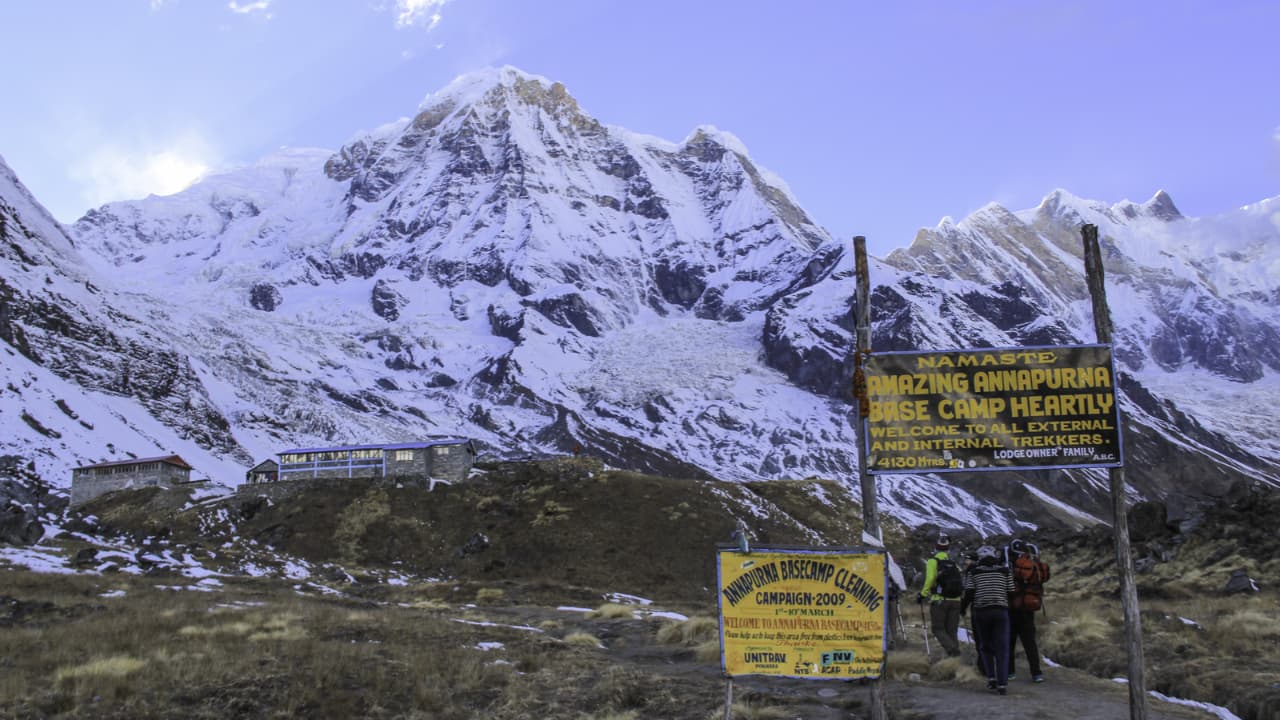
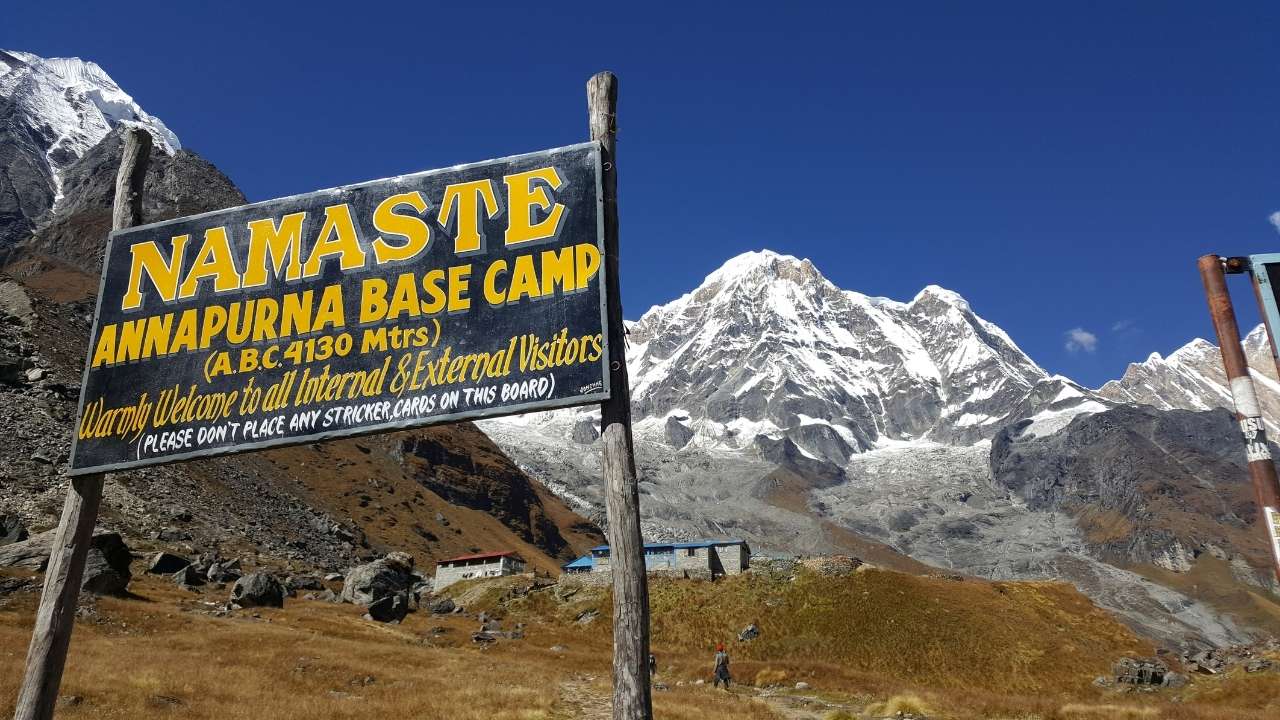
Annapurna Base Camp sits at an elevation of 4,130 meters (13,549 feet) above sea level, deep within the Annapurna Sanctuary in Nepal's north-central Himalayas. Surrounded by towering Himalayan peaks, including Annapurna I (8,091 meters), Annapurna South (7,219 meters), Hiunchuli (6,441 meters), and Machhapuchhre (6,993 meters), the base camp occupies a remarkable position in the heart of one of Nepal's most impressive mountain landscapes.
Unlike viewpoints reached through a short climb, Annapurna Base Camp is the destination of a multi-day trek through traditional mountain villages, terraced hillsides, rhododendron forests, and increasingly rugged alpine terrain. The trail gradually climbs from lower elevations to Machhapuchhre Base Camp at approximately 3,700 meters before reaching Annapurna Base Camp at 4,130 meters. This steady change in elevation is an important part of the trekking experience, influencing walking pace, physical effort, and the body's ability to adjust to thinner air.
Understanding the height of Annapurna Base Camp also helps trekkers prepare for the conditions they may encounter along the route. Although its elevation is lower than Everest Base Camp (5,364 meters), 4,130 meters is high enough for altitude sickness to become a concern. In this guide, we explore the exact height of Annapurna Base Camp in meters and feet, elevation changes along the trekking route, cumulative altitude gain, surrounding mountain peaks, and the effects of high altitude on trekkers.
Annapurna Base Camp Height in Meters and Feet
Annapurna Base Camp stands at 4,130 meters (13,549 feet) above sea level. This elevation refers to the base camp itself, not the summit of Annapurna I, the 8,091-meter mountain that dominates the surrounding landscape. The elevation is measured from mean sea level, the standard reference used to describe the height of geographical locations and mountain destinations. Located in the Annapurna Sanctuary, within Kaski District of Gandaki Province, the base camp lies approximately 40 kilometers north of Pokhara. Its geographical coordinates are approximately 28.5306° N latitude and 83.8781° E longitude.
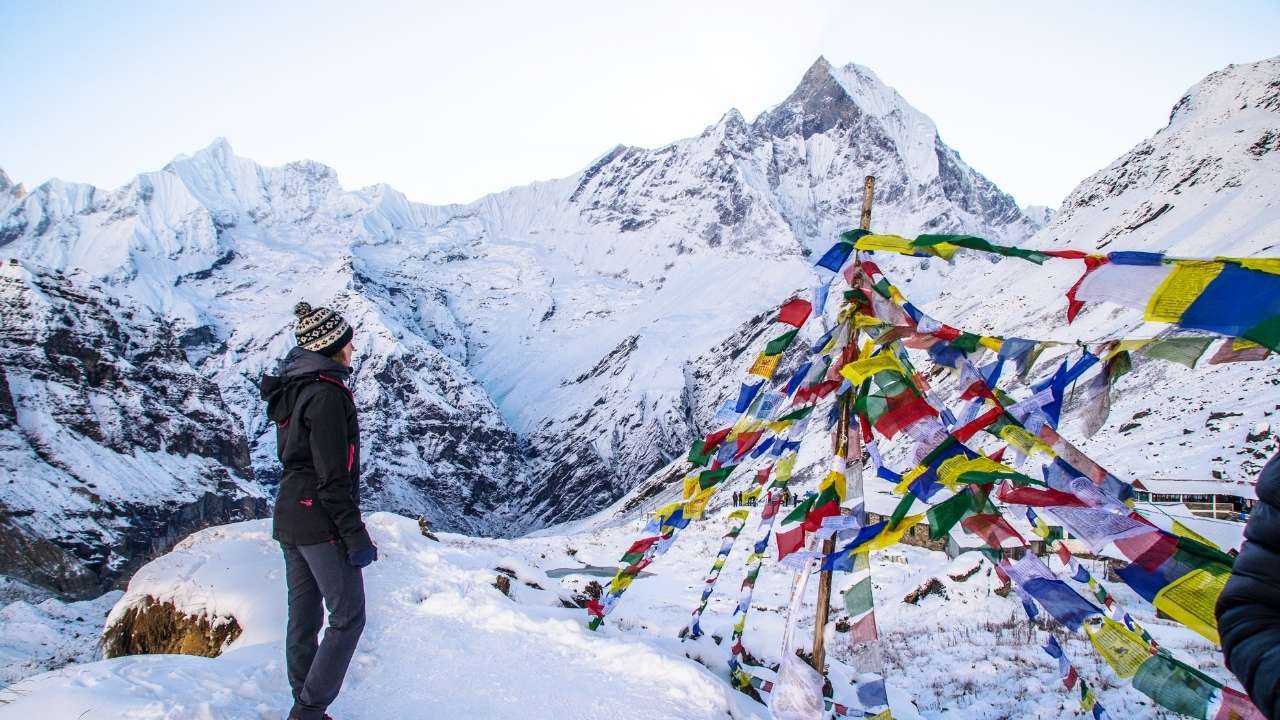
The location sits at the head of the Modi Khola valley, inside a high glacial basin enclosed by the Annapurna mountain range. The Annapurna Sanctuary forms a natural mountain amphitheater, with towering Himalayan peaks surrounding the basin. Annapurna I (8,091 meters), Annapurna South (7,219 meters), Hiunchuli (6,441 meters), and Machhapuchhre (6,993 meters) are among the prominent mountains visible from the base camp. This geographical setting makes the destination distinctive: trekkers reach 4,130 meters and find themselves surrounded by some of the most recognizable peaks in the Nepalese Himalayas.
Annapurna Base Camp Height vs. Annapurna I Height
The elevation of Annapurna Base Camp should not be confused with the height of Annapurna I. Although the two share the same mountain name, they represent different geographical points.
-
Annapurna Base Camp: 4,130 meters (13,549 feet)
-
Annapurna I summit: 8,091 meters (26,545 feet)
Annapurna I rises 8,091 meters above sea level and is the world's tenth-highest mountain. Its south face towers above the Annapurna Sanctuary, creating the dramatic mountain backdrop visible from the base camp. Reaching Annapurna Base Camp does not involve climbing Annapurna I; the trekking route leads into the sanctuary and ends at the established base camp below the mountain.
Elevation of Annapurna Base Camp Trek: Village-by-Village Altitude
The Annapurna Base Camp Trek follows a gradual ascent from the lower foothills of the Annapurna region into the high-altitude Annapurna Sanctuary. Depending on the starting point and route variation, trekkers begin around 1,000 to 1,200 meters before passing through traditional Gurung villages, forest settlements, and alpine trekking stops on their way to the base camp at 4,130 meters.
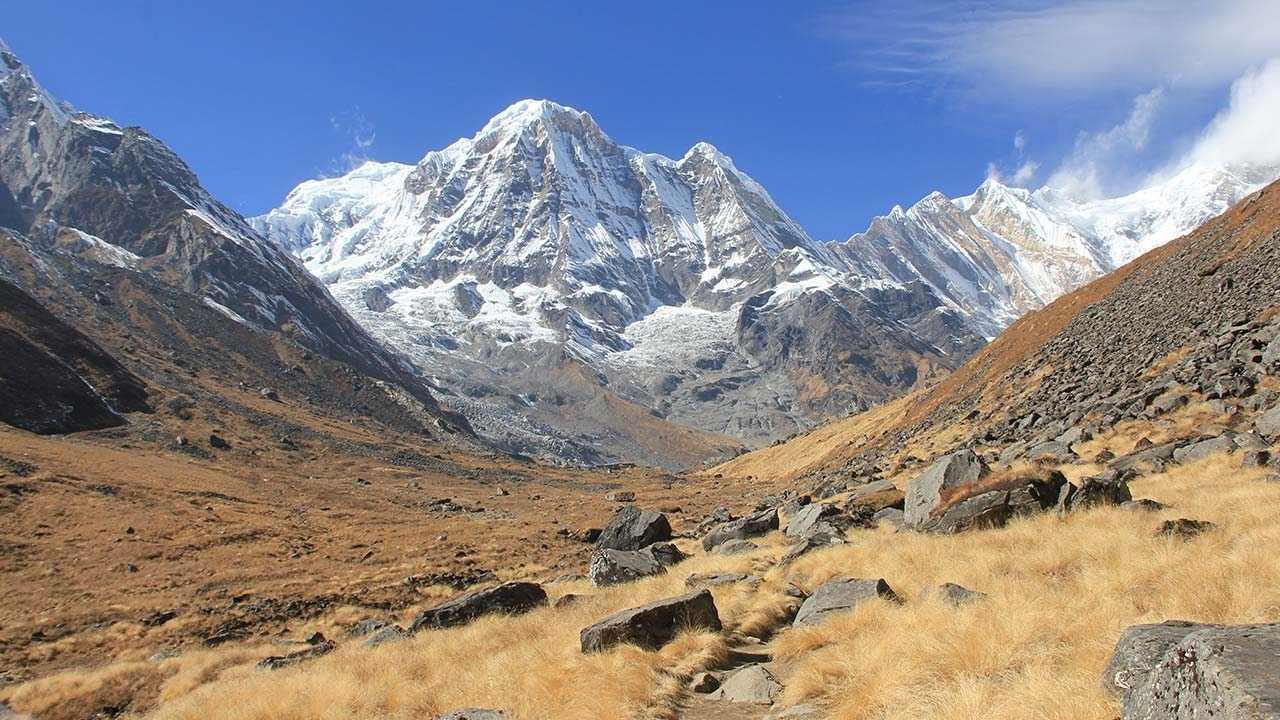
The trail passes through several distinct elevation zones. Ghandruk and Chhomrong are among the major villages along the southern approach, while Bamboo, Dovan, Himalaya, and Deurali mark the gradual transition into higher mountain terrain. Machhapuchhre Base Camp at 3,700 meters is the final major overnight stop before the short ascent to Annapurna Base Camp. The following table shows the approximate elevations of the major settlements and trekking stops along the route.
|
Trekking Destination |
Elevation (meters) |
Elevation (feet) |
|
Nayapul |
1,070m |
3,510ft |
|
Syauli Bazaar |
1,170m |
3,839ft |
|
Ghandruk |
2,012m |
6,601ft |
|
Chhomrong |
2,170m |
7,119ft |
|
Bamboo |
2,310m |
7,579ft |
|
Dovan |
2,600m |
8,530ft |
|
Himalaya |
2,920m |
9,580ft |
|
Deurali |
3,230m |
10,597ft |
|
Machhapuchhre Base Camp |
3,700m |
12,139ft |
|
Annapurna Base Camp |
4,130m |
13,549ft |
**Note: Annapurna Base Camp elevations are approximate. The actual trekking route, trailhead, overnight stops, and recorded elevations can vary slightly depending on the itinerary**
How Much Elevation Do You Gain on the Annapurna Base Camp Trek?
The total elevation gain on the Annapurna Base Camp Trek depends on where you begin walking and how much uphill and downhill terrain your chosen route covers. Using the Eco Holidays Nepal itinerary, the trek starts at Syauli Bazaar (1,170 meters) and reaches Annapurna Base Camp (4,130 meters), giving a net elevation gain of 2,960 meters (9,711 feet). However, this figure represents the difference between the starting point and the highest destination, not the total amount of uphill climbing.
Annapurna Base Camp Elevation During Trek: Starting and Highest Elevations
The starting elevation varies depending on the chosen trailhead and road access. Traditional itineraries may begin trekking from Nayapul (1,070 meters), while modern itineraries often use road access to reach Syauli Bazaar (1,170 meters), Ghandruk, or other higher starting points.
|
Trekking Point |
Elevation |
|
Nayapul (traditional starting point) |
1,070 meters |
|
Syauli Bazaar |
1,170 meters |
|
Ghandruk |
2,012 meters |
|
Chhomrong |
2,170 meters |
|
Machhapuchhre Base Camp |
3,700 meters |
|
Annapurna Base Camp |
4,130 meters |
Starting from Nayapul gives a net elevation difference of approximately 3,060 meters (10,039 feet) to Annapurna Base Camp. From Syauli Bazaar, the difference is 2,960 meters (9,711 feet). These figures describe net altitude gain rather than cumulative climbing. An exact cumulative ascent figure requires a defined route and elevation profile, since variations in trailheads, side trips, and daily walking routes affect the total.
What Is the Highest Sleeping Altitude on Annapurna Base Camp Trek?
The highest sleeping altitude on the standard Annapurna Base Camp Trek is 4,130 meters (13,549 feet), at Annapurna Base Camp itself. Unlike some trekking destinations where visitors reach a high viewpoint and descend to sleep at a lower settlement, most standard ABC itineraries include an overnight stay at the base camp.
Before reaching Annapurna Base Camp, trekkers generally spend the night at Machhapuchhre Base Camp (3,700 meters), approximately 430 meters below their final destination. After reaching Annapurna Base Camp, they typically spend the night in a mountain teahouse before beginning the descent toward Bamboo.
Sleeping at 4,130 meters is particularly relevant when considering altitude acclimatization. The body continues adjusting to reduced oxygen availability while resting, and sleeping at higher elevations can place additional physiological stress on trekkers. Following a gradual ascent, maintaining a sensible walking pace, and recognizing early symptoms of altitude sickness are therefore important parts of the journey.
Annapurna Base Camp Altitude Sickness: Is 4,130 Meters Dangerous?
Annapurna Base Camp, at 4,130 meters (13,549 feet), is high enough for trekkers to experience altitude sickness. However, reaching this elevation does not automatically mean you will become ill. The risk depends on several factors, particularly how quickly you ascend, your previous experience at high altitude, and how well your body adjusts to reduced oxygen availability.
As elevation increases, atmospheric pressure decreases, meaning less oxygen is available with each breath. Your body responds by increasing breathing and gradually making physiological adjustments to maintain oxygen supply. This process, known as acclimatization, takes time. If you ascend faster than your body can adapt, you may develop Acute Mountain Sickness (AMS), the most common form of altitude illness.
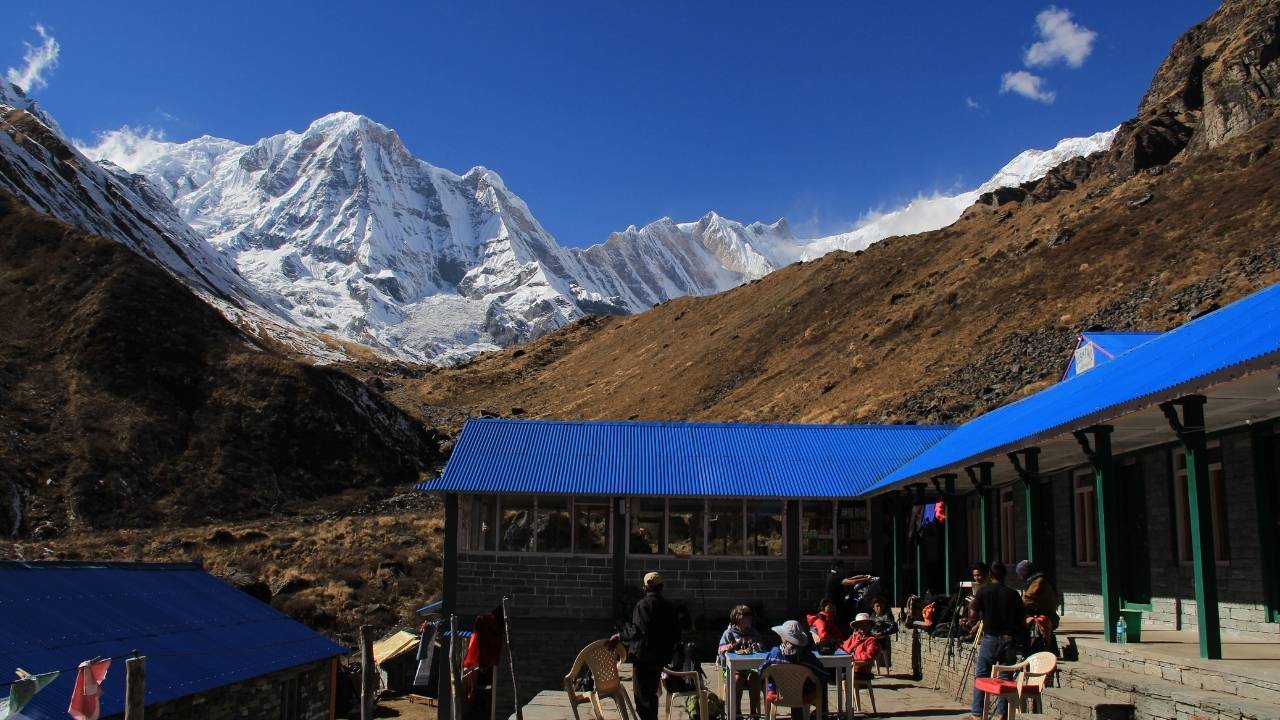
The Annapurna Base Camp route gradually climbs through Ghandruk, Chhomrong, Bamboo, Dovan, and Deurali before reaching Machhapuchhre Base Camp and Annapurna Base Camp. This progression provides opportunities for the body to adjust to increasing elevations. Nevertheless, altitude sickness can affect healthy, physically fit trekkers, so understanding its symptoms and knowing when to stop ascending are essential.
What Is Acute Mountain Sickness (AMS)?
Acute Mountain Sickness (AMS) is an altitude-related condition that can develop when someone ascends to a higher elevation without sufficient time to acclimatize. It commonly occurs above 2,500 meters (8,200 feet), although some people may experience symptoms at lower elevations.
AMS is particularly relevant to the Annapurna Base Camp Trek because much of the upper route takes place above 2,500 meters. Trekkers may begin noticing symptoms around Dovan, Himalaya, or Deurali, although the onset varies between individuals.
Common symptoms of AMS include:
-
Headache: Persistent headache that develops after ascending to a higher elevation.
-
Nausea: Feeling sick, reduced appetite, or occasionally vomiting.
-
Dizziness: Lightheadedness or difficulty maintaining balance.
-
Fatigue: Unusual tiredness or weakness beyond what would normally be expected from walking.
-
Difficulty Sleeping: Interrupted sleep or frequent waking during the night.
Headache accompanied by at least one other symptom, such as nausea, dizziness, or unusual fatigue, is a typical indicator of AMS following an ascent. Symptoms often appear within 2 to 12 hours of reaching a higher elevation, sometimes becoming noticeable during the first night.
Mild AMS does not necessarily require immediate evacuation, but it should never be ignored. Trekkers experiencing symptoms should stop ascending, rest at their current elevation, and inform their guide. If symptoms worsen or fail to improve, descending to a lower elevation is necessary.
How to Prevent Altitude Sickness During the Annapurna Base Camp Trek?
Gradual ascent is one of the most effective ways to reduce the risk of altitude sickness. The objective is to give your body enough time to adjust as your sleeping elevation increases. A few practical precautions can make a significant difference:
-
Follow a gradual trekking itinerary: Avoid rushing through the upper sections of the Annapurna Base Camp route. Once above 3,000 meters, established altitude-medicine guidance recommends increasing sleeping elevation by no more than approximately 500 meters per day, with an additional acclimatization day for every 1,000 meters of sleeping-altitude gain where practical.
-
Monitor your symptoms: Pay attention to headaches, nausea, dizziness, and unusual fatigue. Inform your trekking guide as soon as symptoms develop rather than waiting until they become severe.
-
Maintain adequate fluid intake: Drink regularly throughout the day to replace fluids lost through breathing and physical exertion. Avoid excessive water consumption, as overhydration can also be harmful.
-
Avoid alcohol during acclimatization: Alcohol can interfere with sleep and worsen some effects of high altitude. Avoiding it during the initial days at higher elevations is a sensible precaution.
-
Maintain a comfortable walking pace: Allow enough time to complete each trekking day without excessive physical exertion. A slower, consistent pace is generally more suitable for adjusting to increasing elevations than trying to reach each destination as quickly as possible.
-
Discuss preventive medication with a doctor: Acetazolamide (commonly known by the brand name Diamox) can help accelerate acclimatization and reduce the likelihood of AMS. However, it is not necessary or appropriate for everyone. Discuss its suitability, dosage, and potential side effects with a healthcare professional before your trek.
**Note: Reaching Annapurna Base Camp at 4,130 meters is achievable for many trekkers, but altitude awareness remains essential. A gradual itinerary, sensible walking pace, early recognition of symptoms, and timely decisions to stop or descend are fundamental to managing the high-altitude conditions along the route**
How Does Annapurna Base Camp Height Compare With Other Nepal Trekking Destinations?
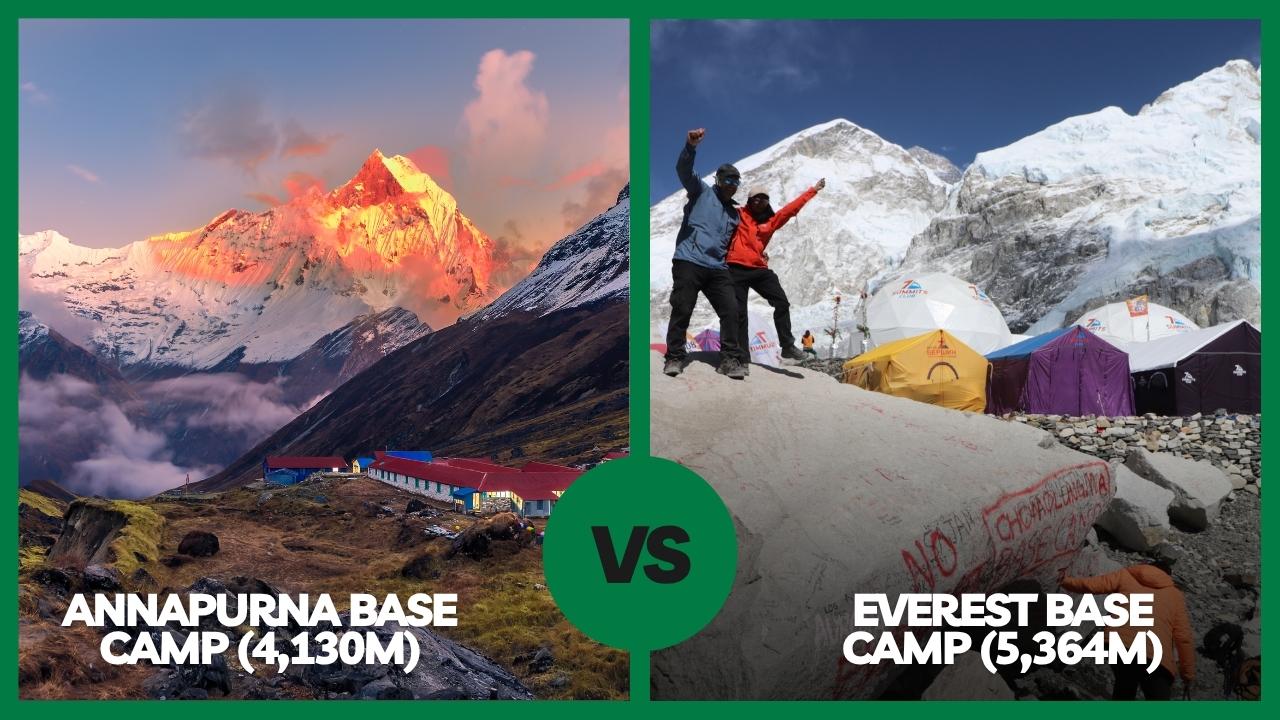
At 4,130 meters (13,549 feet), Annapurna Base Camp height sits below several popular high-altitude trekking destinations in Nepal, including Everest Base Camp, Gokyo Ri, and Kala Patthar. However, it is higher than Poon Hill and slightly lower than Mardi Himal Base Camp. Comparing these elevations helps trekkers understand where Annapurna Base Camp stands among Nepal's major Himalayan trekking destinations.
|
Trekking Destination |
Elevation (meters) |
Elevation (feet) |
|
3,210m |
10,531ft |
|
|
Annapurna Base Camp |
4,130m |
13,549ft |
|
4,500m |
14,763ft |
|
|
5,364m |
17,598ft |
|
|
5,357m |
17,575ft |
|
|
5,550m |
18,208ft |
Annapurna Base Camp is approximately 1,234 meters lower than Everest Base Camp and 1,420 meters below Kala Patthar, the popular viewpoint overlooking Mount Everest. It is also 1,227 meters lower than Gokyo Ri, another prominent high-altitude destination in the Everest region. Within the Annapurna region, Mardi Himal Base Camp reaches approximately 4,500 meters, making it 370 meters higher than Annapurna Base Camp. Poon Hill, at 3,210 meters, is considerably lower and is commonly visited as a shorter Himalayan trekking destination.
Although Annapurna Base Camp is lower than Everest Base Camp and other high-altitude viewpoints, 4,130 meters is still a significant elevation. Reduced oxygen availability can affect physical performance and trigger altitude sickness, particularly when trekkers ascend too quickly. Therefore, gradual ascent and awareness of altitude-related symptoms remain important throughout the Annapurna Base Camp Trek.
Does the Annapurna Base Camp Elevation Make the Trek Difficult?
The 4,130-meter elevation of Annapurna Base Camp adds to the physical demands of the trek, particularly during the final ascent from Machhapuchhre Base Camp. However, altitude is only one part of the challenge. Daily walking distance, steep stone staircases, repeated elevation changes, weather conditions, and individual fitness all influence how difficult the journey feels. Most itineraries involve approximately 5 to 7 hours of walking per day, although some longer days may take more time depending on the route and walking pace.
The trail combines gradual forest paths with steep uphill sections, stone steps, suspension bridges, and rocky mountain terrain. The ascent between Chhomrong and the upper settlements is particularly demanding because of repeated climbs and descents. Altitude becomes a more noticeable factor above 3,000 meters. As atmospheric pressure decreases, less oxygen is available with each breath, making physical activities such as climbing stairs and walking uphill more strenuous. Trekkers may experience faster breathing, reduced stamina, and longer recovery times, even when walking at a pace that feels comfortable at lower elevations.
Temperature and weather conditions also change significantly along the route. While lower villages can be relatively warm during the day, temperatures around Deurali, Machhapuchhre Base Camp, and Annapurna Base Camp can drop considerably, particularly at night and during winter. Snowfall, icy trails, strong winds, and reduced visibility can add further difficulty depending on the season. For most reasonably fit trekkers, Annapurna Base Camp is considered a moderate-to-demanding trek rather than a technical mountaineering expedition.
You do not need climbing equipment or previous mountaineering experience, but you should be comfortable walking for several hours on consecutive days. Preparing with regular hiking, stair climbing, cardiovascular exercise, and leg-strength training can make the journey more manageable. Equally important is choosing an itinerary that allows sufficient time for gradual ascent and maintaining a consistent walking pace at higher elevations.