Highlights of Everest Base Camp Trek- Helicopter Return From Pheriche
Trek through the Khumbu Valley along the classic Everest Base Camp trail, passing Sherpa settlements, suspension bridges, alpine forests, glacial valleys, and high-altitude mountain terrain
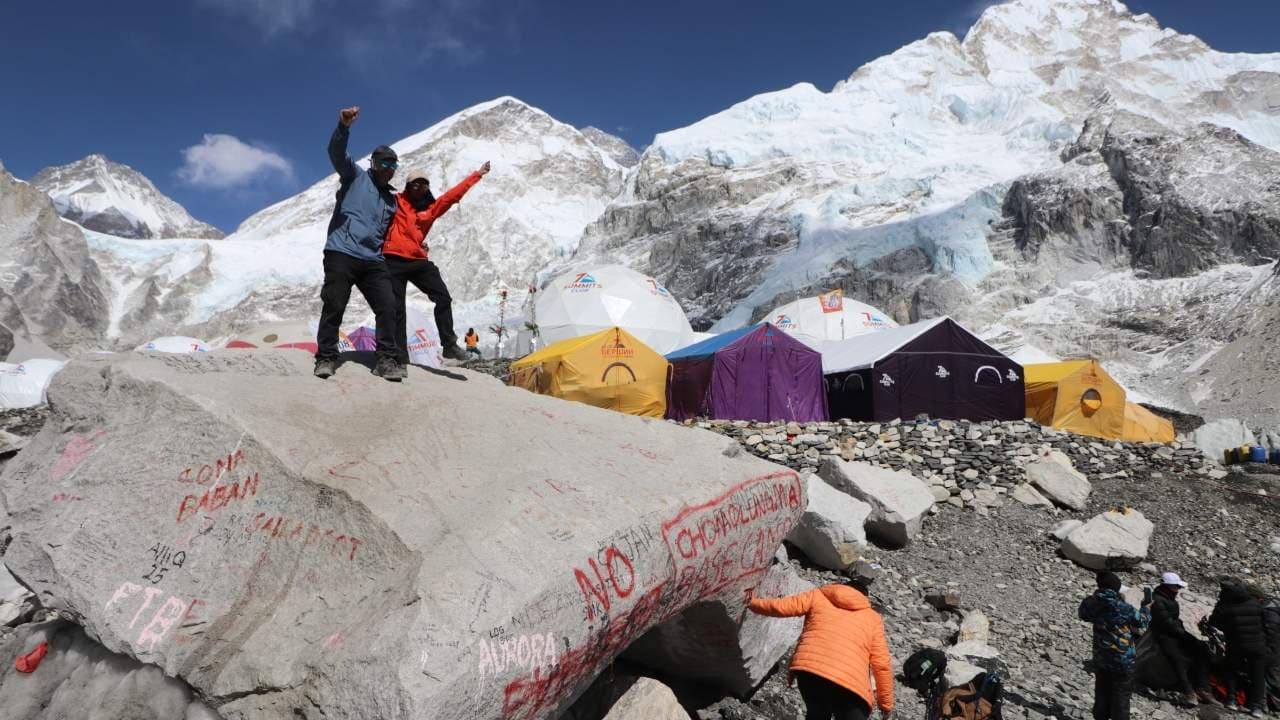
Reach Everest Base Camp at 5,364 meters (17,598 feet) and experience the legendary destination where Everest expeditions prepare for their summit attempts.
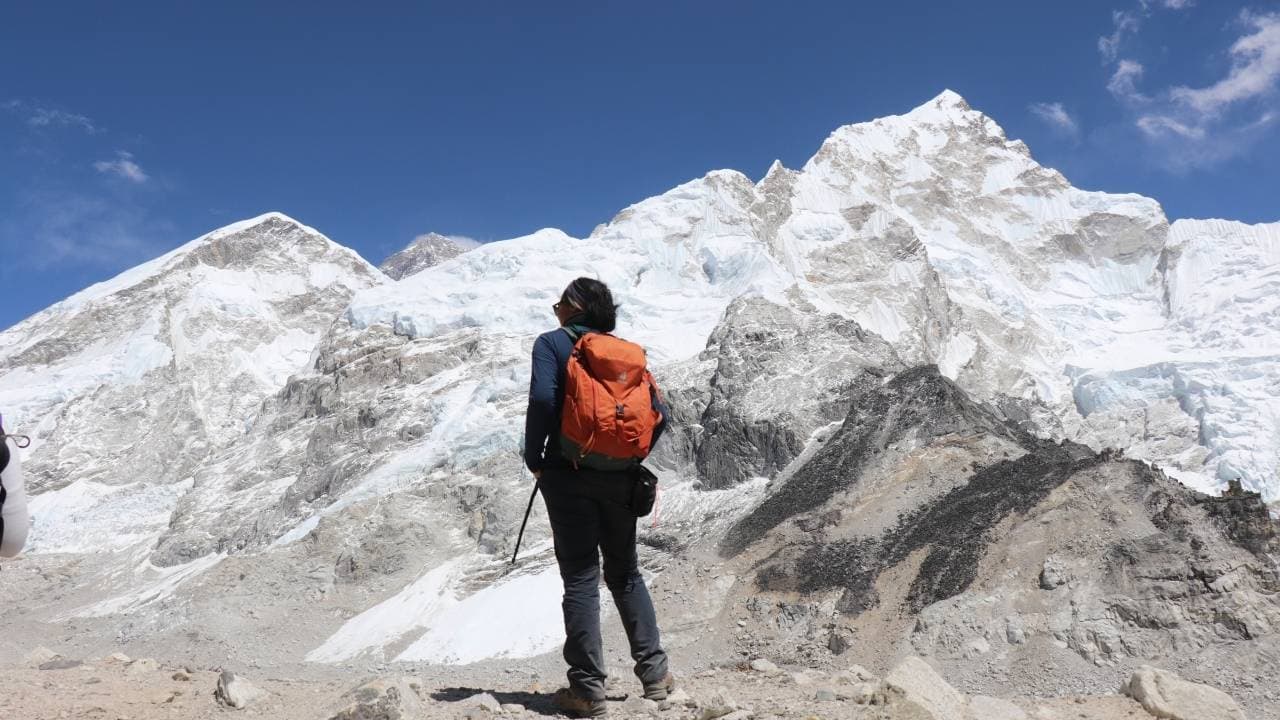
Hike to Kala Patthar at approximately 5,550 meters (18,208 feet) for a close, panoramic view of Mount Everest, Nuptse, Pumori, and the surrounding Himalayan giants
Explore Namche Bazaar, the main trading and acclimatization hub of the Khumbu, with traditional Sherpa culture, mountain viewpoints, and lively teahouses
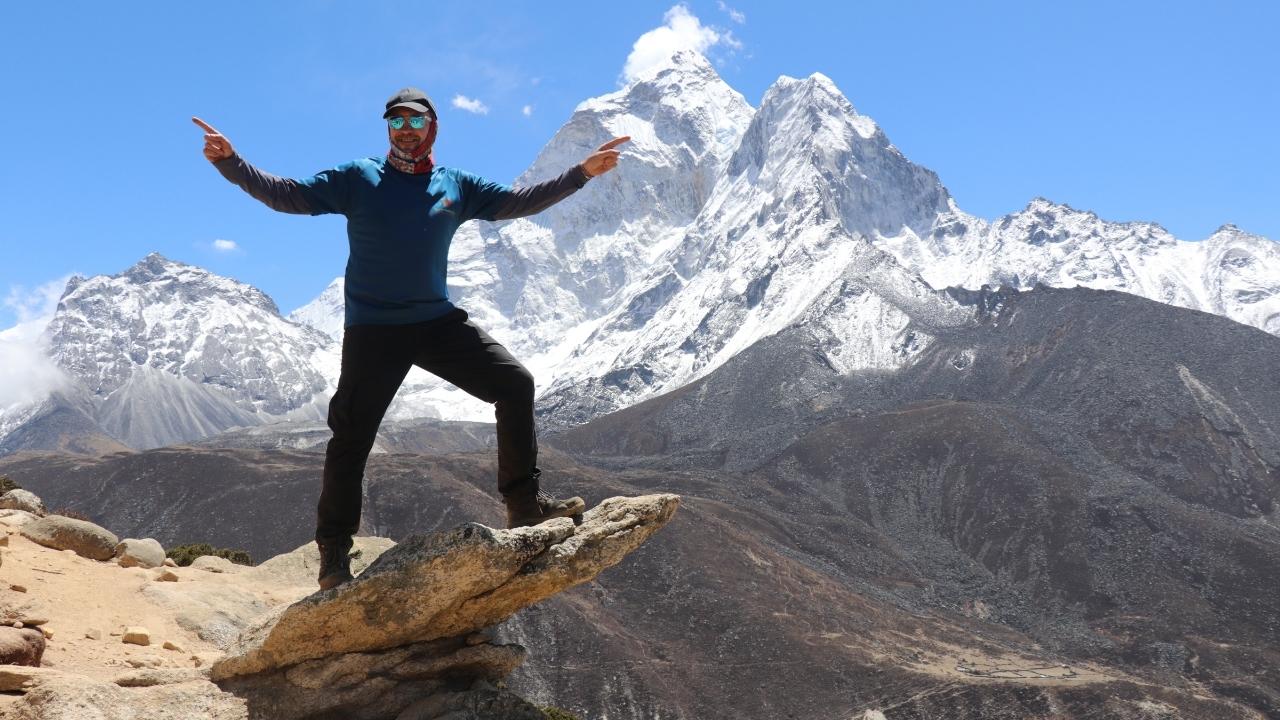
Visit Tengboche Monastery, an important Buddhist center set against the dramatic mountain scenery of Ama Dablam, Everest, and neighboring peaks
Spend acclimatization days in Namche Bazaar and Dingboche, with opportunities for higher viewpoints that help you experience the landscape while preparing for the trek's more demanding elevations
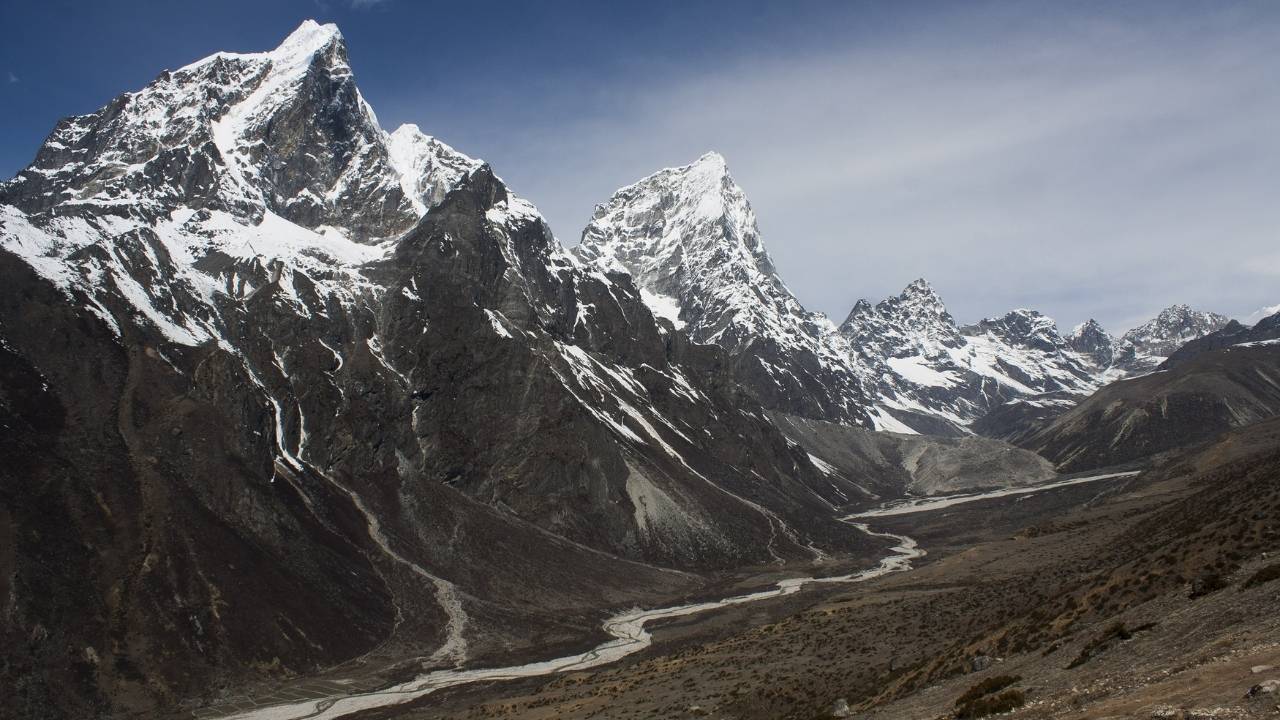
Walk beneath towering Himalayan peaks as the scenery changes from the forested Dudh Koshi Valley to the open alpine terrain, rocky moraines, and glacial surroundings above Dingboche
Pass the Everest memorials at Thukla, which commemorate climbers and Sherpas who lost their lives on the mountain, adding a meaningful historical dimension to the journey
Experience the high-altitude settlement of Gorakshep at 5,164 meters (16,942 feet), the final overnight stop before visiting Everest Base Camp and hiking to Kala Patthar
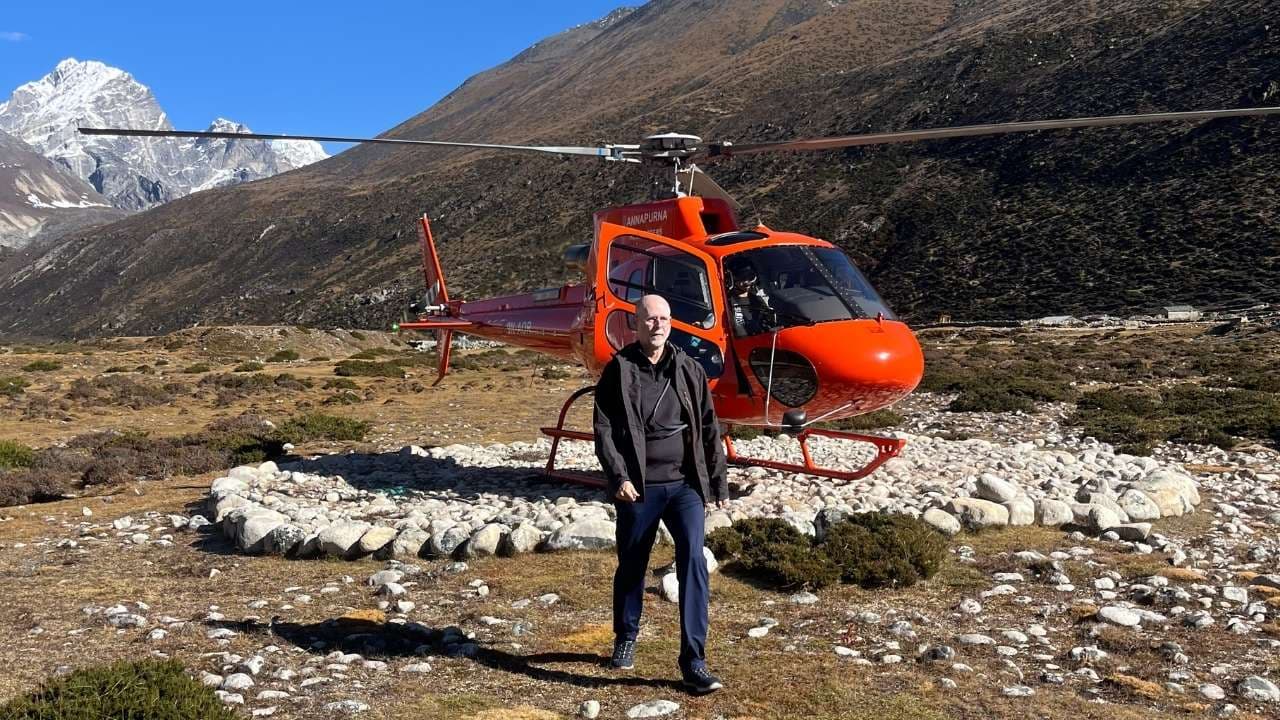
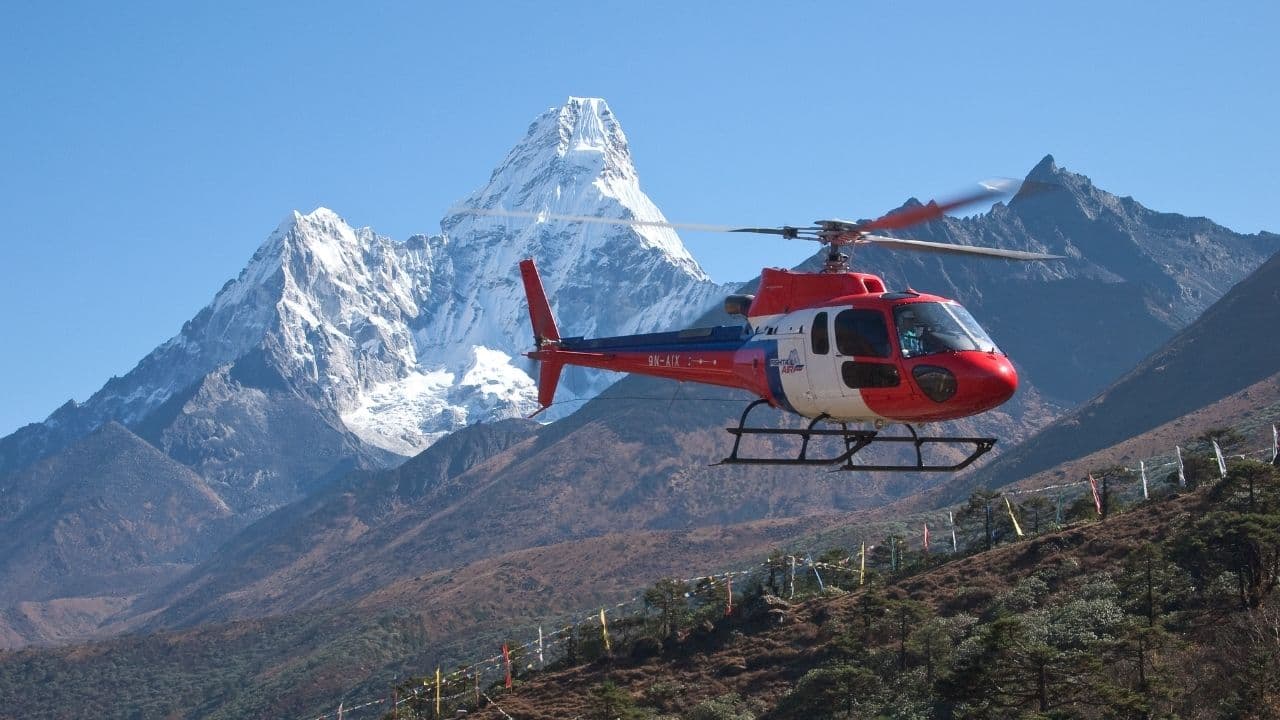
Descend to Pheriche at 4,230 meters (13,877 feet) after completing the main trekking highlights, then take a helicopter toward Kathmandu instead of retracing the entire route to Lukla on foot
Enjoy an aerial perspective of the Khumbu's rugged mountain landscape during the helicopter return, subject to weather, visibility, and flight operations
Complete a 10-day Everest adventure that combines the classic Base Camp trek, the Kala Patthar sunrise hike, Sherpa cultural landmarks, and a helicopter return that shortens the journey back to Kathmandu
Trip Overview
Few journeys in the Himalayas bring you as close to the world’s highest mountain as the trek to Everest Base Camp. The trail winds through the heart of the Khumbu, past traditional Sherpa villages, ancient monasteries, suspension bridges, and valleys framed by towering Himalayan peaks. As you climb higher, the landscape grows more dramatic, leading you to Everest Base Camp at 5,364 meters (17,598 feet) and the panoramic viewpoint of Kala Patthar at approximately 5,550 meters (18,208 feet), where Everest and its neighboring giants rise above the surrounding glaciers.
The 10-day Everest Base Camp Trek with Helicopter Return From Pheriche lets you experience this remarkable journey without retracing the entire trail on foot. After reaching the major highlights of the Everest region, you descend to Pheriche, where a helicopter flight offers a different perspective of the mountains, glaciers, and deep valleys you have spent days exploring on foot. It is a memorable way to conclude the trek, combining the satisfaction of reaching Everest Base Camp with an aerial journey through one of the most spectacular mountain landscapes on Earth.
This itinerary suits travelers who want to experience the full challenge of trekking to Everest Base Camp while making better use of a limited holiday. However, the helicopter return changes only the journey back, not the effort required to reach high altitude. Proper acclimatization, good physical preparation, and awareness of altitude sickness remain essential, and helicopter operations from Pheriche depend on weather and flying conditions.
Why Choose Everest Base Camp Trek- Helicopter Return From Pheriche?
The Everest Base Camp Trek- Helicopter Return From Pheriche combines the classic trek to Everest Base Camp and Kala Patthar with a shorter return journey. You still experience the demanding high-altitude walking, Sherpa villages, monasteries, and glacier landscapes that define the Everest region, but instead of retracing the entire trail to Lukla, you descend to Pheriche for a planned helicopter flight to Kathmandu.
Complete the Everest Base Camp and Kala Patthar Journey: Visit Everest Base Camp at 5,364 meters (17,598 feet) and hike to Kala Patthar at approximately 5,550 meters (18,208 feet). These two destinations offer different experiences: Everest Base Camp brings you to the foot of the Khumbu Icefall, while Kala Patthar provides a renowned panoramic viewpoint of Everest and neighboring peaks.
Save Several Days on the Return Journey: Returning by helicopter from Pheriche means you do not need to walk back through Pangboche, Tengboche, Namche Bazaar, and Lukla. This makes the itinerary appealing if you have limited time but still want to complete the main Everest trekking route.
Experience the Khumbu Beyond Its Famous Viewpoints: The journey passes through Phakding, Namche Bazaar, Tengboche, Dingboche, Lobuche, and Gorakshep. Each section reveals a different side of the region, from riverside trails and pine forests to Buddhist settlements, alpine valleys, and glacial terrain.
See Multiple Himalayan Peaks Along the Route: Depending on the viewpoint and weather, you can see Everest, Lhotse, Nuptse, Ama Dablam, Thamserku, Kangtega, Pumori, Changtse, and other surrounding peaks. The changing perspectives from Namche Bazaar, Tengboche, Dingboche, and Kala Patthar make the mountain scenery a continuing part of the trek rather than a single destination.
Includes Acclimatization Without Rushing Straight to Base Camp: Dedicated acclimatization days in Namche Bazaar and Dingboche give you time to adjust to increasing elevation. These stops also provide opportunities for local exploration and viewpoint hikes before continuing toward Lobuche and Gorakshep.
Discover Sherpa Culture and Buddhist Heritage: Visit Tengboche Monastery, walk past mani walls and prayer wheels, and explore traditional settlements where mountain life remains closely connected with Tibetan Buddhist traditions and the history of Everest mountaineering.
Spend Less Time Retracing Familiar Trails: The helicopter return changes the final stage of the journey. Rather than repeating several days of downhill trekking, you descend from Gorakshep to Pheriche after visiting Everest Base Camp and Kala Patthar, then take the planned flight toward Kathmandu. This is particularly useful for trekkers who want to reduce the overall duration of their Himalayan trip.
Combine a Demanding Trek With an Aerial Return: The helicopter flight offers a different perspective on the mountains and valleys you have explored on foot. It is a distinctive finish to the journey, although flights remain dependent on weather, visibility, passenger weight, and operational conditions.
Make the Most of a 10-Day Trekking Schedule: This itinerary brings together the major Everest trekking landmarks, acclimatization stops, cultural highlights, and helicopter return within 10 days. It suits travelers who want to experience the central Everest region without allocating additional days to the full return trek to Lukla.
Everest Base Camp Trek With Helicopter Return From Pheriche Itinerary Outline
The 10-day Everest Base Camp Trek with Helicopter Return From Pheriche follows the classic Khumbu trail to Everest Base Camp (5,364 meters) and Kala Patthar (5,550 meters), before the journey back by helicopter. The table below covers the daily route, elevation changes, trekking distances, and estimated durations, including the final walk to Pheriche and helicopter return.
With daily distances, walking hours, and elevation changes laid out together, you can see how the challenge builds toward Everest and how the flight saves you from retracing the entire route on foot.
Day
EBC Trek Helicopter Return From Pheriche Itinerary
Elevation Profile
Duration/ Distance
01
Kathmandu to Lukla (2,860m/ 9,383ft) to Phakding (2,610m/ 8,562ft)
1,460m/ 4,790ft (gain)
Flight Distance: 138km/ 85 miles
Flight Duration: 35 minutes
Trek Distance: 8km/ 4.9 miles
Trek Duration: 3 to 4 hours
02
Phakding to Namche Bazaar (3,440m/ 11,286ft)
830m/ 2,723ft (gain)
Trek Distance: 12.3km/ 7.64 miles
Duration: 5 to 6 hours
03
Namche Rest and Short Hike Up to Everest View Hotel (3,880m/ 12,729ft)
04
Trek to Tengboche (3,867m/ 12,687ft)
427m/ 1,400ft (gain)
Trek Distance: 10.7km/ 6.65 miles
Duration: 5 to 6 hours
05
Trek to Dingboche (4,410m/ 14,468ft)
543m/ 1,781ft (gain)
Trek Distance: 9.8km/ 6.09 miles
Duration: 5 to 6 hours
06
Acclimatization Day (Nagarjun Hill)
07
Dingboche to Lobuche (4,910m/ 16,108ft)
500m/ 1,640ft (gain)
Trek Distance: 8.8 km/ 5.47 miles
Duration: 5 to 6 hours
08
Trek to Gorakshep (5,164m/ 16,942ft) After Lunch Everest Base Camp (5,364m/ 17,598ft), Then Back to Gorakshep
454m/ 1,489ft (gain)
Trek Distance: 11.5km/ 7.15 miles
Duration: 8 to 9 hours
09
Hike Up to Kalapathar (5,550m/ 18,208ft) for Sunrise Then Back to Gorakshep After Breakfast Trek Down to Pheriche (4,230m/ 13,877ft)
386m/ 1,266ft (gain)
Trek Distance: 13.8km/ 8.57 miles
Duration: 5 to 6 hours
10
After Breakfast Helicopter Flight to Kathmandu (1,400m/ 4,593ft) on Sharing Basis
Flight Distance: 150km/ 93 miles
Flight Duration: 1 to 1.5 hours
Cost Details
What's Included in Everest Base Camp Trek- Helicopter Return From Pheriche
Airport pickup and drop-off in Kathmandu by private vehicle.
Three meals a day (breakfast, lunch, and dinner) during the trek.
Teahouse accommodation throughout the trekking portion of the journey.
Required trekking permits, including the Sagarmatha National Park entry permit and other applicable local permits.
Kathmandu to Lukla flight with domestic airport transfers and applicable domestic airport taxes.
Helicopter flight from Pheriche to Kathmandu, subject to weather conditions, flight availability, and operational approval.
Experienced, government-licensed, English-speaking trekking guide, including the guide's salary, meals, accommodation, transport, and insurance.
First-aid kit and basic medical supplies carried by the trekking team.
Emergency helicopter rescue coordination, with the cost payable through your travel insurance where covered by your policy.
Sleeping bag, down jacket, duffel bag, and trekking poles for use during the trek, to be returned after the trip.
Eco Holidays Nepal T-shirt as a trip souvenir.
Everest Base Camp trekking map.
Pulse oximeter checks twice daily to monitor oxygen saturation and heart rate during the trek.
Assistant guide for groups of more than six trekkers.
Government taxes and official expenses related to the included services.
What's Excluded in Everest Base Camp Trek- Helicopter Return From Pheriche
International airfare and applicable international airport taxes.
Nepal visa fees and other personal documentation costs.
Accommodation in Kathmandu, unless specifically included in your package.
Lunch and dinner in Kathmandu, along with meals not specified in the itinerary.
Travel and medical insurance, including adequate high-altitude trekking and emergency helicopter evacuation coverage.
Porter service ($240). One porter can generally carry luggage for two trekkers; confirm the current rate when booking.
Personal expenses, including laundry, Wi-Fi, internet access, and phone calls.
Hot and cold drinks, including bottled water, tea, coffee, soft drinks, and alcoholic beverages purchased during the trek.
Desserts and extra snacks, including chocolate, cake, pie, and pudding.
Hot showers and battery-charging fees at teahouses.
Extra activities and sightseeing in Kathmandu not listed in the itinerary.
Additional accommodation, meals, or transportation resulting from flight delays, cancellations, weather disruptions, or other unforeseen circumstances, unless covered by the package terms.
Tips for the trekking guide, assistant guide, and other support staff.
Price & Availability
Itinerary of Everest Base Camp Trek- Helicopter Return From Pheriche - 10 days
Day 01
Kathmandu to Lukla (2,860m/ 9,383ft) to Phakding (2,610m/ 8,562ft): 35 minutes and 3 to 4 hours trek
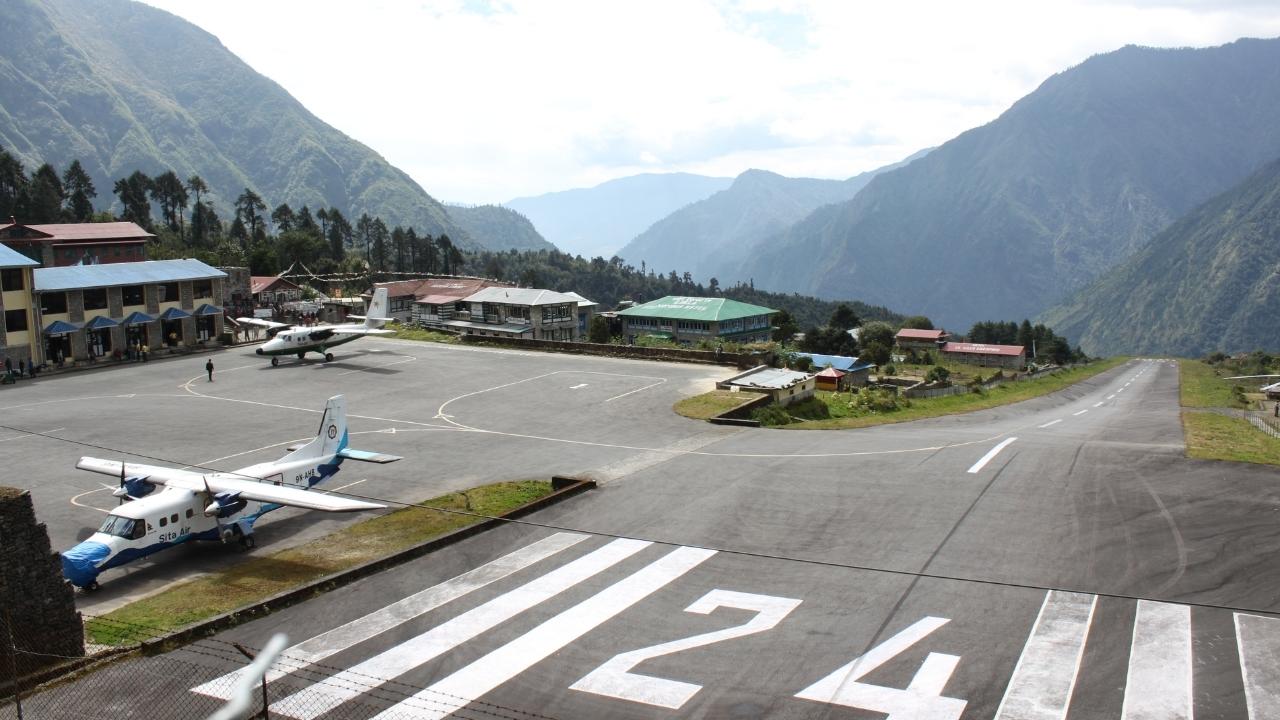
Your Everest Base Camp Trek- Helicopter Return from Pheriche begins with an early-morning flight from Kathmandu to Lukla, a scenic journey of around 30 to 35 minutes that brings you into the heart of the Khumbu region. As your aircraft approaches Lukla, you can enjoy views of rolling green hills, deep river valleys, and snow-covered Himalayan peaks before landing at Tenzing-Hillary Airport. After meeting your trekking guide and making the final preparations, you will begin walking toward Phakding.
The trail leaves Lukla through Chheplung, where you can catch your first distant views of Mount Khumbila, a sacred mountain revered by the local Sherpa community. You will then continue past traditional settlements, stone walls carved with Buddhist prayers, mani walls, and colorful prayer flags fluttering above the path. As you descend through the Dudh Koshi Valley, you will pass through Thado Koshi and cross suspension bridges spanning the glacial river, with small teahouses and cultivated terraces appearing along the route.
After approximately 8 km of trekking over 3 to 4 hours, you will reach Phakding at 2,610 meters (8,562 feet). This riverside village offers a gentle introduction to trekking in the Everest region, giving you time to settle into your teahouse, enjoy a warm meal, and prepare for the more demanding climb toward Namche Bazaar the following day.
Max. Elevation:2610
Duration:35 minutes (flight) and 3 to 4 hours (trek)
Distance:138km (flight) and 8km (trek)
Day 02
Phakding to Namche Bazaar (3,440m/ 11,286ft): 5 to 6 hours
After breakfast in Phakding, you will follow the Dudh Koshi River north toward Namche Bazaar, the principal trading center of the Khumbu region. Today’s trail involves a sustained ascent, with several suspension bridges, forested sections, and traditional Sherpa settlements along the way. You will pass through Toktok and Benkar Villages, where you can enjoy views of waterfalls, pine-covered hillsides, and distant Himalayan peaks before continuing toward Monjo.
At Monjo, you will enter Sagarmatha National Park, where your permits will be checked before you continue toward Jorsale. From here, the trail follows the river through a wooded valley before reaching the famous Hillary Suspension Bridge, one of the most memorable crossings on the Everest Base Camp route. Suspended high above the meeting point of the Dudh Koshi and Bhote Koshi rivers, the bridge offers a dramatic view of the rugged valley below.
Beyond the bridge, you will begin the long, steady climb toward Namche Bazaar. On clear days, you may catch your first glimpse of Mount Everest along this uphill section, adding an exciting moment to the demanding ascent. After approximately 10 to 12 km of walking over 6 to 7 hours, you will arrive at Namche Bazaar at 3,440 meters (11,286 feet). Set within a natural mountain amphitheater, Namche is known for its colorful buildings, busy market lanes, bakeries, trekking shops, and strong Sherpa heritage. You will spend the night here, allowing your body to begin adjusting to the higher elevation.
Max. Elevation:3440
Duration:5 to 6 hours
Distance:12.3km
Day 03
Namche Rest and Short Hike Up to Everest View Hotel (3,880m/ 12,729ft)
Today is dedicated to acclimatization, giving your body time to adapt to the altitude before you continue toward the higher settlements of the Everest region. Rather than spending the entire day resting inside your teahouse, you will take a gradual morning hike above Namche Bazaar, following trails that climb through the surrounding hills toward Syangboche and the renowned Everest View Hotel.
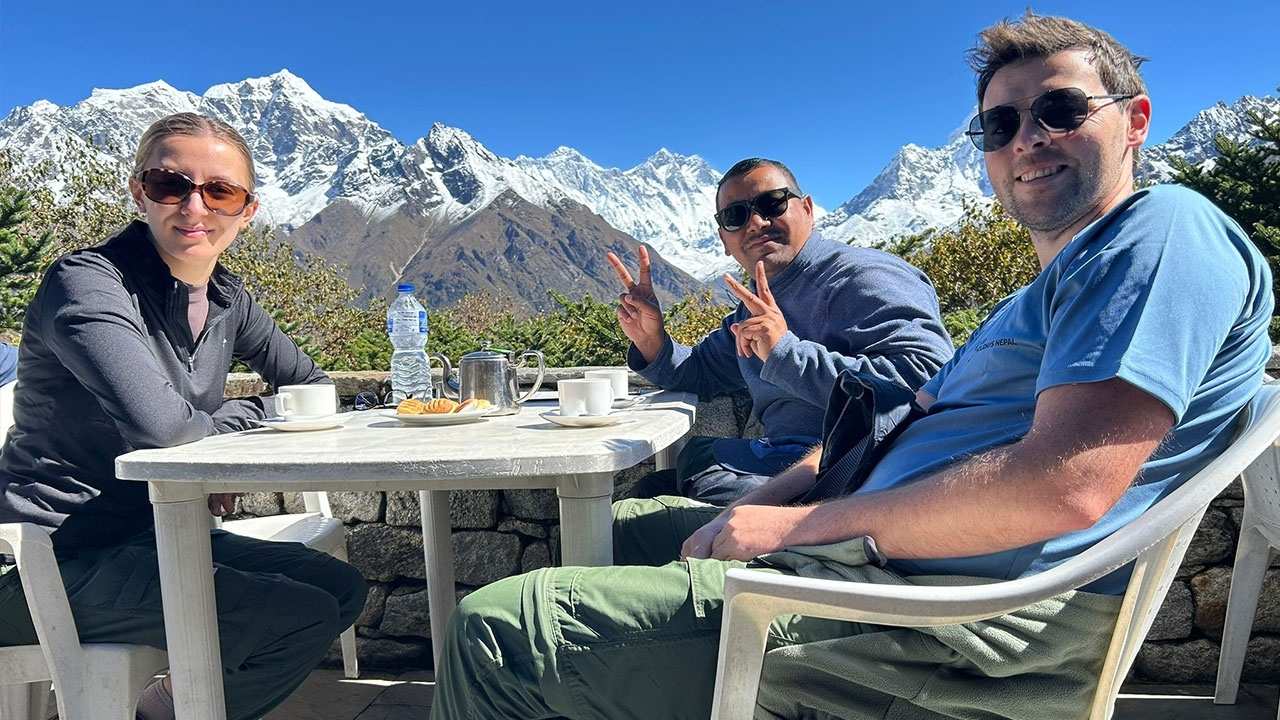
As you leave Namche, the trail gradually rises above the settlement, revealing increasingly wide views of the Khumbu Valley. You will pass near the Syangboche airstrip and continue toward Everest View Hotel, situated at approximately 3,880 meters (12,729 feet). From the viewpoint, you can enjoy impressive panoramas of Mount Everest, Lhotse, Nuptse, Ama Dablam, and the surrounding Himalayan peaks. The sight of Ama Dablam’s distinctive summit rising above the valley is particularly striking from this elevated position.
After spending some time enjoying the mountain scenery, you will descend to Namche Bazaar for lunch and a relaxed afternoon. You can explore the Sherpa Culture Museum, visit the local market, or stop at a bakery before returning to your teahouse. The round-trip hike generally takes around 2 to 3 hours, depending on your pace and the conditions. This combination of gentle activity and rest helps support acclimatization while allowing you to experience one of the most accessible panoramic viewpoints in the Everest region. You will spend another night in Namche Bazaar, preparing for the trek toward Tengboche the next day.
Max. Elevation:3440
Day 04
Trek to Tengboche (3,867m/ 12,687ft): 5 to 6 hours
After properly acclimatizing in Namche Bazaar, you will continue your Everest Base Camp journey along a scenic trail overlooking the Dudh Koshi Valley. The route initially follows a relatively gentle path toward Kyangjuma Village, where you can enjoy expansive views of Ama Dablam, Thamserku, and other Himalayan peaks. As you walk along the hillside, you will pass prayer wheels, mani stones, and small resting spots where you can pause to appreciate the mountain scenery.
From Kyangjuma, the trail continues toward Sanasa Village before descending through forested slopes to the Dudh Koshi River at Phunki Tenga. This small riverside settlement is a convenient place to stop for lunch and recharge before tackling the steep climb ahead. After crossing the river, you will ascend through forests of pine and rhododendron toward Tengboche. The uphill section can be demanding, particularly as you gain elevation, so maintaining a steady pace and taking short breaks will help you manage the climb comfortably.
After approximately 5 to 6 hours of trekking, you will reach Tengboche at 3,867 meters (12,687 feet), one of the most important spiritual centers in the Khumbu region. The village is home to Tengboche Monastery, a renowned Buddhist monastery set against a spectacular backdrop of Everest, Nuptse, Lhotse, and Ama Dablam on clear days. If the monastery is open and prayer sessions are taking place, you may have an opportunity to experience the peaceful atmosphere of Sherpa Buddhist traditions.
Max. Elevation:3867
Duration:5 to 6 hours
Distance:10.7km
Day 05
Trek to Dingboche (4,410m/ 14,468ft): 5 to 6 hours
After breakfast in Tengboche, you will leave the monastery behind and descend through a beautiful forest of rhododendron, pine, and juniper toward Deboche. Along this section, you will pass prayer flags, mani walls, and traditional Buddhist structures that reflect the spiritual heritage of the Khumbu. The trail then continues toward the Imja Khola, which you will cross before gradually climbing toward Pangboche Village, one of the region’s oldest Sherpa settlements.
As you approach Pangboche, the landscape begins to change, with fewer dense forests and increasingly open views of the surrounding mountains. Ama Dablam dominates much of the skyline, while the trail offers striking views of its sharp ridges and neighboring Himalayan peaks. You will continue through the upper Pangboche area toward Shomare, a small settlement where you can take a break and enjoy lunch before proceeding into the Imja Valley.
Beyond Shomare, the trail becomes more exposed as you enter a drier, higher-altitude landscape. You will pass Orsho Village and continue toward the junction near the route to Pheriche Village before following the trail toward Dingboche. Stone-walled fields, yak pastures, and scattered settlements become more common as you approach the village. After approximately 5 to 6 hours of trekking, you will reach Dingboche at 4,410 meters (14,468 feet), a popular acclimatization stop beneath the dramatic faces of Ama Dablam, Island Peak, and the surrounding peaks.
Max. Elevation:4410
Duration:5 to 6 hours
Distance:9.8km
Day 06
Acclimatization Day (Nagarjun Hill)
Today, you will spend another night in Dingboche to help your body adjust to the thinner air at approximately 4,410 meters (14,468 feet). Since the next stages of the Everest Base Camp Trek take you above 4,500 meters, this acclimatization day is an important opportunity to gain elevation gradually while avoiding the strain of a long-distance trekking day.
After breakfast, you will take a steady uphill hike toward Nagarjun Hill, also known locally as Nangkartshang Peak. The trail climbs above Dingboche through rocky terrain and open alpine slopes, offering increasingly broad views of the Imja Valley as you gain altitude. Depending on your pace, weather conditions, and how you feel, you can choose a suitable turnaround point rather than pushing toward the highest section of the hill.
During the hike, you may enjoy impressive views of Ama Dablam, Island Peak, Taboche, Cholatse, and the surrounding snow-covered Himalayan ridges. The elevated viewpoint also gives you a clearer perspective of the rugged valley leading toward Chhukung and the high mountain terrain beyond Dingboche. The ascent is relatively short in distance but can feel demanding because of the altitude, so you will walk slowly, drink water regularly, and take breaks whenever necessary.
You will return to Dingboche for lunch and spend the remainder of the day resting, enjoying the mountain surroundings, or spending time with fellow trekkers at your teahouse. The hike commonly takes around 3 to 5 hours round trip, depending on your turnaround point and walking pace. You do not need to reach the summit to benefit from the day's activity. If you develop symptoms of altitude sickness or feel unusually unwell, you should stop ascending and inform your guide. After another night in Dingboche, you will be better positioned to continue toward the higher settlements on the Everest Base Camp route.
Max. Elevation:4410
Day 07
Dingboche to Lobuche (4,910m/ 16,108ft): 5 to 6 hours
After enjoying your breakfast in Dingboche, you will continue your trek toward Lobuche, following a high-altitude trail through the upper Khumbu Valley. As you leave the village, you will pass stone-walled fields and scattered yak pastures, with the landscape becoming increasingly rocky and sparse. The trail gradually climbs toward Dusa Village and continues through the open valley toward Dughla (Thukla), where you can take a break before tackling the steeper section ahead.
From Dughla, you will begin a challenging ascent toward the Thukla Pass area, where memorials commemorate climbers and Sherpas who lost their lives on Everest and other Himalayan peaks. These stone cairns and memorial plaques create a moving reminder of the risks involved in high-altitude mountaineering. You will have time to pause, reflect, and take in the surrounding mountain scenery before continuing along the trail.
Beyond the memorials, the route becomes less steep as you follow a rocky path through the Khumbu Valley. You will walk beneath the dramatic peaks and ridges of the region, with views of Pumori and other snow-covered mountains appearing as the trail approaches Lobuche. At this elevation, the thinner air can make even a gradual walk feel strenuous, so you should maintain a comfortable pace and take regular breaks.
After approximately 5 to 6 hours of trekking, you will reach Lobuche at 4,910 meters (16,108 feet), a small high-altitude settlement consisting mainly of trekking lodges and seasonal teahouses. You will settle into your accommodation, enjoy a warm meal, and rest in preparation for the following day's trek to Gorakshep and Everest Base Camp.
Max. Elevation:4910
Duration:5 to 6 hours
Distance:8.8 km
Day 08
Trek to Gorakshep (5,164m/ 16,942ft) After Lunch Everest Base Camp (5,364m/ 17,598ft), Then Back to Gorakshep: 8 to 9 hours
From Lobuche, you will continue toward Gorakshep, the last regular overnight settlement on the classic Everest Base Camp trekking route. The trail follows a rugged glacial landscape, with sections of loose stones and uneven ground as you make your way toward the Khumbu Glacier. You will gradually gain elevation while walking beneath the towering Himalayan peaks, including Pumori and Nuptse, whose imposing slopes dominate the surrounding scenery.
As you approach Gorakshep, the landscape becomes increasingly barren, with little vegetation and wide stretches of sand, gravel, and glacial debris. After approximately 2 to 3 hours of walking, you will reach Gorakshep at 5,164 meters (16,942 feet). You will check into your teahouse, have lunch, and take some time to rest before continuing to Everest Base Camp. This break is particularly important because the afternoon hike takes you higher into an environment where the reduced oxygen level makes walking noticeably more demanding.
After lunch, you will follow the rocky trail toward Everest Base Camp, passing along the edge of the Khumbu Glacier and through the rugged terrain shaped by glacial movement. The route involves uneven ground, gradual ascents and descents, and sections where progress can be slow. Along the way, you will enjoy views of the Khumbu Icefall, surrounding ice formations, and the immense mountain landscape beneath Everest. When you reach Everest Base Camp at 5,364 meters (17,598 feet), you will have the opportunity to take photographs, appreciate the achievement, and experience the famous staging area used by climbing expeditions during the spring climbing season.
After spending time at Base Camp, you will retrace your steps to Gorakshep for the night. The round-trip hike from Gorakshep to Everest Base Camp generally takes around 5 to 6 hours, depending on trail conditions and your pace, making the entire day's walk approximately 8 to 9 hours. You will return tired but with the memorable experience of reaching one of the Himalayas' most celebrated destinations.
Max. Elevation:5364
Duration:8 to 9 hours
Distance:11.5km
Day 09
Hike Up to Kalapathar (5,550m/ 18,208ft) for Sunrise Then Back to Gorakshep After Breakfast Trek Down to Pheriche (4,230m/ 13,877ft): 5 to 6 hours
You will begin the day before dawn with an early-morning hike to Kala Patthar, one of the most celebrated viewpoints in the Everest region. Leaving Gorakshep in the darkness with your headlamp on, you will follow the steep, rocky trail uphill as the first light gradually spreads across the Himalayan horizon. The ascent is demanding at this altitude, so you will maintain a slow, steady pace and take breaks whenever needed.
As you climb higher, the surrounding peaks begin to emerge in the morning light. From the summit of Kala Patthar at approximately 5,550 meters (18,208 feet), you can enjoy an extraordinary panorama of Mount Everest, Nuptse, Pumori, and the surrounding Himalayan giants, weather permitting. The viewpoint is particularly famous for its close perspective of Everest's summit, which is not normally visible from Everest Base Camp. Watching the first sunlight illuminate the mountain faces is a memorable highlight of the entire trek.
After spending time enjoying the sunrise and taking photographs, you will descend to Gorakshep for breakfast. Once you have eaten and collected your belongings, you will begin the return journey toward Pheriche, retracing the trail through the rugged terrain to Lobuche and continuing downhill toward Dughla (Thukla). You will pass the climbers' memorials again before descending through the broad valley toward the lower settlements.
As you lose elevation, the landscape gradually opens up, and the walk becomes more comfortable as the air grows denser. You will continue toward Pheriche, a traditional high-altitude settlement situated beside the Imja Khola Valley. The village is known for its stone-built houses, yak-grazing pastures, and the Himalayan Rescue Association's aid post, which provides important altitude-related medical information and assistance during the trekking season.
The trek from Gorakshep to Pheriche generally takes around 5 to 6 hours, excluding the early-morning Kala Patthar excursion and breakfast stop. Upon reaching Pheriche at approximately 4,230 meters (13,877 feet), you will settle into your teahouse, enjoy a warm meal, and rest after a long and rewarding day. Spending the night here also positions you for your planned helicopter return to Kathmandu the following morning.
Max. Elevation:4230
Duration:5 to 6 hours
Distance:13.8km
Day 10
After Breakfast Helicopter Flight to Kathmandu (1,400m/ 4,593ft) on Sharing Basis: 1 to 1.5 hours
After breakfast in Pheriche, you will prepare for the final leg of your Everest Base Camp adventure: a shared helicopter flight back to Kathmandu. Instead of retracing the trekking trail through Namche Bazaar, Phakding, and Lukla, you will leave the high Himalayas by air, saving several days of walking on the return route.
Once your helicopter is ready for departure, you will board at the designated landing area in Pheriche. As the helicopter lifts above the valley, you can enjoy a different perspective of the rugged terrain you crossed on foot. The aerial journey offers sweeping views of the Khumbu Valley, glacial rivers, mountain ridges, and snow-covered peaks, providing a final opportunity to appreciate the scale of the Himalayan landscape.
The flight time is approximately 1 to 1.5 hours when conditions and routing permit, although the actual journey may take longer if a connection, refueling stop, or operational delay is necessary. Helicopter departures in the Everest region are weather-dependent, so you should allow some flexibility in your travel plans.
Upon arrival in Kathmandu at approximately 1,400 meters (4,593 feet), you will transfer to your hotel or onward destination, bringing your 10-day Everest Base Camp Trek With Helicopter Return from Pheriche adventure to a close. The flight-assisted return makes this itinerary particularly appealing if you want to experience the major highlights of the Everest Base Camp trek while reducing the time and physical effort required for the return walk.
Max. Elevation:1400
Duration:1 to 1.5 hours
Distance:150km
If the provided schedule isn't suitable for you, we can create personalized travel arrangements.
Accommodation and Meals During EBC Trek Helicopter Return From Pheriche
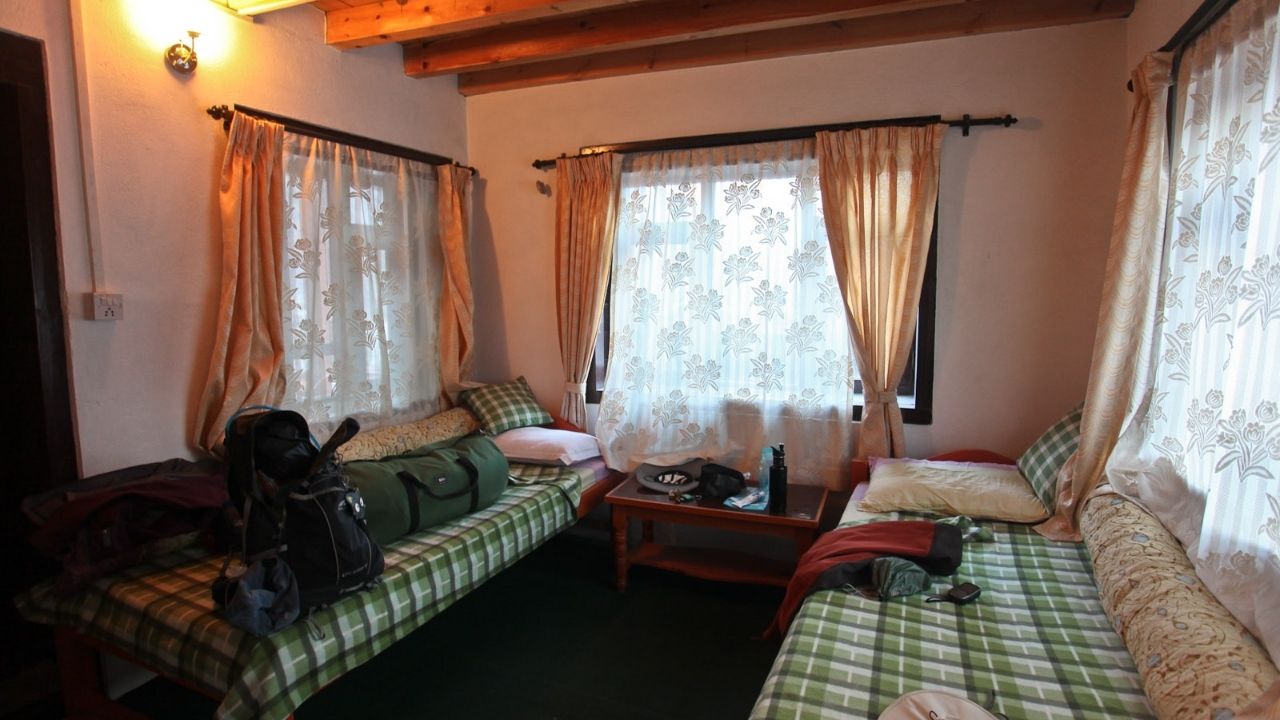
Accommodation during the EBC Trek Helicopter Return From Pheriche is arranged in local teahouses and mountain lodges throughout the Khumbu region. You will stay in villages such as Phakding, Namche Bazaar, Tengboche, Dingboche, Lobuche, Gorakshep, and Pheriche, with facilities varying according to elevation and location. Lower villages, particularly Namche Bazaar, generally offer more lodge choices and better amenities, while accommodation in Lobuche and Gorakshep is simpler because of their remote, high-altitude settings.
Rooms are usually arranged on a twin-sharing basis, with beds, mattresses, pillows, and blankets. Shared bathrooms are common at higher elevations, and attached bathrooms are more likely to be available in some lower-altitude lodges. Hot showers, Wi-Fi, and electronic-device charging may incur additional charges. Dining rooms are often the warmest communal spaces in the evening, but bedrooms are generally unheated. Since overnight temperatures can fall below freezing in the upper Khumbu, bringing a suitable sleeping bag is recommended, even when blankets are provided.
Your final trekking-night accommodation is in Pheriche at 4,230 meters (13,877 feet), before your shared helicopter flight to Kathmandu the following morning. The helicopter return saves you from retracing the trail through Namche Bazaar and Lukla, but departure remains subject to weather, visibility, and operational conditions.
Food During the Trek
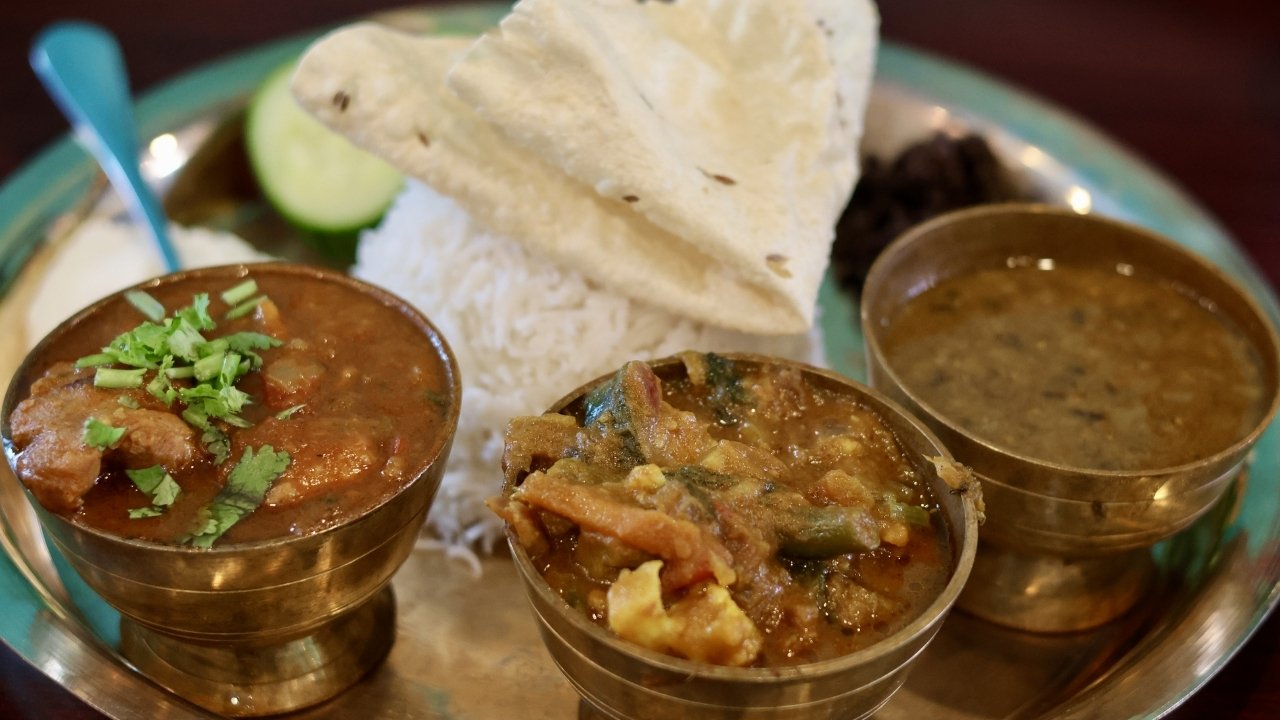
Teahouses serve a mixture of Nepali, Tibetan, and international dishes, with menus generally offering more variety in lower villages than at higher elevations. Your daily meals can be planned around the walking schedule, with breakfast before departure, lunch at a teahouse along the trail, and dinner at your overnight lodge. The exact food menu available depend on the lodge, season, and local supplies.
Breakfast
Eggs: Boiled, fried, scrambled, and omelets
Bread: Tibetan bread, toast, chapati, and pancakes
Cereals: Porridge, muesli, and cornflakes served with milk
Potato Dishes: Boiled potatoes and hash browns
Light Sides: Jam, honey, butter, and seasonal fruit where available
Lunch and Dinner
Dal Bhat: Steamed rice, lentil soup, seasonal vegetables, curry, and pickle; often available with refills
Sherpa Stew (Syakpa): A hearty noodle stew with vegetables and sometimes meat
Thukpa: Tibetan-style noodle soup with vegetable or meat options
Momo: Steamed or fried dumplings filled with vegetables, chicken, or other available fillings
Noodles and Chow Mein: Stir-fried noodles with vegetables or egg, with meat options at some teahouses
Rice Dishes: Vegetable or egg fried rice, and meat fried rice where available
Pasta: Spaghetti, macaroni, and pasta with tomato, vegetable, or cheese sauces
Soups: Vegetable soup, garlic soup, and other seasonal varieties
Potato Dishes: Fried, boiled, or mashed potatoes, sometimes served with vegetables or eggs
Bread-Based Meals: Sandwiches, chapati, and bread served with eggs or vegetable curry
Beverages
Tea: Black tea, milk tea, lemon tea, ginger tea, and mint tea
Coffee: Instant black coffee and milk coffee
Hot Drinks: Hot lemon, honey and ginger, and hot chocolate
Drinking Water: Boiled water, bottled water, and treated water
Cold Drinks: Soft drinks, packaged juice, and other locally available beverages
**Note: Menu choices vary by teahouse and elevation. Fresh ingredients and meat options may be more limited in higher settlements such as Lobuche and Gorakshep**
Transporation
Transportation for this 10-day Everest Base Camp trek includes a flight from Kathmandu to Lukla at 2,860 meters (9,383 feet) and a shared helicopter flight from Pheriche to Kathmandu at the end of the trek. The Lukla flight takes approximately 30 to 35 minutes, replacing the lengthy overland journey to the Everest region and bringing you directly to the starting point of your trek.
Your return helicopter flight departs from Pheriche at 4,230 meters (13,877 feet), saving you several days of walking back through the Khumbu Valley to Lukla. The flight generally takes around 1 to 1.5 hours, depending on the routing, weather, and operational arrangements. As this is a shared service, departure times and passenger arrangements depend on availability and flight operations. Weather conditions in the Himalayas can change quickly, so delays or schedule changes are possible.
During the trekking portion, you will travel on foot between villages, including Phakding, Namche Bazaar, Tengboche, Dingboche, Lobuche, and Gorakshep. No regular road transportation connects these settlements along the trekking route. Your main transportation costs therefore relate to the flights at the beginning and end of the trek, while your guide will coordinate the trekking logistics between destinations.
**Note: Helicopter flights are subject to weather, visibility, landing conditions, and aviation safety requirements. It is advisable to leave some flexibility in your onward travel plans in case the helicopter return is delayed**
Difficulty and Fitness Requirement
The Everest Base Camp Trek with Helicopter Return from Pheriche is a challenging trek involving long walking days, steep ascents and descents, uneven rocky trails, and high-altitude exposure. You should be comfortable walking for 5 to 7 hours daily, with the longest day requiring approximately 8 to 9 hours. The trail demands steady endurance rather than technical climbing skills, but repeated uphill sections, stone steps, loose gravel, and glacial terrain can make progress physically demanding.
Altitude adds another layer of difficulty as you climb above 4,000 meters, sleep at Gorakshep (5,164 meters), and reach Kala Patthar (approximately 5,550 meters). Reduced oxygen can leave you breathless and fatigued even when walking slowly. Cold mornings, freezing nights, strong winds, and rapidly changing mountain weather can further affect comfort and walking conditions, particularly in the upper Khumbu. The cumulative strain of consecutive trekking days can also become noticeable as recovery gets harder at higher elevations.
Good general fitness and stamina are essential, although previous high-altitude trekking experience is helpful rather than mandatory. No technical climbing skills are required. The helicopter return from Pheriche reduces the walking distance and time needed for the return journey, but you must still manage the demanding ascent to Everest Base Camp and Kala Patthar. Acclimatization helps reduce altitude-related risks but cannot eliminate them, so you must follow your guide's instructions and report symptoms promptly.
Best Time for Everest Base Camp Trek With Helicopter Return From Pheriche
The best time for the Everest Base Camp Trek with Helicopter Return from Pheriche is spring (March to May) and autumn (late September to November). These seasons generally offer clearer mountain views, more favorable trekking conditions, and better opportunities for helicopter operations than the monsoon period. Autumn is particularly attractive for dry trails and crisp views of Everest, while spring brings warmer walking conditions and the activity of the Everest climbing season. However, helicopter flights from Pheriche remain weather-dependent throughout the year.
Spring: March to May
Spring brings gradually warming temperatures to the Khumbu region, making the long walking days more comfortable as the season progresses. Forests below Tengboche develop fresh greenery, rhododendrons bloom along lower sections of the trail, and Everest Base Camp becomes an active expedition site during April and May.
In Namche Bazaar (3,440 meters), daytime temperatures can reach approximately 10 to 15°C, while nights remain close to or below freezing early in the season. Around Dingboche (4,410 meters), daytime temperatures are commonly around 5 to 10°C, with nighttime temperatures falling to approximately -5 to -10°C during colder periods. At Gorakshep and Kala Patthar, conditions are considerably colder, and snow or strong winds can affect the upper trail.
March can still bring winter-like conditions at higher elevations, while May tends to be warmer but may experience increasing afternoon cloud and pre-monsoon showers. Starting your walks early gives you a better chance of enjoying clear mountain views before clouds build.
Best for: Warmer trekking conditions, spring flowers, and seeing Everest Base Camp during the climbing expedition season.
Autumn: Late September to November
Autumn is generally the strongest season for this itinerary, particularly from October to mid-November. Following the monsoon, the air is often clearer, the trails are generally drier, and mountain views from Namche Bazaar, Tengboche, Gorakshep, and Kala Patthar can be exceptionally sharp. These conditions are especially valuable for the sunrise hike to Kala Patthar and the panoramic views of Everest, Lhotse, Nuptse, and Pumori.
In October, daytime temperatures in Namche Bazaar are commonly around 10 to 13°C, with nighttime temperatures near 0°C. By November, daytime temperatures often fall to approximately 8 to 10°C, and nights can drop to -4°C or lower. At Dingboche, average daytime highs decline from around 9°C in October to 5°C in November, while nighttime temperatures can fall below -10°C in November. Gorakshep is colder still, particularly before sunrise.
October generally offers a balance of clear skies and manageable temperatures, although trails and teahouses can be busy. November is often drier and quieter, but colder nights and occasional snowfall become more significant concerns later in the month. Stable weather improves the chances of helicopter operations, but does not guarantee departure from Pheriche on schedule.
Best for: Clear Himalayan panoramas, dry trekking trails, Kala Patthar sunrise views, and generally favorable conditions for the helicopter return.
Winter: December to February
Winter is possible for experienced, well-equipped trekkers, but severe cold makes the upper Khumbu considerably more demanding. Lower villages such as Lukla and Namche Bazaar can still have sunny days, while Dingboche, Lobuche, and Gorakshep experience freezing nights and possible snowfall. Heavy snow can make sections of the trail difficult to navigate and may affect lodge availability.
In Namche Bazaar, daytime temperatures can range around 5 to 10°C during favorable weather, with nights below freezing. At Dingboche and higher settlements, daytime temperatures may remain near or below freezing during cold spells, while nighttime temperatures can fall below -15°C. Conditions at Kala Patthar are particularly harsh before sunrise, when wind and exposure can make the climb feel considerably colder.
The main advantages are quieter trails and occasional exceptionally clear skies. However, fewer open lodges, snow-covered paths, and potential helicopter delays make winter a less dependable choice for a fixed 10-day itinerary.
Best for: Trekkers seeking quieter trails who are prepared for extreme cold, possible snow, and flexible travel arrangements.
Summer and Monsoon: June to August
The monsoon is generally the least favorable period for this trek. Rain, low clouds, and reduced visibility can obscure mountain views, while wet trails below Namche Bazaar may become slippery and muddy. Leeches can also be present on forested sections. At higher elevations, precipitation may fall as snow during colder weather systems.
Temperatures in Namche Bazaar can reach approximately 12 to 18°C during warmer periods, while Dingboche may experience daytime temperatures around 5 to 10°C. Nights remain cold at altitude, even during summer. The main problem is not simply temperature but the combination of cloud cover, rainfall, changing trail conditions, and reduced flight reliability.
Poor visibility can delay or prevent the helicopter departure from Pheriche, potentially requiring an additional overnight stay or an alternative arrangement. Although trekking may be possible during breaks in the weather, this season requires greater flexibility and is generally not recommended for travelers with tight onward flight schedules.
Best for: Travelers with flexible schedules who accept wet trails, limited mountain visibility, and a greater likelihood of weather-related travel disruption.
Altitude and Acclimatization
Altitude is one of the main challenges of the Everest Base Camp Trek with Helicopter Return from Pheriche. As you climb from Lukla at 2,860 meters (9,383 feet) to Everest Base Camp at 5,364 meters (17,598 feet), the available oxygen decreases, making even steady walking more tiring. The highest point of the trek is Kala Patthar at approximately 5,550 meters (18,208 feet), where you may notice breathlessness, headaches, reduced appetite, fatigue, or difficulty sleeping.
Your itinerary includes acclimatization stops in Namche Bazaar (3,440 meters) and Dingboche (4,410 meters). These stops allow your body time to adjust before you continue toward Lobuche and Gorakshep, where the altitude becomes more demanding. Short acclimatization hikes, followed by a return to sleep at the same elevation, help your body adapt gradually. However, acclimatization does not eliminate the risk of altitude sickness, and good fitness alone cannot prevent it.
To reduce the risk, walk at a steady pace, drink water regularly, eat enough even when your appetite decreases, and avoid alcohol. Tell your guide promptly if you develop a persistent headache, nausea, dizziness, unusual weakness, or other symptoms of altitude sickness. Symptoms that worsen at rest, difficulty walking straight, confusion, or breathlessness while resting require urgent attention and descent; never continue higher simply to keep to the itinerary.
The helicopter return from Pheriche shortens the return journey on foot, but it does not reduce the altitude exposure during the trek or remove the need for proper acclimatization. Your safety depends on allowing enough time to adjust, monitoring symptoms, and following your guide’s advice throughout the journey.
Everest Base Camp Trek Nepal Packing Essentials
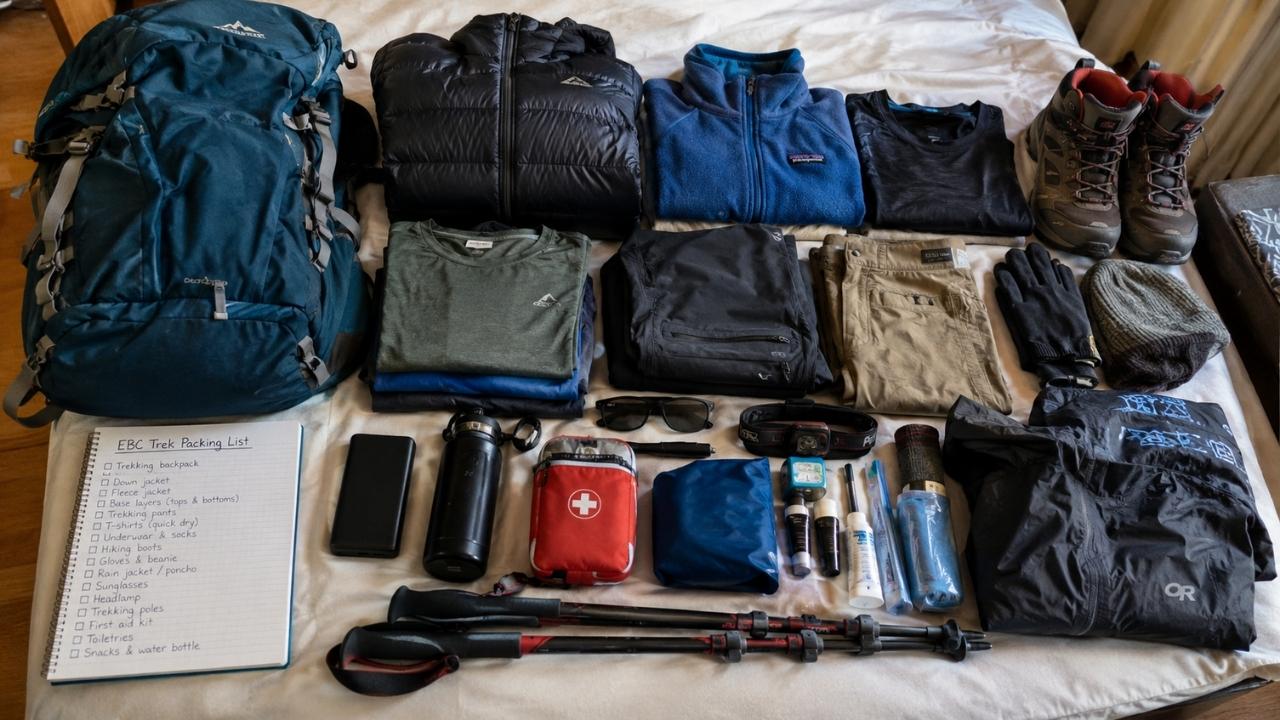
Packing for the Everest Base Camp Trek- Helicopter Return from Pheriche means preparing for long walking days, changing weather, strong UV exposure, and freezing temperatures at higher elevations. You will move from Lukla’s relatively mild conditions to nights in Gorakshep at 5,164 meters (16,942 feet), followed by an early-morning hike to Kala Patthar at approximately 5,550 meters (18,208 feet). Layered clothing, reliable trekking footwear, and a warm sleeping system are essential, even if you trek during spring or autumn. Keep your main luggage light and carry daily necessities in a comfortable daypack.
Clothing
Moisture-wicking base layers, including long-sleeved tops and thermal leggings
Quick-drying trekking T-shirts and trousers
Fleece jacket or insulated mid-layer
Down jacket suitable for freezing high-altitude conditions
Waterproof and windproof outer shell
Thermal underwear for cold mornings and nights
Warm trekking socks, plus spare pairs
Insulated gloves and a lighter pair for walking
Warm hat or beanie and a sun hat
Neck gaiter or buff
Comfortable underwear and sleepwear
Footwear
Broken-in trekking boots with good ankle support and reliable grip
Lightweight camp shoes or sandals for use inside teahouses
Gaiters if trekking during snowy or muddy conditions
Enough trekking socks to keep your feet dry and reduce blister risk
Sleeping and Trekking Gear
Four-season sleeping bag suitable for sub-zero temperatures, particularly in late autumn or winter
Sleeping bag liner for extra warmth and hygiene
Comfortable daypack, approximately 25–35 liters
Waterproof pack cover or dry bags
Trekking poles to reduce strain on steep ascents and descents
Headlamp with spare batteries for the early Kala Patthar hike
Reusable water bottles or a hydration system
Water purification tablets or a suitable filter
Sun Protection and Personal Care
UV-protection sunglasses, preferably suitable for high-altitude conditions
High-SPF sunscreen
SPF lip balm
Quick-drying towel
Toothbrush, toothpaste, and basic toiletries
Hand sanitizer, tissues, and wet wipes
Small rubbish bag for carrying personal waste
Health and First Aid
Personal prescription medication
Basic first-aid kit and blister treatment
Oral rehydration salts
Any altitude-related medication prescribed by your healthcare professional
Personal medication for common issues such as pain or digestive discomfort, as appropriate
Travel insurance details covering high-altitude trekking and emergency helicopter evacuation
Documents and Money
Passport and copies of important travel documents
Trekking permits and other required documentation, arranged or confirmed with your trekking operator
Travel insurance policy and emergency contact details
Nepali rupees in small denominations for personal expenses
A secure money pouch or wallet
Electronics and Useful Extras
Mobile phone and charger
Power bank
Charging cables and compatible adapter
Camera and spare batteries, if needed
Lightweight binoculars, if you enjoy mountain viewing
Earplugs for shared teahouse rooms
A small notebook or offline copy of important travel details
Travel Insurance
Travel insurance is essential for the Everest Base Camp Trek with Helicopter Return from Pheriche. Choose a policy that explicitly covers trekking up to 5,550 meters (18,208 feet), emergency helicopter evacuation, and medical treatment for altitude-related illness. Standard travel insurance may exclude high-altitude trekking or evacuation, so check the policy limits and exclusions before purchasing. Your policy should cover:
High-altitude trekking up to the maximum elevation of Kala Patthar (5,550m/ 18,208ft)
Emergency helicopter evacuation and mountain rescue
Medical treatment and hospitalization, including altitude sickness
Trip cancellation, interruption, and delays are covered
Emergency medical repatriation if required
The helicopter flight from Pheriche to Kathmandu is a planned part of this itinerary, but it is not a substitute for emergency evacuation coverage. Weather and operating conditions can also delay or prevent flights. Carry your insurance details and emergency assistance number, and confirm that your insurer can arrange rescue services in Nepal.
Safety and Trekking Support
Eco Holidays Nepal supports you throughout the EBC Trek Helicopter Return from Pheriche, from the first day on the trail to coordinating your return flight. Your guide manages the trekking pace, keeps track of trail and weather conditions, and helps you follow the planned acclimatization schedule as you gain altitude. You should report any symptoms or concerns early, so your guide can help assess the situation and arrange appropriate support.
Experienced Trekking Guide: Your guide leads the group along the route, helps you navigate changing trail conditions, and advises when to slow down, rest, or adjust the day’s plan.
Acclimatization and Altitude Awareness: The itinerary includes acclimatization stops in Namche Bazaar and Dingboche. Your guide can monitor how you are feeling and help identify possible altitude sickness symptoms. If symptoms worsen, your health takes priority over continuing higher.
Emergency Coordination: If you become seriously unwell or an accident occurs, Eco Holidays Nepal can help coordinate the appropriate response, including medical assistance and evacuation arrangements where necessary. Helicopter evacuation depends on weather, availability, and operational conditions.
Helicopter Return Support: Your team coordinates the planned helicopter transfer from Pheriche to Kathmandu. Mountain weather can cause delays or cancellations, so follow your guide’s instructions and allow flexibility in your onward travel plans.
Practical Assistance on the Trail: Your guide can help you understand daily walking conditions, prepare for cold weather at higher elevations, and coordinate with teahouses along the route so you know what to expect at each overnight stop.
**Note: Before departure, confirm the specific support included in your package, including guide arrangements, emergency procedures, and assistance during helicopter delays. Carry your own travel insurance details and disclose any relevant medical concerns to your trekking team before the trek begins*
Necessary Permits for Everest Base Camp Trek
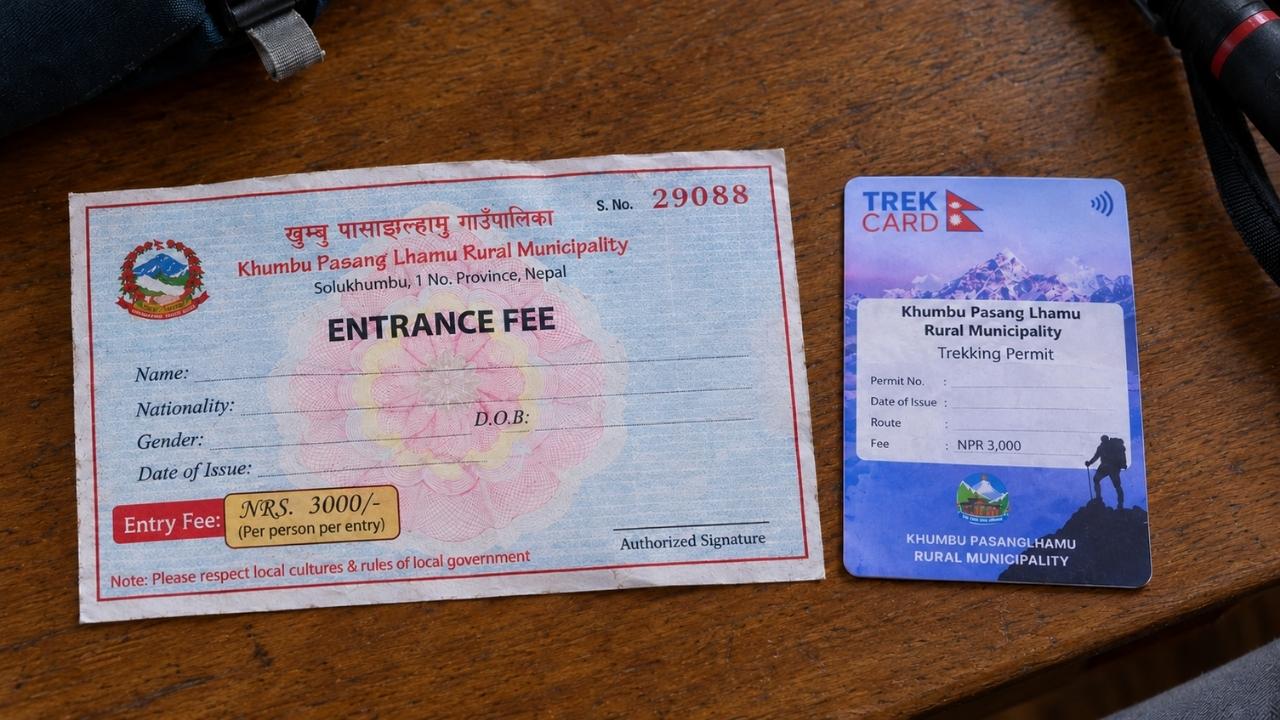
The Everest Base Camp Trek requires two main permits: the Sagarmatha National Park Entry Permit and the Khumbu Pasang Lhamu Rural Municipality Permit. The first allows entry into the protected national park, which the trail enters near Monjo, while the second covers the local municipality through which the Everest trekking route passes. For most foreign trekkers, the published fees are NPR 3,000 per person for each permit, bringing the combined cost to approximately NPR 6,000 per person. These fees should be reconfirmed before departure, as government and local charges can change.
Eco Holidays Nepal will take care of the required permit arrangements for your trek. You will need to provide your passport details and any requested documents before departure. Keep your passport and permits accessible during the journey, as they may be checked at designated points along the trail. A separate restricted-area permit is not required for the standard Everest Base Camp and Kala Patthar route. However, confirm any additional documentation requirements with Eco Holidays Nepal before your trek, particularly if your itinerary includes destinations beyond the standard route.
**Note: Confirm the current permit fees and which charges are included in your trekking package when booking**
Everest Base Camp Trek- Helicopter Return From Pheriche FAQs
Everest Base Camp Trek- Helicopter Return From Pheriche FAQs
What Is Everest Base Camp Trek Helicopter Return From Pheriche?
This is a 10-day trekking package that takes you from Lukla through the Khumbu Valley to Everest Base Camp (5,364m/17,598ft) and Kala Patthar (approximately 5,550m/18,208ft), before you descend to Pheriche (4,230m/13,877ft) for a helicopter flight to Kathmandu. The route includes acclimatization stops in Namche Bazaar and Dingboche, along with traditional Sherpa villages and views of Everest, Lhotse, Nuptse, and Ama Dablam. The helicopter return saves you from retracing the entire trail on foot toward Lukla.
How Many Days Does the Everest Base Camp Trek With Helicopter Return From Pheriche Take?
The itinerary takes 10 days, beginning with your flight from Kathmandu to Lukla and trek to Phakding, and ending with the helicopter flight from Pheriche to Kathmandu. It includes two acclimatization days, the visit to Everest Base Camp, and the early-morning Kala Patthar hike. Allow extra time beyond the package dates if you have an international flight to catch, as weather can delay Lukla flights or the helicopter transfer.
What Is the Maximum Altitude Reached on This Everest Base Camp Trek?
The highest point is Kala Patthar at approximately 5,550 meters (18,208 feet), reached during the early-morning hike on Day 9. Everest Base Camp itself sits at 5,364 meters (17,598 feet), while Gorakshep, where you spend the night before the Kala Patthar hike, is around 5,164 meters (16,942 feet). These elevations make gradual acclimatization important, even for fit trekkers.
Do I Need Previous High-Altitude Trekking Experience for This Trek?
Previous high-altitude trekking experience is helpful but not essential. You should, however, be comfortable walking for around 5 to 7 hours on consecutive days, including steep uphill sections, rocky paths, and long descents. The route includes acclimatization days in Namche Bazaar and Dingboche, but these do not eliminate the risk of altitude sickness. Good endurance, suitable equipment, and following your guide’s advice are more important than having technical climbing experience.
How Many Hours Do You Walk Each Day on the Everest Base Camp Trek?
Walking time generally ranges from 3 to 7 hours on regular trekking days, with longer days for the main highlights. The Phakding–Namche Bazaar and Namche–Tengboche stages usually take around 5 to 7 hours. The trek from Lobuche to Gorakshep and onward to Everest Base Camp takes approximately 8 to 9 hours, including the return to Gorakshep. The following day, allow time for the Kala Patthar hike and the descent to Pheriche. Actual times depend on your pace, weather, trail conditions, and how you respond to altitude.
Is Altitude Sickness a Risk on This Trek, and How Can I Reduce the Risk?
As you ascend above 5,000 meters and sleep at Gorakshep on this EBC Trek Helicopter Return From Pheriche, acute mountain sickness (AMS) is a genuine concern. Early symptoms include headache, nausea, dizziness, loss of appetite, and unusual fatigue. Reduce the risk by following the acclimatization schedule, walking steadily, drinking enough fluids, and avoiding further ascent if symptoms develop. Tell your guide immediately if you feel unwell. Worsening symptoms, confusion, difficulty walking straight, or breathlessness at rest require urgent medical attention and descent.
Can I Trek to Everest Base Camp and Kala Patthar on the Same Trip?
Yes. Both Everest Base Camp and Kala Patthar are included in this 10-day itinerary, but they are visited on separate days to make the schedule more manageable at altitude. You trek to Everest Base Camp (5,364 meters) from Gorakshep on Day 8, then return to Gorakshep overnight. On Day 9, you can hike to Kala Patthar (5,550 meters) before descending to Pheriche for the planned helicopter transfer the following day’s itinerary segment. Kala Patthar is particularly popular for its panoramic view of Mount Everest and the surrounding peaks.
What Happens If Bad Weather Delays or Cancels the Helicopter Flight From Pheriche?
Helicopter operations depend on visibility, wind, weather, and safe landing conditions. If the flight cannot operate as scheduled, you may need to wait in Pheriche or stay overnight while your operator coordinates the next available option. Additional accommodation, meals, or alternative transport may incur extra costs, depending on your package terms. Keep a flexible schedule after the trek and avoid booking an international flight too close to your planned helicopter arrival in Kathmandu. The flight is planned, but it cannot be guaranteed for a specific time.
Can Beginners or First-Time Trekkers Complete the Everest Base Camp Trek With Helicopter Return From Pheriche?
Yes, beginners can complete the trek if they have adequate fitness, prepare for several consecutive days of walking, and follow the acclimatization schedule. You do not need mountaineering skills, but the high altitude makes this more demanding than a typical hiking holiday. The helicopter return reduces the need to walk back to Lukla, but you must still complete the challenging ascent to Everest Base Camp and Kala Patthar. If this is your first multi-day trek, build up your walking endurance before departure and discuss any health concerns with a medical professional.
What Additional Expenses Should I Budget for During the Trek?
Your extra spending depends on what the package includes. Common expenses are hot showers, device charging, Wi-Fi, snacks, bottled drinks, and personal purchases at teahouses. You should also budget for guide and porter tips, travel insurance covering high-altitude trekking and helicopter evacuation, and any meals or accommodation not included in your package. Keep some Nepali rupees in cash because card payments and ATMs become less reliable as you gain altitude.
Can I Book a Private Departure for the Everest Base Camp Trek With Helicopter Return?
Yes, you can enquire with Eco Holidays Nepal about arranging a private departure for your preferred dates. A private trekking departure allows you to travel with your own group and coordinate the pace and arrangements more closely with your guide. However, a private trekking departure does not automatically mean a private helicopter charter. Confirm whether the return flight is shared or privately chartered, and ask about any additional cost before booking.
Are There Weight Restrictions for Passengers on the Pheriche Helicopter Flight?
Yes, helicopter payload limits depend on passenger weights, baggage, altitude, weather, and operating conditions. Because Pheriche is at approximately 4,230 meters, the helicopter cannot necessarily carry the same load as it could at a lower elevation. Passengers may be weighed before departure, and the operator may need to divide a group into separate flights if the payload limit is exceeded. Baggage allowances vary by operator, so confirm the exact passenger and luggage limits before your trek.
A surprisingly rich birding escape right on Kathmandu's doorstep
I only had a single free day in Kathmandu before my flight home, and taking this birding excursion to Phulchwoki Hill was the best way to spend it. Driving up through the dense oak and rhododendron forests, the temperature dropped and the forest came alive with bird activity. Within a few hours of quiet walking, we logged Cutias, Kalij Pheasants, Laughingthrushes, and several colorful Sunbirds. Our guide knew every feeding spot along the trail and brought along high-end spotting scopes that made capturing crisp photographs effortlessl.
MMaria Luz Esteve1st Apr, 2022
Great Cultural Experience
I had planned to visit Nepal before COVID, but my trip was cancelled. Finally, I made it to Kathmandu in 2022. The city tour was a great choice for my first day. We saw many beautiful temples and old buildings, and our guide told us interesting stories about the places. Kathmandu was lively and colorful, and I enjoyed walking around the old areas. Thank you Eco Holidays Nepal for making our first day easy and enjoyable. Highly recommended for anyone visiting Kathmandu.
DDolors Pallas15th Mar, 2022
My First Big Trip After COVID
This was my first major international trip after the COVID years, so I was excited and nervous at the same time. The Everest Base Camp trek was better than I expected. The team explained everything clearly and helped us with the daily walking and altitude. Some tea houses were still getting back to normal after the quiet COVID period, but I actually liked the peaceful feeling in the villages. The scenery was unbelievable. Everything was well arranged, and I would happily travel with Eco Holidays Nepal again.