

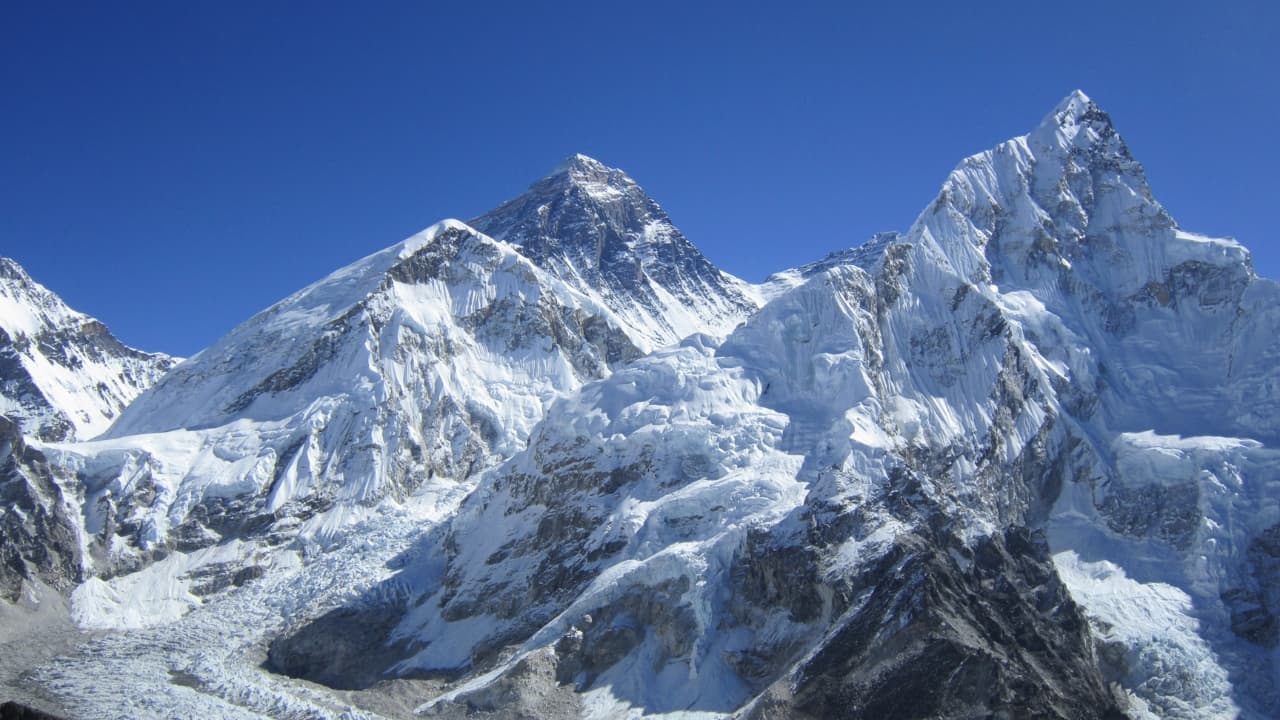
The Everest Base Camp Trek With Helicopter Return combines the challenge of trekking into the heart of the Himalayas with the convenience of flying back to Kathmandu. Over 10 days, you travel through the Khumbu Valley, walk beneath some of the world's highest peaks, experience Sherpa villages and Buddhist monasteries, and reach Everest Base Camp at 5,364 meters (17,598 feet). Instead of spending several additional days retracing your steps, you return by helicopter after hiking to Kala Patthar, one of the region's finest viewpoints at approximately 5,550 meters (18,209 feet).
What makes this journey appealing is not simply the time saved. You still experience the gradual transformation of the landscape, from the forested trails around Phakding to Namche Bazaar and the stark, high-altitude terrain surrounding Lobuche and Gorakshep. The two acclimatization days at Namche Bazaar and Dingboche are essential parts of the experience, helping your body adjust as you climb higher. The helicopter journey adds another perspective, revealing the scale of the Himalayan valleys, glaciers, and mountain ridges from above.
For travelers balancing limited vacation time with the ambition of reaching Everest Base Camp, this option offers a practical alternative to the traditional return trek. However, it remains a physically demanding high-altitude adventure, and the helicopter flight depends on weather and operating conditions. This guide covers the EBC Trek with helicopter return 2026 package cost, day-by-day itinerary, inclusions, difficulty, best seasons, and helicopter arrangements to help you decide whether this is the right way to experience Everest.
Everest Base Camp Trek With Helicopter Return: Overview and Facts
Eco Holidays Nepal's 10-day Everest Base Camp Trek With Helicopter Return combines a classic high-altitude trekking experience with a helicopter flight back to Kathmandu. The route passes through Phakding, Namche Bazaar, Tengboche, Dingboche, Lobuche, and Gorakshep before reaching Everest Base Camp at 5,364 meters (17,598 feet). The journey also includes a sunrise hike to Kala Patthar at approximately 5,550 meters (18,208 feet), followed by a helicopter return from the Gorakshep area.
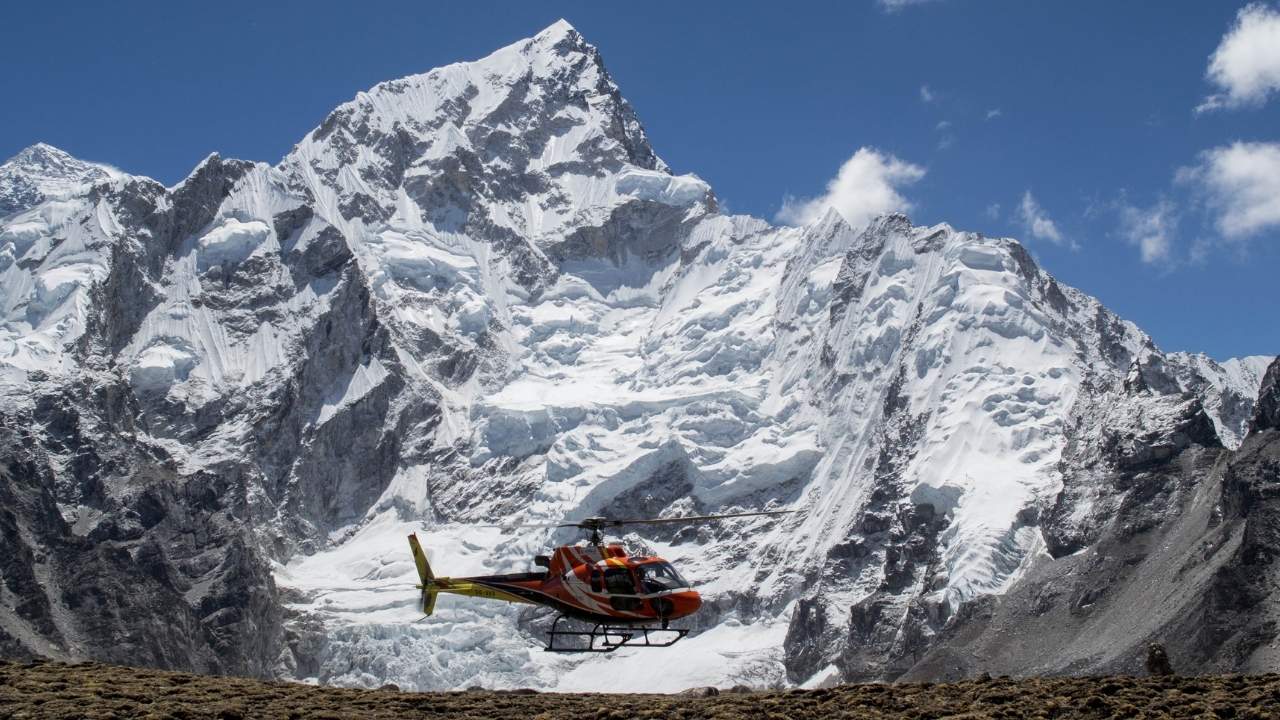
The itinerary includes two acclimatization days, at Namche Bazaar and Dingboche, to help trekkers adjust to increasing altitude. By replacing much of the usual downhill trek with a helicopter flight, the trip saves several days of walking while preserving the main trekking experience. The package includes teahouse accommodation, meals during trekking, a guide, permits, and the specified helicopter return on a shared basis.
Everest Base Camp Trek With Helicopter Return: Quick Facts
|
Trek Details |
Information |
|
Duration |
10 days |
|
Destination |
Everest Base Camp, Khumbu, Nepal |
|
Starting Point |
Lukla |
|
Everest Base Camp Elevation |
5,364 meters (17,598 feet) |
|
Highest Viewpoint |
Kala Patthar 5,550 meters (18,208 feet) |
|
Helicopter Return |
Gorakshep Area to Kathmandu |
|
Acclimatization Days |
2 (Namche Bazaar and Dingboche) |
|
Accommodation |
Teahouses During the Trek; One Kathmandu Hotel Night Included |
|
Meals |
Breakfast, Lunch and Dinner During Trekking |
|
Group Size |
Minimum 1 Person |
|
Trek Grade |
|
|
Helicopter Arrangement |
Shared Flight |
|
Listed Price |
US$1,975 to 2,375 Per Person (Depending on Group Size) |
What Is the Everest Base Camp Trek With Helicopter Return?
The Everest Base Camp Trek With Helicopter Return is a high-altitude trekking journey that takes you to Everest Base Camp at 5,364 meters (17,598 feet), with a helicopter flight replacing much of the usual downhill trek back through the Khumbu Valley. With Eco Holidays Nepal's 10-day itinerary, you walk from Lukla through Phakding, Namche Bazaar, Tengboche, Dingboche, and Lobuche before reaching Gorakshep and Everest Base Camp. The following morning, you hike to Kala Patthar at approximately 5,550 meters (18,208 feet) for sunrise before taking a shared helicopter flight back to Kathmandu.
The difference becomes clear when you consider the return journey. On a conventional Everest Base Camp trek, you generally retrace the trail through the same mountain settlements over several days. With the helicopter-return option, you still experience the major walking stages and the gradual climb into the high Himalayas, but you avoid approximately three to four days of downhill trekking. The flight also gives you an aerial perspective of the glaciers, deep valleys, and surrounding peaks, including Everest, Lhotse, Nuptse, and Ama Dablam.
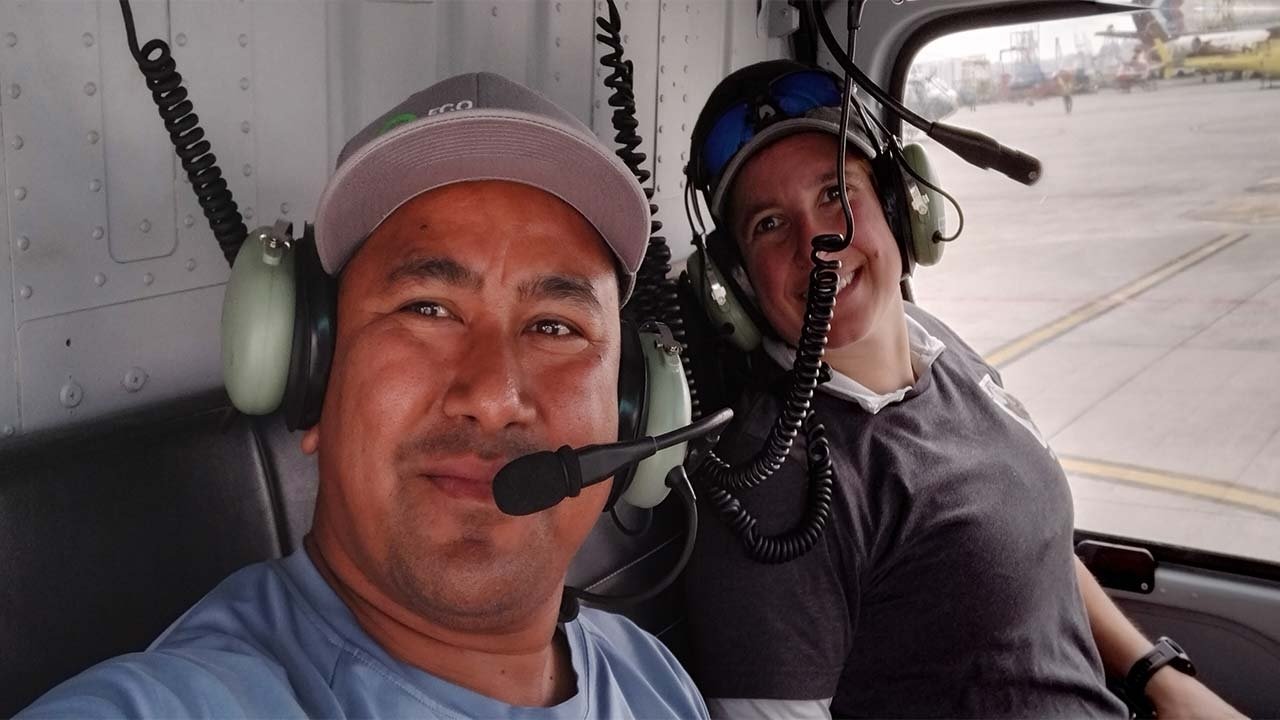
However, this is not a helicopter sightseeing tour with a brief stop at Everest Base Camp. You still need to complete demanding walking days, including the approximately 11.5 km round trip between Gorakshep and Everest Base Camp, which the itinerary estimates at 8 to 9 hours. The ascent also includes two acclimatization days, at Namche Bazaar (3,440 meters) and Dingboche (4,410 meters), before you continue toward the higher settlements. Flying down reduces the time spent descending, but it does not remove the physical demands or altitude-related risks of the trek.
This format is particularly suitable for travelers who want to reach Everest Base Camp but have limited time for a longer return trek. It can also appeal to those who prefer to spend their remaining days enjoying the Himalayan scenery from the air rather than walking back over familiar ground.
**Note: The helicopter return is shared, and the flight remains subject to weather and operational conditions**
Everest Base Camp Trek With Helicopter Return Itinerary
Eco Holidays Nepal's 10-day Everest Base Camp Trek With Helicopter Return follows the classic trail through the Khumbu Valley, allowing you to experience the major Sherpa settlements, high-altitude landscapes, and Everest Base Camp before returning to Kathmandu by helicopter. The route includes two acclimatization days at Namche Bazaar and Dingboche, before continuing toward Lobuche and Gorakshep. On the final morning, you hike to Kala Patthar for sunrise and then fly back to Kathmandu, avoiding several days of downhill trekking.
The itinerary below follows Eco Holidays Nepal's published package, including its daily distances, elevations, and estimated walking times.
10-Day Itinerary at a Glance
|
Day |
Route and Activity |
Elevation |
Distance and Duration |
|
01 |
Arrive in Kathmandu; transfer to hotel |
1,400 meters |
Airport transfer: approx. 20 minutes |
|
02 |
Fly to Lukla; trek to Phakding |
2,860 meters to 2,610 meters |
8 km; 3 to 4 hours trekking; 35-minute flight |
|
03 |
Phakding to Namche Bazaar |
3,440 meters |
12.3 km; 5 to 6 hours |
|
04 |
Acclimatization and exploration at Namche |
3,440 meters |
Acclimatization hike to Hotel Everest View (3,880 meters) |
|
05 |
Namche Bazaar to Tengboche |
3,867 meters |
10.7 km; 5 to 6 hours |
|
06 |
Tengboche to Dingboche |
4,410 meters |
9.8 km; 5 to 6 hours |
|
07 |
Acclimatization at Dingboche |
4,410 meters |
Optional acclimatization hike |
|
08 |
Dingboche to Lobuche |
4,910 meters |
8.8 km; 5 to 6 hours |
|
09 |
Lobuche to Gorakshep, visit Everest Base Camp, return to Gorakshep |
5,364 meters |
11.5 km; 8 to 9 hours |
|
10 |
Sunrise hike to Kala Patthar; helicopter to Kathmandu |
5,550 meters |
1.2 km; 1.5 to 2 hours and helicopter flight: approx. 1 to 1.5 hours |
Everest Base Camp Trek With Helicopter Return Cost in 2026
The cost of the Everest Base Camp Trek With Helicopter Return in 2026 generally ranges from around US$1,800 to US$3,500 per person for many locally operated, shared-helicopter packages, although some operators charge considerably more for premium services or private arrangements. The final price depends on group size, accommodation standards, the helicopter's return route, and the services included in the trekking package.
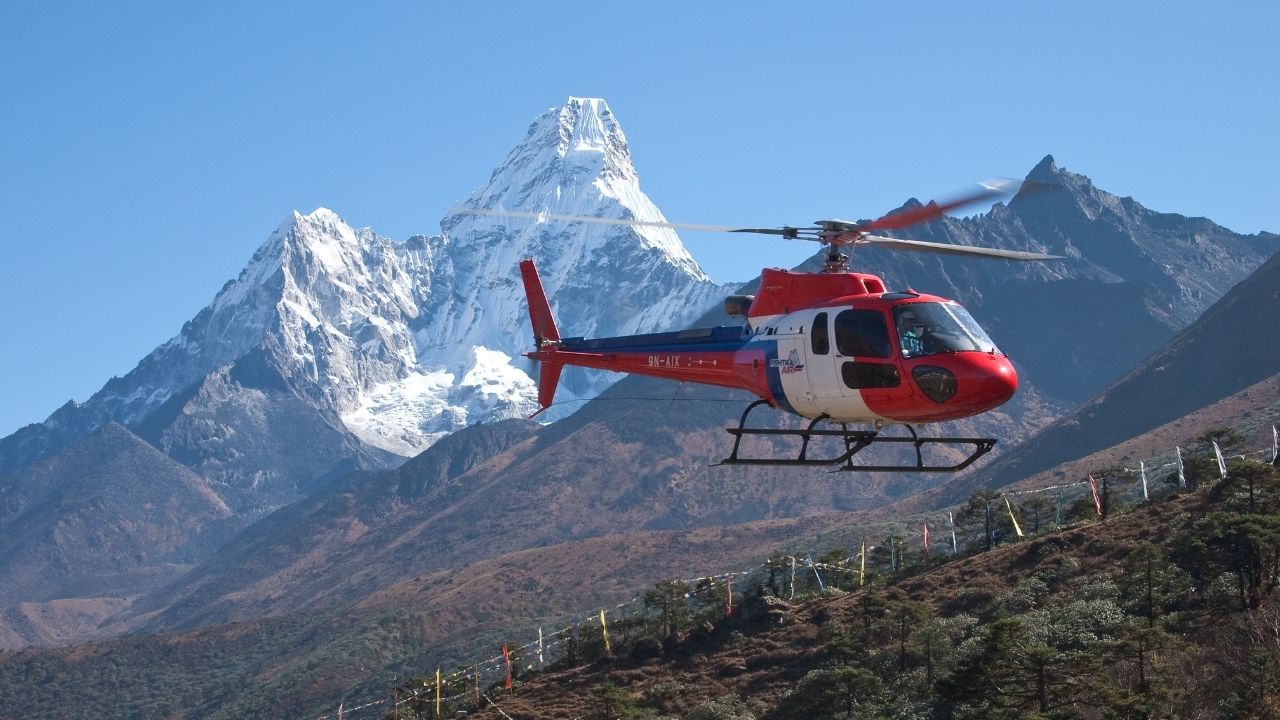
The helicopter return is the main additional expense compared with a conventional Everest Base Camp trek. You still need accommodation, meals, permits, a guide, and transport to Lukla, but you replace several days of descending on foot with a flight from the upper Khumbu region. The price should therefore be assessed against the complete package, not simply the cost of the helicopter seat. Travelers should also distinguish a trek-and-fly package from a helicopter sightseeing tour, which does not involve completing the full walking route to Everest Base Camp.
Everest Base Camp Trek With Helicopter Return Cost at Eco Holidays Nepal
Eco Holidays Nepal's 10-day package includes the trek to Everest Base Camp, a sunrise hike to Kala Patthar, and a shared helicopter return from the Gorakshep area to Kathmandu. The published price varies according to the number of travelers booking together.
|
Group Size |
Price Per Person |
|
1 Person |
US$2,375 |
|
2 to 4 People |
US$2,175 |
|
5 to 10 People |
US$2,050 |
|
11 to 20 People |
US$1,975 |
These are the prices listed on the Eco Holidays Nepal package page and should be reconfirmed before booking. The per-person rate falls as the group grows, making a shared arrangement particularly attractive for families or friends traveling together. Solo travelers pay the highest listed rate because the trip's shared costs are spread across fewer people.
The package includes the one-way Kathmandu to Lukla flight, a shared helicopter return, a trekking guide, permits, teahouse accommodation, meals during the trek, and one night in a standard Kathmandu hotel on a twin-sharing basis. Porter service is listed separately at US$200, while personal expenses, extra hotel nights, alcoholic beverages, Wi-Fi, hot showers, and device charging are among the exclusions. Check the current package terms for the complete list before making a booking.
For full details, see the Everest Base Camp Trek With Helicopter Return package by Eco Holidays Nepal.
Best Time for Everest Base Camp Trek With Helicopter Return
The best time for the Everest Base Camp Trek With Helicopter Return is spring (March to May) and autumn (September to November). These seasons generally offer more favorable trekking conditions, clearer mountain views, and better opportunities for helicopter operations. October is a strong all-round choice, while April combines milder daytime weather at lower elevations with rhododendron blooms and activity around Everest Base Camp.
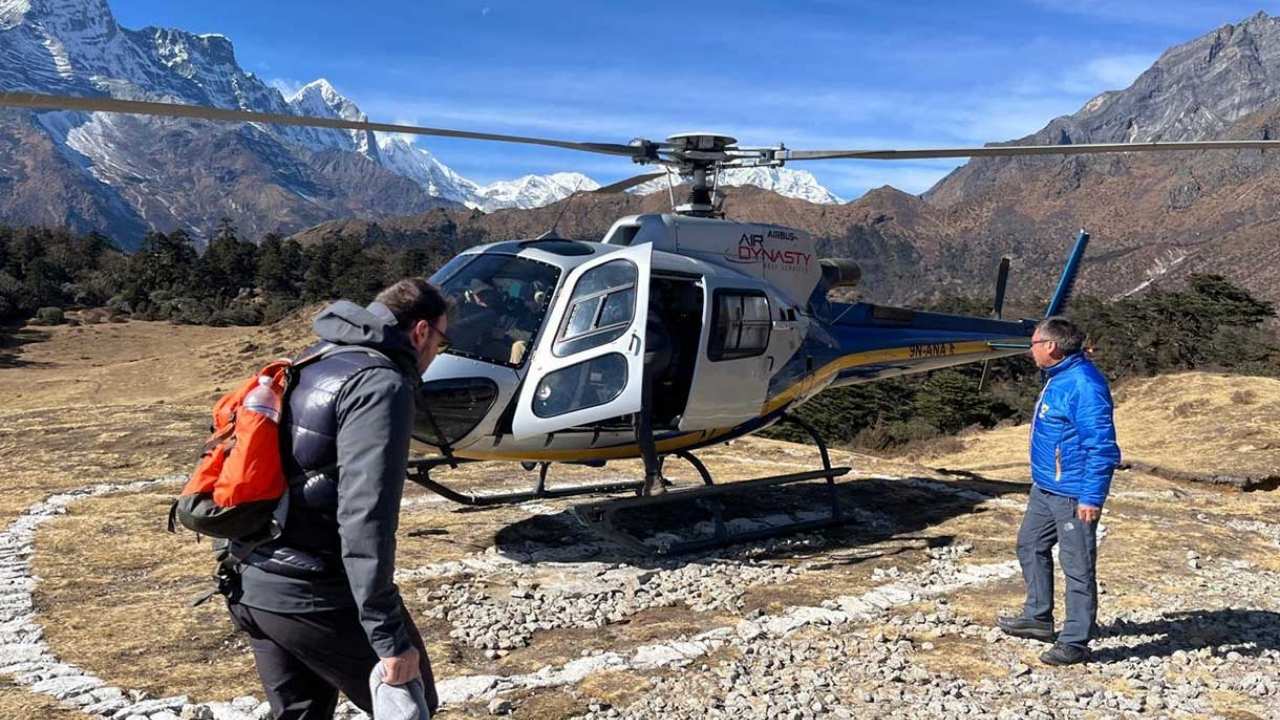
Temperature changes significantly along the route. Days may feel comfortable while walking through the lower Khumbu, but mornings and nights become much colder above Dingboche. At Gorakshep (5,164 meters), temperatures can fall well below freezing, particularly in autumn and winter. The early-morning hike to Kala Patthar (approximately 5,550 meters) is therefore likely to be one of the coldest parts of the journey.
Seasonal Weather and Temperature
|
Season |
Lower Trail (Daytime) |
Gorakshep (Typical Conditions) |
Visibility and Trail Conditions |
|
Spring (March to May) |
Approximately 5°C to 15°C |
Nights often below 0°C; colder early in spring |
Generally favorable mornings; warmer days, with increasing cloud and occasional pre-monsoon precipitation later in the season |
|
Autumn (September to November) |
Approximately 5°C to 15°C |
Nights frequently below 0°C, becoming colder in November |
Often the clearest mountain views; trails usually drier after the monsoon |
|
Monsoon (June to August) |
Approximately 10°C to 20°C |
Cold, with possible snow at higher elevations |
Cloud, rain, and wet lower trails; reduced visibility can disrupt flights |
|
Winter (December to February) |
Approximately 0°C to 10°C |
Severe overnight cold, often well below 0°C |
Clear spells are possible, but snow, ice and strong winds can affect trekking and helicopter operations |
**Note: Temperatures are broad planning estimates, not daily forecasts. Actual conditions vary with elevation, wind, cloud cover and the time of day. Lower-trail temperatures refer roughly to the Phakding to Namche area; Gorakshep is substantially colder**
-
Spring: March to May
Spring brings gradually warmer days and longer daylight hours. Rhododendrons bloom along parts of the lower trail, while the upper Khumbu remains a landscape of rocky slopes, glaciers and snow-covered peaks. April and early May are appealing for trekkers who want a balance of daytime comfort and mountain scenery. Cloud and pre-monsoon showers can become more frequent as May progresses, so early starts are useful for mountain views and the Kala Patthar hike.
-
Autumn: September to November
Autumn is generally the strongest season for clear Himalayan views, especially in October, after the summer monsoon has passed. October offers a good balance of dry trails, visibility, and trekking temperatures. November can also provide excellent views, but temperatures drop as winter approaches, making warm layers, insulated gloves, and suitable sleeping equipment particularly important for the night at Gorakshep.
How Weather Affects the Helicopter Return?
A helicopter flight depends on visibility and flying conditions along the route, not simply the weather in Kathmandu. Low cloud, strong winds, snowfall, or poor visibility around Gorakshep can delay departure even when the trekking trail remains passable. Spring and autumn generally provide favorable operating windows, but no season guarantees a flight. Keep some flexibility in your travel schedule and budget for possible extra accommodation or transport if weather delays your return.
Difficulty, Altitude and Acclimatization
The Everest Base Camp Trek With Helicopter Return is a challenging high-altitude trek, even though the helicopter removes several days of walking from the return journey. You still follow the demanding uphill route through the Khumbu Valley, spend several nights above 3,000 meters, and walk to Everest Base Camp at 5,364 meters (17,598 feet). The following morning, the hike to Kala Patthar takes you to approximately 5,550 meters (18,209 feet), where the air contains considerably less available oxygen than at sea level.
The difficulty builds gradually as you gain elevation. Lower sections between Lukla, Phakding and Namche Bazaar include forest paths, suspension bridges and sustained climbs. Beyond Tengboche, the landscape becomes more exposed, vegetation thins, and the trail climbs toward Dingboche, Lobuche and Gorakshep. Walking uphill, recovering after a long day, and sleeping at altitude can become increasingly demanding, even if you are accustomed to hiking at lower elevations.
One of the toughest stages is the excursion from Gorakshep to Everest Base Camp and back. Eco Holidays Nepal estimates this section at approximately 11.5 km (7.1 miles) and 8 to 9 hours. The trail crosses uneven, rocky terrain beside the Khumbu Glacier, and progress can be slow at this altitude. The early start for Kala Patthar adds another physical demand before the helicopter flight. The return flight saves time and reduces the need for several days of downhill walking, but it does not make the ascent itself easier.
Key Everest Base Camp Trek Elevation
As you progress toward Everest Base Camp, the increasing elevation becomes one of the main factors affecting your pace, energy, and recovery. The route climbs from Lukla at 2,860 meters to Gorakshep at 5,164 meters, before reaching Everest Base Camp and ascending further to Kala Patthar. The elevations below show how quickly the terrain rises and where you can expect the greatest physical demands.
|
Location |
Elevation |
What It Means for Trekkers |
|
Lukla |
2,860m/ 9,383ft |
The trek begins at an elevation where some people may already notice the effects of thinner air. |
|
Namche Bazaar |
3,440m/ 11,286ft |
The first major climb and the first planned acclimatization stop. |
|
Tengboche |
3,867m/ 12,687ft |
A higher overnight stop after a day of climbing and descending through the valley. |
|
Dingboche |
4,410m/ 14,468ft |
A second acclimatization stop before continuing into the high Khumbu. |
|
Lobuche |
4,910m/ 16,108ft |
Walking and recovery can feel noticeably harder at this elevation. |
|
Gorakshep |
5,164m/ 16,942ft |
The overnight base for the Everest Base Camp excursion and Kala Patthar hike. |
|
Everest Base Camp |
5,364m/ 17,598ft |
The main trekking destination, reached on foot from Gorakshep. |
|
Kala Patthar |
5,550m/ 18,208ft |
The highest point on this itinerary, with a demanding early-morning ascent. |
**Note: The itinerary includes acclimatization days at Namche Bazaar (3,440 meters) and Dingboche (4,410 meters). These breaks are important because your body needs time to adjust to lower oxygen availability as you climb. Without adequate acclimatization, the risk of altitude-related illness increases**
How Fit Do You Need to Be for Everest Base Camp Trek With Heli Return?
You do not need mountaineering experience, but you should be prepared for consecutive days of walking, sustained uphill sections, and a long day reaching Everest Base Camp. Before departure, build endurance through regular hikes, brisk walking, stair climbing, or uphill treadmill sessions. Practice longer walks on consecutive days, ideally carrying the daypack you plan to use during the trek.
Fitness helps you manage the physical workload, but it cannot predict how well you will adjust to altitude. Walk at a pace that allows you to breathe comfortably, eat and drink regularly, and avoid rushing to match faster trekkers. The helicopter return is best understood as a way to shorten the itinerary and reduce the downhill walking, not as a shortcut around the demands of high-altitude trekking.
Is the Everest Base Camp Trek With Helicopter Return Worth It?
Absolutely, especially for travelers who want to experience the Everest region on foot and return to Kathmandu with an unforgettable aerial journey through the Himalayas. Eco Holidays Nepal's 10-day Everest Base Camp Trek With Helicopter Return combines the adventure of trekking through the Khumbu Valley with the extraordinary experience of flying above its glaciers, rugged valleys, and towering Himalayan peaks.
The journey includes a trek to Everest Base Camp at 5,364 meters (17,598 feet), followed by an early-morning hike to Kala Patthar at approximately 5,550 meters (18,209 feet), one of the finest viewpoints for Mount Everest and the surrounding Himalayan giants. After experiencing these iconic destinations, you return by helicopter from the Gorakshep area, adding a spectacular new perspective on the landscapes you have explored on foot. It is this combination of physical adventure, high-altitude scenery, and aerial sightseeing that makes the experience particularly rewarding.
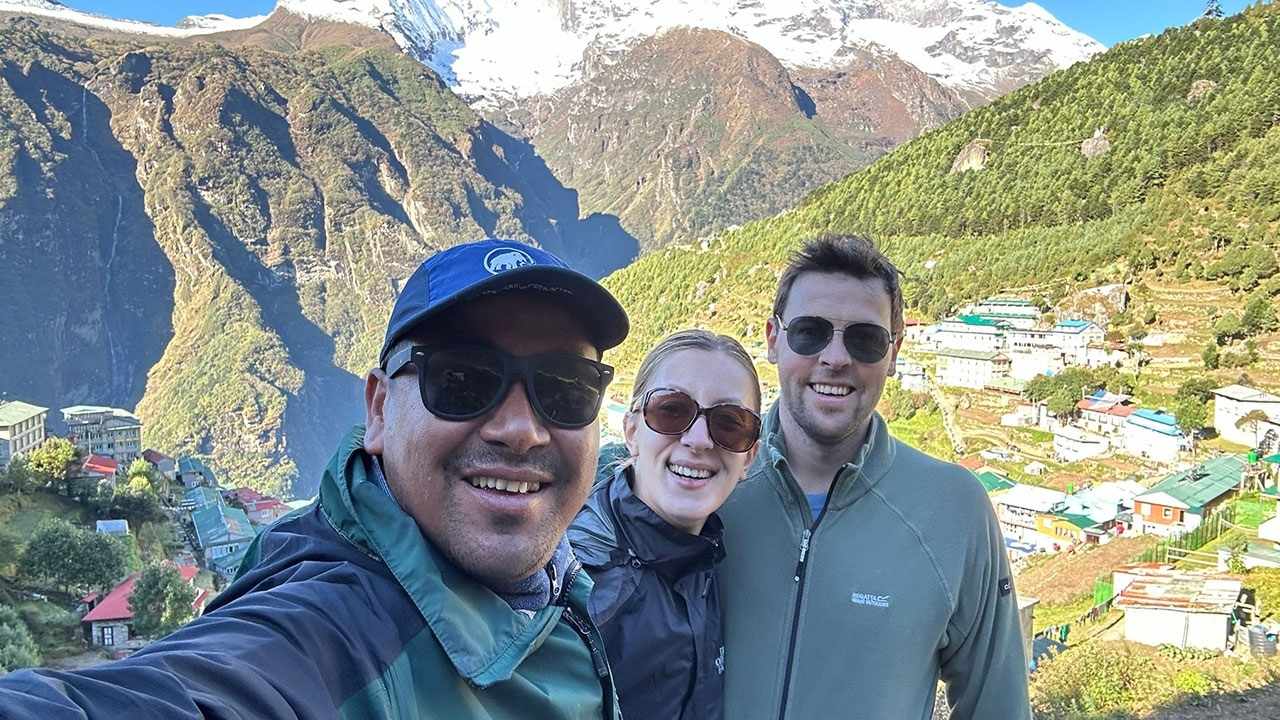
While this is a premium trekking experience, the value lies in combining the essential Everest Base Camp journey with a helicopter flight and completing the adventure in just 10 days. You still experience the villages, mountain trails, suspension bridges, and changing landscapes that make trekking in the Khumbu so memorable, with the helicopter providing a spectacular conclusion to the journey.
Who Is This Trek Best For?
This trek is an excellent choice for travelers who:
-
Have Limited Vacation Time: Experience Everest Base Camp, Kala Patthar, and the surrounding Khumbu region in a 10-day itinerary.
-
Want the Complete Trekking Experience: Walk through Sherpa villages, mountain settlements, and dramatic Himalayan terrain before returning by helicopter.
-
Value a Memorable Aerial Journey: See the glaciers, deep valleys, and Himalayan peaks from above, gaining a different perspective on the landscapes explored during the trek.
-
Prefer a Premium Trekking Experience: Combine an established high-altitude trekking route with the convenience and excitement of a helicopter return.
-
Enjoy Active Mountain Adventures: Take on consecutive trekking days and the demanding ascent to Kala Patthar while experiencing the Everest region at close range.
The Everest Base Camp Trek With Helicopter Return is particularly worthwhile if you want the satisfaction of reaching Everest Base Camp on foot, the panoramic views from Kala Patthar, and the excitement of a Himalayan helicopter flight within a limited holiday period.