Highlights of EBC with Lobuche and Island Peak (Everest Base Camp Trek With Two Peaks Climbing)
Experience an extraordinary 21-day Himalayan adventure combining the classic Everest Base Camp Trek with technical summit attempts on Lobuche East (6,119m/ 20,075ft) and Island Peak (6,189m/ 20,305ft)
Follow the legendary Everest trekking trail from Lukla through Phakding, Namche Bazaar, Tengboche, and Dingboche, experiencing traditional Sherpa villages, suspension bridges, rhododendron forests, and dramatic Himalayan landscapes
Stand at Everest Base Camp (5,364m/ 17,598ft), surrounded by the rugged Khumbu Glacier, towering ice formations, and the legendary Khumbu Icefall
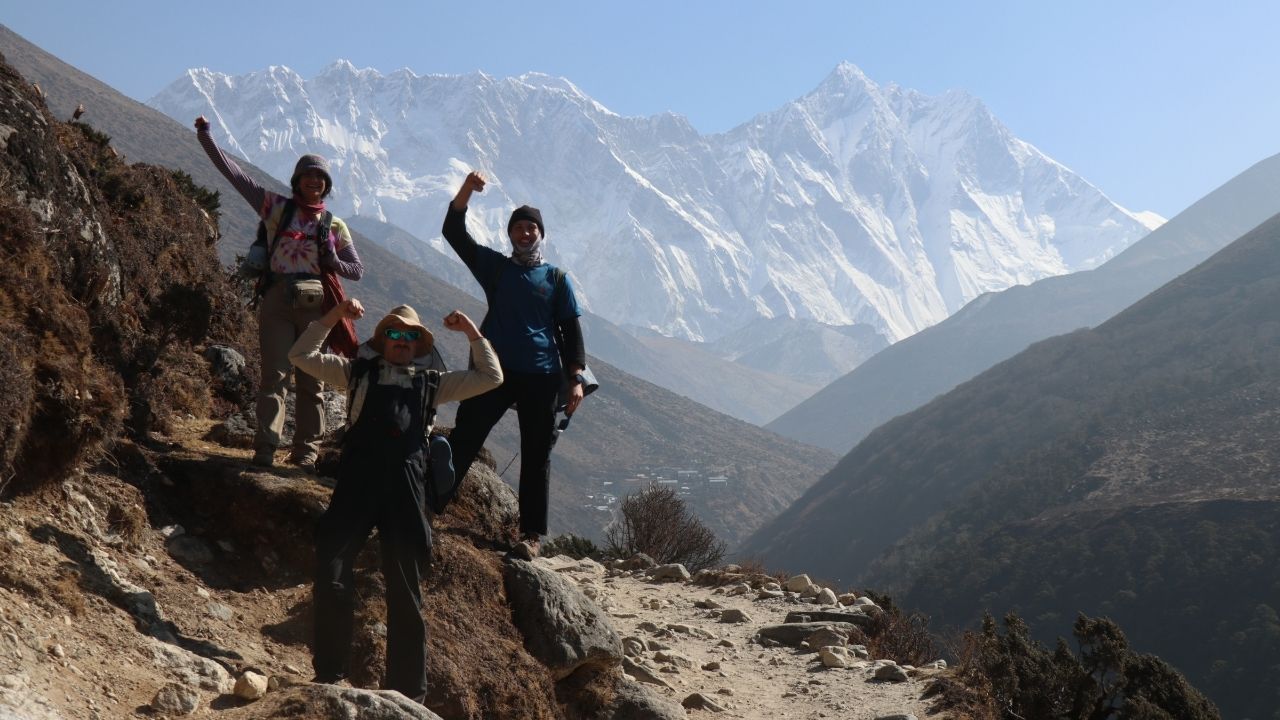
Witness a spectacular Himalayan sunrise from Kala Patthar (5,550m/ 18,208ft), with close-up views of Mount Everest, Nuptse, Pumori, and the surrounding snow-covered peaks
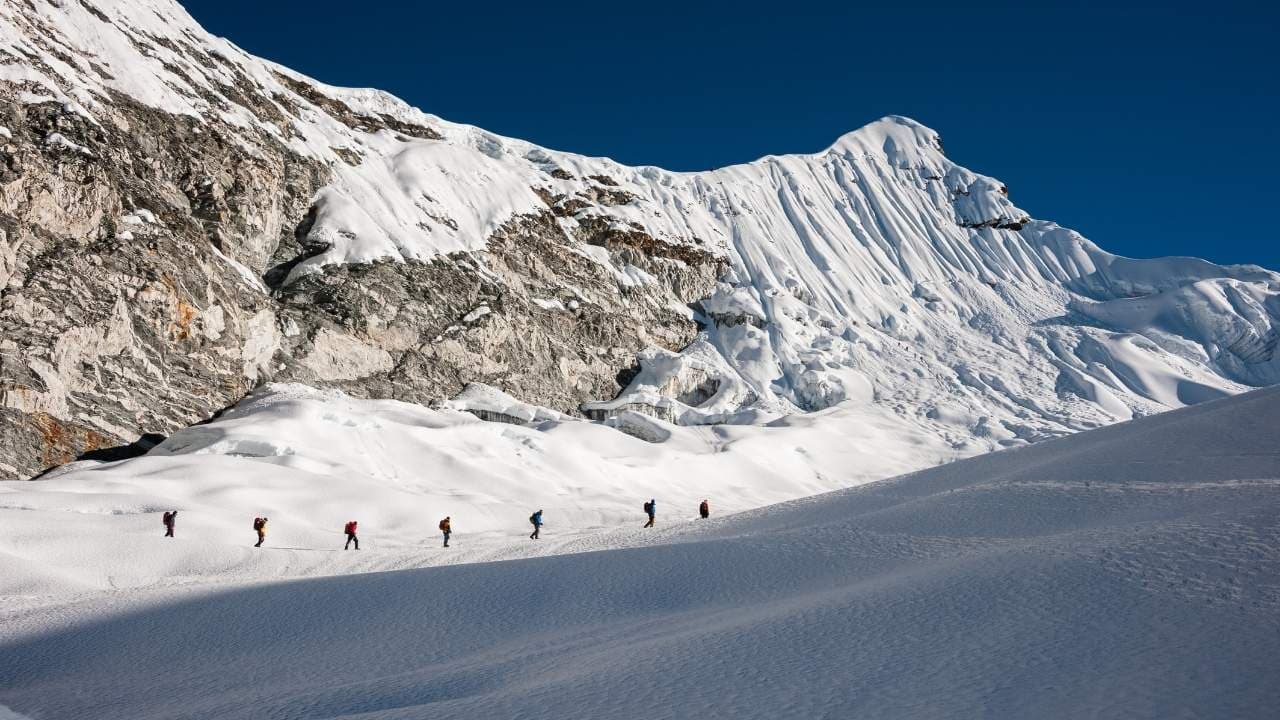
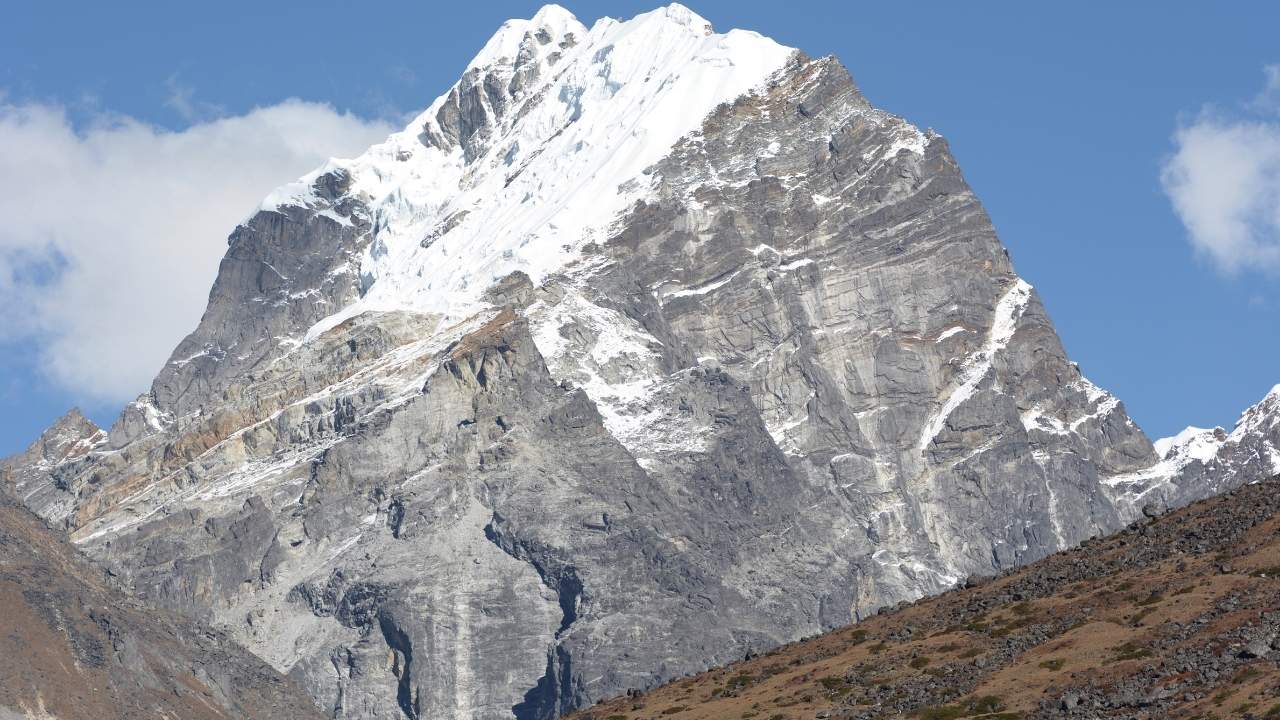
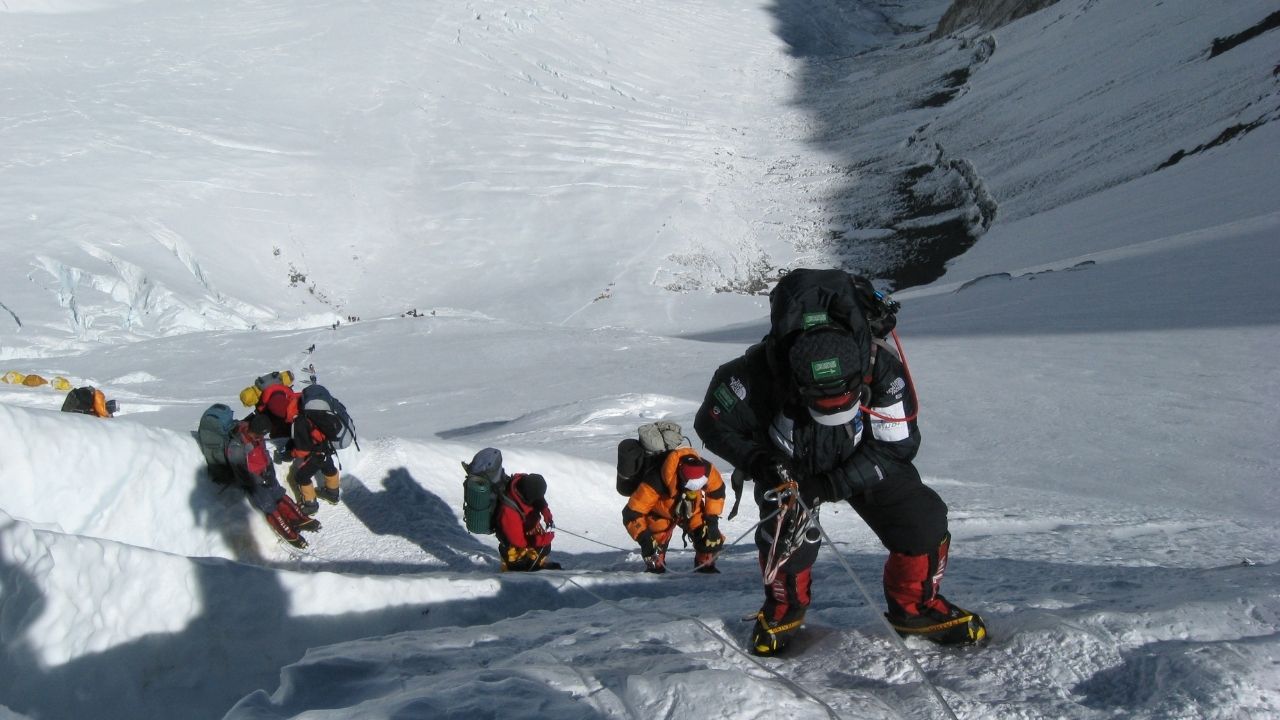
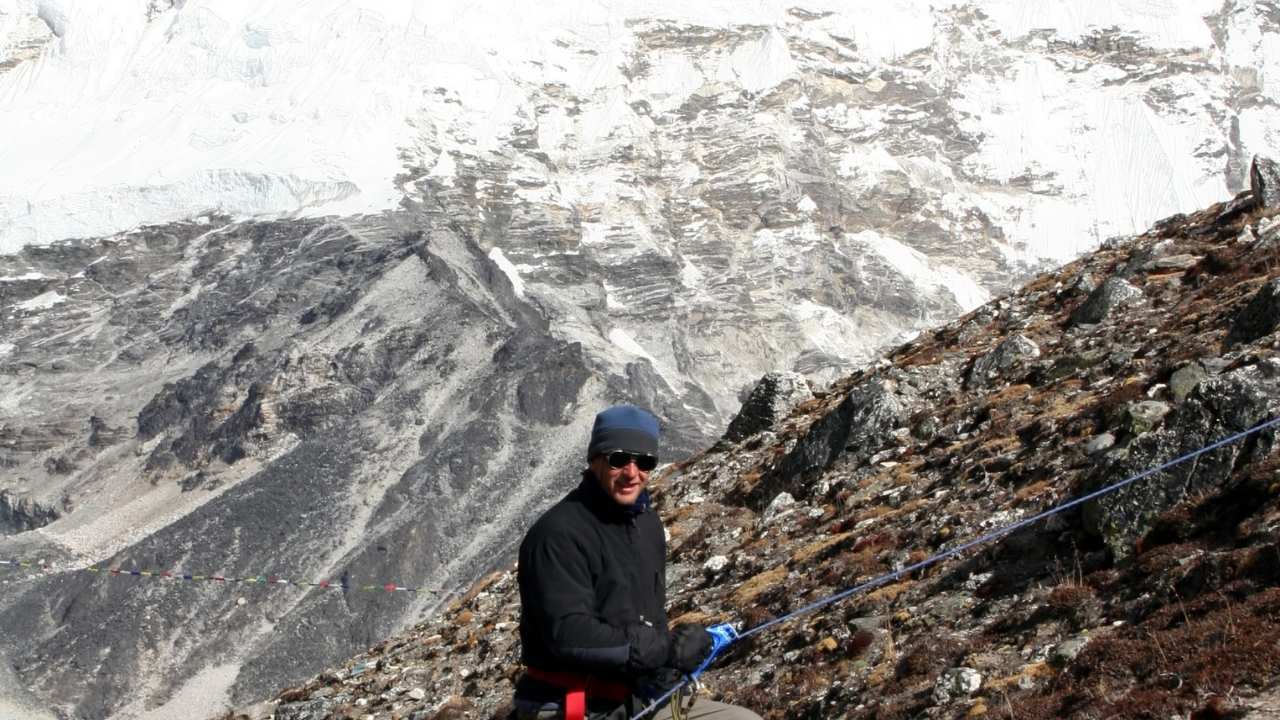
Take on the technical challenge of Lobuche East (6,119m/ 20,075ft), navigating steep snow and ice slopes, fixed-rope sections, and exposed summit terrain under the guidance of experienced climbing professionals
Cross Kongma La Pass (5,535m/ 18,159ft), one of the Everest region's three high passes, while traversing rugged glacial terrain between the Lobuche climbing area and Chhukung
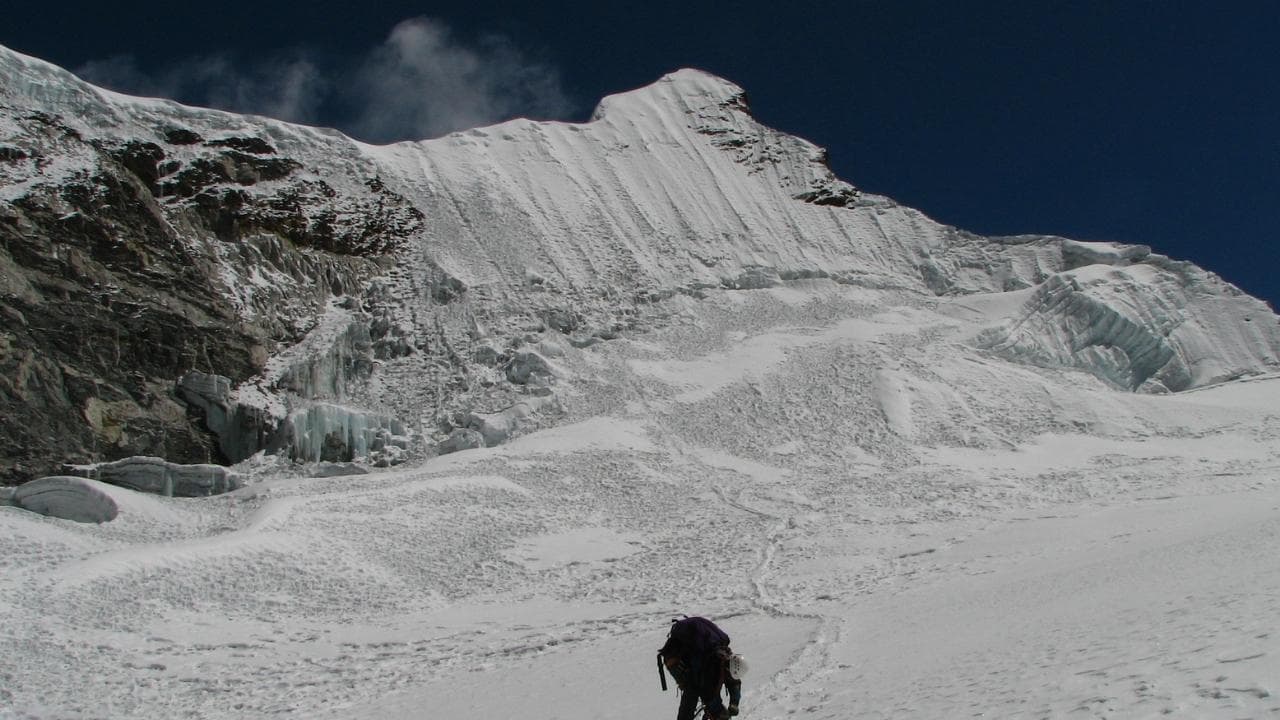
Conquering the summit of Island Peak (6,189m/ 20,305ft), climbing through rocky terrain, glacier sections, and a steep snow-and-ice headwall beneath the towering south face of Lhotse
Enjoy remarkable Himalayan panoramas from the two climbing summits, including views of Everest, Lhotse, Makalu, Baruntse, Ama Dablam, Nuptse, and other magnificent peaks, depending on weather and visibility
Experience authentic Himalayan expedition camping at Lobuche East High Camp (5,400m/ 17,716ft) and Island Peak Base Camp (5,100m/ 16,732ft), with technical climbing preparation and early-morning summit departures
Explore the cultural heritage of the Khumbu through visits to Tengboche Monastery, Khumjung village, and traditional Sherpa settlements, where Buddhist traditions remain closely connected to mountain life
Follow a carefully planned acclimatization schedule with dedicated days in Namche Bazaar and Dingboche, including hikes toward Hotel Everest View (3,880m/ 12,729ft) and Nangkartshang viewpoint (around 5,000m)
Develop practical mountaineering experience using crampons, ice axes, harnesses, ascenders, and fixed ropes while learning essential climbing techniques from qualified guides
Complete a rewarding expedition that combines Everest's most iconic trekking destinations, two challenging 6,000-meter peaks, a high mountain pass, Sherpa cultural experiences, and technical mountaineering within a single journey
Trip Overview
Imagine standing on a snow-covered Himalayan summit above 6,000 meters, watching the morning sunlight illuminate the towering peaks of Everest, Lhotse, Nuptse, and Ama Dablam. After days of trekking through the Khumbu Valley, crossing rugged glacial terrain, and preparing for challenging summit ascents, the experience becomes far more meaningful than simply reaching the top of a mountain. The EBC With Lobuche and Island Peak Climbing brings together three remarkable Himalayan objectives: Everest Base Camp (5,364m/ 17,598ft), Lobuche East (6,119m/ 20,075ft), and Island Peak (6,189m/ 20,305ft). This 21-day adventure is designed for ambitious trekkers who want to experience the legendary Everest region while taking their first serious steps into technical Himalayan mountaineering.
This expedition is particularly rewarding as it provides you with the opportunity to experience two distinctly different 6,000-meter climbing challenges within a single journey. Lobuche East introduces you to steeper snow and ice slopes, exposed climbing sections, and demanding summit terrain, while Island Peak offers an exhilarating ascent involving glacier travel, fixed ropes, and a steep headwall beneath the immense south face of Lhotse. Both climbs require physical endurance, careful footwork, and familiarity with mountaineering equipment, making the journey especially appealing to experienced high-altitude trekkers seeking to develop their climbing abilities. With each summit attempt, you gain a deeper understanding of what it takes to move safely and confidently in the high Himalayas.
Beyond the technical challenges, the Everest region also offers an atmosphere that is difficult to replicate elsewhere. You will experience the warmth of Sherpa hospitality in mountain villages, encounter centuries-old Buddhist traditions, and walk beneath some of the world's highest peaks. The scenery changes dramatically as you gain altitude, from the forested banks of the Dudh Koshi River to the windswept landscapes of Lobuche, the icy surroundings of the Khumbu Glacier, and the spectacular mountain amphitheater of the Imja Valley. A sunrise hike to Kala Patthar (5,550m/ 18,208ft) and the demanding crossing of Kongma La Pass (5,535m/ 18,159ft) add two unforgettable experiences beyond the summit climbs themselves.
The Everest Base Camp Trek with Lobuche and Island Peak Climbing expedition also introduces you to the realities of Himalayan climbing. At Lobuche East High Camp (5,400m/ 17,716ft) and Island Peak Base Camp (5,100m/ 16,732ft), you will experience nights in expedition tents, prepare your technical equipment, and begin summit attempts in the early hours when mountain conditions are generally more favorable. Acclimatization days in Namche Bazaar and Dingboche, practical climbing instruction, experienced mountain guides, and a reserved contingency day are incorporated into the itinerary to support your preparation and safety.
EBC with Lobuche and Island Peak is more than an extended Everest Base Camp Trek; it is an opportunity to transform your Himalayan trekking experience into a genuine mountaineering adventure. There is something truly rewarding about taking your Himalayan adventure beyond the trekking trails, learning to navigate snow and ice, and feeling the excitement of a summit attempt as the first morning light touches the surrounding peaks. With Lobuche East and Island Peak ahead of you, every challenge becomes an opportunity to discover your capabilities, gain valuable mountaineering experience, and create memories that stay with you long after you return from the mountains.
Why Choose Everest Base Camp Trek with Lobuche and Island Peak?
The Everest Base Camp Trek with Lobuche East and Island Peak Climbing takes you beyond the familiar trekking trails of the Khumbu and into the world of Himalayan mountaineering. You will begin by walking through traditional Sherpa villages, gradually make your way toward Everest Base Camp, and witness the towering Himalayan peaks from Kala Patthar. What makes this 21-day expedition special is how each stage builds upon the previous one.
The trekking days help you adapt to altitude, the climbing camps introduce you to life on the mountain, and the summit attempts challenge your endurance and technical abilities. By the time you complete the journey, you will have experienced much more than the traditional Everest Base Camp route.
Experience Everest Base Camp Before Your Climbing Adventure Begins: As you follow the classic trail through Phakding, Namche Bazaar, Tengboche, Dingboche, and Lobuche, you will gradually approach Everest Base Camp (5,364m/ 17,598ft). Walking alongside the Khumbu Glacier and standing near the foot of the Khumbu Icefall gives you a closer appreciation of the environment where major Everest expeditions begin.
Climb Two Himalayan Peaks With Different Technical Challenges: Your first summit objective is Lobuche East (6,119m/ 20,075ft), where steep snow and ice sections, fixed ropes, and exposed ridges test your climbing skills. Afterward, Island Peak (6,189m/ 20,305ft) introduces a different experience, with glacier travel, possible crevasse crossings, and a steep headwall before the summit. Attempting both mountains allows you to experience two distinctive climbing environments during one expedition.
Watch the Sunrise Over Everest From Kala Patthar: Before beginning the technical climbing stages, you will hike toward Kala Patthar (5,550m/ 18,208ft) in the early morning. As daylight spreads across the mountains, you can watch Everest, Nuptse, Pumori, and the surrounding Himalayan peaks emerge above the Khumbu Glacier. This viewpoint offers one of the most memorable perspectives of Everest along the entire journey.
Cross Kongma La Pass Between Your Two Summit Attempts: After your Lobuche East climb, the route takes you across Kongma La Pass (5,535m/ 18,159ft) toward Chhukung. This is not simply a connecting trail between the two mountains. You will negotiate rocky slopes, glacial moraine, and a demanding high-altitude pass while enjoying views of the surrounding peaks and valleys. The crossing adds another rewarding challenge before your Island Peak expedition begins.
Experience the Changing Landscapes of the Everest Region: The journey begins beside the Dudh Koshi River, surrounded by pine forests, suspension bridges, and hillside villages. Beyond Tengboche, the forests gradually disappear as you enter the open alpine landscapes of Dingboche and Lobuche. Later, the rocky Khumbu Glacier gives way to the dramatic Imja Valley, where Island Peak rises beneath the immense mountain walls of Lhotse and its neighboring peaks.
Discover What Life at a Himalayan Climbing Camp Feels Like: Unlike a regular Everest Base Camp trek, you will spend nights in expedition tents at the climbing camps. At Lobuche East High Camp (5,400m/ 17,716ft) and Island Peak Base Camp (5,100m/ 16,732ft), your days involve preparing equipment, practicing climbing techniques, discussing summit conditions with your guides, and resting before early-morning departures. These experiences introduce you to the practical side of mountaineering beyond the comforts of teahouse trekking.
Enjoy Remarkable Mountain Views From Two Different Summits: Lobuche East offers expansive views toward Everest, Lhotse, Nuptse, Pumori, and the surrounding Khumbu mountains. Island Peak provides a particularly dramatic perspective of Lhotse's towering south face, along with Makalu, Baruntse, and Ama Dablam. Each summit rewards you with a different view of the Himalayan landscape, provided weather and climbing conditions allow a safe ascent.
Build Confidence and Practical Mountaineering Experience: Throughout the expedition, you will work with climbing equipment such as crampons, ice axes, harnesses, and ascenders under the guidance of experienced climbing professionals. Learning how to move efficiently on snow and ice, use fixed ropes, and manage your energy during long summit days can help prepare you for more demanding Himalayan climbing objectives.
Explore Sherpa Villages and Mountain Traditions Along the Way: As you move through Namche Bazaar, Khumjung, Tengboche, and Pangboche, you will encounter communities whose lives are closely connected to the mountains. Visiting Buddhist monasteries, passing prayer wheels and mani walls, and seeing the role of Sherpa guides in Himalayan mountaineering add cultural depth to an otherwise physically demanding expedition.
Benefit From a Carefully Structured 21-Day Journey: The itinerary includes acclimatization hikes in Namche Bazaar and Dingboche, technical preparation at the climbing camps, and a contingency day around Island Peak. These arrangements provide opportunities to adapt to altitude, develop familiarity with climbing equipment, and respond to changing mountain conditions rather than rushing directly toward the summits.
EBC With Lobuche and Island Peak Outline Itinerary
The following table presents a detailed overview of the 21-day EBC With Lobuche and Island Peak Climbing, covering daily destinations, elevation profiles, trekking and climbing distances, and estimated durations. It also identifies acclimatization days, technical summit attempts, and the reserved contingency day, giving you a clear understanding of the expedition's daily schedule and physical demands.
Day
Everest Base Camp Trek With Two Peaks Climbing Itinerary
Elevation Profile
Duration/ Distance
01
Welcome to Kathmandu (1,400m/ 4,593ft)– Arrival, Hotel Transfer, Trek Briefing, and Climbing Equipment Check
02
Scenic Flight to Lukla (2,860m/ 9,383ft) and Begin Your Himalayan Adventure with a Trek to Phakding (2,610m/ 8,562ft)
1,460m/ 4,790ft (gain)
Flight Distance: 138km/ 85 miles
Flight Duration: 35 minutes
Trek Distance: 8km/ 4.9 miles
Trek Duration: 3 to 4 hours
03
Follow the Dudh Koshi River Through Monjo and Jorsalle Before Ascending to Namche Bazaar (3,440m/ 11,286ft)
830m/ 2,723ft (gain)
Trek Distance: 12.3km/ 7.64 miles
Duration: 5 to 6 hours
04
Acclimatization Day in Namche Bazaar– Hike to Hotel Everest View (3,880m/ 12,729ft) and Explore Khumjung Village
05
Journey Through Rhododendron Forests to Tengboche (3,867m/ 12,687ft)
427m/ 1,400ft (gain)
Trek Distance: 10.7km/ 6.65 miles
Duration: 5 to 6 hours
06
Trek Along the Imja Khola Valley, Passing Pangboche Before Reaching Dingboche (4,410m/ 14,468ft)
543m/ 1,781ft (gain)
Trek Distance: 9.8km/ 6.09 miles
Duration: 5 to 6 hours
07
Acclimatization Hike to Nangkartshang Peak Viewpoint (Around 5,000 meters) and Return to Dingboche
08
Ascend Through Thukla Pass and Its Climbers' Memorials Before Continuing to Lobuche (4,910m/ 16,108ft)
500m/ 1,640ft (gain)
Trek Distance: 8.8 km/ 5.47 miles
Duration: 5 to 6 hours
09
Trek Across the Khumbu Glacier's Rugged Moraine to Gorak Shep (5,164m/ 16,942ft) and Explore Everest Base Camp (5,364m/ 17,598ft)
454m/ 1,489ft (gain)
Trek Distance: 11.5km/ 7.15 miles
Duration: 8 to 9 hours
10
Witness the Sunrise Over Mount Everest from Kala Patthar (5,550m/ 18,208ft) Before Descending to Lobuche (4,910m/ 16,108ft) for Climbing Preparation
386m/ 1,266ft (gain)
Trek Distance: 9km/ 5.5 miles
Duration: 5 to 6 hours
11
Approach Lobuche East High Camp (5,400m/ 17,716ft) and Prepare for Your First Himalayan Summit Attempt
490m/ 1,607ft (gain)
Trek Distance: 5km/ 3.1 miles
Duration: 4 to 5 hours
12
Conquer Lobuche East (6,119m/ 20,075ft)– Summit Ascent and Descent to the Designated Lower Climbing Camp
719m/ 2,358ft (gain)
Climb Distance: 6.5km/ 4 miles
Climb Duration: 8 to 9 hours
13
Follow the Imja Valley Toward Chhukung (4,730m/ 15,518ft) via Kongma La Pass (5,535m/ 18,159ft), Surrounded by the Towering Peaks of Lhotse and Ama Dablam
625m/ 2,050ft
Trek Distance: 11km/ 6.8 miles
Duration: 7 to 8 hours
14
Trek Beneath the Imja Glacier to Island Peak Base Camp (5,100m/ 16,732ft) and Complete Your Final Climbing Preparations
370m/ 1,213ft (gain)
Trek Distance: 5km/ 3.1 miles
Duration: 4 hours
15
Summit Island Peak (6,189m/ 20,305ft)– Experience Spectacular Himalayan Panoramas Before Descending to Base Camp
1,089m/ 3,572ft (gain)
Climb Distance: 11km/ 6.8 miles
Climb Duration: 8 to 10 hours
16
Reserved Contingency and Recovery Day for Island Peak Climbing, Weather Conditions, and Safe Descent
17
Retrace the Imja Valley Through Chhukung and Dingboche to Pangboche (3,900m/ 12,795ft)
1,200m/ 3,937ft (loss)
Trek Distance: 11km/ 6.8 miles
Duration: 6 hours
18
Trek Through Tengboche and the Forested Dudh Koshi Valley Before Returning to Namche Bazaar (3,440m/ 11,286ft)
460m/ 1,509ft (loss)
Trek Distance: 13.8km/ 8.57 miles
Duration: 6 hours
19
Enjoy Your Final Trek Through Monjo, Phakding, and the Dudh Koshi Valley to Lukla (2,860m/ 9,383ft) for an Overnight Stay
580m/ 1,902ft (loss)
Trek Distance: 17.9km/ 11.1 miles
Duration: 6 to 7 hours
20
Bid Farewell to the Everest Region with a Scenic Morning Flight from Lukla to Kathmandu (1,400m/ 4,593ft)
1,460m/ 4,790ft (loss)
Flight Distance: 138km/ 85 miles
Duration: 35 minutes
21
Final Departure from Kathmandu– Airport Transfer and Farewell to Nepal After an Unforgettable Himalayan Climbing Adventure
Cost Details
What's Included in EBC with Lobuche and Island Peak (Everest Base Camp Trek With Two Peaks Climbing)
Private airport pickup and drop-off in Kathmandu.
Two nights' accommodation in a tourist-standard hotel in Kathmandu on a twin-sharing basis, including breakfast.
Round-trip domestic flights between Kathmandu and Lukla, including applicable airport taxes and transfers. Flights may operate via Manthali during peak trekking seasons.
Three meals daily (breakfast, lunch, and dinner) throughout the trekking and climbing expedition.
Fresh seasonal fruits after dinner during the teahouse trekking portion.
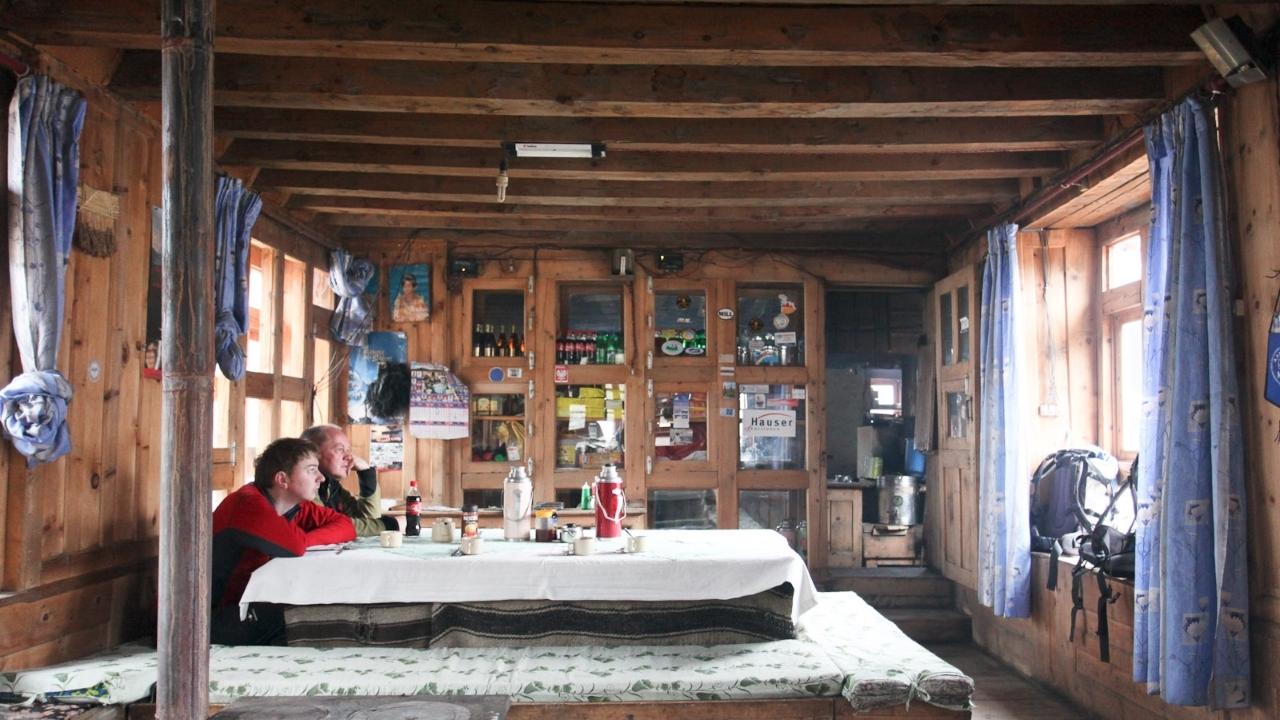
Twin-sharing teahouse or trekking lodge accommodation along the Everest Base Camp route.
Expedition camping accommodation at Lobuche East High Camp, the designated lower climbing camp, and Island Peak Base Camp.
Camping equipment, including expedition tents, sleeping tents, and necessary group camping supplies.
Meals prepared by the expedition support team during the camping and climbing days.
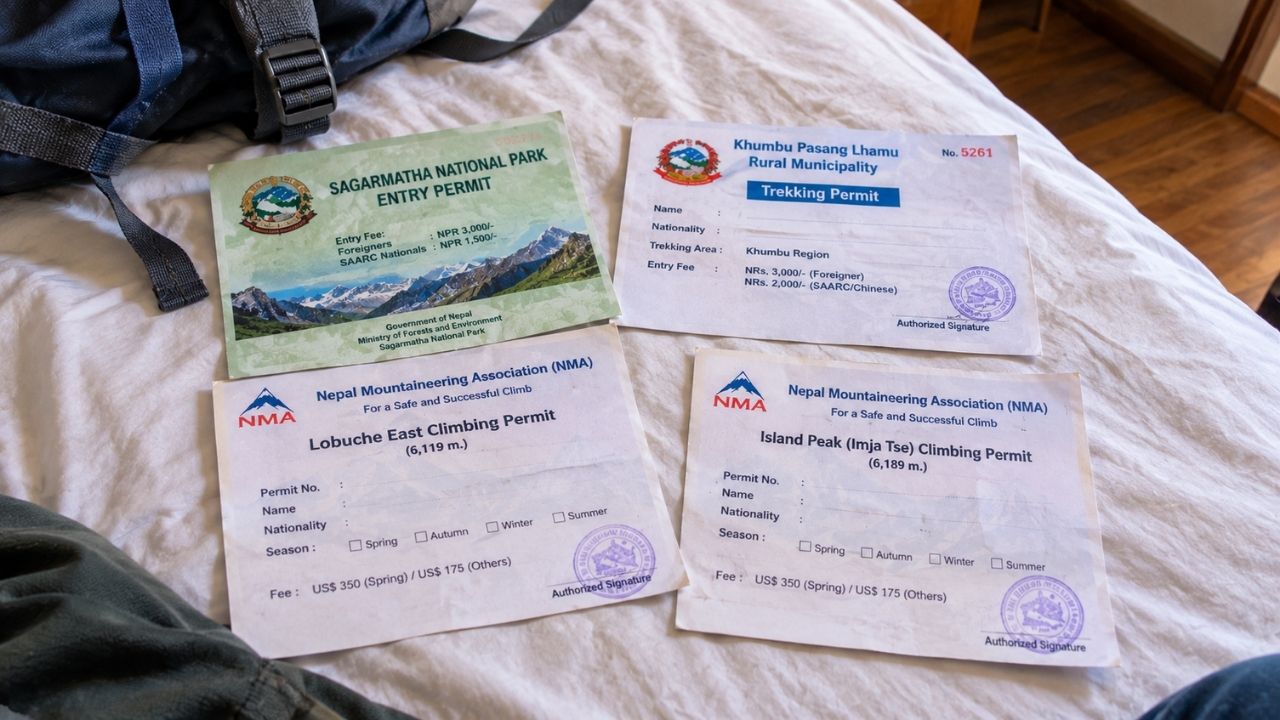
All required trekking and climbing permits, including Sagarmatha National Park entry, Khumbu Pasang Lhamu Rural Municipality entry, and separate climbing permits for Lobuche East and Island Peak.
Experienced, English-speaking, government-licensed trekking guide and professional climbing Sherpa for the expedition.
Technical climbing support, including route guidance, climbing instruction, and assistance with fixed ropes during summit attempts.
Necessary group climbing equipment, including climbing ropes and other shared technical equipment.
Porter support for carrying designated trekking luggage, generally one porter for every two trekkers.
Salaries, meals, accommodation, transportation, equipment, and insurance for guides, climbing Sherpas, porters, and expedition support staff.
Assistant trekking guide for groups of more than four participants.
Use of a sleeping bag, down jacket, and duffel bag for the expedition, to be returned after completion.
First-aid supplies carried by the trekking and climbing team.
Pulse oximeter for monitoring oxygen saturation and heart rate during the expedition.
Assistance with arranging emergency helicopter evacuation when necessary, with rescue expenses covered by the traveler's insurance or personal funds.
All applicable government taxes, service charges, and official expenses.
What's Excluded in EBC with Lobuche and Island Peak (Everest Base Camp Trek With Two Peaks Climbing)
International airfare to and from Nepal.
Nepal tourist visa fees.
Lunch and dinner during your stay in Kathmandu.
Personal travel and medical insurance covering technical mountaineering above 6,000 meters and emergency helicopter evacuation.
Personal climbing equipment, including insulated mountaineering boots, crampons, ice axes, climbing harnesses, helmets, ascenders, and other individual technical gear. Rental arrangements can be assisted upon request.
Personal trekking equipment, clothing, and other items not specified in the inclusions.
Alcoholic beverages, bottled drinks, soft drinks, specialty teas, coffee, and other personal beverage purchases during the trek.
Desserts, chocolates, energy bars, additional snacks, and meals ordered outside the included meal arrangements.
Hot showers, Wi-Fi, battery charging, and other personal services at teahouses.
Extra accommodation, meals, or transportation in Kathmandu resulting from early arrival, late departure, or unexpected flight delays.
Additional trekking or climbing days beyond the scheduled 21-day itinerary, including extra accommodation, meals, staff, and logistical expenses.
Costs arising from itinerary changes, personal circumstances, or additional services requested during the expedition.
Excess baggage charges exceeding the domestic flight baggage allowance, generally 15kg per passenger.
Personal expenses such as laundry, souvenirs, toiletries, telephone calls, and shopping.
Tips and gratuities for trekking guides, climbing Sherpas, porters, and drivers.
Any services or expenses not specifically mentioned in the package inclusions.
Price & Availability
Itinerary of EBC with Lobuche and Island Peak (Everest Base Camp Trek With Two Peaks Climbing) - 21 days
Day 01
Welcome to Kathmandu (1,400m/ 4,593ft)– Arrival, Hotel Transfer, Trek Briefing, and Climbing Equipment Check
Your 21-day Everest Base Camp Trek with Lobuche East and Island Peak Climbing adventure begins with your arrival at Tribhuvan International Airport in Kathmandu. Upon landing, our representative will welcome you and arrange a private transfer to your hotel. After completing the check-in process, you can freshen up and relax following your international flight.
Later, you will meet your trekking and climbing team for a detailed briefing about the upcoming Himalayan adventure. Your guide will walk you through the trekking route, acclimatization schedule, climbing preparations, and important safety considerations for Lobuche East (6,119m/ 20,075ft) and Island Peak (6,189m/ 20,305ft). Your mountaineering equipment, including climbing boots, harness, helmet, crampons, and other essential gear, will also be checked to ensure everything is ready for the expedition.
If time permits, you can explore the lively streets of Thamel, visit nearby trekking equipment shops, or enjoy a traditional Nepali dinner. You will spend your first night in Kathmandu before heading toward the Everest region the following morning.
Max. Elevation:1400
Duration:20 to 25 minutes
Day 02
Scenic Flight to Lukla (2,860m/ 9,383ft) and Begin Your Himalayan Adventure with a Trek to Phakding (2,610m/ 8,562ft): 35-minute flight and 3 to 4 hours trek
Today, you will commence your Everest Base Camp Trek with two peaks climbing in the morning with a scenic flight to Lukla, the main gateway to the Everest region. During the approximately 35-minute flight from Kathmandu, you will enjoy aerial views of green hills, deep river valleys, and distant Himalayan peaks before landing at Tenzing-Hillary Airport. During the busy trekking seasons, flights may operate from Manthali Airport in Ramechhap instead, requiring an early road transfer and a shorter flight to Lukla.
After meeting the local trekking crew and making final arrangements, you will begin your first walk along the Dudh Koshi Valley. The trail gradually descends from Lukla through Chheplung Village, passing traditional Sherpa houses, prayer wheels, and mani walls. Continuing through Thado Koshi, you will cross a suspension bridge with views of Kusum Kanguru before following the trail toward Ghat and Chhuthawa.
As you move along the riverside trail, the surroundings become increasingly peaceful, with pine forests, cultivated fields, and the rushing Dudh Koshi River accompanying your journey. After approximately 3 to 4 hours of trekking, you will finally arrive at Phakding, where you will settle into a local teahouse. The relatively gentle first day allows you to begin adjusting to the mountain environment before the more demanding ascent to Namche Bazaar.
Max. Elevation:2610
Duration:35 minutes (flight) and 3 to 4 hours (trek)
Distance:138km (flight) and 8km (trek)
Day 03
Follow the Dudh Koshi River Through Monjo and Jorsalle Before Ascending to Namche Bazaar (3,440m/ 11,286ft): 5 to 6 hours
After enjoying breakfast in Phakding, you will continue your journey north along the Dudh Koshi River toward Namche Bazaar. The trail passes through pine forests and small Sherpa settlements, including Toktok and Benkar, where you can enjoy impressive views of Thamserku (6,608m). Along the way, you will cross several suspension bridges decorated with colorful prayer flags as the trail gradually gains elevation.
Continuing through Chhumowa, you will arrive at Monjo, the entrance to Sagarmatha National Park, where your trekking permits will be checked. From here, the trail descends toward Jorsalle Village, a popular lunch stop beside the river. After crossing the confluence of the Dudh Koshi and Bhote Koshi rivers, you will approach the famous Hillary Suspension Bridge, suspended high above the valley.
The final section on the trail of this day’s trek involves a demanding uphill climb through pine forests toward Namche Bazaar. On clear days, you may catch your first distant glimpse of Mount Everest along the ascent. After approximately 5 to 6 hours of trekking, you will arrive at Namche Bazaar, a bustling Sherpa trading center built into the mountainside. You can spend the evening exploring its narrow streets, cafes, and trekking shops before resting at your teahouse.
Max. Elevation:3440
Duration:5 to 6 hours
Distance:12.3km
Day 04
Acclimatization Day in Namche Bazaar– Hike to Everest View Hotel (3,880m/ 12,729ft) and Explore Khumjung Village
This day of EBC Trek with Island Peak and Lobuche Peak itinerary is dedicated to acclimatization, an essential part of preparing your body for the higher elevations. Instead of remaining inactive, you will enjoy a rewarding hike above Namche Bazaar, following the principle of climbing higher during the day and returning to a lower elevation for the night.
After breakfast, you will ascend along the hillside trail toward Syangboche Airstrip (around 3,720 meters), enjoying increasingly impressive views of the surrounding Khumbu mountains. Continuing uphill, you will reach Hotel Everest View, situated at approximately 3,880 meters (12,729 feet), where you can admire a spectacular Himalayan panorama featuring Mount Everest, Lhotse, Ama Dablam, and Thamserku.
From the hotel, you will continue toward Khumjung Village (3,790 meters), a traditional Sherpa settlement beneath the sacred Khumbila mountain. Here, you can explore Khumjung Monastery and learn about the village's connection to Sir Edmund Hillary, including the school established through his Himalayan Trust. After spending some time exploring, you will gradually descend to Namche Bazaar for lunch or afternoon relaxation.
As for the remainder of the day, it is free to visit the Sherpa Culture Museum, browse local shops, or rest at your teahouse. Spending a second night at 3,440 meters allows your body additional time to acclimatize before the journey continues toward Tengboche and the higher Khumbu Valley.
Max. Elevation:3440
Day 05
Journey Through Rhododendron Forests to Tengboche (3,867m/ 12,687ft): 5 to 6 hours
After enjoying breakfast in Namche Bazaar, you will continue your journey toward Tengboche, following the scenic hillside trail above the Dudh Koshi Valley. The initial section takes you past the Tenzing Norgay Memorial Stupa and toward Kyangjuma Village, where you can enjoy spectacular views of Ama Dablam, Thamserku, and Mount Everest. Continuing toward Sanasa, you will follow the trail descending through rhododendron and pine forests toward Phunki Tenga.
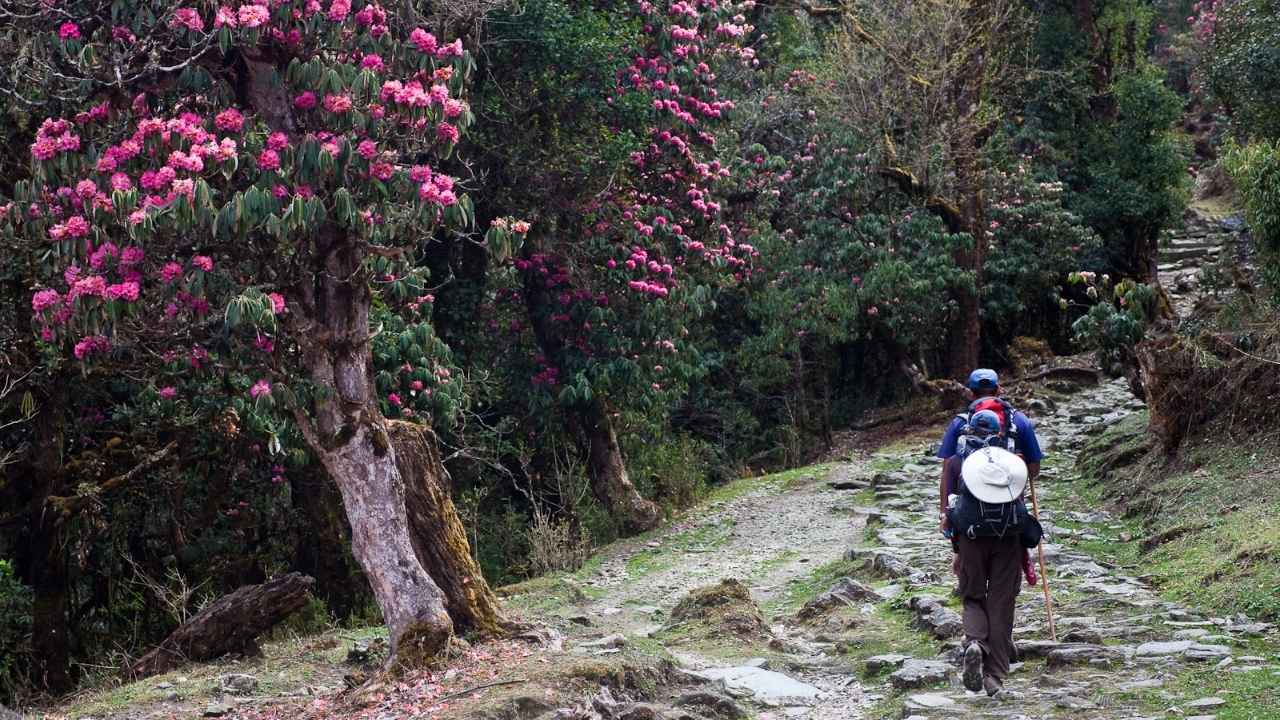
After crossing the Dudh Koshi River on a suspension bridge, you will begin the day's main ascent toward Tengboche. This section involves a steady uphill climb through dense forests, which become particularly beautiful during spring when rhododendrons bloom along the mountainside. As you gain elevation, the surrounding peaks gradually reappear above the treeline.
After approximately 5 to 6 hours of trekking, you will arrive at Tengboche, home to the famous Tengboche Monastery, one of the most important Buddhist monasteries in the Khumbu region. If the monastery is open to visitors, you may have the opportunity to observe its prayer ceremonies and explore the peaceful surroundings. The village also offers remarkable views of Everest, Lhotse, Nuptse, and Ama Dablam. You will spend this night at a local teahouse in Tengboche.
Max. Elevation:3867
Duration:5 to 6 hours
Distance:10.7km
Day 06
Trek Along the Imja Khola Valley, Passing Pangboche Before Reaching Dingboche (4,410m/ 14,468ft): 5 to 6 hours
This day’s adventure takes you deeper into the upper Khumbu Valley as the landscape gradually changes from forested hillsides to open alpine terrain. After breakfast in Tengboche, you will descend through rhododendron and birch forests toward Deboche Village, a quiet settlement surrounded by towering Himalayan peaks. Continuing along the trail, you will cross the Imja Khola on a suspension bridge before ascending toward Pangboche Village, one of the oldest Sherpa settlements in the Everest region.
As you move beyond Pangboche, the vegetation becomes increasingly sparse, revealing expansive views of Ama Dablam, Lhotse, and the surrounding mountain ridges. The trail continues through Shomare, a popular lunch stop, before reaching Orsho, where the route branches toward the upper Imja Valley. From here, you will gradually ascend across open yak-grazing pastures and cross a small stream before making the final climb to Dingboche.
After approximately 5 to 6 hours of trekking, you will arrive at Dingboche, a beautiful high-altitude Sherpa village surrounded by stone-walled fields and impressive mountain scenery. Island Peak, also known as Imja Tse, lies farther east in the Imja Valley, while the surrounding peaks provide a glimpse of the increasingly challenging terrain ahead. You will settle into your teahouse and rest for the evening, preparing for another important acclimatization day.
Max. Elevation:4410
Duration:5 to 6 hours
Distance:9.8km
Day 07
Acclimatization Hike to Nangkartshang Peak Viewpoint (Around 5,000 meters) and Return to Dingboche
With two demanding Himalayan summits still ahead, today provides an important opportunity to improve your acclimatization before continuing toward Everest Base Camp. After breakfast, you will begin a gradual ascent along the ridge rising above Dingboche toward Nangkartshang Peak, following a rocky hillside trail that becomes progressively steeper as you gain elevation.
The hike offers exceptional views of the upper Imja Valley, with Ama Dablam, Lhotse, Makalu, and Island Peak visible in favorable weather. As you climb higher, you can also look down toward the stone-walled fields of Dingboche and the surrounding glacial valleys. Depending on your physical condition and the guide's assessment, you may hike to a viewpoint around 5,000 meters or continue farther toward Nangkartshang Peak (approximately 5,083 meters).
After spending some time enjoying the Himalayan panorama, you will descend along the same trail to Dingboche, completing approximately 3 to 5 hours of hiking, depending on your turnaround point. The remainder of the afternoon is reserved for rest, hydration, and recovery. Your guide will also monitor how well you are adapting to the altitude, as the following days take you above 5,000 meters.
Max. Elevation:4410
Day 08
Ascend Through Thukla Pass and Its Climbers' Memorials Before Continuing to Lobuche (4,910m/ 16,108ft): 5 to 6 hours
Leaving Dingboche after breakfast, you will follow the ascending trail toward Dughla (Thukla), moving through the wide alpine landscape of the upper Khumbu Valley. The route initially climbs toward the ridge above Dingboche before joining the trail from Pheriche near Dusa Village. As you continue across the open yak pastures, you will be able to enjoy impressive views of Taboche, Cholatse, and the surrounding snow-covered mountains.
The trail gradually approaches Dughla Village, a small settlement situated near the terminal moraine of the Khumbu Glacier. After a short break, you will begin a steep ascent toward Thukla Pass (around 4,830m), where numerous stone memorials commemorate climbers who lost their lives in the Everest region. This section offers a meaningful reminder of the challenges and history of Himalayan mountaineering.
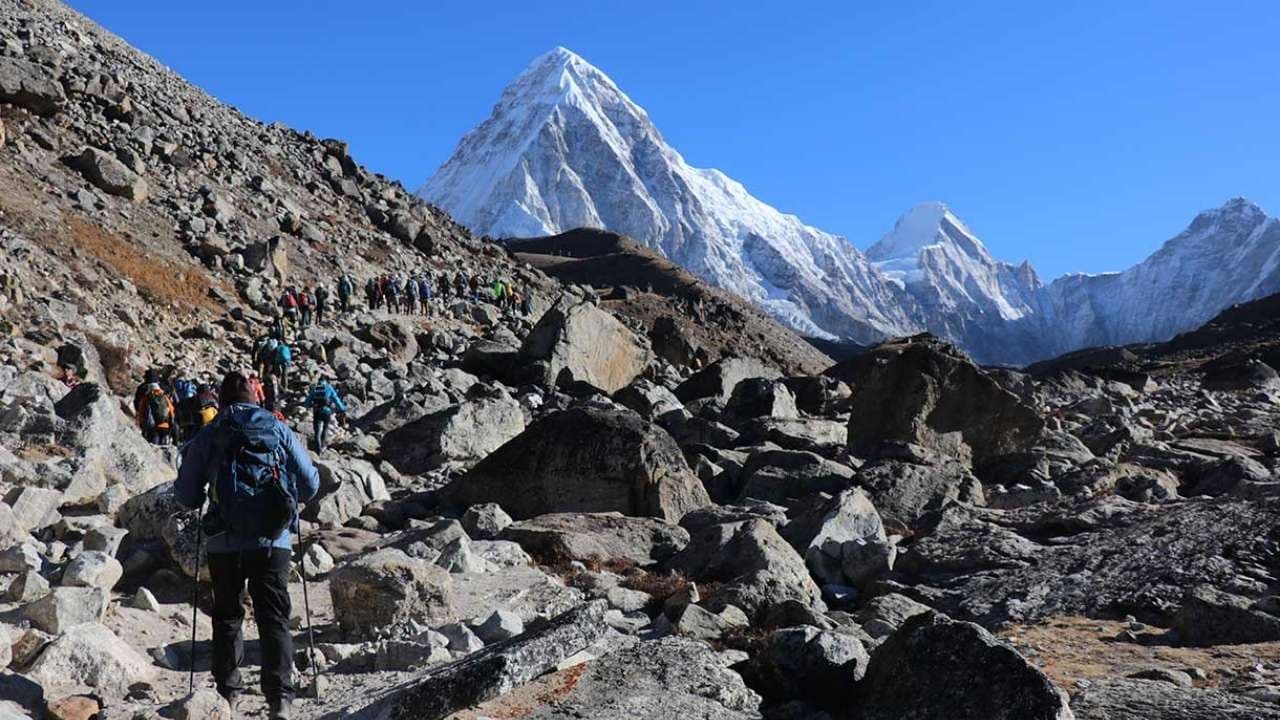
Beyond the memorials, the trail continues along the rocky lateral moraine of the Khumbu Glacier, with magnificent views of Pumori, Nuptse, and other surrounding peaks. After approximately 5 to 6 hours of trekking, you will arrive at Lobuche, a small high-altitude settlement beneath the dramatic mountain landscape. You will spend the night at a teahouse, allowing your body to rest before the journey to Everest Base Camp.
Max. Elevation:4910
Duration:5 to 6 hours
Distance:8.8 km
Day 09
Trek Across the Khumbu Glacier's Rugged Moraine to Gorak Shep (5,164m/ 16,942ft) and Explore Everest Base Camp (5,364m/ 17,598ft): 8 to 9 hours
Today marks one of the major highlights of your Himalayan expedition as you finally make your way toward Everest Base Camp. After an early breakfast in Lobuche, you will follow the rocky trail alongside the Khumbu Glacier, gradually ascending through rugged moraine terrain. The route passes through the area of Lobuche Pass and continues across a series of glacial ridges, offering spectacular views of Pumori, Nuptse, and the surrounding Himalayan giants.
After approximately 2 to 3 hours of trekking, you will arrive at Gorak Shep, the last settlement along the traditional Everest Base Camp route. Following a short rest and lunch at your teahouse, you will continue toward Everest Base Camp. The trail crosses uneven glacial moraine, with impressive views of the Khumbu Icefall, surrounding ice formations, and the massive walls of Nuptse and Lhotse.
Reaching Everest Base Camp is a remarkable milestone, especially as you stand near the starting point of the world's highest mountain expeditions. During the spring climbing season, you will see colorful expedition tents spread across the glacier. Although Mount Everest's summit is not clearly visible from the base camp itself, the surrounding glacial scenery is extraordinary. After enjoying the experience and capturing photographs, you will retrace your steps to Gorak Shep. The complete journey generally takes around 8 to 9 hours, and you will spend the night at Gorak Shep, preparing for an early morning ascent to Kala Patthar.
Max. Elevation:5364
Duration:8 to 9 hours
Distance:11.5km
Day 10
Witness the Sunrise Over Mount Everest from Kala Patthar (5,550m/ 18,208ft) Before Descending to Lobuche for Climbing Preparation: 5 to 6 hours
Your morning begins before dawn on this day as you prepare for the ascent to Kala Patthar, one of the finest viewpoints in the Everest region. Carrying your headlamp and warm clothing, you will follow the steep, rocky trail above Gorak Shep, gradually gaining elevation as the surrounding Himalayan peaks emerge from the darkness. The ascent generally takes 1.5 to 2 hours, depending on your walking pace and altitude conditions.
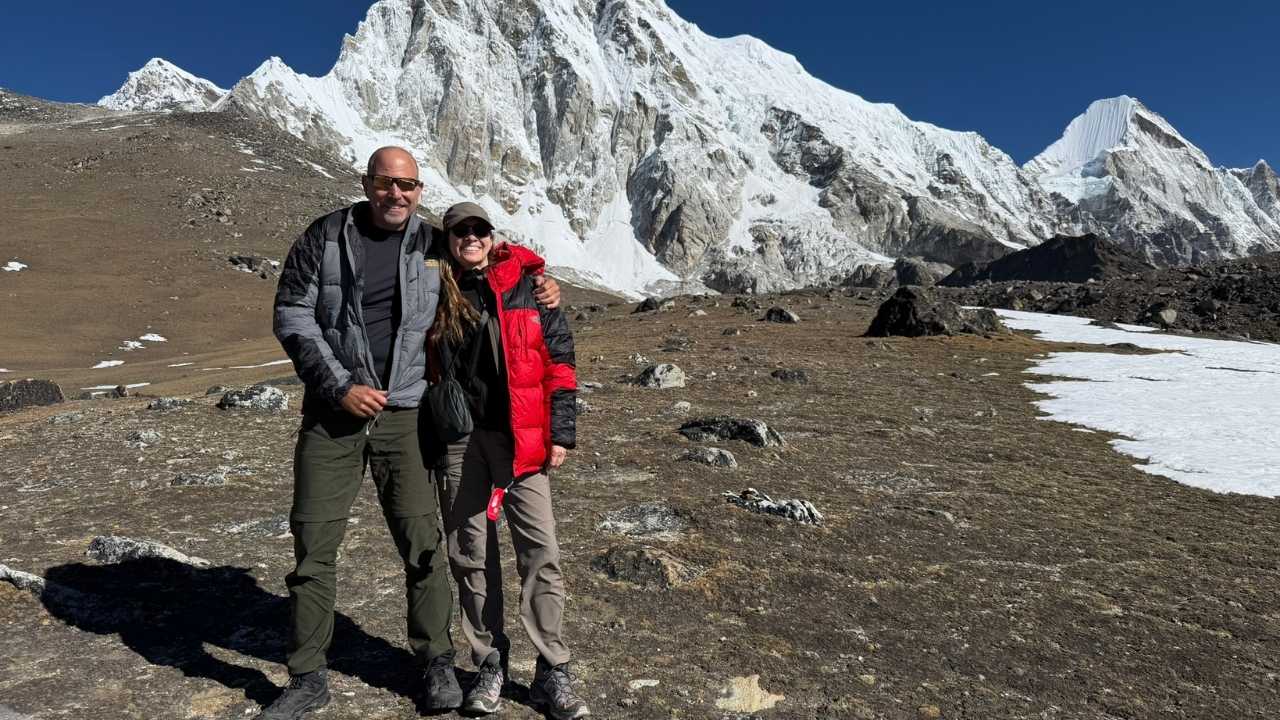
Upon reaching Kala Patthar (5,550m/ 18,208ft), you will be able to witness an extraordinary sunrise panorama featuring Mount Everest, Nuptse, Lhotse, and Pumori. The golden morning light illuminating Everest's summit and the massive Khumbu Glacier below creates one of the most memorable experiences of the trek. After enjoying the views and capturing photographs, you will carefully descend to Gorak Shep for breakfast.
You will take a short break at Gorak Shep and continue with your journey toward Lobuche. In this short trek, you will be able to enjoy another opportunity to appreciate the rugged surroundings of the upper Khumbu Valley. After arriving at Lobuche, you will have time to rest before a briefing on the upcoming Lobuche East ascent. Your guide will review the climbing route, equipment requirements, and safety procedures before you spend the night at the teahouse.
Max. Elevation:4910
Duration:5 to 6 hours
Distance:9km
Day 11
Approach Lobuche East High Camp (5,400m/ 17,716ft) and Prepare for Your First Himalayan Summit Attempt: 4 to 5 hours
After breakfast in Lobuche, you will begin the transition from trekking to mountaineering as you make your way toward the first peak of the Everest Base Camp Two Peak Climbing Trek. The route initially follows the rocky terrain above Lobuche village before gradually ascending toward the mountain's southern slopes. As you move higher, the established trekking paths give way to loose scree, rocky ridges, and increasingly rugged alpine terrain.
The approach passes through the Lobuche East Base Camp area, situated at approximately 4,980 meters, before continuing toward Lobuche East High Camp (5,400m/ 17,716ft). This section involves steeper climbing over rocky slopes, where careful footing and a steady pace are essential. Throughout the ascent, you will enjoy spectacular views of the Khumbu Valley, including Ama Dablam, Cholatse, Taboche, and the surrounding Himalayan peaks.
After approximately 4 hours of trekking and climbing, you will arrive at Lobuche East High Camp, where the climbing crew will arrange the tents and prepare the necessary equipment for the summit attempt. Your climbing guide will conduct a practical briefing covering crampon use, fixed-rope techniques, ascenders, descenders, and other essential mountaineering procedures. You will also review the summit route, weather conditions, and expected departure time. The remaining part of the afternoon is reserved for hydration, rest, and an early meal. You will spend the night in a tent at High Camp, preparing for your 6,000-meter Himalayan summit.
Max. Elevation:5400
Duration:4 to 5 hours
Distance:5km
Day 12
Conquer Lobuche East (6,119m/ 20,075ft)– Summit Ascent and Descent to the Designated Lower Climbing Camp: 8 to 9 hours
Today marks your first major mountaineering achievement of the EBC with Lobuche and Island Peak as you attempt the summit of Lobuche East. Your climbing day begins well before sunrise, generally between 1:00 and 3:00 AM, depending on weather, snow conditions, and your guide's assessment. After a light breakfast and final equipment check, you will begin ascending from Lobuche East High Camp, following your climbing guide across steep rocky sections and snow-covered alpine terrain.
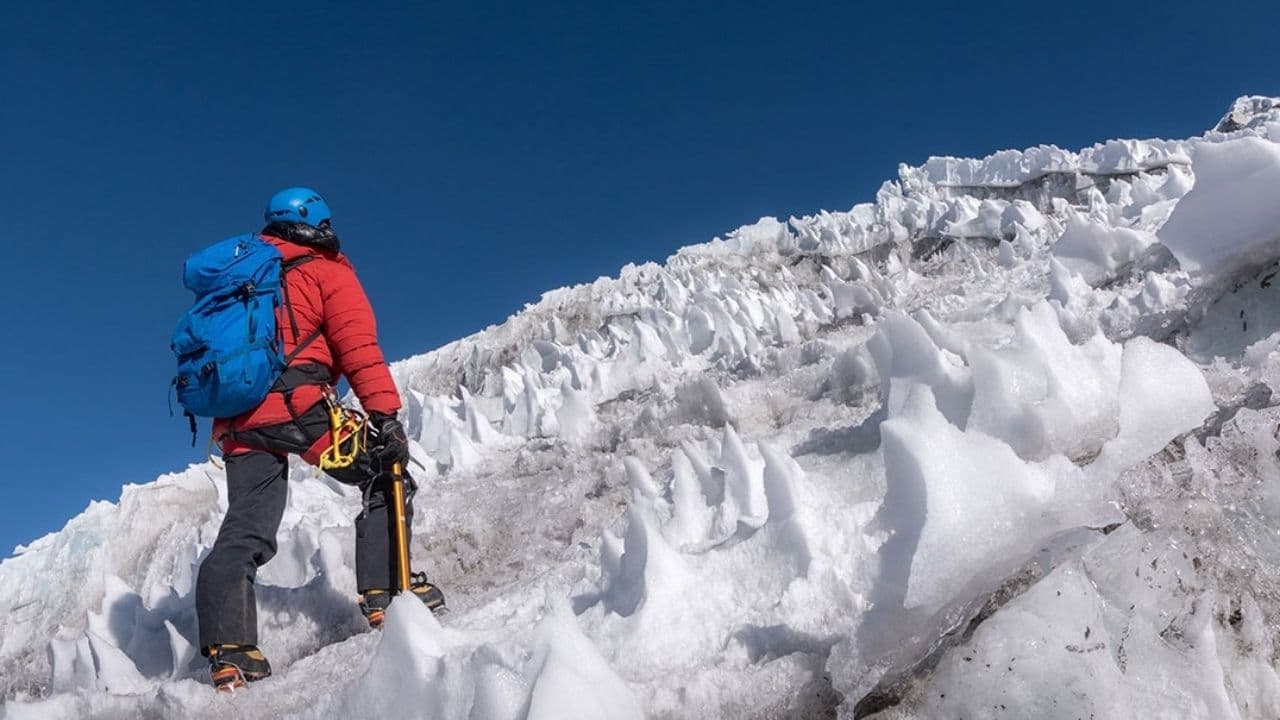
As you gain elevation, the route becomes increasingly technical, with sections of snow and ice requiring crampons, harnesses, fixed ropes, and an ascender where installed. Your climbing guide will manage the rope systems and assist you through the more demanding sections, including steep snow slopes and the exposed summit ridge. The climb requires steady movement, careful foot placement, and effective use of the mountaineering techniques practiced during your preparation.
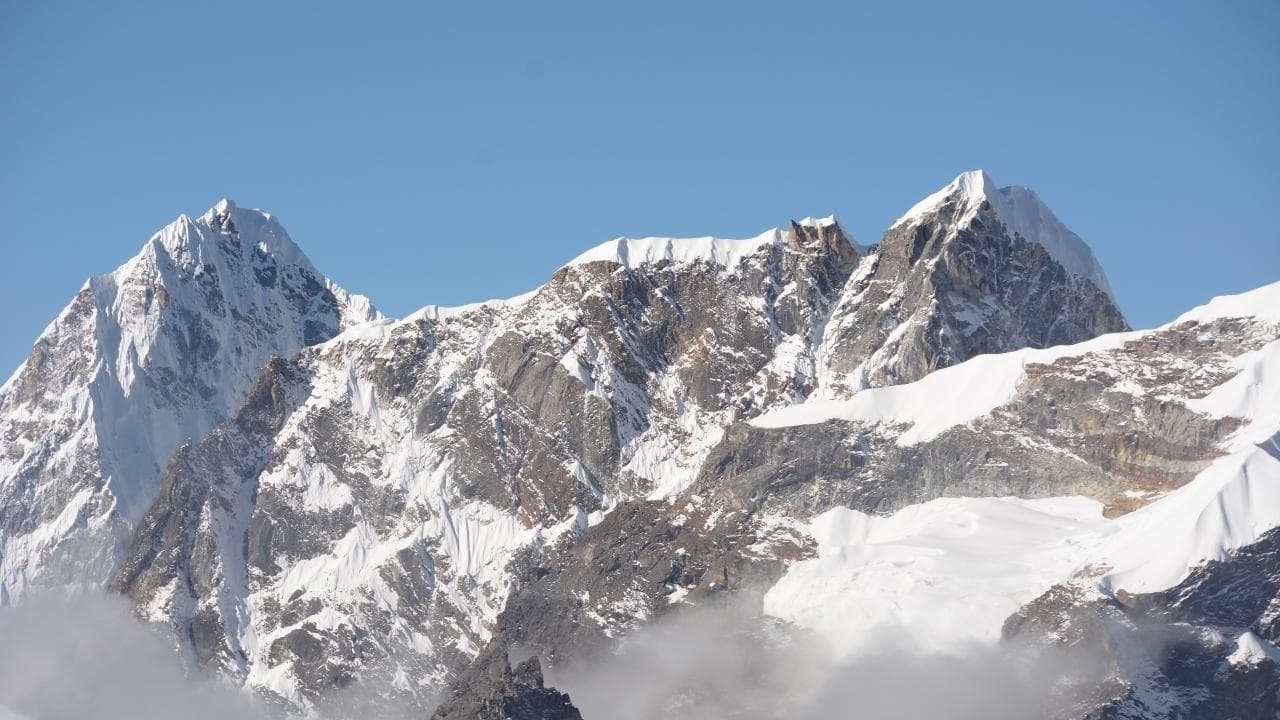
Upon reaching the summit of Lobuche East (6,119m/ 20,075ft), you will be rewarded with extraordinary Himalayan views featuring Mount Everest, Lhotse, Nuptse, Ama Dablam, Makalu, and the surrounding Khumbu peaks. Standing above 6,000 meters is an unforgettable achievement and an important milestone before your upcoming Island Peak expedition. After celebrating your Lobuche East Peak Climbing, you will carefully descend along the climbing route toward High Camp and continue to the designated lower camp, usually Lobuche East Base Camp (4,980m/ 16,338ft).
The descent requires considerable attention, particularly on steep snow and rocky sections where fatigue may become a factor. Although the climbing schedule may take around 8 to 9 hours in favorable conditions, the complete summit-and-descent journey can extend to 10 to 12 hours or longer. You will spend the night at the lower climbing camp, allowing your body to recover after the demanding ascent.
Max. Elevation:6119
Duration:8 to 9 hours
Distance:6.5km
Day 13
Follow the Imja Valley Toward Chhukung (4,730m/ 15,518ft) via Kongma La Pass (5,535m/ 18,159ft), Surrounded by the Towering Peaks of Lhotse and Ama Dablam: 7 to 8 hours
Following your successful Lobuche East summit attempt, another remarkable high-altitude challenge awaits as you cross Kongma La Pass (5,535m/ 18,159ft), one of the three famous high passes of the Everest region. After an early breakfast at Lobuche East Base Camp, you will begin your journey toward the Khumbu Glacier, navigating rocky moraine and uneven glacial terrain under the guidance of your trekking team.
After crossing the Khumbu Glacier, you will follow the demanding ascending trail toward Kongma La. The route climbs through a rugged landscape of loose rocks, steep slopes, and high-altitude mountain terrain, with impressive views of Nuptse, Lhotse, and the surrounding peaks. As you approach the pass, the trail becomes increasingly steep, requiring a slow and consistent pace.
Upon reaching the summit of Kongma La Pass, you can enjoy breathtaking panoramic views of the Khumbu and Imja valleys, with the towering south face of Lhotse dominating the landscape. After taking a short break, you will begin the long descent toward Chhukung, passing rocky slopes and the small alpine lakes beneath the pass before gradually entering the upper Imja Valley.
After approximately 7 to 8 hours of trekking, you will arrive at Chhukung (4,730m/ 15,518ft), a small mountain settlement surrounded by some of the most impressive peaks in the Everest region. The village serves as an important staging point for Island Peak climbing, and you will spend the night at a local teahouse.
Max. Elevation:4730
Duration:7 to 8 hours
Distance:11km
Day 14
Trek Beneath the Imja Glacier to Island Peak Base Camp (5,100m/ 16,732ft) and Complete Your Final Climbing Preparations: 4 hours
After breakfast in Chhukung, you will begin your approach toward Island Peak Base Camp to conquer the final peak of this EBC Trek with Island Peak and Lobuche Peak adventure. You will follow the rugged trail deeper into the upper Imja Valley. The route gradually ascends through a barren alpine landscape, with spectacular views of Lhotse, Ama Dablam, and the surrounding snow-covered mountains. As you continue eastward, the trail follows rocky moraine and glacial terrain near the southern margins of the Lhotse Glacier. The imposing south face of Lhotse rises dramatically above the valley, while Island Peak gradually becomes more prominent ahead.
You will also pass near the lower glacial basin associated with Imja Tsho, a large high-altitude lake formed by glacial retreat. After approximately 3 to 4 hours of trekking, you will reach Island Peak Base Camp (5,100m/ 16,732ft), situated beneath the mountain's southwestern climbing route. Your climbing crew will establish the campsite and organize the necessary equipment for the summit attempt.
During the afternoon, your climbing guide will conduct a final technical preparation session, reviewing the use of crampons, ice axes, harnesses, ascenders, and fixed-rope systems. You will also receive instructions on glacier travel, rope safety, and the steep headwall section leading toward the summit ridge. After an early dinner, you will rest in your tent, preparing for another demanding summit attempt the following morning.
Max. Elevation:5100
Duration:4 hours
Distance:5km
Day 15
Summit Island Peak (6,189m/ 20,305ft)– Experience Spectacular Himalayan Panoramas Before Descending to Base Camp: 8 to 10 hours
Your second Himalayan summit adventure begins in the early hours of the morning as you prepare to climb Island Peak, also known as Imja Tse. After a light breakfast and equipment check, you will depart from Island Peak Base Camp, generally between midnight and 2:00 AM, depending on the climbing conditions and your guide's planned schedule. The initial ascent follows steep, rocky terrain above base camp before reaching the upper mountain, where the route transitions onto snow and glacial sections. Depending on seasonal conditions, you may need to negotiate crevasses using established rope systems and other safety equipment. As you continue higher, the climb becomes increasingly technical, leading toward the steep snow and ice headwall beneath the summit ridge.
Your climbing guide will assist you through the headwall using fixed ropes and appropriate climbing techniques. Once above this demanding section, you will follow the exposed summit ridge toward the top of Island Peak. Careful movement and concentration are essential, particularly where the ridge narrows and the surrounding slopes drop steeply away. Upon reaching the summit of Island Peak at 6,189 meters (20,305 feet), you will enjoy an extraordinary Himalayan panorama featuring Lhotse, Makalu, Baruntse, Ama Dablam, and the surrounding peaks of the Imja Valley. The immense south face of Lhotse dominates the northern skyline, making the summit experience especially memorable.
After celebrating your second successful Himalayan summit of Island Peak Climbing, you will carefully descend along the same climbing route, navigating the fixed-rope sections and glacial terrain before returning to Island Peak Base Camp. The complete summit journey generally requires 8 to 10 hours in favorable conditions, although some groups may take 10 to 12 hours or longer. You will spend the night at the base camp, enjoying a well-deserved rest after completing both Lobuche East and Island Peak climbing objectives.
Max. Elevation:6189
Duration:8 to 10 hours
Distance:11km
Day 16
Reserved Contingency and Recovery Day for Island Peak Climbing, Weather Conditions, and Safe Descent
After the demanding summit attempt on Island Peak, this day of your Everest Base Camp Trek with Two Peaks Climbing serves as an important contingency and recovery day in your Himalayan climbing expedition. High-altitude mountaineering is heavily influenced by weather, snow conditions, and individual physical performance, so having an additional day provides valuable flexibility without unnecessarily rushing the expedition.
If unfavorable weather, strong winds, or unsafe climbing conditions prevented your summit attempt on Day 15, your climbing guide will assess whether another attempt is possible today. Any decision to proceed will depend on the latest weather forecast, snow stability, climbing conditions, and the overall health and fitness of the group. If you successfully completed the Island Peak summit on the previous day, you will enjoy a more relaxed morning at base camp before packing your equipment and beginning the descent toward Chhukung. The return journey generally takes around 3 to 4 hours, following the familiar glacial moraine trail through the upper Imja Valley. As you descend, the dramatic mountain scenery of Lhotse, Ama Dablam, and the surrounding Himalayan peaks accompanies your final moments in the high alpine environment.
You will spend the night at a teahouse in Chhukung, enjoying a comfortable rest after completing both Lobuche East and Island Peak Climbing adventures. If the contingency day is used for a summit attempt, your guide will adjust the descent and overnight arrangements according to your group's condition.
Max. Elevation:4730
Day 17
Retrace the Imja Valley Through Dingboche to Pangboche (3,900m/ 12,795ft): 6 hours
After completing your Island Peak climbing adventure, you will begin your descent through the beautiful Imja Valley toward Pangboche. If you completed the expedition on the scheduled day, your morning will begin with breakfast in Chhukung. Then, youwill retrace the familiar trail westward, leaving behind the rugged glacial landscapes and towering mountain walls of the upper Khumbu region. The initial section follows the Imja Khola through open alpine terrain, offering magnificent views of Lhotse, Ama Dablam, and the surrounding Himalayan peaks.
After approximately 1.5 to 2 hours of walking, you will arrive at Dingboche, where the traditional stone-walled fields and Sherpa houses provide a welcome contrast to the barren landscapes of the higher elevations. Continuing downhill, you will follow the familiar trail through Orsho and Shomare, passing yak-grazing pastures and small mountain settlements along the way. As you descend, the vegetation gradually becomes more noticeable, and the warmer temperatures provide some relief after several nights spent at high altitude.
The final section takes you along the scenic trail toward Pangboche, one of the oldest Sherpa settlements in the Everest region. The village is particularly famous for its historic Pangboche Monastery and spectacular views of Ama Dablam rising above the valley. Tonight, you will settle into a local teahouse, enjoying a well-deserved rest after your demanding Himalayan climbing expedition.
Max. Elevation:3900
Duration:6 hours
Distance:11km
Day 18
Trek Through Tengboche and the Forested Dudh Koshi Valley Before Returning to Namche Bazaar (3,440m/ 11,286ft): 5 to 6 hours
After enjoying breakfast in Pangboche, you will continue your descent toward Namche Bazaar, following the beautiful forested trails of the lower Khumbu Valley. The initial section descends toward the Imja Khola, where you will cross a suspension bridge before entering the rhododendron and birch forests surrounding Deboche. From here, a short uphill climb takes you to Tengboche, home to the renowned Tengboche Monastery, one of the most important Buddhist landmarks in the Everest region.
You may spend some time exploring the monastery surroundings and enjoying the magnificent views of Mount Everest, Lhotse, Nuptse, and Ama Dablam before continuing downhill. The trail descends steeply through pine and rhododendron forests toward Phunki Tenga, where you will cross the Dudh Koshi River on a suspension bridge. After a short break, you will begin the steady uphill ascent toward Sanasa, passing through forested hillsides with occasional openings revealing the surrounding Himalayan peaks.
You will continue trekking through Kyangjuma, following the familiar mountainside trail toward Namche Bazaar, passing the Tenzing Norgay Memorial Stupa along the way. This final section offers beautiful views across the Dudh Koshi Valley and some of your last opportunities to admire the towering Himalayan peaks from the classic Everest trekking route. After approximately 5 to 6 hours of trekking, you will arrive at Namche Bazaar. The remainder of the afternoon is free to explore the bustling Sherpa town, visit local cafes and bakeries, or relax after another rewarding day in the mountains.
Max. Elevation:3440
Duration:6 hours
Distance:13.8km
Day 19
Enjoy Your Final Trek Through Monjo, Phakding, and the Dudh Koshi Valley to Lukla (2,860m/ 9,383ft) for an Overnight Stay: 6 to 7 hours
Today marks your final trekking day in EBC Trek with Island Peak and Lobuche Peak as you make your way from Namche Bazaar to Lukla. After breakfast, you will begin descending along the steep forested trail toward the famous Hillary Suspension Bridge, enjoying another opportunity to admire the dramatic Dudh Koshi Valley from above. The trail continues downhill toward the confluence of the Dudh Koshi and Bhote Koshi rivers before reaching Jorsalle. From Jorsalle, you will follow the riverside trail toward Monjo, where you will exit Sagarmatha National Park after completing the necessary checkpoint formalities.
Continuing south, you will pass through Chhumowa, Benkar, and Toktok, crossing several suspension bridges decorated with colorful prayer flags. The familiar Sherpa settlements, mani walls, and pine forests provide a memorable final experience of the Khumbu trekking trails. After passing through Phakding, you will continue toward Ghat, Thado Koshi, and Chheplung, following the undulating trail alongside the Dudh Koshi River. The final section involves a gradual uphill climb toward Lukla, where your Himalayan trekking adventure originally began.
After approximately 6 to 7 hours of walking, you will arrive at Lukla and settle into your teahouse for the evening. You can spend your final night in the mountains celebrating the successful completion of your Everest Base Camp, Lobuche East, and Island Peak expedition with your trekking and climbing crew. It is also a wonderful opportunity to thank the guides and porters who accompanied you throughout this remarkable journey.
Max. Elevation:2860
Duration:6 to 7 hours
Distance:17.9km
Day 20
Bid Farewell to the Everest Region with a Scenic Morning Flight from Lukla to Kathmandu (1,400m/ 4,593ft): 35 minutes
After enjoying your final breakfast in the Everest region, you will prepare for the scenic morning flight from Lukla to Kathmandu. Your trekking guide will assist with the airport check-in process and coordinate your departure arrangements. As you board the aircraft at Tenzing-Hillary Airport, you will have one last opportunity to admire the surrounding Himalayan landscape before leaving the Khumbu region behind. During this approximately 35-minute flight to Kathmandu, you will enjoy spectacular aerial views of the rugged mountain valleys, terraced hillsides, and winding rivers of eastern Nepal.
The flight offers a memorable final perspective of the Himalayan terrain you have spent the past several weeks exploring. Upon arrival at Tribhuvan International Airport, our representative will arrange your transfer to the hotel. During the peak trekking seasons, flights from Lukla may operate to Manthali Airport in Ramechhap instead of Kathmandu. In this case, the flight takes approximately 15 to 20 minutes, followed by a road journey of around 4 to 6 hours to Kathmandu, depending on traffic and road conditions.
After reaching your hotel, the remainder of the day is free for relaxation or independent exploration. You may enjoy a hot shower, visit the restaurants and shops around Thamel, or spend the evening reflecting on your achievements in the Himalayas. Having successfully completed the Everest Base Camp Trek with Lobuche and Island Peak, you will enjoy a comfortable overnight stay in Kathmandu before your final departure the following day.
Max. Elevation:1400
Duration:35 minutes
Distance:138km
Day 21
Final Departure from Kathmandu– Airport Transfer and Farewell to Nepal After an Unforgettable Himalayan Climbing Adventure
Your remarkable 21-day Everest Base Camp Trek with Lobuche East Peak and Island Peak Climbing adventure comes to an end today. After enjoying your final breakfast at the hotel in Kathmandu, you can spend some time relaxing or making last-minute preparations for your international departure. Depending on your flight schedule, you may also have an opportunity to explore the nearby streets of Thamel, purchase souvenirs, or enjoy a final cup of Nepali tea.
Our representative will arrive at your hotel at the scheduled time and arrange a comfortable private transfer to Tribhuvan International Airport, generally around 3 hours before your international flight. Along the way, you can reflect on the unforgettable experiences of your Himalayan expedition, from standing at Everest Base Camp and witnessing sunrise over Mount Everest from Kala Patthar to challenging yourself on the towering summits of Lobuche East Peak and Island Peak.
As you bid farewell to Nepal, you will take home lasting memories of the spectacular Himalayan landscapes, traditional Sherpa villages, and the remarkable challenges and achievements of your mountaineering journey. The team at Eco Holidays Nepal wishes you a safe journey home and looks forward to welcoming you back for another Himalayan adventure.
If the provided schedule isn't suitable for you, we can create personalized travel arrangements.
Accommodation and Meals During EBC With Lobuche and Island Peak
The 21-day EBC With Lobuche and Island Peak combines comfortable mountain teahouse stays with basic tented accommodation at high-altitude climbing camps. Throughout the trekking sections, you will stay in traditional Sherpa villages, including Phakding, Namche Bazaar, Tengboche, Dingboche, Lobuche, Gorak Shep, Chhukung, and Pangboche. During the climbing sections, accommodation shifts to expedition tents at Lobuche East High Camp (5,400m/ 17,716ft), Lobuche East Base Camp (4,980m/ 16,338ft), and Island Peak Base Camp (5,100m/ 16,732ft).
Teahouses generally provide twin-sharing rooms with beds, mattresses, pillows, and blankets. Namche Bazaar and lower villages offer relatively better facilities, including attached bathrooms at selected lodges, hot showers, Wi-Fi, and charging services. However, accommodation becomes increasingly basic at higher elevations, particularly in Lobuche and Gorak Shep, where shared bathrooms, limited electricity, and unheated bedrooms are common. Additional charges may apply for hot showers, internet access, and device charging.
At the climbing camps, you will sleep in insulated expedition tents, typically shared by two climbers, with sleeping mats and basic camping facilities arranged by the climbing crew. Unlike teahouses, these camps do not have permanent bathrooms, electricity, or heating. A four-season sleeping bag rated to approximately -20°C or colder is recommended, especially since nighttime temperatures at High Camp can drop well below freezing during the main climbing seasons.
Food During the Trek and Climbing
During the Everest Base Camp Trek with Lobuche East and Island Peak Climbing, you will have access to a variety of Nepali, Sherpa, Tibetan, and Western food at teahouses along the trekking route. Breakfast is generally served before your morning departure, lunch is enjoyed at a teahouse along the trail, and dinner is prepared at your overnight lodge. At Lobuche East and Island Peak climbing camps, meals are prepared by the expedition cooking crew, with simpler, energy-rich options suited to high-altitude conditions.
Breakfast
Eggs: Boiled eggs, fried eggs, scrambled eggs, and vegetable or cheese omelets
Bread: Tibetan bread, chapati, toast with butter or jam, and French toast
Pancakes: Plain, apple, banana, honey, or chocolate pancakes, depending on availability
Porridge: Oatmeal, apple porridge, honey porridge, and traditional tsampa (roasted barley flour)
Cereals: Muesli, cornflakes, and granola served with milk or hot water
Potato Dishes: Hash browns, boiled potatoes, and fried potatoes
Other Options: Baked beans, peanut butter, honey, and fresh fruit in lower villages
Lunch and Dinner
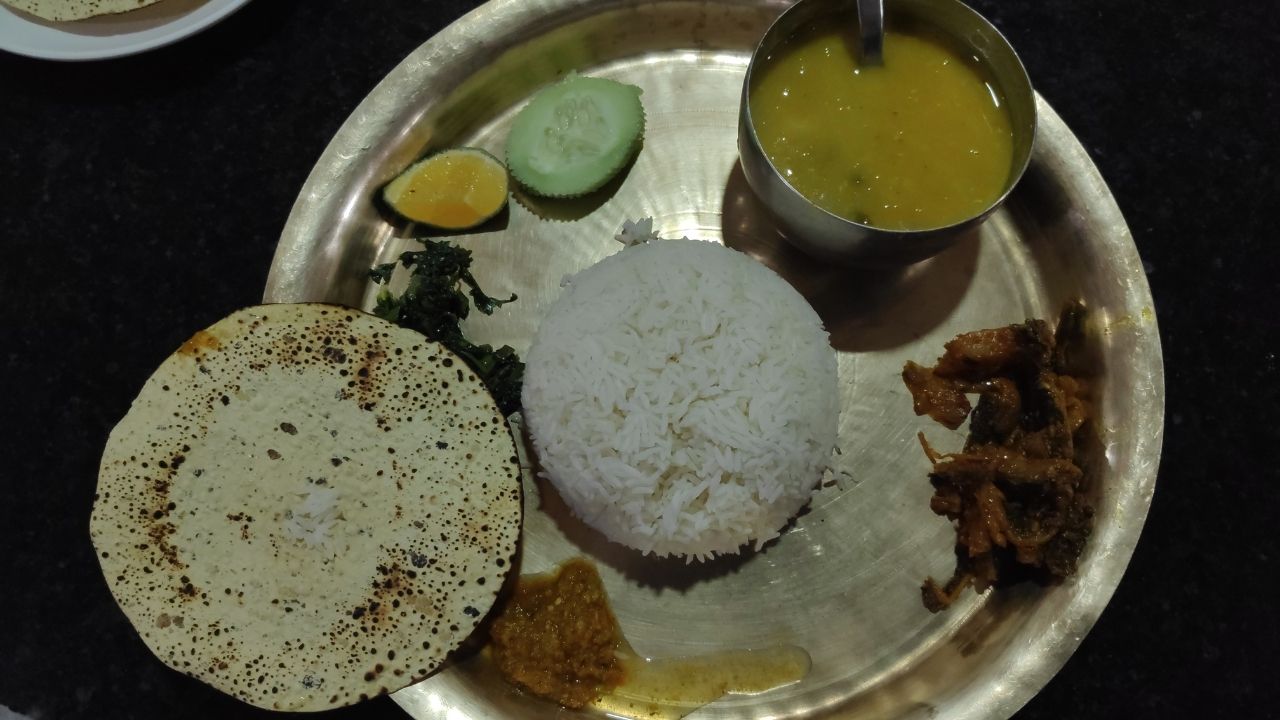
Dal Bhat: Steamed rice, lentil soup, seasonal vegetable curry, and pickles, often with additional servings
Sherpa Stew (Syakpa): Traditional Sherpa stew prepared with handmade noodles, potatoes, and vegetables
Thukpa and Thenthuk: Tibetan-style noodle soups with vegetables, eggs, or available meat
Momo: Steamed or fried dumplings filled with vegetables, cheese, potatoes, or meat
Rice and Curry: Plain rice with vegetable curry, mixed vegetable curry, and egg curry where available
Pizza: Vegetable, cheese, mushroom, and tomato pizza at selected teahouses
Sandwiches: Vegetable, cheese, egg, and grilled sandwiches
Other Dishes: Spring rolls, chapati with curry, and simple meat dishes where available
Beverages
Tea: Black tea, milk tea, ginger tea, lemon tea, mint tea, green tea, and masala tea
Coffee: Instant coffee, black coffee, milk coffee, and brewed coffee at selected lower-altitude cafés
Traditional Drinks: Tibetan butter tea, available at some Sherpa lodges
Hot Drinks: Hot lemon, honey ginger lemon, hot chocolate, and hot fruit-flavored drinks
Drinking Water: Boiled water, properly purified or filtered water, and bottled mineral water
Cold Drinks: Coca-Cola, Fanta, Sprite, packaged fruit juices, and iced tea where available
Hydration Options: Hot water and electrolyte drinks prepared using personal electrolyte powders
Food at Climbing Camps
During your stays at Lobuche East High Camp (5,400m/ 17,716ft), Lobuche East Base Camp (4,980m/ 16,338ft), and Island Peak Base Camp (5,100m/ 16,732ft), meals are generally simpler, including porridge, bread, eggs when available, rice, lentils, noodles, pasta, potatoes, and hot soups. For summit attempts, climbers typically carry energy bars, chocolates, nuts, biscuits, and dried fruits for quick energy between breaks.
Transporation
Transportation for the 21-day Everest Base Camp Trek with Lobuche East and Island Peak Climbing combines private airport transfers, scenic domestic flights, and trekking through the Khumbu region. Upon your arrival in Kathmandu, our representative will arrange a private vehicle transfer to your hotel. Airport transfers and necessary ground transportation in Kathmandu are coordinated according to your itinerary.
Your journey into the Everest region begins with a flight to Tenzing-Hillary Airport in Lukla (2,860m /9,383ft), offering spectacular aerial views of Nepal's hills, river valleys, and Himalayan landscapes. A direct flight from Kathmandu takes approximately 30 to 35 minutes. However, during the busy spring (March to May) and autumn (September to November) trekking seasons, flights frequently operate from Manthali Airport in Ramechhap instead. This requires an early morning drive of approximately 4 to 5 hours (130 to 135 km) from Kathmandu, followed by a 15 to 20-minute flight to Lukla.
From Lukla, the expedition continues entirely on foot through traditional Sherpa settlements, high-altitude trekking trails, and the climbing routes of Lobuche East and Island Peak. Your trekking and climbing equipment will be transported with porter support according to the expedition arrangements, while you carry essential personal belongings in your daypack. After completing both climbing objectives, you will trek back to Lukla and spend the night before taking a morning flight to Kathmandu or Manthali, followed by a road transfer where required.
**Note: Lukla flights depend heavily on mountain weather, visibility, and operational conditions, so delays or cancellations are possible. Domestic flights also have strict baggage limits, commonly around 15 kg per passenger, including hand luggage. Since climbing equipment can exceed this allowance, additional baggage arrangements should be confirmed before departure. We recommend keeping at least one additional buffer day before your international flight**
Difficulty and Fitness Requirements for Everest Base Camp Trek with Lobuche and Island Peak
The EBC with Lobuche and Island Peak is a strenuous, technically demanding expedition suited to physically fit trekkers with previous high-altitude experience and basic mountaineering skills. The journey combines Everest Base Camp (5,364m/ 17,598ft), Kongma La Pass (5,535m/ 18,159ft), and two challenging summits, Lobuche East (6,119m/ 20,075ft) and Island Peak (6,189m/ 20,305ft). Most trekking days involve 5 to 7 hours of walking, while technical summit attempts can require 8 to 10 hours or longer, depending on mountain conditions.
The trekking route includes steep ascents, rocky glacial moraines, suspension bridges, and exposed high-altitude terrain. Lobuche East involves mixed rock, snow, and ice climbing, fixed ropes, and a narrow summit ridge, while Island Peak features glacier travel, possible crevasse crossings, and a steep snow-and-ice headwall. Both climbs require familiarity with crampons, ice axes, harnesses, ascenders, and rope-assisted descents. Although your climbing guide provides technical instruction, previous climbing practice is strongly recommended.
We recommend 12 to 16 weeks of physical preparation, focusing on cardiovascular endurance, leg strength, uphill hiking, and stamina. As a practical fitness benchmark, you should be comfortable completing a 6 to 8-hour mountain hike with 800 to 1,000 meters of elevation gain while carrying a 6 to 10 kg backpack. Previous trekking experience above 4,000 meters and basic mountaineering training are valuable advantages for this Everest Base Camp Trek with two peaks climbing.
Acclimatization days in Namche Bazaar and Dingboche help your body adjust to thinner air, but they do not eliminate altitude sickness risks. Since the expedition includes two 6,000-meter summits and a demanding high-pass crossing, this package is not recommended for complete beginners without substantial preparation. Safe completion of this demanding Himalayan endeavor depends on physical fitness, technical competence, adequate acclimatization, favorable weather, and your climbing guide's assessment.
Best Time to Do EBC With Lobuche and Island Peak
The best time for the EBC Trek With Island Peak and Lobuche Peak is spring (April to May) and autumn (October to early November). These months generally provide the most favorable combination of trekking weather, manageable temperatures, and climbing conditions for the two 6,000-meter summits. Unlike a regular Everest Base Camp Trek, this 21-day expedition requires suitable conditions for glacier travel, fixed-rope climbing, and crossing Kongma La Pass. Snow stability, wind speed, and visibility are therefore just as important as clear mountain views.
Spring: March to May
Spring is one of the most popular seasons for climbing Lobuche East (6,119m/ 20,075ft) and Island Peak (6,189m/ 20,305ft). As temperatures gradually rise, the lower Khumbu trails become more comfortable, rhododendrons bloom around Phakding and Tengboche, and Everest Base Camp becomes increasingly active with mountaineering expeditions. April and May generally offer a better balance of temperatures and climbing opportunities, while March can retain harsh winter conditions on the upper slopes.
In Namche Bazaar (3,440m/ 11,286ft), daytime temperatures typically range from 8°C to 15°C, with nights around -5°C to 2°C. Around Dingboche (4,410m/ 14,468ft), daytime temperatures are commonly 2°C to 10°C, while nights may fall between -5°C and -12°C. At Lobuche East High Camp (5,400m/ 17,716ft) and Island Peak Base Camp (5,100m/ 16,732ft), overnight temperatures can drop to approximately -10°C to -20°C or lower during cold spells.
Snow and ice conditions can provide opportunities for technical climbing, although fresh snowfall, strong summit winds, and unstable snow can still interrupt attempts. By late May, increasing moisture and afternoon clouds may reduce visibility.
Best for: Climbing both 6,000-meter peaks, relatively warmer trekking conditions, rhododendron forests, and experiencing the Everest expedition season.
Autumn: September to November
Autumn offers some of the clearest Himalayan panoramas, with October to early November generally providing the most dependable window for this combined trekking and climbing expedition. Following the monsoon, the Khumbu Valley becomes greener, mountain visibility improves, and the trails gradually dry. From Kala Patthar, Kongma La, Lobuche East, and Island Peak, clear days can reveal exceptional views of Everest, Lhotse, Nuptse, Ama Dablam, Makalu, and surrounding peaks.
October daytime temperatures in Namche Bazaar generally range from 8°C to 13°C, with nighttime temperatures around -2°C to 3°C. In Dingboche, daytime conditions commonly range from 3°C to 9°C, while nights can drop to -5°C to -12°C. Higher climbing camps experience significantly colder conditions, with nighttime temperatures often falling between -10°C and -20°C, particularly in November.
October usually provides a favorable balance of visibility, trail conditions, and climbing temperatures. However, autumn does not guarantee safe climbing conditions. Snow or ice coverage can vary, and exposed sections of Lobuche East and Island Peak may require additional care. By late November, increasing cold, strong winds, and shorter daylight hours make summit attempts more demanding.
Best for: Clear mountain views, generally drier trekking trails, technical climbing opportunities, and favorable conditions for crossing Kongma La Pass.
Winter: December to February
Winter brings exceptionally cold conditions to the upper Khumbu, making this expedition considerably more challenging than a standard Everest Base Camp trek. Although clear skies and quieter trails can be appealing, heavy snowfall, icy slopes, and strong winds can complicate the technical climbing sections and the Kongma La crossing.
Namche Bazaar may experience daytime temperatures around 3°C to 8°C, with nights dropping to -5°C or lower. At Dingboche, daytime temperatures can remain near or below freezing, while nights may fall below -15°C. At the climbing camps above 5,000 meters, nighttime temperatures can reach -20°C to -30°C or colder during severe weather.
Snow accumulation may obscure glacier crevasses, affect fixed-rope routes, and make the exposed summit ridges more hazardous. Shorter daylight hours also leave less flexibility for long summit attempts.
Best for: Highly experienced mountaineers with advanced winter-climbing skills, appropriate equipment, and flexible schedules. Winter is generally not recommended for this standard 21-day itinerary.
Summer and Monsoon: June to August
The summer monsoon is the least suitable period for combining Everest Base Camp with Lobuche East and Island Peak climbing. Frequent rainfall, persistent cloud cover, and poor visibility affect the lower trekking trails, while snowfall and unstable weather can create serious difficulties on the higher climbing routes.
During this period, Namche Bazaar generally experiences daytime temperatures around 12°C to 18°C, while Dingboche may reach approximately 5°C to 12°C. Despite these relatively warmer temperatures, conditions above 5,000 meters remain cold, and fresh snow can accumulate on the climbing routes. Wet and slippery trails, limited mountain visibility, potential flight cancellations, and uncertain snow conditions make summit planning particularly difficult. Glacier travel and steep snow sections can become more hazardous following heavy precipitation.
Best for: Experienced climbers undertaking specialized expeditions with flexible schedules. The monsoon is not recommended for this combined trekking and climbing package.
Altitude and Acclimatization
The Everest Base Camp Trek with Lobuche and Island Peak Climbing involves a gradual ascent from Lukla (2,860m/9,383ft) to Everest Base Camp (5,364m/17,598ft), followed by two technical summits: Lobuche East (6,119m/20,075ft) and Island Peak (6,189m/20,305ft). With both peaks exceeding 6,000 meters and the route crossing Kongma La Pass (5,535m), proper acclimatization is essential for managing altitude sickness risks and maintaining physical performance throughout the expedition.
Our itinerary incorporates two dedicated acclimatization days and additional preparation time at the climbing camps:
Day 4– Namche Bazaar (3,440m/ 11,286ft): You will hike toward Syangboche Airstrip (3,720m), Everest View Hotel (approximately 3,880m), and Khumjung (3,790m) before returning to Namche for the night. This follows the climb high, sleep low principle.
Day 7– Dingboche (4,410m/ 14,468ft): An acclimatization hike toward Nangkartshang viewpoint (around 5,000m) helps you experience thinner air before descending to sleep in Dingboche.
Days 11– Lobuche East Climbing Camp: After reaching Lobuche East High Camp (5,400m/ 17,716ft), you will undergo climbing preparation, equipment checks, and technical briefings before the summit attempt. The planned descent to a lower camp after climbing helps reduce prolonged exposure above 5,000m.
Days 14 to 16– Island Peak Base Camp (5,100m/ 16,732ft): Time is allocated for rest, climbing practice, and summit preparation, with Day 16 reserved as a contingency or recovery day. This provides flexibility for weather conditions and physical recovery following the first summit and Kongma La crossing.
Above 5,000 meters, reduced oxygen availability can cause headaches, nausea, dizziness, fatigue, and disturbed sleep, even among experienced climbers. Your guide will monitor your condition throughout the journey, particularly before the two summit attempts. Maintain adequate hydration, eat regularly, avoid unnecessary exertion during acclimatization days, and report symptoms immediately. Persistent or worsening symptoms require stopping the ascent and may require descent, regardless of the planned schedule.
EBC With Lobuche and Island Peak Packing Suggestion
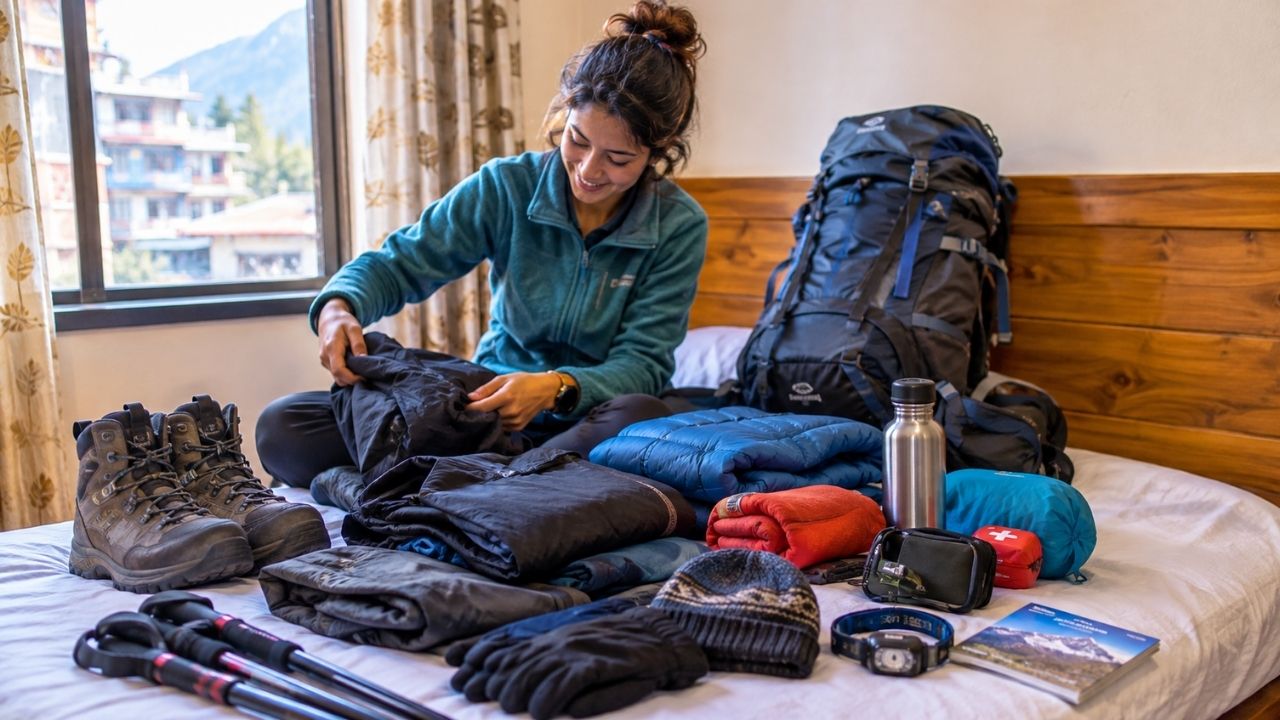
Packing for the 21-day Everest Base Camp Trek with Lobuche East and Island Peak Climbing requires more preparation than a standard Everest Base Camp trek. Along with regular trekking essentials, you will need technical mountaineering equipment for glacier crossings, fixed-rope ascents, and summit attempts above 6,000 meters. Similarly, as temperatures can fall below -20°C at high camps, particularly during early morning summit attempts, proper insulation, weather protection, and reliable climbing gear are essential.
Here is our recommended packing list, organized by category to help you prepare for both the trekking and climbing sections.
Clothing and Layering
Thermal Base Layers: 2 to 3 moisture-wicking thermal tops and 2 thermal bottoms
Trekking Shirts: 3 to 4 quick-drying, long-sleeved or short-sleeved shirts
Fleece Jacket: 1 to 2 warm mid-layers for colder trekking days
Down Jacket: 1 expedition-quality insulated jacket suitable for temperatures below -20°C
Waterproof Jacket: 1 breathable, windproof and waterproof shell with a hood
Trekking Pants: 2 pairs of lightweight, quick-drying trekking trousers
Insulated Pants: 1 pair of warm pants for high camps and summit days
Waterproof Pants: 1 pair of shell trousers for snow, wind, and precipitation
Underwear: 5 to 7 pairs of quick-drying underwear
Footwear and Socks
Trekking Boots: 1 pair of waterproof, ankle-supporting boots with good traction
Mountaineering Boots: 1 pair of insulated, crampon-compatible double boots suitable for 6,000-meter climbing
Camp Shoes: Lightweight sandals or comfortable shoes for teahouses and climbing camps
Trekking Socks: 4 to 5 pairs of moisture-wicking hiking socks
Thermal Socks: 2 to 3 pairs of thick wool or mountaineering socks
Gaiters: 1 pair of waterproof gaiters to keep snow and debris out of your boots
Technical Climbing Equipment
Climbing Harness: Adjustable mountaineering harness suitable for glacier and fixed-rope climbing
Climbing Helmet: Certified helmet for protection against falling rocks and ice
Crampons: 10 to 12-point mountaineering crampons compatible with your climbing boots
Ice Axe: General mountaineering ice axe suitable for snow slopes and self-arrest
Ascender (Jumar): For ascending fixed ropes on steep climbing sections
Belay/Rappel Device: Figure-eight or appropriate assisted descent device
Carabiners: Locking carabiners as specified by your climbing guide
Safety Slings and Tethers: Suitable personal attachment systems for fixed-rope sections
Prusik Cord: For rope safety and emergency climbing applications, as instructed by your guide
**Note: Fixed ropes, anchors, and other group climbing equipment are generally organized by the expedition team. Confirm which personal technical items are included in your package or available for rental before purchasing equipment**
Headwear, Gloves, and Eye Protection
Warm Beanie: 1 to 2 insulated hats covering your ears
Sun Hat: Wide-brimmed hat or trekking cap for daytime sun protection
Buff or Neck Gaiter: 1 to 2 for protection against dust, wind, and cold
Balaclava: 1 thermal face covering for exposed summit conditions
Lightweight Gloves: 1 pair for trekking and mild weather
Insulated Gloves: 1 pair of warm, waterproof gloves
Expedition Mittens: 1 pair of heavily insulated mittens for summit attempts
UV-Protective Sunglasses: Category 4 glacier sunglasses for intense high-altitude sunlight
Ski Goggles: For protection against snow, strong winds, and blowing ice
Backpacks and Sleeping Equipment
Daypack: 30 to 40L backpack for daily trekking essentials
Climbing Backpack: 35 to 45L technical pack suitable for summit equipment
Duffel Bag: 70 to 90L durable duffel for porter-supported luggage
Sleeping Bag: Four-season sleeping bag with a comfort rating appropriate for approximately -20°C or colder
Sleeping Bag Liner: Lightweight liner for additional warmth and hygiene
Dry Bags: Waterproof bags for clothing, electronics, and important documents
Personal Essentials and Toiletries
Water Bottles: Two reusable 1L bottles, preferably insulated for freezing conditions
Thermos Flask: 500 to 750ml insulated flask for hot drinks on summit days
Water Purification: Purification tablets or a reliable water-treatment system
Headlamp: Bright headlamp with spare batteries for pre-dawn summit departures
Trekking Poles: Adjustable poles with snow baskets
Sunscreen: Broad-spectrum SPF 50+ sunscreen
Lip Balm: SPF-protected lip balm for dry, windy conditions
Personal Hygiene: Toothbrush, toothpaste, biodegradable soap, sanitizer, wet wipes, and toilet paper
Quick-Drying Towel: Compact microfiber towel
Personal First Aid: Blister treatment, adhesive bandages, prescribed medicines, and personal medical supplies
Electronics and Travel Documents
Power Bank: High-capacity power bank for charging essential devices
Camera or Smartphone: With spare batteries and sufficient storage
Charging Accessories: Charging cables and universal travel adapter
Passport and Nepal Visa: Valid passport and appropriate entry documentation
Emergency Contacts: Printed and digital copies of insurance and emergency assistance details
Cash: Nepali rupees for personal purchases, hot showers, charging, and other expenses
Summit-Day Snacks and Nutrition
Energy Bars: Compact, high-calorie snacks for long climbing hours
Chocolates and Energy Gels: Quick energy during summit attempts
Nuts and Dried Fruits: Lightweight snacks providing sustained energy
Electrolyte Supplements: For replacing electrolytes during prolonged physical activity
Instant Drink Mixes: Optional warm or flavored drinks for climbing camps
You should prioritize well-fitting mountaineering boots, reliable insulation, and properly tested climbing equipment over unnecessary extra clothing. You should check your technical gear before leaving Kathmandu, and any unfamiliar equipment should be practiced with under your climbing guide's supervision. Eco Holidays Nepal can help you review your packing list and coordinate suitable rental equipment in Kathmandu, so you are properly prepared for both Lobuche East and Island Peak.
Travel Insurance
Comprehensive travel insurance is essential for the EBC Trek with Island Peak and Lobuche Peak, as the expedition involves remote Himalayan terrain, technical mountaineering, and elevations reaching 6,189 meters (20,305 feet). Standard travel insurance often excludes high-altitude trekking and technical climbing, so your policy must explicitly cover mountaineering above 6,000 meters, including both Lobuche East (6,119m/ 20,075ft) and Island Peak (6,189m/ 20,305ft).
Your insurance should include the following:
High-Altitude Trekking and Climbing: Coverage for trekking, glacier travel, fixed-rope climbing, and mountaineering up to at least 6,500 meters, including both summits.
Emergency Helicopter Evacuation: Search, rescue, and helicopter evacuation from remote locations in the Khumbu region, subject to weather and operational conditions.
Medical Treatment and Repatriation: Emergency hospitalization, altitude-related illnesses such as AMS, HAPE, and HACE, and medical repatriation when necessary.
Trip Cancellation and Interruption: Protection against eligible cancellations, unexpected medical emergencies, and interruptions caused by covered events.
Travel and Baggage Delays: Coverage for eligible Lukla flight disruptions, lost baggage, and delayed climbing equipment, according to policy terms.
Before arriving in Nepal, confirm with your insurer that Lobuche East and Island Peak are specifically covered, including their summit elevations and the technical climbing activities involved. Check the policy's altitude limits, exclusions, evacuation arrangements, and whether the insurer can provide direct payment guarantees for emergency rescue services.
**Note: We recommend carrying both digital and printed copies of your insurance certificate, policy number, and 24-hour emergency assistance contact details. Share these documents with Eco Holidays Nepal before departure so your trekking and climbing team can coordinate with your insurer promptly if an emergency arises**
Safety and Trekking Support
At Eco Holidays Nepal, we prioritize your safety, comfort, and overall well-being throughout the Everest Base Camp Trek With Two Peaks Climbing. Since this expedition involves two technical summits above 6,000 meters, glacier crossings, and challenging high-altitude terrain, our trekking and climbing teams provide continuous guidance, practical assistance, and carefully coordinated expedition support. Here is how we look after our guests throughout the journey:
Experienced Trekking and Climbing Guides: We arrange knowledgeable local trekking guides and qualified climbing guides to assist you throughout the Khumbu trails, Kongma La Pass, and both technical summit climbs.
Altitude Monitoring and Acclimatization: Our guides monitor your condition, walking pace, and possible altitude sickness symptoms, with dedicated acclimatization days in Namche Bazaar (3,440m/ 11,286ft) and Dingboche (4,410m/ 14,468ft).
Technical Climbing Preparation: Before attempting Lobuche East (6,119m/ 20,075ft) and Island Peak (6,189m/ 20,305ft), our climbing guides conduct equipment checks and provide practical instruction on crampons, ice axes, fixed ropes, ascenders, and safe descending techniques.
Weather and Route Assessment: We evaluate mountain weather, snow and ice conditions, and climber readiness before summit attempts. Your climbing guide may adjust the schedule or turn back if conditions become unsafe.
Porter and Camping Support: Our support crew transports designated expedition equipment, arranges climbing tents, and helps manage meals and camping logistics at Lobuche East and Island Peak climbing camps.
Emergency Assistance and Rescue Coordination: In case of altitude sickness, injury, or other emergencies, our guides prioritize immediate care and safe descent while coordinating additional medical assistance or helicopter evacuation when necessary.
Flexible Expedition Management: Day 16 provides contingency time for Island Peak climbing or recovery. Our team also assists with itinerary adjustments caused by weather, flight delays, or unexpected circumstances.
Kathmandu-Based Operational Support: Our office coordinates airport transfers, domestic flights, accommodation arrangements, and communication with the mountain team throughout the expedition.
Your safety always takes priority over reaching the summit. Although our team takes practical measures to manage expedition risks, climbing above 6,000 meters remains weather-dependent and physically demanding. We focus on responsible decision-making, proper acclimatization, and reliable support rather than promising guaranteed summit success.
Necessary Permits for EBC Trek With Island Peak and Lobuche Peak
The 21-day EBC with Lobuche and Island Peak requires both trekking entry permits and separate mountaineering permits for the two summits. Since your journey passes through Sagarmatha National Park and the Khumbu region before climbing Lobuche East (6,119m) and Island Peak (6,189m), you must obtain the appropriate authorizations before entering the protected areas and beginning the technical climbs. The following permits are required for this expedition:
Sagarmatha National Park Entry Permit: Required to enter the protected Everest region beyond Monjo, including the Everest Base Camp route. The entry fee is NPR 3,000 per person for foreign nationals and NPR 1,500 for SAARC nationals.
Khumbu Pasang Lhamu Rural Municipality Permit: A local trekking permit issued through the municipality's tourist information service in Lukla. The fee is NPR 3,000 for most foreign visitors and NPR 2,000 for SAARC and Chinese nationals.
Lobuche East Climbing Permit: A separate mountaineering permit is required to summit Lobuche East. The Nepal Mountaineering Association (NMA) permit cost for this peak is US$350 per climber in spring and US$175 in autumn, winter, and summer.
Island Peak (Imja Tse) Climbing Permit: Island Peak requires its own climbing authorization, even if you already have a Lobuche East permit. The climbing fee is likewise US$350 in spring and US$175 during the other seasons.
At Eco Holidays Nepal, we take care of all the necessary trekking and climbing permit arrangements for your expedition. Our team coordinates the applications, required documentation, permit payments, and entry formalities for both summits and the Everest trekking route. You will generally need to provide a valid passport copy, passport-sized photograph, travel insurance details, and relevant climbing information before departure. We will guide you through the documentation process and confirm the applicable permit requirements for your travel dates.
EBC with Lobuche and Island Peak (Everest Base Camp Trek With Two Peaks Climbing) FAQs
Everest Base Camp Trek with Lobuche and Island Peak Climbing FAQs
What Is the Everest Base Camp Trek With Lobuche and Island Peak?
The Everest Base Camp Trek with Lobuche East and Island Peak is a 21-day Himalayan expedition combining the classic Everest Base Camp Trek (5,364m/ 17,598ft) with two technical climbing objectives: Lobuche East (6,119m/ 20,075ft) and Island Peak (6,189m/ 20,305ft). The adventure also includes Kala Patthar (5,550m/ 18,208ft), Kongma La Pass (5,535m/ 18,159ft), Sherpa villages, and high-altitude expedition camping. It is designed for trekkers seeking to progress into mountaineering while experiencing the Everest region.
Can Beginners Climb Lobuche East and Island Peak?
Both peaks are challenging for beginners, particularly when attempted during the same expedition. First-time climbers with strong trekking experience, excellent fitness, and proper technical training may be able to participate under professional guidance. However, complete beginners without previous high-altitude trekking experience should consider building their endurance and climbing skills before attempting this demanding 21-day journey.
Do I Need Previous Mountaineering Experience to Climb Both Peaks?
Previous mountaineering experience is strongly recommended, especially for Lobuche East, which involves more demanding technical sections. You should ideally be familiar with crampons, ice axes, harnesses, and fixed-rope techniques. Experience trekking above 4,000 to 5,000 meters is also valuable. Your climbing guides will provide practical instruction before the summit attempts, but this should reinforce rather than replace adequate preparation.
Which Is More Difficult to Climb, Lobuche East or Island Peak?
Lobuche East (6,119m/ 20,075ft) is generally considered more technically demanding because of its steeper snow and ice terrain, exposed ridges, and challenging summit sections. Island Peak (6,189m/ 20,305ft) is slightly higher and involves glacier travel, potential crevasse crossings, and a steep headwall. Both require good fitness and technical climbing skills, although their relative difficulty depends on snow conditions, route conditions, and individual experience.
How Physically Fit Do I Need to Be for This 21-Day Expedition?
You should be comfortable trekking for 5 to 7 hours on consecutive days and prepared for summit days that may require 8 to 10 hours or longer. We recommend 12 to 16 weeks of training focused on cardiovascular endurance, leg strength, and uphill walking. Before departure, aim to complete 6 to 8-hour hikes with 800 to 1,000 meters of elevation gain while carrying a 6 to 10kg backpack.
What Is the Highest Altitude Reached During the Expedition?
Island Peak (6,189m/ 20,305ft) is the highest point of the expedition, followed by Lobuche East (6,119m/ 20,075ft). Other major elevations include Kongma La Pass (5,535m/ 18,159ft), Kala Patthar (5,550m/ 18,208ft), and Everest Base Camp (5,364m/ 17,598ft). You will also spend nights at Lobuche East High Camp (5,400m/ 17,716ft) and Island Peak Base Camp (5,100m/ 16,732ft).
How Are Altitude Sickness and Acclimatization Managed During the Climb?
The itinerary includes acclimatization days in Namche Bazaar (3,440m/ 11,286ft) and Dingboche (4,410m/ 14,468ft), with hikes to higher viewpoints before returning to sleep at lower elevations. Guides monitor your condition throughout the expedition and adjust plans if symptoms develop. Headaches, nausea, dizziness, and unusual fatigue should be reported immediately. Worsening altitude sickness requires stopping the ascent and descending when necessary.
Can I Rent Mountaineering Equipment in Kathmandu?
Yes, Kathmandu's Thamel area has trekking and mountaineering shops offering equipment rentals, including insulated climbing boots, crampons, ice axes, harnesses, helmets, and sleeping bags. Availability, sizing, and equipment quality vary, so inspect and test everything before departure. Eco Holidays Nepal can assist with equipment checks and help coordinate suitable rentals.
Are Climbing Permits for Both Lobuche East and Island Peak Included in the Package?
Yes, Eco Holidays Nepal includes and handles all necessary permits for the Everest Base Camp Trek with Lobuche East and Island Peak Climbing. This covers the separate climbing permits for both 6,000-meter peaks, the Sagarmatha National Park Entry Permit, and the Khumbu Pasang Lhamu Rural Municipality Entry Permit. Our team manages the permit applications, required documentation, fees, and formalities before your expedition, allowing you to focus on your trekking and climbing preparations.
How Many Nights Will I Spend Camping During the Expedition?
The standard itinerary generally includes four nights of expedition camping, covering Lobuche East High Camp, the lower Lobuche East climbing camp, and Island Peak Base Camp. The exact number can change depending on summit schedules, weather, and how the contingency day is used. During the remaining trekking days, you will stay in local teahouses and lodges.
Is There an Extra Contingency Day for Lobuche East and Island Peak Climbing?
Day 16 of your Everest Base Camp Trek With Two Peaks Climbing itinerary is reserved primarily for Island Peak climbing contingencies, allowing flexibility if unfavorable weather or climbing conditions delay the planned Day 15 summit attempt. If the climb is completed on schedule, the day can be used for recovery and descent toward Chhukung. There is no separate dedicated contingency day for Lobuche East in the standard itinerary, so additional flexibility should be arranged in advance if required.
Is Helicopter Evacuation Available in Case of an Emergency?
Helicopter rescue services operate in the Everest region and can be arranged during serious altitude illness, injuries, or other emergencies. However, evacuation depends on weather, visibility, landing conditions, and aircraft availability, especially near high-altitude climbing camps. Your travel insurance should explicitly cover helicopter rescue and technical mountaineering above 6,000 meters, preferably up to at least 6,500 meters.
Can I Book the Everest Base Camp Trek With Lobuche East and Island Peak as a Private Expedition?
Yes, we at Eco Holidays Nepal can organize this expedition privately for individuals, couples, or groups. A private arrangement provides greater flexibility with departure dates, guide coordination, climbing preparation, and daily pacing. However, summit attempts and itinerary adjustments must still follow safe acclimatization practices and the decisions of your climbing guides.
Can the 21-Day Itinerary Be Customized According to My Climbing Experience and Fitness Level?
Yes, the Everest Base Camp Trek with Lobuche and Island Peak Climbing itinerary can be adjusted to include additional acclimatization days, technical training sessions, summit contingency days, or a more gradual trekking schedule. Experienced climbers may prefer different logistical arrangements, while first-time Himalayan climbers often benefit from extra preparation. Customization should prioritize safe altitude progression rather than simply reducing the expedition's duration.
Is Supplemental Oxygen Required to Climb Lobuche East and Island Peak?
Supplemental oxygen is not normally required for Lobuche East(6,119m/ 20,075ft) or Island Peak (6,189m/ 20,305ft). Most climbers attempt these summits without bottled oxygen after following an appropriate acclimatization schedule. However, the reduced oxygen availability at these elevations makes both climbs physically demanding. Proper acclimatization, hydration, pacing, and immediate attention to altitude-related symptoms remain essential.
A surprisingly rich birding escape right on Kathmandu's doorstep
I only had a single free day in Kathmandu before my flight home, and taking this birding excursion to Phulchwoki Hill was the best way to spend it. Driving up through the dense oak and rhododendron forests, the temperature dropped and the forest came alive with bird activity. Within a few hours of quiet walking, we logged Cutias, Kalij Pheasants, Laughingthrushes, and several colorful Sunbirds. Our guide knew every feeding spot along the trail and brought along high-end spotting scopes that made capturing crisp photographs effortlessl.
MMaria Luz Esteve1st Apr, 2022
Great Cultural Experience
I had planned to visit Nepal before COVID, but my trip was cancelled. Finally, I made it to Kathmandu in 2022. The city tour was a great choice for my first day. We saw many beautiful temples and old buildings, and our guide told us interesting stories about the places. Kathmandu was lively and colorful, and I enjoyed walking around the old areas. Thank you Eco Holidays Nepal for making our first day easy and enjoyable. Highly recommended for anyone visiting Kathmandu.
DDolors Pallas15th Mar, 2022
My First Big Trip After COVID
This was my first major international trip after the COVID years, so I was excited and nervous at the same time. The Everest Base Camp trek was better than I expected. The team explained everything clearly and helped us with the daily walking and altitude. Some tea houses were still getting back to normal after the quiet COVID period, but I actually liked the peaceful feeling in the villages. The scenery was unbelievable. Everything was well arranged, and I would happily travel with Eco Holidays Nepal again.